A Practical Guide to Hiring an Estate Clean Out Service
Discover how to hire the right estate clean out service. Our guide covers costs, preparation, and how to maximize the value of your estate assets.
When you’re tasked with clearing out a home, the job can feel absolutely overwhelming. That’s where an estate clean out service comes in. Think of them as more than just a junk removal crew; they are professionals who manage the entire process of emptying a property, whether it’s after a death, a big move, or a downsizing event.
What an Estate Clean Out Service Actually Does

Clearing a loved one's home is a massive undertaking, both physically and emotionally. An estate clean out service provides the heavy lifting and logistical support needed during this difficult time. It's a critical component in the larger picture of knowing how to settle an estate.
Their job goes way beyond just hauling things to the curb. A full-service company manages the complete lifecycle of a home's contents. This usually starts with a systematic sorting process, going through every room, closet, and drawer to separate items according to your specific wishes.
Core Services Offered
While services can vary from one company to the next, most reputable providers offer a core set of services to handle the entire clearing process. You can generally count on them for:
- Sorting and Categorizing: Professionals help you sort items into piles: keep, sell, donate, recycle, or dispose.
- Item Removal: They do all the hard work of removing everything you don’t want, from heavy furniture and appliances to small personal belongings.
- Donation Coordination: Many have established relationships with local charities. They’ll manage the pickup and delivery of donated goods and make sure you get the tax receipts.
- Responsible Disposal: A good service focuses on eco-friendly disposal. They’ll ensure recyclable materials are handled correctly and work to minimize what ends up in a landfill.
An estate clean out service brings order to chaos. They apply an efficient, objective system to a task that can be incredibly emotional for family members, ensuring the property is cleared out respectfully and completely.
Beyond Basic Junk Removal
It’s crucial to understand the difference between an estate clean out service and a standard junk hauler. While junk removal is part of the job, a true estate service brings a more detailed and sensitive approach. They can even be tasked with looking for important documents, family photos, or heirlooms that might have been overlooked.
This isn't a small niche, either. The junk-removal industry in the United States generated about $10.4 billion in revenue in 2023, showing just how high the demand is for these specialized services. This growth is largely fueled by an aging population and a greater need for outside help when managing home turnovers.
How to Prepare for a Professional Estate Cleanout

The work you do before the professionals show up can make all the difference. Putting in a little prep time is the single best way to ensure a smooth, cost-effective estate cleanout. It saves you money on labor hours and, more importantly, prevents priceless or sentimental items from being accidentally hauled away.
First things first: get on the same page with your family. Before a single box is moved, have a clear conversation about who wants which heirlooms. Set these items aside. This simple step can sidestep a world of future disagreements and emotional headaches.
Secure Documents and Valuables
Your absolute top priority is to find and secure all critical documents. You don't want a property deed, will, or car title getting lost in the shuffle. It happens more often than you'd think.
Designate a safe place—a lockbox or even a spare room that is strictly off-limits to the crew. This is where you'll gather:
- Legal Papers: Wills, trusts, deeds, and vehicle titles.
- Financial Records: Bank statements, tax returns, stock certificates, and insurance policies.
- Personal IDs: Passports, birth certificates, and Social Security cards.
Do the same for small valuables. Jewelry, coin collections, or artwork you plan to keep or sell separately should be gathered and put away. Many families begin this process because they need to figure out how to sell inherited property, and securing these important assets is a non-negotiable first step.
A Practical Sorting Strategy
With the irreplaceable items safe, you can start sorting. Remember, the goal isn’t to do the crew's job for them. It’s about making clear decisions so they can work efficiently.
A color-coded sticker system is my go-to recommendation. It’s simple, visual, and leaves no room for error. Walk through each room and label items with one of four categories:
- Keep: For all items staying with family members.
- Sell: Anything with resale potential, from antique furniture to kitchen gadgets.
- Donate: Good, usable items destined for a local charity.
- Discard: Anything that’s broken, expired, or otherwise ready for disposal.
By clearly marking everything, you transform a complex, room-by-room puzzle into a straightforward logistical task for the estate clean out service. This direct guidance can reduce their on-site time by 20% or more, translating directly into cost savings for you.
Don't forget to point out any hazardous materials like old paint cans, harsh cleaning chemicals, or old tube TVs. These require special handling, and the service provider needs to know about them upfront.
To help you get organized, here’s a quick checklist of the key tasks to tackle before the cleanout team arrives.
Your Pre-Cleanout Preparation Checklist
| Task Category | Action Item | Pro Tip |
|---|---|---|
| Family Coordination | Hold a family meeting to decide on heirlooms. | Create a shared spreadsheet to track who is taking what item to avoid confusion. |
| Document Security | Locate and gather all legal, financial, and personal IDs. | Store them in a waterproof, fireproof lockbox and move it off-site if possible. |
| Valuables | Collect and secure all jewelry, art, and collections. | Take photos of valuable items for insurance purposes before storing them. |
| Item Sorting | Label items with a clear Keep, Sell, Donate, or Discard system. | Use brightly colored sticky notes or painter's tape that won't damage surfaces. |
| Hazardous Waste | Identify and consolidate all hazardous materials. | Group these items in one area (like the garage) for easy identification by the crew. |
| Access & Logistics | Clear a path to the door and remove any obstacles. | Let neighbors know a cleanout will be happening to avoid parking issues. |
| Communicate | Walk through the property with the project manager. | Point out your labeled categories and off-limit areas to ensure everyone is aligned. |
Following these steps will set you and your cleanout crew up for success. For an even more in-depth guide, our comprehensive estate cleanout checklist covers every detail to ensure you don’t miss a thing.
Choosing the Right Estate Clean Out Service
Picking the right company for an estate cleanout is easily one of the most critical decisions you'll make. A good partner brings professionalism and compassion to a tough situation. The wrong one? They can add a world of stress and unexpected costs.
Not all providers are the same, so it pays to do your homework.
You’ll quickly find a mix of options out there, from local junk haulers to full-blown estate liquidators. A junk removal company is perfect if you just need someone to haul away bags and boxes you’ve already sorted. But a dedicated estate clean out service offers a much more comprehensive approach, often handling the sorting and donation runs for you.
Essential Questions to Ask Every Provider
Before you even think about signing a contract, treat your first call like an interview. You’re hiring a team for a sensitive and significant job, and their answers will tell you everything you need to know about their experience and integrity.
Arm yourself with a few non-negotiable questions to make sure you’re making a smart choice:
- Are you fully licensed and insured? This is the absolute deal-breaker. Ask to see proof of general liability and workers' compensation. If you don't, you could be on the hook for any accidents that happen on the property.
- How do you handle donations and recycling? A responsible company won’t just dump everything in a landfill. They should have clear partnerships with local charities and be able to tell you if you'll get donation receipts for tax season.
- Can you provide a detailed, written estimate? A vague quote scribbled on a napkin or given over the phone is a major red flag. A real pro will want to see the property to give you an accurate, itemized estimate that spells out every potential cost.
- What items do you not take? Make sure you’re clear on their policy for hazardous materials. Things like old paint, household chemicals, and certain electronics need special disposal, and you need to know who is responsible for that.
A trustworthy estate clean out service will welcome your questions and give you straight answers. If a company gets defensive, uses high-pressure sales tactics, or gives you a price that seems too good to be true, trust your gut and walk away.
Comparing Different Types of Services
It helps to understand the different business models so you can find a provider that actually fits your goals.
A simple junk hauler is usually the cheapest option, but they expect you to do all the sorting and decision-making. A full-service estate cleanout company, on the other hand, manages nearly everything but charges a premium for that convenience.
Some companies will also offer liquidation services, promising to sell valuable items for you. While this sounds great, they often take a hefty commission—sometimes 35% to 40%—which can seriously eat into the estate's proceeds. You have to weigh the convenience against the cost.
For a deeper dive into local options, our guide on finding house cleanouts near me has more specific tips for vetting providers in your area.
Understanding Estate Clean Out Costs and Timelines
When you're budgeting for an estate cleanout, two questions come up immediately: "How much will this cost?" and "How long will it take?" The honest answer is, it depends. There’s no flat rate for this kind of work; the final price and timeline are shaped by the specifics of the property.
The most straightforward factors are the size of the home and the sheer volume of stuff inside. A packed three-bedroom house is a completely different project than a tidy one-bedroom apartment, and the labor required will reflect that.
Key Factors That Influence Your Final Cost
Beyond the obvious, several other things can swing the final quote one way or another. Knowing what they are helps you understand why one company’s estimate might be totally different from another's.
- Geographic Location: Labor and disposal costs just aren't the same everywhere. A job in a dense urban center will almost always cost more than the same work in a quiet suburb or rural town.
- Property Accessibility: This is a big one. Is the house on a steep hill? Is parking a nightmare? Do crews have to navigate multiple flights of stairs? Any logistical hurdle adds time, and time is money.
- Specialized Removal: Some items are a job in themselves. Pianos, hot tubs, and commercial-grade appliances require extra muscle and specific equipment. The same goes for hazardous materials like old paint, unknown chemicals, or e-waste, which come with their own disposal rules and fees.
The national average cost for a full estate cleanout lands around $1,250, but the real-world range is massive—from $275 to $4,000. That huge gap is all thanks to the factors we just covered, which is why you should never trust a quote given over the phone.
Digging into the numbers, you see a pretty clear pattern. A small apartment cleanout typically runs between $275–$700. A medium-sized home? You’re likely looking at $1,200–$3,000. To get a better handle on budgeting, you can compare these figures to our guide on the cost of an estate sale and see how the numbers stack up against other ways of clearing a property.
Mapping Out a Typical Project Timeline
Just like the cost, the timeline for a cleanout isn't set in stone. But most professional services follow a pretty predictable path.
First comes the initial consultation and quote, which usually takes 1-3 days to schedule and complete. A company representative will need to visit the property in person to assess everything and give you a detailed, written estimate.
Next is the cleanout itself, the main event. This can last anywhere from 1 to 5 days. A small, well-organized condo might be done in a single day. A large, multi-story home filled with a lifetime of belongings could easily keep a crew busy for the better part of a week.
Finally, there’s the final walkthrough. This only takes about an hour. Once the crew is finished, you or your representative should walk through the empty property with the project manager to make sure everything was done right before you sign off and make the final payment.
From the first phone call to the last handshake, a standard project can take anywhere from a few days to more than a week. Building this timeline into your plans is the best way to keep the process moving smoothly.
A Smarter Way to Handle Valuable Items
Paying a company to haul away items that could put money back into the estate just doesn't sit right. It feels like throwing money out with the trash. Before you book a full-service cleanout, there’s a much more strategic way to approach this: separate the assets from the actual junk first.
This hybrid approach is simple. You start by identifying and selling the valuable items yourself. Once you’ve cashed in on the good stuff, you can hire a basic junk removal service for what’s left. This way, you capture the full value of the estate's assets instead of watching them get tossed in a dumpster or sold for pennies on the dollar by someone else.
The Problem with Traditional Commissions
Traditional estate sale companies offer a convenient, hands-off solution, but that convenience comes at a shockingly high price. These services often take a massive cut of the gross sales, which can seriously deplete the funds that are supposed to go back to the estate.
It's standard practice for these companies to charge commissions that eat up a huge chunk of the final earnings. According to a report from Angi, it's common to see commissions between 30% to 50%.
Think about that. On a $10,000 sale, the estate might only see $5,000 to $7,000. The rest is gone.
In contrast, running the sale yourself through a modern online auction platform means you keep a much, much larger share of the profits. The financial difference isn't just noticeable; it's dramatic.
Taking Control with an Online Auction
Platforms like DIYAuctions hand you the tools to host your own professional online estate auction. It’s a game-changer. This approach connects you directly with a network of local buyers who are already searching for things like antique furniture, collectibles, and even everyday household goods.
Here's a quick look at how this smarter model works:
- You Catalog the Items: Just snap some pictures and write simple descriptions for the items you want to sell.
- You Set the Terms: You’re in charge. You choose the auction dates and schedule a single pickup day that works for you.
- The Platform Handles the Rest: The service markets your sale to local buyers, processes all payments securely, and gives you the support you need.
This method puts you firmly in the driver's seat, ensuring you maximize the value recovered from the estate. After your auction wraps up and the buyers have picked up their items, you're left with only the things that truly need to be discarded. This makes the final cleanout phase much smaller, faster, and cheaper.
Let's look at a direct comparison to see how the numbers really stack up.
Traditional Service vs. DIYAuctions Profit Comparison
The table below breaks down the potential financial outcome from selling $10,000 worth of items through a traditional company versus using the DIYAuctions platform. The difference in your net profit is significant.
| Metric | Traditional Estate Sale Company | DIYAuctions Platform |
|---|---|---|
| Gross Sales | $10,000 | $10,000 |
| Commission Rate | 30% - 50% | 10% |
| Commission Paid | $3,000 - $5,000 | $1,000 |
| Your Net Profit | $5,000 - $7,000 | $9,000 |
As you can see, by taking control of the sale, you could potentially keep an extra $2,000 to $4,000 for the estate. It's the same amount of goods sold, just a much more efficient and profitable way of doing it.
The image below gives you a sense of what a full estate clean out service can cost. By selling off the valuable items first, you can drastically reduce, or even completely cover, these final expenses.
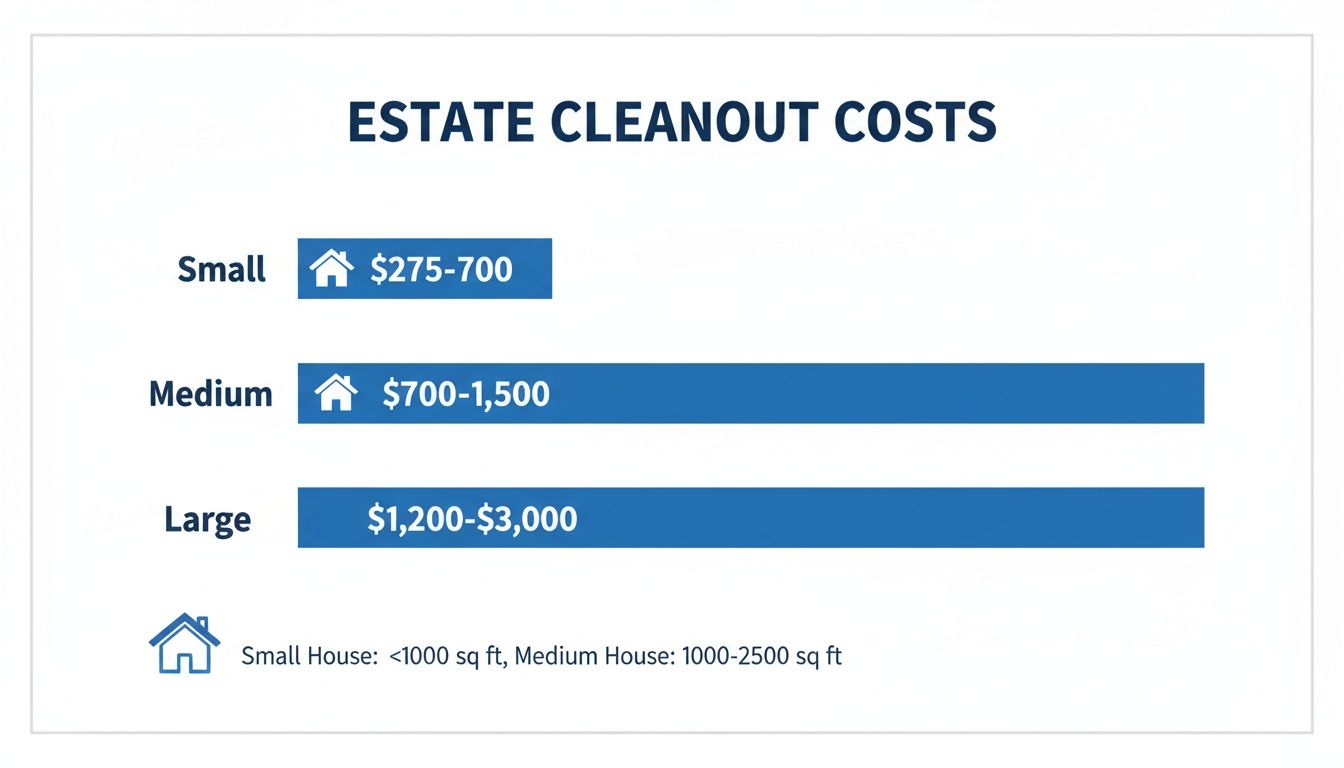
For medium-to-large homes, these costs can easily run into the thousands. A successful pre-cleanout auction can turn what would have been a major expense into a much more manageable task.
Got Questions About Estate Clean Outs? We’ve Got Answers.
When you're dealing with an estate for the first time, it’s natural to have a lot of questions. Hiring an estate clean out service can feel like a leap into the unknown, but a little bit of clarity goes a long way.
Let's tackle some of the most common questions people have. Getting straightforward answers is the best way to feel confident moving forward.
How Long Does a Typical Estate Clean Out Take?
This is probably the number one question we hear, and the honest answer is: it depends. The timeline is almost entirely dictated by the size of the property and, more importantly, the sheer volume of stuff inside.
A small, tidy apartment might be a one-day job for a professional crew. Easy in, easy out. But a large family home packed with a lifetime of memories and possessions? That could easily take several days, or even a full week, to handle respectfully and thoroughly.
Here’s a rough guide to help you set expectations:
- Small Apartment (1-2 Rooms): Usually wrapped up in 4-8 hours, all within a single day.
- Average Home (3 Bedrooms): Plan for 2-3 days for a full crew to sort, haul, and clean.
- Large or Hoarded Estate: This could stretch from 4-7 days or even longer, especially if there are tricky access points or special circumstances.
Any reputable company will insist on an on-site walkthrough before giving you a firm estimate. That initial visit is critical for them to see what they’re dealing with and for you to get a realistic timeline.
Remember, the goal isn't just speed; it's doing the job right. Rushing can lead to big mistakes, like accidentally tossing priceless family photos or missing important legal documents tucked away in a drawer.
Do I Need to Be There for the Whole Thing?
Not usually, no. You don't need to supervise the crew for the entire job. Once you've walked them through the property, pointed out what stays, and clarified any off-limits areas, you can let them get to work.
That said, your presence is crucial at two key points.
First, be there for the initial walkthrough. This is your chance to communicate your exact needs, answer their questions, and make sure everyone is on the same page. Second, plan to return for a final inspection before you make the final payment. This ensures the work was done to your satisfaction and the property is in the condition you agreed upon.
What Happens to All the Stuff They Take?
This is what separates a great estate clean out service from a simple junk hauler. A professional team won't just dump everything in a landfill. Their process should be built around responsible disposal.
They’ll systematically sort everything they remove. Items that are still in good condition—like furniture, clothing, and housewares—are typically donated to local charities. A good company will even be able to provide you with donation receipts for tax purposes.
Beyond that, they’ll separate materials like metal, paper, and e-waste for recycling. Always ask a potential provider about their environmental policies. You want to make sure their approach aligns with your own values and that they’re committed to minimizing waste.
More guides in Estate Organization & Cleanup
July 21, 2026
What Is a Settling in Service? a Guide for Downsizers
Learn what a settling in service does, its benefits, and costs. Our guide helps downsizers and executors decide if hiring one is right for their move.
Read guideJuly 11, 2026
Beneficiary Communication: Executor's Guide to Estate
Ensure a smooth estate with effective beneficiary communication. This guide provides executors with key strategies for managing family expectations and legal
Read guideMay 20, 2026
Clean Out a House: Expert Tips for 2026
Clean out a house for moving, downsizing, or estates. Our guide offers tips on sorting, selling, & disposal for a stress-free process.
Read guideGet the estate sale pricing guide
Enter your email for pricing ranges, planning notes, and a clearer path to launch.