Starting a Profitable Estate Sale Business
A practical guide to launching a profitable estate sale business. Learn essential steps for setup, pricing, marketing, and managing successful sales.

So, you're thinking about diving into the world of estate sales. It's an incredible business that's part treasure hunt, part project management, and part human connection. You're not just selling things; you're stepping in to help families during a major life transition—a death, a big move, or downsizing. It's a field where empathy and business savvy go hand-in-hand.
Understanding the Modern Estate Sale Landscape

This isn't your grandmother's garage sale circuit. The estate sale industry is a serious, growing business, and it's being fueled by some massive trends. As the baby boomer generation downsizes and passes on estates, an enormous volume of personal property needs a new home. This creates a steady, reliable demand for people who know how to manage the process.
At the same time, there's been a huge cultural shift. Shoppers are tired of cheap, mass-produced furniture and decor. They're actively looking for unique, well-made, pre-loved items that have a story. For eco-conscious consumers, interior designers, and professional resellers, a well-run estate sale is the ultimate find.
The Opportunity in a Growing Market
The numbers don't lie. This industry has some serious financial muscle. The global estate liquidation market was valued at $3,323.85 million in 2021 and is on track to hit $4,198.66 million by 2025. That's a clear signal of strong, consistent demand and a wide-open opportunity for new entrepreneurs. You can dig deeper into the liquidation service market growth on cognitivemarketresearch.com.
But this growth isn't just about lining up for a weekend sale anymore. The smartest companies have embraced technology and are running a much more flexible, modern operation. There are several ways to structure your business, and many of the most successful companies use a mix of a few different approaches.
To give you a clearer picture, let's break down the common business models you can choose from. Each has its own rhythm and set of challenges, so finding the right fit for you is one of the first big decisions you'll make.
Comparing Estate Sale Business Models
| Business Model | Description | Pros | Cons |
|---|---|---|---|
| Traditional On-Site Sales | You host a multi-day sale inside the client's home. You price, stage, and manage everything from start to finish. | High commission potential. Direct interaction with buyers. The classic, most recognized model. | Labor-intensive setup. Dependent on local foot traffic. Security can be a concern. |
| Online Auctions | You catalog and photograph items, then sell them through an online auction platform to a wider audience. | Reaches a much larger buyer pool. Less on-site staffing needed. Weather isn't a factor. | Requires good photography and writing skills. Shipping/pickup logistics can be complex. |
| Consignment Partnerships | You take high-value or specialty items from an estate and sell them through an established antique mall or shop. | Taps into an existing customer base. Less marketing effort on your part. Good for niche items. | You split the commission with the shop. Slower sales cycle. Less control over pricing. |
| Direct Buyouts | You offer the client a single, lump-sum price for the entire contents of the home and take everything. | Quick, clean solution for the client. You keep 100% of the resale profit. No commission splits. | High upfront capital required. Huge risk if you misjudge the value of the contents. |
Choosing your model really depends on your starting capital, your local market, and how hands-on you want to be. Many companies start with one model, like traditional on-site sales, and then add online auctions or consignments as they grow.
Core Skills for Success
To really make it in this business, you need to be more than just a good salesperson. The best operators blend sharp business skills with a genuinely compassionate approach. You’re walking into a family's life during a deeply emotional time, and your ability to be a calm, organized, and trustworthy guide is everything.
Success in this business is built on a foundation of trust. Clients are handing you the keys to their family's history, and you must honor that responsibility while maximizing their financial return.
Think of yourself as a project manager, inventory specialist, marketing guru, and customer service pro all rolled into one. You’ll be negotiating with clients, merchandising a home to look its best, researching the history of an obscure collectible, and offering a kind word to a grieving family member—sometimes all in the same afternoon. It's this unique mix of roles that makes the work so challenging, and ultimately, so rewarding.
Building a Solid Business Foundation
Before you ever price a single antique teapot or stage a client’s living room, you’ve got to build the foundation of your estate sale business. This is the behind-the-scenes work—the legal and financial framework that protects you, your clients, and your future profits.
It might feel like a chore, but getting this right from day one prevents massive headaches later. More than just paperwork, it signals to clients that you're a serious, trustworthy professional they can rely on during a sensitive time.
Choosing Your Business Structure
One of the first, and most important, decisions you'll make is how to structure your business legally. This choice directly impacts your personal liability, how you’re taxed, and how much administrative work you’ll have. It’s a decision with real, long-term consequences.
For most new estate sale professionals, it comes down to two main options.
- Sole Proprietorship: This is the quickest way to get up and running. You and your business are one and the same in the eyes of the law. It’s simple to set up with minimal paperwork. The big catch? There’s no legal wall between your personal assets (your house, your car) and your business debts. If something goes wrong, you're personally on the hook.
- Limited Liability Company (LLC): An LLC creates that critical legal barrier between you and your business. It’s designed to shield your personal assets from business liabilities and lawsuits, which offers incredible peace of mind as you start taking on bigger sales. It takes a bit more paperwork and a small filing fee, but that protection is priceless.
To really get into the weeds of how these two structures stack up, this guide on incorporation vs sole proprietorship is a fantastic resource.
Securing Necessary Licenses and Permits
With your business structure decided, it's time to get licensed. The specific permits you need will vary quite a bit depending on your city, county, and state. Don't guess here—do your homework.
You'll almost certainly need a few key things:
- General Business License: This is standard practice. Most cities require one for any business to operate legally.
- Seller's Permit / Resale License: Since you’ll be selling goods and collecting sales tax on behalf of your clients, this is almost always mandatory.
- Secondhand Dealer License: Some areas classify estate sale operators as secondhand dealers, which can come with its own license and specific record-keeping rules.
The best place to start is your city hall or county clerk's website. They often have a checklist for new businesses. Operating without the right permits can lead to fines and, worse, damage your reputation before you even get off the ground.
A solid legal and financial foundation isn't just a defensive measure; it’s a proactive strategy that builds client trust and enables sustainable growth for your estate sale business.
Getting the Right Insurance Coverage
Insurance is absolutely non-negotiable. Think of it as your primary safety net for all the "what ifs." Accidents happen. A shopper could trip over a rug, or a valuable item could get broken during setup. Without insurance, you're completely exposed.
You need two core types of coverage, minimum:
- General Liability Insurance: This covers claims of bodily injury or property damage that happen during one of your sales. A client’s homeowner's policy won't cover your business operations—that’s a common misconception.
- Errors and Omissions (E&O) Insurance: Also called professional liability insurance, this is crucial. It protects you if a client claims you made a professional mistake that cost them money, like significantly underpricing a rare antique.
Having the right insurance shows clients you're a professional who takes this business seriously. It's a small price to pay for real protection and credibility. For more on getting started, many new entrepreneurs find helpful resources designed for estate sale managers that walk through all these essential first steps.
Mastering Your Core Operations
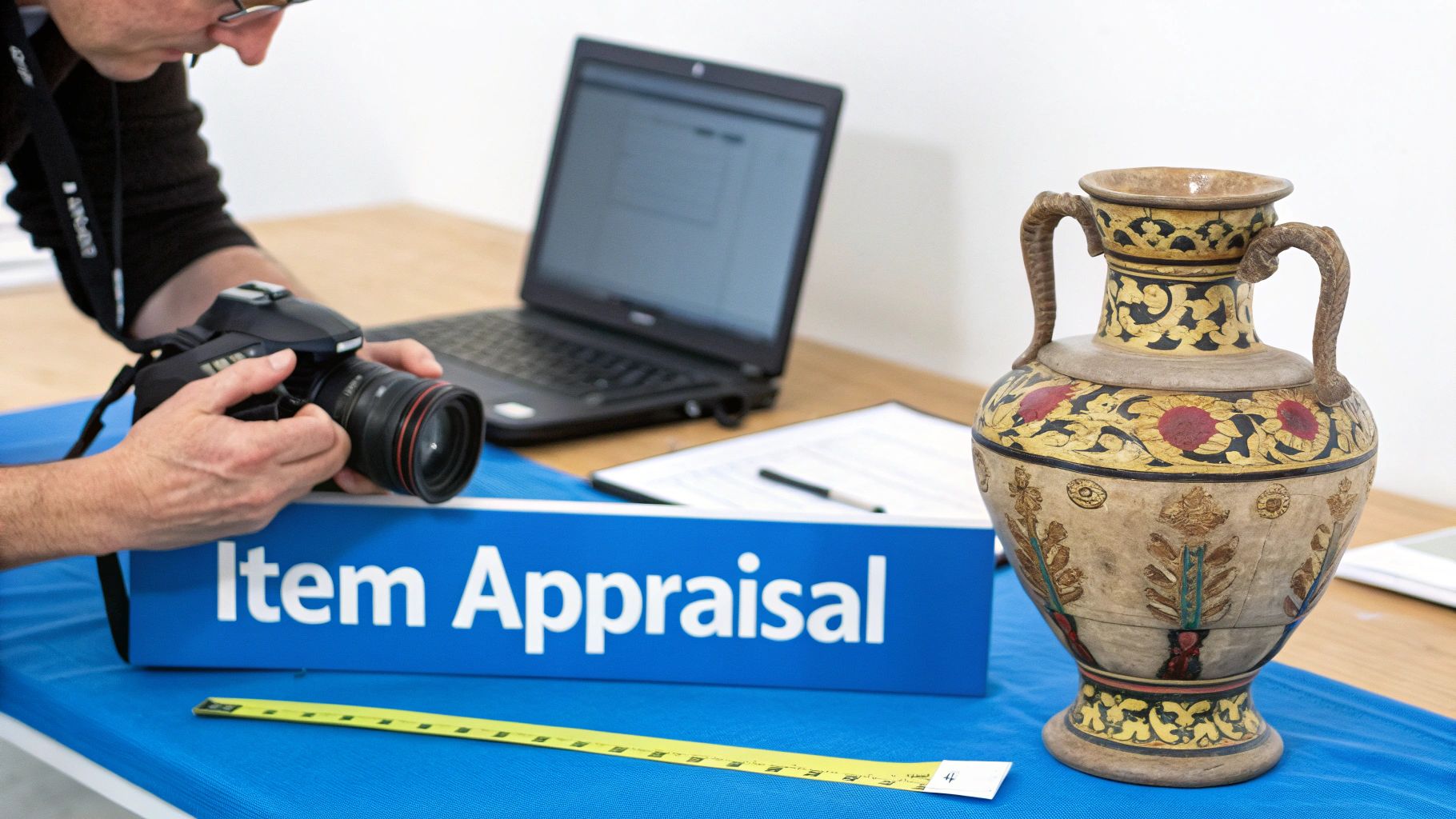
Once your business framework is solid, it's time to get your hands dirty. This is where the real work happens—transforming a home filled with personal history into a well-organized, profitable event. A truly successful estate sale business isn’t built on a fancy business plan; it's built on mastering three fundamental skills: appraising, staging, and photography.
Think of these not as items on a to-do list, but as the craft of your profession. How well you execute them directly impacts your client's final check, your commission, and the reputation you're building with every sale.
The Art of Sorting and Appraising
Your first big job inside any home is wading through a lifetime of possessions. It can definitely feel like a lot to take on, but having a system is everything. You aren't just tidying up; you're on a treasure hunt, carefully separating valuable finds from everyday household goods and, of course, the items that are ready for donation or disposal.
I always start by creating broad categories—furniture goes here, kitchenware there, collectibles in this corner. This first pass gives you a mental map of the inventory. It's also when you start the critical work of appraisal.
Pricing is where your expertise (and research skills) really come into play. You don't need to be a certified appraiser for every fork and spoon, but you absolutely need to become a fantastic researcher.
- Check Online Marketplaces: The "sold" listings on eBay are your best friend. Sites like Etsy and Chairish are also goldmines for establishing real-world values for vintage items, clothing, and common collectibles.
- Dig into Auction Archives: For higher-end antiques or art, look at the sold results on platforms like LiveAuctioneers or Heritage Auctions. This shows you what dedicated collectors are actually paying.
- Consult Specialty Guides: For niche stuff like coins, stamps, or specific pottery styles, don't forget about reference books and online collector forums. They can be incredibly valuable.
Your goal is to find that pricing "sweet spot"—high enough to be fair to your client, but compelling enough to sell within the short window of a two- or three-day sale.
Knowing When to Call a Specialist
Sooner or later, you'll come across something that’s way outside your wheelhouse—fine jewelry, a rare book, a piece of art that just feels important. The biggest mistake new operators make is taking a wild guess. It's a gamble that can cost your client thousands and instantly tarnish your professional reputation.
This is why building a network of trusted specialist appraisers is non-negotiable. Pay them for their time and expertise. A formal appraisal for a valuable item doesn’t just ensure you're pricing it right; it gives buyers documented confidence and justifies the higher price tag. See it as an investment, never an expense.
Staging for Maximum Sales
With everything sorted and priced, it's time to stage. Your job now is to turn a private residence into an inviting retail space. Think clear pathways and logical groupings. Clutter is the enemy.
Put on your shopkeeper hat. Group all the kitchen goods in the kitchen. Put the tools in the garage. Use tables, bookcases, and any available shelving to get items off the floor and closer to eye level. It also helps to create little vignettes—a set of teacups on a tray, a cozy armchair paired with a reading lamp—to help shoppers visualize how these pieces could look in their own homes.
Capturing Compelling Photographs
Let's be real: your sale starts online the moment you post the photos. Long before anyone steps through the door, your pictures are doing the heavy lifting. High-quality photography is your single most powerful marketing tool. It generates buzz, brings in the serious buyers, and sets a professional tone for the entire event.
This is about more than just pointing your phone and snapping a picture.
- Light is Everything: Always use natural light when you can. Open the blinds, throw back the curtains, and turn on every lamp. Avoid using a harsh flash, which creates ugly glare and weird shadows.
- Lead with the Best: Your main gallery photos should feature the most valuable, unique, or eye-catching items. This is the bait that will hook people and make them click on your listing.
- Tell the Whole Story: Start with wide shots of each room so people can see the volume and how it's staged. Then, zoom in for detailed close-ups of individual items, making sure to capture any maker's marks, signatures, or special features.
The effort you put into these core operations has a ripple effect. The global real estate market, which is projected to hit $654.39 trillion by 2025, increasingly sees professional estate liquidation as a key service. Online platforms are seeing massive growth in sales volume, proving that a well-presented event can pull in a huge audience. This trend, which you can read more about on sites like Statista.com, just highlights how crucial it is to master these skills if you want to stand out and succeed.
Creating Smart Pricing and Client Contracts
Figuring out your fees and getting client relationships down in writing are two of the most important things you'll do when building a real, profitable estate sale business. If you mess this part up, you can find yourself doing a ton of work for very little money—or worse, getting into a nasty dispute with a client.
But when you get it right? You build a reputation for being transparent and fair, and that's what will fuel your growth for years to come. Your pricing model is the first thing that tells a potential client what you're worth. It needs to be simple enough for them to grasp, competitive enough to land the job, and, most importantly, structured to make sure you get paid well for your expertise.
This is where you stop being a hobbyist and start being a business owner.
Deciphering Commission Structures
The go-to method for estate sale companies is charging a commission based on the total gross sales. It’s a win-win: the more money you make for your client, the more money you make for yourself. Simple. But the way you structure that commission can make a big difference.
A flat percentage is the most straightforward route. For instance, you might charge a clean 35% on everything sold. It’s incredibly easy for clients to understand and for you to calculate. No confusion.
Another popular option is a tiered or sliding scale commission. This approach can be more strategic, especially for larger estates. You might charge 40% on the first $10,000 in sales and then 30% on everything after that. This structure gives you a huge incentive to push past that initial threshold and really maximize the sale's total value. It rewards you for bringing in the big numbers.
If you want to dig deeper into setting the right rates, we have a detailed guide on pricing for estate sales that breaks it all down.
To see how this plays out, let's look at a few scenarios.
Commission Structure Earning Scenarios
This table shows how different commission models affect both your earnings and the client's take-home amount across various sale totals.
| Total Sale Gross | Flat 35% Commission | Your Earning (Flat) | Tiered Commission (40% on first $10k, 30% on rest) | Your Earning (Tiered) |
|---|---|---|---|---|
| $15,000 | $5,250 | $5,250 | ($10,000 * 40%) + ($5,000 * 30%) | $5,500 |
| $30,000 | $10,500 | $10,500 | ($10,000 * 40%) + ($20,000 * 30%) | $10,000 |
| $50,000 | $17,500 | $17,500 | ($10,000 * 40%) + ($40,000 * 30%) | $16,000 |
As you can see, the "best" structure can depend on the total value of the estate. A tiered model often works well for mid-range sales, while a flat rate can be more lucrative on higher-grossing projects.
Accounting for Additional Fees
Your commission should cover the core work: sorting, pricing, staging, marketing, and running the actual sale. But some jobs come with heavy-lifting that falls well outside that scope. It's completely standard practice to charge separate, clearly defined fees for these extras.
Think of things like:
- Clean-Out Services: The labor and cost of completely emptying the house of unsold items and trash after the sale is over.
- Trash Hauling: Fees for renting a dumpster or making multiple trips to the local dump.
- Specialist Appraisals: The cost of bringing in an outside expert for fine art, rare coins, or high-end jewelry.
Make sure you list these potential fees right in your contract. Total transparency here builds trust and prevents that awkward conversation when the final invoice comes due.
Crafting an Ironclad Client Contract
Let me be clear: your contract is the single most important document you have. It's not a formality. It’s a tool that sets expectations, defines everyone's job, and protects both you and your client. I'll say it again for the people in the back: never, ever work on a handshake deal.
A professional contract needs to be detailed but written in plain English, not confusing legalese. As you develop your pricing, you should also look into strategies for improving gross profit margin—many of these principles can inform how you structure your contract terms for maximum profitability.
Your contract absolutely must include these key clauses:
- Scope of Work: Be painfully specific. List everything you will do (sort, price, photograph, market) and what you won’t do.
- Commission and Fee Structure: Spell out the exact commission model (flat or tiered) and list every potential add-on fee.
- Payment Schedule: State exactly when the client gets paid, usually within a set number of business days after the sale wraps up.
- Client Responsibilities: This is huge. Outline what the client must do, like removing all personal items they're keeping before you even start working.
- Unsold Items: Define the plan for leftovers. Will they be donated? Bought out? Disposed of? And who pays for it?
Your contract is your roadmap for the entire project. It sets professional boundaries, manages client expectations, and serves as your primary protection if a disagreement arises.
At the end of the day, a smart pricing model and a rock-solid contract are the foundation of any serious estate sale business. They give you the clarity and security you need to build great client relationships and make sure your hard work pays off.
Marketing Your Sales to Attract Eager Buyers
You can stage the most incredible sale with perfectly priced items, but it means nothing if nobody shows up. Think of marketing as the engine that drives your entire estate sale business—it’s what turns a quiet private home into a weekend hotspot for eager buyers.
This isn't just about sticking a few signs in the ground. It's about building a loyal following, a community of people who get genuinely excited every time you announce a new sale.
The great news? You're stepping into a red-hot market. The entire secondhand economy is booming as people look for value, sustainability, and unique items. In fact, trends for 2025 show a huge uptick in younger generations hitting up estate sales to save money and reduce waste. You can see more on these 2025 estate sale trends for yourself. Your job is simply to connect this built-in audience with the treasures you're selling.
Build Your Most Valuable Asset: Your Email List
Your email list is, without a doubt, the most powerful marketing tool you will ever own. It’s a direct line to your best customers—the die-hards who actually want to hear from you. Unlike social media, you own this list. No algorithm can suddenly decide to hide your posts.
Start building it from day one. Put a simple sign-up sheet at the checkout table of every single sale. Add a sign-up form to your website. Make it a priority.
When you send out an email blast, treat it like an exclusive first look for your VIPs.
- Lead with great photos. Show off the star pieces—the best furniture, the coolest collectibles, the most unique finds.
- Write a subject line that pops. Something like "Mid-Century Modern Treasures in Northwood This Weekend!" creates immediate intrigue.
- Give them all the details. Address, dates, and hours need to be crystal clear.
This direct line ensures your biggest fans never miss out.
Harness the Power of Online Listing Sites
To cast a wider net, you have to list your sale on specialized websites. These platforms are the go-to weekend planners for serious shoppers, dedicated resellers, and collectors in your area.
The undisputed king of the hill here is EstateSales.net. Listing your sale on this site is non-negotiable. People literally plan their entire weekend around the listings they find there, and a great post can bring hundreds of people to your door.
Your listing needs to be more than just a list; it needs to be an invitation. Don't just say "furniture and kitchenware." Get specific to attract the right people: "Henredon dining set," "complete collection of vintage Pyrex," or "garage packed with Craftsman tools." The more detail you provide, the more qualified your buyers will be.
A great online listing does more than just announce a sale; it creates a sense of urgency and excitement, convincing buyers that your event is the one they can't afford to miss this weekend.
Generate Buzz with Social Media
Social media is where you build your brand's personality and connect with your community in a more visual, real-time way. Platforms like Facebook and Instagram are perfect for this.
Use these channels to tell the story of each sale. Post photo galleries and quick video walkthroughs in the days leading up to the event. This builds a ton of anticipation and lets shoppers pre-scout the items they want to make a beeline for on opening day.
- Facebook: Share your sale announcements in local community groups and garage sale pages. For just a few dollars, you can run a targeted ad to reach thousands of people within a specific radius of the sale.
- Instagram: This is all about the visuals. Use high-quality posts and Reels to highlight individual items. Use hashtags like #estatesalefinds, #[YourCity]Vintage, and #thrifting to help new people discover you.
The key is consistency. The more you post, the more you'll build a dedicated following of local treasure hunters. For a much deeper dive, check out our complete guide on strategic estate sale marketing, which covers more advanced tactics.
Don’t Forget Old-School Signage
Even with all the digital tools at our fingertips, never, ever underestimate the power of good old-fashioned signs. Clear, professional, and plentiful signage is absolutely critical for guiding people to the sale. Signs capture drive-by traffic and help those who saw your online listing but need a final nudge to turn down the right street.
Keep your signs dead simple and easy to read from a moving car. Use a big, bold font with just the essentials: "Estate Sale" and a giant arrow. Place them at every major nearby intersection and at every turn leading to the house. Your goal is to make finding your sale completely effortless.
Running a Smooth Sale and Post-Sale Process
All the appraisals, staging, and marketing have led to this moment: sale day. This is the main event for your estate sale business, where all that meticulous prep work pays off in a profitable, seamless experience for both your shoppers and your client.
A smooth sale isn’t about getting lucky; it’s about having a solid, repeatable process. From the second the doors open until you hand that final check to your client, every step needs to be handled with professional calm. This is where your ability to juggle logistics, people, and money all at once really shines. A well-run sale day is what builds your reputation as the go-to operator who gets results without the drama.
Preparing for Showtime
The morning of the sale should feel like the calm before a very exciting storm, not a mad scramble. Your sale-day prep is all about the final touches and setting up your operational hubs to manage the flow of people and payments.
First thing’s first: set up a dedicated checkout station. This needs to be a single, clearly marked spot—usually right by the main entrance—where every single transaction happens. Don't fall into the trap of having multiple pay points; it just creates confusion and opens the door for errors.
Make sure this station is stocked with everything you'll need:
- Payment Systems: You need options. A reliable card reader like a Square or PayPal Zettle, a cash box loaded with plenty of change, and maybe a sign for Venmo or Zelle payments.
- Supplies: Have bags, wrapping paper for fragile items, some extra price tags, pens, and a calculator right there at your fingertips.
- Sold Area: Designate a specific table or corner right next to checkout as the "sold" area. This keeps paid-for items from getting lost in the shuffle or accidentally re-sold.
This simple command center is the heart of your entire event.
Staffing Your Sale Effectively
Let's be clear: you can't be everywhere at once. Trying to run a sale by yourself is a surefire recipe for chaos, customer frustration, and potential theft. Good staffing isn't an expense; it's an investment in security, great service, and your own sanity.
A good rule of thumb is to have one person per major area (one upstairs, one in the basement, one for the garage) plus a dedicated cashier.
Before you let the first person in, assign clear roles. Your team needs to know who’s watching which rooms, who can answer pricing questions, and who’s on deck to help carry heavy furniture. This simple division of labor ensures every part of the home is covered and customers can always find someone to help.
Your team is the face of your business during the sale. A friendly, helpful, and vigilant staff not only improves the customer experience but also acts as your first line of defense against theft and damage.
Post-Sale Wrap-Up and Client Settlement
Once the last shopper is out the door, your final phase of work begins. The goal now is to leave the property in the agreed-upon condition and give your client a crystal-clear financial accounting of the sale.
The first job is to handle the unsold items. Your contract should have already spelled this out—whether you’re arranging a charity donation pickup, calling a junk removal service, or facilitating a buyout of what's left. Whatever the plan, get it done quickly.
This is where your pre-sale marketing really pays off. A structured buyer attraction process minimizes leftovers in the first place.

Finally, it's time to prepare the client's settlement statement. Think of this document as your final report card; it’s absolutely critical for maintaining your professional reputation. It needs to be meticulously detailed, itemizing the total gross sales, subtracting your commission, and listing any other fees (like trash hauling or specific appraisal costs) that were outlined in your contract.
This level of transparency provides closure for the client and reinforces the value you provided, which is exactly what leads to those powerful word-of-mouth referrals.
Here are the answers to the questions that are probably running through your head as you think about starting your own estate sale business.
Jumping into a new business venture always comes with a fair share of unknowns. But getting a handle on the most common questions will give you the confidence to move forward.
The first thing most people want to know is how much it costs to get started. The good news? You don't need a massive bankroll. Because you're selling items on consignment and not buying inventory, your initial outlay is surprisingly low. Most successful companies get off the ground with less than $5,000 for things like business registration, insurance, and basic supplies.
What Is the Hardest Part of the Business?
Ask any veteran in this industry, and they'll tell you the hardest part isn't the physical labor—it's the emotional weight. You're stepping into people's lives during incredibly difficult moments, often dealing with grief, loss, and overwhelming stress. Learning to be a compassionate guide while still making smart business decisions is a balancing act you'll constantly be perfecting.
From a practical standpoint, the sheer variety of stuff you'll have to price is a huge challenge. One day it's vintage Pyrex, the next it's antique woodworking tools. Becoming a quick and accurate researcher is non-negotiable.
The most rewarding part of this work is also the most challenging: being a calm, trusted guide for a family during an overwhelming time. Your professionalism and compassion are your greatest assets.
Do I Need to Be a Certified Appraiser?
Nope, you don't need a formal certification to run a successful estate sale company. What you do need is to become a top-notch researcher. Your reputation—and your clients' profits—hinges on your ability to price items accurately.
That said, you absolutely must know your limits. When you come across high-value items like fine art, diamond jewelry, or rare coins, it's time to call in the experts. Build a network of certified appraisers you can trust. Paying for their expertise protects your client, gives buyers confidence, and solidifies your reputation as a true professional. Don't ever guess on the big stuff.
More guides in Estate Sale Basics
July 28, 2026
Revenue Reporting for Estate Sales and Auctions
Learn revenue reporting essentials for estate sales and auctions. Discover key metrics, templates, and best practices to simplify tracking and compliance.
Read guideJuly 26, 2026
Stamp Collection Valuation: A Practical Step-by-Step Guide
Stamp collection valuation made simple. Learn how to identify, grade, price, and sell your stamps with confidence for estate sales or consignment.
Read guideJuly 23, 2026
Estate Sales Brick NJ: Your 2026 Guide to Success
Planning your estate sales brick nj? Our guide covers permits, pricing, marketing, & running a safe sale with DIYAuctions.
Read guideGet the estate sale pricing guide
Enter your email for pricing ranges, planning notes, and a clearer path to launch.