Estate Sales Clermont FL: Maximize Your Profit in 2026
Maximize profit for your estate sales clermont fl. Our 2026 guide covers local permits, pricing, & online tools to simplify the process.
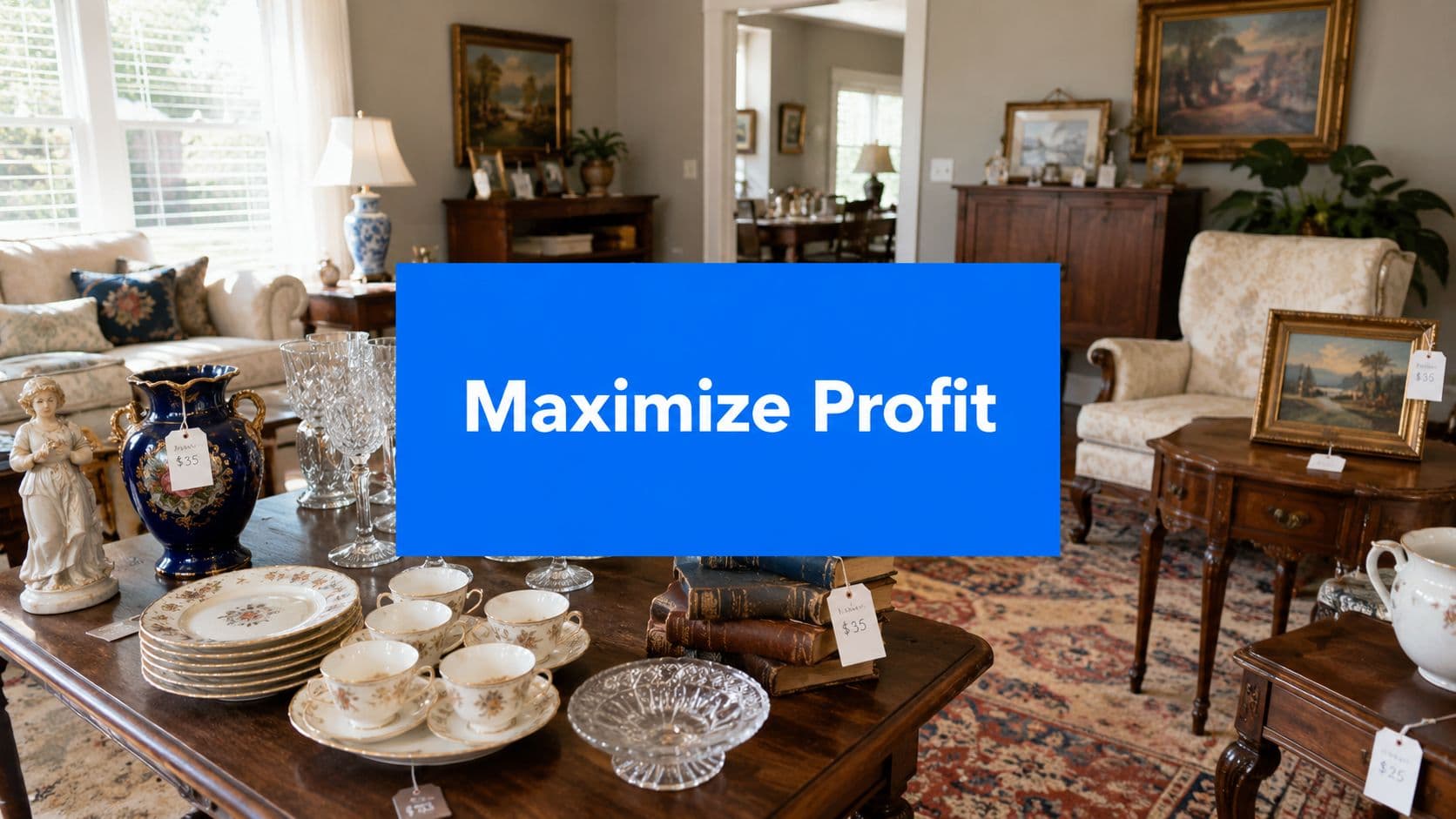
If you're sorting through a Clermont home after a death, a late-life move, or a major downsize, the hard part usually isn't deciding that items need to go. It's deciding how to sell them without losing money, losing time, or turning the house into a month-long public event.
Most families start with the same assumptions. Hire a local estate sale company. Accept the commission. Hope the pricing is right. Hope the leftovers are manageable. In practice, estate sales in Clermont work better when you treat them as a controlled liquidation project, not a casual weekend sale. The right process protects your timeline, your records, and the value of what you're selling.
Your Guide to Estate Sales in Clermont
Clermont creates a very specific kind of estate sale pressure. Homes turn over, families relocate, inherited properties need to be cleared, and closing dates don't wait for sentimental sorting. In 2025, Clermont recorded over 1,600 closed residential property transactions, up 6.8% from 2024, which points to a very active local cycle of moves, transitions, and inherited property decisions, according to Clermont housing stats and sales data.

That matters because an estate sale isn't just about clearing a house. It's part of a larger transaction. Sometimes the property is headed to market. Sometimes heirs need to divide proceeds. Sometimes the goal is to empty the home fast enough to hand over keys without paying for extra hauling, storage, or extended cleanout time.
What usually works in Clermont
The strongest estate sales Clermont FL sellers run have three traits:
- A clear scope: only sell what is approved for sale
- Market-based pricing: don't let wishful pricing stall the process
- A fixed pickup plan: sold items leave quickly and cleanly
What doesn't work is the old pattern of opening the doors, guessing at tags, and hoping enough local foot traffic shows up. Clermont buyers are active, but they're also selective. If items are poorly presented or overpriced, they sit.
Practical rule: Treat the personal property inside the home with the same seriousness you'd treat the sale of the home itself.
The opportunity most families miss
A well-run sale gives you more than empty rooms. It gives you control. You decide what gets listed, how it's described, when bidding closes, and how pickup happens. That control matters more in Clermont than many people realize because local timing can shift quickly when a home is being prepared for listing, contract deadlines, or final possession.
If you're facing estate sales in Clermont FL right now, the practical goal isn't perfection. It's a sale process that is organized, transparent, and aligned with the property's next step.
Planning Your Sale and Navigating Local Rules
Before you list a single lamp or dining chair, slow down and build the framework. Most estate sale problems start early. Someone sells items before the family agrees. Someone forgets to check neighborhood restrictions. Someone hires a company without understanding how the fee sheet really works.

Start with permissions and property rules
In Clermont, check city rules, county requirements, and any HOA standards tied to the property before you announce a sale or schedule pickup traffic. Estate sales often get treated like garage sales by neighbors and code staff, so it's smart to verify signage limits, parking expectations, and whether your community has restrictions on sale activity at the home.
Use a short planning checklist:
- Confirm authority to sell. Make sure the executor, trustee, or owner has clear authority over the contents.
- Check local and neighborhood rules. City ordinances and HOA documents matter.
- Walk the property. Note stairs, narrow hallways, heavy furniture, gated access, and loading points.
- Separate keep, donate, discard, and sell. Don't catalog first and debate later.
- Set a target date. Tie the sale schedule to the home's actual timeline.
Inventory first, emotions second
Families often want to price while they're still deciding what stays. That's backwards. Build the inventory before you argue over value. Room-by-room inventory keeps the process moving and reduces conflict because everyone can react to a concrete list instead of vague memory.
A practical room audit should include:
- Furniture and decor: note condition, brands, and visible damage
- Collections: group like items together instead of scattering them
- Garage and patio contents: often overlooked, often easy sellers
- Appliances and utility items: confirm they are included before listing
- Personal papers and photos: remove these before anything goes live
A clean inventory sheet solves half the disputes that derail family-run estate sales.
The real trade-off with traditional companies
The biggest planning mistake I see is signing a contract too early because the company promises "no upfront fees." That phrase sounds comforting, but it often hides the true cost structure. A 2024 analysis found that 68% of consumers were unaware of hidden charges for cleaning, advertising, or staffing until after signing contracts, and some Central Florida liquidators charge a 40% rate plus those undisclosed fees, as noted in this Florida estate liquidator fee analysis.
That doesn't mean every full-service company is wrong for every family. It does mean you should ask for a written breakdown of commission, labor, trash-out, staging, advertising, and unsold-item handling before agreeing to anything.
If you want a clearer picture of how local estate sale planning can differ from one Florida market to another, this guide to estate sale planning in Palm Harbor is useful because the process issues are similar even when neighborhood conditions differ.
Pricing Your Items for the Clermont Market
Pricing is where most estate sales Clermont FL hosts either preserve value or give it away.
Clermont itself offers a helpful pricing lesson. The local sales-to-list-price ratio is 97%, but neighborhood conditions differ sharply. Somerset Estates shows a 12-month supply, while Johns Lake Estates shows a 3-month supply, which means sellers need different pricing strategies depending on local liquidity, according to this Clermont neighborhood market breakdown.
Use local market logic, not wishful thinking
That housing pattern translates well to estate contents. In a slower micro-market, buyers have options and take their time. In a tighter one, realistic pricing still matters, but well-presented items move with less resistance. The lesson is simple. Citywide averages don't price your estate. Your immediate selling environment does.
If the home is in an area where buyers are already moving cautiously, don't stack your catalog with ambitious opening prices on ordinary goods. Everyday furniture, kitchenware, and household utility pieces should feel easy to bid on. Reserve stronger pricing confidence for items with clear brand value, standout condition, or collector appeal.
A practical pricing filter
When deciding what to ask, sort each item into one of these buckets:
| Item type | Pricing approach | Common mistake |
|---|---|---|
| Everyday household goods | Price to move | Treating used basics like retail inventory |
| Better furniture | Support with dimensions, maker, condition | Ignoring wear that buyers will notice at pickup |
| Collectibles and antiques | Start attractively and let bidding work | Setting a high entry point that kills momentum |
| Garage, patio, utility items | Keep descriptions simple and functional | Underestimating demand for practical items |
This isn't about pricing low for the sake of it. It's about pricing in a way that creates action.
What to research before assigning value
A smart seller checks comparables, but only comparables that match. "Looks similar" isn't enough. Compare by material, brand, age, condition, and whether the item is something buyers can still purchase easily elsewhere.
Use this order of operations:
- First, identify. Look for maker marks, labels, model numbers, or collection names.
- Then, compare condition. A scratch, missing hardware, or replaced fabric matters.
- Finally, decide if the item is common or competitive. Common items need sharper pricing.
If three buyers would describe an item as "used but useful," price it like a used item, not like a treasured heirloom.
Price by category, not by memory
Sentimental memory inflates numbers faster than any market condition. The fact that a dining set hosted holidays doesn't change what a buyer will pay today. The same goes for inherited china, decorative art, and home office pieces that were expensive when new.
A better method is to set pricing rules by category before reviewing individual items. For example, decide how you'll handle upholstered furniture, maker-signed decor, small appliances, and grouped kitchen lots. That gives your catalog consistency and keeps you from overvaluing one item just because it carries family history.
Creating Your Online Catalog and Marketing Plan
A modern estate sale succeeds or fails before pickup day. It succeeds in the catalog. Buyers decide whether to bid based on what they can see, what they can understand, and whether the listing feels trustworthy.
The shift toward digital selling isn't theoretical anymore. The digital auction transition has surged 55% in Central Florida since 2024, and 73% of high-value items like antiques sell for 20 to 30% more via online bidding due to broader bidder pools. Digital auctions can also reduce total time-to-sale by an average of 18 days, according to this Central Florida digital auction trend report.

The catalog needs three things
An online estate catalog doesn't need fancy copy. It needs clean execution.
Photos that answer questions
Take more than one photo. Show the front, sides, top, maker tag, and any flaw that would matter to a bidder. Natural light helps. So does a blank wall or uncluttered background. If a dresser has wear on one edge, show it. Good buyers don't mind condition. They mind surprises.
Descriptions that reduce hesitation
A useful description includes the basics a pickup buyer needs:
- What it is
- Dimensions
- Brand or maker if known
- Condition notes
- Anything missing, replaced, or repaired
Skip sales language. Clear beats clever every time.
Starting prices that invite action
Many sellers sabotage the auction by setting opening bids too high. Bidding needs room to develop. A realistic starting point gives buyers permission to engage. Once they engage, competition can take over, especially on standout items.
Reach beyond local drive-by traffic
Traditional walk-in sales depend heavily on who happens to see a sign or local listing in time. Online selling opens the sale to nearby buyers, remote heirs, collectors, and specialty shoppers who would never attend a one-day in-person event. That's especially helpful when the estate includes antiques, tools, niche decor, or collectible household pieces.
For offline promotion that supports the digital listing, direct mail can still help if you use it carefully. Realtors and local marketers can borrow useful tactics from Sendvo direct mail best practices, especially around message clarity, neighborhood targeting, and timing.
Better estate sale marketing doesn't mean louder marketing. It means giving the right buyer enough information to bid confidently.
One tool that fits this model
If you want a structured way to run the sale yourself, DIYAuctions is one platform that lets hosts build an online auction, upload photos and descriptions, set prices and timing, process payments, and organize a single pickup event while keeping the fee structure transparent. Their own guide to estate sale marketing ideas is useful if you're trying to make your catalog stronger without turning the process into a full-time job.
Managing Your Sale and Pickup Day Logistics
Closing the auction is only half the job. Pickup day is where your planning either pays off or unravels.
In Clermont, speed matters because property timelines can get tight. The average home sale price in Clermont was $492,020 in December 2025, and resale inventory grew by 43.99% since 2024, which points to a more competitive environment where sellers often need efficient, clean handoffs that match broader property timelines, based on Clermont market conditions on Realtor.com.

Set up the house like a distribution point
Don't treat pickup like an open house. Treat it like order fulfillment.
Group sold items by buyer name or invoice number. Move smaller sold lots to tables, counters, or staging shelves near the exit. Keep large furniture tagged in place until the buyer arrives. If the garage is available, use it as a controlled handoff zone.
A simple layout works best:
- Front room: check-in and payment verification
- Garage or cleared area: small item staging
- Interior rooms: large items waiting for removal
- Exit path: clear route for furniture and carrying teams
Communicate before buyers arrive
The smoothest pickup days are won the day before. Send clear instructions on arrival windows, parking, loading help expectations, and the need to bring packing materials or labor for heavy items. Don't assume buyers know they must move a sofa themselves. Put it in writing.
Use short, direct language:
- State the pickup window
- Give the address and parking notes
- Explain what identification or confirmation is needed
- Tell buyers what help is not provided
- Set a deadline for missed pickups
Buyers are easier to manage when the rules are written before they leave home.
Keep the event controlled
You don't need a crowd wandering the property. You need an orderly line of people collecting paid items. Have one person verify names and paid status, and another guide item retrieval. If the sale is at a home in a tighter Clermont subdivision, that extra control helps with traffic and neighbor concerns.
Many hosts appreciate support materials and post-sale process guidance. A practical reference like post-sale support for estate auction hosts can help you think through no-shows, disputed pickups, and how to handle unsold or unclaimed lots.
Plan for leftovers before pickup starts
Unsold and uncollected items create the last round of stress. Decide in advance what happens to them. Some go to donation. Some go to junk removal. Some may be offered to backup buyers if your platform and terms allow it. The point is to make those decisions before the driveway fills up.
Keep a short fallback list:
| Situation | Best response |
|---|---|
| Buyer is late | Apply your stated pickup policy |
| Buyer forgot help for heavy furniture | Reschedule only if your rules permit |
| Item remains unsold | Move it to donation, disposal, or later resale |
| Unclaimed small lot | Separate it immediately so it doesn't get mixed back in |
When pickup is organized this way, the house clears faster and the property moves to its next phase without a messy final week.
Your Path to a Profitable and Simple Estate Sale
Estate sales in Clermont FL don't have to follow the old script of high commissions, vague contracts, and a crowded one-day event that leaves half the job unfinished.
A more workable approach is straightforward. Confirm your authority. Check local and HOA rules. Build a real inventory. Price for the actual Clermont environment, not family memory. Present items clearly online. Then run a single, controlled pickup day that empties the house with less friction.
The biggest difference is transparency. Traditional estate sale models often leave families guessing about fees, labor, and what happens after the event. A digital-first, host-controlled process puts those decisions back where they belong. In your hands. It also gives you a better shot at preserving sale value, especially when the property itself is on a deadline.
You don't need to be a professional liquidator to do this well. You need a system, a clear sale scope, and the discipline to price and organize like someone handling a real asset transition.
If you're staring at rooms full of furniture, kitchenware, tools, decor, paperwork, and family decisions, start smaller than you think. Pick one room. Build the inventory. Separate what stays from what sells. Once that first room is organized, the rest becomes manageable.
If your goal is a cleaner process and stronger profit retention, explore DIYAuctions and see whether an online estate sale model fits your Clermont timeline.
More guides in Estate Sale Basics
July 28, 2026
Revenue Reporting for Estate Sales and Auctions
Learn revenue reporting essentials for estate sales and auctions. Discover key metrics, templates, and best practices to simplify tracking and compliance.
Read guideJuly 26, 2026
Stamp Collection Valuation: A Practical Step-by-Step Guide
Stamp collection valuation made simple. Learn how to identify, grade, price, and sell your stamps with confidence for estate sales or consignment.
Read guideJuly 23, 2026
Estate Sales Brick NJ: Your 2026 Guide to Success
Planning your estate sales brick nj? Our guide covers permits, pricing, marketing, & running a safe sale with DIYAuctions.
Read guideGet the estate sale pricing guide
Enter your email for pricing ranges, planning notes, and a clearer path to launch.