How to Declutter Garage: how to declutter garage made simple
Learn how to declutter garage with practical tips, smart storage ideas, and habits to keep it clean.
Let’s be honest, staring into a cluttered garage can feel like looking at a mountain you have to climb. It’s overwhelming. But the secret to conquering it isn't just diving in and moving boxes around. The real work starts before you even touch a single item.
Creating Your Garage Decluttering Game Plan
A solid game plan is what separates a successful weekend project from a frustrating mess that just gets bigger. Before you drag everything out onto the driveway, take a few minutes to think strategically. This is about making a few key decisions upfront that will save you hours of headache later.
First, give your garage a job. What do you really want this space to be?
- A clean, simple place just for parking the car?
- A fully kitted-out workshop for your hobbies?
- A home gym or a play area for the kids?
- An ultra-organized extension of your home's storage?
Once you have a clear vision, every single thing you pick up either fits that vision or it doesn't. Simple. It’s the ultimate filter. For some, this planning stage even leads to exploring alternative garage solutions, such as converting a shipping container to truly maximize their property's potential.
Set Your Schedule and Mindset
Next, pull out your calendar and block off the time. A full weekend is a popular choice, but don't feel pressured. Breaking the project into a few two-hour chunks over a week can be way more manageable and just as effective.
This is as much a mental game as it is a physical one. Get ready to be ruthless. You have to be prepared to let go of things that no longer serve the new purpose you’ve defined for your garage. If you need a little more guidance on that front, our room-by-room declutter checklist is a fantastic resource for the whole house.
You’re not alone in this, by the way. The desire for functional, tidy spaces is booming. The global market for garage storage and organization is expected to hit nearly $1.5 billion by 2025. It’s a clear sign that people are tired of the clutter and ready to reclaim their space.
The Four-Zone Sorting Method
To keep things moving and avoid getting bogged down, you need a system. This is my go-to method because it’s fast and decisive. Grab some tarps or a few big empty boxes and create four distinct zones in your driveway or on the lawn.
Here's a quick breakdown of the system I recommend to everyone starting a big clean-out:
The Four-Zone Sorting Method
| Zone | Criteria | Action Items |
|---|---|---|
| Keep | Items used regularly, have true sentimental value, or are essential for the garage's new purpose. | Designate a "safe zone" for these items to be returned to the garage later. |
| Donate/Sell | Good, usable items that someone else could use. Think tools, sports gear, or furniture. | Set aside for a drop-off or list them for sale on a platform like DIYAuctions. |
| Trash/Recycle | Anything broken beyond repair, expired, or truly unusable. | Immediately bag for trash. Separate recyclables and hazardous materials (old paint, chemicals). |
| Relocate | Things that simply don't belong in the garage (e.g., kitchen supplies, kids' indoor toys). | Create a pile to be taken back inside the house to their proper homes. |
This simple framework makes the process so much smoother. As you handle each item, you only have one question to answer: "Which zone does this go in?" No more agonizing over every little thing. It gives you a clear path from chaos to a clean, organized space.
The Hands-On Sorting and Purging Process
Alright, you’ve got your game plan and the zones are marked out. Now it's time to roll up your sleeves and get to it.
The biggest mistake I see people make is dragging everything out onto the driveway at once. It looks productive for about an hour, and then the overwhelm kicks in. Suddenly, you've got a yard sale you never planned for, and it’s threatening to rain. Don't do that.
Instead, pick one small, manageable section. That could be a single shelving unit, a dark corner, or even just one stack of mystery boxes. Focus all your energy there. Sort it completely before you even think about the next spot. This approach builds momentum and gives you those little wins that keep you going. It turns a monster task into a series of achievable goals.
Making Decisive Choices
As you handle each item—whether it’s an old fishing rod or a half-empty can of WD-40—you need to make a quick call. The classic "have I used it in the last year?" rule is a decent starting point, but it's not foolproof. A better method is asking a few more targeted questions.
To make this crystal clear, here’s a simple flowchart that walks you through the decision for every single item you pick up.
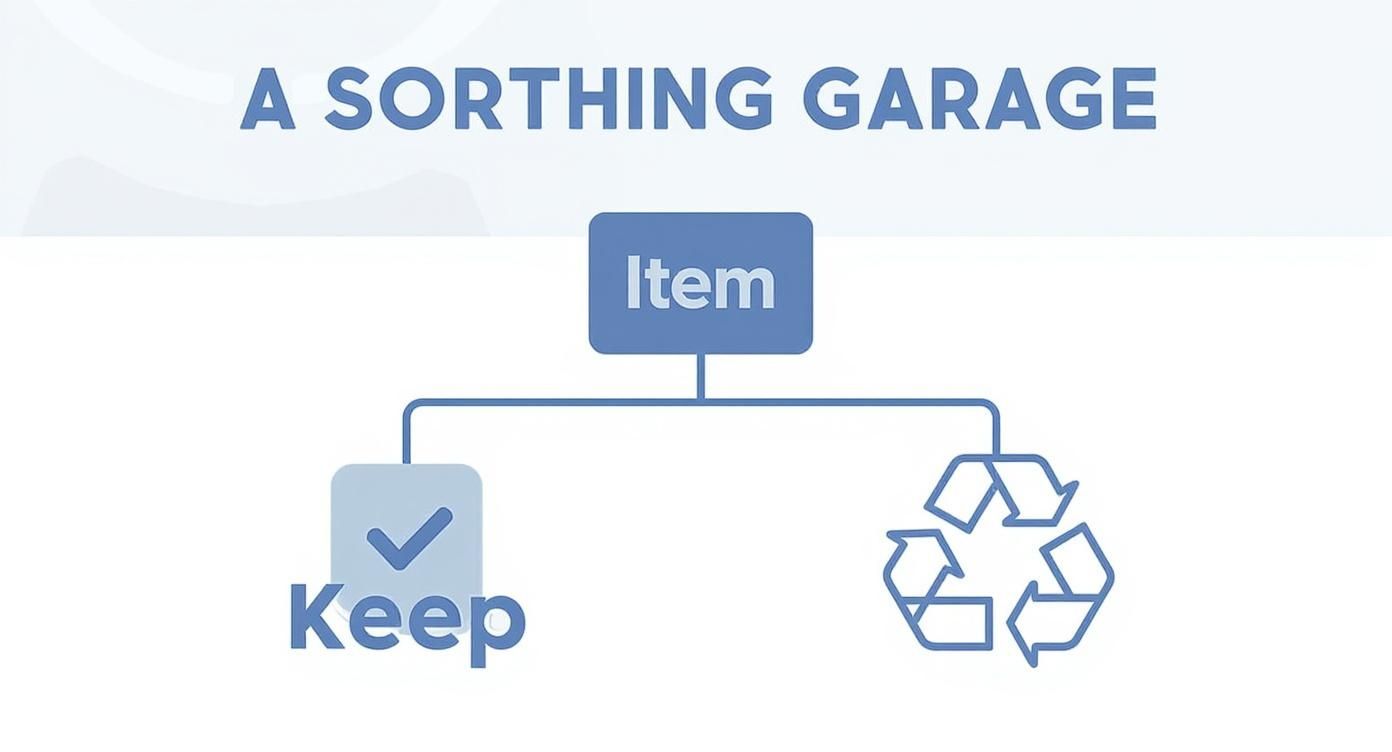
This visual guide really boils it down. Does the item have a definite place in your future, or is it time to part ways?
The real secret to effective decluttering is a mental shift. Stop asking, "What if I need this someday?" and start asking, "Does this support the way I want to use this space?" If an item doesn't fit the new vision for your garage, it's just getting in the way.
But what about the tough stuff? Those sentimental items, like your kid's first bike or that box of tools your grandpa left you. These choices are personal, no doubt. My rule of thumb is to allow yourself one small, curated box for keepsakes. For bigger things, take a photo to preserve the memory, then let the physical object go. It’s about honoring your past without letting it clutter your present.
If you're really struggling with this part of the process, know that you're not alone. We found a great guide offering extra help with decluttering that has some fantastic, practical advice.
Handling Problematic Items Safely
Let's be honest, not everything can be tossed in a bin or dropped off at Goodwill. Garages are notorious hiding spots for hazardous materials and bulky items that need special disposal. Figuring out what to do with them is a critical part of a responsible cleanout.
As you sort, create a separate "problem pile" for anything that can't go in the regular trash.
- Hazardous Waste: We're talking old paint, pesticides, motor oil, antifreeze, and car batteries. These are a hard no for the landfill. Check your local town or county website for a household hazardous waste (HHW) collection day or a permanent drop-off site.
- Electronics: Old power tools that have given up the ghost, a broken shop vac, or that ancient PC monitor are all considered e-waste. Most communities have dedicated recycling programs to keep the heavy metals and plastics out of the environment.
- Bulky Equipment: What about that rusty treadmill that’s become a laundry rack? Or the lawnmower that hasn't started since 2015? If they're beyond repair, search for a local scrap metal recycler. Some might even pay you a few bucks for the metal.
By separating these items from the start, you make the final disposal phase a whole lot easier and ensure you’re doing right by the environment.
Time for a Serious Deep Clean
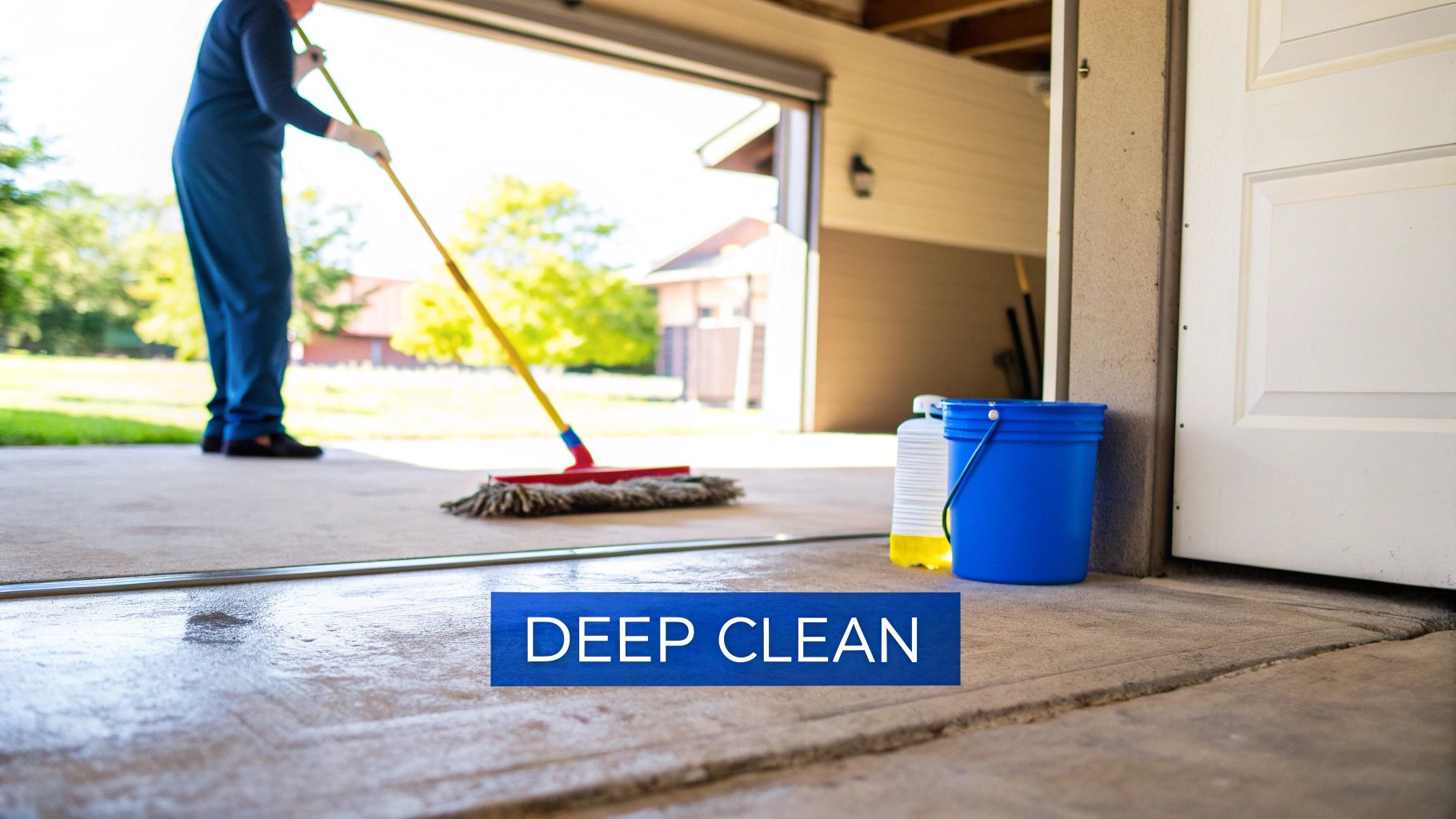
With everything cleared out, you’re staring at a blank canvas. This is a rare moment—the perfect opportunity to give your garage a top-to-bottom clean it hasn’t seen in years. This isn’t just about aesthetics; it’s about setting the stage for a truly organized and functional space.
Always start from the top and work your way down. Grab a shop vac or a broom with a long handle and go after all those cobwebs, dust bunnies, and dead bugs hiding in the ceiling corners and around light fixtures. You'll probably be amazed (and a little grossed out) by what's been living up there.
Next, hit the walls and windows. A simple bucket of warm, soapy water is usually all you need. Give any permanent shelving a good wipe-down, clean the garage door, and wash the windows. Letting in more natural light can instantly make the whole area feel bigger and more inviting.
Tackle the Garage Floor
Let’s be honest, the garage floor takes the most abuse. It’s seen everything from tracked-in mud and grime to those stubborn oil stains that seem to become permanent fixtures.
Sweeping is just the first pass. To really get it clean, you’ll need a bit more power. For those set-in oil and grease spots, a dedicated concrete degreaser is your best friend. Follow the instructions on the bottle, and you’ll see years of grime lift away.
Pro Tip: Got a fresh oil spill? Pour a generous amount of cat litter directly on it. Let it sit overnight to soak up the oil, then just sweep it up the next day before treating any remaining stains.
After you've spot-treated the tough areas, it's time to wash the entire floor. A pressure washer makes quick work of this, but a stiff-bristled deck brush and some old-fashioned elbow grease will get you there, too.
Inspect, Repair, and Upgrade
While your garage is completely empty, seize the opportunity to play detective. This is your chance to spot issues that were hidden behind stacks of boxes and old equipment.
What to look for:
- Foundation & Walls: Check for cracks that might signal water or structural problems.
- Pest Activity: Look in corners and along baseboards for droppings or nests.
- Water Damage: Search for damp spots or discoloration on the walls and floor.
This is also the ideal time for a few simple upgrades that have a huge impact. A fresh coat of light-colored paint will brighten up the space dramatically. And if you really want to level up, apply an epoxy sealant to the floor. It gives the garage a professional, finished look and makes future cleanups a breeze.
Time to Install Your Smart Garage Storage
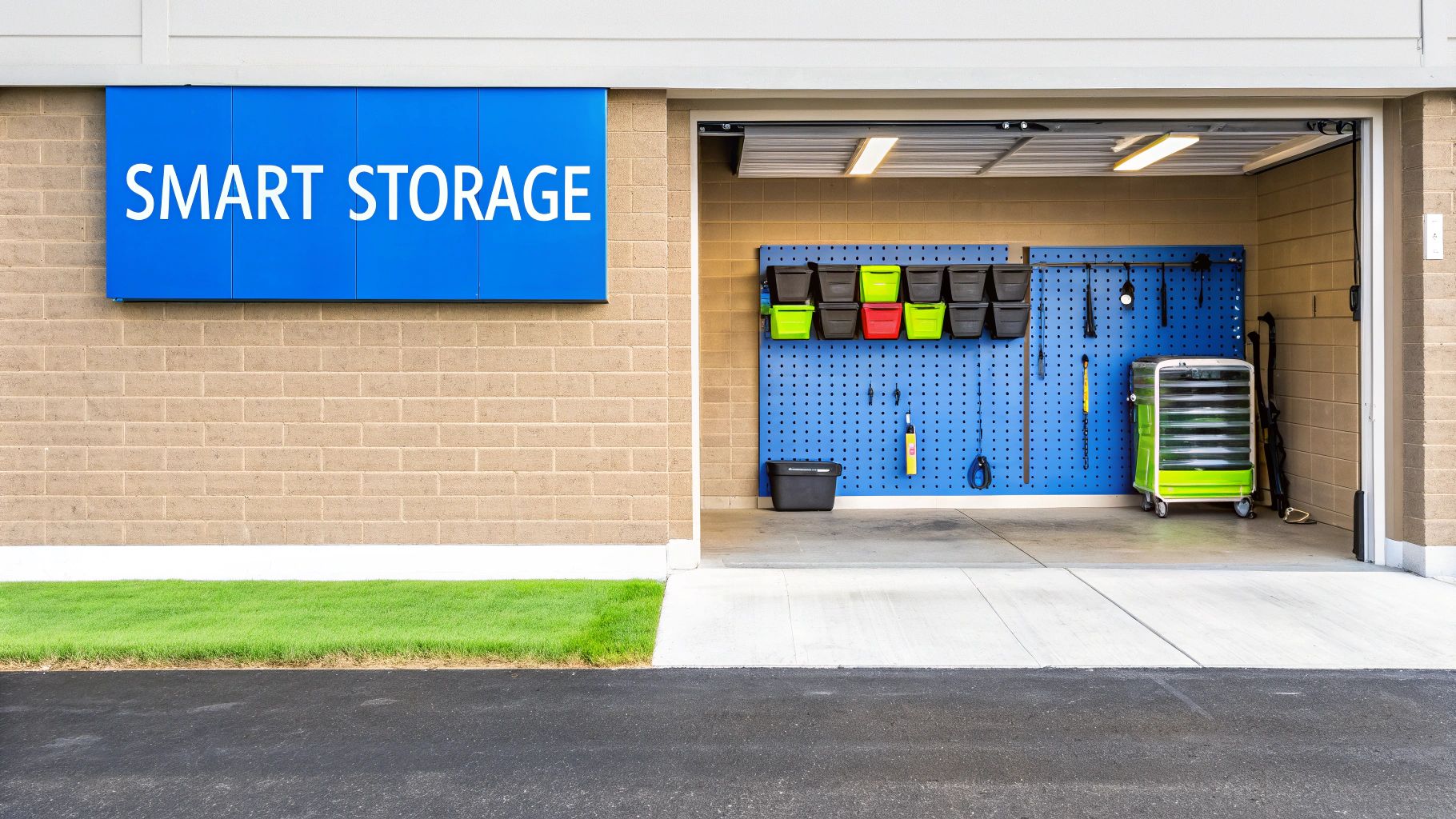
With all the clutter gone, you’re looking at a clean slate. This is your chance to build a garage that actually works for you. A lot of people make the mistake of just putting their "keep" pile back into the garage, only a little neater this time. Don't do that.
The real game-changer is to think vertically. Get as much as you can off the floor. The floor is for cars and walking, not for piles of storage bins. Your walls and ceiling are your most valuable, underused assets. Using them properly not only frees up a ton of space but makes it way easier to find things and keep the floor clean.
Choosing Your Core Storage Solutions
The market for garage organization is massive right now, and for good reason. The garage storage shelves market alone is expected to hit $305.2 million globally by 2025, fueled by people getting more into DIY home projects. That’s great news for you, because it means you’ve got plenty of options. You can read more about the garage storage shelves market trends here.
Let's look at the most effective tools for the job:
- Heavy-Duty Shelving: This is the foundation of any organized garage. Whether freestanding or mounted to the wall, these shelves are perfect for heavy bins, car care supplies, and other bulky items. Go for steel or tough industrial-grade plastic that won't buckle under pressure.
- Pegboards and Slatwall Systems: For all the things you need to grab quickly—hand tools, garden trowels, extension cords—nothing beats a good wall panel system. Pegboards are a classic, affordable option. Slatwall systems are a bit more heavy-duty and give you more flexibility with hooks and accessories for bigger things like bikes or leaf blowers.
- Overhead Racks: This is your secret weapon for reclaiming wasted space. Overhead racks are perfect for things you only use seasonally, like holiday decorations, camping gear, or patio cushions. They get all that stuff out of your way until you actually need it.
- Lockable Cabinets: If you have chemicals, paint, pesticides, or sharp tools, you need to store them safely. Lockable cabinets keep hazardous materials away from kids and pets while giving your garage a clean, finished look.
Here's a pro tip: Organize your storage based on how often you use things. Everyday items go at eye level. Things you use often go within easy reach. Long-term storage goes up high or in the back. It’s a simple rule that stops you from having to unstack three boxes just to get to one thing.
Create Logical Zones in Your Garage
Once you’ve got your storage hardware installed, the final move is to create "zones." This just means you assign a specific purpose to each area of your garage, making sure every item has a permanent, logical home. It's the absolute key to keeping the space tidy for the long haul.
Think of it like a mini-warehouse with different departments. A properly zoned garage might be set up something like this:
| Zone | What Goes Here | Best Storage Solution |
|---|---|---|
| Auto & Maintenance | Motor oil, car wash soap, washer fluid, basic tools. | A rolling tool chest, a small cabinet, or dedicated shelves near your parking spot. |
| Lawn & Garden | Rakes, shovels, bags of soil, pots, the mower. | A wall-mounted rack for long tools and some sturdy shelves for the heavy bags. |
| Sports & Hobbies | Bikes, basketballs, helmets, camping gear. | Overhead racks for bikes, and big wire baskets or bins for balls and loose gear. |
| Workshop & DIY | Power tools, screws and nails, lumber, paint cans. | A workbench with a pegboard behind it, plus cabinets to hold all the supplies. |
When you create these zones, you stop clutter before it even starts. You'll always know exactly where to find the hedge clippers or where to put the bike away. This system is what separates a garage that’s clean for a week from one that stays organized for years.
Alright, you've sorted, you've cleaned... now what do you do with the piles of stuff you no longer need? This is where the magic happens, but it’s also where a lot of people stall out. Don't let those "donate" and "sell" piles become a permanent fixture. Let's get them out the door.
The goal here is simple: clear the space efficiently and responsibly.
https://www.youtube.com/embed/r7yElTfh8JM
For items in good shape, your first thoughts are probably donating or selling. Local charities, schools, and even community theaters are often thrilled to get donations of tools, sports equipment, or furniture. Quick tip: always call ahead to see what they’re actually accepting. Their needs and storage space can change week to week.
Strategies for Selling Your Items
If you’ve uncovered some items with real value, selling them is a fantastic way to recoup some cash for your hard work. A classic garage sale is always an option, but for anything valuable or specialized, you'll get better results online. Facebook Marketplace is a powerhouse for moving bigger things locally, like that old lawnmower or patio furniture.
I’ve learned this the hard way: a great photo and an honest description are everything. Don’t just post "used bike." Get specific. Mention the brand, the frame size, its condition, and any recent tune-ups. Honesty builds trust and attracts serious buyers, not time-wasters.
For those who have a whole garage's worth of valuable stuff to offload, an online estate sale platform can be a game-changer. It consolidates the whole process. In fact, we put together a complete guide on how to sell household items online that walks you through maximizing your profit without all the usual headaches.
Responsible Disposal and Recycling
Let's be real—not everything is a hidden treasure. A big part of any garage cleanout is dealing with the junk, and this is where you need a plan.
First, pull out anything that absolutely cannot go in your regular trash bin.
- Electronics (E-waste): That ancient computer monitor, the broken shop vac, and old power tools are full of materials that have no business in a landfill. Your local waste management service almost certainly has e-waste recycling events or a permanent drop-off spot.
- Scrap Metal: Don't just toss that rusty lawnmower or pile of metal shelves. A local scrap metal yard will take it, and some might even pay you a few bucks for it.
- Hazardous Waste: This is the non-negotiable category. Old paint, motor oil, pesticides, and mystery chemicals need to be handled with care. A quick search for "Household Hazardous Waste" or "HHW" on your city or county website will show you designated collection days and locations.
If you're staring at a pile that's just too big or heavy for your car, don't sweat it. A professional service like Fulton Junk Removal can be a lifesaver. They’ll do the heavy lifting and make sure everything is disposed of properly, saving you time, a sore back, and a whole lot of hassle.
Keeping Your Garage Clean for Good
The real win isn't just getting your garage organized—it's walking into that same clean, functional space six months from now. You've already done the heavy lifting, so let's make sure it sticks. The trick is to build a few simple habits that stop the clutter from ever creeping back in.
This isn't about another weekend-long overhaul. It's about shifting from a one-time project to a little bit of ongoing maintenance. Small, consistent actions become automatic and keep your garage feeling like a true extension of your home, not a dumping ground.
Create Your New Garage Rules
The secret to long-term success is a system so easy you barely have to think about it. These aren't massive lifestyle changes, just a couple of simple rules for your newly organized space.
- Stick to the 'One-In, One-Out' Rule: This is the absolute golden rule of staying organized. When a new rake, basketball, or storage bin comes in, an old or broken one has to go out. This single policy is your best defense against the slow, silent buildup of clutter.
- Set Up a 'Landing Zone': Let's be real—not everything that lands in the garage is meant to live there. Designate one specific spot, like a single shelf or a clearly marked bin, for temporary items. Think library books, things you need to return to a store, or a tool you borrowed from a neighbor. This gives them a home without letting them take over.
Consistency beats intensity every single time. A quick 15-minute tidy-up each weekend is way more effective than a grueling six-hour cleanout once a year. It nips messes in the bud before they become overwhelming projects.
Get the Whole Household on Board
Your pristine system will only last if everyone using the space is on the same page. A perfectly organized garage can be completely undone in a day if your family doesn’t know where things are supposed to go.
Take five minutes and give everyone a quick "tour" of the new setup. Walk them through the zones and explain why things are where they are. And don't skip the labels—clearly marking shelves and bins is non-negotiable. It takes all the guesswork out of putting things away.
This idea of maintaining an organized home is becoming a huge priority for people. In fact, the global market for garage storage is expected to hit an incredible $24.6 billion by 2025. It just shows how much we're all starting to value functional, clutter-free spaces. You can discover more insights about garage storage trends and see how you’re part of a bigger movement. By getting the family involved, you’re making sure your investment of time and effort pays off for years to come.
More guides in Estate Sale Basics
July 28, 2026
Revenue Reporting for Estate Sales and Auctions
Learn revenue reporting essentials for estate sales and auctions. Discover key metrics, templates, and best practices to simplify tracking and compliance.
Read guideJuly 26, 2026
Stamp Collection Valuation: A Practical Step-by-Step Guide
Stamp collection valuation made simple. Learn how to identify, grade, price, and sell your stamps with confidence for estate sales or consignment.
Read guideJuly 23, 2026
Estate Sales Brick NJ: Your 2026 Guide to Success
Planning your estate sales brick nj? Our guide covers permits, pricing, marketing, & running a safe sale with DIYAuctions.
Read guideGet the estate sale pricing guide
Enter your email for pricing ranges, planning notes, and a clearer path to launch.