Measurement Standards for Flawless Estate Sales
Learn how using proper measurement standards for your estate sale listings builds buyer trust, reduces disputes, and helps you sell more on DIYAuctions.
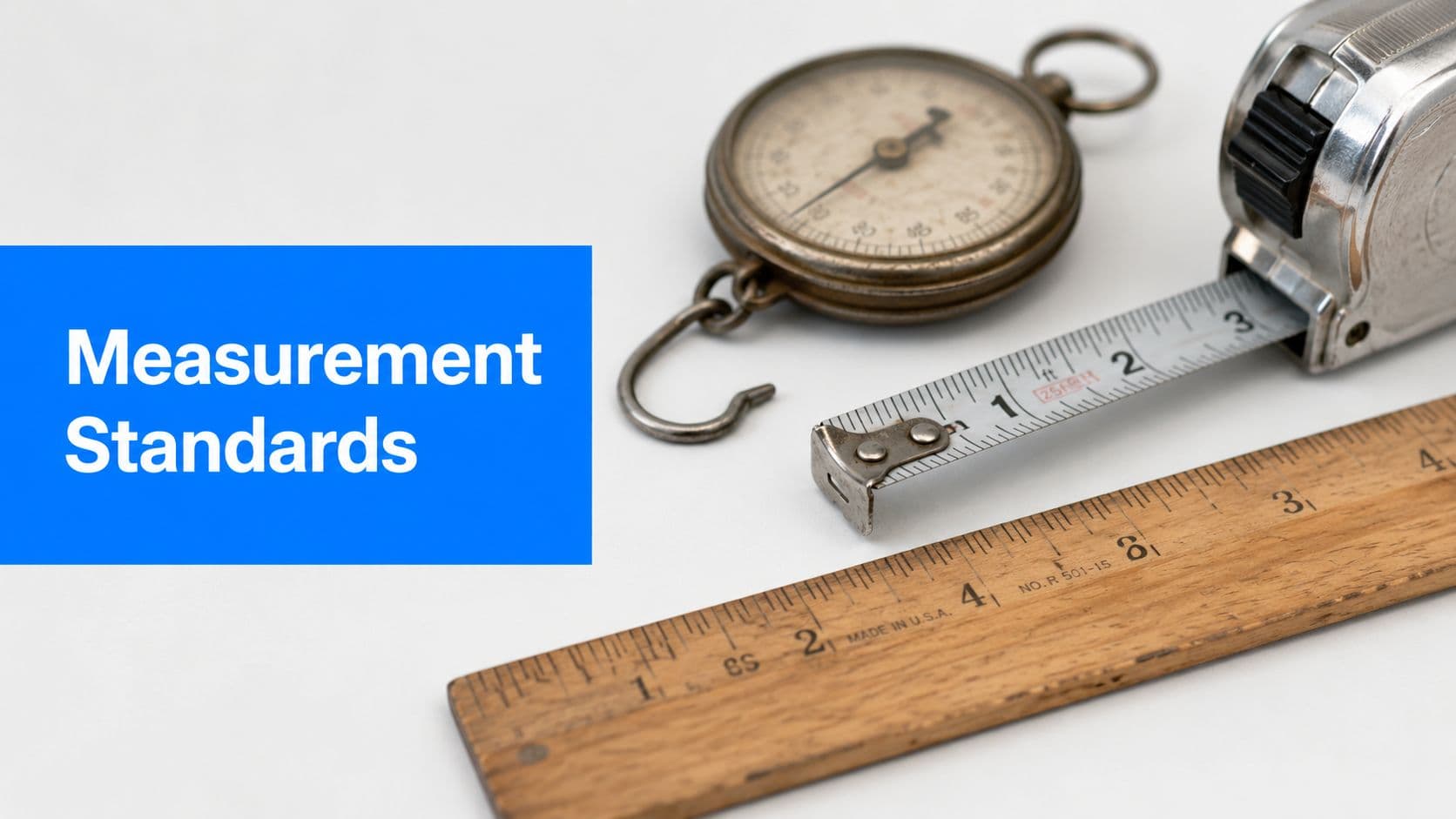
You're probably staring at a house full of things that all need to be listed, photographed, priced, and moved. The easy temptation is to focus on the obvious jobs first: sorting valuables, choosing pickup dates, and writing descriptions that sound appealing.
But one of the biggest problems in an estate sale usually starts with something much smaller. A bad measurement. One missing dimension. One buyer who assumes a cabinet is shallower than it is, or lighter than it looks, or small enough to fit in the back of an SUV.
That's where measurement standards stop being a technical phrase and start becoming a money-saving habit. In an online estate sale, accurate dimensions aren't busywork. They're part of risk control, buyer communication, and profit protection.
The Hidden Risk in Every Estate Sale Listing
Pickup day is where weak listings get exposed.
A buyer wins a handsome antique armoire. The photos looked great. The bidding was strong. Then they arrive with a rented van, a narrow doorway at home, and a tape measure in hand. The piece is deeper than they expected. It won't fit through the door without removing trim or doors. Now everyone is frustrated. The buyer feels misled, the seller loses time, and the item that should've been gone is still sitting in the house.

That kind of mess doesn't usually come from dishonesty. It comes from loose habits. Sellers eyeball a dresser. They list a rug as “large.” They measure the top of a table but forget the widest point at the legs. Buyers fill in the blanks themselves, and buyers are often wrong.
Where sellers get into trouble
The most common mistakes aren't complicated:
- Skipping depth: Furniture buyers often care about depth as much as width.
- Measuring only the main body: Handles, finials, curved backs, and overhanging tops change fit.
- Using inconsistent units: One listing in inches, another in feet, another in centimeters creates confusion.
- Leaving out weight: Some buyers need to know whether two people can carry an item safely.
A listing doesn't need engineering-level detail. It does need the details that affect transport, placement, and pickup.
Buyers can forgive a worn corner they can see in photos. They're less forgiving when they find out an item won't fit where they planned to put it.
Why this matters more online
In a live, in-person sale, a buyer can bring a tape measure and inspect the piece before handing over money. Online, they can't. They bid based on what you provide.
That's why good measurement standards matter so much in estate sale work. They turn vague listings into dependable ones. They reduce the chance of awkward pickup-day negotiations. They also signal that the rest of your catalog is likely organized the same way.
When sellers take measurements seriously, they look more professional even if this is their first sale. That changes how buyers behave. They bid with fewer doubts, ask fewer repetitive questions, and arrive better prepared.
Building Buyer Trust with Standardized Measurements
Remote buyers don't just evaluate the item. They evaluate the seller.
If your listing says “nice sideboard, good condition,” a buyer has to do too much guessing. If it says the overall dimensions clearly, names the important details, and presents everything in the same format as your other listings, the buyer relaxes. The item feels more real. The seller feels more competent.

Standardized measurements reduce hesitation
A strong listing works like a product spec sheet. It answers the practical questions before the buyer has to ask them.
That matters because uncertainty slows bidding. A buyer who isn't sure whether a cabinet is too tall for a hallway, too wide for a wall, or too heavy for pickup often does one of two things. They either skip the listing, or they bid lower to protect themselves.
When the measurements are clear, that hesitation drops. The buyer can compare your item against their room, their vehicle, and their pickup plan.
Traceability is the trust piece
The core principle of measurement standards is traceability, which means data is correct and comparable across different places and times, according to this technical explanation of traceability and calibration. For an estate sale seller, that translates into something simple. A buyer in another city can trust that the dimensions in the listing mean the same thing they would mean in their own garage, hallway, or living room.
That's the quiet power of consistency. If every listing follows the same format and the same measuring method, buyers stop wondering whether one width was taken at the top and another at the base. They start trusting the catalog.
Practical rule: Every missing measurement forces the buyer to assume risk. Every clear measurement removes one reason not to bid.
What works and what doesn't
Here's the difference in plain terms:
| Listing habit | What happens |
|---|---|
| Consistent dimension format | Buyers can scan quickly and compare items without confusion |
| Clear overall size plus notable protrusions | Fewer surprises at pickup |
| Units used the same way across listings | Less back-and-forth messaging |
| Vague size words like “small,” “big,” or “oversized” | More buyer assumptions and more disputes |
| Partial measurements only | Buyers hesitate or bid defensively |
Sellers sometimes think measurements are an administrative detail. They're not. They're part of marketing. A chair with exact dimensions is easier to buy than a chair that only “looks standard.” A framed print with image size and frame size feels more transparent than one with a single rough estimate.
That's why standardized measurements often separate smooth sales from chaotic ones. They don't just describe the object. They show the buyer you've done the work.
Essential Dimensions and Units for Your Items
Most estate sale measurement mistakes happen because sellers don't use a simple, repeatable vocabulary. Once you lock that in, the work gets faster.
The basic dimensions buyers expect
For most items, these are the dimensions that matter:
- Length is the longest side, usually measured end to end.
- Width is the side-to-side measurement across the front or broadest face.
- Height runs from the floor or base to the highest point.
- Depth is front to back.
- Diameter is the distance across the center of a round item.
For a dresser, buyers usually want width, depth, and height. For a rug, length and width are enough unless the shape is unusual. For a round pedestal table, diameter and height usually tell the story better than length and width.
Use one naming system and stick to it
Confusion starts when a seller switches terms mid-catalog. One listing says width first. Another says depth first. A third says “length” for a sofa when the buyer expects “width.” Pick a format and stay with it.
A practical standard for estate sales is this:
| Item type | Best order |
|---|---|
| Furniture | Width x Depth x Height |
| Art and mirrors | Width x Height |
| Rugs and textiles | Length x Width |
| Round tables and trays | Diameter x Height |
| Lamps | Base width or diameter, then overall height |
That kind of consistency helps buyers compare quickly. It also helps you avoid your own cataloging errors.
Imperial or metric
The first international measurement standards were created to reduce trade confusion, and the metre itself was first defined as exactly 1/10,000,000th of the distance from the equator to the North Pole according to this history of global measurement standards. That same idea still applies in estate sales. A shared system makes transactions smoother.
In practice, many estate sellers work in inches and feet because that's what local buyers expect for furniture and room planning. Metric can also work well, especially if you're used to centimeters and meters. What matters most is consistency.
Use one system across your listings. If you want to add a second unit for convenience, that's fine, but don't mix formats from item to item.
A few item-specific choices matter
Different categories need different details:
- Furniture: Always include overall dimensions, not just the top surface.
- Framed art: Measure the full frame. If the image area matters, add it separately.
- Rugs: Measure flat and note shape if it's not rectangular.
- Boxes and shipping materials: Match the item to a realistic packing option. If you need sturdy options for heavier household goods, these heavy duty packing boxes are a useful example of the kind of packaging dimensions you should compare against before listing.
- Ship-friendly items: If shipping is part of your plan, estimate size and weight early so you can avoid underpricing. A practical reference is this guide to shipping cost calculation.
A listing gets easier to trust when the measurements match the way a buyer thinks about using, moving, or packing the item.
Once you settle on your unit system and your dimension order, the rest becomes routine. That's when measuring stops feeling slow and starts feeling like part of your workflow.
Your Step-by-Step Guide to Measuring Accurately
The right process beats a good memory every time. If you rely on quick guesses while moving through a house, you'll eventually transpose numbers, skip a protruding edge, or forget which notebook scribble belonged to which item.
Start with the same tools every time. A metal retractable tape measure is the one tool I wouldn't skip. Soft sewing tapes are fine for fabric and curved surfaces, but they can sag on furniture and throw you off. Keep a notepad or digital inventory sheet beside you, and write measurements down immediately.
The measuring routine that prevents errors
Use this sequence for almost everything:
- Place the item in a stable position. Don't measure a chair while it's tilted on carpet or a lamp while the shade is crooked.
- Identify the widest, deepest, and tallest points. Ignore the temptation to measure only the main body.
- Measure twice. The first reading tells you the number. The second confirms you didn't hook the tape on the wrong edge.
- Record the result before moving on. Don't trust yourself to remember it through the next three items.
- Photograph the item after measuring if needed. That helps you match your notes later.
This short video gives a useful visual refresher on tape-measure basics before you start working room by room.
How to measure common estate sale items
Here's where sellers often need item-specific judgment.
Furniture
For sofas, dressers, cabinets, and tables, capture the overall size first. That means the farthest left to farthest right point, the deepest front-to-back point, and the tallest point.
Then add any detail that changes usability:
- Sofas and chairs: Seat height and seat depth can help buyers judge comfort.
- Dining tables: Note if leaves are included and whether your measurement is with or without them.
- Cabinets and hutches: Include removable top sections only if you clearly label them.
Artwork and mirrors
Measure the outside edge of the frame. That's the number buyers need for wall placement. If the visible art area matters, list it separately as “image area” or “sight area.”
Lamps
Buyers care about overall height, but they also need to know whether the base is wide enough for a side table or whether the shade overhangs the base significantly. Measure the widest part of the base, then the full height to the top.
Rugs and textiles
Lay rugs flat. Measure length and width at the outer edges. If a rug is handmade or slightly irregular, say so plainly rather than pretending it's perfectly square.
Why standardization matters in practice
Ancient builders in the Indus Valley used uniform bricks with a precise 4:2:1 ratio, and rulers divided into exactly ten equal parts, according to this history of standardized measurement in trade and construction. The reason was practical. Uniform standards made structures sound and trade less confusing.
Your estate sale catalog works the same way. When every item is measured with the same method, the catalog becomes easier to trust and easier to manage.
Measure the item the way a stranger would need to understand it, not the way you already know it from walking past it every day.
Keep the records tied to the item
Many DIY sellers lose control when they measure carefully, then store the notes loosely.
A simple fix is to pair each item with an inventory line as you go. If you need a framework for that, this home inventory list template gives you a clean starting point for keeping descriptions, photos, and dimensions tied together.
Good measurement standards aren't about perfection. They're about repeatable accuracy. If you can measure the same way every time, your listings improve fast and your pickup day gets easier.
Crafting Perfect Listings on DIYAuctions
A measurement only helps if the buyer can read it easily.
Many estate sale listings fail here. The seller did the work, but buried the dimensions inside a long paragraph, used inconsistent abbreviations, or mixed condition notes with sizing in a way that forces the buyer to hunt for the important details.

A format buyers can scan fast
Use a plain structure like this in the description:
- Overall dimensions 72" W x 24" D x 36" H
- Material Oak veneer with brass pulls
- Condition Surface wear, one ring mark on top, drawers slide properly
- Pickup note Heavy. Bring two people for removal.
That format works because the eye finds the dimensions first. Then the buyer sees material, condition, and handling notes in order.
Before and after
Here's the kind of vague listing that causes trouble:
Big comfy couch, nice neutral color, solid condition, great for family room.
Now compare that with a listing that gives a buyer what they need:
Upholstered sofa in beige fabric. Overall dimensions 84" W x 38" D x 34" H. Seat depth approximately 22". Condition shows light wear to armrests and one small spot on rear corner. Bring adequate vehicle space for pickup.
The second listing doesn't sound flashy. It sounds dependable. That's better.
Useful habits for awkward or irregular items
Not every item fits a neat rectangle. For those pieces, clarity matters more than elegance.
| Item | Better listing approach |
|---|---|
| Curio cabinet with crown detail | Give overall height including crown |
| Drop-leaf table | List open and closed dimensions separately |
| Large sculpture | State tallest point, widest point, and base size |
| Nested tables | List each table if practical, or state the largest and note nesting set |
A scale photo also helps. A common household object beside the item can give buyers an immediate visual reference, especially for decor, ceramics, and tabletop lots. It shouldn't replace real measurements, but it supports them.
If a buyer has to message you to ask for the most basic size information, the listing wasn't finished.
Keep your wording clean
Don't write “about,” “roughly,” or “seems to be” unless the item can't be measured more precisely because of shape or flexibility. Soft language weakens confidence.
If you're comparing platforms or deciding where certain items belong, it can also help to explore eBay selling with The Bin Finder for a broader view of how item type, fees, and buyer expectations change from one marketplace to another. Estate sale sellers often move between channels, and listing discipline matters on all of them.
For a stronger starting point when writing descriptions, use this guide to an estate sale listing. The cleaner your listing structure is, the easier it becomes to repeat across dozens or hundreds of items.
Measure with Care Sell with Confidence
The sellers who look professional aren't always the ones with the fanciest photos or the rarest inventory. Often, they're the ones who remove doubt.
That's what measurement standards do in an estate sale. They reduce confusion, lower the chance of pickup problems, and help buyers bid with more confidence because they know what they're committing to. A well-measured listing also saves you from a steady stream of preventable questions.
The payoff isn't abstract. It shows up in smoother pickups, fewer disputes, and a catalog that feels organized from the first item to the last. It also helps you make better decisions about transport, staging, and packaging while you're still building the sale.
If you're preparing a sale now, start with the next ten items. Measure them carefully. Record dimensions in one consistent format. Write listings that answer the buyer's practical questions before they ask. Then carry that standard through the rest of the house.
That small discipline changes the whole tone of a sale.
If you want a simple way to put these habits into action, create your next sale on DIYAuctions, where you can organize listings, upload clear item details, and run a professional estate sale with more control over the process and your profit.
More guides in Estate Sale Basics
July 28, 2026
Revenue Reporting for Estate Sales and Auctions
Learn revenue reporting essentials for estate sales and auctions. Discover key metrics, templates, and best practices to simplify tracking and compliance.
Read guideJuly 26, 2026
Stamp Collection Valuation: A Practical Step-by-Step Guide
Stamp collection valuation made simple. Learn how to identify, grade, price, and sell your stamps with confidence for estate sales or consignment.
Read guideJuly 23, 2026
Estate Sales Brick NJ: Your 2026 Guide to Success
Planning your estate sales brick nj? Our guide covers permits, pricing, marketing, & running a safe sale with DIYAuctions.
Read guideGet the estate sale pricing guide
Enter your email for pricing ranges, planning notes, and a clearer path to launch.