National Cash Register Model 720: A Collector's Guide
How to identify, date and value a National Cash Register Model 720, fix common mechanical faults, and choose the best way to sell it.
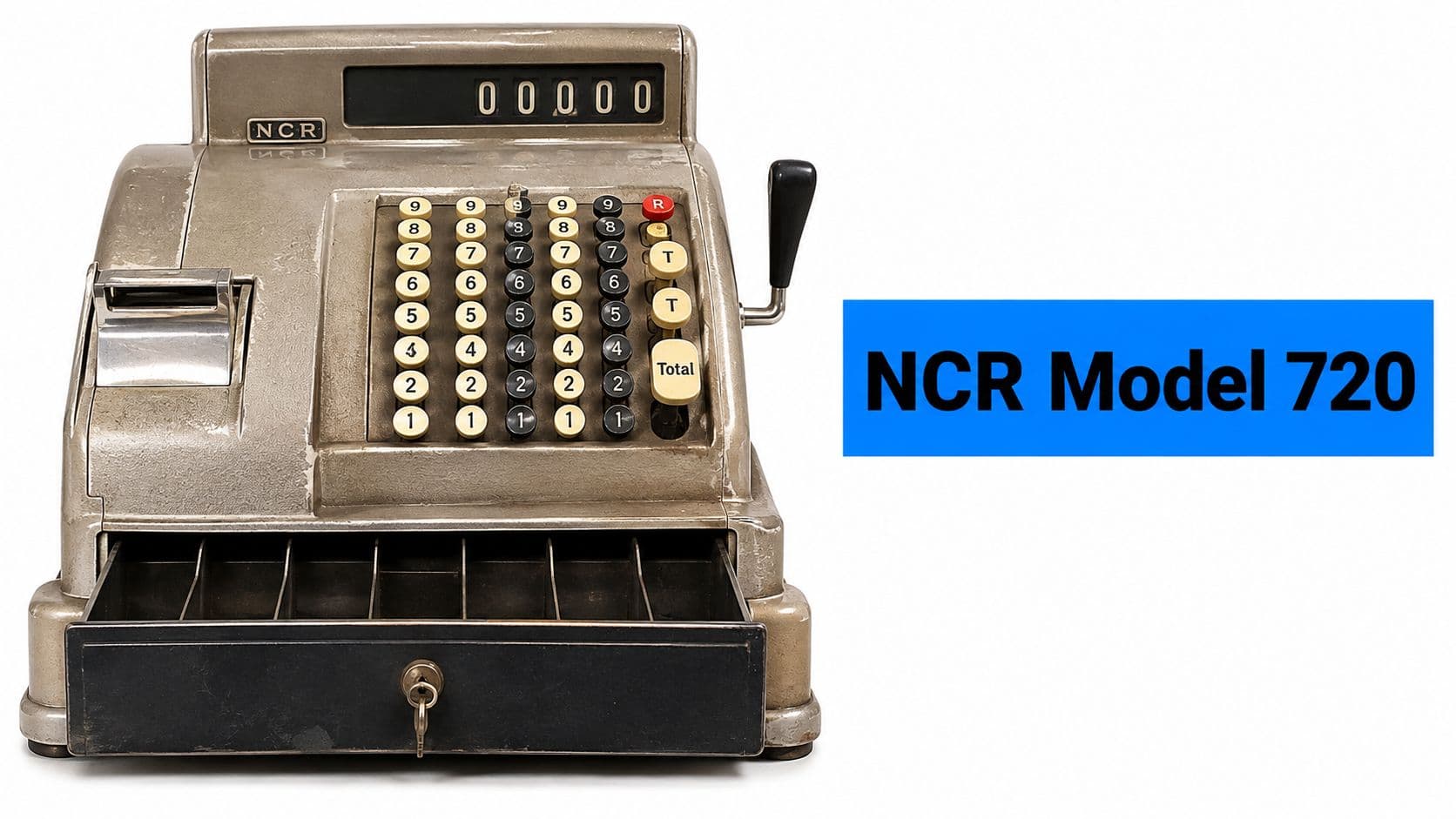
You find a heavy register in a garage, a tag says 720, and someone asks what it's worth before you've even checked if the drawer opens. That label is a starting point, not proof, and the National Cash Register Model 720 rewards a slower check of its physical evidence first.
Spot a Genuine Model 720 by Its Markings
Is this really a Model 720? Don't answer from a seller's tag alone. Check six places in the order you'd walk around the machine, because one matching feature proves little until the others agree.
| Feature | Where to look | What it confirms |
|---|---|---|
| Serial plate | Front or side of the case, and under the drawer | Model and serial number; a missing or replaced plate makes dating uncertain |
| Key plate and key layout | Top of the keyboard and key assembly | Key arrangement that matches the Model 720 configuration in documentation |
| Cash drawer | Inside the drawer and at its release mechanism | Original drawer, dividers and release; a replaced drawer lowers confidence |
| Patent markings | Cast into the case or on the mechanism | Patent dates consistent with NCR design lineage; check against the serial record |
| Case materials and finish | Overall body and trim | Metal and wood construction; stripped or repainted finish weakens attribution |
| Internal mechanism | Through the top or an access panel | Number wheels, adders and carry parts that look original and match the design |
A model number doesn't settle the year. A plate can be moved, replaced, or read wrong, and a later finish can hide the clues underneath it.
Say a seller copies "720" from a shiny replacement plate, then a buyer notices the key layout doesn't match the documentation for that configuration. The price conversation collapses, not because the machine is worthless, but because the identification was rushed.
The same habit helps with other collectibles. Guides on how to verify vintage watch authenticity stress checking markings in combination, and that cross-checking mindset applies here too.
Your ten-minute checklist
- Photograph each location: Shoot the plate, keys, drawer, patent marks, case, and mechanism in daylight.
- Measure the basics: Record dimensions, key count, and weight, since you shouldn't assume a published specification fits your variant, then compare them with any documentation you find.
- Note what's not original: Write down anything missing, replaced, or refinished before you describe it to anyone.
If those notes are messy, pause. A general primer on how to identify valuable antiques can help you sort documented facts from family stories before you go further.
How to Date a Model 720 From Its Serial Number
Dating works when you treat the serial as evidence to test, not a label to copy. Reliable attribution requires comparing the maker plate, serial number, case materials, mechanism, patent dates, and restoration evidence, because missing or replaced plates make dating uncertain, as the Antique Identifier cash register identification guide explains.
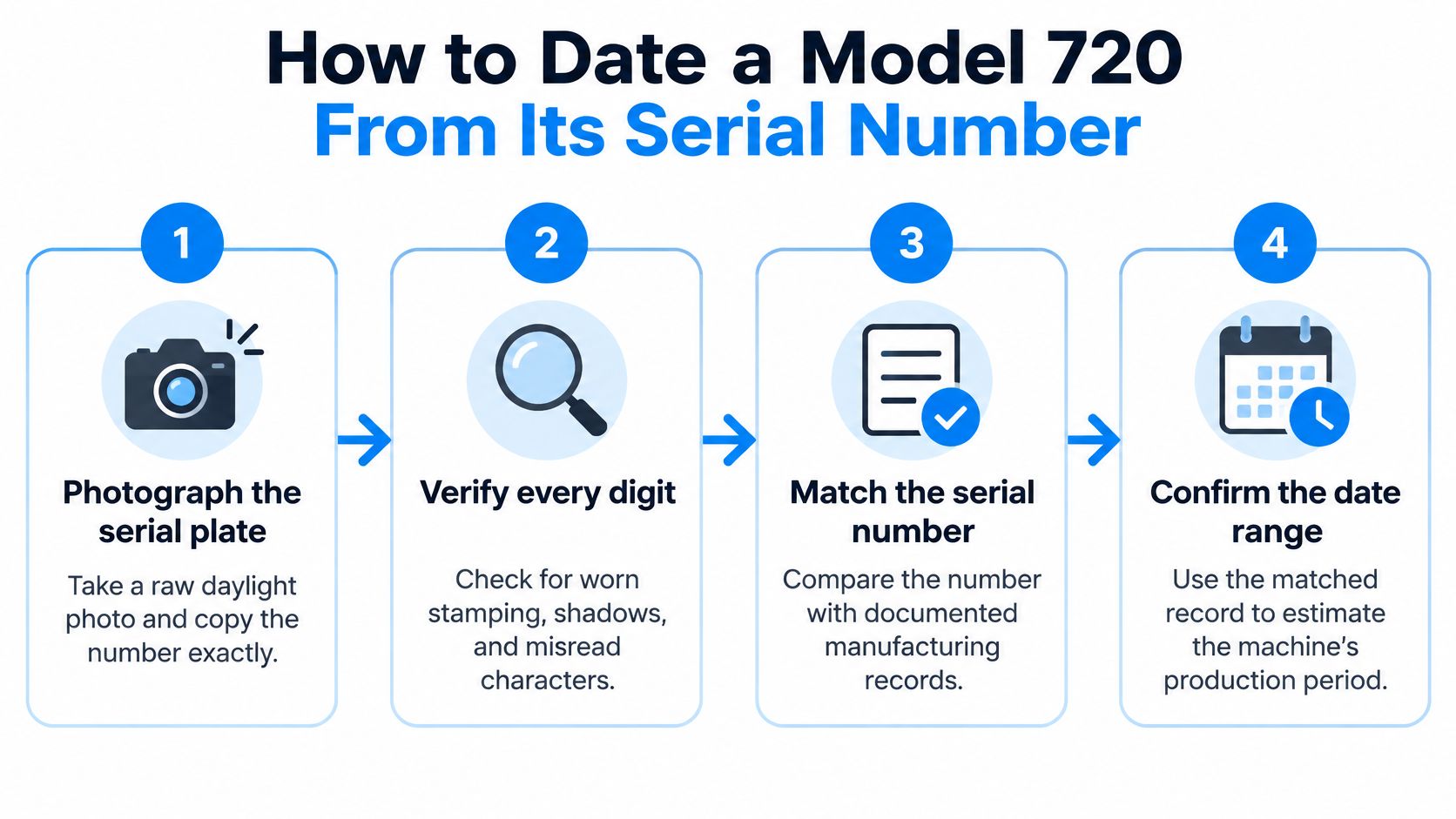
Work through these steps in order
- Photograph the serial plate in raw daylight. Transcribe every digit exactly as stamped. A misread character sends every later comparison the wrong way, so zoom in and read it twice.
- Compare the serial with a published NCR serial reference or collector database. Treat a range match as a lead, not proof. It tells you where to look next, not what to print in a listing.
- Read any patent dates on the case or mechanism. Check that they fit a period when NCR used that design. A single patent date can't date the whole machine, since castings and parts could remain in use.
- Inspect the plate itself. Look for fresh rivet marks, scratched screw heads, or paint lines around the edges. Those clues suggest the plate was moved or replaced, which weakens the number's value.
- Compare wear with the suggested age. Heavy wear on keys, drawer runners, and mechanism on a supposedly young machine is a warning sign. So is a pristine mechanism paired with a battered case.
- Cross-check at least two independent clues before writing a year. Serial range plus patent dates, or serial plus matching mechanism, gives you a defensible estimate. One clue alone doesn't.
- If the plate is missing, say so plainly. Write "model attributed, year estimated" in the listing. Buyers respect that wording more than a confident year you can't support.
Practical rule: A confident date needs agreeing evidence. An estimate needs honest wording. Don't dress one up as the other.
That distinction matters to buyers. A confident date lets a collector place the National Cash Register Model 720 in a serial range and compare it with similar machines. An estimate signals the machine may still be genuine and interesting, but its history has a gap the price should reflect.
Common slips are predictable. Sellers read a serial from a replacement plate without checking its fasteners. Others trust one patent date and ignore mismatched keys. Both errors create false expectations, and both are avoidable with photos taken before any cleaning starts.
Where the Model 720 Fits in NCR's History
Ritty's saloon in Ohio lost money to pilfering clerks. That daily leak led James Jacob Ritty to design the first cash register, and his 1879 patent, U.S. Patent No. 221,360, started the lineage the National Cash Register Model 720 belongs to, according to the Library of Congress guide to cash registers.
Investors bought the invention. It moved through the National Manufacturing Company, then John Henry Patterson and Frank Jefferson Patterson reorganized it as the National Cash Register Company. NCR added paper rolls for printed receipts and later added electric motors. Each addition made the machine a stronger check on cash handling.
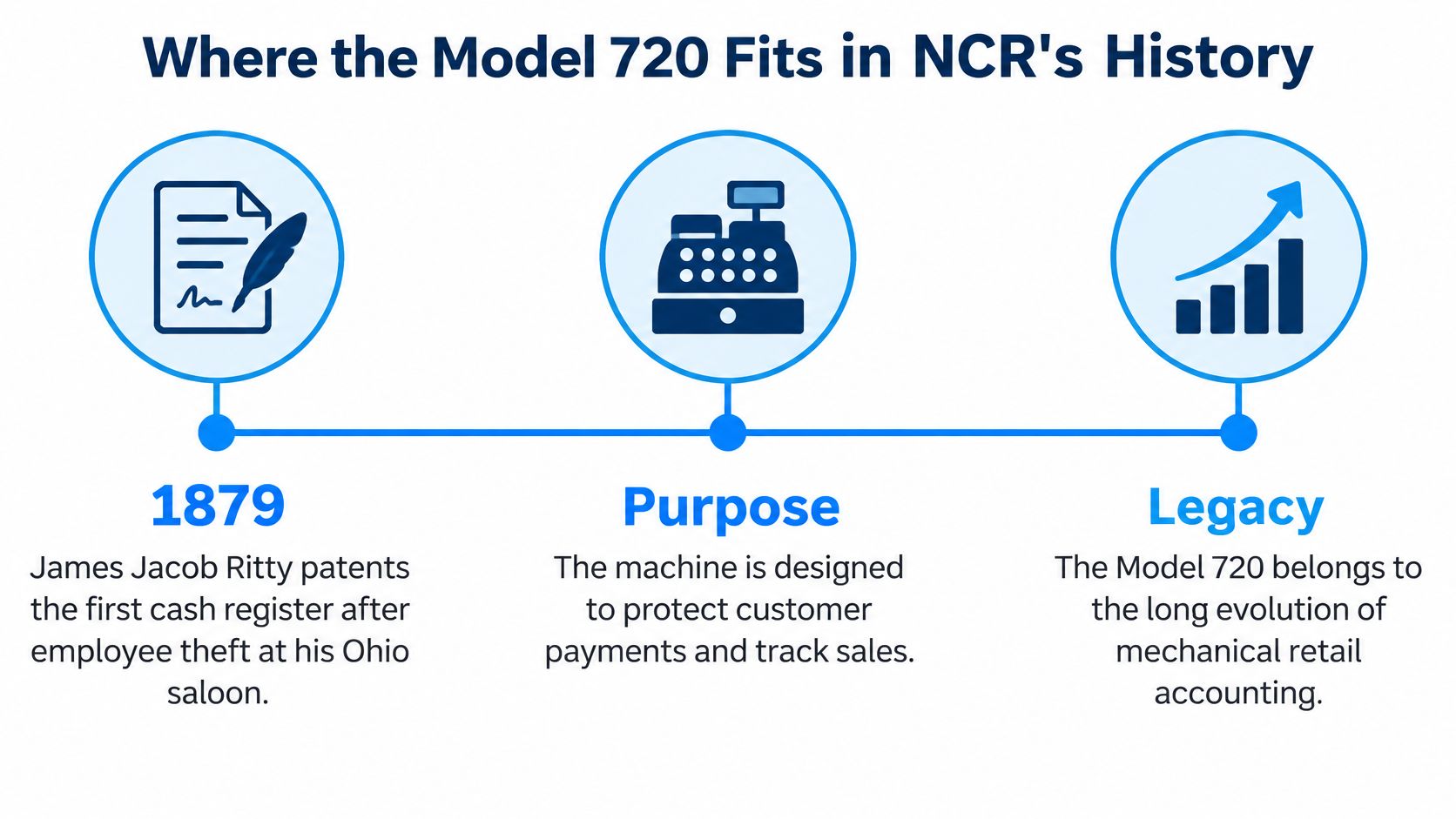
Production grew fast across the 1880s and 1890s, and kept growing into the early 1900s as NCR sold registers in large volume to ordinary shops. Those machines sat in stores, cafés, and other merchants' premises. They worked long hours as cash containers, receipt printers, and employee controls.
That working history is what gives a surviving 720 its meaning. Collectors who compare CRT and early LCD screens pay close attention to transitional designs, and register buyers do the same with mechanism changes, case styles, and surviving paperwork. For the 720, documented records and matching original parts shape value far more than a polished case. A complete audit trail of keys, counters, drawer, and receipts proves how the tool earned its keep.
How the Mechanism Works and Why It Matters
A National Cash Register Model 720 works like an old car odometer. Press a key and pivots and linkages turn a number wheel. When that wheel passes nine, a carry part pushes the next wheel forward by one.
NCR mechanical designs used keyed input to drive accumulating counters through number wheels, carry mechanisms, and a cash drawer. Each sale therefore left three traces at once. Cash went into a locked drawer, wheels held the running count, and a paper roll could preserve the entry for later checking.
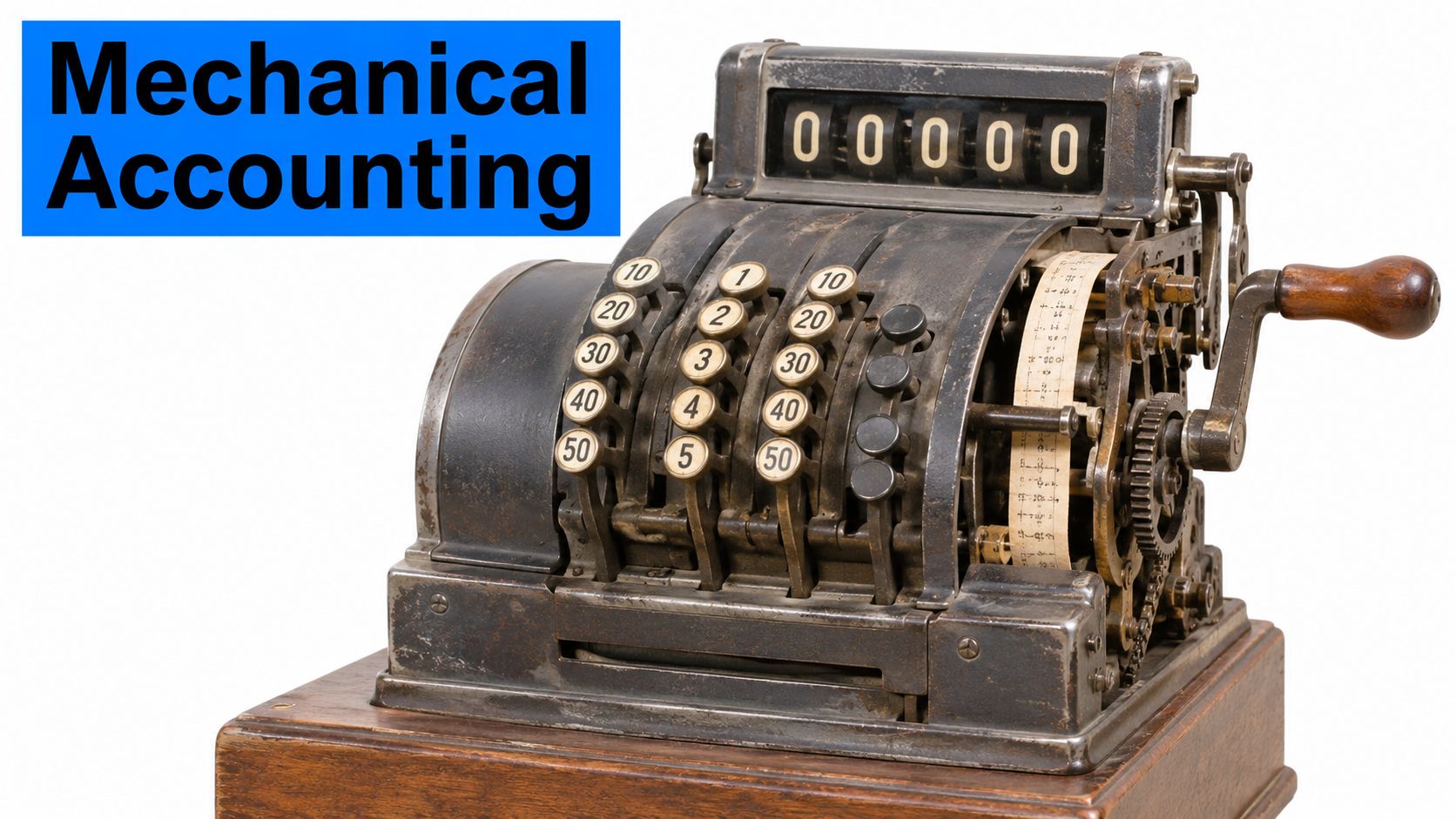
Two ways of adding
Early NCR designs used two different adding arrangements. Detail adders kept separate totals for individual keys. Total adders combined sales into one consolidated counter.
A detail adder layout allowed department or denomination level accounting. A shopkeeper could see which keys produced which totals. A total adder gave one running figure. It was simpler to read and less revealing about the mix of sales.
Model 720 variants can differ, so confirm the arrangement from serial number, case markings, and service documentation. Two machines with the same name in a listing may not share the same internal configuration.
Why timing is the real test
Accuracy depends on mechanical timing. Worn key pivots, hardened lubricant, misaligned gears, or weak springs cause missed registration, incorrect carry, or a drawer that fails to release.
Test it the way a clerk would. Enter repeated low, midrange, and carry-over amounts. Record whether the totalizer advances consistently each time. A machine that registers a small sale but fails when a wheel should carry into the next column has shown exactly where to look.
A working mechanism proves the machine works today. It does not prove how it was used decades ago.
A register records what was entered. It cannot reconstruct a full sales history on demand. Describe the mechanism as a tested feature, not as evidence of a famous shop or a busy past without documentation.
Common Faults and How to Fix Them
Most faults on a National Cash Register Model 720 aren't mysterious. They're wear, dried lubricant, and parts slightly out of alignment, showing up as a key that doesn't register or a drawer that stays shut.
| Symptom | Likely cause | First fix |
|---|---|---|
| Missed registration on repeated keys | Worn key pivots or dry linkages | Clean pivots and add a light coat of machine oil |
| Carry errors, such as a tens digit not advancing | Misaligned carry parts or worn carry pawls | Check alignment by hand and clean the carry mechanism without bending it |
| Totaliser stalls or skips | Hardened lubricant or gummed gears | Remove old lubricant with a dry cloth, then lubricate lightly |
| Drawer will not release | Misaligned latch or weak release spring | Check the latch path and the spring tension before adjusting |
| Flaking plating or lifting decals | Aggressive polishing or solvent use in the past | Stop cleaning and consult a specialist conservator |
| Cracked or broken casting | Impact damage or age-related fatigue | Refer to a specialist before any repair that replaces original parts |
Start with the least invasive step
Brush out dust with a soft brush, vacuum the drawer with a nozzle held away from loose parts, and wipe keys with a dry cloth. That alone often frees a sluggish linkage, and it can't damage a finish.
Next, lubricate only the pivots and bearings that need it. Use light machine oil in small amounts, applied with a needle oiler or a toothpick. Don't flood the gears, because excess oil collects dust and gums up again.
Work one key at a time and test as you go. If a pivot frees up, stop there. Chasing a perfect feel across the whole keyboard in one session is how beginners bend linkages they didn't need to touch.
Protect the finish while you work
Avoid aggressive polishing and strong solvents on plating, paint, and decals. They can strip the original finish, and that finish is part of the evidence for what the machine is. Shine doesn't restore value once original surfaces are gone.
Prefer reversible steps. Photograph each area before and after, keep any part you remove in a labeled bag, and write down what you did. A buyer can accept honest cleaning. Undisclosed refinishing is harder to forgive.
Stop point: Flaking plating, cracked castings, a bent frame, or any repair that replaces original parts is specialist work, not a weekend experiment.
Timing helps you plan. Basic cleaning and lubrication usually take a day or two of short sessions. A mechanism that needs parts made or sourced can take weeks, so don't promise a sale date until you've tested it.
Test after every repair
- Low amounts: Enter the same small sale several times and check it registers each time.
- Carry-over amounts: Enter figures that force a wheel past nine and confirm the next digit advances.
- Drawer release: Confirm the drawer opens cleanly without forcing the latch.
If the fault moves or worsens, you've learned something useful. Note it and stop, rather than adjusting a second part to compensate for the first.
What a Model 720 Is Worth and What Moves the Price
A plain metal register sets the floor, and the floor is low. A specialist valuation page published in 2023 stated that plain metal NCR machines, including Model 720, are generally worth US$100 or less. Read that as an audit starting point for an ordinary finish in ordinary condition, not as a final offer for every machine.
Asking prices run higher because hope is not a transaction. A Craigslist listing published in 2026 offered an antique National Cash Register Model 720 for US$195. That figure records what one seller requested in Chicago. It does not record what a buyer paid, and mixing those two numbers is the most common pricing error with this model.
| Scenario | Price reference | Notes |
|---|---|---|
| Plain metal NCR machine, including Model 720 | US$100 or less (specialist valuation, 2023) | General anchor for plain metal examples |
| Antique Model 720 listed for sale in Chicago | US$195 asking price (2026 listing) | Asking price only, not a sold price |
| Working, complete, original plating and documented serial | Near the specialist anchor, higher within that band for completeness and function | Use only recent sold results in the same serial range and condition |
| Non-working or restored with replaced parts | Lower in that band than a comparable original, working example | Replacement parts and refinishing reduce collector interest |
Price follows evidence. Think of the register as a ledger where each marking either confirms the entry or leaves it open.
Completeness confirms the most. An original drawer with dividers and period accessories removes the buyer's largest uncertainty. Documented serial information comes next. Clear photos plus a careful transcription let a collector check the description against the machine itself.
Original surfaces carry weight. Intact plating and paint show the case was not stripped to create shine, and honest wear reads as use history rather than damage. A mechanism that registers, carries past nine, and releases the drawer on repeated tests supports the description with action, not adjectives.
The deductions are physical too. Reproduction parts, stripped finishes, and frozen keys lower interest because each one replaces evidence with guesswork. Broken castings lower it further, since repair can mean loss of original metal. A missing serial plate leaves the production date uncertain, so buyers price in that risk.
Work from sold results in the same serial range and condition, adjust in small steps for completeness, function, and finish, and state the basis plainly when no close comparable exists. A broader antique price guide online can help you judge whether a comparable matches. With the National Cash Register Model 720, condition and documentation move the price more than the model name does.
Choose How to Sell Your Model 720
Once identification and value are settled, you're choosing between speed, effort, and return. There's no single right route for a National Cash Register Model 720, only a route that fits how much time you have.
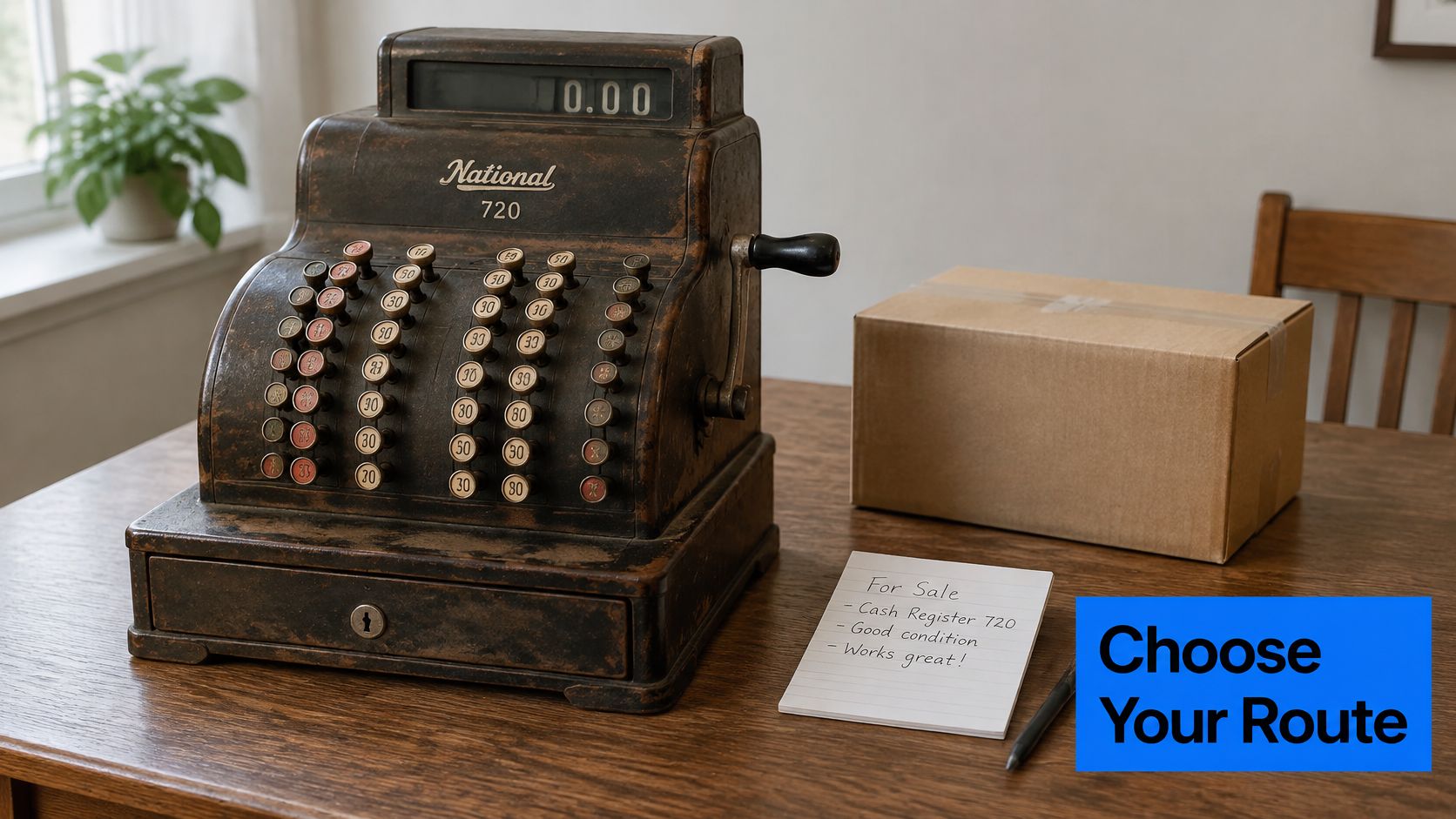
- Local antiques dealer: Fast and simple, with no shipping worries, but the offer will usually be the lowest because the dealer needs a margin.
- Specialist collector sale: Slower, and you'll answer detailed questions, but the right buyer pays for documented originality.
- General estate sale: Convenient when the register is one item among many, though it may sit beside kitchenware and attract casual offers.
- Online estate auction: Wider reach while you keep control of how the machine is presented and collected.
How the online route works in practice
With DIYAuctions, the seller decides what stays, what each item is worth, and when pickup happens. You set the starting bid, decide what's listed, and choose the pickup timing rather than handing those calls to someone else.
Don't guess at costs. Check the platform's current fee and payment terms directly before listing, so your expected return is based on current terms, not memory. That one check prevents an avoidable surprise after the sale.
Watching a register being handled and tested can also sharpen your listing, since you'll notice which details buyers ask to see.
Write a listing buyers can trust
Use the serial number, dimensions, documented condition, and the photos from your checklist. Set the starting bid from sold comparables, and disclose repairs or replaced parts in plain language.
Say what works and what doesn't. "Registers and releases, carry slips on repeated entries" tells a collector more than "works great," and it protects you from a dispute later.
If you're weighing channels, a guide to the best way to sell antiques online can help you compare effort against likely return before you commit.
A checklist for this week
- Finish your photos: Plate, keys, drawer, mechanism, and any damage, all in daylight.
- Write the honest summary: Model attribution, serial, condition, and known faults in a few lines.
- Pick your price basis: One or two sold comparables, noted with dates.
- Choose your route: Dealer for speed, specialist or online auction for return.
Take ten minutes today to photograph your serial plate, drawer, and keys, then write down what's original and what isn't. Once that record exists, create your DIYAuctions listing with a starting bid based on sold comparables, disclose every fault you've found, and set a pickup time that suits you.
Get the estate sale pricing guide
Enter your email for pricing ranges, planning notes, and a clearer path to launch.