Packing Help for Seniors A Guide to a Stress-Free Move
Get practical packing help for seniors with our guide to downsizing, organizing, and moving safely. Discover tips that make relocation a positive experience.

Long before you tape up a single box, a successful senior move starts with a compassionate, well-thought-out plan. It’s a process built on open family conversations, a timeline that prevents burnout, and having one person steer the ship as a dedicated 'move manager'.
The best approach is proactive, organized, and focused on emotional support, not just logistics.
Your Foundation For A Smooth Senior Relocation
Moving later in life is a major transition. You’re not just packing belongings; you’re navigating decades of memories while preparing for a new chapter. The key to doing this well is building a strong foundation of communication and careful planning long before moving day.
This first phase isn’t about lifting heavy boxes. It’s about creating a support system that respects everyone’s feelings and manages all the moving parts. The whole thing can feel overwhelming, but breaking it down into smaller pieces makes all the difference.
Creating A Realistic Moving Timeline
A rushed move is a stressful move, period. For seniors, we’ve found an 8 to 12-week timeline is ideal. It allows for a deliberate, unhurried pace, which helps prevent both physical exhaustion and emotional overload.
Everyone gets the breathing room they need to sort through belongings, make thoughtful decisions, and prepare without feeling like they’re up against a wall.

As you can see, dedicating that first month to planning and gentle downsizing sets a calm, controlled tone for the entire process.
To make this even easier to follow, we've broken it down into a simple, four-phase plan.
A Four-Phase Senior Moving Timeline
| Phase (Time Before Move) | Key Focus Areas | Essential Tasks |
|---|---|---|
| Phase 1 (8-12 weeks) | Planning & Downsizing | Create a moving binder, set a budget, start sorting one room at a time, and contact moving companies for estimates. |
| Phase 2 (4-8 weeks) | Logistics & Liquidation | Finalize movers, begin packing non-essentials, and start selling or donating items you're not keeping. |
| Phase 3 (2-4 weeks) | Final Preparations | Confirm all services, arrange for utility transfers, and pack the bulk of household items. |
| Phase 4 (1-2 weeks) | Move-Out & Settle-In | Pack an "essentials" box, do a final clean of the old home, and oversee the move itself. |
This structured approach helps ensure no detail gets missed while keeping stress levels low for everyone involved.
Assigning A Move Manager
Every big project needs a leader, and a senior move is no different. Designating one person as the 'move manager' is a game-changer—it centralizes communication and keeps decisions from getting messy. This role can be filled by a trusted family member or a hired professional, like a Certified Senior Move Manager.
The move manager handles things like:
- Coordinating with the moving company and other services.
- Keeping track of schedules, deadlines, and important papers.
- Serving as the main point of contact for everyone.
- Helping to mediate discussions to keep things moving forward.
Having this single point of leadership prevents confusion and makes sure important tasks don’t fall through the cracks. It also gives the senior a reliable go-to person for questions and support. For a broader look at organizing the move, this practical guide on how to move house smoothly is a great resource.
The Power Of A Moving Binder
One of the simplest yet most effective tools you can use is a moving binder. This can be a physical binder or a digital folder, but it becomes the command center for the entire relocation.
A moving binder is more than just a collection of papers; it's a source of control and clarity during a time that can feel chaotic. It empowers everyone involved by keeping essential information accessible and in one place.
Gather all critical paperwork here: estimates from movers, checklists, contact lists, floor plans for the new home, and any moving-related receipts. Having everything consolidated eliminates the stress of frantically searching for misplaced information. This kind of organization is a core part of our comprehensive guide to moving for seniors, which has even more tips for a successful transition.
The need for this kind of organized packing help for seniors is only growing. The global moving services market was valued at around USD 35.8 billion and is expected to hit USD 52.3 billion by 2033, a trend driven largely by an aging population. With 54.1 million Americans over 65, it’s clear this is a group that needs specialized support.
Downsizing with Dignity and Purpose
Sorting through a lifetime of possessions is easily the most emotional part of moving for a senior. This isn't just about clearing out a house; it's about honoring a life well-lived and all the memories tied to it. A gentle, practical strategy can turn what feels like an overwhelming task into a meaningful journey.
The trick is to focus on the memories, not just the objects. By reframing the process this way, you create space—both physically and emotionally—for the next chapter. It's all about letting go with grace while holding on to what truly matters.
Start Small to Build Momentum
The idea of sorting an entire home can feel paralyzing. So, don't even try. Start in the least emotionally charged room you can find, like the linen closet, a guest bathroom, or the laundry room.
Deciding what to do with old towels and half-used cleaning supplies is far easier than going through a box of family photos. These small, early wins build confidence and create momentum, making it much easier to tackle the more personal spaces later on.
The Four-Box Method: A Practical Approach
Sometimes, the most effective packing help comes down to a simple system. Grab four large boxes or bins and label them clearly: Keep, Gift, Sell, and Recycle/Donate.
As you go through an area, pick up an item and make a quick, decisive choice. Put it in one of the boxes. This method helps you avoid the common trap of just moving an item from one pile to another without ever actually making a decision.
- Keep: These are the non-negotiables—the essentials and cherished items that will be used and enjoyed in the new home.
- Gift: Think of heirlooms or sentimental pieces that specific family members or friends would absolutely love to have.
- Sell: These are valuables that are no longer needed but could provide a nice financial cushion for the move or other expenses.
- Recycle/Donate: Items that still have life in them can go to a good cause, while others can be properly disposed of.
As you sort, you’ll inevitably run into things that are just junk. For big furniture or old appliances, calling in professional junk removal services can save a lot of time and physical strain.
Honoring Memories, Not Just Objects
Letting go of a physical thing doesn't mean you have to let go of the memory attached to it. For many people, this realization is a major turning point in the downsizing journey.
The goal is to preserve the story, not the stuff. Technology gives us wonderful ways to do this. A photograph of a grandfather's favorite armchair, accompanied by a short written memory, can be just as powerful as the chair itself.
Consider creating a digital scrapbook or a physical photo album for the items you can't take. Snap a good photo and encourage your loved one to share the story behind it. This act of preservation validates the item's importance while making it much easier to part with. It turns what could be a moment of loss into a legacy-building activity.
This is also a great time for legacy conversations. If a grandchild shows interest in an old set of tools or a piece of jewelry, use it as a teaching moment. Talk about the history of the item and why it was special. This passes the story along with the object, making it even more valuable to the next generation.
Turning Clutter into Capital
Downsizing often uncovers valuable items that simply won't fit in the new space—antique furniture, collectibles, or a full set of fine china. Instead of just donating them, you can turn these assets into cash for the move or the next stage of life. It provides a real, positive outcome to an otherwise difficult process.

Modern platforms have made this easier than ever. Online auction sites give families the power to manage the sale of these goods themselves, ensuring they get the full value.
Platforms like DIYAuctions, for instance, provide a guided process for cataloging items and connecting with local buyers who are actively looking for what you have.
This approach gives you complete control over pricing and your timeline—a huge advantage over traditional estate sale companies that often take a large commission. For a deeper dive, our guide on downsizing for seniors is packed with strategies for making the most of your belongings. By handling the sale yourself, you can maximize your returns while making the whole liquidation process much simpler.
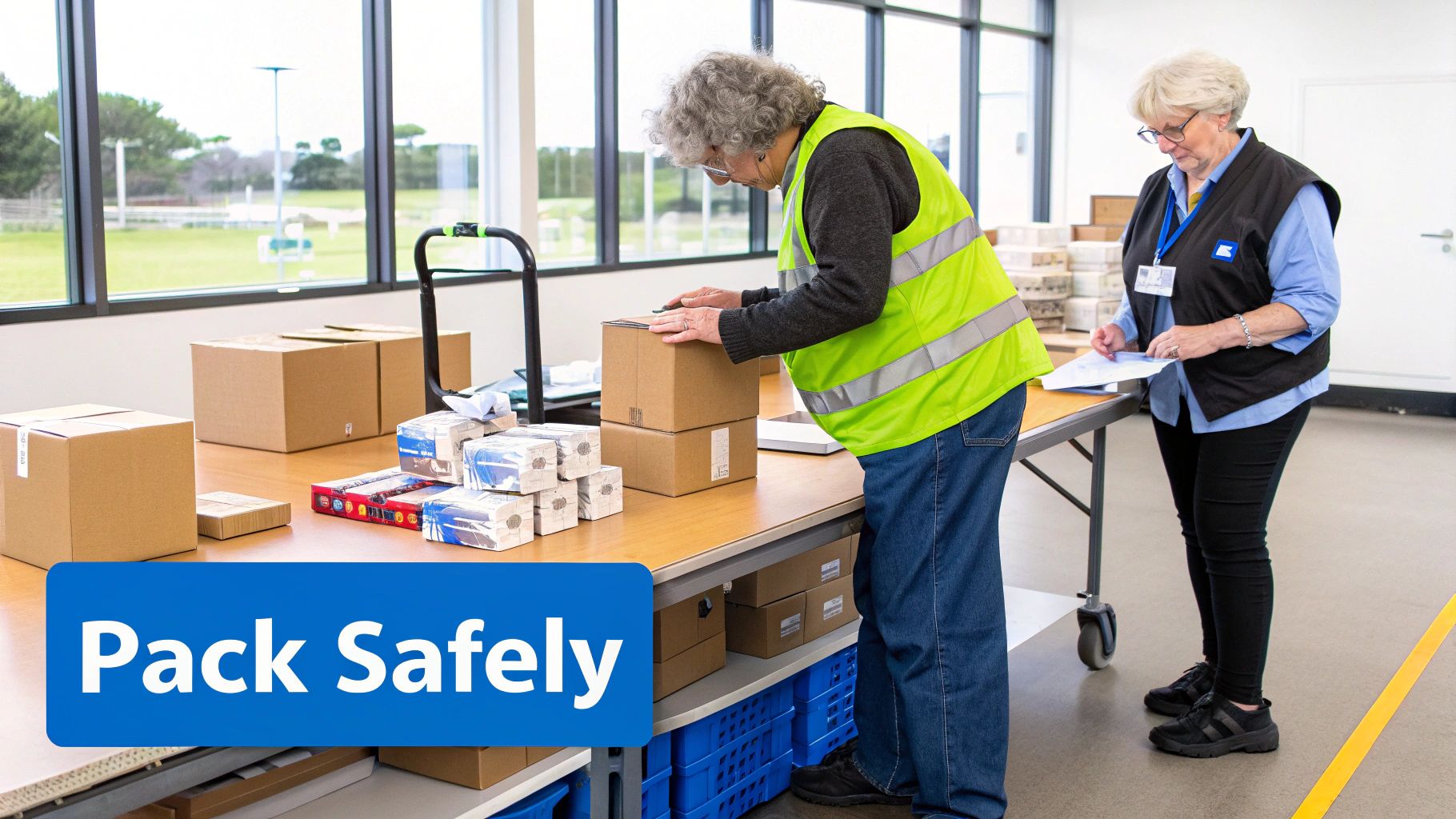
Packing Safely and Staying Organized
The real physical work—and risk—of any move begins with the first box you tape shut. For older adults, all that bending, lifting, and repetitive motion can quickly lead to a pulled muscle or a serious injury. This is why it’s so critical to prioritize a safe and organized system from the very beginning.
This isn’t about speed-packing. It’s about creating a safe workspace and a logical flow. By thinking about ergonomics and smart labeling before you start, you turn a daunting chore into a manageable project, protecting your well-being and making life a whole lot easier when it's time to unpack.
Create a Dedicated Packing Station
First things first: get off the floor. The single best thing you can do to prevent back strain is to set up a dedicated packing station. Use a sturdy, waist-high surface like a kitchen or dining room table.
Gather all your supplies and bring them to this one central spot. This simple step eliminates the constant need to bend down for the tape gun or walk across the house for more bubble wrap. A well-stocked station keeps everything within easy reach.
Your station should include:
- A good mix of box sizes, especially small and medium ones.
- Quality packing tape and a dispenser (it's worth it!).
- Cushioning materials like packing paper, bubble wrap, or even old towels and linens.
- Markers and labels for clear, easy-to-read identification.
- Scissors or a box cutter to open new supplies.
This setup does more than just keep you organized—it makes the entire process safer and far more efficient by cutting down on unnecessary movement.
Ergonomics and Safety First
There’s a reason why the full-service moving segment, which includes professional packing, makes up a massive 43% share of the market. Families are often looking to avoid the physical risks involved, especially since falls impact an alarming 1 in 4 older adults every single year. You can see more on these trends in the moving services market report.
Even if you have help, it’s crucial to follow a few safety basics. Always lift with your knees, not your back. And most importantly, keep the weight of each box manageable.
Our hard-and-fast rule? Keep every single box under 25 pounds. The easiest way to do this is by using smaller boxes for heavy things.
A box of books is deceptively heavy. Use your smallest boxes for items like books, canned goods, or dishes. Save the big boxes for light and bulky things like pillows, lampshades, and blankets.
And please, use a dolly or hand truck to move stacked boxes. Never try to carry more than one at a time—it blocks your view and is a recipe for a trip or fall. Speed is not the priority here; safety is.
A Smart System for Labeling Boxes
A good labeling system is a true gift to your future self. It’s what transforms unpacking from a chaotic guessing game into a methodical, stress-free process. The goal is simple: know exactly what’s in a box and where it goes without ever having to open it.
A color-coding system works wonders. Just assign a different color to each room in the new house. Blue for the primary bedroom, yellow for the kitchen, green for the living room—you get the idea. Put a colored sticker or a bold swipe of a colored marker on at least three sides of the box.
Then, get specific with your descriptions. Don’t just write "Kitchen." Write "Kitchen - Coffee Maker & Mugs - Open First." That level of detail is a lifesaver when you’re exhausted on moving day and just want a cup of coffee. For extra peace of mind, keep a corresponding master inventory list, noting any high-value items for insurance purposes. This simple system makes settling in so much easier.
Managing Medications, Documents, and Valuables
While most of a home can be sorted into boxes for the moving truck, some things are just too important to let out of your sight. This is where packing help for seniors becomes absolutely critical—handling the non-negotiables like medications, important papers, and irreplaceable valuables. A little proactive planning here prevents dangerous gaps in care and delivers huge peace of mind.
The best approach is to create a dedicated "Essentials Go-Bag." This isn't just another box; it's a small suitcase or carry-on that travels with the senior, not on the truck. It ensures immediate access to everything they need during transit and upon arrival.
Think of this bag as a lifeline for the first few chaotic days in a new home. It guarantees that health and security are never compromised, no matter how long it takes to unpack everything else.
Assembling the Essentials Go-Bag
This bag is a first-aid kit for the entire moving process. It should hold everything needed to get through the first week comfortably and safely before a single moving box is opened.
Here’s a practical checklist of what to pack inside:
- Medications: At least a seven to ten-day supply of all prescriptions and any regular over-the-counter meds. Also, include a printed list detailing each medication, its dosage, and the prescribing doctor's contact info.
- Medical Information: Pack copies of medical records, insurance cards, and Medicare/Medicaid cards. A comprehensive list of all doctors and specialists with their phone numbers is also a must.
- Legal & Financial Papers: Have copies of key documents like Power of Attorney, a will, birth certificates, and Social Security cards. If you have originals, it's wise to keep them in a secure, separate place like a safe deposit box.
- Personal Identification: Make sure a driver’s license, state ID, passport, or other ID is easily accessible.
- Contacts: Don't just rely on a cell phone that could die or get misplaced. Keep a physical, written list of important phone numbers for family, doctors, friends, and the moving company.
Physically separating these items from the rest of the household goods is a simple but non-negotiable safety measure.
Pre-Move Pharmacy and Valuables Prep
Long before the moving truck arrives, a couple of crucial tasks will make for a much smoother transition. The most important? Arranging for prescription transfers.
Contact both the current pharmacy and the new one at least two weeks in advance to get the ball rolling. This one phone call can prevent the incredibly stressful and dangerous situation of running out of essential medication during the move.
Next, turn your attention to irreplaceable valuables. This isn't just about expensive jewelry; it includes family heirlooms, old photo albums, and anything with high sentimental value. These items should never be packed by movers or tossed on the truck.
Valuables should be inventoried, photographed for insurance purposes, and transported personally. This eliminates the risk of loss, damage, or theft during the chaos of the move.
Taking the time to create a detailed list of these items is an excellent practice. For more guidance, check out our in-depth article on how to create a personal property inventory list. This document is invaluable for both your own organization and for any insurance needs, giving you a clear record of your most cherished possessions. Taking these steps ensures that health, identity, and memories are all protected throughout the move.
Choosing the Right Help: Professional Movers or DIY
Deciding who will handle the heavy lifting is one of the biggest calls you'll make during this process. This choice ripples through the entire move, affecting the budget, the timeline, and everyone’s stress levels. When it comes to hiring professional movers versus rallying family and friends for a DIY approach, it’s not just about money—it's about safety, efficiency, and emotional well-being.
There’s no single right answer here. The best path forward really depends on your loved one’s health, how available the family is, the sheer volume of stuff to be moved, and of course, the budget. Let’s walk through the realities of each option so you can make a confident choice.
Vetting Professional Senior Movers
Bringing in professionals can be a total game-changer. A good moving crew provides the kind of packing help for seniors that lifts the physical burden completely. They come with experience, the right equipment, and proper insurance, which dramatically cuts down the risk of injury or damage to cherished belongings.
But you have to be careful—not all moving companies are created equal. Finding a reputable service that truly understands the nuances of senior relocations is absolutely essential.
As you start your research, look for these green flags:
- Specialized Experience: Don't be shy about asking companies if they have specific training or experience with senior moves. Look for credentials like a Certified Senior Move Manager (CSMM).
- Transparent, In-Home Estimates: A trustworthy mover will want to see the home, either in person or through a detailed video call, before giving you a binding estimate. Vague quotes over the phone are a major red flag.
- Proper Licensing and Insurance: Always, always verify their Department of Transportation (DOT) number and ask for proof of insurance. This is your safety net if something goes wrong.
A professional mover’s value isn’t just in their strength; it’s in their ability to manage the logistics, handle fragile items with care, and provide peace of mind during a stressful transition.
The demand for this kind of specialized support is growing fast. With major demographic shifts underway, the global elderly care market, valued at USD 49.29 billion, is expected to nearly double. This is deeply connected to the moving industry, as millions of Baby Boomers will need relocation help in the coming years. You can discover more about these market insights on Fortune Business Insights.
The Realities of a DIY Move
A DIY move, powered by the support of family and friends, can be a fantastic way to save money and add a personal touch to the experience. It gives you total flexibility with the schedule and can feel much more comfortable for a senior who might be anxious about strangers handling their possessions.
But it's crucial to be realistic about what you're taking on. A DIY move demands a huge investment of time, organization, and pure physical energy from every single person involved.
Before you commit, have an honest conversation about these factors:
- Physical Capability: Can your team of helpers genuinely and safely lift heavy furniture and what feels like a million boxes without risking injury? Backs are fragile!
- Time Commitment: Does everyone have the bandwidth for multiple days of packing, loading, driving, and unloading?
- Necessary Equipment: You’ll still need to rent a properly sized truck, dollies, moving blankets, and straps to do the job right.
Comparing Moving Options for Seniors
To help you see things more clearly, we've put together a simple comparison to weigh the pros and cons of each approach.
| Consideration | Professional Movers | DIY with Family/Friends |
|---|---|---|
| Physical Strain | Minimal. The crew handles all heavy lifting and labor. | High. Requires significant physical effort from everyone involved. |
| Overall Cost | Higher. You are paying for labor, expertise, and insurance. | Lower. Primary costs are truck rental, fuel, and supplies. |
| Efficiency & Speed | High. Experienced crews work quickly and efficiently. | Variable. Depends on the number and experience of your helpers. |
| Liability | Low. The moving company’s insurance covers damages. | High. You are responsible for any damage to items or property. |
Ultimately, the best choice is the one that provides the most support while keeping risks to a minimum. Whether you decide to hire a professional crew or rally the troops, putting safety and clear communication first will lead to a much smoother, more positive moving day for the senior in your life.
Common Questions About Senior Moving
Navigating a senior move brings up a lot of questions, especially for families going through it for the first time. Having straightforward answers can clear up confusion and reduce anxiety, making the entire process feel more manageable.
Let's walk through some of the most common concerns we hear and the practical advice that can help.
When Is the Best Time to Start Planning a Senior Move?
In an ideal world, you'd start the planning process three to four months before the move. I know that sounds like a lot, but this extended timeline is the single best way to reduce stress. It gives everyone breathing room.
Starting early allows for a more thoughtful, relaxed approach to downsizing and sorting without that constant pressure of a looming deadline. It gives seniors time to adjust emotionally, make decisions without feeling rushed, and schedule services without scrambling.
For example, you could tackle one room per week for a couple of months, leaving the final month for packing and final arrangements. This gradual pace minimizes both physical strain and emotional stress, turning a potentially overwhelming event into a manageable transition.
How Can We Handle Sentimental Items We Cannot Take?
This is often the toughest part of the entire process. The key is to shift the focus from keeping the object to preserving the memory tied to it. This mental switch can make letting go feel less like a loss.
A wonderful first step is offering significant items to family members or friends who will truly cherish them. For everything else, consider creating a digital scrapbook. Take good photos of each piece, and maybe even jot down a few notes about its history. You can compile these into a beautiful photo book that takes up a fraction of the space.
Preserving the memory is the true goal. By photographing cherished items and documenting their stories, you honor the emotional connection while freeing up physical space, turning a difficult task into a loving transition.
Sometimes, keeping a small piece of a larger item works wonders. Think one special teacup from a large china set, or a small square of fabric from a well-loved but worn-out family quilt. It’s a way of validating the attachment while still making progress.
What Belongs in an Essentials Box for Moving Day?
Every move needs an "Essentials Box" (sometimes called a "First Night Box"). This box or bag holds everything the senior will need immediately upon arriving at their new home. It's crucial that this box travels with them personally—not in the moving truck.
Think of it as a 24-hour survival kit. Here’s what it absolutely must include:
- Medications & Health Info: At least a 7-10 day supply of all medications. Also include a full list of prescriptions, dosages, and doctor contact information.
- Important Documents: Keep copies of insurance cards, Power of Attorney, identification, and other critical papers.
- Personal Comforts: A change of clothes, toiletries, eyeglasses, hearing aids, and chargers for phones or tablets.
- Basic Conveniences: A coffee maker, some snacks, mugs, paper towels, and toilet paper. A small first-aid kit is always a good idea, too.
Having this box ready prevents a frantic search for necessities right after an exhausting day.
How Do I Find a Reputable Mover for a Senior Relocation?
Finding trustworthy packing help for seniors isn’t just about moving boxes; it's about finding people with patience and empathy.
Start by looking for companies with a Certified Senior Move Manager (CSMM) designation from the National Association of Senior & Specialty Move Managers (NASMM). These professionals are specifically trained to handle the unique emotional and physical aspects of helping older adults move.
Always get written, in-home estimates from at least three different companies. Be very wary of any company that gives you a vague quote over the phone without seeing what needs to be moved.
Before you sign anything, check their standing with the Better Business Bureau (BBB) and read recent online reviews. A reputable company will happily provide references and a clear, detailed contract outlining all services and costs. Please, never choose a mover based on price alone—reliability and care are far more important here.
More guides in Downsizing & Relocation
June 17, 2026
Senior Relocation Assistance: Your Complete 2026 Guide
Find practical senior relocation assistance with our step-by-step guide. Learn to assess needs, find funding, and manage downsizing for a smooth transition.
Read guideFebruary 24, 2026
A Guide to Senior Moving Services for a Seamless Transition
Discover how senior moving services can simplify your relocation. This guide covers downsizing, planning, and hiring the right team for a stress-free move.
Read guideFebruary 19, 2026
A Practical Guide to Stress-Free Moves for Seniors
Planning moves for seniors can be overwhelming. Our guide offers practical advice on downsizing, selling items, and settling in for a smooth transition.
Read guideGet the estate sale pricing guide
Enter your email for pricing ranges, planning notes, and a clearer path to launch.