Your Guide to Profitable San Antonio Estate Sales
Run successful San Antonio estate sales with our guide. Learn local market tips, pricing strategies, and how to maximize profits with DIYAuctions.
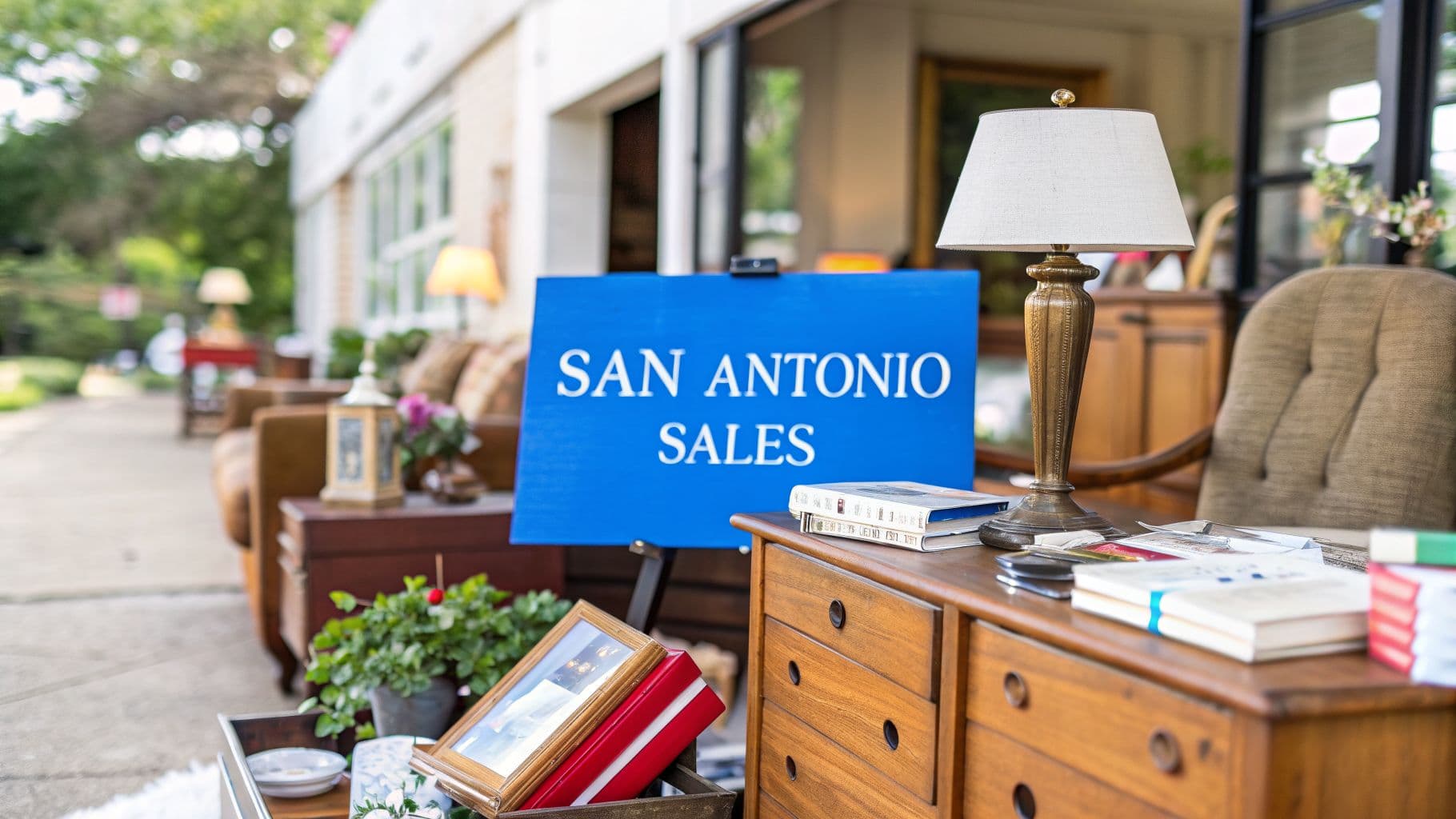
If you're managing an estate sale in San Antonio this year, you've probably noticed a few things. The real estate market isn't what it used to be. Homes are sitting a bit longer, and buyers can afford to be choosier. This new reality changes the game for homeowners and executors needing to clear out a property for sale.
Navigating a San Antonio estate sale in 2026 demands a smarter strategy. The old way of doing things just doesn't cut it anymore, especially when you're trying to get a home on the market quickly and profitably.
Why Your Estate Sale Plan Matters More Than Ever in 2026
When a house needs to be sold, everything inside it has to go first. That’s the simple truth. But in a competitive market, delays can be costly. A slow, drawn-out liquidation process can push back your real estate listing, costing you valuable time and money.
This is where many people run into trouble. They hire a traditional estate sale company, thinking it's the easiest path. The problem? Those companies often take a massive 35% to 50% commission from your total sales. It’s a steep price to pay for a service that often gives you little to no control over the process.
A do-it-yourself approach, powered by a platform like DIYAuctions, flips the script. You get to keep up to 90% of the profits. The difference is staggering.
Think about it: an average estate sale can bring in anywhere from $18,000 to $20,000. After a traditional company takes their 50% cut, you might only see $9,000. With a DIY online auction, that number could be closer to $18,000. That's money that belongs in your pocket, not someone else's.
Comparing Your Options in San Antonio
Your first decision is the most important one: how will you run your sale? While there are plenty of established estate sale companies in San Antonio offering to handle everything, that convenience comes at a heavy cost.
Let’s put the two main approaches side-by-side to see how they really stack up.
Traditional Estate Sale Company vs DIYAuctions Platform
This table breaks down the key differences you'll find when weighing your options in the local San Antonio market.
| Feature | Traditional Estate Sale Company | DIYAuctions Platform |
|---|---|---|
| Commission | Typically 35-50% of total sales | Flat 10% commission, capped at $1,000 |
| Control | Company controls pricing and schedule | You set the prices, dates, and terms |
| Timeline | Can take weeks to schedule and run | Flexible; run your sale on your timeline |
| Profits | Lower net return due to high fees | Maximize your return, keeping up to 90% |
The choice becomes pretty clear. Why hand over half of your inheritance or proceeds when you can manage the sale yourself with the right tools and support?
Throughout this guide, we'll walk you through the entire process using the DIYAuctions platform. You’ll get a clear, step-by-step roadmap for turning what feels like a monumental task into a manageable, highly profitable project.
Creating Your San Antonio Estate Sale Timeline
Trying to rush an estate sale is a recipe for disaster. I've seen it countless times—the frantic last-minute decisions, the stress, and the valuable items that get overlooked, costing families real money. If you're managing an estate sale in San Antonio, the single most important thing you can do is create a realistic timeline.
This isn't just about picking a weekend for the sale. Think of it as your strategic game plan. It’s a roadmap that guides you through every step, from the emotionally heavy sorting days to the final pickup event, protecting you from feeling completely overwhelmed.
Weeks 1 & 2: The Emotional Sort
This is where it all begins, and honestly, it's often the hardest part. The very first job is to walk through the home and separate everything into three simple piles: what to keep, what to sell, and what to donate or discard.
You have to get this done before anything else. Family heirlooms and personal mementos need to be safely put away long before you even think about letting buyers in. Don't underestimate how long this takes; give yourself at least a full weekend just for this initial pass.
Once personal items are secure, you can breathe a little easier and start laying the groundwork for a profitable sale.
- Find a secure spot for all the "keep" items. A locked room, a cleared-out closet, or even a small off-site storage unit works perfectly. Getting them out of the main area prevents mix-ups and gives you peace of mind.
- Next, start a high-level sort of the "sell" items. Put all the kitchenware in one area, tools in the garage, and linens in another. This simple step will make the cataloging process a thousand times easier.
A Quick Word on Local San Antonio Rules
Before you get too far, take a moment to check the local regulations. While the City of San Antonio is generally fine with private home sales, your specific neighborhood might have its own rules.
If you're in a community with a Homeowner's Association (HOA)—like many in Stone Oak, Alamo Heights, or The Dominion—you must check the covenants. Many HOAs have surprisingly strict rules on sale duration, signage, and street parking. A quick call to the HOA board can save you from fines or, even worse, having your sale shut down.
Do this early. It’s a five-minute task that can prevent a massive headache later.
Weeks 3 & 4: Cataloging and Photography
With your items sorted, it’s time to build your online auction catalog. This is easily the most labor-intensive part of the whole process, but it’s where a good sale becomes a great one. Plan on dedicating at least two full weekends to get it right.
This is your opportunity to show off what you have and attract serious bidders.
- Photos: You don't need a professional camera; your smartphone is more than capable. The secret is good lighting and clean backgrounds. Take several clear shots of each item from different angles, making sure to show any imperfections.
- Descriptions: Honesty is key. Write detailed descriptions that include brand names, dimensions, and any flaws. Instead of just "wood table," try something like, "Vintage Ethan Allen solid maple dining table, 42-inch diameter, with two leaves. Minor surface scratches consistent with age."
- Starting Bids: The goal is to generate interest and get people bidding. Set your starting bids low—even just $1—and let the competitive nature of an auction drive the price up to its true market value.
This methodical approach is what builds a high-quality auction that buyers trust. To make sure you haven't missed a thing, our comprehensive estate sale checklist is a great resource to keep you on track.
The Final Two Weeks: Launch and Logistics
In the home stretch, your focus shifts to launching the auction and planning for pickup day. Right now, the San Antonio market conditions make this preparation more important than ever.

As you can see, a higher-than-usual housing inventory means home buyers can afford to be picky. But for sellers, this creates a golden opportunity for a profitable estate liquidation—if it's done right. By following a smart timeline, you're setting yourself up to take full advantage of this market.
Pricing Your Items and Cataloging for San Antonio Buyers

Once you’ve sorted through everything, the next step is turning those possessions into profit. This is where the magic happens: creating an online catalog that grabs the attention of San Antonio buyers. Get this part right, and you'll see a massive difference in your final earnings.
Think of each listing as a mini sales pitch. Your goal is to give bidders the confidence to click, bid, and then bid again. Vague descriptions and blurry photos are the fastest way to leave money on the table.
Researching What Your Stuff Is Worth in the Local Market
Before you put a price on anything, you've got to do a little homework. Some items are obviously valuable, but others might surprise you. Fortunately, you don't have to be a certified appraiser to get a good idea of an item's worth.
The best trick in the book is checking the "sold" listings on sites like eBay. This shows you what people have actually paid for similar items, which is much more reliable than an asking price. Look for items that match yours in brand, condition, and style.
For those unique San Antonio finds, local knowledge is key.
- Vintage Fiesta Dinnerware: A staple in many local homes. Pay close attention to the colors and maker's marks, as some rare colors can fetch surprisingly high bids.
- Mid-Century Modern Furniture: Brands like Broyhill Brasilia or Drexel are hot right now. Check for any stamps or labels, and be completely honest about the item's condition.
- Texas Art: Always look for a signature on paintings and prints. A quick search on the artist's name could reveal if you're holding a piece from a well-known Texas creator.
A fascinating local trend is directly impacting the quality of items at San Antonio estate sales. The luxury real estate market here is on fire, with a 105% jump in high-end home sales and median prices soaring toward $1.44 million. This means more affluent estates are being liquidated, releasing a wave of premium art, designer furniture, and rare collectibles. For you, this is a golden opportunity to sell high-quality goods to eager, discerning buyers. You can see more on these San Antonio property trends on zillow.com.
How to Build a Catalog That Sells
With your research done, it’s time to start building your listings. The DIYAuctions platform is designed to make this simple, guiding you as you upload photos and add descriptions for each "lot."
What's a lot? It’s just auction-speak for a single item or a group of similar items you sell together. An antique armchair would be one lot. A set of eight wine glasses could be another. A smart strategy is to bundle smaller, lower-value items—like a drawer of kitchen utensils—into a single lot to make them more appealing.
Taking Great Photos and Writing Descriptions
You don't need a fancy camera. Your smartphone is more than capable of taking photos that will make your items shine.
- Find the Light: Natural light is always best. Set up near a bright window, but try to avoid direct sun that creates harsh shadows. If you have to shoot at night, just use a couple of lamps to light the item from different sides.
- Use a Simple Backdrop: A plain wall or a solid-colored sheet works perfectly. A busy, cluttered background is distracting and makes your auction look unprofessional.
- Show Every Angle: Take pictures of the front, back, sides, and any important details. And most importantly, photograph any brand names, signatures, or unique marks. Be transparent—if there's a scratch or a chip, take a clear photo of it.
Your description is there to back up your photos. Be specific and honest. Include dimensions, materials, the brand, and a straightforward assessment of the condition. This not only attracts serious bidders but also builds trust, which means fewer questions and a smoother pickup day.
If you really want to get this right, you might be interested in our comprehensive guide on how to price your estate sale items effectively.
Set Your Starting Bids Low to Drive Action
Here's a pro tip that might feel counterintuitive: start your bids low. One of the biggest mistakes we see is setting starting bids too high. The real magic of an auction is the thrill of competition.
A low starting bid—even just $1—is an incredibly powerful psychological tool. It gets people in the door. Once someone has placed that first easy bid, they're invested. Their competitive instincts kick in, and they'll often drive the price up to its true market value, and sometimes even higher. Trust the process; it really works.
Marketing Your Sale & Nailing the Pickup

With your online catalog live, you’ve done the hard work of sorting and pricing. Now it’s time to get the word out and prepare for a seamless finish. A successful sale isn't just about listing items—it's about attracting the right buyers and, just as crucially, running a pickup day that goes off without a hitch.
While the DIYAuctions platform automatically gets your sale in front of our network of qualified local bidders, a little extra local promotion can make a huge difference. Think of it as a team effort. We bring a built-in audience, and you create the neighborhood buzz that pulls in people right here in San Antonio.
Creating Local Buzz in San Antonio
Getting more eyes on your auction is easier than you think. San Antonio has some incredibly active online communities, and posting there is a free and powerful way to drive more bids.
Here’s where you should focus your efforts:
- Neighborhood Facebook Groups: Pages for areas like Alamo Heights, Stone Oak, or the bigger "San Antonio Buy/Sell/Trade" groups are fantastic. Share a friendly post with a few great photos, a link to your auction, and highlight a couple of unique finds.
- Nextdoor: This is your direct line to your immediate neighbors. A quick post letting them know about your online sale can alert people just around the corner who might be looking for exactly what you have.
- Craigslist: It might feel a bit old-school, but Craigslist remains a go-to for many people searching for local sales. Post in the "Garage & Moving Sales" section with clear details and a direct link to your auction.
When you post, keep it simple and friendly. Mention the general area (e.g., "Online estate auction with pickup in the Medical Center area") and share the closing date to create some urgency. For a deeper dive, check out our complete guide on estate sale marketing for more pro tips.
Preparing for a Flawless Single-Day Pickup
The real sign of a successful San Antonio estate sale is a pickup day that runs like a well-oiled machine. You want the experience to be smooth and safe for everyone involved. This part is all about simple, smart logistics.
The moment your auction ends, DIYAuctions sends you a report of who won what. Print that out, and start grouping items by buyer. Put everything for one person into a box or a designated spot, clearly labeled with their name. This one step will save you from a world of confusion when people start arriving.
It's a unique time for sellers. The San Antonio real estate market currently has over 15,000 active listings—an 11% jump from last year—and up to 5.49 months of housing supply. This puts pressure on homeowners to clear out personal property fast to get their homes listed. A smooth pickup day is the critical final step in that process. You can see more on these market shifts in this detailed San Antonio real estate report from Dwellverse.io.
Managing Customer Flow and Safety
On pickup day, your main goals are safety and efficiency. You absolutely don't want a traffic jam at your front door. The easiest way to prevent this is to ask buyers to sign up for a specific pickup time slot, either through a free scheduling tool or a simple email exchange.
Here’s how to make the day a success:
- Stage Everything First: If you can, move all sold items to an easily accessible spot like the garage or a front room. This keeps foot traffic out of the main house.
- Confirm, Don't Collect: One of the best parts of using DIYAuctions is that payments are handled securely online beforehand. Have your list of paid invoices on a clipboard or your phone. When buyers arrive, just check their name off the list. No cash, no fuss.
- Lend a Hand (If You Want): Buyers are responsible for their own muscle, but having a dolly or hand truck available is a nice touch. Small gestures like this make for a much better experience.
Finally, have a backup plan for no-shows. It happens. The platform's terms protect you, but you're still left with the items. You can offer them to the next-highest bidder, relist them, or schedule a pickup with a local charity like Goodwill of San Antonio. Planning ahead ensures your pickup day is a stress-free and satisfying end to your sale.
Maximizing Profits with Secure Payments
After all the work sorting and cataloging, it’s time to make sure you get paid and keep as much of your earnings as you can. This is where the numbers really matter. The goal of any San Antonio estate sale is to maximize your final profit, and the commission you pay will have the biggest impact on that bottom line.
Most traditional estate sale companies around San Antonio are going to charge you somewhere between 35% and 50%. For a pretty standard sale that brings in $15,000, that’s $5,250 to $7,500 straight out of your pocket. It’s a huge chunk of the proceeds.
We built the DIYAuctions model to fix this. Our platform runs on a straightforward 10% commission, and we cap it at a maximum of $1,000. This structure was designed from the ground up to put the profits back where they belong—with you.
A Real-World Financial Comparison
Let's break down what this really looks like with a common scenario. Say your San Antonio estate sale generates $18,000 in total sales, a typical amount for an average-sized home.
Here’s how the math shakes out:
| Financial Metric | Traditional Estate Sale Company (at 40%) | DIYAuctions Platform (at 10%) |
|---|---|---|
| Gross Revenue | $18,000 | $18,000 |
| Commission Fee | $7,200 | $1,000 (Capped) |
| Your Net Profit | $10,800 | $17,000 |
That’s a $6,200 difference. It’s a staggering amount of money that could be used for closing costs, home repairs, or simply distributed to family. The financial upside of using the right tools and taking a hands-on approach is hard to ignore.
This is especially true right now. As the San Antonio housing market finds its footing in 2026, reports show the median home price is around $295,000, with homes selling for 98.2% of their asking price. This puts pressure on homeowners to clear out personal property efficiently to get their house on the market. A low-commission solution ensures you capture the most value from your assets during this time-sensitive process. You can dig into the specifics in this San Antonio real estate market report from markstillings.com.
Shielding Yourself from Payment Risks
Beyond the final numbers, payment security is a massive—and often overlooked—part of the equation. Trying to manage piles of cash, personal checks, or a dozen different payment apps is both stressful and incredibly risky.
One of the biggest fears we hear from sellers is getting stuck with bounced checks, counterfeit cash, or fighting payment disputes long after the sale is over. These are real problems that can sour a successful event.
An online auction with built-in payment processing takes all of that risk off your plate. When a buyer wins an item on DIYAuctions, they pay for it right away through our secure system with a credit or debit card.
This gives you a few layers of critical protection:
- No Cash to Handle: You never have to count big wads of cash or worry about making a deposit at the bank.
- Guaranteed Funds: We verify every payment. You know the money is good before a buyer ever sets foot on your property.
- Built-In Fraud Protection: Our system automatically screens for and blocks fraudulent transactions, protecting you from scams and chargebacks.
By the time your pickup day arrives, every single item is already paid for. Your job is simple: check buyers off the list and help them with their items. All the financial stress is gone, letting you focus on having a smooth, organized day. You get one clean payout without the headaches.
Common Questions About San Antonio Estate Sales
Going through an estate sale for the first time will naturally bring up a few questions. From navigating San Antonio’s local rules to figuring out what to do with unsold items, getting answers upfront can make the whole thing feel a lot less overwhelming.
Here are some of the most common questions we hear, with straightforward answers to help you plan your sale like a pro.
Do I Need a Permit for an Estate Sale in San Antonio?
This is usually the first question people ask, and the answer is refreshingly simple. For a private sale held in your own home, the City of San Antonio typically does not require a special permit. That’s one piece of red tape you can cross off your list.
The bigger thing to watch out for, however, is your Homeowner's Association (HOA). If you live in a community with an HOA—which is common in neighborhoods like The Dominion, Alamo Ranch, or Stone Oak—you absolutely must check their rules first.
Many HOAs have strict guidelines on:
- Signage: Where you can place signs, how big they can be, and when you can put them up.
- Traffic and Parking: Rules to keep neighborhood streets from getting clogged with buyers' cars.
- Sale Duration: Some may limit you to a single weekend.
A quick call to your HOA board before you do anything else is a non-negotiable step. Ignoring their rules can get you fined or even shut down, a major headache you definitely don’t need.
The legal side of settling an estate can go beyond just the sale. If you have questions about the property itself, it’s always wise to consult a professional. A probate attorney in San Antonio can make sure every detail is handled correctly.
How Much Can I Really Save with a DIY Platform?
The savings are often the biggest motivator for people choosing a DIY online auction. Traditional estate sale companies in the San Antonio area usually charge a commission between 35% and 50% of the total sales.
Let’s make that real with a quick example.
Imagine your online auction brings in a total of $15,000.
- With a traditional company taking 40%, their fee is $6,000. You walk away with $9,000.
- Using DIYAuctions, our commission is a flat 10%, but it’s also capped at $1,000. So on that same $15,000 sale, your fee is just $1,000.
You take home $14,000—an extra $5,000 that stays right in your pocket. The difference is huge and has a direct impact on your final payout.
What Should I Do with Items That Do Not Sell?
It’s completely normal to have some things left over after your auction closes. Don't worry about it! The key is to have a plan in place so the final clear-out is quick and easy.
With the DIYAuctions model, you’re always in control and have a few great options.
- Offer a Second Chance: You can easily contact the runner-up bidder and offer them the item at their last bid.
- Pickup Day Deals: During your scheduled pickup event, you can offer any unsold items to the winning bidders for a fixed "buy it now" price. It's an easy way to move a few more things.
- Schedule a Donation: For whatever is left, arrange a pickup with a local charity. Groups like Goodwill of San Antonio or The Salvation Army are often happy to send a truck, making the final clear-out totally painless.
Just decide on your "Plan B" before the sale ends, and you’ll be ready to act without any stress.
Is an Online Platform Easy to Use if I Am Not Tech-Savvy?
That’s a totally fair question. Honestly, if you can take a photo with your smartphone and write an email, you have all the skills you need.
Platforms like DIYAuctions are designed specifically to be simple and intuitive. The entire process is guided from start to finish. Uploading photos is as easy as adding an attachment, and the site walks you through writing descriptions and setting up your auction one step at a time.
It’s built for regular people, not tech wizards. And if you ever do get stuck, our support team is always there to help you through it.
More guides in Estate Sale Basics
July 28, 2026
Revenue Reporting for Estate Sales and Auctions
Learn revenue reporting essentials for estate sales and auctions. Discover key metrics, templates, and best practices to simplify tracking and compliance.
Read guideJuly 26, 2026
Stamp Collection Valuation: A Practical Step-by-Step Guide
Stamp collection valuation made simple. Learn how to identify, grade, price, and sell your stamps with confidence for estate sales or consignment.
Read guideJuly 23, 2026
Estate Sales Brick NJ: Your 2026 Guide to Success
Planning your estate sales brick nj? Our guide covers permits, pricing, marketing, & running a safe sale with DIYAuctions.
Read guideGet the estate sale pricing guide
Enter your email for pricing ranges, planning notes, and a clearer path to launch.