A Guide to Running Successful St Louis Estate Sales
Discover how to plan and execute profitable St Louis estate sales. Our guide offers practical tips for maximizing value and simplifying the entire process.
When you're running an estate sale in St. Louis, you're tapping into a market that's as varied as the city itself. From historic homes in Soulard to sprawling properties out in Chesterfield, every situation is unique. The big question is always the same: how do you sell everything efficiently and, more importantly, for the best possible price?
This guide breaks down the old-school, high-commission model versus a modern approach that leaves you in control and with more money in your pocket.
The Local Advantage for St Louis Estate Sales
The St. Louis area is a fantastic, dynamic place for an estate liquidation. With such a rich history and diverse neighborhoods, you never know what you'll find. One sale might turn up rare Anheuser-Busch collectibles, while another in Webster Groves could be a treasure trove of mid-century modern furniture. This variety fuels a strong market of eager buyers—collectors, antique dealers, and regular homeowners all searching for their next great find.
But that opportunity comes with a crucial decision. Do you hire a traditional estate sale company and hand over a massive chunk of your revenue, often between 35% to 50%? Or do you take the reins yourself?
Choosing Your Sales Model
The traditional route means someone else does the work, but you pay for it with a huge slice of the profits. In stark contrast, platforms like DIYAuctions give you the professional tools to manage your own sale. This modern, hands-on approach has some serious upsides:
- Keep Your Profits: You retain up to 90% of the proceeds. That’s a game-changing difference compared to the old way.
- Total Control: You decide on the prices, the schedule, and all the terms. The sale runs on your timeline, fitting your specific needs.
- Smarter Marketing: Modern platforms connect you directly to a network of local buyers who are actively looking for the kinds of items you’re selling. Our guide on digital marketing for local businesses dives deeper into how effective this targeted reach really is.
Fueling this strong buyer market is a healthy real estate environment. In 2025, the median home sale price in the St. Louis residential market hit $300,000, which was a significant 9.1% increase. This consistent growth creates a fantastic backdrop for any liquidation. To get the full picture, you can read more about St. Louis housing market trends.
For sellers, this is a double win. Not only can the property itself fetch a great price, but the contents are being sold to a confident and active local buyer base. This economic stability makes St. Louis an ideal place for a well-planned estate sale.
Building Your Pre-Sale Blueprint
A successful St. Louis estate sale doesn’t just happen. It’s built on a foundation of smart, upfront planning. Giving yourself about 4-6 weeks before you want the sale to go live is the sweet spot. That window gives you enough breathing room to make good decisions without the last-minute panic that leads to mistakes.
The first job—and often the toughest, emotionally—is sorting through everything. This isn't just about clearing out a house; it’s about making thoughtful choices. The easiest way I've seen this done is by creating three clear categories. Grab some colored stickers or set up different zones in the house.
- Sell: This is everything that will become the star of your online auction.
- Keep: These are the family heirlooms, personal treasures, and anything you’re not ready to part with.
- Donate/Discard: Items that still have life in them but aren't right for the sale, plus anything that's simply reached the end of the road.
The key is to be methodical. Go room by room, even drawer by drawer. It's so easy to get overwhelmed, so break it down into manageable chunks. This slow-and-steady approach also keeps you from accidentally tossing something valuable that was stashed away in an old shoebox.
Navigating Local Logistics
Once you’ve got a rough idea of what you're selling, it’s time to deal with the local red tape. St. Louis is a patchwork of different municipalities, and you’d be surprised how much the rules can vary from one to the next.
For example, holding a sale in Kirkwood might have totally different signage rules than doing one in Clayton. A quick call to your local city hall is non-negotiable. Just ask them, "I'm planning a one-time estate sale at my residence; are there any permits or rules I need to know about?" Taking ten minutes to do this can save you from a major headache and potential fines down the line.
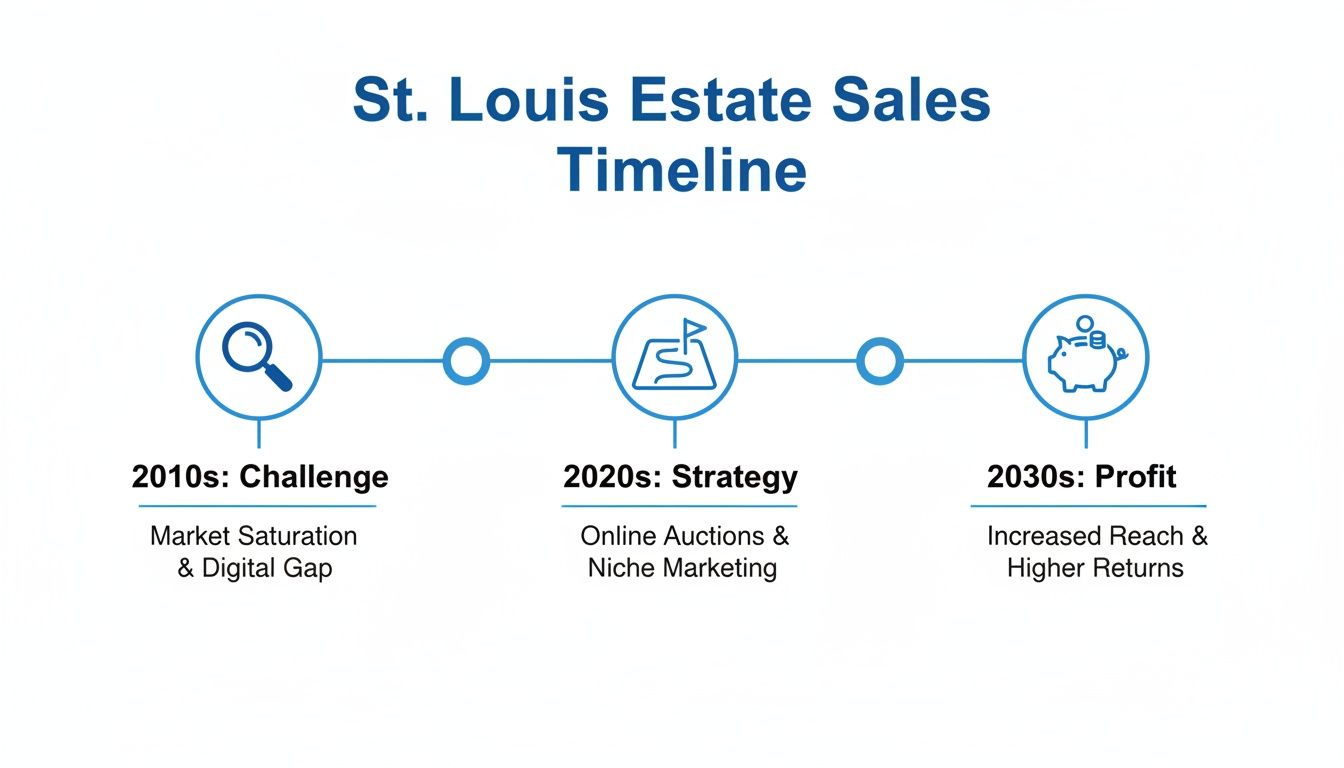
As you can see, putting in the strategic work upfront has a direct impact on how profitable your sale turns out. It's all about turning those potential hurdles into opportunities.
Creating Your Initial Inventory
With the sorting done and the local rules clear, the last piece of your blueprint is a solid inventory. This becomes your command center, especially when you start building your auction on a platform like DIYAuctions. You don't need to have every price figured out yet, but you absolutely need a list.
An inventory isn’t just a list; it’s the first step in transforming clutter into cash. It gives you a clear overview of your assets and sets the stage for an organized, professional-looking online catalog that attracts serious buyers.
Fire up a simple spreadsheet or even just grab a notebook. For every item you’re selling, jot down what it is, a quick note on its condition, and any important details. Trust me, having this list ready will make the next phase of photographing and writing descriptions a whole lot smoother. While you're at it, think about the bigger picture—our guide has some great tips for preparing a house for sale that can help the entire property look its best.
Pricing and Cataloging for Local Buyers

This is where the real work begins—and where you turn your plan into a professional-looking online event that gets results. Pricing is a delicate dance. You need to entice local St. Louis buyers to jump in, but you don't want to leave any money on the table.
For a successful St. Louis estate sale, it all comes down to knowing what local shoppers are looking for.
Start by researching your big-ticket items. Put yourself in a local buyer's shoes. Is that a collection of vintage Anheuser-Busch steins? A stunning mid-century modern credenza from a Webster Groves home? These are the kinds of items with serious regional appeal. A quick search on eBay's "sold" listings can give you a baseline, and a walk through the shops on Cherokee Antique Row will give you a real-world feel for current prices.
Remember, the goal isn't to squeeze out top retail dollar for every fork and spoon. It's about setting a fair market value that gets people bidding and helps you clear out the house.
Creating a Compelling Digital Catalog
Think of your online catalog as your digital storefront. While DIYAuctions makes the process easy, the quality of your listings is what will truly make or break your sale. You absolutely cannot skimp on high-quality photos and engaging descriptions.
Don't worry, you don't need a pro camera—your smartphone is plenty powerful. The secret ingredient is good lighting. Set up near a window to get that soft, natural light, and do your best to clear away any background clutter. Make sure to capture multiple angles, especially for furniture. And always, always photograph brand names, artist signatures, or any dings and scratches. Transparency is key to building trust with your bidders.
When it comes to the description, tell a little story. Instead of "Old wooden chair," try something like, "Vintage oak rocking chair from a Ladue estate, perfect for a cozy reading nook. Shows some minor wear consistent with its age." See the difference? You’re painting a picture and helping buyers imagine it in their own homes.
Think of each listing as a mini-advertisement. Your job is to make someone feel like they've just stumbled upon a hidden gem. Good photos and descriptions can easily double the number of bids an item gets.
For a deeper dive into getting organized before you start shooting photos, check out our guide on inventory management best practices.
To make sure you nail every listing, we've put together a quick checklist tailored for St. Louis sellers. Running through these steps for each item will ensure you're showcasing it in the best possible light.
DIYAuctions Cataloging Checklist for St Louis Sellers
| Checklist Item | Why It Matters | Pro Tip for St Louis Market |
|---|---|---|
| Multiple Clear Photos | Buyers can't inspect items in person, so your photos do all the work. | Natural light is your best friend. Avoid flash. For furniture, show all sides. |
| Detailed Title | The title is the first thing buyers see. Be specific with brand, style, and material. | Include local keywords like "Lafayette Square antique" or "STL sports memorabilia." |
| Accurate Measurements | A potential buyer needs to know if that sofa will fit in their apartment. | Always include dimensions (L x W x H) for furniture and artwork. |
| Honest Condition Report | Disclosing flaws (scratches, chips) builds trust and prevents disputes later. | Phrases like "honest wear" or "great vintage condition" are well-understood. |
| Compelling Description | Tell the item's story. Where did it come from? What's its use? | Mentioning the neighborhood (e.g., "from a historic Central West End home") adds appeal. |
| Brand/Maker's Marks | A photo of a signature or label authenticates the item and adds value. | St. Louis has a rich history of local breweries and manufacturers—highlight these! |
Following this checklist helps you create a catalog that not only looks professional but also actively works to get you the best possible prices from interested local buyers.
Setting Bids to Spark Action
With your beautiful catalog built, it’s time to set your pricing strategy. For most items in a St. Louis estate sale, starting the bidding low—often at just $1—is an incredibly powerful move. A low barrier to entry gets people engaged immediately and kicks off that competitive bidding frenzy you want to see.
Here's how to approach it:
- Low Starting Bids: This is your go-to strategy for the vast majority of your items—household goods, everyday collectibles, decor, and tools. It draws more eyes to your sale and builds momentum as bidders battle it out.
- Reserve Prices: Got something truly special, like fine jewelry, original artwork, or a classic car? A reserve price is your safety net. It's a confidential minimum you set, and the item won't sell unless the bidding hits that number. This protects you from letting a high-value piece go for a steal.
This dual strategy works especially well in the current St. Louis market. With around 3,182 active home listings and properties staying on the market a bit longer, sellers who present their assets effectively have a major edge. The same competitive pricing that drives a successful estate auction is what works in the local real estate world, making this a smart way to liquidate assets quickly and efficiently. You can learn more about the St. Louis real estate market on Realtor.com.
Marketing Your Sale to Attract Buyers
Alright, you've put in the hard work and your professional-looking online catalog is ready to go. Now it's time to get the word out and create some serious buzz for your St. Louis estate sale.
While a platform like DIYAuctions already has a built-in network of local buyers, the smartest sellers don't just rely on that. You want to amplify your own marketing to get as many eyes on your items as possible, which is the key to driving up those final bids.
Think of yourself as a promoter for a can't-miss event. The goal is to build excitement and a little bit of urgency. You'll want to focus your efforts where St. Louis buyers are already looking online.
Tap into Local Digital Communities
Hyper-local platforms are an absolute goldmine. I'm talking about active Facebook Groups and Nextdoor, where you can reach engaged community members who are actively looking for local deals and unique finds.
- Facebook Groups: Jump into groups like "St. Louis Garage & Estate Sales," "Chesterfield MO Online Yard Sale," or even smaller, neighborhood-specific buy/sell groups. Post a friendly announcement with a few great photos and a direct link to your online sale.
- Nextdoor: This is perfect for reaching your immediate neighbors and the surrounding communities. It’s the ideal spot to showcase those larger items—like furniture or lawn equipment—that people would much rather pick up close to home.
When you write your posts, always lead with your most compelling items. Don't just post a generic "Estate Sale this weekend!" Instead, try something that grabs attention, like, "Historic Soulard Estate Sale—Featuring Vintage Anheuser-Busch Collection & Architectural Salvage!" That kind of specific, exciting headline targets collectors and pulls people in.
Your marketing messages should do more than just announce a sale; they should tell a story. Highlighting a few unique, high-demand items creates a powerful hook that draws in a much wider audience than a simple list of goods.
Optimize Your Sale for Search
Beyond social media, don't overlook the power of your sale's title and description. You need to think like a buyer. What keywords would they use to find what you're selling?
Make sure to include terms like "Mid-Century Modern," "Antique Furniture," "Vintage Jewelry," or the specific St. Louis neighborhood where the pickup will be. This simple step helps your sale show up in searches not just on the auction platform, but across the web.
The broader market is on your side, too. Nationally, existing home sales hit 4,350,000 units in December 2025, and here in St. Louis, homes are getting an average of two offers. This signals a really competitive demand for property and, by extension, the contents inside. It’s a great time to be selling.
For a complete promotional playbook, it's always smart to borrow proven tactics from related fields. For example, looking at the best real estate marketing strategies can spark some fresh ideas for showcasing your items in the best possible light. You can also dive deeper with our detailed guide on estate sale marketing strategies. A multi-pronged approach ensures your sale gets the visibility—and the bids—it deserves.
Managing a Seamless Pickup Day
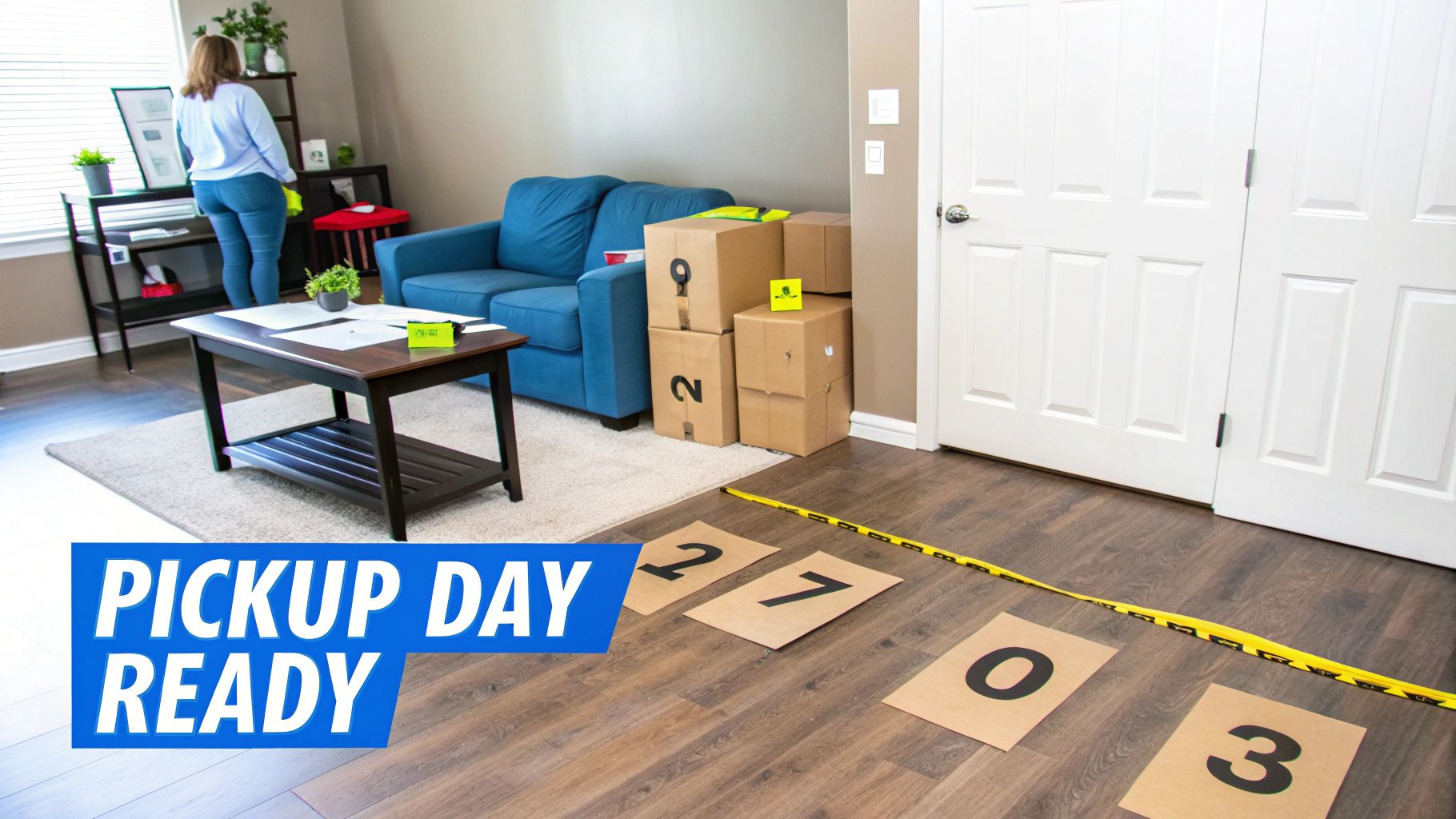
Your online auction is done, the final bids are in, and now comes the moment where it all comes together: pickup day. This is when your online efforts translate into real-world results. A little bit of planning here makes the difference between a chaotic scramble and a smooth, successful finish to your St. Louis estate sale.
Don't wait until the first car pulls up to start figuring things out. The day before, use your sales report from DIYAuctions to gather and group everything for each winning bidder. I like to use simple paper bags or moving boxes, clearly marking each one with the buyer's name and lot numbers.
This one step, pre-staging the sold items, saves an incredible amount of time. Instead of hunting through rooms for that one last piece, you can just grab a buyer's complete order and send them on their way. It's the secret to a calm, efficient pickup event.
Creating a Safe and Efficient Flow
For a few hours, your home is basically a fulfillment center. Your goal is to create a clear, intuitive path for people to follow.
First things first: clear the way. Remove any tripping hazards like area rugs, loose cords, or stray boxes from the main walkway. You want an obvious path from the front door to the pickup area so there's zero confusion.
Next, you have to think about traffic. For homes in neighborhoods with tight street parking, like parts of South City or Webster Groves, it’s smart to schedule specific pickup windows for large furniture buyers. This prevents a logjam in the driveway. A simple sign at the end of the drive with your phone number also works wonders for managing the flow of cars.
Securing Your Space and Finalizing the Process
Security on pickup day is non-negotiable. Even with the friendliest buyers, you need to protect your home and your privacy.
Use signs or blue painter's tape to clearly mark any off-limits areas. It’s also a great idea to have a friend or family member there to help greet people and just generally keep an eye on things. Two sets of eyes are always better than one.
This is where the real power of a platform like DIYAuctions shines. All payments are processed securely online before anyone shows up at your door. This is a massive advantage:
- No Cash Handling: Forget making change, worrying about bounced checks, or the risk of having a lot of cash on hand.
- No Price Haggling: The final bid is the price. Period. This eliminates those awkward last-minute negotiations on your doorstep.
- Verified Buyers: Since every payment is pre-authorized, you know that every single person arriving is a legitimate, committed buyer.
The pre-payment system is an absolute game-changer. It turns the entire pickup process into a simple handoff of pre-paid goods, which cuts the stress and potential for disputes down to nearly zero.
By focusing on organization and leveraging the security of pre-paid transactions, your pickup day will be the smooth, rewarding finale your sale deserves.
Common Questions About St. Louis Estate Sales
When you’re planning a sale, a few questions always seem to pop up. Getting them sorted out early is the key to making sure your St. Louis estate sale goes off without a hitch. We’ve pulled together the most common ones we hear to give you a head start.
Do I Need a Permit for an Estate Sale in St. Louis?
This is always one of the first questions, and for good reason. The answer? It completely depends on where you live. The greater St. Louis area is a real patchwork of different municipalities, and every single one has its own rules.
While St. Louis City doesn't typically require a permit for a one-off sale at your home, you can't just assume that's true for the county. Suburbs like Ladue, Kirkwood, or University City often have their own specific ordinances. They might regulate everything from how long your sale can run to where you can place signs.
My best advice is to always check directly. A quick five-minute call to your local city hall or a peek at their website is the only way to be 100% certain you're good to go. It’s a simple step that can save you from a world of headaches and potential fines.
What Should I Do with Unsold Items?
Look, even the most successful sales will have some things left over. It’s just part of the process. The good news is that St. Louis has a fantastic network of places happy to take those remaining items off your hands. This final clean-up is a lot easier than you might think.
Here are a few of my go-to local options:
- Charitable Donations: Groups like MERS Goodwill and The Salvation Army are always great choices. The best part? They often offer pickup services for bigger things like furniture, which is a massive help.
- Local Community Support: The St. Vincent de Paul Society is another wonderful organization that directly serves people right here in our community.
- Consignment Options: If you have a few higher-value pieces that didn't sell—maybe a nice dresser or some art—think about taking them to one of the antique malls or consignment shops around town. The shops along Cherokee Street are a great place to start.
How Do I Handle Very Valuable Items?
When you’re dealing with things like fine art, rare antiques, or a serious jewelry collection, you need to shift your strategy. The main goal here is protecting their value, and this is where an online auction format really shines.
For these kinds of special pieces, getting a professional appraisal before the sale is a smart investment. It gives you a realistic market value and lets you set a confidential reserve price on a platform like DIYAuctions. A reserve is your safety net—it guarantees your item won’t sell for a penny less than you’re comfortable with.
The competitive bidding you get in an online auction is perfect for driving the price up to its true market value. Plus, the secure payment system takes all the risk out of handling large sums of cash in person. It’s just safer and easier for everyone involved.
More guides in Estate Sale Basics
July 28, 2026
Revenue Reporting for Estate Sales and Auctions
Learn revenue reporting essentials for estate sales and auctions. Discover key metrics, templates, and best practices to simplify tracking and compliance.
Read guideJuly 26, 2026
Stamp Collection Valuation: A Practical Step-by-Step Guide
Stamp collection valuation made simple. Learn how to identify, grade, price, and sell your stamps with confidence for estate sales or consignment.
Read guideJuly 23, 2026
Estate Sales Brick NJ: Your 2026 Guide to Success
Planning your estate sales brick nj? Our guide covers permits, pricing, marketing, & running a safe sale with DIYAuctions.
Read guideGet the estate sale pricing guide
Enter your email for pricing ranges, planning notes, and a clearer path to launch.