A Guide to a Successful Auction for Clothing
Turn your closet into cash with our guide. Learn to master your next auction for clothing, from prepping items to getting paid like a pro.
Ready to turn that overstuffed closet into cash? An auction for clothing is one of the smartest ways to sell your pre-owned fashion. It's a fast-paced method that uses good old-fashioned competition to get you the best price on everything from everyday basics to those unique designer finds.
This guide is your complete roadmap, walking you through exactly how to run a successful sale from start to finish.
The Resale Revolution: Why Clothing Auctions Are Taking Off
Selling secondhand clothes isn't a new idea, but the excitement and sheer scale of today's resale market are on another level. It’s a massive movement, driven by shoppers who are smarter than ever about their budgets and their environmental footprint. An online clothing auction fits perfectly into this modern way of thinking.
This shift is a huge opportunity for anyone with a closet full of clothes they just don't wear anymore. Instead of letting great pieces collect dust, you can connect them with a huge audience that's actively looking for what you have. Let's get you set up to turn those clothes into profit.
The Secondhand Market is Booming
The growth in pre-owned apparel is just incredible. The global secondhand market is on a rocket ship, projected to hit a staggering $350 billion by 2025—that's a threefold jump from where it was in 2020. This explosion isn't random; it's fueled by a few powerful trends:
- Sustainability: People are genuinely concerned about the impact of fast fashion. Buying used is a practical way to reduce waste and feel good about their choices.
- Smarter Shopping: Why pay full retail? Shoppers can find high-quality, brand-name, and even luxury items for a fraction of the price, making style much more accessible.
- The Thrill of the Hunt: The secondhand market is a treasure hunter's paradise. It's the best place to find one-of-a-kind pieces, especially if you're into an area we love—check out our guide on vintage clothing auctions for more on that.
And it’s not slowing down. The market is expected to keep climbing with a compound annual growth rate of 14.9% between 2024 and 2029. You can dig into more of these secondhand market statistics on bankvogue.com.
When you run a clothing auction, you’re doing more than just decluttering. You're participating in a circular economy that's good for your wallet and the planet. It's a true win-win where style and sustainability meet.
Prepping Your Clothes for the Auction Spotlight
When you're running an online auction for clothing, your items can't sell themselves. It's the prep work you do beforehand that screams quality, builds bidder trust, and ultimately convinces someone to hit that "bid" button one last time. Think of yourself as a vintage shop curator; every single piece you list needs to be presented in its absolute best light.
This all starts with a brutally honest inspection of each garment. Lay everything out under a bright light and get your inner detective on. You're looking for the common culprits: loose threads, missing buttons, tiny holes, or subtle stains. For the small stuff, a quick fix is a no-brainer. Sewing on a button takes five minutes but can make a huge difference in the final price.
Cleaning and Presentation
Once you've done your inspection, it's time to clean. And I don't mean just tossing everything into the washer on a standard cycle. Check the care labels! Silks might need a gentle hand wash, while that wool sweater will thank you for using a specialized detergent. Making sure your items are spotless is non-negotiable for getting top dollar. Learning how to effectively remove oil stains before you take pictures is a must, as a single grease spot can kill a sale.
After everything is clean, it's all about presentation. Wrinkles and creases can make a high-end designer piece look like it came from the bottom of a bargain bin.
- A steamer is your best friend. A simple handheld steamer is way more effective—and much gentler on most fabrics—than a clunky old iron.
- Always use a lint roller. Go over every inch right before you start snapping photos to get rid of any dust, pet hair, or lint.
- Store it right. Once an item is prepped, hang it or fold it neatly so it stays perfect until it's ready for its close-up.
This simple flow from preparation to profit is the key to a successful clothing auction.
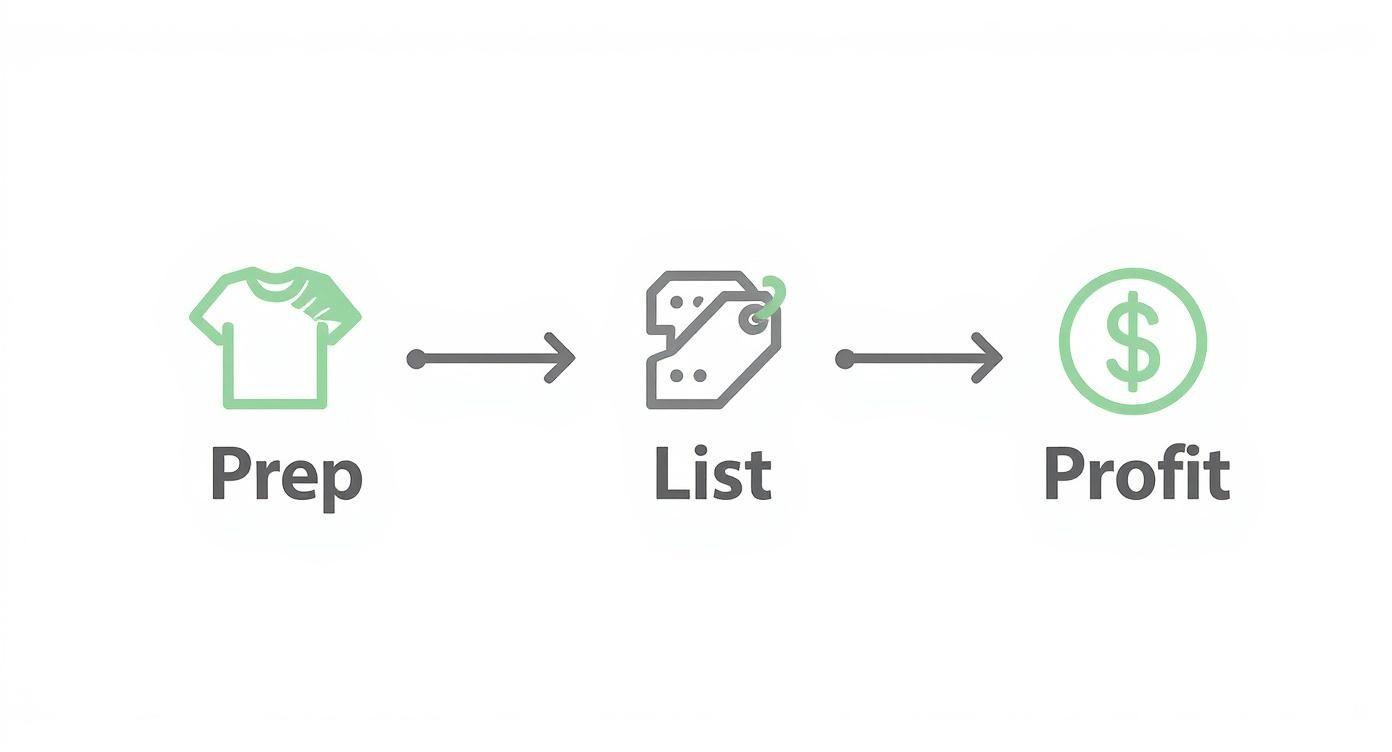
The image above says it all. Diligent prep work is the foundation that directly impacts your listing quality and what bidders are willing to pay.
Your Essential Prep Toolkit
Having the right tools ready makes this whole process go so much faster. You don't need a professional setup, just a few key items to make sure your listings are accurate and look great.
Your basic kit should have a fabric shaver (a lifesaver for pilled sweaters), a small sewing kit for quick fixes, a good steamer, and a flexible measuring tape. When it's time for photos, a decent setup is essential. To nail this part, check out our guide on how to take professional product photos with gear you probably already have. A well-prepped item that's beautifully photographed is already halfway sold.
The time you spend on preparation is a direct investment in your final sale price. A pristine, well-photographed garment can attract 20-30% higher bids than an identical item that appears wrinkled or poorly cared for. Every detail, from a polished button to a crisp collar, signals value to potential buyers.
Crafting Listings That Compel People to Bid
You’ve done the hard work of sorting, cleaning, and repairing. Now comes the fun part: creating the listings that will turn those clothes into cash. Think of each listing as your digital storefront and your most important sales pitch rolled into one. A powerful listing builds trust and gets bidders excited, and it all starts with great photos.

Let’s be clear: high-quality photos are completely non-negotiable. They are the single most important part of your listing. Bidders can’t feel the fabric or try on the fit, so your images have to do all the heavy lifting.
The best trick I've learned is to shoot in natural, indirect light—it shows the true color and texture without creating harsh, unflattering shadows. A clean, neutral background is also a game-changer. It keeps the focus entirely on the garment, which is exactly where you want it. If you're looking to really step up your game, understanding how the right product photography backdrop drives fashion sales can make a huge difference in your final sale prices.
The Art of the Title and Description
Your title is the hook. It’s what grabs a bidder’s attention as they scroll through endless search results. It needs to be descriptive, clear, and packed with the keywords that real buyers are searching for. Put yourself in their shoes: what words would you type into the search bar to find this exact item?
Always lead with the most critical info. I've found this formula works wonders: Brand + Item Type + Size + Key Features (like Color, Style, or Material)
For instance, a title like "Nice Blue Coat" will get lost. A much stronger title would be: "J.Crew Lady Day Coat Size 8 Navy Blue Italian Wool Thinsulate Lined"
See the difference? That title immediately answers a buyer's biggest questions and is full of searchable terms.
Then, use the description to tell the rest of the story. This is your chance to highlight the quality, talk about the style, and be completely honest about the condition. Don't be afraid to use words that evoke texture and quality, but always point out any flaws you found during your inspection. Transparency is key.
The secret to a smooth, profitable auction is answering questions before they're even asked. By including precise measurements, material details, and any care instructions, you minimize the back-and-forth messages and give bidders the confidence they need to bid higher.
To help you cover all your bases, here’s a quick checklist of the details that every great clothing listing should include.
Essential Details for Your Clothing Auction Listing
| Information Category | What to Include | Why It Matters |
|---|---|---|
| Basic Information | Brand, Item Type (e.g., "blouse," "jeans"), Size, Color | These are the top search terms buyers use. Make them impossible to miss. |
| Detailed Photos | Front, back, tags (brand, size, care), close-ups of details, and any flaws. | Builds trust and acts as visual proof of your description. |
| Precise Measurements | Chest (pit-to-pit), length, sleeve, waist, inseam. | Sizing is inconsistent between brands; measurements eliminate guesswork. |
| Condition Notes | Be specific: "Excellent pre-owned," "light pilling under arms," "small mark on cuff." | Honesty prevents disputes and negative feedback. Bidders appreciate it. |
| Material Composition | e.g., "100% Cotton," "90% Wool / 10% Cashmere blend" | Helps buyers understand the feel, quality, and care requirements of the garment. |
Following this checklist for every item will not only make your listings look more professional but will also save you a ton of time answering questions later.
Measurements and Smart Bundling
Never, ever assume a size "M" from one brand is the same as another. We all know sizing is all over the place. Providing key measurements is the single best way to prevent returns and make sure your buyers are happy with their purchase.
For tops, jackets, and dresses, you need:
- Chest (pit to pit): Lay the garment flat and measure from one armpit seam to the other.
- Length (shoulder to hem): Measure from the top of the shoulder down to the bottom hem.
- Sleeve Length: Go from the shoulder seam straight down to the end of the cuff.
For pants and skirts, grab these:
- Waist: Measure flat across the top of the waistband, then double that number.
- Inseam: For pants, measure from the crotch seam down to the bottom of the leg hem.
- Length: For skirts, measure from the top of the waistband down to the bottom hem.
Finally, don't overlook the power of bundling. If you have several lower-value items, like a few t-shirts from the same brand or a bunch of baby clothes in the same size, group them into a single "lot." This strategy creates a much more appealing deal for buyers, increases your average sale price, and clears out inventory way faster than trying to sell each piece for just a few dollars. It's a simple, smart way to make your auction for clothing both efficient and profitable.
Pricing Strategies to Maximize Your Profits
https://www.youtube.com/embed/7X6bW2bCIcs
Setting the right price is where the real strategy comes into play. It’s tempting to just guess what a piece of clothing is worth, but if you want to make real money, you have to let the data guide you. Before you even think about listing an item, you need to put on your market researcher hat.
Platforms like eBay and Poshmark are goldmines for this kind of information. But don't just look at what other sellers are asking for similar items—that’s only half the story. The real secret is to filter your search to show only the "Sold" or "Completed" listings. This tells you what people have actually paid, giving you a rock-solid, realistic baseline for your item's true market value.
This research is non-negotiable. The resale market changes fast. A brand that was flying off the shelves last season might be sitting cold today, while a forgotten vintage style could suddenly be all the rage. Doing your homework keeps you from pricing a hidden gem too low or slapping an unrealistic price tag on something that just won't move.
Starting Bids Versus Buy It Now
Once you’ve got a target value in mind, it's time to decide how you want to sell. There are a few ways to approach this, and the best choice really depends on the item itself.
-
Low Starting Bid: The classic auction move is to start the bidding incredibly low—sometimes even at $0.99. I know, it sounds terrifying. But it’s a brilliant psychological trick that gets people in the door. Those first few bids create a buzz, drawing more eyes to your listing and often sparking a bidding war that drives the final price way higher than you expected.
-
Buy It Now (BIN): A "Buy It Now" price is for the shopper who knows what they want and doesn't want to wait. If you have an in-demand item and you know what it’s worth, a BIN option lets you lock in a great price for a quick, guaranteed sale.
Honestly, a hybrid approach often works best. You can set a low starting bid to attract the auction crowd while also offering a fair BIN price for someone who wants to snag it immediately.
Protecting Your High-Value Pieces
Okay, but what about that designer handbag or rare vintage jacket? Starting the bid at $0.99 feels like a heart attack waiting to happen. What if it sells for pocket change?
This is exactly what a reserve price is for.
A reserve is a hidden minimum price you set. Bidders can't see it, but if the auction ends without the bids reaching your reserve, you don't have to sell the item. Think of it as your safety net. Use this feature sparingly—some bidders get turned off by reserves—but for your irreplaceable, high-value inventory, it's the best way to protect your investment. To get a better handle on this, take a look at our complete guide on how to determine fair market value for your items.
The appetite for secondhand clothing is absolutely massive. The international market for traded used clothing is valued at around $4 billion. The broader apparel resale industry jumped from $181.4 billion to over $202 billion in a single year. When you price your items smartly, you’re plugging into a huge, active market.
At the end of the day, a successful clothing auction comes down to your financial game plan. When you combine solid market research with a smart, flexible pricing strategy, you don't just sell your clothes—you get what they're truly worth.
From Final Bid to Shipped Package
That final thwack of the virtual gavel is a great feeling, but your work isn't quite done. A truly successful clothing auction ends when the item is safely in the buyer’s hands. This last step—fulfillment—is where you really seal the deal, earning that glowing review and creating a repeat customer.
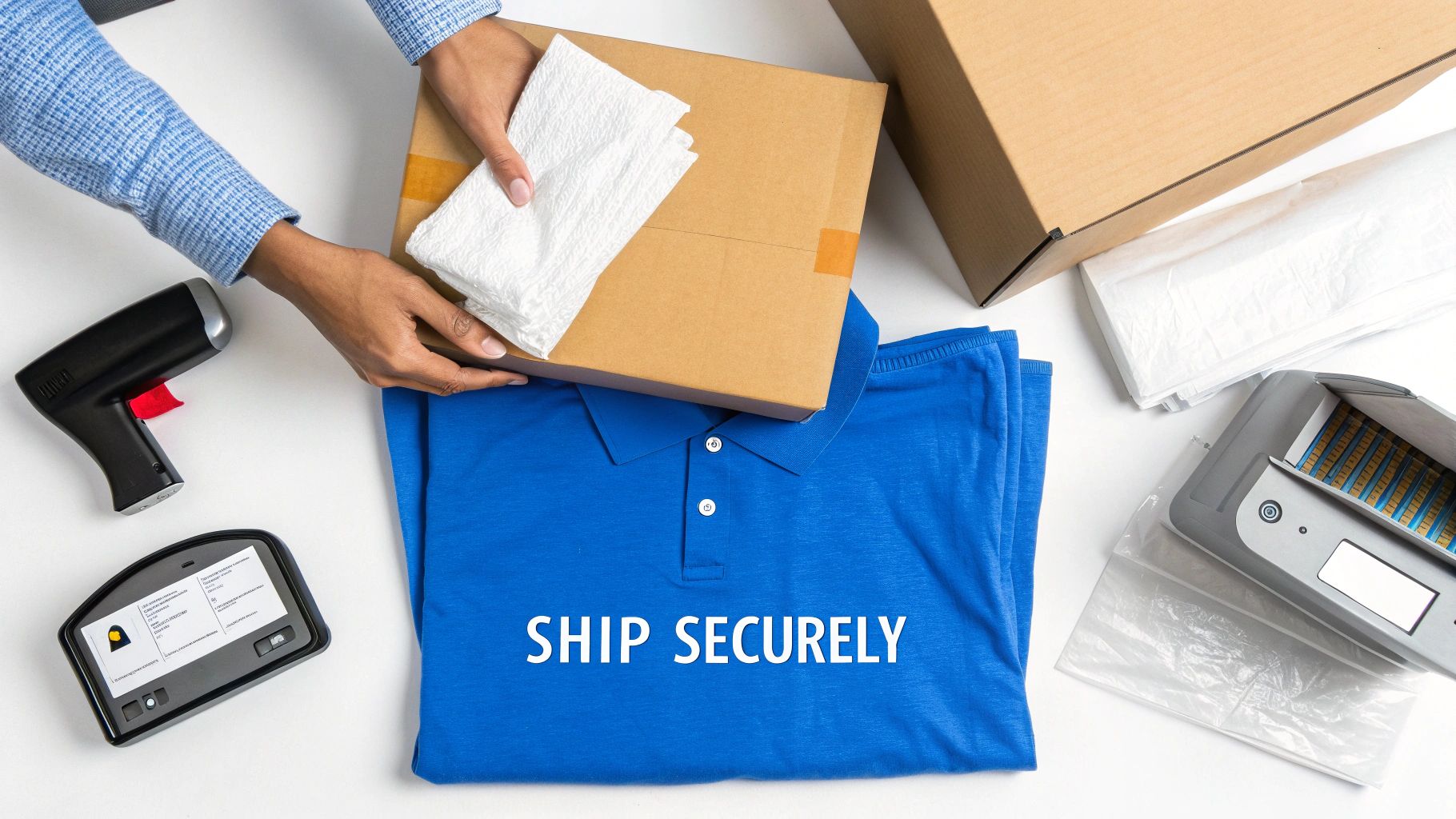
As soon as that auction closes, jump on communication. Don't leave the winner wondering what happens next. I always make it a point to send a friendly congratulatory message and an invoice within a few hours. Thank them for buying, and clearly lay out the total cost—the winning bid plus any shipping charges.
This first message really sets the tone. A quick, professional note shows you’re on top of things, and that goes a long way in building buyer confidence right out of the gate.
Packaging Your Clothing for a Safe Journey
How an item arrives is just as important as how it looked in your photos. Nobody wants to open a package to find a beautiful vintage dress balled up like a dirty sock or a delicate silk blouse that got snagged or damp on its journey.
Your packaging is a direct reflection of your business.
Always start by folding the garment neatly. For anything with delicate details, like beading or sequins, I like to fold it with a layer of acid-free tissue paper to prevent snags. Before it goes into any mailer, slip the clothing into a clear poly bag. This is a non-negotiable step; it’s your best defense against moisture and dirt.
Think of your packaging as the final step in your presentation. A neatly wrapped item that arrives clean and safe tells the buyer you cared about their purchase from start to finish. This small effort can be the deciding factor between a one-time sale and a loyal customer.
From there, it’s about choosing the right mailer. For lightweight stuff like t-shirts, poly mailers are your best friend—they’re tough, waterproof, and cheap. But for anything with more structure, like a blazer, designer jeans, or a fragile vintage piece, a sturdy cardboard box is the only way to go. It’ll keep the item from getting crushed and mangled.
Navigating Shipping and Final Steps
Picking the right shipping service is always a balancing act between cost, speed, and reliability. The good news is that most online auction platforms have integrated shipping label tools that make this a breeze, often with discounted rates.
Here’s a quick rundown of the go-to options:
- USPS Ground Advantage: This is usually the cheapest way to send packages under one pound. It's perfect for most single clothing items.
- USPS Priority Mail: You get much faster delivery (usually 1-3 business days), plus it includes tracking and some insurance. I always use this for higher-value items.
- UPS or FedEx: These guys can be a better deal for heavier shipments, like big clothing lots or heavy winter coats. Their tracking services are also top-notch.
As soon as you ship, upload that tracking number to the order details. This simple action cuts down on the "Where's my stuff?" emails and gives the buyer peace of mind.
Once you see the package has been delivered, a final, quick follow-up message to make sure everything arrived safely is a fantastic finishing touch. It's a small gesture that closes the loop on a positive note and keeps people coming back.
Common Questions About Clothing Auctions
Even with a solid plan, you're bound to have some questions when you first start running clothing auctions. Think of this section as your go-to guide for a few of the most common hurdles you might face. Getting these answers down now will help you run your sales like a seasoned pro.
What Types of Clothing Sell Best?
You can auction off just about any clothing, but some categories just consistently pull in more bidders and better prices. If you want to get the best bang for your buck, focusing on these areas is a smart move.
- Designer and Luxury Brands: This is the obvious one. Names like Gucci, Louis Vuitton, or even high-end contemporary brands like Tory Burch have a built-in audience and hold their value remarkably well.
- True Vintage Pieces: We're talking about items that are genuinely 20 years or older. Think classic 1970s concert tees or sought-after 1990s sportswear. These have a unique appeal that new items can't replicate.
- High-Quality Materials: Garments made from cashmere, silk, genuine leather, or 100% merino wool are always in demand. Bidders understand the value and are willing to pay for it.
- Niche and Novelty Items: This is where things get fun. Rare band merch, retro athletic gear, or even screen-used costumes—like the famous Downton Abbey costumes that went up for auction—can attract passionate collectors and drive bids through the roof.
Handling Non-Paying Bidders
It’s one of the most frustrating parts of selling online, but it’s going to happen: a bidder wins and then vanishes. Don't worry; there's a standard playbook for this.
Your first step is always to send a polite payment reminder through the platform. Give it a few days. If you still hear crickets, you can formally open an "unpaid item case." This gets the platform involved and gives the buyer one last chance to pay up.
If they still don't complete the purchase, the platform will close the case in your favor. You'll typically get your seller fees refunded, and you'll be free to relist the item or, in some cases, make a "Second Chance Offer" to the next-highest bidder.
Don't take a non-paying bidder personally. It's just a part of the online auction game. Follow the process, close the case, and get your item back on the market.
Selling Individually Versus in Lots
Deciding whether to list items one by one or group them into a "lot" is a strategic choice that really comes down to the value and type of clothing you have.
Sell Individually When:
- The piece is high-value (designer, rare vintage, etc.).
- It's a unique item that can stand on its own.
- The brand has a dedicated following that will search for it specifically.
Sell in Lots When:
- You have several lower-value items, like a stack of basic t-shirts.
- The items are from fast-fashion brands that don't have much resale value on their own.
- You have a group of similar items, like "Lot of 5 pairs of baby leggings, size 12M."
Bundling is a great strategy to move inventory quickly and increase your average sale price. Listing individually is all about maximizing your profit on those hero pieces.
More guides in Online Auction Platform
August 1, 2026
Online Auction Bidding Software: Profitable Estate Sales
Learn how online auction bidding software helps sellers run profitable estate sales, plus key features and DIYAuctions benefits.
Read guideJuly 24, 2026
The 7 Best Auctions in Winchester: 2026 Guide
Discover the top auctions in Winchester (VA & KY). Our 2026 guide covers auction houses, consignment details, and modern alternatives like DIY estate sales.
Read guideJuly 3, 2026
What Is an Online Auction: Your 2026 Guide for Estate
What is an online auction - Discover what an online auction is & how it helps estate sellers. Learn formats and maximize profit in 2026 with our comprehensive
Read guideGet the estate sale pricing guide
Enter your email for pricing ranges, planning notes, and a clearer path to launch.