Best Websites to Sell Antiques: Top Platforms to Maximize Profit
Discover the best websites to sell antiques: compare fees, audiences, and features to maximize your profit.

Unearthing a valuable antique is only half the battle; finding the right marketplace is what turns history into profit. Today, countless platforms promise top dollar for your collectibles, but they are far from equal. Some cater to high-end collectors, others to local bargain hunters, and a select few empower you to run the entire sale yourself. Choosing the wrong one can mean lower profits, logistical headaches, and reaching an uninterested audience. This guide cuts through the noise, providing an in-depth analysis of the 12 best websites to sell antiques.
This is not just a simple list. We dissect the critical details for each platform: seller fees, ideal inventory types, typical audience demographics, and unique operational features. For example, knowing which site best presents niche items is crucial, as highly sought-after glass pieces like collectible Fenton Cranberry Opalescent Hobnail Baskets require a platform that attracts dedicated enthusiasts.
Our goal is to help you confidently select the perfect marketplace, whether you are downsizing, managing an estate, or are a seasoned collector. Each entry includes screenshots and direct links, providing a clear path to get started. By understanding the specific strengths and weaknesses of sites like eBay, Chairish, and Ruby Lane, you can strategically maximize your returns and connect your treasures with their next owner.
1. DIYAuctions
DIYAuctions has carved out a unique and powerful niche, positioning itself as the premier platform for individuals who want the reach of a professional estate sale without the staggering commission fees. It is arguably one of the best websites to sell antiques by combining DIY control with a sophisticated, supportive framework. The platform empowers sellers to manage their own online auctions, from cataloging items to setting auction dates, all through a streamlined, intuitive workflow.
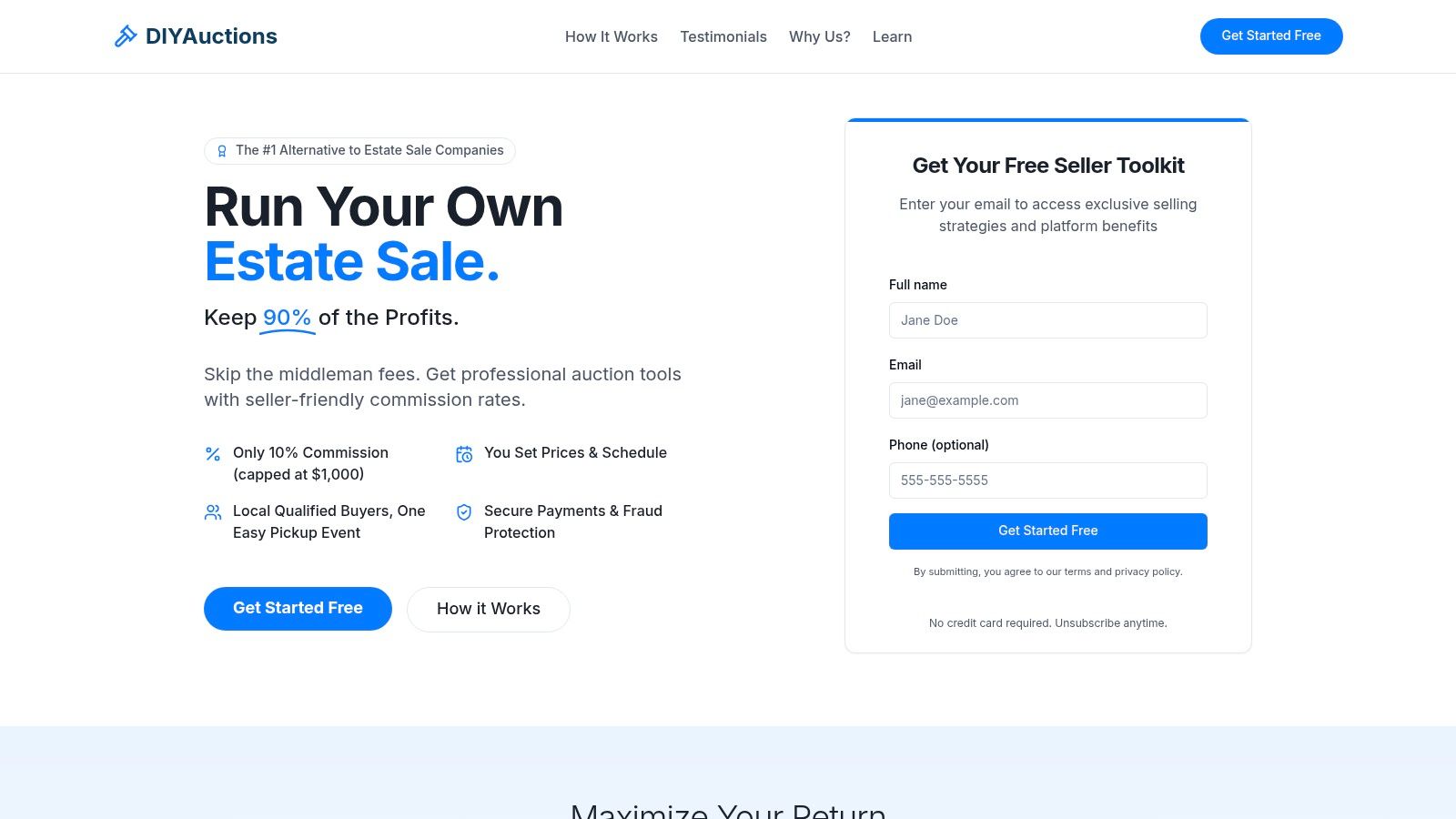
What truly sets DIYAuctions apart is its seller-first financial model. A simple 10% commission, capped at a maximum of $1,000 per sale, is a game-changer. This structure allows sellers to retain the vast majority of their earnings, a stark contrast to the 30-50% commissions common with traditional estate sale companies. For high-value estates, the savings can be tens of thousands of dollars.
The platform handles the critical backend tasks that often overwhelm sellers. This includes marketing your sale to a database of qualified local buyers, processing all payments securely, and providing robust fraud protection. This support allows you to focus on what you do best: preparing your items. The process culminates in a single, organized pickup day managed by you, simplifying the final step of the sale.
Key Features and Considerations
- Financial Control: The 10% commission (capped at $1,000) ensures you keep up to 90% of the revenue. You can start building your sale for free without a credit card.
- Guided Workflow: The user interface provides step-by-step guidance, making it accessible even for first-time online auction hosts.
- Integrated Marketing: Your sale is automatically promoted to local buyers, expanding your reach beyond what you could achieve alone.
- Seller Responsibility: This is a "do-it-yourself" service. You are responsible for photographing items, writing descriptions, and coordinating the local pickup. It is not a full-service, hands-off solution.
This model is ideal for executors liquidating an estate, homeowners downsizing, or collectors who are comfortable managing the physical logistics. For those who want maximum financial return and are willing to invest some hands-on effort, DIYAuctions provides an unparalleled combination of control, support, and profitability.
Website: https://www.diyauctions.com
2. eBay
As the original online marketplace, eBay remains a dominant force and one of the best websites to sell antiques due to its sheer scale. Its global reach connects sellers with an unparalleled number of potential buyers, from casual browsers to highly specialized collectors actively searching for niche items. This massive audience makes it ideal for demand discovery, especially for rare or unusual pieces where the true market value is unknown.
The platform offers flexible selling formats, including auctions to drive competitive bidding and fixed-price "Buy It Now" listings. However, its primary advantage is its historical sales data. Sellers can research "completed listings" to see what similar items actually sold for, providing invaluable, real-world pricing guidance. This feature alone makes it a crucial tool for anyone serious about valuing and selling antiques online.
Key Considerations for eBay
- Fee Structure: eBay's fees can be complex. You'll pay an insertion fee (often waived for a certain number of listings) and a final value fee, which is a percentage of the total sale price including shipping. As of early 2025, sellers should review the updated final value fees for the Antiques category. Optional fees for promoted listings can add to the cost.
- Best Use Case: Excellent for sellers with a wide variety of items, from furniture to ephemera, and those wanting to tap into a huge buyer pool. It’s particularly effective for items with a dedicated collector base.
- Pro Tip: Use high-quality photos from every angle and write detailed, keyword-rich descriptions. Since buyers can’t inspect the item physically, your listing's quality directly impacts buyer trust and final sale price.
Website: https://www.ebay.com
3. Etsy (Vintage)
While best known for handmade goods, Etsy has carved out a significant niche as one of the best websites to sell antiques, specifically "vintage" items, which the platform defines as being at least 20 years old. This clear definition builds buyer trust and attracts a dedicated audience actively searching for retro fashion, unique home decor, collectible jewelry, and nostalgic ephemera. The platform’s strength lies in its marketplace-meets-boutique feel, allowing sellers to create a branded shopfront.
Unlike auction sites, Etsy operates on a fixed-price model, appealing to sellers who know their item's value and want to cultivate a consistent brand. Sellers benefit from integrated tools like calculated shipping labels, direct customer communication, and powerful SEO features that help listings get discovered both on Etsy and through search engines. Its style-conscious community makes it an ideal platform for curated collections that tell a story.
Key Considerations for Etsy
- Fee Structure: Etsy’s fees are multi-layered. Expect a listing fee ($0.20), a transaction fee (6.5% of total price), and a payment processing fee (varies by country). Optional offsite ad fees may also apply if a sale is generated through one of Etsy’s ads, which can add significant cost.
- Best Use Case: Perfect for sellers specializing in curated, style-forward vintage items like clothing, accessories, mid-century decor, and collectibles. For a deeper dive, learn more about how to sell vintage items on Etsy.
- Pro Tip: Your shop's aesthetic is crucial. Use cohesive, high-quality photography and detailed, romantic descriptions to create a strong brand identity. Engage with the community and utilize Etsy's marketing tools to drive traffic to your shop.
Website: https://www.etsy.com
4. Ruby Lane
Ruby Lane positions itself as a curated marketplace, setting a high bar for quality that attracts serious collectors. Unlike the vast, open-for-all nature of some platforms, it operates more like a high-end online antique mall, where individual sellers manage their own storefronts. This focus on vetted, high-quality antiques, art, and vintage jewelry makes it one of the best websites to sell antiques if your items meet their standards.
The platform's structure appeals to established dealers and serious sellers looking for a knowledgeable buyer base. The vetting process ensures that listings are authentic and accurately described, which builds a high level of trust among its dedicated community of collectors. This environment often supports higher average sale prices compared to general marketplaces.
Key Considerations for Ruby Lane
- Fee Structure: Ruby Lane charges a monthly shop maintenance fee, which includes unlimited listings. A tiered "Seller Service Fee" is then applied to sales, which decreases as the sale price increases. Sellers must factor in the monthly cost, as it is due regardless of sales volume.
- Best Use Case: Ideal for sellers with a consistent inventory of high-quality antiques, fine vintage items, or collectible jewelry. It is particularly suited for those who want to build a brand and cater to a discerning, collector-focused audience.
- Pro Tip: Treat your Ruby Lane shop like a professional boutique. Invest in excellent photography, write detailed, historically accurate descriptions, and provide outstanding customer service. Understanding the nuances of your items is key, and an online antique price guide can help you set appropriate market values.
Website: https://www.rubylane.com
5. Chairish
Chairish is a high-end, curated marketplace for chic and unique vintage and antique furniture, art, and decor. It distinguishes itself by targeting a design-savvy audience, including interior designers and discerning homeowners, which makes it one of the best websites to sell antiques that have strong aesthetic appeal. The platform's strong editorial focus and merchandising ensure that listed items are presented in a premium context, often attracting buyers willing to pay a premium for quality and style.
The platform offers a range of seller plans, from a free Consignor option to paid tiers with lower commission rates and enhanced features. A key benefit is Chairish’s handling of logistics for large items, offering sellers integrated access to white-glove shipping services. This support system simplifies the often-complex process of shipping bulky or fragile antiques, a significant advantage over less specialized platforms.
Key Considerations for Chairish
- Fee Structure: Commissions are tiered based on the seller plan and item price. The free Consignor plan has a 30% commission, while professional plans offer lower rates in exchange for a monthly fee. It's crucial to choose a plan that aligns with your sales volume and item values.
- Best Use Case: Ideal for sellers of high-quality, design-forward antique and vintage furniture, lighting, art, and decorative objects. It's particularly effective for pieces that fit into current interior design trends.
- Pro Tip: Your item's acceptance depends on the quality of your photos and its alignment with Chairish’s curated style. Take well-lit, magazine-quality photos and write descriptions that highlight the piece's design provenance and unique character.
Website: https://www.chairish.com
6. 1stDibs
Positioned at the apex of the online market, 1stDibs is a curated, luxury marketplace for the world’s most exceptional antiques, fine art, and design. It is not an open platform; instead, it operates on an application-only basis, vetting professional dealers to ensure the highest standards of quality and authenticity. This exclusivity makes it one of the best websites to sell antiques of significant value, connecting sellers directly with affluent collectors, interior designers, and architects.
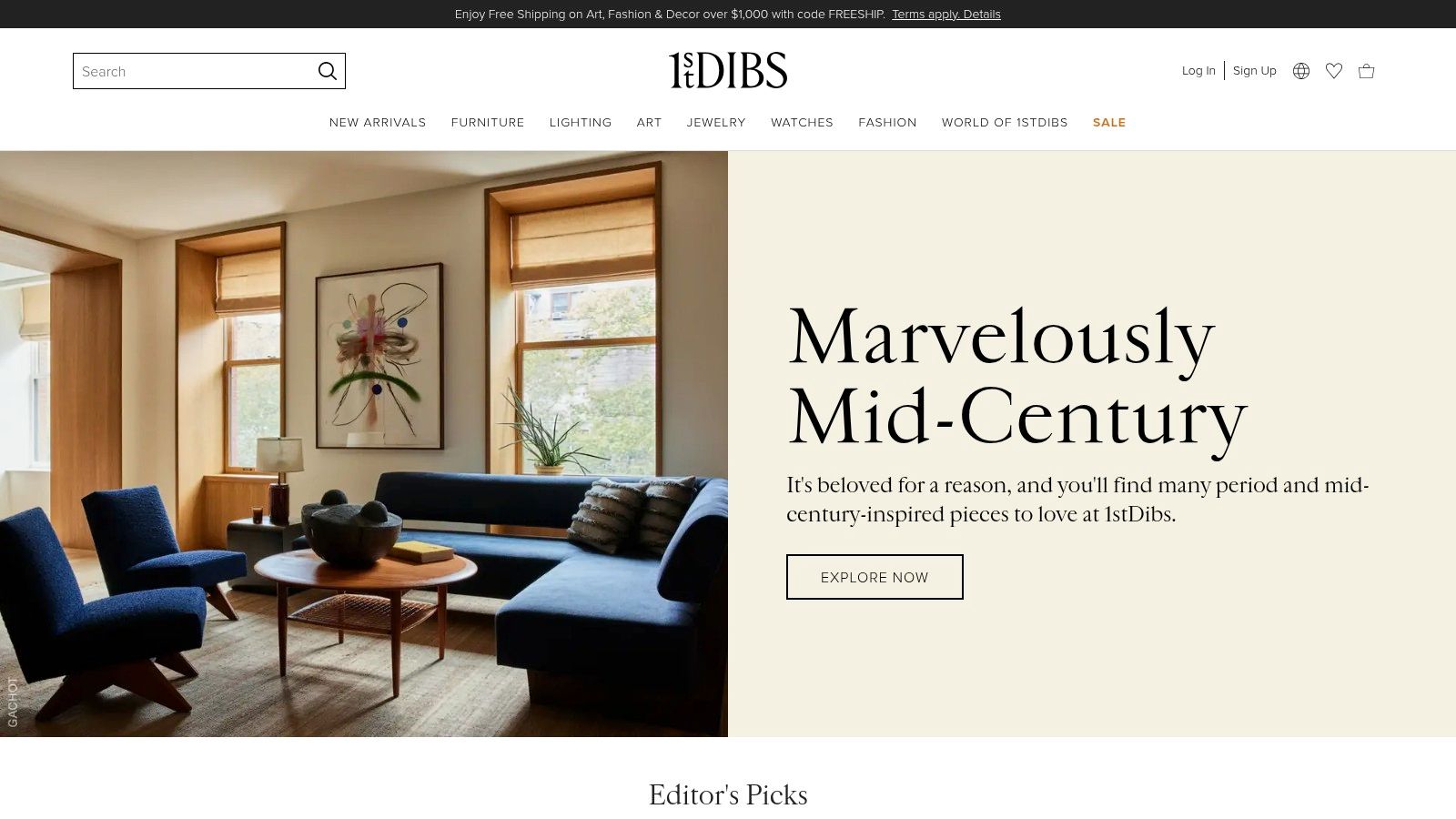
The platform provides a suite of professional tools, including comprehensive logistics support, global marketing, and robust seller protections against fraud. Its primary advantage is granting access to a discerning, high-spend clientele actively seeking investment-grade pieces. This focus on the high end of the market ensures items are presented in a prestigious context, often leading to premium sale prices that are difficult to achieve elsewhere.
Key Considerations for 1stDibs
- Fee Structure: Sellers typically face a combination of a monthly subscription fee and a commission on sales. The exact rates vary by the seller's plan and are not publicly listed, requiring direct consultation during the application process.
- Best Use Case: Ideal for established, professional antique dealers with a consistent inventory of high-value, well-documented items such as signed furniture, important art, or rare decorative objects.
- Pro Tip: Leverage the platform's trade program. Build relationships with interior designers and architects who use 1stDibs for sourcing, as they often make large, repeat purchases for client projects.
Website: https://www.1stdibs.com
7. LiveAuctioneers
LiveAuctioneers operates as a live bidding platform, connecting thousands of individual auction houses with millions of potential bidders worldwide. For sellers, it is an indirect marketplace; you don't list items yourself but instead consign them to a participating auction house. This model makes it one of the best websites to sell antiques of significant value or entire estates, leveraging the marketing power and established reputation of professional auctioneers.
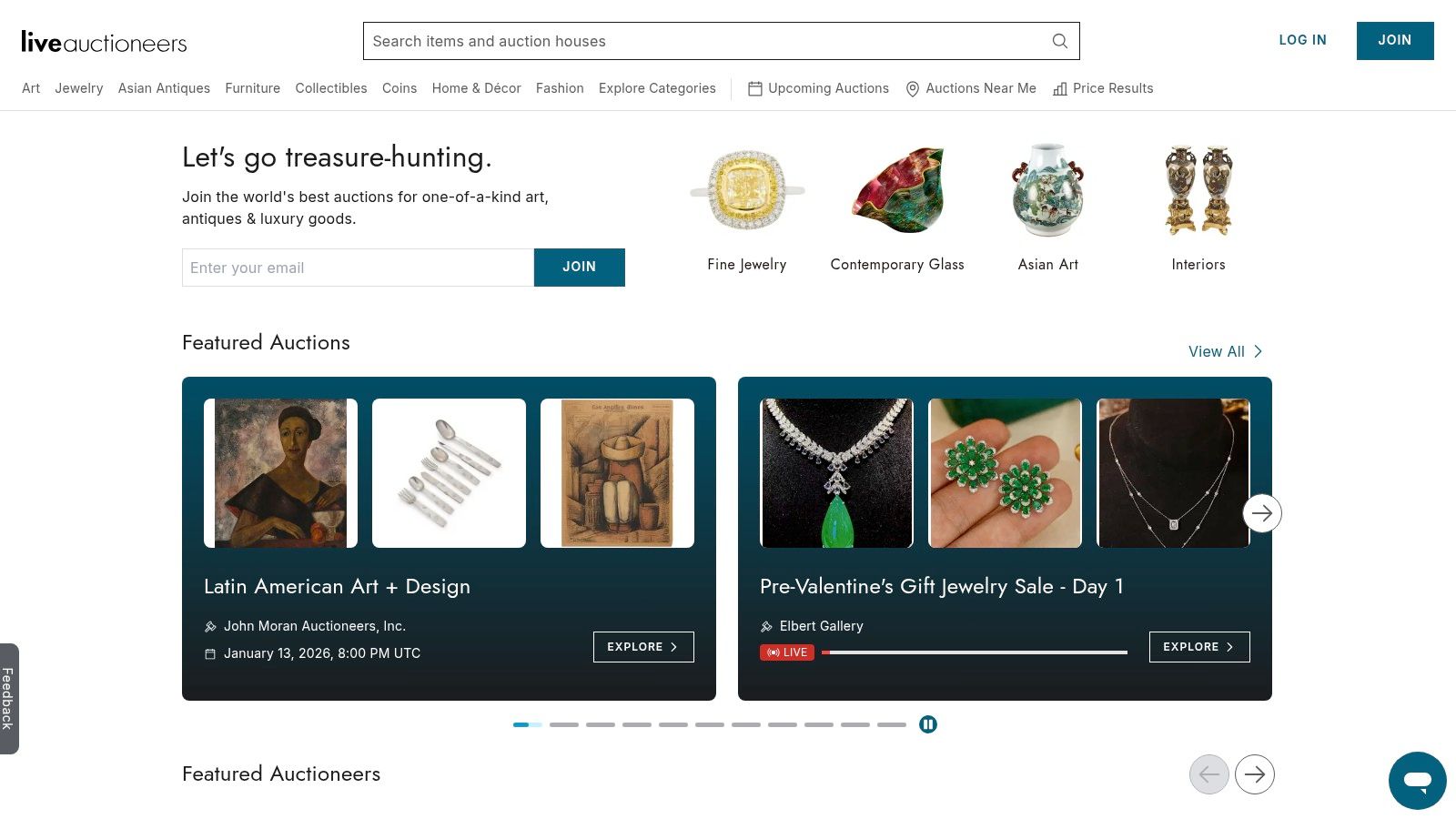
The platform’s strength lies in creating a competitive, real-time bidding environment that can drive prices far beyond initial estimates. By consigning your antiques, you gain access to a targeted audience of serious collectors actively seeking high-quality pieces. The auction house handles the professional photography, cataloging, marketing, and payment processing, making it a streamlined, hands-off process for the consignor.
Key Considerations for LiveAuctioneers
- Fee Structure: Sellers do not pay LiveAuctioneers directly. Instead, you pay a consignor's commission to the auction house handling your items. These fees are highly variable and are negotiated with the specific auction house. Buyers also pay a "buyer's premium," which is added to the hammer price.
- Best Use Case: Ideal for selling high-value individual items, specialized collections, or liquidating entire estates. It's particularly effective for fine art, rare furniture, jewelry, and unique decorative arts that benefit from an auction setting.
- Pro Tip: Research auction houses that specialize in your type of antique. A specialist will have a more targeted client list and the expertise to catalog and market your items effectively, leading to a higher final sale price.
Website: https://www.liveauctioneers.com
8. Invaluable
Invaluable is a unique resource that serves as a high-powered research and connection tool rather than a direct sales platform. It's a leading marketplace for fine art, antiques, and collectibles auctions, connecting sellers to a global network of premier auction houses. While you cannot list items for sale yourself, its true value lies in its comprehensive database of past auction results, making it one of the best websites to sell antiques by first understanding their true market value.
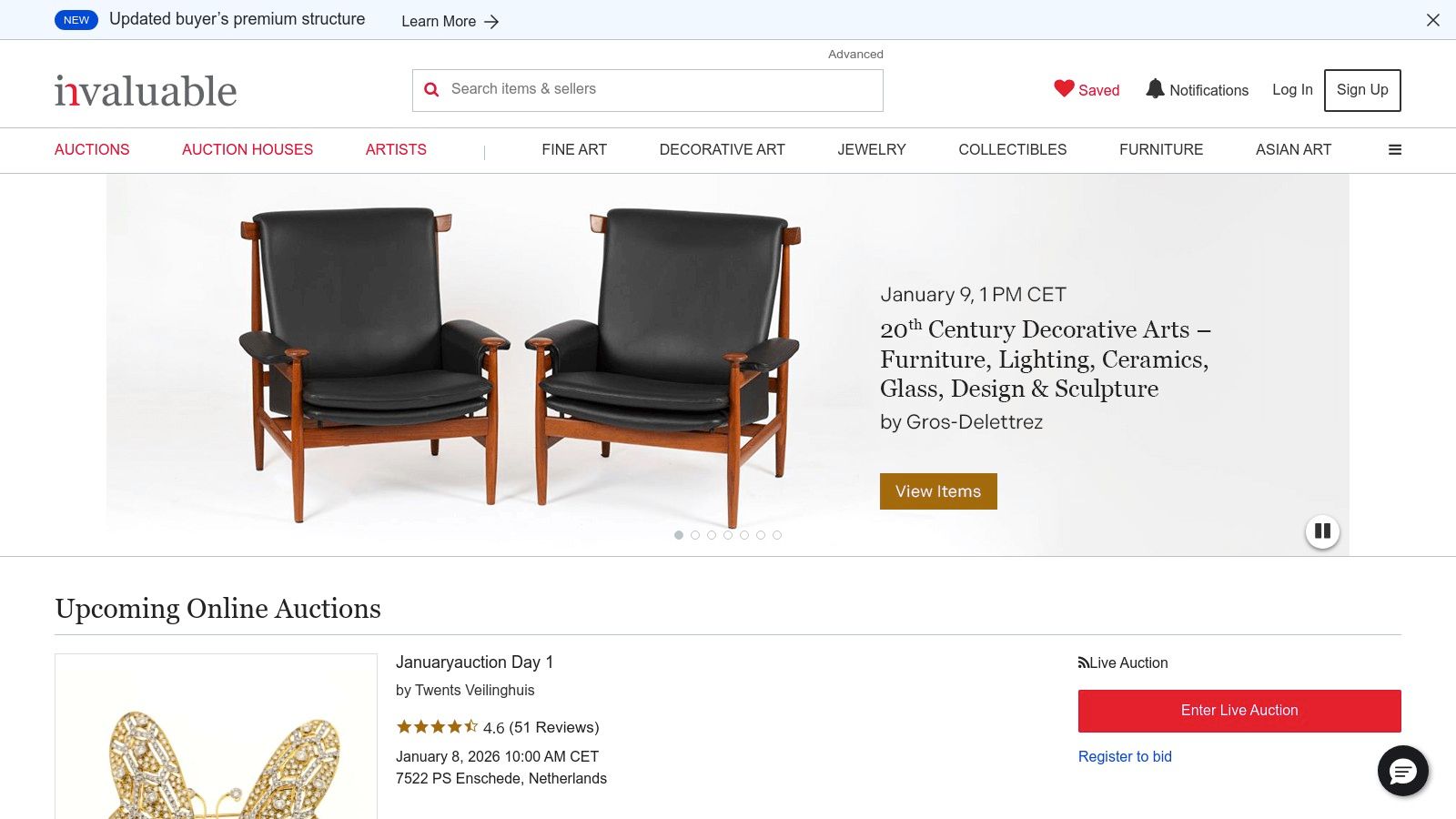
Sellers use Invaluable to identify which auction houses specialize in their specific type of antique and have a proven track record of successful sales. The platform's price archive allows you to research comparable items, providing critical data to set realistic expectations before consigning. This strategic approach helps you find the right venue to reach motivated collectors and achieve the best possible price for high-value pieces.
Key Considerations for Invaluable
- Fee Structure: There are no fees to research or connect with an auction house. However, once you consign an item, the auction house's own commission structure will apply. These fees vary significantly and should be discussed directly with the house.
- Best Use Case: Ideal for owners of fine art, rare furniture, jewelry, and high-end collectibles who need to find a specialized auction house for consignment. It is a critical first step for valuing significant or unique items.
- Pro Tip: Use the "Find an Auctioneer" feature to search by specialty and location. Review the past catalogs of several potential houses to see how they present items similar to yours before reaching out to their consignments department.
Website: https://www.invaluable.com
9. Everything But The House (EBTH)
Everything But The House (EBTH) operates as a full-service online estate sale marketplace, making it one of the best websites to sell antiques for those needing a completely hands-off experience. It is ideal for sellers managing entire estates, downsizing, or consigning a curated collection of high-value items. The company manages the entire process from intake and professional photography to cataloging, marketing, and payment.
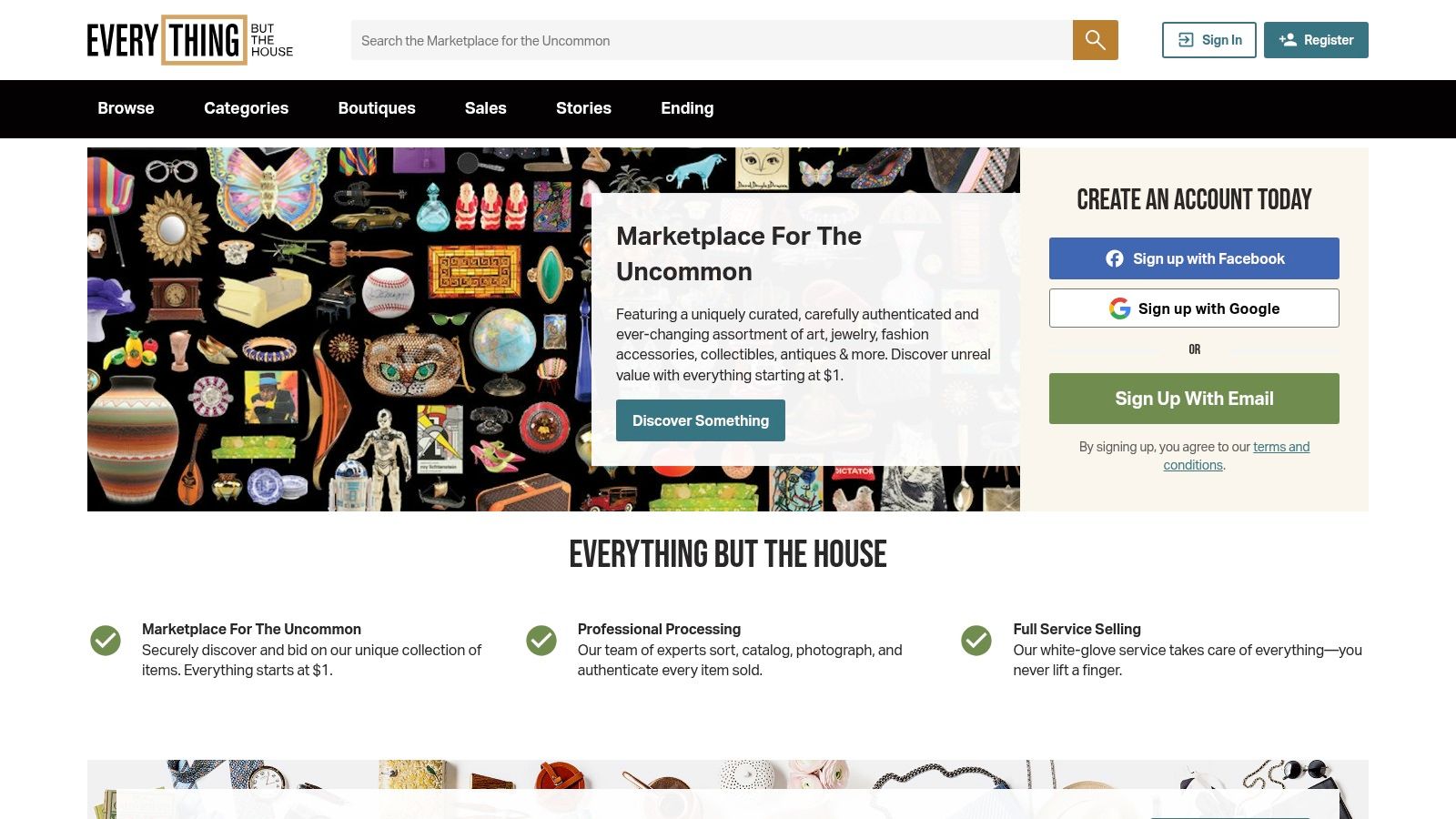
The platform's signature format is the no-reserve auction, where every item starts at just $1. This model attracts a large and competitive bidding pool from across the country, often driving items to their fair market value. For those unfamiliar with the dynamics of this sales model, you can learn more about estate sale antiques and how they function. This end-to-end service distinguishes EBTH from do-it-yourself platforms.
Key Considerations for EBTH
- Fee Structure: EBTH operates on a commission-based model. The specific commission rate and terms are quoted on a per-project basis, depending on the scope and value of the items being sold. There are no upfront listing fees.
- Best Use Case: Perfectly suited for large-scale liquidations, such as clearing an entire home or selling off a significant personal collection. It is the top choice for sellers who value convenience and professional management over maximizing profit on every single item.
- Pro Tip: While the process is hands-off, provide the EBTH team with as much provenance and historical information as you can for key pieces. This detailed background can be used in item descriptions to build bidder confidence and increase the final sale price.
Website: https://www.ebth.com
10. Facebook Marketplace
Facebook Marketplace leverages its massive social network to create one of the most accessible platforms for local sales. It has become a go-to for selling bulky antiques like furniture, mirrors, and large decor, primarily because it facilitates easy, fee-free local pickup transactions. The platform's strength lies in its sheer volume of casual browsers, making it ideal for moving common or large-scale items quickly without the complexities of shipping.
Unlike dedicated antique sites, its user base is broad, not specialized. However, sellers can tap into niche communities by sharing listings in specific buy-and-sell groups dedicated to vintage goods, collectibles, or historical items. While it offers a shipped checkout option with a selling fee, its primary value remains in its powerful local reach and direct buyer-to-seller communication.
Key Considerations for Facebook Marketplace
- Fee Structure: The platform's biggest draw is its zero-fee model for local cash transactions. If you opt for shipped checkout, Facebook charges a selling fee, which is a percentage of the total sale price. Always verify the current fee structure before listing shipped items.
- Best Use Case: Unbeatable for selling large antique furniture or decorative pieces locally. It’s also effective for quickly liquidating less specialized vintage items to a general audience.
- Pro Tip: Always prioritize safety. Arrange to meet buyers in a public, well-lit place. For home pickups, ensure you have someone with you. Clearly state "cash only" or use a secure payment app to avoid potential scams.
Website: https://www.facebook.com/marketplace
11. OfferUp
OfferUp is a mobile-first local marketplace that excels at connecting sellers with buyers in their immediate area. While not exclusively for antiques, its high user volume makes it one of the best websites to sell antiques that appeal to a broad home decor audience, such as furniture, lamps, and mirrors. Its streamlined, app-based interface is designed for quick listings and direct communication between parties, facilitating fast, local transactions.
The platform’s key strength lies in its simplicity and focus on in-person exchanges. For sellers looking to avoid the complexities of packing and shipping large items, OfferUp provides a direct path to a local audience. Features like user verification and suggested safe meeting locations help build trust, though standard precautions for in-person sales are still necessary.
Key Considerations for OfferUp
- Fee Structure: For local sales where you meet the buyer and accept cash, there are no selling fees. This is a significant advantage for maximizing profit on bulky items. Fees only apply if you choose to use the platform's payment and shipping options, which are less common now.
- Best Use Case: Ideal for selling larger, more common antiques like vintage furniture, decor, and household goods to a local audience. It’s perfect for sellers prioritizing a quick, fee-free sale over reaching a niche national collector base.
- Pro Tip: Your success on OfferUp is geographically dependent. Respond to messages quickly and be flexible with meeting times. Use clear, well-lit photos and include dimensions in your description to minimize back-and-forth questions from potential buyers.
Website: https://offerup.com
12. AptDeco
For sellers specializing in antique and vintage furniture, AptDeco solves the single biggest challenge: logistics. This curated marketplace is built around a white-glove pickup and delivery service, making it one of the best websites to sell antiques that are too large or fragile to ship easily. By handling the complex coordination of moving bulky items, it removes a major barrier for both sellers and buyers, particularly in major U.S. metropolitan areas.
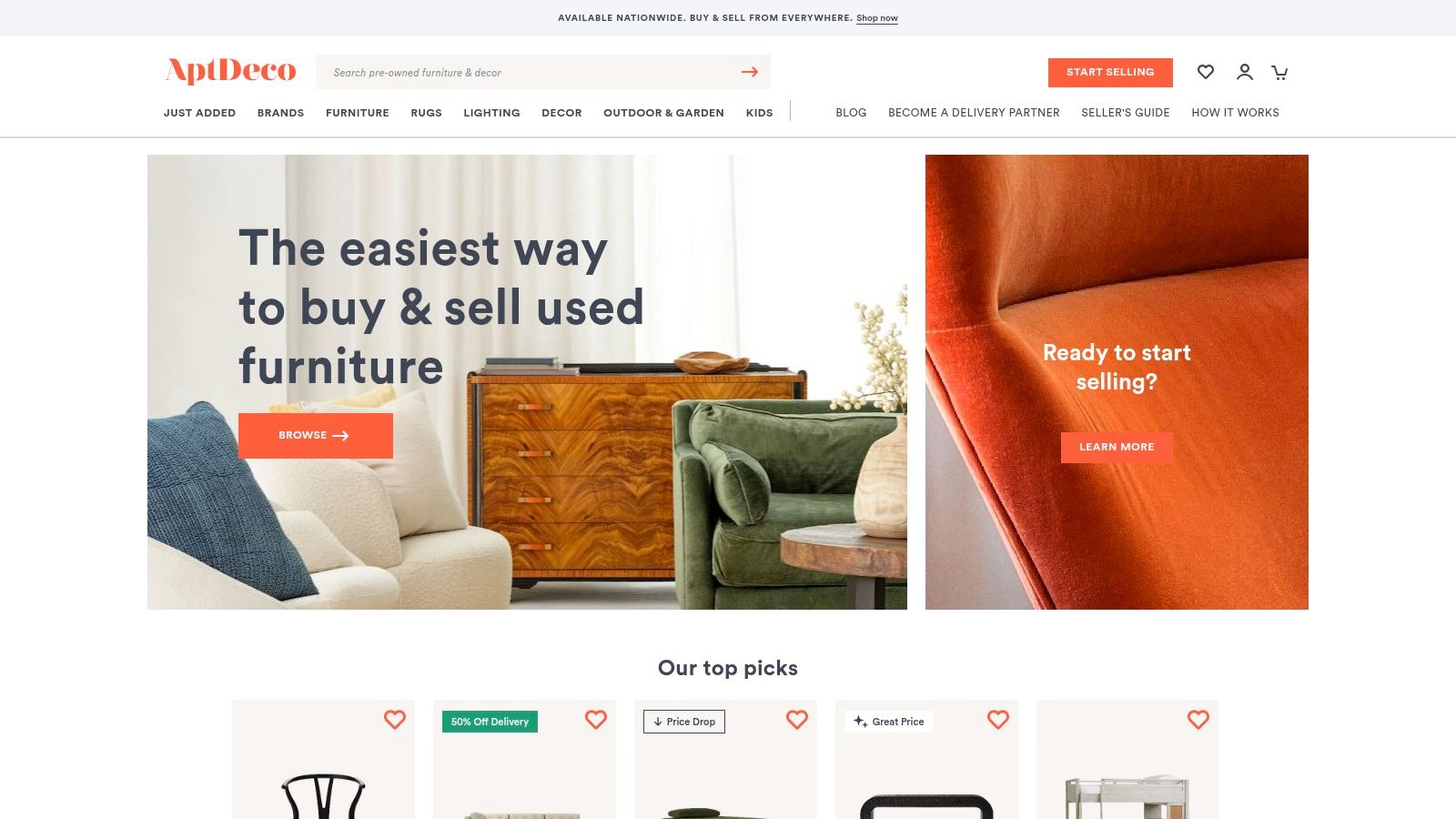
The platform attracts a design-conscious audience actively searching for unique, high-quality furniture and decor. AptDeco’s team reviews each listing to maintain a standard of quality, which builds buyer confidence. Sellers benefit from a streamlined process that includes price guidance, a seller dashboard for managing listings, and secure payment processing, with fast payouts after the item is successfully delivered to its new home.
Key Considerations for AptDeco
- Fee Structure: AptDeco charges a commission fee based on the final sale price, which covers marketing, payment processing, and the coordination of its delivery service. The fee is tiered, so be sure to check their current rates for your item's price range.
- Best Use Case: Ideal for selling antique or vintage furniture, large mirrors, and substantial decor pieces. It's perfect for sellers who want a hassle-free, turnkey solution without worrying about shipping.
- Pro Tip: Your listing is more likely to be approved and sell quickly if you take clear, well-lit photos in a nicely staged environment. Highlight any wear or patina that adds to the item's antique character.
Website: https://www.aptdeco.com
Top 12 Websites for Selling Antiques — Comparison
| Platform | Key features | UX & trust (★) | Price / Value (💰) | Target audience (👥) | Unique selling points (✨) |
|---|---|---|---|---|---|
| DIYAuctions 🏆 | Guided cataloging, local marketing, secure payments, single-day pickup | ★★★★☆ secure payments & verified testimonials | 💰 10% commission (capped $1,000) — keep up to 90% | Executors, downsizers, collectors, tech-savvy sellers | ✨ DIY control + expert support; low capped fee 🏆 |
| eBay | Auction & fixed-price formats, global reach, seller tools | ★★★★☆ massive demand; variable buyer quality | 💰 Final value fees + optional ads (variable) | Broad — casual sellers to power sellers | ✨ Unmatched reach & completed-sales comps |
| Etsy (Vintage) | Shopfronts, SEO-friendly listings, integrated payments | ★★★★☆ trusted vintage audience; clear vintage policy | 💰 Listing + transaction + processing + ads | Curated vintage sellers, small shops | ✨ Strong discovery for style-forward vintage |
| Ruby Lane | Curated antiques, monthly shop fee, unlimited listings | ★★★★☆ collector-focused; vetting builds trust | 💰 Monthly shop fee + tiered service fees | Dealers & high-quality antique sellers | ✨ Curated buyer base; favorable for high-value items |
| Chairish | Design-focused marketplace, auction channel, white-glove options | ★★★★☆ strong merchandising for design buyers | 💰 Tiered plans; higher entry commissions on some tiers | Furniture & decor sellers targeting designers | ✨ White-glove logistics & design-savvy audience |
| 1stDibs | Application-only luxury marketplace, trade program | ★★★★☆ high-trust, vetted dealers & affluent buyers | 💰 Subscription + commission (premium pricing) | Galleries, dealers, high-end collectors | ✨ Access to high-spend global buyers |
| LiveAuctioneers | Live & simulcast bidding via auction houses | ★★★★☆ strong exposure; auction-house managed | 💰 Consignor commissions set by auction house | Estates & high-value consignments | ✨ Competitive live bidding to maximize price |
| Invaluable | Auction search, Past Prices archive, house matching | ★★★★☆ research-forward; no direct consigning | 💰 Depends on chosen auction house | Sellers researching auction routes | ✨ Global auction discovery & price research |
| EBTH | Full-service intake, pro photography, staff-managed auctions | ★★★★☆ hands-off, professional cataloging & marketing | 💰 Commission-based, quoted per project | Whole-home downsizers, sellers wanting turnkey | ✨ End-to-end service with national bidder reach |
| Facebook Marketplace | Local listings, buyer messaging, optional shipped checkout | ★★★☆☆ fast local sales; buyer quality varies | 💰 Free for local pickup; fees for shipped checkout | Local buyers, quick furniture sales, declutterers | ✨ Zero-fee local selling; massive local reach |
| OfferUp | Mobile-first listings, in-app messaging, user verification | ★★★☆☆ easy local transactions; variable safety | 💰 Free for local cash sales | Local furniture & household sellers | ✨ Mobile simplicity + TruYou verification |
| AptDeco | Furniture-focused, white-glove pickup & delivery | ★★★★☆ turnkey logistics; curated buyer base | 💰 Higher commission than DIY/local marketplaces | Sellers of bulky/vintage furniture wanting logistics | ✨ White-glove pickup/delivery; fast payouts after delivery |
Choosing the Right Platform for Your Prized Possessions
Navigating the digital marketplace to sell your antiques can feel overwhelming, but the journey from dusty attic to delighted buyer is clearer once you understand the distinct pathways available. As we've explored, the best websites to sell antiques are not one-size-fits-all. Your ideal platform is a strategic match between the items you possess, your desired level of involvement, and your ultimate financial goals.
The digital landscape offers a spectrum of solutions. For high-value, meticulously curated items, platforms like 1stDibs and Chairish provide a vetted, affluent audience willing to pay a premium for authenticated quality. Conversely, for quick local sales of bulky furniture or everyday vintage finds, Facebook Marketplace and OfferUp offer speed and convenience, albeit with more hands-on coordination required from you.
From Full-Service to Full Control
Your choice often boils down to a trade-off between convenience and control. Full-service models like Everything But The House (EBTH) are a blessing for those managing large estates or simply lacking the time for logistics, as they handle everything from cataloging to shipping. However, this white-glove service comes at a cost, often in the form of significant commission fees.
On the other end, platforms like eBay and Etsy empower you with direct control over your listings, pricing, and customer interactions. This DIY approach can maximize your profit margins but demands a considerable investment of your time in photography, writing descriptions, and managing fulfillment. It requires you to become the marketer, salesperson, and shipper all in one.
Actionable Steps to Your First Sale
Before you commit to a platform, take these crucial next steps to set yourself up for success:
- Inventory and Appraise: Create a detailed list of your items. For anything you suspect is of high value, consider getting a professional appraisal. This knowledge is your most powerful tool in selecting a platform and setting prices.
- Define Your Goals: Are you looking for the highest possible return, a quick and easy clear-out, or a way to reach a niche collector community? Be honest about your priorities: time, profit, and effort.
- Calculate the True Cost: Look beyond the headline commission rate. Factor in listing fees, payment processing charges, and potential shipping subsidy costs. A platform with a 10% commission could end up being more expensive than one with a 5% commission plus numerous hidden fees.
- Start Small: If you're new to online selling, don't list your most valuable heirloom first. Choose a few mid-range items to test a platform's process. This allows you to learn the system and build seller feedback with lower stakes.
Ultimately, the power to unlock the value in your possessions is firmly in your hands. By carefully evaluating your collection against the unique strengths and weaknesses of each site, you can confidently select the right partner for your selling journey. Choose the platform that not only showcases your items beautifully but also aligns with your personal and financial objectives, ensuring your treasured antiques find appreciative new homes and you reap the rewards you deserve.
More guides in Selling Antiques & Collectibles
July 31, 2026
Ceramic Christmas Tree Atlantic Mold Seller's Guide
Identify, value, and sell a Ceramic Christmas Tree Atlantic Mold piece with confidence. Covers markings, rarity, condition, pricing, and listing tips.
Read guideJuly 30, 2026
Nurre Mirror Value: How to Identify and Sell for Profit
Learn to assess nurre mirror value with our step-by-step guide. Identify authentic pieces, estimate price, and sell profitably on DIYAuctions.
Read guideJuly 29, 2026
Distinction Deluxe Stainless Steel by Oneida HH: A Complete
Learn to identify, assess, and price your distinction deluxe stainless steel by oneida hh set for maximum profit.
Read guideGet the estate sale pricing guide
Enter your email for pricing ranges, planning notes, and a clearer path to launch.