A Pro Guide to Charlottesville Estate Sales
Run successful Charlottesville estate sales with our guide. Learn local Virginia laws, pricing strategies, and marketing tips for C'ville liquidations.
Running an estate sale in Charlottesville isn't just about selling off some old stuff. It's a massive project, often happening during a really pivotal moment in someone's life. The biggest fork in the road you'll face right away is deciding whether to bring in a local estate sale company or tackle it yourself. Both routes have major financial and emotional ripples, so it's a decision worth weighing carefully.
The Reality of Estate Sales in Charlottesville
When you decide to hold an estate sale here, you're tapping into a market that's anything but one-size-fits-all. The Charlottesville area has a unique blend of influences that shape every sale. You could be dealing with a historic property right in the city, a sprawling country estate out in Albemarle County, or even a home tied to the ever-present university community. Each one comes with its own set of challenges and real opportunities.
Think about it. A historic home near the Downtown Mall might be full of valuable period furniture and local art that would draw in a very specific crowd of collectors. On the other hand, clearing out the home of a relocating UVA professor could mean a collection of modern furniture, towering bookshelves, and specialized academic gear. Getting a handle on this local flavor is the first real step to a successful sale.
The Core Decision: DIY vs. Professional Services
This is the big one: how are you going to manage the sale? The traditional path is to hire a full-service estate sale company. These folks do it all—they come in, handle the inventory, price everything, run the marketing, and manage the sale days.
The other option is to go the do-it-yourself (DIY) route. This puts you firmly in the driver's seat, giving you total control over every decision, from what to keep to how much to ask for each item. It's definitely more hands-on, but the financial upside can be huge.
A key factor in this decision is cost. Traditional estate sale companies in Charlottesville typically charge a commission of 30% to 50% of the total sales. For a sale grossing $20,000, that could mean paying between $6,000 and $10,000 in fees.
This is where you really need to understand the financial trade-offs. The DIY path, while demanding, lets you keep a much bigger piece of the pie. That's where platforms like DIYAuctions come in—we bridge that gap by giving you the tools and marketing reach of a professional service but with much lower commissions. It’s a modern alternative for people who are comfortable managing the process themselves.
Financial and Emotional Considerations
Beyond the bottom line, there's a serious emotional side to this. Sifting through a loved one's entire life of belongings or downsizing your own home is draining, to say the least.
You have to ask yourself some tough questions:
- Emotional Toll: Can you stay detached enough to price things fairly and deal with hagglers?
- Time Commitment: Do you realistically have the weeks it takes to sort, stage, market, and run the sale?
- Logistical Complexity: Are you ready to manage crowds, handle payments, and coordinate all the item pickups?
Choosing the right path for your Charlottesville estate sale really comes down to your personal situation, what your financial goals are, and if you’re emotionally prepared for the task. To get a clearer picture of the numbers, you can explore a detailed breakdown by learning more about the average cost of an estate sale in our comprehensive guide. Building this foundation will help you plan smart and get the best possible outcome.
Staying Compliant with Virginia Estate Laws
Before you even think about pricing grandma’s antique sideboard, you have to tackle the legal side of things. This is easily the most critical part of planning any estate sale in Virginia. It’s not just about red tape; it’s about protecting the estate, its beneficiaries, and yourself from some serious legal and financial headaches.
When you're running a Charlottesville estate sale, you're more than just a seller. You're a fiduciary, and that comes with real legal responsibilities.
Your first step is proving you have the legal right to sell anything at all. If the sale is happening because of a death, that authority usually goes to the executor named in the will. This isn't automatic—you must be officially qualified by the Clerk of the Circuit Court. For most of us here, that means a trip to the Albemarle County Circuit Court.
This qualification isn't a mere formality. It officially kicks off the probate process, which is how the court oversees the whole affair of identifying assets, paying off debts, and distributing what’s left. Without that court's stamp of approval, you simply have no right to sell or get rid of any estate property.
The Executor and the Probate Process
When you're dealing with an estate, you have to understand how Virginia law dictates the distribution of assets. Getting a handle on Virginia's probate process is non-negotiable, and the weight of that responsibility falls squarely on the executor's shoulders.
As the executor, your legal duty is to always act in the best interest of the estate. This comes with a few key tasks that directly affect the sale:
- Secure the Assets: The very first thing you do after being qualified is lock everything down. Change the locks, make sure valuables are safe—protect the property.
- Notify the Heirs: You have to send formal notifications to all heirs and beneficiaries as required by state law.
- Create an Inventory: This is a big one. You need to create a detailed inventory of every single asset, which then gets filed with the Commissioner of Accounts.
That inventory isn't just a simple list for your sale. It's an official legal document. Every item, from the dining room set down to the costume jewelry, must be listed with an estimated value for the court. If you're not thorough here, you're setting yourself up for major delays and potential legal challenges from beneficiaries.
Virginia Sales Tax and Local Ordinances
Once you’ve got the legal authority squared away, it’s time to think about financial rules, starting with sales tax. The good news? If you're running the sale yourself for a one-time household liquidation, Virginia generally doesn't require you to collect sales tax. But the rules can get a little tricky. For a closer look at the specifics, our guide on general estate sale laws can offer more clarity.
Beyond the state level, you've got local rules in Charlottesville and Albemarle County that can easily trip you up. Ignoring these small details can lead to big problems.
Take advertising, for instance. Putting up signs seems simple enough, right? But both the city and the county have strict rules about where they can go. Signs placed in public rights-of-way—stuck on utility poles or at intersections—are illegal. They’ll get taken down, and you could face a fine. Any signs you use must be on private property, and you absolutely must have the owner’s permission first.
On top of that, many Charlottesville neighborhoods are run by a Homeowners Association (HOA). These HOAs have their own rulebooks, which often dictate:
- How many sales are allowed per property each year.
- Which days and hours a sale can be held.
- Where (or if) you can place signs within the community.
Before you even think about setting a date, get your hands on the HOA covenants. Breaking these rules can result in fines against the property, which is the last thing the estate needs. A quick call or email to the HOA board is a simple step that can save you a world of trouble.
Creating a Realistic Estate Sale Timeline
Running a successful Charlottesville estate sale isn't something you can throw together in a weekend. I’ve seen it time and again—the biggest mistake people make is drastically underestimating how long it takes to sort through a lifetime of belongings. Rushing the process is a surefire way to get overwhelmed and, frankly, leave money on the table.
Give yourself a solid four to eight weeks. Trust me on this. That timeframe turns a mountain of a task into a series of manageable steps, giving you the breathing room you need to make clear-headed decisions, especially when emotions are running high.
The First Hurdle: Sorting It All Out (Weeks 1-3)
This is the most hands-on part of the whole process, both physically and emotionally. You'll need to go through everything, room by room, drawer by drawer, separating items into clear categories. Don't worry about pricing just yet—the only goal here is to get organized.
Set up distinct areas or use colored labels for four simple piles:
- Sell: Everything that will be part of the auction.
- Keep: Personal items, family photos, and heirlooms that are staying with you.
- Donate: Items that are still in good shape but may not have much resale value.
- Discard: Anything that's broken, expired, or truly unsellable.
While you're sorting, it’s absolutely critical to find and secure all personal documents. We're talking about financial records, wills, property titles—anything with sensitive information. Put these in a safe, separate location away from all sale items. You don't want them accidentally sold or tossed.
My Two Cents: Don't be too quick to call something "junk." I've seen old postcards, rusty-looking tools, and dated clothing turn into hot-ticket items for local Charlottesville collectors. If you're on the fence, set it aside. You can always decide later.
Finding the Value and Setting the Stage (Weeks 4-5)
Once everything is sorted, you can finally start figuring out what it’s all worth. This is where you get a real sense of the estate's financial potential. For common household goods, a quick search on online marketplaces will give you a decent ballpark figure.
But for those special pieces—like Virginia-made furniture, local art, or unique collections—it's time to call in an expert. A certified appraiser provides a formal valuation, which is not only key for setting the right price but can also be necessary for legal and tax matters during probate.
This is a good point to visualize where you are in the broader legal and financial journey.
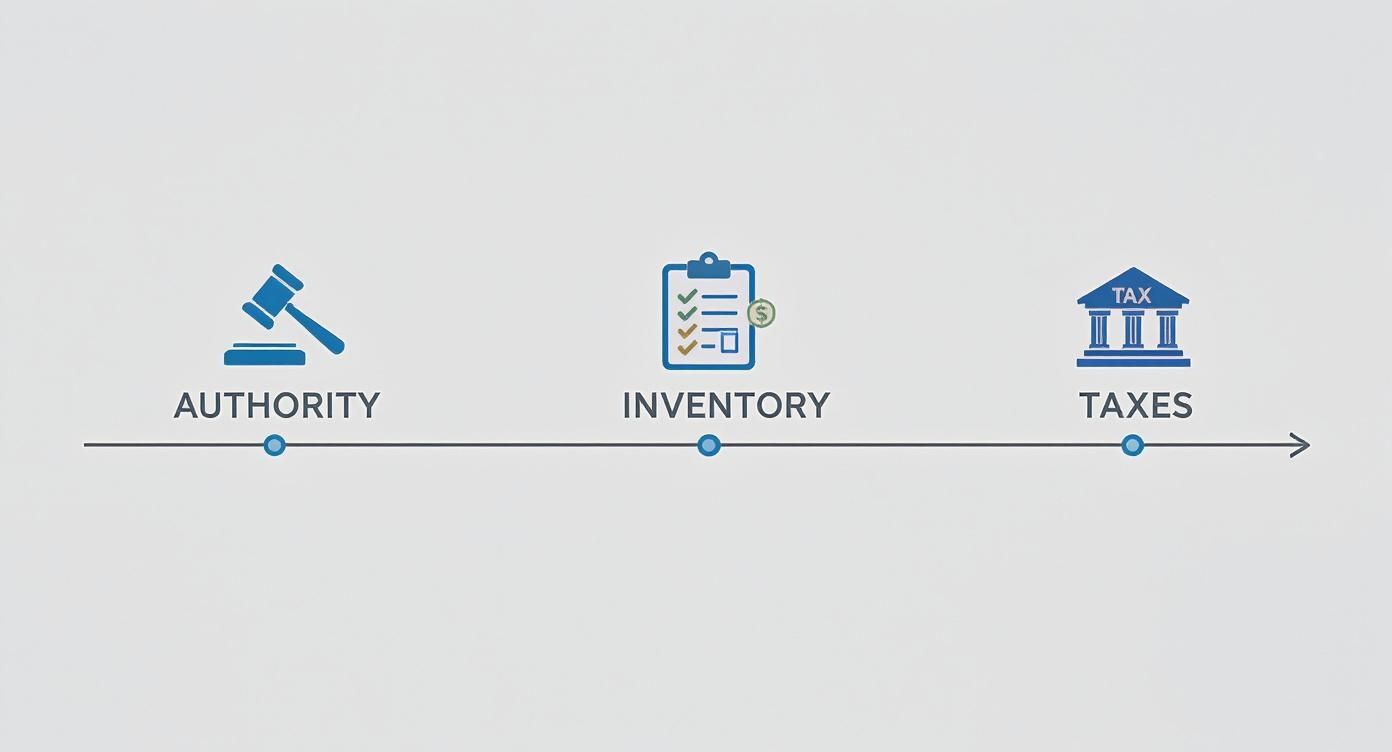
As the graphic shows, getting authority, creating a solid inventory, and handling taxes are the bedrock of the process—and they all come before the sale itself.
With values in hand, you can move on to staging. The idea is to turn the home from a private space into a mini-retail environment. Clean everything up, group similar items together, and make sure there are clear, safe paths for buyers to walk through.
The Final Push: Marketing and Logistics (Weeks 6-8)
These last few weeks are all about promotion and final prep. Now you’ll be taking great photos of your best items, writing descriptions that sell, and getting the word out about your Charlottesville estate sale to draw in the right crowd. With all the hard sorting and pricing behind you, this is the fun part—building excitement for the main event.
This is also a moment to consider the big picture. Many estates include real estate, and property values in our area have been on a steady climb. Back in 2002, the median sales price for a home in Charlottesville and Albemarle County was $242,750. By 2023, it had more than doubled to $582,620. This incredible appreciation shows why getting accurate valuations for everything in an estate is so important. You can dig deeper into these Charlottesville market trends to understand their impact.
Finally, nail down the logistics. Line up help for the sale days, set up a checkout station, and decide how you’ll handle payments. A well-planned timeline like this one prevents that last-minute scramble and sets you up for a smooth and profitable sale.
Pricing and Promoting Your Sale to C'ville Buyers

Nailing the pricing for the contents of a Charlottesville home is part art, part science. It’s a delicate dance between solid research and your own gut instinct. One minute you could be valuing everyday kitchenware, and the next, you're looking at a rare book from a historic Downtown property. Getting this right is what makes or breaks your sale.
For most of the everyday stuff—the sofa, the dish sets, the bedroom furniture—your best bet is a quick online reality check. Hop on Facebook Marketplace or check eBay's sold listings for similar items. You're not aiming for brand-new retail prices; you're looking for that sweet spot that gets an item sold quickly.
But some things need an expert eye. Never, ever guess on the value of fine jewelry, original art, or serious antique collections. This is where you bring in a certified appraiser. Their fee is a small price to pay to avoid the nightmare of undervaluing a true hidden gem by thousands.
Valuing the Property Itself
In many Charlottesville estate sales, the house itself is the biggest asset on the table. The local real estate market has seen its fair share of ups and downs, which directly impacts how you need to approach the sale. Accurately pricing the home is a critical step, and to do it well, you need to understand how to price a home for sale accurately.
Just look at the history here. During the financial crisis from 2007 to 2010, the annual average of foreclosed (REO) sales shot up to around 130, a huge jump from the 25 per year we saw from 2001 to 2006. By early 2019, the market had found its footing again, stabilizing with a low vacancy rate of 1.3% and 4,525 total home sales in the previous year. This shows just how much the wider economy can influence an estate’s bottom line.
Marketing to a Local Audience
Once you’ve got your prices sorted, it’s time to spread the word. A successful marketing plan has to be laser-focused on the real buyers right here in the C'ville area. You aren't just selling to the void; you're targeting specific local groups who are actively looking for what you have.
Think about who's shopping:
- UVA Students: They're always on the hunt for affordable furniture, kitchen basics, and decor for their dorms and apartments.
- Antique Dealers: These pros are scanning sales for unique, high-value pieces they can flip.
- Young Families: Looking for quality used furniture, kids' items, and household essentials without the retail markup.
- Collectors: Searching for very specific things, from vintage vinyl to local pottery.
Your promotions need to speak their language. The absolute key is a compelling online listing, and that starts with great photos. Dim, blurry pictures are a complete deal-killer. Use natural light, snap photos from every angle, and make sure to get close-ups of any important details or maker's marks.
Storytelling sells. Instead of a boring "old wooden desk," try "Solid oak writing desk from a 1950s UVA professor's study." That little bit of history and character makes an item infinitely more desirable to a Charlottesville buyer.
Choosing the Right Promotional Channels
Don't try to be everywhere at once. Focus your energy on the platforms where Charlottesville buyers actually hang out. A smart, multi-channel approach is usually the most effective way to get eyeballs on your sale.
Top Local Promotion Channels:
- Facebook Marketplace and Local Groups: This is your most powerful free tool. Post in groups like "Charlottesville VA Online Yard Sale" or "Buy/Sell/Trade Albemarle County." Creating a Facebook Event for your sale is also a great way to generate buzz.
- Estate Sale Listing Websites: National sites like EstateSales.net have a huge local following. Serious estate sale shoppers subscribe to their email alerts and check the listings daily.
- The DIYAuctions Platform: When you list your sale with us, we don't just give you a platform—we actively promote it. We market your auction directly to our network of qualified local buyers in the Charlottesville area, putting your items in front of serious shoppers ready to bid.
By pairing accurate pricing with a savvy, localized marketing plan, you build the momentum you need for a profitable and busy sale. It’s all about knowing what you have, who wants it, and how to connect them right here in our community.
Running the Sale and Handling the Aftermath
After weeks of prep work, the big day is finally here. This is where all that planning pays off, turning a private home into a smooth, shoppable marketplace for a few short days. Success at this stage comes down to confidently managing the flow of people, items, and money.
Your main goal is to create an environment that feels organized, not chaotic. Start by setting up a clear path for shoppers to follow through the house. Simple signs can direct the flow of traffic, and if the layout allows, using one door for entry and another for exit is a game-changer. It’s a simple trick that prevents logjams in hallways and lets everyone browse without bumping elbows.
Creating a Safe and Secure Sale Environment
Security is, without a doubt, one of the biggest anxieties during any Charlottesville estate sales event. When you have dozens of people you don't know walking through a property, you need a solid plan to protect both the home and its most valuable contents.
Think about the small, high-demand items—jewelry, watches, rare coins. These are the most vulnerable. A locked glass display case is a great solution, especially if you place it right by your checkout station where it’s always in sight. For the rest of the house, simply having a few friends or family members stationed in different rooms works wonders. Their presence is not only a great deterrent but also a huge help for answering shopper questions.
Managing Checkout and Payments
A clunky checkout process can sour a great shopping experience. Set up a single, dedicated spot for all transactions, usually right near the exit. Make sure you’re ready to take more than just cash.
- Cash: It’s still king for many. Have a secure cash box and plenty of small bills and coins ready to make change. Don't get caught without it.
- Digital Payments: Apps like Square or PayPal make accepting credit and debit cards incredibly easy right from your phone. The small fee is a tiny price to pay for securing a larger sale from a buyer who didn't bring enough cash.
Keep your checkout table tidy with bags, boxes, and wrapping paper for fragile finds. A little organization here keeps the line moving and buyers happy. For a deeper dive into day-of logistics, check out our complete guide on how to successfully run an estate sale.
After the Sale: The Important Clean-Out Phase
Once the last shopper leaves, you’re on the home stretch. The final, crucial step is clearing out every last item to get the property completely empty—often called getting it "broom clean," a standard requirement for real estate closings.
Let's face it, the ultimate goal of an estate sale is often to sell the house itself. In a hot market like ours, a clean, empty home is non-negotiable. For example, local data from late 2020 showed detached homes in Charlottesville had a median of just 23 days on the market, partly fueled by a nearly 50% drop in inventory. You can read more about those local real estate market conditions and trends to see just how critical it is to have a property ready to list immediately.
The clean-out is all about sorting what’s left.
Pro Tip: Don't just trash everything! Many unsold items still have a second life. Sorting them for donation or consignment adds one last bit of value to the estate while helping out local charities.
Your best bet is a simple, three-part plan to clear the house efficiently.
- Donate: Round up all the usable items that didn't sell—think clothing, books, and basic household goods. Organizations like the Habitat for Humanity of Greater Charlottesville or the SPCA Rummage Sale are fantastic local options, and many will schedule a pickup for larger furniture.
- Consign: What about that high-end sofa or antique painting that didn't find the right buyer? A local consignment shop in the Charlottesville area can take it from there, selling it for you over time.
- Dispose: For everything else that’s broken, stained, or simply unsellable, it's time to call in the pros. Renting a dumpster or hiring a junk removal service is the fastest way to handle the final push, leaving the property spotless and ready for whatever comes next.
Answering Your Top Charlottesville Estate Sale Questions
Even with the best-laid plans, questions always come up. Running an estate sale in Charlottesville has its own set of rules and financial realities, and it’s smart to know what you're getting into. We've compiled some of the most frequent questions we hear to give you clear, straightforward answers.
Think of this as your go-to reference. It’s here to cut through the confusion and help you make confident decisions.
How Much Do Estate Sale Companies Charge in Charlottesville?
This is almost always the first thing people ask, and for a very good reason. The vast majority of traditional estate sale companies around Charlottesville work on commission. That means they take a slice of the total gross sales right off the top.
You should expect that commission to land somewhere between 30% and 50%. The final percentage isn't just a number pulled out of a hat; it usually depends on the estimated value of the estate and how much work is involved.
- High-Value Estates: If the home is full of desirable antiques, original art, or valuable collections, you might be able to negotiate a lower rate, maybe in the 30-35% range.
- Typical Household Estates: For a more standard liquidation of furniture, everyday items, and general home goods, you're more likely to see commissions in the 40-45% ballpark.
Here's a pro tip: Always, always get a contract in writing that spells out the commission percentage. It should also explicitly list any extra fees for things like trash hauling, post-sale cleaning, or special advertising. Those hidden costs can really eat into your final check.
Do I Need a Permit for an Estate Sale in Albemarle County?
Good news here—the short answer is typically no. For a one-off estate sale held at a private home, you generally don't need a special permit from the City of Charlottesville or Albemarle County. That definitely simplifies the paperwork.
But don't get too comfortable. The real compliance headaches often come from a more local source: your Homeowners Association (HOA). If the property is in a neighborhood with an HOA, they almost certainly have strict rules about sales. This could include how many days the sale can run, where you can park, and what kind of signs you can use.
Speaking of signs, both the city and the county have ordinances against placing them in the public right-of-way. You can’t just stick your signs on utility poles or at street corners. Every sign has to be on private property, and you need the owner’s permission first.
How Should I Handle Valuable Items Like Jewelry or Fine Art?
This is where you need to be extra careful if you're managing the sale yourself. For any item you even suspect has significant value—fine jewelry, original paintings, sterling silver, rare books—guessing is not your friend. Your first move should be hiring a professional appraiser.
A general estate liquidator might not have the niche expertise to value a 19th-century landscape painting or a vintage Cartier watch accurately. An appraiser gives you an objective, market-based valuation. It’s a small investment that could save you from accidentally selling something for a fraction of its worth.
Once you have a certified value, you have a few options:
- Feature it in your main sale: This can be a great way to draw in serious buyers, but you'll want to set a firm reserve price.
- Consign it to an auction house: A specialized auction house can connect your item with a global network of dedicated collectors.
- Sell it to a specialty dealer: A local Charlottesville dealer who focuses on that category might make a fair, direct offer.
What Common Mistakes Should I Avoid with a DIY Sale?
Running your own sale is empowering, but it's easy to stumble. Being aware of the common pitfalls is half the battle.
From our experience, these are the biggest mistakes people make:
- Underpricing: This is the most common error. Without a deep understanding of the local market, people leave a lot of money on the table.
- Weak Marketing: A sign in the yard and a Craigslist post won't cut it anymore. You have to actively market your sale online where the real buyers are looking.
- Lax Security: Small, valuable items can disappear in a crowd. It’s heartbreaking, but theft is a real risk if you’re not vigilant.
- Getting Emotional: This is tough, but you have to separate your personal attachment from the business of the sale. Letting sentiment influence your pricing or negotiations will only hurt your final outcome.
More guides in Estate Sale Basics
July 28, 2026
Revenue Reporting for Estate Sales and Auctions
Learn revenue reporting essentials for estate sales and auctions. Discover key metrics, templates, and best practices to simplify tracking and compliance.
Read guideJuly 26, 2026
Stamp Collection Valuation: A Practical Step-by-Step Guide
Stamp collection valuation made simple. Learn how to identify, grade, price, and sell your stamps with confidence for estate sales or consignment.
Read guideJuly 23, 2026
Estate Sales Brick NJ: Your 2026 Guide to Success
Planning your estate sales brick nj? Our guide covers permits, pricing, marketing, & running a safe sale with DIYAuctions.
Read guideGet the estate sale pricing guide
Enter your email for pricing ranges, planning notes, and a clearer path to launch.