Cherry Hill Estate Sales: A Local Buyer and Seller Guide
Find Cherry Hill estate sales worth the drive, buy smarter on sale day, and plan your own sale with permits, pricing and executor records covered.

You're standing in a Cherry Hill split-level that hasn't really changed in 30 years. The dining room's full, the basement has tools you don't recognize, and a sibling is texting about what happens to the china. Whether you're the executor, the adult child downsizing a parent, or a buyer hoping that house holds a solid mid-century dresser, an estate sale looks simple from the curb. Inside, it's a paperwork, access, and pricing problem that rewards people who plan before they tag anything.
What Estate Sales Are and Why Cherry Hill Produces Them
An estate sale liquidates household contents, often after a death, a move to a smaller home, or a decision to downsize. The sale may cover furniture, kitchenware, tools, and collections throughout the house. Unlike a yard sale focused on surplus goods, an estate sale can involve the contents of multiple rooms and proceeds that belong to an estate. For an executor, that makes clear records and accountable pricing part of the work.

The Local Base Behind the Sales
Cherry Hill's housing and population figures help explain why household contents come up for sale regularly. According to U.S. Census Bureau QuickFacts for Cherry Hill township, the population grew from 71,045 in the 2010 Census to 74,553 in the 2020 Census, an increase of 3,508 residents, or about 4.9%. The latest estimate is 79,965 residents as of July 1, 2025. Long-term homeownership can mean decades of accumulated furniture, tools, kitchenware, and collections, all of which may need sorting and valuation when a household changes hands.
The Cherry Hill township demographic report states that more than 70% of Cherry Hill's housing units were built from 1940 to 1980, while 5.3% were built after 1999. Many homes have three or four bedrooms, with contents spread across several floors and storage areas. That volume affects both the sale and its records: inspections and item valuations help explain what buyers are offered, while organized records give beneficiaries a way to review what was sold and for how much.
| Indicator | Value |
|---|---|
| Population, 2010 Census | 71,045 |
| Population, 2020 Census | 74,553 (+3,508, about 4.9%) |
| Population estimate, July 1, 2025 | 79,965 (+7.3% from 2020 base) |
| Owner-occupied share of occupied homes, 2020 to 2024 | 76.5% |
| Median owner-occupied home value | $386,300 |
| Residents aged 65 or older | 20.7% |
| Homes built 1940 to 1980 | More than 70% |
| Homes built after 1999 | 5.3% |
These figures describe the town, not the number of estate sales. They point to a steady supply of homes where accumulated contents may need to be valued, sold, or cleared. Buyers may find a range of household goods in older, larger homes; sellers need to account for the work of sorting, documenting, and managing the property as well as the sale.
Find Cherry Hill Estate Sales and Their Preview Dates
You can build a useful weekend list in five minutes if you check sources in the right order. Start broad, then verify details on the seller's own page before you drive anywhere.
| Source | What It Shows | Best Use |
|---|---|---|
| Estate sale listing sites | Sale dates, addresses and lot photos | Scanning the whole week in one search |
| Company and auction websites | Preview galleries, hours and terms | Checking one company's sales in detail |
| Local Facebook groups | Posts with dates and sometimes item photos | Catching sales posted in the last 48 hours |
| Yard signs on sale mornings | Arrows and dates at the curb | Finding small sales that never get listed |
| Map search for estate sales | Pins and nearby addresses | Planning a route across several addresses |
| Township and community newsletters | Sales tied to local events or neighborhoods | Tracking recurring sales in one area |
What a Strong Listing Looks Like
Photos tell you more than headlines. A listing with clear shots of furniture, tools, and collectibles in actual rooms is a stronger lead than one generic image and a list of categories. Look for close-ups of makers' marks, drawer interiors, and tool benches. Blurry wide shots usually mean the seller hasn't sorted yet, and pricing on site will be improvised.
Company and auction sites are better for terms. You'll find preview galleries, start times, parking notes, and whether bidding happens online. If you're comparing formats while you search, this overview of finding estate sales near you and online helps you separate walk-through sales from auction sales with a single pickup day.
The Five Checks Before You Leave
- Address confirmed: Verify the street address, not just the neighborhood name.
- Hours and duration: Note whether it's one day or several, and when doors open.
- Preview access: Check whether a preview is open or whether photos are the preview.
- Payment accepted: Confirm cash, card, or both, so you don't lose a piece at checkout.
- Categories present: Skip any sale whose photos show nothing you collect or resell.
Cherry Hill sales often cover several floors plus a basement and garage, so one good sale can eat your whole morning. Save three sales with the strongest photos, drive them in listed order, and don't add a fourth out of optimism. Curb signs are your opportunistic extra, not your plan.
Route rule: Three verified sales beat six vague listings every time. Distance between stops matters less than photo quality at each one.
How to Attend a Cherry Hill Estate Sale and Buy Well
Good buying looks boring. You arrive early, walk slowly, inspect before you carry, and confirm pickup before money changes hands.
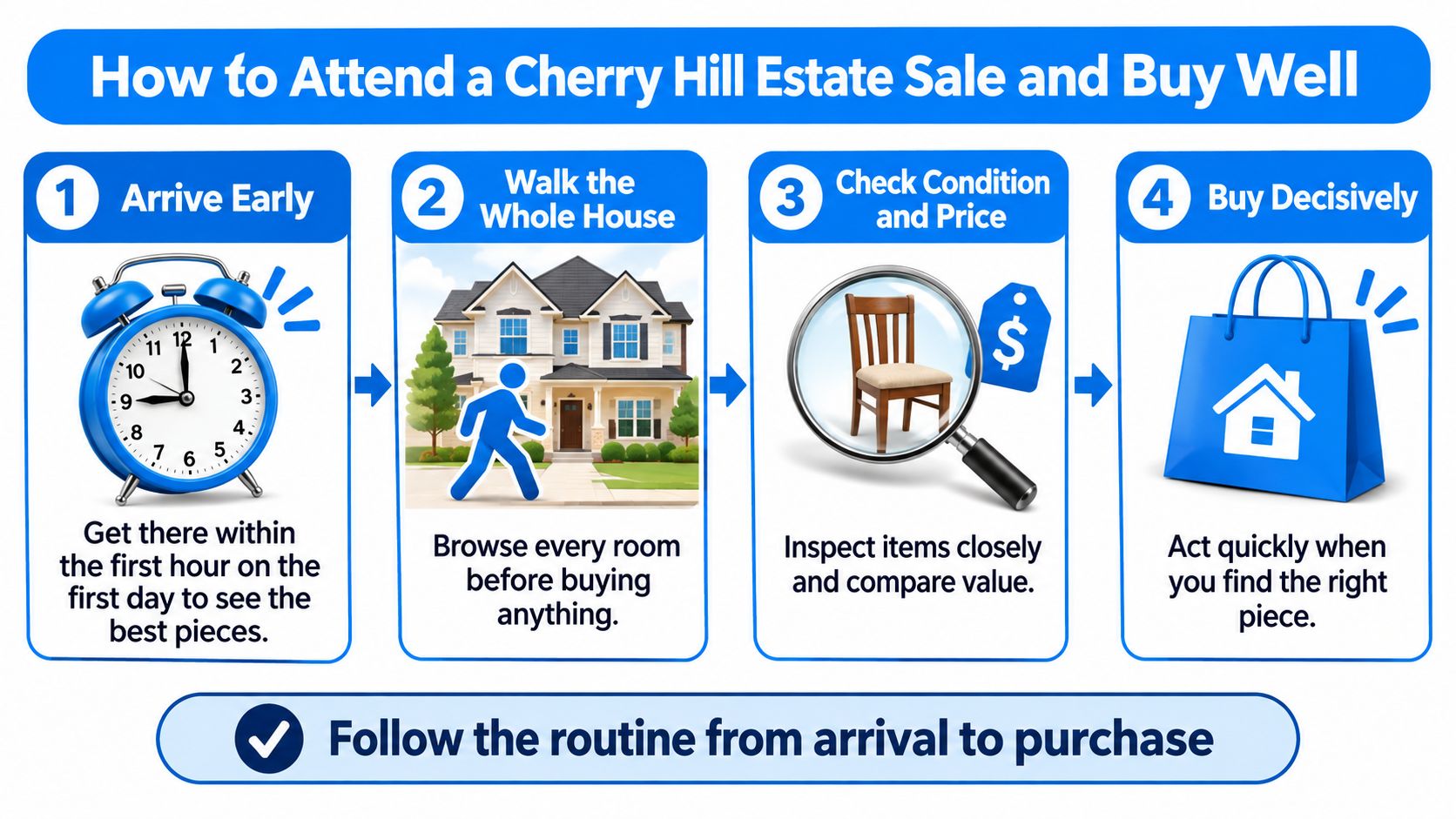
- Arrive within the first hour on the first day. The best pieces, meaning clean mid-century furniture, named tools, and complete sets, rarely survive to day two. Early arrival costs you sleep, not money.
- Walk the whole house before buying anything. Note every room, the basement, and the garage. You'll spot the matching nightstands upstairs after seeing the dresser downstairs, and you'll avoid spending your budget in the first room.
- Inspect each item properly. Test electronics in an outlet. Pull drawers, check joints, rock the frame, and look for hallmarks on silver and jewelry with your phone light. Condition defects you miss at the house become your repair bill at home.
- Ask about pricing on unlabeled items. Many sellers price on the spot, and reasonable offers get easier on later days. On auction-format sales, skip this step. Competitive bidding sets the final price and there's no haggling to do.
- Bring the kit that prevents bad buys. Cash in small bills, a tape measure, moving blankets or a cart, and your phone for measurements and serial numbers. Measure your doorway and vehicle before you leave home, not in the seller's driveway.
- Ask about pickup before you pay. Confirm whether removal is same day, whether help loading exists, and whether delivery is possible. A cheap armoire you can't move isn't cheap.
- Return on the final day for markdowns. Colored stickers and bundle deals appear because sellers would rather discount than haul leftovers. Expect value in linens, kitchenware, and books, not in the headline pieces.
House Rules That Protect Everyone
Never enter rooms the seller has marked off. Those spaces hold family keepsakes, paperwork, or items under dispute, and crossing tape can get you asked to leave. Keep hallways clear while you decide, and don't stack holds you aren't serious about.
At checkout, leave with three things. Get a receipt, an item list with prices, and a confirmed pickup time in writing. Photograph large pieces where they stand, including existing scratches, so pickup day doesn't turn into an argument about damage.
Hosting Timeline, Pricing and Staging From Start to Finish
Sellers lose money in the first two weeks, not on sale weekend. Rushed sorting buries valuables in donation piles, and unpriced collectibles walk out at kitchenware prices. This timeline prevents both.
| When | Task | Output |
|---|---|---|
| 8 weeks before | Decide what to sell, donate or keep; inventory each room | Room-by-room list |
| 6 weeks before | Set aside family pieces; book appraisals for jewelry, art and collectibles | Appraisal receipts |
| 4 weeks before | Photograph and catalog lots; draft a pricing sheet | Photo log and price sheet |
| 2 weeks before | Confirm sale dates, pickup day, staging and signage | Signed schedule |
| 1 week before | Clean, tag and group items by room; publish the sale | Live listing and tagged rooms |
| Sale days | Run the preview, keep hours, mark markdowns | Daily sales log |
| Pickup day | Collect buyer items and close out the sale | Pickup list and receipts |
Sorting and Cataloging
Work room by room and finish one space before opening another. Set aside family pieces in a closed room early, because relatives change their minds less when keepsakes are physically separated. Book appraisals for jewelry, art, and collectibles at six weeks, not six days, since appraisers book out and you'll need their values before you build lots.
When we run a seller-led sale, sellers create lots and organize the house room by room, keeping the context only the family knows. That context matters. You know the dining set is complete and the drill press works, and a catalog that says so sells better than silent photos. We publish the sale, route buyers, handle payment flow, and keep bidding organized, so your effort goes into accurate descriptions instead of crowd control.
Pricing Without Guesswork
Group similar items and price against real comparisons for sold pieces, not asking prices. Price slightly above your target on walk-through sales and plan markdowns for days two and three. Never list a valuable item without a comparison. For a deeper method on comparables and condition adjustments, ScanFlip AI's walkthrough on pricing household finds for resale is a useful companion while you build your sheet.
Auction format changes the work. Competitive bidding sets the final price, so your job is honest photos, measurements, and defect notes that let remote buyers bid confidently. Our breakdown of pricing for estate sales covers reserve thinking and lot grouping. Bundle low-value items into lots, because a box of kitchen tools sells and single utensils don't.
Staging That Sells
- Clear walkways first: Buyers who can't circulate don't stay.
- Keep room groupings intact: Bedroom furniture reads as a set in a bedroom.
- Test electronics and label results: A working note with your initials and date builds trust.
- Label rooms by category: Fast navigation means more rooms visited per buyer.
Check with the Cherry Hill township office whether a permit applies to your sale before you publish it. Keep full hours on the first two days, log every sale and price daily, and don't negotiate against your own markdown schedule out of nerves.
Inspections, Access and Pickup Rules That Change Your Schedule
A house scheduled for inspection may still be full of furniture, but clearing it too early can hide wall or floor damage, block an inspector's access, or expose unsafe conditions. Plan the sale and removal around the inspection sequence, not just the listing date.
The Mallon Homes guide to selling a house in Cherry Hill notes that the process can involve a local fire-safety inspection and a Certificate of Continued Occupancy review covering sidewalks, driveways, fences, trees, sanitation, drainage, sump discharge, and accessory structures. Those checks affect when items can leave and whether the driveway needs to stay open for access.
| Situation | Keep Until Inspection Is Done | Pickup Plan |
|---|---|---|
| Home listed for sale | Furniture needed for the walk-through | Sell rooms first, then clear the rest in one pickup day |
| Home under contract | Items the buyer's closing terms require | Plan pickup before the closing date |
| Home still occupied | Living room and bedroom contents | Run the sale in one area and keep exits clear |
| Bulky or hazardous items | Paint, batteries and propane tanks | Arrange disposal before sale morning |
| Inherited home, delayed closing | Valuable items and estate records | Hold valuables in one locked room until appraised |
One Pickup Day Instead of a Weekend of Traffic
DIYAuctions sales end with one coordinated local pickup day instead of multiple days of buyers walking through the house. A single pickup day keeps driveways and exits clear, keeps neighbors calm, and makes the property easier to secure after bidding closes. Stage sold lots by zone near the exit they will use, and move bulky items to the ground floor before pickup day.
An estate sale is part of handing over a safe, inspectable property.
Some buyers may not collect their items. Sellers can re-list them, donate them, or offer them to the next-highest bidder. Decide how to handle leftovers before pickup day, rather than improvising with a truck outside. Finish with a house-ready walk-through: clear exits, open driveway, remove hazardous materials, and photograph every room empty. Those photos document the property's condition at handover.
Executor Duties and Records After a Death
The instinct after a death is to clear the house fast and end the hard part. For an executor, that's the riskiest move you can make. Speed without records invites the one outcome you can't undo, a beneficiary who believes the sale wasn't fair and has no paper trail to prove otherwise.
The record review starts before anything is priced.

Authority Comes Before Access
Confirm your Letters Testamentary or Letters of Administration and read the will's provisions before any item is sold, given away, or discarded. U.S. Census Bureau QuickFacts for Cherry Hill shows 20.7% of residents are age 65 or older and 76.5% of housing units are owner-occupied, which is why inherited full houses are common here. New Jersey fiduciaries may generally sell estate property publicly or privately, but you must still account for debts, taxes, beneficiaries, and distribution of proceeds. Family agreement at the kitchen table doesn't replace formal appointment.
Separate estate assets from anything belonging to a surviving occupant or relative. Photograph rooms as found before sorting starts. If siblings want specific pieces, record each allocation in writing with a value, because undocumented keepsakes become disputed distributions later.
This short video walks through the executor record-keeping sequence in plain language.
Valuation Records That Hold Up
IRS Publication 559 states that inherited property generally receives a tax basis equal to fair market value on the decedent's date of death, or an alternate valuation date when properly elected by the personal representative. Weak descriptions and missing photos make that valuation hard to substantiate, and any later gain or loss calculation inherits the weakness.
Build the file as you catalog:
- Photograph each material asset: Use several angles, including marks, labels, and defects.
- Record identifiers: Note manufacturer, model, serial number, dimensions, condition, provenance, and valuation date.
- Preserve outcomes: Keep sold prices, discounts, unsold results, and receipts together.
- Separate specialized property: Pull jewelry, art, vehicles, antiques, and collections out of general household lots and appraise them independently when value or uncertainty justifies the cost.
Don't substitute a property-tax assessment for item-level values. Assessments address real estate, not the contents inside it. A listing price isn't automatically fair market value either. In our auction format, competitive bidding sets the final price, so buyers don't haggle, and that bid record becomes a clean, dated trail of what the market paid. Use this executor duties checklist to sequence appointment, inventory, valuation, and sale accounting without skipping the quiet steps. When legal or appraisal questions exceed the checklist, pay for advice before the sale, not after a challenge.
Choose Your Next Step for a Cherry Hill Sale
Buyers, pick three sales with strong room photos this week and drive them in listed order with cash, a tape measure, and your vehicle measurements saved. Hosts, start the eight-week timeline now by listing each room and booking appraisals for jewelry, art, and collectibles before you price anything. Executors, confirm your Letters Testamentary or Letters of Administration and the will's terms first, then inventory valuables and order independent valuations.
We run seller-led estate sales and guide them from the first lot to pickup day, and we offer a free estate sale pricing guide with typical fee ranges, pricing guidance, and a 30-day launch checklist. Our commission is 10 percent of the sale price, capped at $1,000 per transaction. Compare that plainly with the cost of running a sale yourself, including your weekends and your record-keeping risk. You keep control of prices and dates. Download the free pricing guide today, list one room tonight, and let that first finished catalog page set the pace for the rest of the house.
Get the estate sale pricing guide
Enter your email for pricing ranges, planning notes, and a clearer path to launch.