Downsizing Tips for Empty Nesters: A 7-Step Plan
Practical downsizing tips for empty nesters: phased planning, room-by-room decluttering, smart selling, and financial steps for a smoother move.

The bedrooms are quiet, but the closets are still full. You're heating rooms you rarely enter, keeping furniture for gatherings that have changed, and wondering whether the next home should be smaller or easier to manage. Then you open a cupboard and find another decision waiting.
Downsizing isn't a test of how much you can throw away. It's a sequence of choices about your home, money, belongings, and family history. Make those choices in the right order, and you won't have to price collectibles while packing the kitchen or discover that your favorite sofa won't fit through the new doorway.
These downsizing tips for empty nesters follow the decisions you'll face along that timeline, from planning before you've chosen a destination to arranging the final sale and pickup. You can begin even if you're staying put for now. Start with what no longer serves you, preserve what matters, and let your next stage of life determine what comes along.
1. Start Early with a Phased, Room-by-Room Plan
Your decision point is whether to move now, prepare for later, or simplify where you are. Don't make selling the house a prerequisite for reducing its contents. You can clear unused rooms while you investigate housing options without committing to a moving date.
Housing availability can complicate that decision. Redfin's analysis of empty nesters and large homes describes the difficulty of finding affordable, move-in-ready smaller homes, especially for owners leaving a mortgage-free property. Selling unwanted possessions and buying another home are separate projects.

Build a schedule around decisions
Choose a low-emotion area, such as a linen cupboard or utility-room shelf. A garage works only if it isn't where you keep your treasured tools or hobby equipment.
- Assign room deadlines. Put sorting, photography, donation, and removal dates on a shared calendar.
- Separate sorting from hauling. Finish the decisions before scheduling transport.
- Keep a sale inventory. Record each item's location, owner, condition, and proposed destination.
- Reserve breathing room. Leave space between clearing possessions and preparing the property for sale.
Say you're considering a condo but haven't found one. Start with duplicate garden equipment and unused guest-room furniture, not the bed you sleep in or the desk you use daily.
Use our downsizing checklist for seniors to organize the overall sequence, and the Royal LePage Brookside Realty downsizing guide as a companion for move preparation. Keep your own calendar as the working document rather than juggling competing lists.
2. The Four-Box Method for Keeping, Selling, Donating, and Discarding
An unused bread maker is an easy decision until someone says they might bake again. At the sorting stage, give every object a destination based on actual use, condition, and fit, not a vague possibility.
Label containers Keep, Sell, Donate, and Discard. For furniture and oversized equipment, use matching tags and inventory entries instead of trying to move everything into sorting piles.

- Keep means justified. The item has a current purpose, a confirmed place, or personal significance you deliberately choose to preserve.
- Sell means marketable. You can identify it, describe its condition, and make it available to a buyer.
- Donate means usable. Confirm that the receiving organization accepts the item before loading the car.
- Discard means unsuitable for reuse. Separate recycling, electronics, batteries, paint, and other materials requiring special disposal.
Suppose your dining set won't fit the likely destination. Tag it for sale, photograph it in place, and keep it usable until the scheduled removal. Moving it into the garage immediately creates unnecessary lifting and can damage the finish.
Sorting rule: A sale pile isn't progress unless you also assign responsibility for listing it and arranging its departure.
Allow a temporary review area for disputed belongings, but give it a firm review date. Otherwise, you've created another storage category.
The home organisation tips from Container Self Store can complement your room-clearing routine. Keep walking routes open throughout the process, and don't build piles that make everyday life harder while you're trying to simplify it.
3. Swedish Death Cleaning (Döstädning)
Before offering sentimental belongings for sale, decide which memories need a physical object. Swedish death cleaning offers a useful frame: reduce what others will eventually have to sort, while you can still explain the stories and make the choices yourself.
That doesn't mean treating your home as an estate before you're ready. It means distinguishing an irreplaceable family letter from a replaceable serving platter, even when both have been in the same cupboard for decades.
Offer the story without imposing the object
Invite adult children to identify what they want. Send photographs, dimensions, and a short history rather than asking whether anyone wants everything in the dining room.
- Name the owner. Don't promise or sell a shared possession without agreement.
- Document its history. Attach names, places, and meaningful details to heirlooms.
- Set collection expectations. A family claim needs an agreed pickup arrangement.
- Respect a refusal. Someone can value the memory without having room for the furniture.
For example, a daughter may want her grandmother's handwritten recipes but not the cabinet that held them. Preserve the recipes, photograph the cabinet, and release the furniture without interpreting that choice as rejection.
A study of later-life household downsizing found that informal sales were generally less stressful, while participants described garage sales as laborious and had mixed reactions to estate sales. Choose a selling process that preserves control rather than assuming every household should use the same method.
You don't have to keep an entire collection to preserve the person or period of life it represents.
If partners disagree, pause the disputed category and continue elsewhere. Don't resolve an emotional disagreement by putting the item in the donation pile.
4. Measure and Plan Before You Move
The sofa fits against the wall, but the front door won't open fully. That's the kind of mistake a floor plan should catch before you commit an item to the moving truck.
Begin with functions rather than furniture. Decide where you'll sleep, read, work, eat, pursue hobbies, and accommodate guests, then assign pieces to those activities. In a representative Swiss survey, 26% of empty nesters felt their home was too large, according to the Zurich University of Applied Sciences. Your own room audit should focus on how you live, not how many rooms you once needed.
Check the route as well as the room
Use graph paper or a floor-plan app to draw the destination. Measure furniture at its widest points, including arms, handles, and projecting legs.
- Access measurements. Check doors, hallways, stair turns, elevators, and building delivery restrictions.
- Operating space. Allow room for drawers, recliners, cabinet doors, and dining chairs in use.
- Everyday movement. Keep routes between seating, bathrooms, and exits clear.
- Storage access. Don't keep something merely because it fits on an inaccessible shelf.
Say your dining table fits only with every chair pushed in. It doesn't fit the way you need to use it. Sell it before the move rather than paying to transport it and solving the problem later.
For layout inspiration, consult these cozy living room furniture ideas, then test any arrangement against your measurements.
Keep the destination floor plan beside you as you review furniture.
5. Digitize Photos, Documents, and Memorabilia
Digitize after deciding what matters, but before packing the archive. Scanning every scrap of paper without sorting it first replaces physical clutter with files nobody can find.
Separate family photographs, personal correspondence, household records, and sensitive documents. Each needs a different handling decision, and not everything should go into a shared family folder.
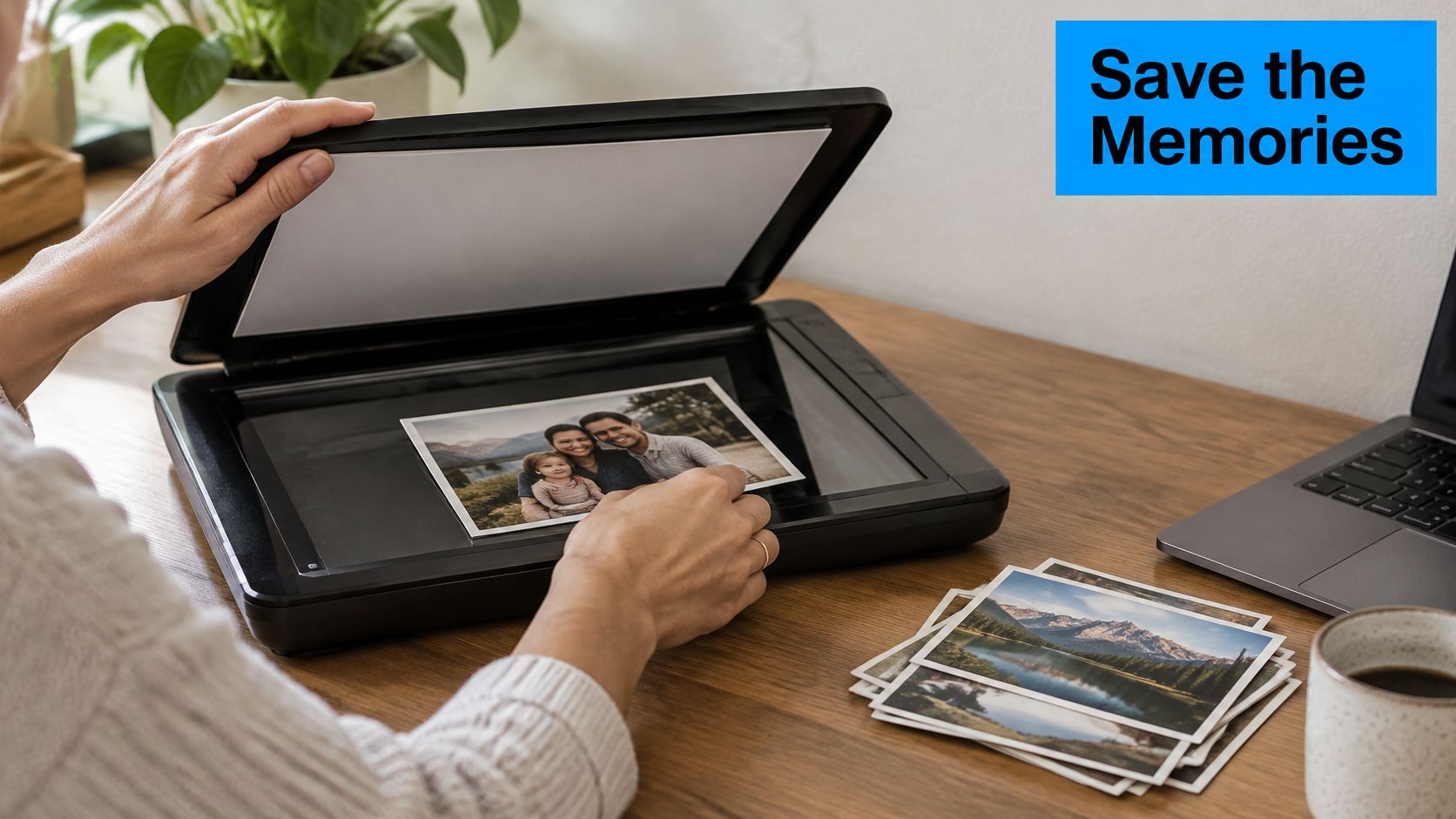
Make the archive usable
Start with a meaningful group, such as wedding photographs or a grandparent's letters. Clean the scanner glass, keep originals in order, and inspect the resulting files before putting anything away.
- Name files consistently. Include the date when known, followed by the event, person, or location.
- Capture context. Scan handwritten notes on photograph backs and identify people while someone still remembers.
- Keep separate backups. Store copies on an external drive and in a secure cloud account, then test that they open.
- Protect private information. Keep financial records and identification documents out of broadly shared folders.
For example, scan a holiday album into a clearly named folder and add a short document identifying relatives. Send the family a sample before scanning the remaining albums so you can confirm that everyone can access and understand the format.
Don't shred originals just because you've scanned them. Keep wills, deeds, certificates, and other important originals securely until the appropriate professional confirms what must be retained for your circumstances.
For bulky memorabilia, photographs may preserve enough of the memory. Keep the most meaningful physical pieces, not every item associated with the occasion. If you hire a scanning service, ask how it tracks originals, handles fragile materials, transfers files, and protects private information.
6. Sell Collectibles and Specialty Items Through Targeted Channels
A box labeled “miscellaneous tools” gives buyers little to evaluate. Before setting prices, separate ordinary household goods from items that need identification. Collectibles, art, jewelry, specialist equipment, and well-made furniture deserve a closer look, but age alone does not establish value.
Make this review early enough in the downsizing timeline to leave room for research. Identify potentially valuable items before relocation pressure forces quick decisions. Compare similar sold items, not just optimistic asking prices. The guide to collectibles worth money can help you spot categories that may merit closer attention.
Build evidence before writing the listing
- Identify the details. Photograph maker's marks, signatures, model labels, and distinctive construction.
- Describe condition. Show chips, repairs, missing components, and wear in close-up photographs.
- Group with purpose. Keep matching accessories with equipment, but don't bury a desirable item in unrelated goods.
- Match the delivery method. Consider whether local pickup suits a bulky or fragile object better than shipping.
For example, when sorting a workshop, separate a recognizable specialty plane from mixed hand tools. Photograph its markings and note any missing parts. Avoid aggressive cleaning or polishing until you understand whether buyers value the item's existing surface.
Pricing judgment: An appraisal is most useful when uncertainty about an item's identity or value could change how you sell it.
Targeted selling takes more effort, so reserve it for items where better identification could affect the result. Group low-value everyday goods sensibly rather than creating elaborate listings for every object.
7. Choose the Right Liquidation Method and Plan the Financial and Tax Details
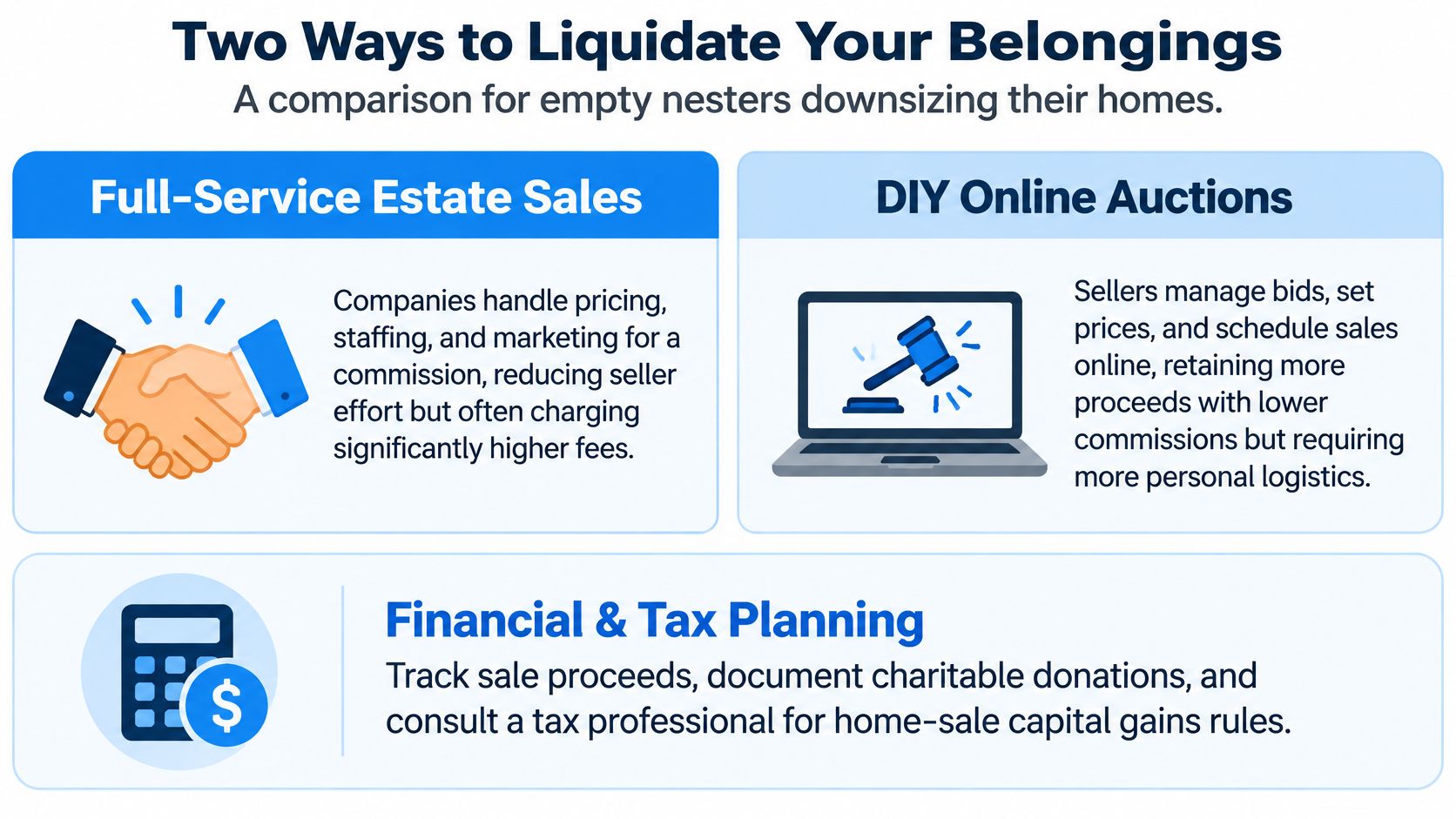
Choose the selling method once you understand the contents, workload, and deadline. A full-service estate sale, consignment arrangement, individual marketplace listings, and seller-led online auction solve different problems.
Full-service help reduces your direct workload but requires careful review of fees and responsibilities. Individual listings give you control but also leave you managing inquiries, appointments, and unsold goods. Consignment can suit selected pieces, provided its selling timetable matches yours.
Compare net results, not headline promises
Use our estate liquidation options guide to frame the comparison. Read the proposed terms for commissions, removal, payment, unsold items, and any additional charges.
For example, you might consign a distinctive cabinet, sell household goods through a coordinated event, and donate usable low-value leftovers. That can make sense, but only if the separate schedules don't interfere with your move.
- Track sale activity. Record descriptions, proceeds, fees, and related expenses.
- Document donations. Keep receipts, photographs, and item descriptions without assuming every donation creates a deduction.
- Budget for the transition. Include moving, cleaning, repairs, storage, and overlapping housing costs.
- Get tax advice early. Ask a qualified professional about your home sale, valuable possessions, and charitable gifts before making assumptions.
A smaller property isn't automatically cheaper. In AARP's home and community preferences survey, 60% of respondents anticipating a move wanted to reduce housing and maintenance expenses. Compare complete ownership costs, including taxes, insurance, association fees, utilities, and likely repairs, rather than purchase price alone.
Keep possession-sale proceeds separate from the home-sale budget. Until buyers have paid and collected, that money shouldn't fund an essential moving expense.
Downsizing Tips for Empty Nesters at a Glance
| Tip | Primary Focus | Best Timing | Key Benefit |
|---|---|---|---|
| Start Early with a Phased, Room-by-Room Plan | Gradually sorting the home by room | 6–12 months before the move | Reduces stress and allows time to plan sales |
| The Four-Box Method: Keep, Sell, Donate, Discard | Sorting belongings into four clear categories | During room-by-room decluttering | Speeds decisions and prevents moving unneeded items |
| Swedish Death Cleaning (Döstädning) | Thoughtful, gradual decluttering and sharing heirlooms | Over time, ideally well before a move | Eases the future burden on loved ones |
| Measure and Plan Before You Move | Matching furniture and belongings to the new home | Before deciding what to move or sell | Avoids unsuitable items and lowers moving costs |
| Digitize Photos, Documents, and Memorabilia | Preserving keepsakes and records digitally | While preparing to downsize | Saves physical space while keeping memories accessible |
| Sell Collectibles and Specialty Items Through Targeted Channels | Reaching knowledgeable buyers for valuable items | Before a sale, with time for research and appraisal | Can bring higher prices than selling items in bulk |
| Choose the Right Liquidation Method and Plan the Financial and Tax Details | Comparing sale options and organizing financial records | Before selling, donating, or listing the home | Helps manage costs, track proceeds, and avoid surprises |
Put the Plan Into Motion and Keep More of What Your Things Are Worth
Downsizing works best when you separate decisions that feel tangled together. Choosing where to live isn't the same as deciding whether to keep the guest-room dresser. Preserving family history doesn't require keeping every object, and selling something well doesn't mean spending endless hours managing it.
Start with the stage you're in. If you're exploring a move, audit your rooms and compare housing costs. If you've chosen a destination, confirm what fits. If you're ready to sell, finish the inventory, settle family claims, and choose a process you can realistically manage.
Define what finished looks like
Write down the result you want: clear walking routes, a manageable collection, furniture that fits, or a house ready for listing. That gives you a practical stopping point and helps prevent temporary storage from becoming the next unfinished project.
You don't need to eliminate everything you rarely use. You need to make intentional room for the belongings and activities you want in your next home, while arranging a reliable exit for the rest.
When you reach the selling stage, we guide seller-led estate sales from the first lot to pickup day. At DIYAuctions, you organize lots room by room, preserve the context only your family knows, choose reserve prices and closing windows, and set one coordinated local pickup day. Our 10% commission is capped at $1,000, and we handle marketing to local buyers, secure payment processing, and fraud protection.
Choose a low-emotion drawer today, clear it, and record any sale items before moving on. When you're ready to turn that inventory into a sale, download our free estate sale pricing guide, including its 30-day launch checklist, and use it to plan your catalog, pricing, and pickup. You'll begin with a manageable task and finish with a concrete next step.
Get the estate sale pricing guide
Enter your email for pricing ranges, planning notes, and a clearer path to launch.