A Guide to Your Estate Furniture Sale
Our expert guide to holding an estate furniture sale. Learn to value, price, and sell furniture using modern tools for maximum profit and minimal stress.
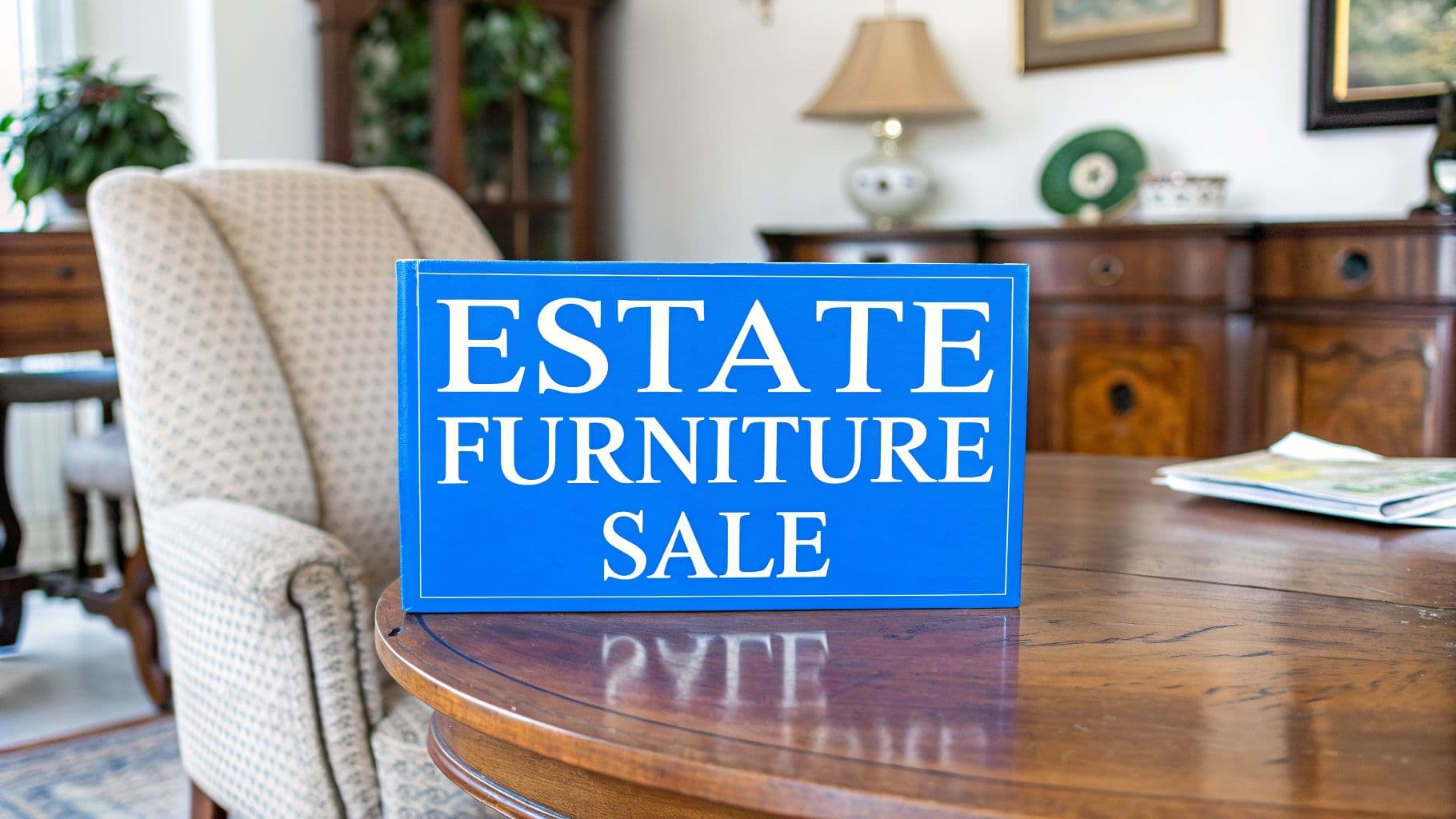
When you're faced with an estate or a major downsize, the sheer volume of furniture can feel like an impossible puzzle. The traditional route involves hiring an estate sale company, but their hefty commissions—often 30% to 50%—can take a huge bite out of your final proceeds.
There's a better way. Taking on the sale yourself, especially with a platform like DIYAuctions, puts you in the driver's seat and lets you keep the profits where they belong.
Why a DIY Estate Furniture Sale Is the Smart Move

It’s easy to think a DIY sale is too much work, but the payoff is massive. The biggest win? Your wallet. Instead of handing over a huge chunk of your earnings, you maximize your financial return.
This isn’t just a niche market, either. The demand for quality used furniture is booming. The online resale furniture market hit $34 billion in 2023 and is on track to reach a staggering $56 billion by 2030. People are actively searching for sustainable, well-made pieces, and your items are exactly what they want.
Complete Control Over Your Sale
When you run your own sale, you call all the shots. You decide what sells, what the prices are, and when the pickup happens. This kind of control is a lifesaver, especially when you’re dealing with sentimental items or trying to coordinate with a moving truck.
This is a common scenario for people learning how to prepare for downsizing your home. A DIY sale lets you set a timeline that works for your schedule, not a company’s.
The DIY model isn't about doing everything from scratch. It’s about having the right framework. We give you the tools for cataloging, payments, and promotion so you can focus on what matters.
A Clear Look at Your Bottom Line
Let's break down the real financial difference. A traditional estate sale service sounds convenient, but that convenience comes at a premium price, directly reducing the funds that go back to the estate or your family.
To help you weigh the pros and cons, our guide to estate liquidation companies offers a much deeper comparison.
Here’s a simple table to illustrate the financial impact.
Traditional Estate Sale vs DIYAuctions Model
| Feature | Traditional Estate Sale Company | DIYAuctions Platform |
|---|---|---|
| Commission | 30% - 50% of gross sales | 10% commission, capped at $1,000 |
| Control | Company sets pricing and schedule | You control pricing, dates, and items |
| Marketing | Local ads, email lists | Targeted local marketing + your network |
| Net Profit | Significantly reduced by high fees | You keep nearly all of the proceeds |
Ultimately, choosing the DIY path is about empowerment. It gives you the power to honor the true value of the items and ensure the financial return is as high as possible. With the right plan, what looks like a mountain becomes a very manageable—and profitable—project. This guide will show you exactly how.
How to Value and Catalog Your Furniture

Before you list a single thing, you have to know exactly what you’re working with. This part of the process is a bit of detective work mixed with storytelling, and it directly shapes how much you'll earn. It’s all about separating the everyday items from the hidden gems.
I always suggest starting with a simple walk-through of the home. Get a feel for each piece. Is it solid wood or a veneer? Can you pin down a style, like mid-century modern or antique Victorian? This first pass helps you wrap your head around the job ahead.
Finding and Researching Value
The true value of a piece is often hidden in plain sight. Many higher-quality furniture items have a maker's mark—a small stamp, tag, or label identifying the company that built it.
You can usually find them in a few common spots:
- Inside or on the back of drawers
- Underneath tabletops and chair seats
- On the back of dressers or headboards
Once you’ve found a brand name or mark, the real research begins. A quick search on online marketplaces will show you what sellers are asking for similar items. But the key is to find out what they have actually sold for. That "sold" price is the true market value.
If you come across a piece you think might be a truly valuable antique, don’t just guess. A small investment in an online appraisal can pay for itself many times over. For most items, though, a little digging on your own will give you a solid price range to work with.
The goal isn't to become a certified appraiser overnight. It’s about gathering enough data to price your items confidently, ensuring you don’t leave money on the table or scare away buyers with unrealistic numbers.
Creating a Compelling Online Catalog
With your research done, it’s time to build your online catalog on DIYAuctions. This is where you transform a simple inventory list into a collection of desirable items. A great catalog can make or break your sale.
Think of every listing as its own mini sales pitch. You need two things: fantastic photos and an honest, detailed description. This combo builds trust with buyers and gets them excited enough to start bidding. For a complete walkthrough, check out our guide on creating a personal property inventory list that you can easily adapt for your furniture sale.
Taking Photos That Sell Furniture
Your photos are the single most important part of your listing. Buyers can’t see the furniture in person, so your images have to do all the heavy lifting. A little effort here goes a long, long way.
Pro Photography Tips:
- Use Natural Light: Set up your shots in a well-lit room, preferably with natural daylight. Avoid harsh, direct sun or deep shadows that hide the details.
- Showcase Every Angle: Take pictures from the front, back, and sides. Get close-ups of the hardware, wood grain, upholstery, and any other special features.
- Highlight the Flaws: This is critical. If there's a scratch, a ding, or some wear, take a clear photo of it. This transparency builds incredible trust and prevents headaches on pickup day.
- Provide Scale: A photo that helps buyers visualize an item’s size is incredibly helpful. Simply placing a common object like a book on a side table can do the trick.
A quick 20-30 second video walk-around can also be a game-changer. Showing how smoothly a drawer opens or panning across the finish can seriously boost a buyer's confidence and make your listing pop.
Writing Descriptions That Build Trust
Once the photos grab a buyer's attention, the description is what seals the deal. This is your chance to tell the item’s story and answer questions before they’re even asked.
Start with a clear, descriptive title. Instead of "Wood Dresser," go for something like "Vintage Mid-Century Modern Walnut 6-Drawer Dresser." Specifics sell.
In the description itself, cover all the bases:
- Dimensions: Always include height, width, and depth. For furniture, this is non-negotiable.
- Materials: Be specific. Is it solid oak, walnut veneer, or brass-plated hardware? Quality materials are a huge selling point.
- Condition: Describe the piece honestly. Use phrases like "excellent vintage condition with minor age-appropriate wear," and be sure to reference any flaws you photographed.
- The Story: If you know anything about the piece’s history, share it! A simple line like, "This was my grandmother's favorite reading chair" adds a personal touch that connects with buyers.
By carefully valuing and cataloging your items, you’re laying the foundation for a highly profitable and smooth-running estate sale. You aren’t just listing objects; you're giving buyers a chance to find their next treasured piece.
Pricing Your Furniture to Maximize Profit
Setting the right price for your furniture can feel like walking a tightrope. Go too high, and you’ll scare buyers away. Go too low, and you're leaving cash on the table that belongs to the estate or your moving fund. The real goal is finding that sweet spot where an item's value meets what the market is willing to pay.
There’s no single pricing strategy that works for every piece. A firm "Buy It Now" price is perfect for some items, while a heated auction is the best bet for others. You have to be flexible.
Auction vs. Buy It Now Pricing
How do you choose? It really boils down to how common the item is. For something standard and functional, like a simple bookshelf or a common brand of side table, a 'Buy It Now' price is usually the way to go. Do a quick search for what similar pieces have sold for, price yours competitively, and you'll attract someone who just needs it now without the fuss of an auction.
But for that special mid-century modern credenza or a perfectly preserved antique rocking chair? That’s where an auction shines. A competitive starting bid can ignite a real bidding war among collectors and design enthusiasts. We’ve seen this happen countless times—the final price soars far beyond what you might have guessed, letting the market itself tell you the item's true worth.
When in doubt, start with an auction. It’s the single best piece of market research you can get. An auction tells you what buyers are actually willing to pay, not just what you think an item is worth.
The Psychology of Smart Pricing
Valuing your furniture isn’t just about the materials or the brand; it's about what buyers perceive as valuable. For example, a solid oak dining set will always hold its value better than a nearly identical one made from cheap veneer or MDF. Buyers know this, and they’ll pay a premium for quality that lasts.
The data backs this up. The 2025 Furniture Resale Index from Remoov showed that solid wood dining tables and chairs—especially extendable ones—can retain 40-65% of their original value. In contrast, a veneer piece with some obvious wear might only get you 15-35%. Using a platform like DIYAuctions helps you capture the high end of that range, since you keep up to 90% of the final sale price.
If you're selling valuable inherited furniture, it’s also smart to be aware of how capital gains might affect you. It's worth a few minutes to read up on understanding capital gains tax on inherited property so there are no surprises later.
Practical Pricing Examples
Let’s look at a few real-world scenarios.
- The Antique Dresser: You found a maker's mark and verified it's over a century old. Your strategy here is an auction with a reserve price. This protects you from selling it for less than your minimum, while giving passionate collectors room to bid it up.
- The IKEA Bookshelf: It’s in good shape, but it's a model you see everywhere. The best approach is a low 'Buy It Now' price for a quick, no-hassle sale. The goal is efficiency, not a massive profit.
- The Leather Sofa: It's from a quality brand but has some visible wear and tear. Price it with a competitive starting bid in an auction. Be sure to include honest photos of the scuffs—this builds trust and attracts serious buyers who recognize a good deal when they see one.
With DIYAuctions, you have the freedom to mix and match these strategies for every single item in your sale. You can set starting bids, add 'Buy It Now' options, and manage everything without giving away a huge chunk of your profits in commissions.
For a deeper look into the nuts and bolts of setting prices, check out our complete guide on how to price estate sale items.
From Listings to Logistics: Running Your Sale Event
You've done the hard work of cataloging your furniture and setting your prices. Now comes the exciting part—turning those listings into a smooth, successful sale. While a platform like DIYAuctions automatically connects you with local buyers, a little extra promotion can really get the word out and build a buzz around your sale.
The real key to success, however, is a perfectly organized single-day pickup. Trust me, getting this right is the difference between a chaotic free-for-all and a calm, profitable afternoon. My goal is always to have a plan that makes me feel completely in control from start to finish.
This simple visual breaks down the three core phases of a great sale day.

It all comes down to proactive promotion to bring in buyers, detailed planning for pickup day, and secure systems to protect your earnings.
Promoting Your Estate Furniture Sale
Even with the built-in audience on your chosen platform, a little self-promotion can give your sale a huge boost. Think about where your ideal buyers are spending their time online. Local Facebook groups and community forums are absolute gold.
I’ve had great results by sharing a few of the best photos in neighborhood groups a couple of days before the auction ends. A simple post that says, "We're holding an online estate furniture sale with local pickup this Saturday! Check out the full catalog of vintage and modern pieces here," along with your auction link, can drive a ton of qualified traffic. Just make sure you lead with your best photos!
Planning the Pickup Day Logistics
The single-day pickup model is your secret weapon. It focuses all the activity into one short, manageable window, saving you from weeks of disruptive one-off appointments. A seamless pickup day is all about being prepared.
Here's my personal pre-pickup checklist:
- Group Items by Buyer: Before anyone arrives, I organize sold items by the winning bidder's name. Large sticky notes are perfect for labeling each piece or a group of smaller items.
- Clear All Pathways: Make sure there's a wide, clear path from where the furniture is to the front door. This is crucial for preventing dings and scratches to the home or the item.
- Create a "Holding Area": If you have the space, moving all sold items into a garage or a single room makes pickup incredibly efficient and keeps foot traffic contained.
The best strategy is to think ahead for the buyer. Having their items staged and ready near an exit shows you respect their time and keeps things moving. It’s a professional touch that leaves a great impression.
Secure Payments and Fraud Protection
This is one area where you can't afford to take chances, and it’s a huge reason to use a managed platform like DIYAuctions. Handling payments securely isn't just important—it's essential for a successful estate furniture sale.
Every dollar should be paid and verified through the platform before a buyer ever shows up at your home. This approach sidesteps all the common headaches and risks that come with private sales.
Payment Risks You Must Avoid:
- Cash Transactions: Carrying large amounts of cash is a security risk, and it makes record-keeping a pain.
- Check Payments: The risk of a bounced check is just too high. It's a risk not worth taking.
- Peer-to-Peer Apps: While apps like Venmo or PayPal seem convenient, their buyer protection policies can allow someone to reverse a payment after they’ve left with your item, leaving you with nothing.
By making sure all payments are cleared ahead of time, pickup day becomes a simple matter of checking IDs and handing over the goods. When a buyer arrives, you just use the platform's app to confirm who they are and what they've paid for. It’s the modern, secure way to sell that protects you from fraud, letting you focus on getting the furniture to its new home.
Managing Pickup Day and Post-Sale Logistics
After all your hard work cataloging and running the sale, pickup day is game day. This is where your planning pays off, turning a potentially chaotic day into a smooth, professional event for you and your buyers.
Your role is simple: be a friendly host and an organized manager. Keep your phone or tablet handy with the DIYAuctions app open—it’s your command center for the day.
Verifying Buyers and Purchases
When a buyer arrives, the first step is always a quick verification. This isn't about being distrustful; it's about being professional and making sure the right items go to the right person.
Here’s the simple check-in process using the DIYAuctions dashboard:
- Greet the buyer and ask for their name.
- Pull up their order in the app to see exactly what they've won.
- Politely ask to see a government-issued ID to confirm the name matches the order.
This one small step prevents mix-ups and protects both you and the legitimate buyer from any potential fraud. Once they're confirmed, you can guide them to their new treasures.
Documenting the Handover
Before any heavy lifting begins, walk the buyer over to their items. This is the perfect time to have them do a final inspection.
Let them look everything over to confirm the condition matches what you showed in the photos and described in the listing. It’s their chance to give the final nod of approval.
The DIYAuctions platform includes a digital sign-off feature for pickups. Buyers can sign right on your device, confirming they inspected the item, were happy with the condition, and have taken possession. This creates a digital handshake, giving you a clear record and final protection against any post-sale disputes.
This simple sign-off is a clean, professional way to close out the transaction for each item and gives everyone peace of mind.
Handling No-Shows Professionally
It happens. Despite your clear instructions, a buyer might not show up. Don't panic—your sale terms are there to protect you.
Standard policy for online auctions is that items not collected during the pickup window are considered forfeited, with no refund. This is fair to you, as it compensates you for your time and the lost opportunity to sell to another bidder.
Once the pickup window has officially closed, simply mark the buyer as a "no-show" in the DIYAuctions system. The platform handles the rest, ensuring you retain the payment as outlined in your terms.
After the Sale: Payouts and Unsold Items
Once the last buyer has left, take a breath. The hard part is over! The final steps are quick and happen right inside your dashboard.
Officially close out your sale in the platform. DIYAuctions will then finalize all the transactions and generate a summary of your total earnings. You’ll get a clean breakdown of each item's sale price, making it easy to see the results of your effort.
What you've just done is tap into a huge market. The global furniture sector, valued at $540 billion in 2025, is on track to hit $684.5 billion by 2035, and indoor furniture represents a massive 69% of that pie. You can learn more about these market trends and how you're a part of this growing industry.
But what about the few pieces that didn’t sell? You still have great options:
- Donate: Local charities often offer free pickup for furniture and provide a receipt for a tax deduction. It’s a win-win.
- Consign: If you have a few high-value or unique items left, a local consignment shop might be the perfect place to find a specific buyer.
- Relist: You can always hold onto the item for a future sale or try another marketplace. Sometimes a new audience or a slightly different price is all it takes.
By managing the final logistics with a clear plan, you ensure your sale ends on a high note—with a tidy profit and an empty space.
Common Questions About Estate Furniture Sales
Even the most organized seller has a few lingering questions before their first online sale. Trust me, after years in this business, I've heard just about all of them.
Let's tackle some of the biggest concerns head-on. My goal is to give you the clarity you need to run a smooth, successful, and profitable sale.
What If I Don't Know the Value of My Antique Furniture?
This is the big one. The last thing you want is to accidentally sell a priceless heirloom for pennies on the dollar. The great thing is, you don't need to be a certified appraiser to get a fair price.
Start by playing detective. Check for any maker's marks, labels, or stamps—often hidden inside drawers, on the back, or on the underside of a piece. A quick online search for the brand can give you a ballpark idea of what similar items have sold for.
But here’s the real secret: let the market decide. With a platform like DIYAuctions, you simply set a starting bid you’re comfortable with. From there, interested collectors and savvy buyers compete, naturally driving the price up to its true market value. It's the single best way to protect yourself from undervaluing a hidden gem.
How Do I Handle Large, Heavy Items During Pickup?
The logistics of moving a massive armoire or a solid oak dining table can feel daunting. The solution is simple: clear communication from the very beginning.
In every single listing for a large or heavy item, you must clearly state that buyers are responsible for bringing their own help, tools, and an appropriate vehicle. This is a non-negotiable, standard practice for these types of sales. Your job is to provide access to the item, not to do the heavy lifting.
On pickup day, having a furniture dolly or some moving blankets on hand is a thoughtful gesture, but it’s not required. Your role is to supervise, not participate. Politely reinforcing that the buyer's crew must handle the entire move protects you from physical strain and potential liability.
Is an Online Estate Sale Safe?
Safety should always be your top priority. It's also one of the best reasons to use a managed platform like DIYAuctions, which is built from the ground up to protect sellers.
All payments are processed securely through the platform before pickup day ever arrives. This is a game-changer. It means you never handle cash, never worry about bounced checks, and completely avoid payment app scams. The money is confirmed and in the system before anyone ever steps foot on your property.
When a buyer arrives, you just use your phone or tablet to:
- Verify their identity against the paid order.
- Confirm which items they purchased.
- Get their digital signature to confirm they've received their items.
This pre-payment and verification process removes nearly all the financial risk and personal safety concerns associated with private sales, letting you focus on a smooth and professional pickup day.
What Happens If an Item Does Not Sell?
It’s completely normal for a few items not to sell in your first auction. Don't worry, you have several great options.
First, you can simply relist it. Sometimes all it takes is a different starting price, better photos, or a more compelling description to attract the right buyer. The DIYAuctions platform makes it easy to give an item a second chance.
Your second option is donation. Many local charities will pick up furniture for free and provide you with a tax-deductible receipt. It’s a win-win: you clear out the last few pieces and support a good cause.
Finally, for more specialized or high-end pieces, a local consignment store could be a great fit. They have an established clientele and can often find the perfect home for your unique items.
More guides in Estate Sale Basics
July 28, 2026
Revenue Reporting for Estate Sales and Auctions
Learn revenue reporting essentials for estate sales and auctions. Discover key metrics, templates, and best practices to simplify tracking and compliance.
Read guideJuly 26, 2026
Stamp Collection Valuation: A Practical Step-by-Step Guide
Stamp collection valuation made simple. Learn how to identify, grade, price, and sell your stamps with confidence for estate sales or consignment.
Read guideJuly 23, 2026
Estate Sales Brick NJ: Your 2026 Guide to Success
Planning your estate sales brick nj? Our guide covers permits, pricing, marketing, & running a safe sale with DIYAuctions.
Read guideGet the estate sale pricing guide
Enter your email for pricing ranges, planning notes, and a clearer path to launch.