Estate Sale Bay Area: estate sale bay area best practices for a successful sale
Your estate sale bay area guide to a profitable event: learn local rules, pricing, and marketing tips to maximize results.
Thinking about running an estate sale in the Bay Area? It can feel like a massive undertaking, but with the right game plan, it's completely manageable. This guide is your roadmap for navigating our unique market, whether you're in a historic San Francisco Victorian or a modern Silicon Valley suburb.
Your Blueprint for Bay Area Estate Sales
Running a successful estate sale is about more than just slapping price tags on items. It’s a real project, especially in a market as fast-paced as the Bay Area. Getting it right comes down to knowing your goals, setting a realistic schedule, and picking the right way to sell.
Right from the start, you've got some big decisions to make. Are you going with a traditional, in-person weekend sale, or does a modern online auction make more sense? Each has its own pros and cons depending on where you are, what you're selling, and how comfortable you are with technology. A solid plan is your best defense against feeling overwhelmed.
For a deeper dive, this complete guide on how to organize an estate sale is a great resource, covering all the essential steps from start to finish.
Setting Realistic Goals and Timelines
Before you even think about sorting through rooms, you need to define what a "win" looks like for you. Is the number one goal to make as much money as possible? Or is it to clear out the house quickly for a sale? Maybe it's about finding good homes for sentimental pieces. Your main objective will steer every other decision you make.
A typical estate sale timeline in the Bay Area runs anywhere from four to eight weeks. That's from the first day of planning to the final clear-out. This timeframe gives you room for all the critical stages:
- Initial Sort: Deciding what to keep, sell, donate, or toss.
- Research & Pricing: Figuring out what your items are worth in the local market.
- Marketing: Spreading the word to the right Bay Area buyers.
- The Sale Itself: Running the event, whether it's online or in-person.
One of the most common mistakes I see is people underestimating how long preparation takes. Rushing the process almost always leads to leaving money on the table and a ton of unnecessary stress. Give yourself plenty of runway.
This flow chart breaks down the key stages and decision points.
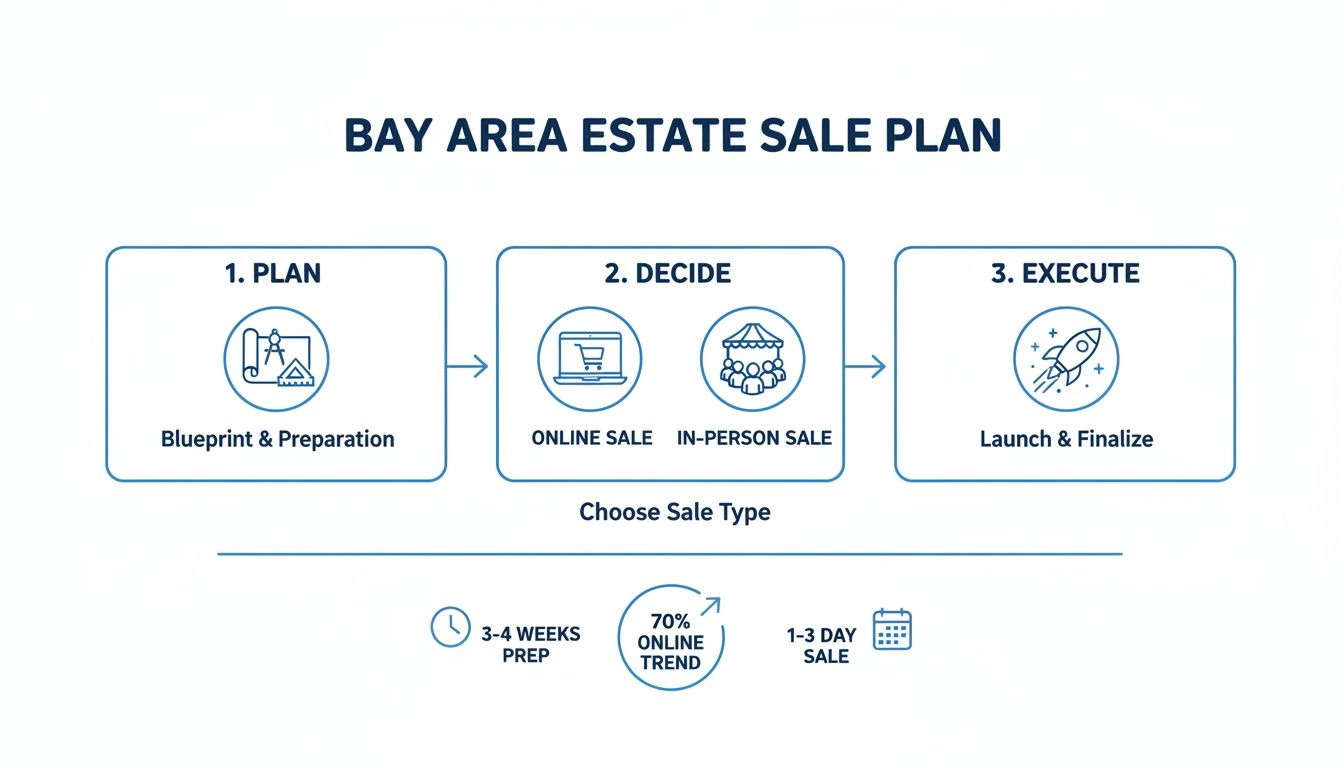
As you can see, that "Decide" phase is a crucial fork in the road—it dictates all your logistics and marketing from that point forward.
In-Person Sale vs. Online Auction
The Bay Area market is great for both traditional and digital sales, but your choice will change everything from how you market to how you handle pickup day.
An in-person sale has that classic treasure-hunting vibe. It's fantastic for selling a high volume of everyday household goods. Shoppers in places like Berkeley or Oakland really enjoy the experience of digging through a home to find a hidden gem.
On the other hand, an online auction can pull in a much wider audience, including serious collectors from all over the country. This is a game-changer if you have high-value or niche items like mid-century modern furniture, vintage Apple computers, or local artwork—all things Bay Area buyers (and beyond) go crazy for.
Plus, an online format completely sidesteps the headaches of parking and crowd control in tight-knit neighborhoods in San Francisco or the Peninsula.
To help you get a clearer picture of the timeline, here’s a high-level overview of the key phases involved.
Bay Area Estate Sale Planning at a Glance
| Phase | Timeline | Key Activities |
|---|---|---|
| Phase 1: Foundation & Sorting | Weeks 1-2 | Define goals (profit, speed, etc.). Start sorting items into keep, sell, donate, and discard piles. |
| Phase 2: Cataloging & Research | Weeks 3-4 | Photograph and write descriptions for all sale items. Research comparable prices for key pieces. |
| Phase 3: Marketing & Launch | Weeks 5-6 | Set up your online auction or plan your in-person event. Start promoting the sale to local groups. |
| Phase 4: Sale & Pickup | Week 7 | Run the sale event (typically over a weekend or a 7-day online auction). Host a single-day pickup. |
| Phase 5: Clear-Out & Payout | Week 8 | Arrange for donation pickups or junk removal for any unsold items. Finalize financials and receive payment. |
This table acts as a simple checklist to keep you on track. While every sale is different, sticking to a structured timeline like this will help ensure nothing falls through the cracks.
Navigating Local Rules, Permits, and Taxes
The Bay Area is famous for a lot of things, but a uniform set of rules isn’t one of them. What works in San Jose might get you a hefty fine in Oakland. This patchwork of city and county regulations is a major hurdle for anyone planning an estate sale in the Bay Area, making local knowledge absolutely critical.
Before you even think about putting up a sign, your first stop should be your city's official website. Look for terms like "garage sale permit," "temporary event permit," or "estate sale regulations." Some cities are strict about how many sales you can have a year or where signs can go. Others might not require a formal permit but still have code enforcement officers who watch for violations.
A quick call to your city’s planning or code enforcement department can save you a world of trouble down the road. Just ask them directly what’s required to hold a residential estate sale.
Decoding Permits and Parking Puzzles
Permits are just the beginning. In dense neighborhoods like those in Berkeley or San Francisco's Richmond District, parking is the real beast. An estate sale can easily draw dozens of cars at once, creating chaos on narrow streets and sparking instant friction with neighbors.
Here are a few practical steps to manage the inevitable traffic crunch:
- Talk to Your Neighbors: Give your immediate neighbors a heads-up about the sale dates and times well in advance. A simple courtesy can prevent a lot of angry phone calls to the city.
- Post Clear Parking Instructions: Make sure your sale advertisements include parking guidance. Suggest nearby public lots or specify which side of the street is best for parking.
- Don't Block Driveways: Use brightly colored cones or clear, professionally printed signs to mark off driveways and fire hydrants. It shows respect for your community and helps everyone avoid a ticket.
If you're in a planned community in places like Foster City or parts of Marin, Homeowners Association (HOA) rules add another layer of complexity. Many HOAs have strict regulations on signs, traffic, and any kind of commercial activity. Always, always get written approval from your HOA board before you start marketing.
"I once managed a sale where the HOA only allowed three small, pre-approved signs in the entire development. We had to rely almost entirely on digital marketing to guide buyers. Forgetting to check with the HOA is a rookie mistake you don't want to make."
Untangling California Sales Tax
This is the one people forget most often: sales tax. In California, if you hold more than two sales in a 12-month period, you're generally considered a retailer and are on the hook for collecting sales tax.
The California Department of Tax and Fee Administration (CDTFA) requires you to register for a seller's permit, which you can do online. Once that’s done, you are responsible for collecting the correct district sales tax rate—which varies by city and county—and sending it to the state.
For example, the sales tax in Alameda County is different from Santa Clara County. You have to charge the rate for the sale's physical location. Keeping meticulous records of every single transaction isn't just a good idea; it's a legal requirement.
For anyone managing an estate, especially when dealing with assets like inherited property, understanding the full tax picture is crucial. It’s worth your time to review resources like a guide to Understanding Capital Gains Tax on Inherited Property to make sure all your bases are covered. This can have financial implications that go far beyond just sales tax.
Taking the time to sort out these local rules—from city permits to state taxes—is what separates a stressful, problematic event from a smooth and successful sale.
How to Price Your Items for the Bay Area Market
Pricing is where an estate sale makes or breaks it. Get it right, and you’ll see fantastic returns. Get it wrong, and you’ll be left with a house full of unsold stuff. It’s a real art, balancing an item's true value against what a local buyer is actually willing to pay for it right now.
And in a market as unique as the Bay Area, the rules are completely different. What sells like crazy in Marin might be a total dud in a San Jose sale.
Forget everything you think you know about antiques. A gorgeous Victorian-era dresser that would be a showstopper somewhere else could sit untouched at a sale in a SoMa condo. Why? Because the buyers there are hunting for clean, minimalist lines, not ornate details. You absolutely have to price for the audience you have.
Researching for the Local Market
Before you even think about putting a price tag on anything, you have to do your homework. Your one and only goal is to find out what similar items have actually sold for—right here in the Bay Area—in the last few months. Asking prices you see on Craigslist or Facebook Marketplace are often just wishful thinking. Sold listings are your source of truth.
Get started by digging into these resources:
- Online Marketplaces: Jump on eBay, Facebook Marketplace, and Chairish and use their filters to see only "sold" or "completed" listings. Make sure you narrow the location down to Northern California sellers.
- Local Auction Results: Many local auction houses post their past results online. This is gold for figuring out the value of high-end art, jewelry, or unique collectibles.
- Specialty Dealers: Have a niche collection of vintage vinyl or old comic books? Look up local dealers in the area and see what they're pricing comparable items at in their shops.
Doing this research grounds your prices in reality. It’s the single best way to avoid either giving away something valuable for pennies or pricing a common item so high that no one even gives it a second look. For a deeper dive into valuation, check out our comprehensive estate sale pricing guide.
What Sells Best in the Bay Area
While every home is different, some categories are just consistently hot sellers around here. Knowing these trends helps you spot the high-value items in your sale and price them with confidence.
Bay Area buyers are almost always on the hunt for:
- Mid-Century Modern Furniture: Think Herman Miller, Eames, and even quality unbranded pieces from the 50s and 60s. This style is in constant demand.
- Vintage Tech: Early Apple and Macintosh computers, classic audio gear like receivers and turntables, and old video game consoles can spark a bidding war among collectors.
- Local and California Art: Paintings, sculptures, and pottery from known California artists have a built-in audience that already understands their worth.
- Designer Goods: Well-kept designer clothing, handbags, and accessories from luxury brands will always command strong prices.
It's easy to get excited about these "hero" items, but remember that the bulk of your profit often comes from all the everyday stuff. Don't overlook the kitchenware, tools, and linens—it all adds up.
This is especially true in our current housing market. By November 2025, San Francisco's single-family home median listing prices had jumped 7.76% from the year before, and condo sales spiked by a massive 51.82% as fewer new listings hit the market. This inventory crunch makes estate sales a critical source for furnishing new homes, a trend you can leverage.
When to Call a Professional Appraiser
Doing your own research is perfect for most household goods, but for some things, guessing is a recipe for disaster. Don't even think about winging it—bring in a certified appraiser for these categories:
- Fine Jewelry and Watches: An expert can identify precious metals, gemstones, and the real value of signed pieces from brands like Tiffany or Rolex.
- Fine Art: An appraiser can authenticate a piece, figure out its history, and tell you its current market value.
- Rare Books and Documents: First editions, signed copies, or historical papers need specialized knowledge to be valued correctly.
- Antiques: Whether it's furniture or decorative arts, a specialist can accurately determine the period, condition, and provenance.
Yes, an appraisal costs money, but that fee is an investment. It can pay for itself ten times over by uncovering the true value of just one forgotten item. Think of it as insurance against making a huge financial mistake.
The screenshot below shows just how easy it is to manage your items on the DIYAuctions platform. You have total control.
This is where your research comes to life. You can set your starting bids and "Buy It Now" prices, putting you in the driver's seat to get the most out of your sale.
Marketing Your Sale to Attract Eager Buyers
Even the most perfectly staged and priced estate sale will fall flat if nobody shows up. Smart marketing is what turns a house full of items into a can't-miss event, drawing in the exact buyers you want—from serious collectors in Marin to first-time apartment dwellers in the East Bay.
The old "sign on the corner" method just doesn't cut it anymore, especially here. To succeed in the Bay Area, you need a digital-first strategy. Your job is to create some buzz, tell a story about the items, and make it incredibly easy for people to see what you’re offering before they even think about getting in the car. It all hinges on one thing: great photos.
Your Camera is Your Best Salesperson
In the world of online estate sales, your photos do almost all the heavy lifting. They're your first and, frankly, your only chance to grab a buyer's attention and make them stop scrolling. Grainy, poorly lit pictures just scream "amateur," leading shoppers to assume the items themselves are junk.
Clear, bright, and well-composed photos are non-negotiable. Don't worry, you don't need a fancy professional camera—your smartphone is more than capable. Just stick to a few ground rules:
- Let the Light In: Open every curtain and blind. Artificial overhead lighting usually casts weird, yellow shadows. The best light is almost always mid-morning or late afternoon.
- Keep it Simple: Tidy up the area around the item you’re shooting. You don’t have to create a magazine-worthy vignette, but clearing away random clutter makes a world of difference.
- Show Off the Details: Take multiple shots of anything important. For a piece of furniture, get a full shot, then zoom in on the details—the joinery, the maker's label, or any interesting signs of wear. For electronics, always get a clear photo of the model number.
- Be Honest About Flaws: If a piece has a scratch or a chip, take a picture of it. Buyers really appreciate transparency, and it builds trust in you and your entire sale.
Think of every photo as its own little advertisement. A little extra effort here will pay off big time in the interest you generate.
Write Descriptions That Actually Sell
Once your photos have hooked them, your descriptions need to reel them in. This is crucial for an estate sale in the Bay Area, where people are often looking for things with a bit of history or character. Don't just list what an item is; describe what it could be.
A classic mistake is writing a dry, boring list. Instead of "Brown leather chair," try something like, "Vintage mid-century modern leather armchair, perfect for a reading nook. Shows a beautiful patina and wear consistent with its age." See the difference? The second version paints a picture and speaks directly to a specific kind of buyer.
Your descriptions should be short but compelling. Always include brand names, materials, and dimensions. For those truly unique items, a little backstory can go a long way in sparking a buyer's imagination and making them feel a real connection to it.
Where to Post Your Bay Area Estate Sale for Maximum Reach
With your amazing photos and descriptions ready, it’s time to spread the word. A targeted, multi-platform approach is the best way to make sure you’re reaching the widest possible audience. Focus your energy on these channels:
- Specialized Listing Sites: Websites like EstateSales.net and EstateSales.org are the bread and butter for serious estate sale shoppers. A listing here is essential; it puts your sale right in front of people who are actively looking for them every single weekend.
- Craigslist: It might feel a bit old-school, but Craigslist is still a powerhouse, especially for things like furniture, tools, and large household items. Be sure to post in both the "garage sale" section and any relevant "for sale" categories to get the most eyes on your listing.
- Local Facebook Groups: This is where you can get hyper-local. Search for groups like "Berkeley Buy/Sell/Trade" or "Marin County Vintage Finds." These online communities are packed with engaged local buyers. Just make sure you read the group rules before you post.
Using these platforms together creates a marketing net that catches everyone from professional resellers to casual weekend treasure hunters. For an even deeper dive into digital promotion, you can learn more about estate sale marketing in our in-depth article.
Using an online auction platform like DIYAuctions takes your reach to another level entirely. It lets you market not just to local pickup buyers but to a national audience of collectors who might pay a premium for a rare piece of Bay Area history, art, or tech. It’s the perfect way to combine local convenience with nationwide demand.
Running a Smooth and Secure Estate Sale
The doors are about to open, and all your planning comes down to this moment. Whether you’re managing an in-person event or a one-day pickup for an online auction, the big day is all about logistics, security, and making sure buyers have a great experience.
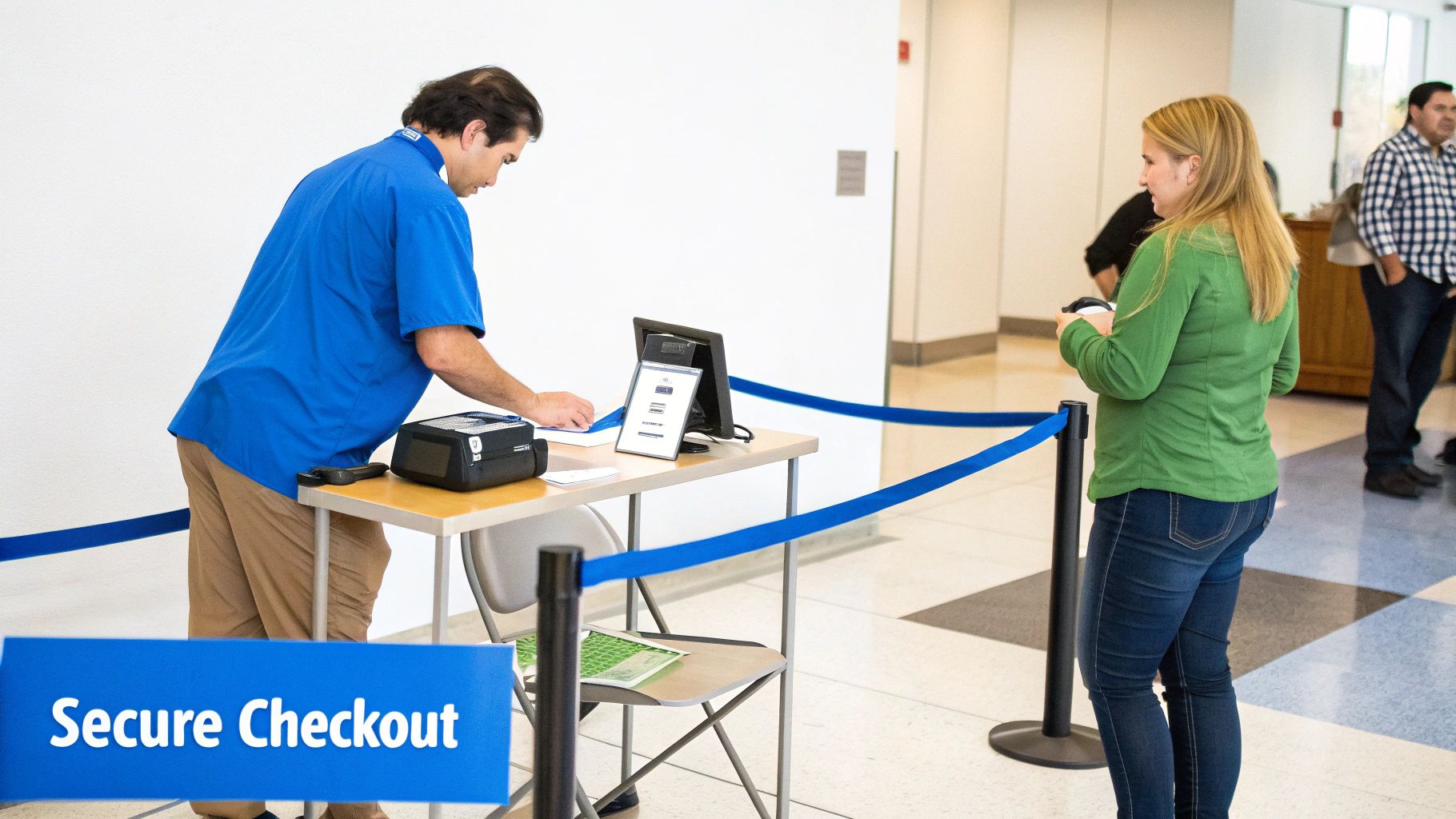
A well-organized event feels professional, builds trust, and honestly, just minimizes stress for everyone. Your main goal here is to create a smooth flow of traffic. You’ve got to think about how shoppers will move through the space. The last thing you want are bottlenecks near the checkout table or in tight hallways. A few simple crowd control measures can make all the difference, turning a potentially chaotic day into a pleasant treasure hunt.
Managing Day-Of Logistics
A little forethought goes a long, long way in preventing day-of chaos. One of the best tactics for an in-person sale is simply controlling how many people are inside the home at any given time. This not only creates a better shopping vibe but also drastically cuts down on the risk of theft or accidental damage.
You don't need a huge team, but having a few key people in place is critical. Think of it like this:
- The Greeter: Station someone at the entrance. They can manage the flow of people coming in and out, answer basic questions, and keep an eye on any large bags.
- The Floater: You need at least one person walking through the sale. They can tidy up displays, answer questions, and help customers with larger items.
- The Cashier: A dedicated person at a well-defined checkout station is non-negotiable. This keeps the line moving and centralizes every single transaction.
This simple three-person setup immediately creates a professional and secure atmosphere right from the moment buyers walk in.
Secure Payments and Fraud Prevention
Handling the money is probably the most critical part of running a successful estate sale in the Bay Area. You absolutely need a system that’s convenient for buyers but totally secure for you. While cash is traditional, relying on it entirely is a risk—counterfeit bills are a real thing.
These days, digital payments are standard. Offering a few different options makes buying easy and protects you from common scams.
- Credit Cards: A reputable mobile card reader from a service like Square or PayPal is a must. It’s professional and gives you a clean digital record of every sale.
- Digital Wallets: Apps like Venmo or Zelle are convenient, but be careful. Always confirm the payment has hit your account on your own device before the buyer leaves with an item.
- Avoid Personal Checks: As a general rule, just politely decline personal checks. The risk of a bounced check is just too high for a one-day event.
I’ve seen this happen: a common scam involves credit card chargebacks. To protect yourself, always use a chip reader and get a signature for large purchases. For very high-value items, taking a quick, discreet photo of the buyer’s ID can deter fraudulent claims down the road.
A Security Checklist for Peace of Mind
Beyond secure payments, you have to think about the physical security of the property and its contents. Remember, not everything in the house is for sale, and you need to make that crystal clear.
Before the first person steps inside, do a final security sweep:
- Secure Off-Limits Areas: Use rope, painter's tape, or clear "Do Not Enter" signs to block off any rooms, closets, or areas that are not part of the sale.
- Remove Personal Items: Double-check that all personal documents, family photos, prescription meds, and any valuables not for sale are locked away and out of sight.
- Establish Clear Exits: Make sure all pathways are clear and exits are unblocked. This is for customer flow and, more importantly, for safety.
- Have a "Sold" System: Use bright "SOLD" stickers or create a designated hold area for paid items. This prevents confusion and stops things from being accidentally resold.
This focus on organization reinforces the value of the items and the home itself—a crucial detail in the current market. In September 2025, San Francisco home sales shot up 35% year-over-year, driven by the AI boom and an incredibly tight housing supply. A professionally run estate sale plays a vital role in this ecosystem, bringing unique properties and their contents to a market that’s hungry for inventory. To dig deeper, you can learn more about how market dynamics are reshaping San Francisco real estate on daniellelazier.com.
Using Online Auctions to Boost Your Profits
Moving your sale online might feel like a big step, but it's often the single best financial decision you can make. The old-school way of running an estate sale in the Bay Area comes with a steep cost. Most traditional companies take a commission between 35% and 50%, which slices a huge chunk out of your proceeds.
Platforms like DIYAuctions completely change that equation. Our model is simple: a transparent 10% commission. The financial upside is immediate and obvious, ensuring the vast majority of the money earned stays right where it belongs—with you.
Reaching a Broader Market
One of the biggest wins with an online auction is its reach. A weekend sale in Palo Alto will draw local crowds, sure. But what about the serious collector in New York who would pay top dollar for that vintage piece of Silicon Valley memorabilia you have?
Going online shatters those geographical limits, putting your best items in front of a national audience. It’s a hybrid approach that works beautifully.
- Local Buyers: Can bid on everyday household items—kitchenware, furniture, garden tools—and grab everything on one convenient pickup day.
- National Bidders: Compete for your niche collectibles, artwork, or mid-century modern pieces, driving prices far higher than a local-only sale ever could.
This dual-audience strategy is the key to maximizing what you earn. You get the best of both worlds: you clear out the entire house efficiently while making sure your unique treasures sell for what they're truly worth.
User-Friendly Tools Simplify the Process
You definitely don't need to be a tech wizard to pull this off. Modern platforms are built to be intuitive, walking you through every step. Simple photo uploads from your phone, easy-to-use description templates, and built-in marketing tools make the whole process feel manageable.
For a full walkthrough, our guide to online estate sale auctions covers all the nitty-gritty details.
Running an online auction gives you complete control over your assets without the overwhelming logistics of a multi-day, in-person event. You set the timeline, manage the catalog, and watch the bids roll in from your own home.
This level of control is especially valuable in the Bay Area’s fast-moving real estate market. Back in October 2025, existing single-family home sales in the San Francisco Bay Area rose by 2.5% year-over-year. That points to a resilient market where quick and efficient estate liquidations are more important than ever. By embracing technology, you can run a sale that’s not just more profitable, but perfectly suited to today's pace.
Your Bay Area Estate Sale Questions Answered
If you’re planning an estate sale in the Bay Area, you’ve probably got a few questions. From costs to local trends, getting the lay of the land is the first step to a successful sale. I've run countless sales here, and these are the most common things people want to know.
How Much Do Estate Sale Companies Charge Here?
This is usually the first question on everyone's mind. Traditional estate sale companies in the Bay Area typically take a commission between 35% and 50% of your total sales.
But be careful—that percentage often isn't the full picture. Many companies add on separate fees for things like major clean-outs, marketing, or hauling away unsold items. On a typical $18,000 sale, a high commission could cost you over $8,000. Before you sign anything, always insist on a detailed breakdown of every single potential cost.
What Sells Best in the Bay Area?
While your everyday household goods will always form the backbone of a sale, Bay Area buyers have a real appetite for certain items. We're in a unique market, and things that might get overlooked elsewhere can be hot tickets here. Mid-century modern furniture, vintage audio gear, and early Silicon Valley tech memorabilia are always in high demand.
A few other things to keep an eye out for:
- Designer Clothing and Accessories: Well-kept luxury brands have a strong following of savvy shoppers.
- Local Art: Pieces from California artists often resonate with regional buyers.
- Specialty Tools: Don't underestimate that collection of woodworking or mechanic's tools; they sell fast.
What Should I Do with Unsold Items?
It’s almost a guarantee you'll have some things left over. Planning for this from the start will save you a massive headache later. Fortunately, the Bay Area has plenty of great resources for the final clear-out.
The final clear-out is just as important as the sale itself. Having a plan for leftovers prevents last-minute stress and ensures the property is left empty and ready for its next chapter.
Consider local donation centers like Community Thrift or Out of the Closet—many even offer pickup services for furniture and other large items, which is a lifesaver. If you have higher-value pieces that didn't find a buyer, consignment shops are a solid next step. For everything else, a reputable junk removal service can handle the rest, leaving the home completely empty.
More guides in Estate Sale Basics
July 28, 2026
Revenue Reporting for Estate Sales and Auctions
Learn revenue reporting essentials for estate sales and auctions. Discover key metrics, templates, and best practices to simplify tracking and compliance.
Read guideJuly 26, 2026
Stamp Collection Valuation: A Practical Step-by-Step Guide
Stamp collection valuation made simple. Learn how to identify, grade, price, and sell your stamps with confidence for estate sales or consignment.
Read guideJuly 23, 2026
Estate Sales Brick NJ: Your 2026 Guide to Success
Planning your estate sales brick nj? Our guide covers permits, pricing, marketing, & running a safe sale with DIYAuctions.
Read guideGet the estate sale pricing guide
Enter your email for pricing ranges, planning notes, and a clearer path to launch.