Your Guide to a Profitable Estate Sale Illinois
Run a successful estate sale Illinois with our guide. Learn the legal rules, pricing strategies, and DIY tools to maximize your profit and simplify the process.
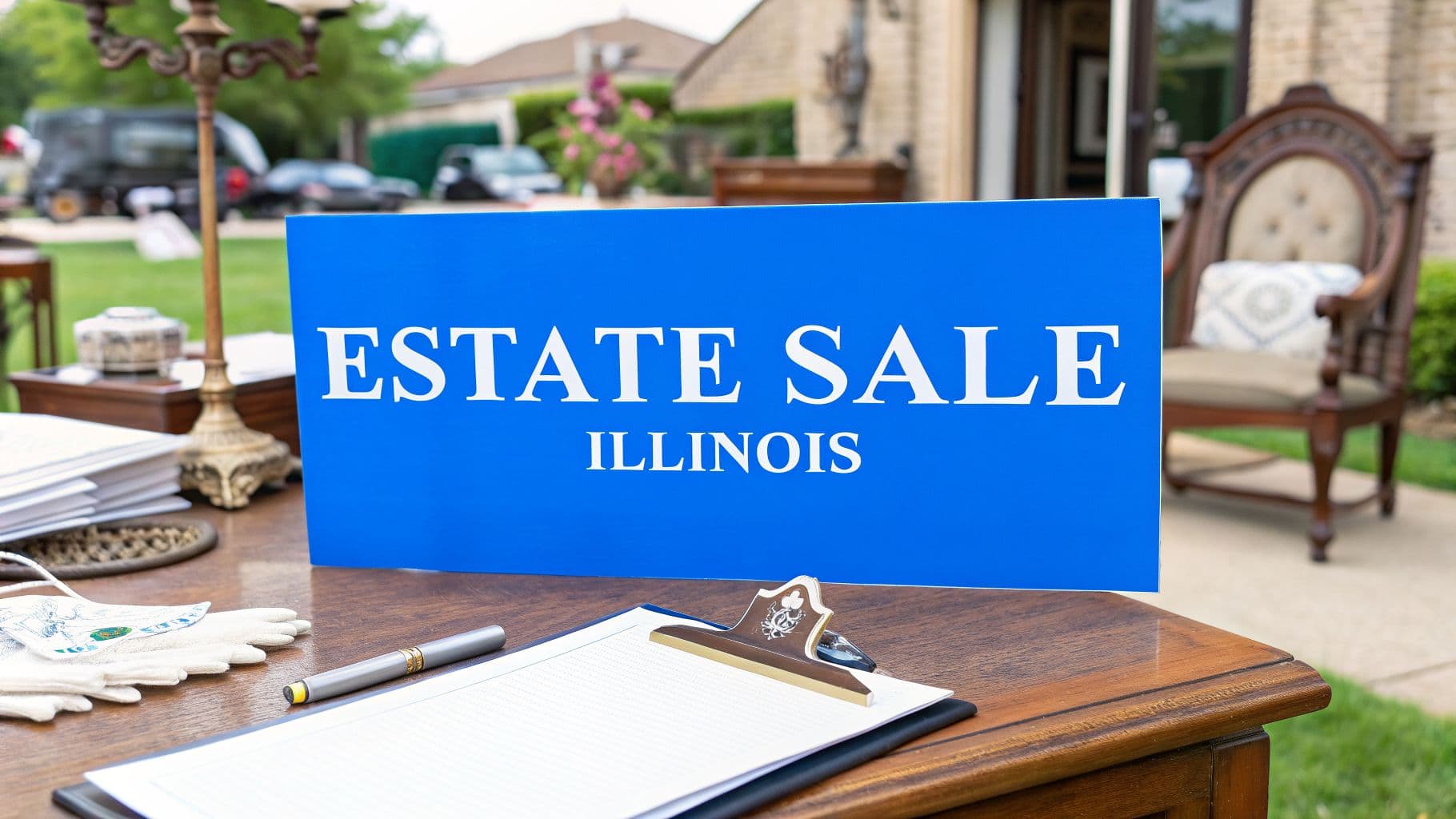
Planning an estate sale in Illinois can feel like a monumental task, but it doesn't have to be. Whether you’re downsizing, moving, or handling a loved one's estate, a well-run sale is the key to a smooth transition. The good news? You no longer have to give up nearly half your profits to a traditional estate sale company to get it done right.
Running Your First Illinois Estate Sale

The job of liquidating an entire household’s worth of possessions is a heavy one, both emotionally and physically. For years, the standard approach in Illinois was to hire an estate sale company, hand over the keys, and hope for the best.
After they took their cut—typically a staggering 30% to 50% commission—you were left with a fraction of what your items actually sold for. That model is outdated.
How to Navigate the Modern Illinois Market
The game has changed for estate sales in Illinois, driven by a unique mix of economic factors and powerful new tools. For one, the housing market presents a real challenge. Recent figures show the median home price in Illinois climbed to $290,700, but at the same time, the number of homes sold dropped by over 12%.
What does this mean for you? While your home equity is high, the process of actually selling can drag on, making it more important than ever to liquidate personal property efficiently. You can dig deeper into the Illinois housing market dynamics to see these trends firsthand.
This exact situation has created a huge demand for smarter liquidation options. People are realizing there’s serious value locked away in their belongings, not just their real estate. This is where a modern approach makes all the difference.
Forget handing over the keys and a huge chunk of your profits. A DIY online auction puts you in control, letting you keep what you earn while connecting with a built-in network of motivated local buyers.
Your Path to a More Profitable Sale
Instead of losing a massive percentage of your proceeds to commissions, platforms like DIYAuctions provide a much better way. We give you the tools, marketing muscle, and payment system to run your own professional-grade sale without the professional-grade fees.
This guide will walk you through the entire process, breaking down what feels like an overwhelming project into a series of clear, manageable steps.
Here’s a quick look at why this approach is quickly becoming the new standard:
- Keep What You Earn: With a simple, capped commission, the vast majority of the profits go directly into your pocket.
- You're in Charge: You decide what to sell, how to price it, and when the sale happens. No one will pressure you to sell sentimental items.
- Simple and Secure Logistics: An online auction with a single, scheduled pickup day avoids the chaos and security risks of a multi-day open house.
This guide is your roadmap to a less stressful, more profitable sale where you are in complete control from start to finish. Let’s get started.
Navigating Illinois Legal and Financial Rules
Running an estate sale in Illinois is about more than just pricing vintage furniture and family heirlooms. There are specific legal and financial duties you have to manage, and overlooking them can cause some serious headaches down the line.
Let's break down exactly what you need to know. Getting a handle on these rules upfront will protect you, the estate, and your bottom line.
The first thing people always ask about is taxes. The Illinois Department of Revenue requires you to collect the state's Retailers' Occupation Tax—but only if you're considered "in the business of selling." For a one-time sale to clear out personal property, that's usually not you. If you start holding sales regularly, however, the situation changes.
Beyond the state level, the rules can change dramatically from one town to the next. Never just assume you can put a sign in the yard and open the doors.
Check Local Permit Requirements
Before you even think about taking pictures, make a quick call to your local city or village hall. Whether you’re in a Chicago bungalow, a home in Naperville, or a place down in Springfield, your local government likely has its own rules for residential sales.
Some towns might require:
- A temporary sales permit, which usually comes with a small fee.
- Limits on how many days your sale can run.
- Specific rules about where you can place signs advertising your sale.
A five-minute phone call is all it takes to clarify these rules and avoid a surprise fine. It's a simple step that can save you a world of trouble.
Understanding Executor and Trustee Duties
If you're the executor of a will or the trustee of a trust, you carry a fiduciary duty. That's a formal way of saying you have a legal obligation to act in the best financial interest of the estate and its beneficiaries. When it comes to selling assets, this means your work has to be transparent, diligent, and fair.
Your job isn't just to sell things; it's to get the best possible price for the estate. This is where documented, fair-market pricing becomes your best friend, protecting you from any claims of mismanagement from heirs.
For many estates, selling personal property is part of the probate process—the court-supervised procedure for settling a deceased person's affairs. While things like trusts can help assets avoid probate, items in an estate sale often fall under the court's watch. Solid documentation is your best defense. You can dive deeper into the specific estate sale laws and executor responsibilities that apply in our detailed guide.
This is especially critical in a state like Illinois, where property taxes are among the highest in the nation. It's no surprise that many families turn to an estate sale to offset these costs after inheriting or selling a home. This is where a platform like DIYAuctions can be a game-changer. We charge just a 10% commission (capped at $1,000), so you keep 90% of the sale proceeds. That's a huge difference compared to the 35% or more that traditional estate sale companies take. For executors across all 102 Illinois counties, that financial advantage is a big deal. You can see how these figures align with statewide trends by reviewing data from the Illinois Department of Revenue.
Meticulous Record-Keeping Is Non-Negotiable
From the moment you start sorting to the day you make the final bank deposit, keep detailed records of everything. This isn't just a good habit—it’s a legal and financial shield for the estate's final tax return and for your own protection.
Your records need to include a full inventory list with final sale prices, receipts for any expenses you paid for (like cleaning supplies or marketing), and a clear accounting of all the money that came in. To stay compliant and make tax time easier, it’s a good idea to learn how to organize receipts for taxes. This diligence creates a clear paper trail that will satisfy both the IRS and any curious beneficiaries.
Building Your Illinois Estate Sale Timeline
A successful estate sale doesn’t happen by accident. It's the result of smart, methodical planning, not a last-minute scramble. Think of your timeline as your single most important tool, turning what feels like a monumental task into a series of manageable steps.
For a typical estate sale in Illinois, we’ve found the sweet spot is starting 6 to 8 weeks before your planned pickup day.
This runway gives you breathing room to sort through everything without feeling overwhelmed, properly research what your items are worth, and get the word out to the right buyers. Rushing almost guarantees you’ll leave money on the table. This timeline is built for an online auction format, which ends with one organized pickup day, not a chaotic multi-day free-for-all at the house.
The First Phase: Sorting and Decluttering
The first part of the process is often the most emotional: sorting a lifetime of possessions. Your job is to create three piles: keep, sell, and discard. It’s tough to be objective when you’re dealing with sentimental items, but it's a necessary step.
Try to look at things from a buyer's perspective.
- Does this have a real-world use or decorative appeal today?
- Has anyone actually used or displayed this item in the past few years?
- Is it part of a set that’s more valuable together than in pieces?
This isn’t about erasing memories—it’s about making smart decisions to get the most value for the estate. Anything that's broken, badly stained, or clearly unsellable should be tossed or donated right away. Clearing the clutter creates physical and mental space to work. Be realistic; this step can easily take a week or two, so be patient with yourself.
Cataloging and Pricing for the Illinois Market
Once you know what you're selling, it’s time to build your online catalog. This is where a platform like DIYAuctions really shines. You aren't just making a list; you're creating compelling lots that will get bidders excited.
For every item, you'll need:
- Clear, well-lit photos from several different angles.
- Accurate measurements and an honest description of its condition.
- Any brand names, maker's marks, or interesting history you know.
Pricing is where your knowledge of the local Illinois market can make a huge difference. An item’s value can swing wildly from one part of the state to another. For instance, antique farm equipment might spark a bidding war in Central Illinois, while mid-century modern furniture is a hot commodity in Chicago and up along the North Shore.
Don't just guess what something is worth. Do your homework. See what similar items have actually sold for recently on other online auction sites and marketplaces. A competitive starting bid is the secret to getting early interest and driving the final price up.
Marketing and Launching Your Online Auction
With all your items cataloged, you’re ready to schedule and launch the auction. We find that a 7 to 10 day auction run is perfect. It gives buyers enough time to find your sale, browse your catalog, and place their bids without dragging on for too long.

While DIYAuctions markets your sale to our network of local buyers, you can give it a serious boost. Share the auction link in local Facebook groups—think of community forums in Peoria, collectors’ circles in the Chicagoland area, or neighborhood pages in Springfield. This is how you make sure the right eyes land on your best items.
As the auction is running, you can field questions from bidders and watch the action unfold. It’s a transparent, hands-off process that lets you track progress without the headache of haggling. Once the auction ends, all payments are processed through the platform automatically. Every item is paid for before anyone shows up, which means no last-minute price negotiations and no security risks from handling cash. All that's left is to get ready for a smooth, single-day pickup with the winning bidders.
How to Market Your Sale to Illinois Buyers
Don't make the classic mistake of thinking a few yard signs will cut it. To run a truly successful estate sale in Illinois, you need a smart marketing plan that gets your items in front of the right local buyers—from serious collectors in the suburbs to bargain hunters in your own neighborhood.
Your goal is to build excitement and a bit of urgency before the bidding even starts. This is where a modern platform like DIYAuctions gives you a huge head start. We automatically put your sale in front of our established network of Illinois buyers who are already looking for sales just like yours.
But you don't have to stop there. A few targeted strategies can seriously amplify your reach and your final profits.
Crafting Listings That Convert
Think of your online listings as your digital salesperson. Vague descriptions and blurry photos won't do the job. High-quality photos and compelling descriptions are what turn browsers into bidders. Don't just list an "old lamp"—showcase a "Vintage Mid-Century Modern Teak Table Lamp with Original Shade."
For every item, focus on what makes it special.
- Shoot Photos That Sell: Use bright, natural light and a clean background. Be sure to capture multiple angles, close-ups of any maker's marks or signatures, and even pictures of any flaws. Honesty builds trust.
- Tell the Item's Story: Go beyond the basics. Include dimensions, condition, and any interesting history you might know. Was it a family heirloom? Did it come from a specific period?
- Think Like a Buyer: Use keywords someone would actually search for. Add terms like "antique," "vintage," "farmhouse," "MCM," or specific brand names to attract the right people.
Putting in this little bit of extra effort helps buyers bid with confidence, knowing exactly what they’re getting.
Remember, the difference between selling a set of designer handbags in Oak Brook and vintage farm equipment in rural Peoria is the story you tell. A tailored marketing message that highlights what makes each item unique is what attracts specialty buyers and drives prices up.
Tapping into Local Online Communities
Beyond our built-in marketing, social media is your secret weapon for creating local buzz. Illinois is packed with hyper-local online groups filled with passionate buyers who are ready to shop.
Focus your energy where local communities are already gathering. Facebook is fantastic for this. Spend a little time searching for and joining groups in your area, like:
- Local buy/sell/trade groups for your town or county (e.g., "Naperville Resale," "Springfield Online Garage Sale").
- Specialty collector groups (e.g., "Chicagoland Collectors," "Illinois Antique Lovers").
- Community and neighborhood forums.
When you post, don't just drop a link and leave. Write a short, engaging message highlighting a few of your best items and include great photos. This feels less like an ad and more like a genuine heads-up on a great opportunity. For even more pro tips, check out our complete guide on how to master estate sale marketing.
A targeted approach on social media can make a huge difference. Here's a quick look at where your efforts pay off the most.
Marketing Channel Effectiveness for Illinois Estate Sales
| Marketing Channel | Best For | Target Audience | Pro Tip |
|---|---|---|---|
| DIYAuctions Platform | Maximum reach with minimal effort | Active local bidders specifically searching for estate sales | We handle this for you! Your sale is automatically promoted to our network. |
| Facebook Groups | Generating targeted local buzz | Niche collectors, local residents, and community members | Post 2-3 times in each relevant group, highlighting different items each time. |
| Facebook Marketplace | Broad local visibility for standout items | General bargain hunters and people searching for specific goods | Cross-post a few of your most desirable items with a link to the full auction. |
| Visually showcasing unique or designer pieces | Younger buyers, design enthusiasts, and collectors of trendy items | Use relevant hashtags like #chicagoantiques, #illinoisvintage, or #estatesalefinds. |
Using a mix of these channels ensures you're not just reaching a lot of people, but the right people who are most likely to bid on your items.
Understanding the Illinois Buyer Landscape
The current Illinois housing market actually creates a perfect opportunity for estate sellers. In the Chicago metro area, for example, a tight housing market means homes can sit longer, increasing the need for estate sales to liquidate personal property before a move.
Statewide, there were 6,994 homes sold in January 2026, a figure that's down 11.6% from the previous year. You can dig into Chicago's housing inventory trends yourself to see how the market is shifting. For downsizers and families in the Chicago-Naperville-Elgin area facing high property taxes, this creates a real need.
This data reveals a large, motivated audience of both buyers and sellers looking for value outside of traditional real estate. Your marketing should speak directly to them, positioning your sale as a fantastic local opportunity.
Managing a Safe and Smooth Pickup Day

The auction is over, the payments are in, and now it’s time for the grand finale: pickup day. Honestly, this is where a well-planned online auction really shines. A smooth, single-day pickup event is what separates a modern estate sale in Illinois from the drawn-out chaos of a traditional sale, and it's where your careful planning truly pays off.
One of the best parts of this process? All payments are handled online beforehand through the platform. This completely sidesteps the biggest headaches of old-school sales—no fumbling with cash, no chasing down no-shows, and zero haggling at the door. Every buyer has already paid, so you know exactly who's coming and what they're there for.
Your only job on pickup day is to play traffic controller, getting the right items to the right people as smoothly and safely as possible.
Preparing for a Flawless Pickup Event
Before anyone rings the doorbell, you need to stage the home for function, not for show. The goal is a seamless flow of people and their purchased items.
Start by grouping sold items by buyer or invoice number. If someone won ten different lots—a lamp, a rug, and eight boxes of kitchenware—get all of it together in one spot. Then, slap a label on the pile with the buyer’s name and invoice number.
This little bit of prep work will save you a mountain of headaches. Instead of running around the house hunting for that one last item while a buyer waits, you can just point them to their designated pile, do a quick check, and help them get on their way. Think of your garage or a cleared-out room as a temporary fulfillment center.
An organized pickup day is a safe pickup day. By controlling the flow of people and having items pre-staged, you minimize foot traffic through the house, protect your property from accidental damage, and create a much more secure and professional experience for everyone.
Managing Liability and Home Security
Even with a perfectly planned event, you're still inviting strangers to your property, and accidents can happen. It’s always a smart move to give your homeowner's insurance policy a quick read to see what’s covered.
Here are a few common-sense steps to lock down the house:
- Restrict Access: Use signs or simply close and lock doors to any rooms that are off-limits. There's no reason for buyers to wander into private bedrooms or offices.
- Clear the Pathways: Walk the route from the driveway to the items and back out. Make sure it's completely clear of tripping hazards like loose rugs, boxes, or extension cords.
- Provide Assistance Wisely: It’s fine to lend a hand with a box, but for bulky furniture, you have to draw a line. Always insist that buyers bring their own muscle for heavy lifting—it’s their responsibility.
This is another huge advantage of a single pickup day over a multi-day open house. You dramatically limit your liability exposure by containing all the activity to just a few hours. In Illinois, where real estate transactions are so focused on preventing liability, applying that same careful mindset to your pickup day is just good sense.
After the Last Item Is Gone
Once the last car pulls away, you’re on the home stretch. You might have a handful of unsold or unclaimed items left. This is the time to decide their fate—donate them to a local Illinois charity, call a junk removal service, or simply dispose of them.
Finally, it’s time to look at the numbers. A platform like DIYAuctions gives you a clean, detailed report of every item sold, the final price, and your total earnings. This clear documentation is gold, especially for an executor who needs to report back to beneficiaries or the probate court. It’s the final, satisfying step in a profitable and remarkably low-stress sale.
Why a DIY Approach Maximizes Your Profit
When you're settling an estate, your goal is to preserve as much value as possible for the beneficiaries. The single biggest factor impacting your net profit is the commission you pay. It’s just simple math.
Traditional estate sale companies often charge steep commissions, typically ranging from 30% to 50%. For a modest estate sale in Illinois that brings in $20,000, you could be handing over $6,000 to $10,000 of the proceeds. That’s a massive chunk of the estate's value gone before you even see a check.
We built DIYAuctions on a different model. Our straightforward commission means you keep 90% of the total sales, and our fees are capped.
On that same $20,000 sale, your fee would be capped at just $1,000. That leaves you with $19,000 in your pocket—thousands of dollars more than you'd get through a traditional company. This isn't a small difference; it can completely change the financial outcome for the estate.
Beyond the numbers, a DIY approach gives you something just as valuable: total control and transparency. You see every bid as it comes in and know the final price for every single item. There are no hidden fees or surprises.
If you’re the executor, this level of clarity is essential. Understanding all your options, including the different types of estate sale agents and services, is key to fulfilling your fiduciary duty to maximize the estate's assets. Our platform provides the tools to do exactly that.
Frequently Asked Questions About Illinois Estate Sales
Even the best-laid plans come with questions. When you're running an estate sale in Illinois, a few common concerns always seem to pop up. Let’s tackle some of the most frequent ones so you can move forward with confidence.
Do I Need a Special License to Hold an Estate Sale in My Illinois Home?
For a one-time sale at your own home, the short answer is usually no. The state of Illinois generally views this as you simply selling your personal property, not running a full-fledged business that needs a special license.
That said, local city and village rules are where you need to pay close attention. Municipalities, especially places like Chicago or suburbs in DuPage and Kane counties, often have their own requirements. This could mean needing a temporary permit for the sale or facing restrictions on how many sales you can hold per year and where you can put your signs. A quick call to your local village or city hall is the best way to avoid any surprise fines.
Am I Required to Collect Sales Tax on Items I Sell?
According to the Illinois Department of Revenue, you only have to collect sales tax if you’re considered "in the business of selling." For most folks holding a single estate sale to liquidate personal items, this won't apply.
The situation gets a bit murky if you start holding sales more often. This is where a modern platform like DIYAuctions really helps. Our payment system can be set up to handle tax collection automatically wherever it's required, completely removing the guesswork and compliance burden from your plate.
What Is the Biggest Mistake in Pricing for an Illinois Sale?
By far, the most common and costly mistake is pricing with your heart instead of your head. It’s completely understandable to have sentimental attachment to family items, but that emotional value doesn't, unfortunately, translate to market value for buyers.
The second biggest error we see is failing to understand the local Illinois market. A vintage John Deere sign might spark a bidding war in rural central Illinois, while that same promotional effort would be better spent on mid-century modern furniture for buyers in the Chicago suburbs. Always research what similar items have actually sold for on auction sites to price your items for maximum profit.
How Do I Ensure My Privacy and Security During Pickup?
This is one of the most significant advantages of running an online auction compared to a traditional sale where the public streams through your home. Privacy and security are baked right into the process.
- No Cash on Site: Every single payment is handled online before anyone shows up. This completely eliminates the risks of dealing with large amounts of cash, getting a bounced check, or having to haggle with people at your front door.
- Controlled Access: You set one specific, limited time window for pickups. Instead of a free-for-all with strangers wandering through the house for days, you host a short, manageable event with only the verified, paying buyers.
With this model, you are in total control. Only winning bidders who have already paid are allowed on your property, and only at their scheduled time. It's an infinitely more private and secure way to manage the final step of your sale.
More guides in Estate Sale Basics
July 28, 2026
Revenue Reporting for Estate Sales and Auctions
Learn revenue reporting essentials for estate sales and auctions. Discover key metrics, templates, and best practices to simplify tracking and compliance.
Read guideJuly 26, 2026
Stamp Collection Valuation: A Practical Step-by-Step Guide
Stamp collection valuation made simple. Learn how to identify, grade, price, and sell your stamps with confidence for estate sales or consignment.
Read guideJuly 23, 2026
Estate Sales Brick NJ: Your 2026 Guide to Success
Planning your estate sales brick nj? Our guide covers permits, pricing, marketing, & running a safe sale with DIYAuctions.
Read guideGet the estate sale pricing guide
Enter your email for pricing ranges, planning notes, and a clearer path to launch.