DIY Estate Sales Clearwater: Maximize Your Profit!
Run successful estate sales clearwater without high commissions. Our DIY guide covers prep, pricing, rules, and DIYAuctions to maximize profit.
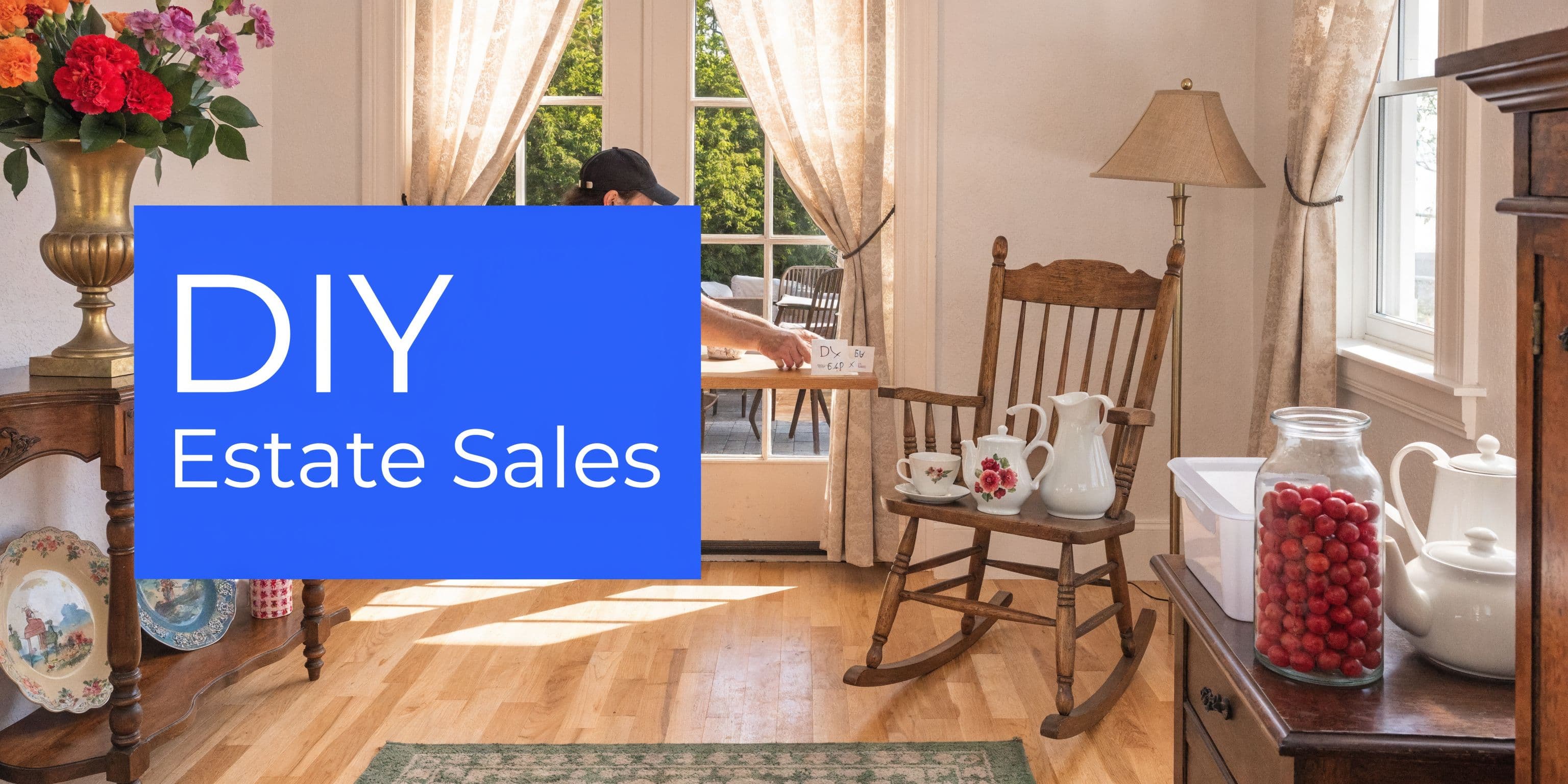
If you're staring at a Clearwater house full of furniture, collectibles, kitchenware, artwork, tools, and family history, the hardest part isn't deciding to hold a sale. It's figuring out how to do it without giving away a huge share of the proceeds, losing weeks to logistics, or turning pickup day into a traffic jam in your own driveway.
That situation shows up in a few familiar forms. A parent is moving into assisted living. An executor is trying to clear a property without family arguments getting worse. A homeowner is downsizing after decades in the same neighborhood. In every version, the questions are the same. What should be sold? What should be kept? How do you price it? And how much of the final total do you get to keep?
Understanding the Clearwater Estate Sale Market
Clearwater is active enough that you can't treat an estate sale like a casual weekend garage sale. The Tampa and St. Petersburg area, including Clearwater, shows dozens of sales weekly, and ZIP codes such as 33763 and 33760 show 30 to 40 plus results at any time on EstateSales.net's Clearwater listings. The same source notes that Florida hosts over 15,000 estate sales annually, tied to retiree relocation and downsizing patterns.

That level of activity creates two realities at once. First, there are plenty of buyers. Second, sellers face serious competition, especially if they're listing everyday household goods rather than a highly curated collector estate.
Why Clearwater stays busy
Clearwater has a steady stream of sales because life transitions are common here.
- Downsizing households: Longtime residents need to reduce volume quickly.
- Inherited estates: Executors need a clean process that can stand up to family scrutiny.
- Relocation moves: Sellers don't have time for a multi-week, open-door setup.
- Collector homes: These can attract strong interest, but only if the cataloging is organized.
In practice, estate sales clearwater buyers respond well when the inventory is easy to browse and the terms are clear. They don't reward confusion. If photos are weak, pickup instructions are vague, or pricing feels random, bidders move on to the next sale.
Practical rule: In a crowded local market, clarity beats volume. A well-labeled, well-photographed catalog performs better than a messy house full of unlabeled surprises.
Conflict: Profit Retention
Sellers start by calling a traditional estate sale company because it feels safer. The problem is that fees are opaque until you're already deep into the process. The cleaner the house and the more valuable the contents, the more painful that math becomes.
A useful starting point is to review a straight breakdown of the cost of an estate sale before choosing a format. Sellers assume the biggest risk is not selling enough. In Clearwater, the bigger mistake is selling plenty, then realizing the fee structure ate up the return.
If the property is part of an estate, legal timing matters too. Families want to move fast, but probate can put limits on what happens next. Before cataloging anything major, it's worth understanding the probate process so the sale plan matches the legal reality.
Your Foundation for a Successful Sale
A strong sale starts before the first listing goes live. Most failed estate sales clearwater sellers put too much energy into the visible part, photos, tags, sale-day setup, and not enough into the decisions that make the whole thing run cleanly.
Start with a written sorting system
Use a simple four-part sort and stick to it:
- Keep
- Sell
- Donate
- Family review
Don't sort by room only. Sort by decision status. That keeps the emotional items from getting mixed into sale inventory, which is one of the fastest ways to create delays and arguments.
For households with several decision-makers, assign one person final say on each category. If everyone gets veto power over every lamp, chair, and serving dish, the process drags.
Sentimental items should be separated early. Once sale prep starts, indecision becomes expensive.
Build the timeline backward from the property deadline
Whether the house needs to be cleared for listing, closing, or turnover, the deadline should control every prep task. Sellers who work backward make cleaner decisions. Sellers who don't keep revisiting old choices.
A practical timeline includes:
- Inventory week: Walk every room, closet, garage area, patio, and storage zone.
- Decision week: Finalize what stays and what leaves.
- Prep period: Clean, photograph, group, and document sale items.
- Sale window: Keep it tight so momentum doesn't fade.
- Pickup day: Schedule a single coordinated collection day.
- Final cleanout: Remove donations, trash, and unsold leftovers promptly.
Executors need a stricter process
Probate sales require more discipline than standard downsizing sales. For Florida probate matters, the executor must petition the court, list the assets, and get court confirmation on offers, and delays tied to unaddressed liens or family conflicts affect 30 to 40 percent of estates and can lower final sale price by 20 to 30 percent, according to House Buyers of America's probate sale overview.
That doesn't mean every Clearwater probate sale is difficult. It means the paperwork and communication need to be tight from the beginning.
Probate checklist that avoids common mistakes
- Document authority: Make sure the executor or personal representative is clearly identified.
- Inventory first: List what exists before making promises to heirs or buyers.
- Flag title issues early: Liens and unresolved claims don't fix themselves.
- Keep beneficiary communication organized: Casual verbal updates create confusion later.
- Match the sale method to the timeline: If court timing is slow, don't promise immediate disposal.
For families handling both physical property and online accounts, a short read on digital estate planning can help fill in a category people forget until they're already in the middle of administration.
Think about pickup before you think about marketing
Local judgment matters in this situation. Clearwater neighborhoods vary. Some streets can handle staggered pickups easily. Others get congested quickly. If a house sits on a narrow street, near a busy corner, or in a neighborhood with strict association expectations, organize loading flow before any buyer arrives.
Use these questions early:
- Where will buyers park?
- Which door will they use?
- Where will large furniture be staged?
- Who verifies sold items at handoff?
- What happens if a buyer arrives outside the assigned window?
A sale feels professional when those answers are settled in advance. Buyers notice. Families also notice.
How to Prep and Price for Maximum Profit
Most estate value is lost in two places. Bad presentation and bad pricing.
The local buyer pool in Clearwater can be enthusiastic, but buyers still compare one sale against dozens of others. If your furniture is dusty, your glassware looks cloudy in photos, or your descriptions leave out dimensions and condition notes, you're forcing buyers to guess. Guessing lowers bids.
Prep work that changes results
There is a big difference between cleaning for donation and cleaning for sale. Sale prep means making an item easy to trust.
Here’s what works best:
- Furniture: Wipe surfaces, tighten visible hardware, and photograph from multiple angles.
- Artwork and decor: Show the front, back, signature area if relevant, and any wall wear.
- Kitchen lots: Group related pieces logically instead of mixing random cabinets into one pile.
- Tools and garage items: Separate by function. Buyers search by use.
- Collectibles: Include maker marks, damage, missing parts, and close-ups.
For inherited estates, prep has a real payoff. This video source on estate sale pricing and preparation states that experts recommend pricing items at 70 to 80 percent of retail value to reach a 65 percent sell-through rate, and that a prescribed prep plan can produce 200 percent ROI on pre-sale investments such as minor repairs or cleaning.
Pricing without guessing
A lot of sellers swing between two bad instincts. One is sentimental overpricing. The other is panic discounting.
The better approach is to use replacement logic. Ask what a ready buyer would pay today for that exact item, in that condition, with that level of convenience. Then price from there.
For many household categories, the 70 to 80 percent of retail guideline above is a useful ceiling for strong, clean, desirable items with good presentation. If the item is common, worn, incomplete, or difficult to transport, expectations should come down.
A detailed guide on pricing for estate sales is useful if you want a framework that keeps emotions out of the decision.
Don't price from memory. Price from condition, category, and buyer convenience.
What Clearwater buyers tend to respond to
Buyers in this area search with practical intent. They want pieces that fit a move, a second home, a rental, a collector niche, or a room refresh. That means item titles should be specific, not cute.
Compare these two approaches:
| Listing style | Result |
|---|---|
| "Beautiful old chair" | Too vague to attract serious interest |
| "Upholstered accent chair with carved wood frame, light wear on arms" | Easier for the right buyer to evaluate |
The same rule applies to coastal decor, patio furniture, tools, workshop equipment, vintage glass, and hobby collections. Clear naming helps local buyers decide quickly.
Small improvements that matter
Some prep jobs don't justify the time. Others do.
Good candidates for light prep include:
- Surface cleaning
- Simple hardware tightening
- Pairing detached components with the right item
- Removing obvious clutter from the photo area
- Separating premium pieces from low-value bulk
Poor candidates include major restoration, speculative repainting, or trying to force damaged everyday goods into a premium category. Buyers can tell.
Running Your Sale Smoothly with DIYAuctions
Handling your own sale no longer means improvising with handwritten tags, cash boxes, and dozens of text messages. Modern online platforms changed that. They let sellers control the process without recreating the workload of a traditional estate company.

The biggest shift is operational. Instead of opening the house for several days and hoping the right buyers show up, you build a digital catalog, attract bidders before pickup day, and organize the load-out around confirmed purchases.
Catalog first, crowd second
For solo sellers in Clearwater, one of the hardest parts is visibility. The area is crowded with competing listings. According to the Clearwater 33759 market page on EstateSales.net, a saturated market can mean over 40 weekly sales, and online platforms help by handling targeted marketing and fraud protection, reducing seller effort by up to 70 percent compared with traditional multi-day sales.
That's the part many sellers underestimate. The issue isn't just posting inventory. It's getting that inventory in front of qualified local buyers instead of wasting time on casual browsers and no-shows.
A clean setup process
A well-run online sale follows this sequence:
-
Create the sale Enter the event details, pickup location rules, and timing.
-
Upload strong photos Use clear shots, not just one distant room photo. Individual item images matter.
-
Write direct descriptions Include condition notes, dimensions when useful, and any missing parts.
-
Group intelligently Small household goods can sell better in practical lots than as scattered singles.
-
Set sale timing Keep the close and pickup timeline realistic.
-
Monitor bidder questions Fast answers prevent hesitation.
If you want a functional overview of the platform side, the online auction application shows how a guided workflow can remove a lot of the setup friction.
Why online structure fixes common Clearwater problems
Traditional in-person sales create a predictable list of headaches. People ask for early entry. They carry items to the wrong table. They hold merchandise without paying. They block driveways. They negotiate aggressively on the spot because they know you're tired.
Online sales narrow those problems.
- The catalog replaces repeated explanations
- Bidding establishes demand before pickup
- Digital payment reduces cash disputes
- Buyer records make handoff cleaner
- A single pickup window cuts neighborhood disruption
The single-day model particularly shines here. Instead of managing several days of browsing, haggling, and repeat traffic, you're moving pre-sold items to verified buyers in an orderly sequence.
Here's a look at the workflow in action:
What to watch during the live sale
Once the catalog is active, the job changes. You're no longer pricing and sorting. You're managing information.
Watch for these issues:
- Questions about condition: Answer with specifics, not sales language.
- Pickup constraints: Repeat the time window clearly and consistently.
- Duplicate items: Label them so buyers know which lot they're bidding on.
- Reserve confusion: If you use minimums, make them simple and intentional.
- End-of-sale bottlenecks: Confirm how winners will receive pickup instructions.
A lot of new sellers think the sale is over once bidding ends. It isn't. The handoff still determines whether the overall experience feels organized or chaotic.
What doesn't work
Some habits from old-school estate sales carry over badly online.
Avoid these mistakes:
- Overstuffed lots: They look convenient to the seller but confusing to buyers.
- Vague condition notes: They create disputes later.
- Too many low-quality room photos: They don't replace proper item listings.
- Loose pickup language: "Come by sometime Saturday" is how delays start.
- Changing terms midstream: Buyers lose confidence fast.
The best self-managed sales feel boring in the right way. Buyers know what they're bidding on, how they'll pay, and when they'll collect.
Coordinating a Stress-Free Pickup Day
Pickup day is where a well-run online sale proves itself. If the auction side was organized, the load-out feels more like scheduled order fulfillment than a public sale.

What a smooth pickup day looks like
The strongest pickup days have one thing in common. Buyers arrive knowing exactly where to go, what to bring, and how long they have.
A workable flow looks like this:
- Send instructions early: Include address, parking notes, and the pickup window.
- Assign time slots if needed: This matters for furniture-heavy sales.
- Stage sold items by buyer or invoice number: Don't make staff hunt room to room.
- Keep a check-off list at the door: Verification should happen before loading starts.
- Use a separate area for unsold goods: Mixing sold and unsold inventory slows everything.
The single-day model particularly shines here. Instead of managing several days of browsing, haggling, and repeat traffic, you're moving pre-sold items to verified buyers in an orderly sequence.
Avoid the chaos of open-house selling
Multi-day in-person sales break down the same way. Someone wants to come early. Another buyer can't find the tag for an item. A large piece sells, but the buyer doesn't bring help to move it. Two people think they bought the same side table.
An online sale with prepayment avoids a lot of that friction because the deal is already settled before pickup starts. You're not still negotiating while the house is full.
Buyers should arrive to collect, not to debate.
Set up the house for flow, not browsing
On pickup day, the property should feel closed to shopping. It should feel open for retrieval.
Use a simple layout:
| Zone | Purpose |
|---|---|
| Entry table | Check names or invoice details |
| Staging area | Hold small and medium sold items |
| Furniture path | Clear route for large-item removal |
| Hold area | Problem items, missing pieces, or buyer questions |
| Exit point | Final verification before departure |
If the house has stairs, narrow hallways, or delicate flooring, mention that in advance. Buyers bringing muscle and moving blankets will have a better experience than buyers showing up in sandals expecting staff to solve everything.
Handling unsold items after the sale
No estate sale clears every last object the same way. The key is to decide the next step before pickup day ends.
Common options include:
- Donate usable basics
- Schedule a removal service for low-value leftovers
- Relist select items that deserve a second attempt
- Offer family members a final claim window on non-sale pieces
Don't leave this part vague. Once the successful buyers are gone, energy drops fast. A property that is mostly cleared but still packed with leftovers can drag on longer than the sale itself.
A practical end-of-day checklist
Before locking up, confirm these five things:
- Sold items are gone.
- Uncollected items are documented.
- The payment record matches the pickups completed.
- The house is separated into donation, disposal, and relist categories.
- Family or executor stakeholders know what remains.
That closeout step keeps the sale from turning into a half-finished project.
The Financial Advantage of a DIY Estate Sale
Few need convincing that convenience matters. They need clarity on the money.
The financial gap is the simplest reason more sellers are rethinking traditional estate sales clearwater models. According to EstateSales.net Clearwater 33764 market context, traditional estate sale companies average 30 to 50 percent commissions. On a $10,000 sale, that can leave a seller with $5,000 to $7,000. A 10 percent commission model leaves the seller with $9,000.
Profit Comparison Traditional vs. DIYAuctions
| Metric | Traditional Estate Sale Company | DIYAuctions Platform |
|---|---|---|
| Example gross sale total | $10,000 | $10,000 |
| Typical commission | 30% to 50% | 10% |
| Seller net | $5,000 to $7,000 | $9,000 |
That difference isn't cosmetic. It changes what the sale accomplishes. For a downsizing seller, it can mean more money available for the move. For an executor, it can mean a cleaner result for beneficiaries. For a collector or specialty seller, it can mean not watching the best items lose value to overhead.
Traditional companies still fit some situations, especially when a family wants full hands-off service and accepts the tradeoff. But many Clearwater sellers don't need that model. They need structure, buyer reach, secure payments, and a controlled pickup day.
If your priority is keeping more of what your household goods, collections, or inherited property are worth, a modern platform is the sharper tool.
If you're ready to run your sale with more control and better margins, DIYAuctions offers a straightforward way to do it. You handle the decisions. The platform handles the mechanics that create the most stress, including marketing, payments, and buyer coordination. Visit https://www.diyauctions.com to start planning your sale.
More guides in Estate Sale Basics
July 28, 2026
Revenue Reporting for Estate Sales and Auctions
Learn revenue reporting essentials for estate sales and auctions. Discover key metrics, templates, and best practices to simplify tracking and compliance.
Read guideJuly 26, 2026
Stamp Collection Valuation: A Practical Step-by-Step Guide
Stamp collection valuation made simple. Learn how to identify, grade, price, and sell your stamps with confidence for estate sales or consignment.
Read guideJuly 23, 2026
Estate Sales Brick NJ: Your 2026 Guide to Success
Planning your estate sales brick nj? Our guide covers permits, pricing, marketing, & running a safe sale with DIYAuctions.
Read guideGet the estate sale pricing guide
Enter your email for pricing ranges, planning notes, and a clearer path to launch.