Online Auction Application: Master Estate Sales with Proven Tactics
Discover how an online auction application can streamline your estate sale—from cataloging and pricing to bidding and payout.

When you're handling an estate, the list of tasks can feel endless. But what if you could take one of the biggest jobs—liquidating the contents of a home—and turn it into a modern, profitable, and manageable project? An online auction application does just that. It puts you in the driver's seat, allowing you to connect with a huge network of motivated local buyers and keep a much larger slice of the revenue.
Why an Online Auction Application Beats Traditional Estate Sales
The default move for many people is to call an estate sale company. It seems like the easiest option, but it comes with a major catch: sky-high commissions that can swallow 35% to 50% of your gross sales. That's a huge chunk of the estate's value walking out the door.
An online auction application completely flips the script. It gives you a clear, structured way to run the entire process yourself, from taking photos of items to organizing a single pickup day. Forget having strangers traipsing through the house for days on end. Instead, you create a professional online storefront that reaches a wide, pre-qualified audience of bidders in your area.
The Financial Advantage of Going DIY
The most compelling reason to run your own online auction is the bottom line. Traditional liquidators defend their steep fees by promising to handle everything, but their goal is often speed over value. They need to clear the house quickly, which can mean underpricing antiques, collectibles, and other valuable items just to get them sold.
With a platform like DIYAuctions, you pay a straightforward, transparent commission—often as low as 10%. That difference alone can mean thousands of extra dollars for the estate.
Just look at the benefits:
- Maximize Your Profits: You keep up to 90% of the total revenue.
- Stay in Control: You decide the starting bids, the auction schedule, and the rules.
- Reach More Buyers: Your sale gets promoted to a large database of local buyers who are actively searching for items.
- Simplify the Process: The application handles the tedious stuff like payment processing, notifying bidders, and tracking sales.
Tapping Into a Booming Market
Let's face it, everyone shops online now. The online auction market has seen incredible growth, changing how we buy everything from vintage furniture to everyday household goods. In 2024, the global online auction market was valued at an astonishing USD 681.72 billion and is projected to climb to over USD 1.65 trillion by 2035.
This boom is driven by convenience and the fact that nearly everyone is comfortable buying online. It’s the perfect time to adopt this model for your own sale. You can learn more about this incredible market growth over at Market Research Future.
By managing your own sale through an online auction application, you’re not just saving a fortune on commissions. You’re stepping into a thriving digital marketplace where demand is high and your potential for profit is far greater. It’s about working smarter, not harder, to honor the true value of an estate.
Laying the Groundwork for a Winning Auction
A profitable online auction doesn't just happen by accident—it’s built on a solid foundation. The real work happens long before the first bid comes in, and a quality online auction application is your best friend for making this setup process smooth and organized. It all starts with creating your account and defining the core details of your sale.
Think of this as drawing the blueprint for your event. You'll start by giving your auction a clear, descriptive title. Something like "Mid-Century Modern Furnishings & Decor Estate Auction in Springfield" immediately tells potential bidders what they’ll find and where it’s located.
Nail Down Your Dates
The timing you choose for your auction’s closing and pickup can make or break your results. While your sale might be live online for a week or more, the most critical dates for your buyers are the day the bidding ends and the day they pick up their winnings.
Most people are busiest during the week, so scheduling your auction to close on a Saturday or Sunday evening is a smart move. This timing often creates a final surge of bidding activity as people are home, relaxed, and ready to compete for the items they want.
Likewise, the pickup day needs to be as convenient as possible. I’ve seen these two options work best:
- A Weekend Pickup: A Saturday or Sunday gives people who work weekdays a chance to collect their items without taking time off.
- A Single, Organized Day: Hosting a one-day pickup event keeps your workload contained and minimizes disruption. It’s a clean, efficient process for everyone.
By choosing buyer-friendly dates right from the start, you're removing hurdles and attracting a much larger pool of serious bidders.
Define Your Auction Rules
Clarity is everything when it comes to building bidder confidence and avoiding headaches later. Your online auction application will have a dedicated spot to outline the terms and conditions for your sale. This is where you set professional expectations.
A well-defined set of rules is your contract with your bidders. It protects you, creates transparency, and ensures a smooth handoff from the final bid to the final pickup.
Make sure your rules are simple, easy to find, and cover all the essentials. To really get this right, you’ll want to understand all your application's admin panel capabilities, since that's where you'll configure everything.
Here are the key rules you need to establish:
- Payment Policies: State clearly that all payments are processed automatically through the platform right after the auction closes. This simple rule virtually eliminates non-payment issues.
- Bidding Increments: Define how much the bid increases with each new offer. For example, bids under $50 might go up by $2.50, while bids over $100 could jump by $10.
- Pickup Logistics: Give the exact pickup address, date, and a specific time window. And always, always emphasize that buyers must bring their own help and packing materials for heavy items.
- Item Condition: Include a standard disclaimer that all items are sold "as-is, where-is." This helps manage expectations and prevents disputes.
Write a Sale Description That Grabs Attention
Your sale description is your #1 marketing tool. It’s the first thing bidders see and your best shot at getting them excited enough to browse your entire catalog. Don't just write a generic intro—tell a story.
For instance, mention if the sale is full of items from a specific era, a unique collection, or well-known brands. A compelling description creates a sense of discovery that pulls people in. This is a foundational step, and you can find more great tips in our complete guide on how to do an online auction.
The market for these events is huge, especially in North America, which is driving 41% of global growth in the online auction world. Between 2025 and 2029, this region is expected to add USD 3.98 billion in market expansion, all fueled by time-crunched buyers who want unique items and digital convenience.
Creating Item Listings That Drive Higher Bids
Your catalog is the heart of your auction. It’s not just a list of items; it’s your digital showroom, and every single listing is a chance to turn a casual browser into a determined bidder. When you use an online auction application, you have all the tools you need to build a professional-looking catalog that builds trust, minimizes bidder questions, and ultimately drives higher prices.
It all starts with great photos. You don't need a professional camera, either—your smartphone is more than powerful enough to capture images that sell. The key is to treat each item like a star and give it a proper photoshoot.
The quality of your photos directly impacts a bidder's confidence. Clear, honest, and comprehensive images tell a story of value and care, making people more comfortable placing higher bids.
Mastering Smartphone Photography for Your Auction
Your goal should be to create a complete visual record of each item. This means snapping it from every important angle—front, back, sides, top, and bottom. For a dresser, open the drawers and get a shot of the inside. For stereo equipment, show the connection ports on the back.
Lighting is your most important tool here. Please, avoid using your phone's built-in flash! It creates harsh shadows and completely washes out the item's true colors. Instead, find a spot with plenty of natural, indirect light, like near a large window on an overcast day. A simple white poster board from the dollar store can be used as a backdrop to make smaller items pop.
To elevate your photos from good to great, check out our detailed guide on how to take professional product photos with just your phone. A few simple tricks can make a world of difference.
Always be upfront about an item’s condition. If a wooden table has a scratch or a piece of china has a small chip, take a clear, close-up photo of it. This kind of honesty builds incredible trust with your bidders. They know exactly what they're getting, which prevents headaches and disputes later on.
Writing Descriptions That Sell
Once you have your photos, it’s time to write compelling descriptions. Put yourself in the buyer's shoes: what would you need to know before placing a bid? Your online auction application provides the structure; your job is to fill in the details that matter.
Start with a clear, descriptive title. Instead of just "Old Chair," try something like "Vintage Mid-Century Modern Walnut Armchair by Drexel." This immediately tells bidders the style, material, and brand, attracting people who are specifically searching for those keywords.
Your description should be a mini-sales pitch that covers all the essential info. I find it's easiest to break it down into easy-to-read points:
- Measurements: Always include dimensions (height, width, depth). This is non-negotiable for furniture and large decor.
- Brand and Materials: List the manufacturer, designer, and what the item is made of (e.g., solid oak, sterling silver, canvas).
- Condition: Describe the item's state honestly. Use real-world terms like "excellent vintage condition," "shows minor wear consistent with age," or "has a noticeable scratch on the left side."
- Provenance or History: If you know the item's backstory, share it! A short sentence about where it came from can add significant charm and perceived value.
This level of detail is especially crucial for certain categories. For instance, the collectibles market—a powerhouse segment valued at USD 678.80 billion in 2019—is driven by knowledgeable buyers who crave specifics. To attract these serious bidders, who are helping push global art and antique sales past USD 20 billion in 2024, your cataloging has to be on point. You can discover more insights about this key growth category over at the online auction market report from Technavio.
Let's look at a quick comparison to really illustrate the difference good details can make.
Effective vs Ineffective Item Listings
Investing just a few extra minutes in each listing can transform a basic item into a must-have find. Here's how to turn a weak listing into one that gets bids.
| Listing Element | Ineffective Example (Avoid) | Effective Example (Do This) |
|---|---|---|
| Title | Old Desk | Antique Oak Secretary Desk with Drop Front & Key |
| Description | A wooden desk. It has some drawers. Works fine. | Beautiful antique secretary desk crafted from solid oak. Features a functional drop-front writing surface, multiple small cubbies for organization, and three large lower drawers. The original brass hardware is intact, and the lock comes with its key. Shows minor scuffs consistent with its age, adding to its character. A timeless and functional piece. |
| Dimensions | Not provided | 42" H x 30" W x 18" D |
| Photos | One dark, blurry photo | 8 well-lit photos showing the front, back, sides, interior, drawers, hardware, and a close-up of a minor scuff. |
By taking the time to present your items properly, you're not just listing things for sale—you're creating an experience that encourages confident bidding. This thorough approach, powered by your online auction application, is the secret to a sale that meets and even exceeds your financial goals.
Smart Pricing and Promotion to Boost Your Bottom Line
How you price your items and promote your sale are two of the biggest factors that will determine your final profit. After you've built out some fantastic item listings, the real magic happens when you pair them with a pricing strategy that gets people bidding. An online auction application makes this part easy, giving you smart options to spark some real excitement and protect the value of your best stuff.
The psychology behind auction pricing is fascinating. One of the most common and surprisingly effective tactics is to start items with a really low opening bid—often just $1. I know, it sounds a little crazy, but it does something powerful: it lowers the barrier for someone to get involved. That low price gets you that all-important first bid, which puts the item on bidders' watchlists and builds early momentum.
That momentum is what you're after. It frequently builds into a bidding war as the auction’s end time gets closer. Buyers who have spent days watching an item can get emotionally invested and are much more likely to keep bidding so they don't lose out. The result? The final price is set by genuine market demand, often blowing past what you might have gotten with a higher starting price.
Setting Reserves for High-Value Items
Of course, a $1 start isn’t the right move for everything. When you're dealing with high-value assets like antique furniture, fine jewelry, or even a vehicle, you need a safety net. This is where a reserve price is your best friend. A reserve is simply a confidential minimum price that must be hit for the item to actually sell.
Bidders can't see your reserve, but they are notified if their bid is still under that hidden threshold. This is how you protect yourself from having to let a valuable piece go for pennies on the dollar. I recommend using reserves sparingly, as they can sometimes intimidate new bidders, but they are an absolutely essential tool for your most important items.
To set realistic prices and reserves, you have to do a little homework. Use your online auction application's tools to check out past auctions for similar items. It's also a great idea to search "sold" listings on major online marketplaces to see what things actually sold for, not just what sellers were asking. This quick bit of research grounds your expectations in reality.
The infographic below really nails down the key pieces of a strong listing, all of which directly impact how buyers perceive its value.
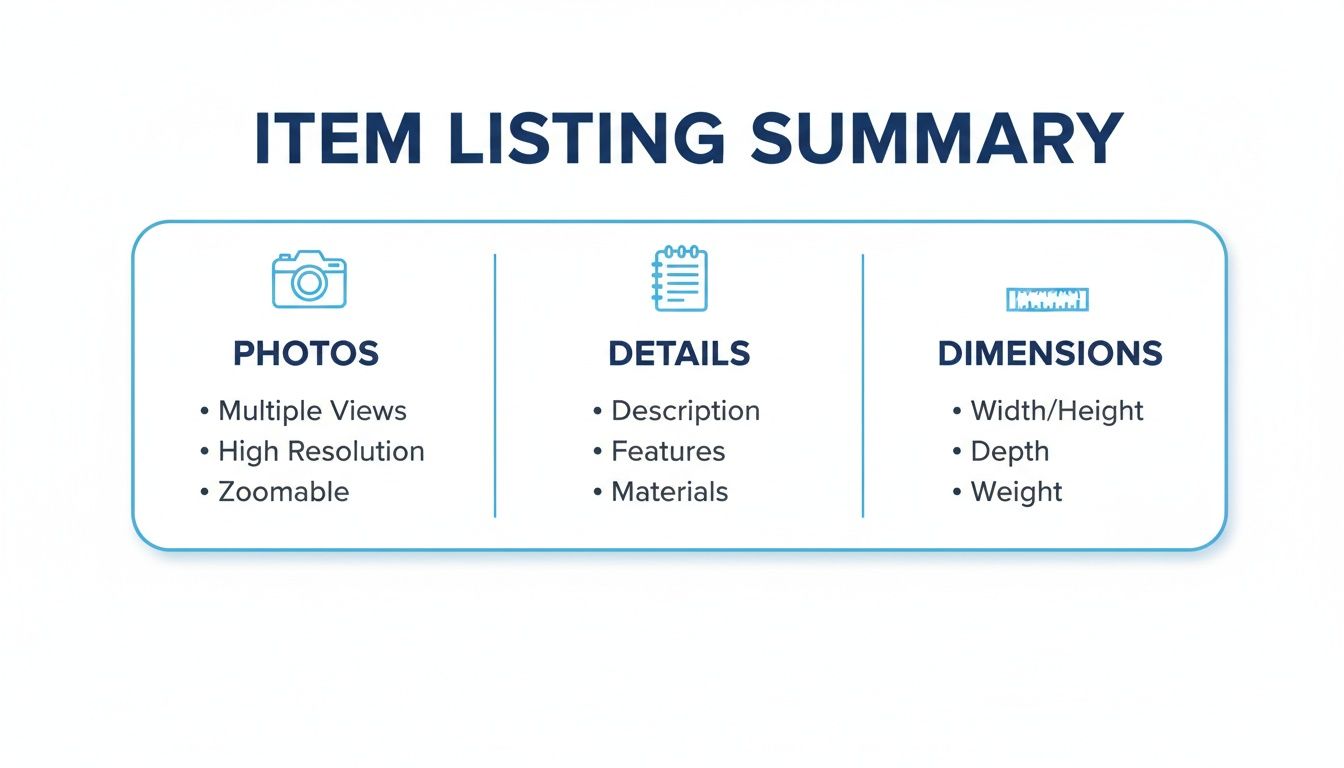
As you can see, it's the combination of great photos, detailed descriptions, and accurate measurements that builds a bidder's confidence and justifies the final price they're willing to pay.
Expanding Your Reach Beyond the Platform
While your auction app does a great job marketing your sale to its network of local buyers, you can get even better results with some extra promotion. Think of it as pouring gasoline on an already-burning fire. The platform gives you a unique link to your auction—now it's time to share it.
Social media is your most powerful free tool here. Start by sharing the auction link on your personal Facebook profile and ask your friends and family to pass it along. Even better, post it in relevant local online communities.
Look for groups like:
- Local Buy/Sell/Trade Groups: These are hotspots for active buyers in your specific area.
- Community and Neighborhood Groups: Pages for your city, county, or even your subdivision are perfect for hyperlocal promotion.
- Hobbyist or Collector Groups: Selling something specific, like vintage toys or vinyl records? Find the online communities dedicated to those interests.
When you post, don't just drop a link and run. Share a few of your best photos and write a short, friendly message. Call out a few of the most interesting items to get people curious and encourage them to click through to the full auction.
"Your promotion efforts create a ripple effect. Every share and comment expands your audience, bringing in new bidders who might not have seen your sale otherwise, which directly leads to more competition and higher final prices."
To make sure your pricing and promotion really deliver, it's worth exploring these proven tactics to increase online sales for more great ideas. When you combine a smart pricing model with some targeted, personal promotion, you create the perfect conditions for a profitable and successful auction.
Managing Your Live Auction and Pickup Day Like a Pro
Once you’ve launched your auction, your job shifts from cataloger to manager. This is when the quiet excitement builds. Your online auction application is now your mission control, letting you watch the bids roll in, see which items are getting hot, and answer questions from interested buyers.
Think of this phase as all about communication and organization. No matter how perfect your photos and descriptions are, bidders will have questions. Responding quickly and professionally builds the trust they need to place that first bid—or get into a bidding war. A fast, helpful answer can make all the difference.
But the real make-or-break moment comes after the last bid is placed. A smooth pickup day is what truly defines a successful sale. It’s the final impression you leave with your buyers.
Monitoring Bids and Answering Questions
During the auction, your app's dashboard is where the action is. Most platforms give you a live look at what's happening. You can quickly spot the items driving a bidding frenzy and maybe see which ones could use a little extra promotion on your social media channels.
Your main job, though, is customer service. You'll get questions like:
- "Could you give me the exact height of that dresser?"
- "Will I need to bring help to move the sofa, or is there assistance?"
- "Does the turntable have a needle?"
Answering these promptly shows you're an active and reliable seller. It gives bidders confidence, which almost always leads to better prices.
A great pickup experience is just as important as a great auction. It’s the final handshake that leaves buyers feeling satisfied and more likely to bid on your future sales. A disorganized pickup day can sour an otherwise perfect event.
Prepping for a Flawless Pickup Day
As soon as the auction closes and the automated payments are processed, it’s time to switch into logistics mode. Don’t wait until the morning of pickup day to start organizing. A little prep work right after the sale ends prevents a world of stress later.
Start by grouping items based on the winning bidder's number. Your online auction application will provide an invoice for each winner, which is your roadmap. Set up designated zones in the garage or a large room for each buyer and place all their items together. Use labeled boxes or bags for smaller things to keep them from getting lost in the shuffle.
This simple step is a game-changer. It turns what could be a frantic search for items into a calm, orderly process when buyers arrive.
Executing a Stress-Free Pickup Event
On the big day, your goal is efficiency. Think of it like running a will-call window. A simple setup makes all the difference.
Your Pickup Day Checklist:
- Set Up a Check-In Station: A simple table near the entrance is perfect. This is where you'll greet buyers, ask for their name or bidder number, and pull up their invoice on a tablet or laptop.
- Verify Payment: The beauty of the platform is that all payments are already handled. Your job is just to confirm their invoice says "Paid." No fumbling with cash or credit cards.
- Direct Buyers to Their Items: Once you've checked them in, you or a helper can point them directly to their pre-sorted pile of winnings. It's a quick and easy handoff.
- Have a Signing Sheet: As a final step, ask buyers to sign a master list confirming they’ve received everything. This creates a clean record that the transaction is officially complete.
Remember to be polite but firm about your rules. Your auction terms should clearly state that buyers must bring their own help for heavy items and their own boxes. A gentle reminder at check-in helps manage expectations and keeps things moving smoothly for everyone. With a little organization, you’ll impress your buyers and wrap up your sale like a seasoned pro.
Common Questions About Using an Online Auction Application
Jumping into the world of DIY estate auctions can feel like a huge step, and it's totally normal to have questions before you get started. A good online auction application is built to make the whole thing easier, but knowing how it handles common worries is key. Let's walk through the questions we hear all the time to give you the confidence you need.
What Happens If a Winner Fails to Pay or Pick Up
This is probably the biggest worry for first-timers, and it’s where a professional platform really shows its value. The non-payment issue is pretty much a non-issue. Platforms like DIYAuctions require bidders to have a valid credit card on file, and when the auction clock hits zero, payment is processed automatically and securely. No more chasing people for money.
But what about pickups? If a buyer is a no-show during your scheduled pickup time, the platform's terms typically kick in—the items are considered forfeited without a refund. This is a crucial policy that protects you from wasting your day and ensures you're still compensated for the sale. From there, you're free to relist the items, donate them, or dispose of them however you see fit.
How Much Work Is Actually Involved
I get it, the "DIY" part can sound like a lot of work. But a purpose-built online auction application automates all the tedious parts. Your job is to handle the hands-on stuff that needs your personal touch: taking great photos, writing honest descriptions, and organizing the items for the pickup day. Think of it as the creative and organizational side of the sale.
The software handles the heavy lifting, including:
- Marketing the Sale: Your auction gets promoted to a built-in network of local, qualified buyers who are already looking for sales just like yours.
- Processing Payments: Every transaction is handled securely, protecting both you and your buyers.
- Sending Notifications: The system automatically tells bidders when they've been outbid, when they've won, and sends reminders about pickup.
- Tracking Sales: You get clear reports and invoices, so you know exactly who bought what and for how much.
It’s a massive time-saver compared to listing things one-by-one on marketplaces or running a chaotic multi-day garage sale. All your effort is focused on one efficient, organized event.
Am I Responsible for Sales Tax or Disputes
Nope, and this is a huge relief that saves you from some major headaches. A professional online auction application handles all the payment processing, which means it automatically calculates, collects, and remits the correct sales tax based on the buyer's location. This takes a complex and confusing task completely off your plate. You don't have to think twice about tax compliance.
One of the biggest advantages of using a dedicated platform is the layer of financial security it provides. The application acts as the middleman for every transaction, managing everything from payments to fraud protection so your revenue is secure and you can focus on the sale.
On top of that, the platform manages all financial transactions, which includes any potential credit card disputes or chargebacks. If a buyer tries to contest a charge, the platform's team handles the entire resolution process. This fraud protection is an invaluable safety net. To see how these features stack up across different platforms, you can check out our complete guide on the best online auction software.
Can I Sell Large or Specialty Items
Absolutely. In fact, an online auction is one of the best ways to sell those big, bulky, or high-value specialty items. The competitive bidding almost always brings in higher prices for things like vehicles, fine art, antiques, or heavy equipment than you’d ever get from a local classified ad. The platform attracts serious buyers and collectors who know what these items are really worth.
When you’re listing these kinds of items, success is all in the details.
- For Large Items: Give precise measurements and make it crystal clear that the buyer is 100% responsible for bringing their own help, tools, and the right vehicle for removal.
- For Fine Art or Antiques: Be sure to include any known history or provenance. Note any artist signatures, maker’s marks, or certificates of authenticity you might have.
- For Vehicles: Detail the make, model, year, mileage, and overall condition. Always include a photo of the VIN and be upfront about any known mechanical issues.
Giving bidders all the information they need empowers them to bid confidently, which is how you get the best possible price for your most valuable assets.
More guides in Online Auction Platform
August 1, 2026
Online Auction Bidding Software: Profitable Estate Sales
Learn how online auction bidding software helps sellers run profitable estate sales, plus key features and DIYAuctions benefits.
Read guideJuly 24, 2026
The 7 Best Auctions in Winchester: 2026 Guide
Discover the top auctions in Winchester (VA & KY). Our 2026 guide covers auction houses, consignment details, and modern alternatives like DIY estate sales.
Read guideJuly 3, 2026
What Is an Online Auction: Your 2026 Guide for Estate
What is an online auction - Discover what an online auction is & how it helps estate sellers. Learn formats and maximize profit in 2026 with our comprehensive
Read guideGet the estate sale pricing guide
Enter your email for pricing ranges, planning notes, and a clearer path to launch.