Estate Sales Denver: Your estate sales denver Guide
Discover estate sales denver: a practical guide to pricing, market strategy, and marketing to ensure a successful, profitable sale.

To run a successful estate sale in Denver, you have to know the rhythm of the local market. It’s not just about selling stuff; it’s about timing. The city's real estate trends have a huge say in how you should price, market, and schedule your sale, making the difference between simply liquidating assets and actually maximizing their value.
Why the Denver Real Estate Climate Matters
An estate sale is more than just an event to clear out personal belongings—it's tied directly to what’s happening in the local housing market. The speed of home sales, the amount of inventory on the market, and general buyer confidence all set the stage for your sale. If you misread the signs, you could leave a lot of money on the table or find yourself scrambling to clear a property before closing.
For example, a hot seller's market might push you to clear the house out fast to get it listed. A slower, more balanced market, on the other hand, gives you more breathing room to be strategic. Getting a feel for these dynamics from the get-go helps you set goals that are actually achievable.
How Denver Market Shifts Impact Your Sale
Denver’s real estate scene is anything but static. It can swing from a seller’s market to a balanced one faster than you’d think, and that has real consequences for anyone managing an estate.
We've seen this play out recently with the surge in local housing inventory. At one point, active listings across the Denver Metro area shot up to over 10,000—the highest we’ve seen since 2011 and nearly double the seasonal average. That’s a jump of roughly 50 percent compared to the previous year. You can dig into what these market shifts mean for sellers over on Kentwood.com.
This table breaks down what these market shifts mean for you in practical terms.
| Market Factor | Seller's Market Condition | Balanced Market Condition | Your Estate Sale Strategy |
|---|---|---|---|
| Pace of Home Sales | Homes sell in days. Intense pressure to list ASAP. | Homes sit longer. Buyers are more selective. | Seller's: Run a quick, efficient sale. Balanced: Take more time to research and market key items. |
| Buyer Mentality | Buyers are eager, often overlooking a home's contents. | Buyers are picky. A clean, empty home is a major plus. | Seller's: Focus on speed. Balanced: Ensure the home is completely cleared post-sale for a better impression. |
| Inventory Levels | Very low. Competition among buyers is fierce. | High. Buyers have more options and leverage. | Seller's: You can get away with a less-than-perfect clean-out. Balanced: Use the extra time to your advantage for a more profitable sale. |
Understanding where the market stands today helps you tailor your approach instead of just hoping for the best. A little strategy goes a long way.
The Bottom Line: A balanced market with more homes for sale means your property might sit a bit longer. This gives you a wider window to plan your estate sale, but it also means potential home buyers aren't as desperate. A clean, empty property suddenly becomes a much bigger selling point.
Tying Your Sale to Your Real Estate Goals
Your estate sale strategy needs to be in lockstep with what you plan to do with the property itself. Are you prepping the home for a quick listing, or is the main goal just to sell the contents, with no property transaction involved?
Here’s how to think about it:
- Selling the house soon? Your timeline is non-negotiable. The sale has to wrap up with enough of a buffer for a final clean-out before the stagers and photographers show up.
- Just liquidating contents? You’ve got a lot more flexibility. You can afford to take more time researching valuable pieces and schedule the sale during a peak season, like late spring or early fall, to attract more buyers.
- Selling key items with the home? This is less common, but in some high-end listings, valuable furniture or custom-built pieces can be negotiated into the home sale itself to boost the property’s appeal.
Ultimately, looking at your Denver estate sale through the lens of the wider real estate market gives you a serious strategic edge. It’s how you make smarter decisions that lead to a bigger payout.
Your Blueprint for a Successful Sale
Let’s be honest: a great Denver estate sale doesn’t just happen. It’s built on a solid foundation of smart planning long before the first buyer walks through the door. Before you even think about price tags or running ads, you need to get a handle on what you’re actually selling.
Your first step is a simple walkthrough. Think of it as a discovery mission. Go through every room, every closet, and yes, every junk drawer. The goal isn't to get sentimental or start cleaning—it's to get a mental map of the sheer volume and variety of items you're dealing with.
Sort with a Strategy
Once you have the lay of the land, it's time to get organized. The most effective way I’ve seen this done is with a simple, three-category system for every single item in the house.
- Keep: These are the non-negotiables—the family heirlooms and personal items that are not for sale. It's best to move these items to a secure, off-site location right away to prevent any mix-ups or accidental sales.
- Sell: This is everything else, from valuable antiques to everyday kitchen gadgets. This pile becomes your sale inventory.
- Donate/Discard: This is for anything broken, unsanitary, or just not worth selling. Be realistic here. Clearing out the clutter is absolutely critical for staging a sale that feels inviting, not overwhelming.
Using this "three-pile" method forces you to make a decision and keep moving. It prevents you from getting bogged down in one room, allowing you to methodically work your way through the home.
The diagram below shows how this crucial planning stage feeds directly into your marketing and, ultimately, your financial success.
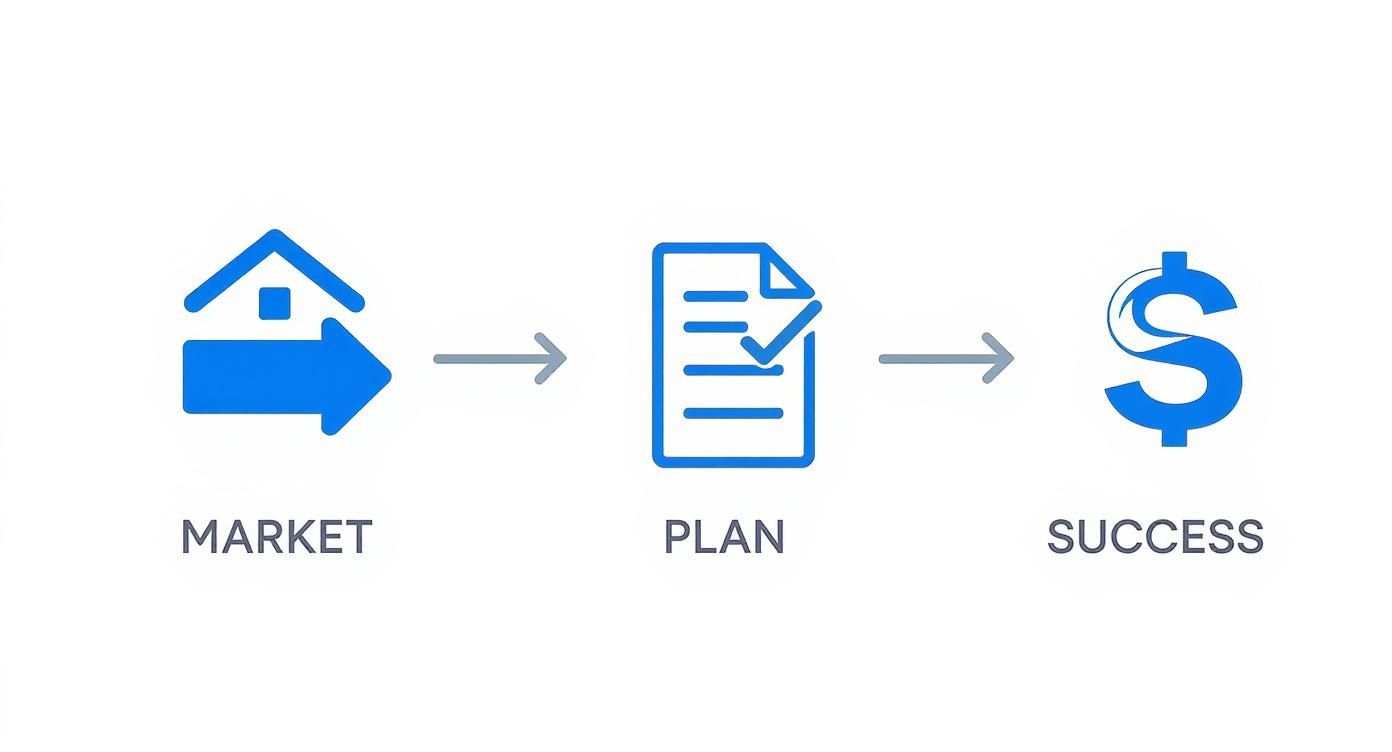
It’s not just a single event. A profitable sale is a flow where solid planning makes effective marketing possible, which in turn leads to the best outcome.
Navigating Denver's Local Rules
Don't let a local ordinance derail all your hard work. This is a step people often forget, and it can lead to last-minute panic or even fines.
Before you set a date, do a little homework on the local rules. Check with the City and County of Denver to see if you need a permit for an estate sale. Rules can change, especially around things like how long the sale can run and where you can place signs.
If the home is in a neighborhood with a Homeowners Association (HOA), this is even more critical. Some HOAs have very specific rules about:
- Sale Dates and Times: They might limit you to certain days of the week or hours.
- Signage: Many have strict policies on the size, style, and placement of signs.
- Parking and Traffic: They'll often have guidelines to prevent shoppers from blocking driveways or creating chaos.
A quick phone call or email to the HOA board is all it takes to avoid a major headache on sale day. Ignoring these rules could get your sale shut down.
Pro Tip: As you're sorting, start a simple inventory spreadsheet. Create columns for the item, its location, a brief condition note, and a spot for the price later. This document will be your best friend when it’s time to price, market, and track what sells.
Pricing Your Items for Maximum Profit
Proper pricing is what makes or breaks an estate sale. It's a tricky balancing act. Price too high, and you'll be staring at a house full of leftovers. Go too low, and you're practically giving away money.
The secret is to take your emotions out of the equation. Sentimental value, unfortunately, doesn't translate to market value. You have to be objective. The best place to start is by researching what similar items—or "comps"—have actually sold for online. Dive into the "sold" listings on eBay, check out Etsy, and scroll through Facebook Marketplace. These are gold mines for figuring out the going rate for everyday things like kitchenware, tools, and standard furniture.
This research gives you a reality check. For instance, you might see a vintage Pyrex bowl listed for $50, but if they consistently sell for $25, that’s your real-world price point. For a much deeper look into valuation strategies, our comprehensive guide on pricing for estate sales is a fantastic resource.
Differentiating Between Everyday Goods and Valuables
A quick online search won't work for everything, so you'll need to adjust your approach based on what you're selling. Knowing the market for specialty items, like appraising and pricing antique jewelry, can make a huge difference in your final profits.
Here’s a simple way to think about it:
- General Household Items: This is your kitchen gear, books, linens, and general decor. You want this stuff to fly out the door. A good rule of thumb is to price it at 10-30% of what it cost new, depending on its condition.
- Furniture: In the Denver market, mid-century modern pieces are still very popular. On the other hand, older, heavy wood furniture often needs more aggressive pricing to find a buyer. Condition is everything here.
- Collectibles & Antiques: This is where you need to be careful. If you're dealing with fine art, rare coins, or high-end designer pieces, guessing is a recipe for disaster. It's almost always worth spending a little to hire a professional appraiser who knows that specific category inside and out.
Key Takeaway: The goal isn't to get top dollar for every last spoon. It's to build a pricing structure that encourages people to buy in volume while still protecting the real value of your best items.
The Psychology of Sale Pricing
Smart pricing isn't just about the numbers on the tags; it’s about nudging buyers in the right direction. There's a parallel here to the Denver housing market. Even as the market has shifted, median home sale prices have held strong, bouncing between $589,900 and $615,000. That stability comes from smart initial pricing—in one month, only 1.12% of closed home sales had price drops. That proves that setting the right price from the start is absolutely critical.
You can bring that same strategic thinking to your estate sale. One of my favorite techniques is bundling. Grouping similar items—like a set of gardening tools or a box of classic paperbacks for a single price—makes shoppers feel like they're getting a great deal and helps you clear out smaller items much faster.
For a multi-day sale, a planned discount schedule is non-negotiable. It creates urgency and keeps people coming back. A popular, effective model for estate sales in Denver looks like this:
- Day 1: Full price. This is for the early birds and serious collectors who want the best selection.
- Day 2: 25% off most items. This brings in a fresh wave of buyers who might have been on the fence the first day.
- Day 3 (Final Hours): 50% off. Now, the mission is simple: liquidate what’s left.
Following a schedule like this ensures you end the sale with a nearly empty house and the most money in your pocket.
Attracting Eager Buyers to Your Sale
Once you’ve got everything priced, the next challenge is making sure people actually show up. A great sale with no crowd is just a room full of priced items. This is where you need to move beyond a simple sign on the corner and embrace a modern marketing mindset to draw a steady stream of motivated buyers.

Forget about blurry photos and one-line descriptions. If you want to generate real excitement, you need high-quality images and detailed, compelling descriptions. Your goal is to tell a story and create a sense of discovery before the doors even open.
Mastering Your Online Presence
These days, the vast majority of serious estate sale shoppers find events online. Your efforts here will have the biggest impact, so focus on creating digital listings that showcase your best items and provide all the crucial details.
- Key Listing Platforms: Websites like EstateSales.net are the gold standard. They attract dedicated buyers who are actively searching for sales in the area. A well-crafted listing on a major platform is non-negotiable for reaching your core audience.
- Local Social Media: Don’t sleep on the power of local Denver Facebook groups. Search for community pages like "Denver Garage Sales" or neighborhood-specific buy-and-sell groups. These are treasure troves of local shoppers.
For a deeper dive into crafting the perfect ad that gets clicks and foot traffic, check out our guide on writing an effective estate sale advertisement. It breaks down exactly how to create listings that convert lookers into buyers.
Expert Tip: When you're taking photos, always use natural light if you can—it makes everything look better. Stage your most interesting items and group related objects together to create little vignettes. Think of it as creating a mini-catalog that highlights the unique character of the estate.
Creating Effective Signage and Buzz
While your digital marketing will do the heavy lifting, physical signs are still fantastic for capturing drive-by traffic on sale days. You just have to be strategic about it and, most importantly, follow the local rules.
First things first: check with your local municipality and any HOA for rules on signage. They’ll have specific regulations on placement, size, and how long signs can be up. Some Denver neighborhoods are notoriously strict.
Once you know the rules, create signs that are simple, bold, and easy to read from a moving car. Think big, dark font on a light background with just the essentials: "Estate Sale," an arrow, the address, and the dates. If you want to learn more about the psychology behind good event promotion, there are great strategies for advertising an event that apply here.
By combining a strong online push with clear, compliant physical signs, you create a marketing plan that works from every angle. This two-pronged approach ensures you reach both the dedicated shoppers who plan their weekends around estate sales in Denver and the casual passersby, giving you the best shot at a huge turnout.
Running a Safe and Seamless Event
After all the prep work, the big day is finally here. Your success now comes down to how well you can manage the event itself, creating an environment that’s not just profitable but also safe and inviting for shoppers. A smoothly run sale is the key to maximizing what you make and avoiding the kind of chaos that can unravel even the best-laid plans.

Before you even think about unlocking the door, do one last safety walkthrough. Your top priority is managing the flow of people. Look for tripping hazards like loose rugs or extension cords that need to be taped down. Clearly mark any tricky steps or uneven floors.
Think like a shopper navigating the space. You want to create a clear path that guides people through the home, ideally in a single direction to prevent traffic jams in narrow hallways. If you can, setting up a separate entrance and exit is a game-changer, especially during that initial morning rush.
Managing Shoppers and Security
That first hour is always the most intense. You'll likely have eager buyers lined up well before you open, so you need a plan. A great strategy is to control the initial entry, letting in a limited number of people at a time—say, 10-15 to start. This prevents the house from being instantly overwhelmed and gives everyone a better, less stressful shopping experience.
Once folks are inside, you have to keep a close eye on your inventory. It’s an unfortunate reality, but theft can happen. A few practical security measures can make a huge difference:
- Have Enough Help: You can't be everywhere at once. Make sure you have enough friends or family helping out to monitor different sections of the home. It’s essential to have someone stationed near the exit at all times.
- Secure the Valuables: Small, high-value items are the easiest to pocket. Keep jewelry, collectibles, and other small treasures in a locked display case or right behind your checkout table where you can see them.
- Central Checkout: Set up a single, organized checkout station near the exit. This also becomes a convenient spot to hold larger "sold" items until the customer is ready to load them up.
Don't forget to secure any off-limits areas. Use rope, caution tape, or simple "Do Not Enter" signs to block off private rooms, unsafe basements, or any other space that isn't part of the sale. This is as much for their safety as it is for your privacy.
Handling Payments and Negotiations
You need to be ready to accept more than just cash. While cash is great, many Denver shoppers will expect to pay with a credit card or a digital wallet like Venmo or PayPal. Using a payment processor like Square or PayPal is incredibly easy these days and can seriously boost your sales.
And then there's the haggling. It’s just part of the estate sale culture, so be prepared for it. The key is to decide on your pricing flexibility before the doors open. My advice? Hold firm on your prices for the first day, especially for the really desirable items. As the sale progresses into the second or third day, you can start being more flexible. By the last few hours, your goal is to clear the house.
A good rule of thumb is to avoid offers below 25% of your asking price unless it’s the final hour of the sale. If you get a lowball offer early on, a polite, "I can't go that low right now, but feel free to check back later," keeps things friendly and leaves the door open.
Finally, don't overlook liability. Accidents can and do happen, from someone tripping to an item breaking. Before the sale, it's critical to understand what your homeowner's policy covers. You may need additional protection. We strongly suggest reading up on the specifics of estate sale insurance to make sure you're fully covered. Peace of mind is priceless.
What to Do When the Sale Is Over
The last buyer has walked out the door, but you’re not quite at the finish line yet. Clearing out what remains is the final, essential step to get the property ready for its next chapter, whether that’s hitting the real estate market or being handed over to new owners.
It's time for one last, decisive sort of everything that didn't sell. The goal here is to empty the house efficiently, and thankfully, Denver has plenty of resources to help you do just that. I find it’s best to break down the remaining inventory into three simple categories: items to consign, things to donate, and what’s just junk. This keeps the process from feeling overwhelming and helps you make quick, smart decisions.
Smart Disposal of Leftover Items
For those higher-value pieces of furniture, art, or collectibles that didn’t find a new home during the sale, consignment is a fantastic option. Local Denver shops can sell these items for you, and you'll get a cut of the final price without lifting another finger.
- Consignment Shops: Do a little research. A stunning mid-century modern credenza, for instance, will fetch a much better price at a specialized vintage furniture store than at a general consignment shop. Match the item to the right store.
- Donation Centers: For all the clothing, kitchenware, and other usable household goods, donation is a quick and feel-good solution. Many organizations even offer pickup services for large furniture, which can be a massive help.
- Junk Removal: Let’s be honest—some things just can't be sold or donated. For broken furniture, old mattresses, or anything else past its prime, a professional junk removal service is your best friend.
Local Denver Tip: Organizations like ARC Thrift Stores and the Denver Rescue Mission are popular and reliable choices for donations. For junk removal, most local services can give you a same-day quote and clear everything out in a flash—invaluable when you’re on a tight schedule.
Final Cleanout and Property Prep
Once the house is completely empty, it needs a serious, thorough cleaning. This isn't just a quick sweep-up; it’s a deep clean that gets the home ready for its close-up. If you're managing one of the many estate sales Denver homeowners undertake before listing a property, this step has a direct impact on its value and appeal.
Seriously consider hiring professional cleaners. It's often more affordable than you'd think, and the difference they make is night and day. A sparkling clean, empty home lets potential buyers see its true potential without any distractions.
This final push completes the entire process. You’ve successfully maximized the value of the home's contents and have left the property in pristine condition. It's the satisfying final step that ties up all the loose ends, closing out the estate liquidation journey cleanly and professionally.
Your Top Denver Estate Sale Questions, Answered
If you're stepping into the world of estate sales for the first time, you've probably got a few questions. It’s completely normal. We hear the same ones all the time from folks in Denver, so let's clear the air and give you the straightforward answers you need to feel confident.
Do I Need a Permit for an Estate Sale in Denver?
This is easily the most common question we get. For the most part, the City and County of Denver itself doesn't require a special permit for a typical estate sale held at a private home. But—and this is a big but—your Homeowners Association (HOA) almost certainly has its own rules.
Ignoring the HOA is a recipe for a last-minute disaster. Before you even think about setting a date, you absolutely must check your HOA’s covenants. They often have strict rules about:
- Signage: Limits on the size, number, and placement of your signs.
- Duration: Restrictions on which days of the week or hours of the day you can operate.
- Parking: Specific guidelines to manage traffic and keep neighbors happy.
A quick phone call or email to your HOA management can save you from a major headache, or worse, a hefty fine on the day of your sale.
What's the Real Difference Between an Estate Sale and a Garage Sale?
It's a fair question. While both involve selling secondhand goods, they aren't the same thing at all. Think of a garage sale as a bit of spring cleaning—you’re getting rid of some outgrown clothes, old toys, and random odds and ends from the garage.
An estate sale is a whole different ballgame. It's a large-scale event designed to liquidate the majority, if not all, of the contents of a home. This is usually triggered by a major life event, like downsizing for retirement, a long-distance move, or handling the affairs of a loved one who has passed away. The sheer volume of items is much larger, covering everything from furniture and antiques to fine china and everyday kitchen tools.
The core difference is scale and intent. A garage sale is about clearing out some clutter. An estate sale is a complete liquidation of a home's belongings.
How Much Do Estate Sale Companies Charge?
If you're thinking about hiring a traditional estate sale company, you need to know what you’re getting into financially. Most professional companies in the Denver area don't charge a flat fee; they work on commission.
You can expect their take to be anywhere from 35% to 50% of the total sales from the event.
The final percentage usually hinges on the estimated value of what you’re selling. A house packed with high-value art and antiques will likely land you a lower commission rate than one with more standard household goods. This commission fee is supposed to cover everything—their team's time for sorting and pricing, all the marketing, and staffing the sale itself. Always, always ask for a detailed breakdown of all costs before you sign a contract.
More guides in Estate Sale Basics
July 28, 2026
Revenue Reporting for Estate Sales and Auctions
Learn revenue reporting essentials for estate sales and auctions. Discover key metrics, templates, and best practices to simplify tracking and compliance.
Read guideJuly 26, 2026
Stamp Collection Valuation: A Practical Step-by-Step Guide
Stamp collection valuation made simple. Learn how to identify, grade, price, and sell your stamps with confidence for estate sales or consignment.
Read guideJuly 23, 2026
Estate Sales Brick NJ: Your 2026 Guide to Success
Planning your estate sales brick nj? Our guide covers permits, pricing, marketing, & running a safe sale with DIYAuctions.
Read guideGet the estate sale pricing guide
Enter your email for pricing ranges, planning notes, and a clearer path to launch.