A Practical Guide to Estate Sales in NJ
Discover how to successfully manage estate sales in NJ. Our guide covers legal prep, pricing strategies, marketing, and final steps for maximizing your returns.
Getting started with an estate sale in New Jersey can feel overwhelming, whether you're handling a loved one's inheritance or downsizing your own home. The path forward involves a few key decisions right from the jump—from understanding your goals and local rules to deciding if you want to hire a traditional company or manage the process yourself using a modern online platform.
This first choice really sets the tone for everything that follows.
Your First Steps for a New Jersey Estate Sale
Planning an estate sale in the Garden State isn't just about sticking price tags on old lamps. It's a real project, and it needs a solid plan. People run estate sales for all sorts of reasons—managing an estate as an executor, clearing out a family home for a move, or simply simplifying life. Each situation brings its own unique set of emotions and logistical hurdles.
The first, most critical step is to figure out your main goal. Are you trying to get the absolute most money possible? Or is clearing out the house quickly the top priority? Maybe it's a mix of both.
Often, an estate sale is one piece of a much larger puzzle, like decluttering before a move. If that's your situation, this comprehensive guide on how to downsize your home has some great strategies that pair well with prepping for a sale.
Choosing Your Path Forward
The biggest decision you'll make right away is how you're going to run the sale. This choice impacts how involved you'll be, what it will cost, and how long it will take. You really have two main options.
-
Traditional Estate Sale Companies: These are the full-service pros. They come in and handle literally everything—sorting, pricing, staging, marketing, and running the sale days. For their work, they take a commission, usually between 30% to 50% of the total sales. It's a great option if you're short on time, live out of state, or just can't face the hands-on work.
-
DIY Platforms: A service like DIYAuctions puts you in the driver's seat. You're the one cataloging your items and deciding on prices, but the platform takes care of the tricky parts like processing payments and marketing your sale to a network of qualified local buyers. The big win here? The commission fees are drastically lower, meaning you keep way more of the money.
This decision often comes down to how much control you want to have over the process.
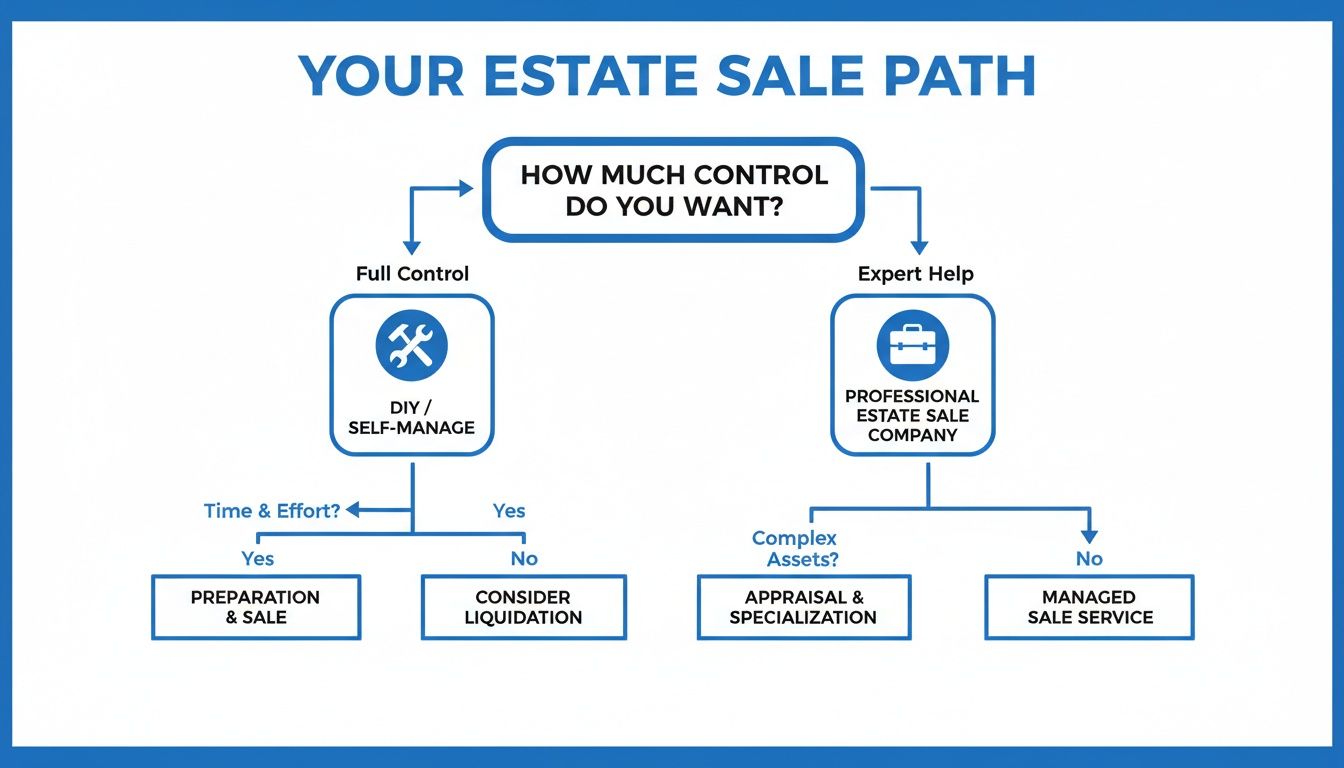
As you can see, the more you want to control the pricing and the overall feel of the sale, the more a DIY approach starts to make a lot of sense.
Choosing Your Sale Method: Traditional vs. DIYAuctions
To make the choice clearer, here’s a straightforward breakdown comparing a traditional company with a platform like DIYAuctions.
| Feature | Traditional Estate Sale Company | DIYAuctions Platform |
|---|---|---|
| Control | Low - The company makes most decisions on pricing and process. | High - You control pricing, cataloging, and the sale timeline. |
| Commission/Fees | High - Typically 30% to 50% of gross sales. | Low - A small, transparent percentage, so you keep more profit. |
| Effort Required | Low - They handle almost everything for you. | Medium - You do the cataloging, but the platform automates the rest. |
| Timeline | Can be slower; you work on their schedule. | Flexible - You set the dates that work for you. |
| Transparency | Varies by company; reports can be complex. | High - Real-time tracking of bids and sales in your dashboard. |
| Best For | People who are out-of-state, have no time, or prefer to be hands-off. | People who want to maximize profit and retain control. |
Deciding between these two paths really depends on your personal priorities—whether you value convenience over cost, or control over having someone else do the work.
Understanding the New Jersey Context
New Jersey has a very active housing market, which is great news for anyone liquidating an estate. With the median home sale price sitting around $559,800 and thousands of homes changing hands every month, there's a constant flow of high-quality furniture, decor, and other assets hitting the second-hand market.
This turnover creates a steady stream of buyers who are looking for exactly what you're selling.
If you're taking on this project as an executor, getting a handle on your legal duties is non-negotiable. Using a detailed executor duties checklist like this one is a smart move to make sure you’re ticking all the right boxes. https://www.diyauctions.com/learn/executor-duties-checklist
Laying this groundwork early on helps prevent legal headaches and keeps the entire process moving along smoothly.
How to Price Items for Your NJ Estate Sale

This is where the rubber meets the road. Get the pricing right, and you'll have a successful sale. Get it wrong, and you'll be left with a house full of stuff and a lot of frustration.
Pricing is both an art and a science, and it requires a delicate balance. You want to make money, but the ultimate goal is to liquidate everything. The absolute key is to detach emotionally and focus on fair market value—what a real buyer in today’s New Jersey market is actually willing to pay.
Unfortunately, sentimental value doesn't translate to dollar value. That dining set that hosted 30 years of family holidays is worth its condition, style, and brand, not the memories made around it. Getting your head around this early on is a game-changer for making smart, profitable decisions.
This objectivity is what helps you see your items through a buyer’s eyes, whether they're hunting for antique furniture in a historic Morristown home or scoping out vintage electronics in a Cherry Hill suburb.
Researching Fair Market Value
For the bulk of common household items—think kitchenware, everyday furniture, tools, and decor—you can absolutely determine the prices yourself. Good research is your best friend here.
The trick is to look at what similar items have actually sold for, not the wishful thinking prices people list them at.
Here are some of my go-to resources for research:
- Online Marketplaces: The "sold" listings on eBay and Facebook Marketplace are gold. They show you real-world prices for items just like yours.
- Replacement Retailers: For newer items in great shape, a good starting point is pricing them at 25-50% of what they cost new today. Condition and demand will push that number up or down.
- Local Antique Shops: Pop into a few local shops in your part of New Jersey. It’s a great way to get a real feel for how collectors and vintage pieces are priced in your specific area.
Pricing Pro Tip: Your house isn't a high-end antique store. Estate sale shoppers are hunting for a deal. Your main goal is volume and an empty house, so price things to move.
For a much deeper dive into valuation methods, our guide on how to price estate sale items lays out detailed strategies to help you get started with confidence.
When to Call a Professional Appraiser
While you can price most things on your own, some items just scream for an expert's eye. Trying to guess the value of fine art, antique jewelry, or rare coins is a recipe for a costly mistake. One of the biggest regrets I hear is from people who accidentally sold a valuable piece for a tiny fraction of its worth.
Think about hiring a certified appraiser if the estate includes:
- Original artwork or sculptures
- Fine jewelry, watches, or gemstones
- Serious collections of stamps, coins, or rare books
- Authenticated historical memorabilia
- Designer furniture or high-end fashion
An appraiser gives you a documented valuation, which doesn't just ensure you price things correctly—it also gives you serious credibility with knowledgeable buyers. The appraisal fee is a small investment that can easily save you from losing thousands.
Strategic Pricing Techniques to Move Inventory
Once you've figured out your values, you can use a few clever strategies to encourage sales and get that house cleared out. Always remember, the goal is an empty home at the end of the day.
A fantastic tactic is bundling. Grouping low-value items together is a lifesaver. Think about it: a "box of assorted kitchen gadgets for $10" is way more appealing and easier to sell than 20 separate items priced at 50 cents each. This is how you clear out all those smalls quickly.
Finally, don't forget about psychological pricing. It might seem silly, but pricing something at $49 instead of $50 really can make it seem more affordable. For an online auction, this same logic applies to your opening bid. Setting a low starting bid often creates a bidding frenzy, attracting more people and driving the final price higher than a more intimidating high start would have.
Marketing Your Estate Sale to New Jersey Buyers
Getting the word out is everything. After all, you can have a house full of treasures, but it won't matter if nobody knows about your sale. The key is to create a buzz that draws in the right kind of buyers—from serious collectors to casual shoppers looking for a great find.
Writing Descriptions That Sell
Think like a copywriter, not just a seller. Your descriptions are your first (and maybe only) chance to grab someone's attention. Instead of just listing what you have, tell a story.
Instead of "Old table for sale," try something like, "Solid oak dining table, seats eight, perfect for family gatherings." Use evocative words like "vintage," "one-of-a-kind," and "rare find" to spark curiosity. And don't forget the essentials: clearly state your sale dates, hours, location, and the payment methods you'll accept.

Understanding the New Jersey Market
Knowing your audience is crucial, and in New Jersey, buyers are savvy. They’re willing to pay for quality, but they know what they’re looking for. The state’s real estate market offers a clue: recently, 44.3% of New Jersey homes sold above the list price. While the market is taking longer to move, this tells us that well-presented, desirable items can still command a premium.
Your location within the state matters, too. We see a lot of buyer activity in counties like Monmouth and Ocean. If you're running a sale in one of these areas, you might find that items get picked up faster and for better prices simply due to strong local demand.
Where to Post Your Sale for Maximum Visibility
A multi-pronged marketing attack is your best bet. You need to hit different platforms to reach everyone from the hardcore estate sale enthusiast to the neighbor down the street. Combining a few online and traditional methods is the fastest way to build momentum for your estate sales in NJ.
Here are the places I always recommend:
- Local Online Communities: Facebook Marketplace is a given, but the real gold is in local groups. Search for your town or county's name plus "buy/sell," "community," or "treasures." These groups can put your sale in front of thousands of local eyes, fast.
- Specialized Listing Sites: Websites like EstateSales.net are the holy grail for serious shoppers. These are the folks who plan their weekends around sales, and they check these sites religiously. Posting here gets you in front of a dedicated, ready-to-buy audience.
- Hyperlocal News Outlets: Don't sleep on your local news sites. Places like NJ.com's local sections or the various Patch.com town sites have community calendars that are perfect for this. It’s a great way to reach a different demographic that might not be scrolling Facebook all day.
Key Takeaway: The goal is to create layers of marketing. Someone might see your ad on a dedicated site, their spouse might see it on Facebook, and their neighbor might mention the sign you put on the corner. The more visible you are, the more foot traffic you'll get.
If all that sounds like a lot of work, you're not wrong. For a more hands-off approach, a platform like DIYAuctions can be a game-changer. They handle the promotion by marketing your sale directly to their own large database of vetted local buyers. It's a targeted strategy that gets your items in front of people in your area who are already looking for what you have.
For a complete playbook on promotion, check out our in-depth guide to estate sale marketing.
Managing Logistics and Security on Sale Day

A smooth sale day doesn't just happen—it's the direct result of smart planning. Whether you're coordinating an in-person event or managing pickups for an online sale, the goal is always the same: create an organized, safe, and efficient experience for everyone.
You really need to think through the flow of the day from a buyer's perspective while keeping your own security front and center. For traditional in-person estate sales in NJ, this means prepping the home to handle a crowd. If you've sold online, your focus shifts to making the item hand-off seamless and secure.
Setting Up for a Secure In-Person Sale
When you open your doors to the public, you need a clear strategy to protect the property and the items for sale. Your main job is to direct traffic and prevent people from wandering into areas or getting into things that aren't part of the sale.
Here are the essential security steps I always recommend:
- Establish a single entry and exit point. This gives you total control over who is coming and going. Set up a checkout table right near this spot to monitor the flow of people and products.
- Clearly mark off-limit areas. Use rope, caution tape, or simply close doors with big "Do Not Enter" signs. This blocks off private rooms, closets, or any part of the house you want to keep secure.
- Secure personal items. Before anyone arrives, get all personal documents, family photos, medications, and anything else not for sale out of the home. Lock them in a room or, even better, move them off-site entirely.
Crucial Tip: Get at least one other person to help you. It's nearly impossible to watch every room, manage payments, and help customers all by yourself. A second set of eyes is your best defense against accidents or theft.
Managing a Streamlined Online Pickup Process
If you use an online auction platform like DIYAuctions, your "sale day" is really a pickup day. The logistics are different, but organization and security are just as critical. The goal is to avoid chaos and ensure a quick, safe exchange for every single buyer.
Create a schedule with specific time slots for each winning bidder. This is a game-changer. It stops everyone from showing up at once, which can get overwhelming and unsafe fast. A 15-to-20 minute window per buyer is usually plenty of time for them to gather their items and load up without feeling rushed.
Handling Payments Securely
Let's be honest: managing money is one of the most stressful parts of a traditional estate sale. Having a lot of cash on-site creates a huge security risk, from potential theft to the simple headache of making change and dealing with bank deposits.
This is where modern payment processing comes in. Using a platform that handles all transactions online before pickup day eliminates this risk completely.
Here's why going cashless is so much safer:
- No cash on premises: This immediately makes the property a less attractive target for theft.
- Guaranteed funds: You never have to worry about a bounced check or a counterfeit bill. The payment is cleared long before the item leaves your possession.
- Digital records: Every transaction is tracked automatically, which makes your financial wrap-up and tax record-keeping incredibly simple.
This approach turns pickup day from a high-stress financial event into a straightforward logistical task. Buyers show up, flash their paid receipt, and you help them with their items. It’s a safer, more professional way to finalize the sale.
What to Do After the Sale Ends
The last buyer has driven away, the doors are locked—now what? This final stretch is all about clearing out what's left and settling the books. Don't worry, it's completely normal to have items left over. I've never seen a sale, professional or DIY, that was a complete sell-out.
The key is having a plan ready for the leftovers so you're not stuck staring at a half-empty house, wondering where to begin. Your goal is a broom-clean home, and this is the last step to get there.
Creating a Clean Slate
When it comes to the remaining items, you've basically got three choices: consign, donate, or dispose.
For things that still have real value but just didn't find the right buyer during your sale, consignment shops are a great option. Look for local spots in New Jersey that specialize in what you have, whether it’s antique furniture, art, or designer clothes. They'll handle the selling and just take a cut.
Donating is the go-to for most of what's left. Organizations like Goodwill and The Salvation Army are all over New Jersey, and they'll give you a receipt for your taxes. If you have bulky furniture, check out a Habitat for Humanity ReStore; they often schedule free pickups, which saves you a massive headache.
Finally, for anything that's broken, too worn, or just not worth selling or donating, it's time to toss it. Renting a small dumpster for a day or calling a service like 1-800-GOT-JUNK? is money well spent. It gets the property cleared out fast and lets you move on.
Wrapping Up the Financials
Once the house is empty, you can finally focus on the numbers. Start by tallying up all your sales to get your gross revenue. Then, subtract every single expense—permit fees, appraisal costs, marketing, even the pizza you bought for your helpers. What's left is your net profit.
Keeping good records isn't just for accountants; it's for your own sanity. A simple spreadsheet tracking every dollar in and every dollar out makes this final step a breeze instead of a nightmare.
The last piece is understanding your tax situation. For a one-time estate sale of personal property at your home, you generally don't have to worry about collecting New Jersey sales tax. However, depending on the estate's circumstances, the proceeds might be part of inheritance or capital gains considerations, so it's always smart to be aware.
If you ran your sale through a platform like DIYAuctions, this whole financial wrap-up is incredibly simple. Your dashboard gives you a clean report showing total sales, expenses, and your net proceeds after the commission. Having that clean digital record is a lifesaver for your own files and for any tax questions that might come up later.
Your Top NJ Estate Sale Questions Answered
When you're planning an estate sale in New Jersey, a lot of questions pop up. It's easy to get bogged down in the details, from navigating local town rules to figuring out the best time of year to sell.
Getting the right answers upfront is the key to avoiding headaches and costly mistakes. Here are the straight answers to some of the most common questions we hear from people just like you.
Do I Really Need a Permit for an Estate Sale in My New Jersey Town?
Almost certainly, yes. The vast majority of towns and municipalities across New Jersey require you to get a permit before holding an estate sale, tag sale, or even a simple garage sale. Don't skip this step.
The rules can change dramatically from one town to the next. Some towns in Bergen County, for instance, are notoriously strict about how many sales you can hold per year and where you can put your signs. Head down to an Ocean County town, and you might find a much more laid-back approach.
Your First Move: Before you do anything else, call your local municipal clerk's office. They are your single source of truth for the application, fees, and any local rules you need to follow. Ignoring this can get your sale shut down fast.
What’s the Going Rate for an Estate Sale Company in NJ?
If you hire a traditional estate sale company in New Jersey, get ready to hand over a significant chunk of your earnings. The typical commission runs between 30% and 50% of the gross sales. That’s their fee for handling everything from pricing and marketing to staffing the sale itself.
Often, the final percentage depends on the total estimated value of your items—a higher-value estate might land you a slightly lower rate. But remember, that commission comes right off the top, taking a huge bite out of your final profit.
This is exactly why so many people are looking for a better way. An alternative like DIYAuctions puts you in control with a clear, flat 10% commission. It’s a modern approach that lets you keep the lion's share of the money your items are actually worth.
When’s the Best Time of Year to Hold an Estate Sale in New Jersey?
Timing your sale right can make a huge difference in your turnout and final numbers. In New Jersey, the sweet spots are spring (think April through June) and early fall (September and October).
The weather is your friend during these months. It’s pleasant enough to encourage shoppers to come out for in-person pickups, which is a huge logistical win.
Here’s how the seasons generally stack up:
- Spring (April - June): This is prime time. The weather is great, and buyers are eager to get out and shop.
- Summer (July - August): Can work well, especially in shore towns, but you’re competing with vacations.
- Fall (September - October): Another peak season. The weather is comfortable, and serious buyers are often looking to acquire items before the holidays.
- Winter (November - March): This is the toughest season. A surprise snowstorm or bitter cold can kill your turnout.
As a rule of thumb, it's also smart to steer clear of major holiday weekends. You don't want to compete with family gatherings and travel plans.
How Should I Handle Really Valuable Stuff Like Art or Jewelry?
When you come across items that might be high-value—we’re talking fine art, antique jewelry, rare coins, or signed collectibles—guessing is the worst thing you can do. Your first and most important step is to get a professional appraisal.
Find a certified appraiser in your specific part of New Jersey who specializes in what you have. This gives you a documented, fair market value, which is crucial for pricing correctly and gives you instant credibility with serious collectors.
Once you have that valuation in hand, you can make an informed decision. You might decide to include it in your main online auction with a firm reserve price, consign it to a specialty dealer, or even sell it through a high-end auction house.
More guides in Estate Sale Basics
July 28, 2026
Revenue Reporting for Estate Sales and Auctions
Learn revenue reporting essentials for estate sales and auctions. Discover key metrics, templates, and best practices to simplify tracking and compliance.
Read guideJuly 26, 2026
Stamp Collection Valuation: A Practical Step-by-Step Guide
Stamp collection valuation made simple. Learn how to identify, grade, price, and sell your stamps with confidence for estate sales or consignment.
Read guideJuly 23, 2026
Estate Sales Brick NJ: Your 2026 Guide to Success
Planning your estate sales brick nj? Our guide covers permits, pricing, marketing, & running a safe sale with DIYAuctions.
Read guideGet the estate sale pricing guide
Enter your email for pricing ranges, planning notes, and a clearer path to launch.