A Modern Guide to Estate Sales Maine
Run profitable estate sales Maine with our modern guide. Learn how to navigate local rules, price items effectively, and manage the entire process yourself.

When you’re staring down a house full of possessions, an estate sale can feel like the only practical way forward. This is especially true in Maine, where a hot real estate market can add a serious time crunch to the already emotional task of downsizing, moving, or handling a loved one's affairs.
Why an Estate Sale Just Makes Sense in Maine’s Market

Life changes are often what push us to consider an estate sale. Maybe you're helping your parents downsize from the family home in Cumberland County, or you're an executor tasked with clearing a property quickly to get it on the market. The house is filled with a lifetime of belongings, and the thought of sifting through it all is just overwhelming.
This is a scenario we see all the time. The traditional path is to call an estate sale company. They handle the work, which is a relief, but it comes at a significant cost. Most companies charge a commission between 30% and 50% of the total sales. That’s a huge slice of your family’s inheritance or home sale profits gone before you see a dime.
How Maine’s Real Estate Boom Changes Everything
The pressure to empty a home has never been greater, thanks to Maine's housing market. Over the past decade, property values have soared. The pandemic kicked this into overdrive, with homes often selling for cash over the asking price within hours of being listed.
This fast-paced environment means that once a home goes under contract, you have a very short window to clear it out completely. You need a liquidation strategy that is not just profitable but also incredibly fast.
It’s Time to Take Back Control
For most Mainers, giving up nearly half the value of an estate to commissions is a non-starter. That financial hit is driving more and more people to look for alternatives where they can keep more of their money and manage the process on their own terms.
Modern platforms put the power back in your hands. When you run the sale yourself, you can:
- Keep More of the Profits: Instead of losing a huge chunk to commissions, you can keep up to 90% of the proceeds.
- Work on Your Schedule: You set the dates for the sale, making sure it lines up perfectly with your real estate closing or move-out date.
- Price Things Your Way: You have the final say on what your items are worth, ensuring family heirlooms and sentimental pieces are valued appropriately.
This hands-on approach shifts the dynamic from a stressful burden to an empowering project. It ensures the value of the estate goes directly to the family, not to a middleman.
While you're thinking about liquidating assets, it's a good idea to understand the full picture of estate management. This practical guide to estate planning offers some great context. And if you're still weighing the pros and cons, our article on whether estate sales are worth it breaks down the financial benefits of taking the lead on your own sale.
Understanding Maine's Estate Sale Rules
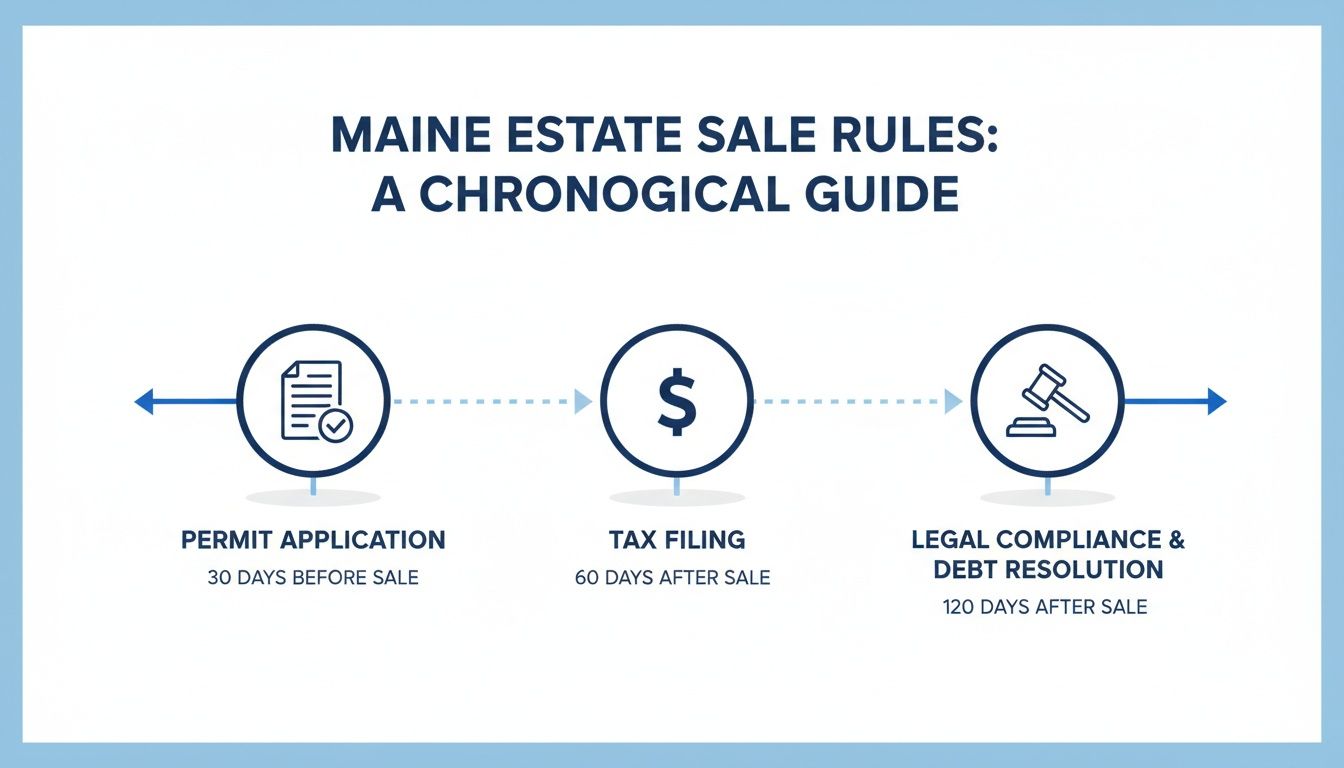
When you're running an estate sale in Maine, knowing the local rules is just as important as knowing how to price antiques. The good news? For a one-time, private sale—like clearing out a family member's home—the state keeps the legal hurdles refreshingly low. You generally don't need to jump through hoops getting special permits or licenses.
But that changes the moment your sale starts to look less like a one-off event and more like a regular business. If you were to host multiple sales throughout the year, the state would likely see you as a retailer, and that's a whole different ballgame. It’s a critical distinction that shapes your responsibilities for taxes and permits.
When a Seller's Permit Is Required
Let's get straight to it: for the vast majority of people running a single family estate sale, you will not need a seller's permit (also called a sales tax permit). This is because the state considers it a "casual and isolated sale" when an executor or family member is simply liquidating personal property.
Things get more complicated, however, if you are:
- Running sales for others: The minute you start helping neighbors or friends run their sales for a fee, you’ve crossed into operating a business.
- Hosting frequent sales: Holding several sales in a year, even from different locations, flags you as a retailer in the state's eyes.
- Selling new merchandise: Bringing in outside inventory to beef up the estate's offerings moves you from a private liquidation to a commercial one.
If any of those sound like you, you'll need to register with Maine Revenue Services to get a seller's permit and handle sales tax correctly.
Handling Maine Sales Tax
Since most private estate sales Maine families conduct are one-time events, you typically don’t have to worry about charging the state's 5.5% sales tax. This is a huge relief. It means no calculating taxes at checkout, no collecting them, and no filing tax returns afterward.
For private sellers, this exemption is a game-changer. The price a buyer sees is the price they pay. It keeps transactions simple and removes the administrative headache that comes with tax compliance.
If you're even a little unsure whether your sale qualifies as "casual," your best bet is to check with a tax professional or call Maine Revenue Services directly. A few minutes of clarification upfront can save you from major legal or financial trouble later. For a wider look at how these laws can differ elsewhere, our guide on general estate sale laws offers some great context.
The Executor's Legal Duties
If you’re the executor of the estate, you have a fiduciary duty—a legal obligation—to act in the best interest of the beneficiaries. Plain and simple, this means your job is to get the best possible value from the estate's assets. A well-organized, well-marketed sale is how you fulfill that duty.
Your responsibilities include securing the property, taking an accurate inventory of everything, and making sure every dollar from the sale is accounted for and distributed properly. Using a platform that digitally tracks every sale and payment creates a crystal-clear record, which is invaluable when it comes to legal and financial reporting.
Selling Regulated Items Like Vehicles and Firearms
Some items just aren't as simple as others. You can't just slap a price tag on a car or a handgun and sell it to the first person with cash.
For vehicles, you must have the title. It needs to be legally transferred to the new owner through the Maine Bureau of Motor Vehicles, signed by the executor. The buyer will also need a bill of sale to get it registered.
Firearms are even more regulated. Maine law is strict: private handgun sales must be processed through a federally licensed firearms dealer (FFL), who will run a background check. While the rules for long guns (rifles and shotguns) between Maine residents can be a bit more relaxed, the smartest and safest route is to use an FFL for all firearm transactions. It ensures you’re fully compliant and protected from liability.
Your Estate Sale Planning Timeline
A successful Maine estate sale doesn’t happen overnight. Trust me, trying to rush it is a surefire recipe for stress and leaving money on the table. The sweet spot is giving yourself a good six to eight weeks. This turns what feels like a monumental chore into a series of calm, manageable steps.
Think of it less like a frantic sprint and more like a well-plotted roadmap. This timeline guides you from a house packed with memories to a clean slate, making sure every detail is handled and you get the best possible return for your items.
The 8-Week Maine Estate Sale Countdown
To make it even easier, here’s a week-by-week breakdown of what to do and when. This checklist helps keep you on track from the initial sort-through right down to the final pickup day.
| Timeframe | Key Tasks | Pro-Tip from DIYAuctions |
|---|---|---|
| Weeks 8-6 | Sort & Separate: Go room by room. Designate items to keep, sell, or discard. This is the heavy lifting, so take your time. | Don't price anything yet! Just focus on sorting. Create a "sell" zone in a spare room or garage to keep things organized. |
| Weeks 5-4 | Catalog & Photograph: Start building your online auction. Take clear, well-lit photos and write honest, detailed descriptions. | Natural light is your best friend for photos. For a piece of furniture, snap shots from all angles, plus close-ups of details or flaws. |
| Week 3 | Research & Price: Look up what similar items have actually sold for online. Set your starting bids. | Low starting bids (even $1) on common items can spark bidding wars. For high-value pieces, you can set a higher start or a reserve price. |
| Week 2 | Stage for Pickup: Plan the logistics for pickup day. Clear pathways and group items for easy collection. | A smooth pickup is your final impression. An organized space makes for happy buyers who are more likely to return for future sales. |
| Week 1 | Go Live & Promote: Launch your auction! Share the link on local social media pages to boost the marketing we already do for you. | Stay engaged. Be ready to answer questions from bidders promptly. This builds trust and encourages more bidding activity. |
| Auction Week | Monitor & Prepare: Keep an eye on the bidding. Double-check that all "keep" items are secured away from the sale items. | As items are sold, begin grouping them by winning bidder number. This will make your pickup day a breeze. |
| Pickup Day | Manage Collection: Greet buyers, direct them to their items, and ensure a smooth, organized process. | Have a printed or digital list of all winning bidders and their items. Check people off as they collect their winnings. |
| Post-Sale | Final Wrap-Up: Handle any remaining items (donate or discard). Ensure the property is clean and tidy. Get paid! | Once the sale is over, payments are processed and funds are deposited directly into your account. No cash to handle! |
Following this timeline takes the guesswork out of the process, ensuring nothing critical slips through the cracks.
Getting Started: 6 to 8 Weeks Out
This is where the real work begins, and it’s often the most emotional part of the journey. Your only goal right now is to sort every single item into one of three piles: keep, sell, or toss/donate. My advice? Tackle one room, or even one corner of a room, at a time. It keeps the overwhelm at bay.
As you start sorting, it's a huge help to apply some effective decluttering strategies. You’ll need to be disciplined about separating cherished family heirlooms and important papers from the things you're ready to part with. This is also when you should flag potential big-ticket items—that antique bureau, the signed painting, or the box of old jewelry—that might need a bit more research down the line.
Building Your Sale: 4 Weeks Out
Once everything is sorted, it’s time to bring your sale to life online. This is where you’ll build your auction catalog on a platform like DIYAuctions, turning your collection of items into an event that buyers can get excited about.
Here's how to nail this phase:
- Take Great Photos: Good lighting is everything. Seriously. Use natural light from a window whenever you can, and shoot against a plain background. For that vintage L.L. Bean desk, you'd want a full shot, a close-up of the beautiful wood grain, a picture of the drawer pulls, and an honest shot of any scratches.
- Write Honest Descriptions: Tell the story of the item. Include the brand, dimensions, condition, and anything that makes it special. For that desk, you might say, "Vintage L.L. Bean solid maple writing desk, circa 1980s. Measures 48" W x 24" D x 30" H. Shows some light surface wear consistent with age but is structurally solid as a rock."
- Do Your Homework: Start researching what similar items have actually sold for. Don't just look at asking prices; find the "sold" listings on marketplaces. This intel is gold for the next step.
The Final Stretch: 2 Weeks and Counting
With your catalog built, it's time to set your starting bids. Using the research you just did, you can price things smartly. For everyday household goods, a low starting bid often creates a fun bidding war that pushes the final price higher than you'd expect. For that signed piece of local art, you can set a higher starting bid or a reserve to make sure it sells for what it’s worth.
This is also the perfect time to finalize your staging plan for pickup day. It’s an online sale, but the pickup is very real! Think through the flow.
- Group items together by category or, eventually, by buyer number.
- Make sure there are clear, safe paths for people to walk.
- Set up a clear spot to greet people when they arrive.
Getting these logistics sorted out now prevents a chaotic scramble later and leaves your buyers with a great final impression.
A week before the auction begins, you'll hit the "launch" button. From there, it's about monitoring the bidding, answering any questions that pop up, and doing the final prep for pickup day. Make sure anything not for sale is moved into a locked room or clearly marked "Not For Sale." This last week is all about ensuring a smooth finish to a successful sale.
How to Price and Stage Items for Maine Buyers

Let’s be honest: pricing and staging are where the magic happens. It's the difference between a sale that fizzles out and one that ends in a flurry of exciting bidding wars. You're not just getting rid of stuff; you're helping bidders imagine these items in their own homes.
Get this part right, and you're not just clearing a house—you're maximizing your returns, and doing it efficiently.
Valuing Your Maine Treasures
The first rule of pricing? Take your emotions out of the equation. That rocking chair might hold a lifetime of memories, but its market value is decided by what a buyer is willing to pay for it today. Your job is to find that sweet spot.
Good research starts online, but you have to look at the right numbers. Don't waste time looking at what sellers are asking for similar items. That’s just a wish list. Instead, filter for "sold" listings on sites like eBay. This shows you what people have actually paid, which is the only data that really matters.
Say you found an antique sea captain's desk in a Kennebunkport home. You’d search for "antique nautical desk sold" or "19th-century captain's writing desk sold." Pay close attention to the final prices and, just as importantly, the condition of those sold items to find a true comparison for your piece.
Understanding Local Demand
What sells like hotcakes in Portland might get crickets in Presque Isle. Mainers have distinct tastes, and you need to price with that local flavor in mind.
- L.L. Bean & Outdoor Gear: Vintage flannel, classic Maine hunting boots, and old-school field coats are always a hit. Keep an eye out for the older, made-in-USA labels—they often fetch a premium.
- Nautical & Maritime Antiques: Anything with a coastal story sells. Think ship models, brass lanterns, old maps of Casco Bay, or even authentic, weathered buoys. These items resonate deeply with local collectors.
- Antique Furniture: Solid, early American furniture built from pine, maple, or cherry does very well here. If a piece has a known local history or was made by a Maine artisan, that's a huge selling point.
- Local Art: Always be on the lookout for paintings or prints by known Maine artists. Pieces depicting iconic landscapes from Acadia to the Western Maine mountains are particularly sought after.
The state's hot real estate market is another big driver. When home prices climb, people need to downsize or clear estates quickly. For instance, Lincoln County's median home price recently shot up 23.8% year-over-year, and Kennebec County saw a 13.3% increase. This activity, both on the coast and inland, creates a constant demand for furniture, art, and antiques.
A little counterintuitive advice: set a low starting bid. Even $1. A low barrier to entry gets people bidding, and that initial momentum is what creates competition. More often than not, it drives the final price much higher than a conservative starting bid ever could.
For a much deeper dive into valuation strategies, check out our complete guide on how to price estate sale items.
Staging for an Online Auction
In an online sale, your photos are the showroom. You don't need a professional studio, just a bit of intention. Staging isn't about redecorating; it’s about removing distractions so the item itself is the star.
Think of it as a "before and after." A dusty vase on a cluttered shelf will get scrolled past without a second thought. But take that same vase, wipe it down, and place it against a simple, solid-colored background with good natural light? Suddenly, it looks like a treasure.
Here’s a quick example with some vintage glassware:
- Before Staging: A bunch of colorful glass bottles are crammed onto a dark, dusty bookshelf. You can barely see their shapes, and a camera flash creates a nasty glare.
- After Staging: The bottles are cleaned and thoughtfully arranged on a plain white cloth near a window. The natural light makes the colors pop. The photo is taken from a slight angle to show off their depth and detail.
This simple shift transforms the items from "clutter" into a "collection." The perceived value skyrockets, attracting more attention, more bids, and a higher final price—all without you spending a dime.
Getting the Word Out and Nailing Pickup Day
You’ve put in the hard work sorting, cataloging, and pricing. Now it’s time for the exciting part: connecting all those treasures with eager Maine buyers and planning for a smooth, stress-free pickup day. Getting the word out and managing the final handover are every bit as important as your pricing strategy.
While a platform like DIYAuctions automatically gets your sale in front of a network of qualified local buyers, you can really amplify your results with a little local outreach of your own. Think about where your ideal buyers are already hanging out online.
Spreading the Word in Maine Communities
Your goal is to reach people who already love the kinds of things you’re selling. For estate sales Maine residents get excited about, that means targeting local interest groups.
- Facebook Marketplace and Groups: This is huge. Post in town-specific "yard sale" groups or general community pages. If your sale is in Brunswick, for example, the "Midcoast Maine Online Yard Sale" group is a fantastic place to share your auction link.
- Craigslist: It might feel a bit old-school, but a surprising number of people in Maine still use Craigslist as their go-to for finding furniture, tools, and unique local items.
- Nextdoor: This is perfect for reaching your immediate neighbors. They're often the most motivated buyers since they don't have to travel far.
When you post, make sure to use your best photos and a clear, enticing title. Something like, "Online Estate Sale in Portland - Antiques, L.L. Bean, and Nautical Decor!" always works well. And, of course, always include a direct link back to your online auction.
Designing a Flawless Pickup Day
The final piece of the puzzle is managing the physical collection of all the sold items. An online auction is great because it prevents a huge crowd from showing up all at once, but you still need a solid plan for an organized pickup. A well-run pickup day leaves a great lasting impression.
The keys here are control and clarity. You get to set the date and a specific time window (say, Saturday from 9 AM to 2 PM). Using a scheduling tool where buyers sign up for a time slot is an absolute game-changer. This staggers arrivals and prevents a traffic jam on a narrow dirt road or a crowded entryway.
Think of pickup day like a well-choreographed event, not a free-for-all. A little planning goes a long way in preventing chaos and ensuring every transaction is smooth and secure for both you and the buyer.
This is more important than ever as Maine's housing market continues to heat up, pushing more families to liquidate assets quickly and efficiently. The steady climb in the state's House Price Index—from 980.92 in Q4 2024 to an estimated 1,024 by Q3 2025—highlights just how critical a well-managed sale is for capitalizing on these real estate windfalls. You can discover more about Maine's housing trends and their impact on asset liquidation.
Day-Of Logistics
On the day of the event, your main job is to be the director of traffic. Set up a clear check-in station near the entrance where you can greet buyers and quickly verify their purchases.
Here’s a real-world scenario: Imagine an old coastal Maine home with a long, single-lane driveway. Without a plan, pickup day would be a logistical nightmare of blocked cars and frustrated buyers.
Instead, the person running the sale used an online scheduler for 15-minute pickup slots. As buyers arrived, they checked in at a simple folding table in the garage. The host had a tablet with a list of winning bidders and what they’d won. Once verified, the buyer was pointed toward their items, which were already grouped together and labeled with their name. The whole process was fast, personal, and efficient, with zero traffic jams.
Handling No-Shows and Leftovers
It’s bound to happen—occasionally, a buyer won't show up. Most platforms, DIYAuctions included, have policies for this. Often, the buyer's card on file is charged to ensure you still get paid. From there, you can offer the item to the next highest bidder or simply save it for a future sale. Having a clear, upfront policy about missed pickups usually deters most no-shows from the start.
Got Questions? We've Got Answers About Maine Estate Sales
If you're diving into the world of estate sales for the first time, it can feel like you're learning a whole new language. You've probably got a dozen questions buzzing around—about the costs, what people actually buy, and if you're even on the right track. That's completely normal.
Let's clear the air and tackle the most common questions we hear from families across Maine. Think of this as your personal FAQ to help you move forward with total confidence.
How Much Do Traditional Estate Sale Companies Charge in Maine?
This is usually the first question on everyone's mind, and for good reason. The answer directly hits your bottom line.
Most old-school estate sale companies in Maine work on a commission model, and their cut can be pretty steep—typically between 30% and 50% of whatever the sale brings in.
Let’s translate that into real dollars. Say your sale generates $15,000. A traditional company could walk away with anywhere from $4,500 to $7,500 of that. That’s a huge chunk of the estate's value that won't end up with you or the beneficiaries. It’s exactly why so many people are now looking for modern alternatives that give them back control and let them keep the lion's share of the profits.
What's Hot at Maine Estate Sales Right Now?
While every sale is unique, certain categories consistently get bidders excited here in Maine. Knowing what local buyers are searching for helps you put your best items in the spotlight right from the get-go.
- Antique & Vintage Furniture: Think solid, Maine-made pieces, early American styles, and anything with that classic coastal vibe. A well-built sea captain's desk or a charming wicker porch set will always find a new home.
- Outdoor & Sporting Gear: We Mainers love our gear. Vintage L.L. Bean, classic duck decoys, quality hand tools, and old-school fishing equipment are perennial favorites.
- Maritime Art & Decor: It’s no surprise that paintings of the rocky coast, intricate ship models, brass lanterns, and old nautical charts really connect with local collectors.
- Sterling Silver & Quality Jewelry: Timeless items hold their value. Complete sterling flatware sets, unique brooches, and classic gold rings almost always spark a bidding war.
When you know what’s popular, you can make sure those items are front and center in your photos and descriptions. It's the best way to create an immediate buzz for your sale.
Do I Really Need to Hire a Professional Appraiser?
Honestly, for most of the items in a typical household, paying for a professional appraisal just isn't necessary. You can get a solid handle on market value yourself with a bit of dedicated research.
The secret? Look at what similar items have actually sold for on platforms like eBay—not what people are asking for.
The "sold" listings filter is your best friend. It cuts through the noise and shows you what real buyers were willing to pay, giving you a realistic starting point for your own items.
Of course, there are exceptions. If you come across something you suspect is genuinely rare or valuable—like a signed painting, a significant piece of jewelry, or a historical artifact—that's when you call in an expert. A professional appraisal provides the authentication and documentation that give serious buyers the confidence to bid high, ensuring a true treasure doesn't slip away for a fraction of its worth.
What's the Best Time of Year for an Estate Sale in Maine?
Traditionally, the prime season for in-person estate sales in Maine runs from late spring to early fall, think May through October. Good weather makes for a much easier pickup day, and you tap into a bigger pool of buyers, including tourists and summer residents.
But here’s the game-changer with an online-first auction: you’re no longer a hostage to the calendar.
Since all the bidding action happens online over several days, you aren't gambling on a single sunny weekend. The only part that happens in person is one scheduled pickup day. This blows the doors wide open, making a successful sale possible any time of year. You can absolutely run a great event in February, as long as the driveway is clear for buyers.
This flexibility is a massive advantage. It means you can schedule the sale around your timeline—like an impending house closing—instead of waiting months for the "perfect" season.
More guides in Estate Sale Basics
July 28, 2026
Revenue Reporting for Estate Sales and Auctions
Learn revenue reporting essentials for estate sales and auctions. Discover key metrics, templates, and best practices to simplify tracking and compliance.
Read guideJuly 26, 2026
Stamp Collection Valuation: A Practical Step-by-Step Guide
Stamp collection valuation made simple. Learn how to identify, grade, price, and sell your stamps with confidence for estate sales or consignment.
Read guideJuly 23, 2026
Estate Sales Brick NJ: Your 2026 Guide to Success
Planning your estate sales brick nj? Our guide covers permits, pricing, marketing, & running a safe sale with DIYAuctions.
Read guideGet the estate sale pricing guide
Enter your email for pricing ranges, planning notes, and a clearer path to launch.