Estate Sales NY: estate sales ny Guide to Stress-Free Liquidation
Discover estate sales ny tips for pricing, promotions, and rules to maximize profit and reduce stress during your liquidation.
Running an estate sale in New York has become the go-to solution for thousands of people needing to manage a home's contents. Whether you're downsizing, handling an inheritance, or moving out of state, it’s a smart, practical way to liquidate assets in one of the world's busiest markets. What feels like a mountain of a task can quickly become a profitable, organized project.
Why Estate Sales Are Gaining Momentum in New York

The rise of estate sales in New York isn't just a coincidence; it's a direct response to the state's unique economic and social pulse. This isn't just about clearing out a house—it's about navigating a dynamic real estate market and the constant flow of people moving in and out.
More and more New Yorkers are realizing that an estate sale is simply the most efficient way to deal with a lifetime of accumulated belongings. This is especially true in a state known for its sky-high property values. When homeowners decide to sell or downsize, they're immediately faced with a big question: what do we do with all this stuff?
The Economic Drivers Behind the Trend
In New York's super-charged real estate world, estate sales have become an essential tool. The state's median home sales price recently hit $448,115, a 1.8% jump that marks the 23rd straight month of price growth. This upward trend, combined with a 3-year high in housing inventory, means more homes are changing hands and sellers need to clear them out quickly to capitalize on the hot market. You can dive deeper into the data on the NY real estate market trends on NYSAR.com.
When a property sells, its contents need to be dealt with—fast. An organized sale provides a structured, profitable solution to that immediate problem.
Connecting Valuables with Eager Buyers
Beyond the real estate hustle, New York is home to a massive, diverse market for secondhand goods. This creates the perfect storm for sellers to connect with motivated buyers who are actively hunting for unique items.
- Diverse Buyer Base: You’ve got collectors in Manhattan looking for fine art, new homeowners on Long Island furnishing their first place, and everyone in between. There’s a built-in audience for just about anything.
- High Demand for Quality: New York buyers have a good eye. They appreciate well-maintained furniture, designer decor, and interesting collectibles, and they're willing to pay for it.
- A Profitable Alternative: Instead of just donating or, worse, trashing valuable items, an estate sale unlocks their cash value. You're turning personal assets into real proceeds.
An estate sale isn't just a clearance event; it's a marketplace. It bridges the gap between those needing to liquidate assets and a community of buyers eager to give those items a new home.
Decoding New York's Local Estate Sale Regulations
Before you even think about pricing that first antique lamp, you need to get a handle on the legal side of estate sales in NY. New York isn't a one-size-fits-all state. The rules can shift dramatically from a quiet upstate town to a bustling New York City borough, and ignoring them can bring fines, shutdowns, and a whole lot of unnecessary stress.
Honestly, the best first step is the simplest: a quick phone call or a visit to your local municipal or county clerk's office website. This is the fastest way to sidestep any guesswork and get the real, current information you need.
Navigating Permits and Ordinances
Many towns, especially across Long Island and in Westchester County, will require a permit for your estate sale, much like a typical garage sale permit. The process itself is usually pretty straightforward, but you absolutely have to pay attention to the timelines. For instance, some municipalities might need you to apply at least two weeks in advance and could even limit how many sales you can hold per year.
Down in New York City, the game changes. The rules are often dictated by the specific borough or, more importantly, the building's co-op or condo board. An estate sale in a classic Brooklyn brownstone faces entirely different logistical hurdles than one in a high-rise on the Upper West Side. Always, always check with the building management first—they'll have strict policies on everything from moving large items and public access to how and where you can advertise.
Signage and Traffic Management
One of the most common snags people hit involves signage. You obviously want to attract a crowd, but many localities have surprisingly strict rules about where and how you can place your signs.
- Public Property: Forget about telephone poles, streetlights, or public medians. Taping signs to these is almost always illegal and a quick way to get a fine.
- Time Limits: Some towns are firm on this: signs can only be up on the day of the sale and must come down immediately after it ends.
- Size and Number: Don't be surprised if there are rules about the dimensions of your signs and a cap on how many you can post.
Beyond just the signs, think about the impact on your neighborhood. If you’re expecting a good turnout, you need a plan for parking. The last thing you want is to block a neighbor's driveway or create a hazard, because that’s a surefire way to get complaints and a visit from local authorities.
Remember, a compliant sale is a smooth sale. A quick check on local ordinances protects you from fines and ensures your event runs without any interruptions from code enforcement.
Sales Tax Compliance
Here’s a big one that often gets overlooked: sales tax. According to the NYS Department of Taxation and Finance, if you hold more than two sales in a single year, you might be classified as a vendor. That means you'd be required to register for a Certificate of Authority to collect and remit sales tax.
Even for a one-time event, it’s smart to know where you stand. While most casual, one-off estate sales run by individuals aren't subject to sales tax, the rules can get tricky. You can dive deeper by checking out our detailed guide on the legal requirements for estate sales. Making sure you’re compliant from day one is the best way to avoid any tax headaches later on.
Building Your Practical Estate Sale Timeline
A successful estate sale in New York doesn't just happen overnight. It’s the result of smart planning. Trying to rush it is the easiest way to get overwhelmed and, frankly, leave a lot of money on the table. A good timeline breaks down what feels like a massive undertaking into a series of smaller, more manageable tasks so you can stay in control.
Forget those generic checklists. This is a real-world roadmap built for the realities of liquidating an estate in NY, giving you clear milestones from eight weeks out all the way to the final pickup.
This timeline highlights the key administrative steps you'll need to tackle, from sorting out local permits to handling your tax obligations.
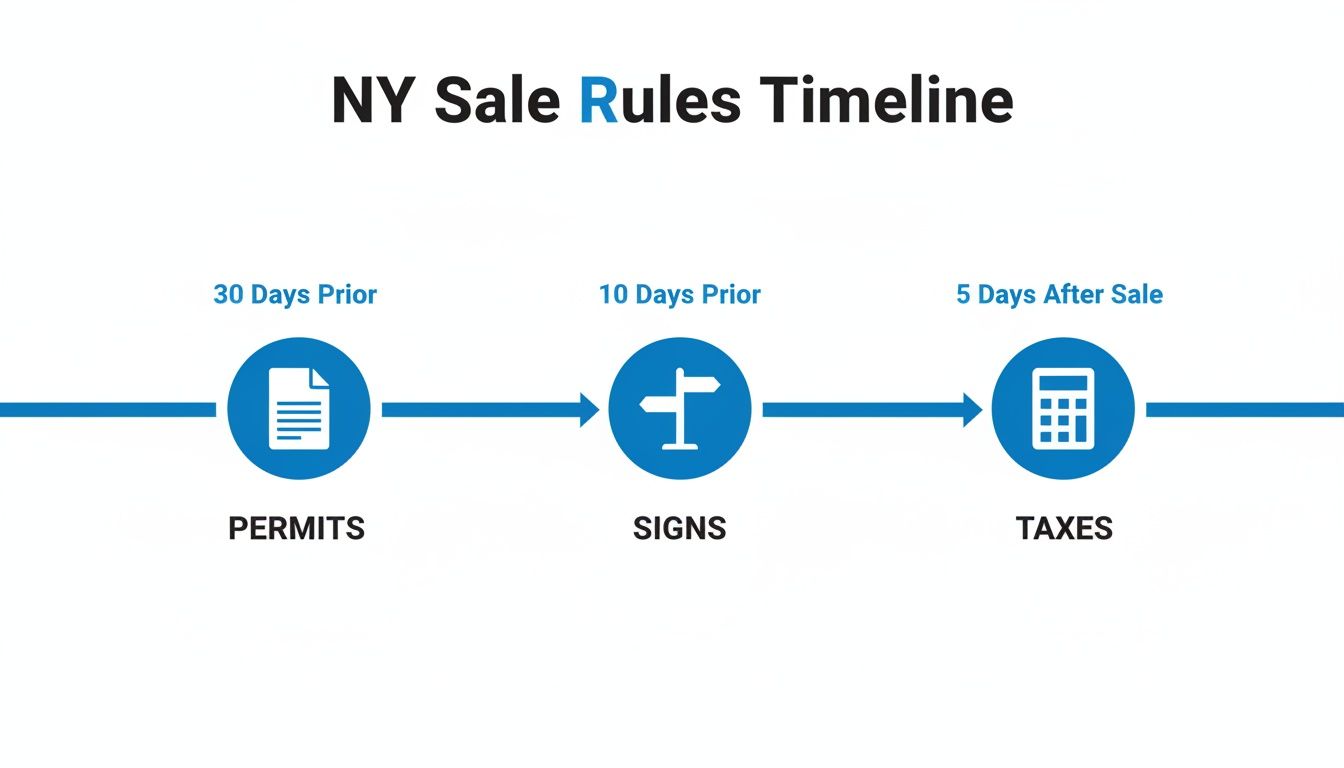
As you can see, getting the legal and administrative stuff handled early is non-negotiable. It saves you from the kind of last-minute headaches that can derail your entire sale.
The Initial Planning Phase: 8 to 6 Weeks Out
This is your foundation-building period. The goal right now is to sort, not sell. Start by walking through the home and dividing everything into three simple piles: keep, sell, or toss/donate.
The trick is to be methodical. Go room by room to keep from getting buried in clutter. This is also the perfect time to flag any items that might need a closer look later—think fine art, antiques, or jewelry that will need some research to price correctly.
- Set Your Dates: Pin down the dates for your sale and, just as importantly, your pickup day. Weekends are usually king, but do a quick check for any big local events or holidays in NY that might steal your crowd.
- Call in the Pros: If you're dealing with complex assets like real estate or a tangled investment portfolio, now is the time to chat with an estate attorney or financial advisor.
- Do a Quick Declutter: You don't need a deep clean just yet, but getting rid of obvious trash and clutter now will make every other step that much easier.
Cataloging and Pricing: 5 to 3 Weeks Out
Now that everything is sorted, you can dive into building your inventory. This is easily the most hands-on part of the whole process, but it’s where you truly start to unlock the value of the items you’re selling.
For everything you plan to sell, grab your phone and take clear, well-lit photos from a few different angles. Write a simple but descriptive title and note any important details—brand, condition, dimensions, and any flaws. This level of detail is exactly what savvy New York buyers are looking for.
A detailed, well-photographed catalog isn't just for your own organization; it's your single most powerful marketing tool. Buyers bid with confidence when they know exactly what they’re getting.
Once the catalog is built, it's time to talk pricing. Online marketplaces and completed auction sites are your best resources here. Search for similar items to get a realistic feel for what things are actually selling for. Remember, pricing for estate sales in NY is about understanding what local buyers will pay, not just what an item is worth to you.
Marketing and Final Prep: 2 Weeks to Sale Day
It's go-time. You want to start building buzz about two weeks before the sale. If you're using a platform like DIYAuctions, this is when your sale goes live, and our system automatically starts marketing it to a network of interested local buyers.
- Launch Your Listings: Push your online auction or sale catalog live for the world to see.
- Spread the Word: Share some of the best items and a link to your full sale in local NYC or suburban community groups on social media.
- Get Ready for Pickup: Organize the home for a smooth pickup day. Grouping sold items by the buyer or lot number ahead of time is a game-changer for making collection quick and painless.
Following a timeline like this creates a logical flow. It keeps the stress down and gives you the best possible shot at a profitable and successful estate sale.
DIY Online Auction vs Traditional Estate Sale Company
When you're looking at your timeline, it's helpful to see how your responsibilities change depending on the path you choose. Here’s a quick breakdown of what you’d be doing with a DIY platform versus what a traditional, full-service company handles.
| Phase (Weeks Before Sale) | DIY Online Auction Host Role | Traditional Company Role |
|---|---|---|
| 8-6 Weeks Out | You sort items (keep/sell/toss), set dates, and handle initial decluttering. | Company conducts a consultation, signs a contract, and may begin initial sorting. |
| 5-3 Weeks Out | You photograph items, write descriptions, research prices, and build the online catalog. | Company staff handles all photography, research, pricing, and cataloging. |
| 2-1 Weeks Out | You launch the sale online, share it on social media, and answer buyer questions. | Company manages all marketing, advertising, and fields all inquiries from potential buyers. |
| Sale Week & Pickup | You monitor the online auction, then manage the scheduled pickup event for winning bidders. | Company runs the on-site sale over several days and manages all customer interactions and checkouts. |
| Post-Sale | You receive a direct deposit of your proceeds (minus platform fee). You handle the disposal of any unsold items. | Company handles final clean-out (often for an extra fee) and sends you a check for the net proceeds. |
Ultimately, the choice comes down to how much control you want versus how much you're willing to pay in commissions. A DIY approach puts you in the driver's seat and maximizes your take-home profit, while a traditional company takes the work off your plate for a much larger cut of the proceeds.
How to Price Your Items for the New York Market
Pricing is where the magic happens, and it's how you unlock the real value of your estate sale. Think of it as part art, part science—especially in a market as varied as New York's. Getting it right means knowing what your items are really worth to a local buyer, which often has little to do with sentimental value. The goal is to land on a price that’s competitive enough to move inventory but high enough to maximize your bottom line.
So, where do you start? With a little recon. Before you slap a price tag on anything, spend some time digging through online marketplaces and checking the "sold" listings on auction sites. Look for items that are a close match to yours—same brand, similar condition, same era. This gives you a solid, data-backed starting point for what New York buyers are willing to pay right now.
Understanding What Sells in New York
The New York market definitely has its own personality. While everyday household items will always find a new home, certain categories consistently do very well and can fetch premium prices. Spotting these trends in your own collection helps you identify your star players.
- Mid-Century Modern (MCM) Furniture: If you've got pieces from designers like Eames or Knoll, you're in luck. Even well-made, unbranded furniture from the 1950s and 60s is incredibly popular, especially in NYC and the surrounding suburbs.
- Designer Décor and Fashion: Never underestimate the power of a brand name. That vintage Coach bag tucked away in a closet or a set of Waterford crystal glasses can be huge draws for collectors.
- Unique Art and Collectibles: New Yorkers have a great eye for originality. Local art, quirky sculptures, and niche collectibles often perform much better here than they might in other markets.
It also pays to understand how the local Long Island real estate market is performing, as a hot market often translates into higher demand and better prices for home furnishings and décor.
Choosing Your Pricing Strategy
Not every item calls for the same approach. You really have two main strategies to choose from: setting a firm price or letting the market decide through an online auction.
For your most in-demand items, an online auction is almost always the way to go. That mid-century modern credenza or a sought-after piece of artwork can spark a real bidding war if you start with a low, attractive bid. You'd be surprised how often friendly competition drives the final sale price far beyond what you would have ever set as a fixed price.
On the other hand, for more common things like kitchenware or standard furniture, a fixed price (or a "Buy It Now" option) makes a lot more sense. It's straightforward for buyers and gives you a predictable return. For a deeper dive, our guide offers more great tips on how to price items for an estate sale.
Key Takeaway: Use an auction for your high-demand "star" items to let competition drive up the value. For everyday goods, use fixed pricing to ensure they sell quickly and predictably.
Right now, New York's estate sale scene is absolutely buzzing. A quick look shows over 249 ongoing sales listed across the region on major platforms. This is a clear sign of a healthy, active market full of eager buyers ready to pay fair prices. That should give you all the confidence you need to price your belongings for what they're truly worth.
Marketing That Attracts Eager New York Buyers

Simply having fantastic items isn't enough to guarantee a successful sale. You've got to get the right eyes on them. In a place as competitive as New York, a smart marketing strategy is what separates a blockbuster sale from a disappointing one.
Forget just sticking a sign on the lawn—it’s time to think bigger and more strategically. You need to tap into the networks of motivated buyers who are actively hunting for their next great find.
Your marketing really begins with your online listing. High-quality photos are completely non-negotiable. Use natural light whenever you can and capture items from multiple angles to give potential bidders a complete picture. Clear, well-lit images build trust and are the single best way to stop someone from scrolling right past your estate sales NY listing.
Crafting Descriptions That Sell
Think of your item descriptions as your sales pitch. Go beyond just the basics and tell a story where you can. Instead of "brown chair," try something like "Vintage Mid-Century Modern Armchair by Knoll." See the difference?
- Be Specific: Always include dimensions, brand names, and materials.
- Note the Condition: Honesty is absolutely key. Mention any scratches, chips, or wear—buyers really appreciate transparency.
- Add Context: If you know an item's history, share it! A little provenance can make a huge difference in perceived value.
A well-crafted listing does the heavy lifting for you by answering questions before they're even asked and getting bidders genuinely excited.
The most effective marketing focuses on clarity and detail. When a buyer in Brooklyn or Westchester feels confident about what they're bidding on, they are more likely to commit and place a higher bid.
Leveraging Local New York Networks
Once your online listing is polished and ready, it’s time to spread the word. Digital platforms are your best friend here.
Focus your energy on local social media groups where New York buyers gather. You’ll find highly active neighborhood groups for communities across all five boroughs, Long Island, and upstate. Share a few of your most compelling items along with a direct link to your full sale catalog. For a deeper dive into building an effective plan, check out this comprehensive small business social media strategy guide.
The real estate sales industry in New York is a huge driver for estate sales NY, fueling property turnover and making up a staggering 7% of the state's GDP. With nearly 40% of NY homes selling above list price, there's a constant, urgent demand for liquidation services. Platforms with built-in marketing can connect you directly to this energetic pool of buyers.
By combining professional-level listings with targeted local promotion, you ensure your sale becomes a must-visit event, not just another listing. You can learn more about crafting the perfect promotion in our guide to effective estate sale marketing.
Your Top NY Estate Sale Questions, Answered
Jumping into an estate sale, especially your first one, always kicks up a few questions. From the cost of hiring help to figuring out what to do with the odds and ends that don't sell, getting clear answers upfront makes a world of difference.
We've heard all the common concerns from New Yorkers planning a sale. Here’s a straightforward look at what you can expect, so you can move forward with confidence and sidestep any surprises.
How Much Do Estate Sale Companies Charge in New York?
This is usually the first thing people want to know, and for good reason—it directly impacts your bottom line. In New York, traditional estate sale companies operate on a commission model, typically taking a cut of 30% to 50% of the total sales. On top of that, you might see extra fees for things like setup, advertising, or post-sale clean-out.
While that full-service approach seems easy, that hefty commission is a tough pill to swallow. It's one of the biggest reasons sellers are now looking for smarter, more cost-effective options, like online auction platforms. The goal is to keep more of your money while still having control over the process.
What Should I Do With Items That Don't Sell?
It's a simple fact: not every single item will find a new home. And that's okay! The trick is to have a plan for the leftovers before the sale ends so you aren't left in a lurch. Luckily, New Yorkers have some great options.
Many sellers choose to donate the remaining items to local charities like Housing Works or Goodwill, which can provide a receipt for a tax deduction. Another solid strategy is to cherry-pick any remaining high-value items for online marketplaces. The key is making that "Plan B" decision ahead of time.
Have your clean-out plan locked in before your sale even goes live. It guarantees a smooth wrap-up, leaving you with a cleared space and zero last-minute stress.
How Do I Handle Payments Securely?
Let's be honest, managing payments can be the most nerve-wracking part of a sale. Holding a large amount of cash on-site is a security risk, and personal payment apps like Venmo or Zelle leave you vulnerable to scams and disputes. This is one area where you absolutely can't afford to take chances.
This is exactly where a managed online auction platform becomes your best friend. These systems are built to eliminate the risk.
- Verified Transactions: All payments are processed and secured online before buyers show up.
- No Cash Handling: You avoid the risks of managing cash in your home entirely.
- Financial Protection: Buyers never see your personal banking information.
Using a platform like DIYAuctions ensures you get paid correctly for every item, without the anxiety of managing the money yourself.
Is Managing the Pickup Day Difficult?
The idea of coordinating a bunch of buyers coming to your home can feel overwhelming, but it's surprisingly simple if you structure it correctly. The secret is to control the schedule from the start.
Don't let people trickle in for days on end. The best method is to set one dedicated pickup day with a tight time window—say, a Saturday from 10 am to 2 pm. Buyers are given this specific slot when they pay for their items. It’s an efficient system that brings everyone in at once. Have a friend or family member help you check off items as they're picked up, and the whole event will be secure, organized, and over before you know it.
More guides in Estate Sale Basics
July 28, 2026
Revenue Reporting for Estate Sales and Auctions
Learn revenue reporting essentials for estate sales and auctions. Discover key metrics, templates, and best practices to simplify tracking and compliance.
Read guideJuly 26, 2026
Stamp Collection Valuation: A Practical Step-by-Step Guide
Stamp collection valuation made simple. Learn how to identify, grade, price, and sell your stamps with confidence for estate sales or consignment.
Read guideJuly 23, 2026
Estate Sales Brick NJ: Your 2026 Guide to Success
Planning your estate sales brick nj? Our guide covers permits, pricing, marketing, & running a safe sale with DIYAuctions.
Read guideGet the estate sale pricing guide
Enter your email for pricing ranges, planning notes, and a clearer path to launch.