Your Guide to Profitable Estate Sales Sacramento
Run profitable estate sales Sacramento with our expert guide. Learn local pricing, marketing, and legal tips to maximize your earnings and simplify the process.
Running an estate sale in Sacramento is a totally different ballgame than it was even a decade ago, thanks to our city's booming real estate market and changing neighborhoods. We've seen a massive surge in home values and a steady influx of new folks moving in, creating the perfect conditions for both sellers and buyers.
Getting a handle on these local dynamics is the key to pulling off a sale that’s not just successful, but genuinely profitable.
Decoding The Sacramento Estate Sale Market
There’s a reason Sacramento has become such a hotspot for estate sales, and it's no accident. A few key trends have come together to create a market that’s just brimming with opportunity. For anyone managing an estate, this means there's a ton of value sitting in local homes and a crowd of eager buyers ready to find it. A lot of these sales happen because people are looking into how to downsize your home, and knowing that can shape your entire game plan.
The biggest factor here is our city's rock-solid real estate market. The steady climb in home prices has built up serious equity for people who have lived here a while.
- Incredible Home Appreciation: Since 2015, Sacramento has seen a whopping 108.08% cumulative increase in home values. That works out to an average annual rate of 7.60%, putting us in the top 30% of the nation for real estate growth.
- A City of Single-Family Homes: Our housing market is mostly made up of single-family homes (59.61%), with a huge chunk of them built between 1940 and 1999.
- A Goldmine for Vintage Finds: This building history means Sacramento estate sales are often treasure troves of sought-after mid-century modern furniture, cool vintage collectibles, and classic appliances from those decades.
It’s this unique mix that has turned our city into a fantastic place for estate liquidations.
Why You Should Consider a DIY Approach Here
The old way of running an estate sale involved hiring a company that would take a massive cut of your profits—usually somewhere between 35% and 50%. But things have changed. With the right tools, you can now run the show yourself and make a whole lot more money.
The rise of online auction platforms puts you squarely in the driver's seat. You get to set the prices, manage the schedule, and keep the lion's share of the profits—often walking away with up to 90% of the total earnings.
This do-it-yourself model works especially well in a market like Sacramento. Our city's blend of historic neighborhoods and a flood of new residents, many moving from pricey places like the Bay Area, creates a really diverse and motivated buyer base. You can get a better sense of this trend by reading our guide on Bay Area estate sales.
By taking control of your own sale, you dodge those high commission fees and connect straight with this ready-to-buy audience. You aren't just selling off old stuff; you're unlocking the value of a home for a new generation of Sacramentans who are excited to find unique, quality pieces for their own places.
Your Pre-Sale Blueprint For Sacramento
A successful Sacramento estate sale doesn't just happen. It's built on a foundation of smart, strategic planning. The real work starts long before you ever think about bids or buyers, and having a clear roadmap is the difference between a stressful mess and a profitable, smooth experience.
Give yourself a solid six to eight weeks. Think of this as your strategic window to get everything organized, make sure you're legally compliant, and set the stage for a great sale.
The first step is always the toughest: sorting. You have to go room by room, drawer by drawer, and put every single item into one of three piles: keep, sell, or donate/discard. This is often an emotional marathon, not a sprint, so be patient with yourself. As you go, keep an eye out for those easily overlooked treasures—costume jewelry, old postcards, vintage clothing, or stamps. You'd be amazed at what can be tucked away inside old books or coat pockets.
This process is especially common in Sacramento, where so many homes are filled with items from a specific era.
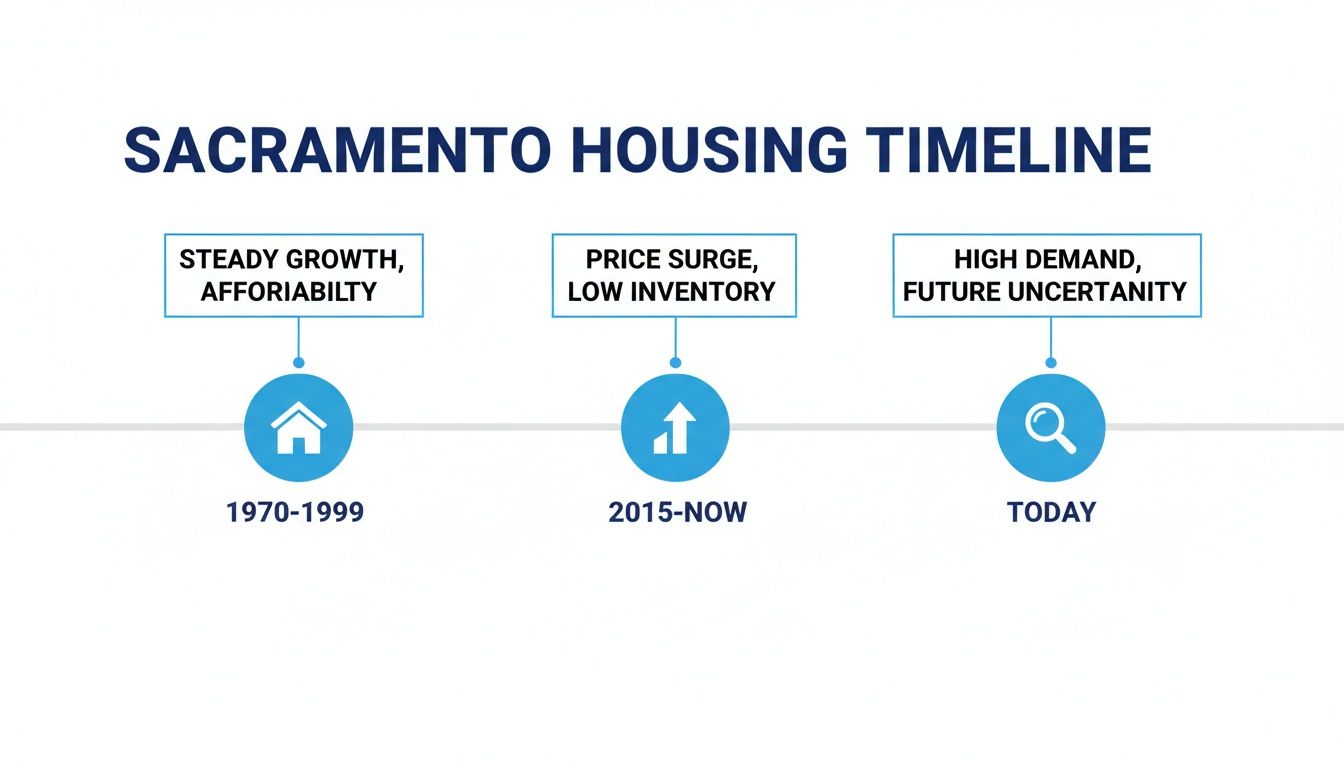
As the chart shows, a huge chunk of our local housing was built between 1970-1999. This means many estate sales today are packed with fantastic mid-century and vintage finds that are in high demand.
Sacramento Estate Sale Planning Timeline
To keep from feeling overwhelmed, break the work down into a simple weekly schedule. This checklist will help you stay on track and avoid that last-minute panic.
Here’s a practical, week-by-week guide to get you ready for sale day.
| Timeline | Key Tasks | Local Sacramento Tip |
|---|---|---|
| 6-8 Weeks Out | Begin sorting items into "keep," "sell," and "donate" categories. Search for important documents and potential valuables. | Check with the City of Sacramento or Sacramento County business license office about permit requirements for your specific address. Rules can differ slightly. |
| 4-5 Weeks Out | Start cleaning, photographing, and cataloging all items for sale. Begin researching prices for unique or high-value pieces. | For large furniture donations, schedule a pickup with a local charity like the Sacramento SPCA Thrift Store or WEAVEWorks well in advance as their calendars fill up. |
| 2-3 Weeks Out | Finalize your online auction catalog with photos and descriptions. Set your sale dates and pickup schedule. | Start creating buzz by sharing sneak peeks in Sacramento-focused Facebook groups like "Sacramento Buy/Sell/Trade" to gauge local interest. |
| 1 Week Out | Launch your sale and begin promoting it heavily online. Confirm arrangements for your single-day pickup event. | If you live in an HOA community (common in areas like Natomas or Folsom), double-check their rules on sale signage and visitor parking. |
Sticking to a schedule like this makes the entire process manageable and ensures no critical steps get missed along the way.
Navigating Local Rules And Regulations
Don't let red tape trip you up. While a one-time residential sale usually doesn’t require a special permit in Sacramento, it's always smart to double-check. A quick call or visit to the city or county's website will give you peace of mind and help you avoid any surprise fines or shutdowns.
Navigating local regulations isn't about jumping through hoops; it's about ensuring a smooth, uninterrupted sale. A few minutes of research upfront can save you significant headaches on sale day.
Some items come with their own set of rules. You can't just casually sell things like cars or firearms; you have to follow specific state and local laws.
- Vehicles: To sell a car, you absolutely must have the title (the "pink slip") and complete a Notice of Transfer and Release of Liability (NRL) with the California DMV. This is a critical step that protects you from any liability after the sale.
- Firearms: California has extremely strict laws for selling firearms. You cannot sell them directly to a buyer. Every single transaction must go through a licensed Federal Firearms License (FFL) dealer, who will conduct the necessary background checks.
Trying to cut corners here can lead to serious legal trouble. By understanding these rules from the start, you build a compliant and secure foundation for your sale. It’s about protecting yourself and your buyers, which ultimately leads to a more professional and trustworthy event.
Pricing Your Items For The Local Market

Alright, you’ve sorted through the estate. Now comes the part where your hard work really pays off: figuring out what everything is worth. This is more than just slapping a price tag on a lamp. It's about understanding the Sacramento market and pricing with a strategy that gets you the best possible return.
Nail this step, and you’ll attract serious bidders who are ready to compete. The goal isn't just to list items; it's to create a professional online catalog that tells a story and makes buyers feel like they've found something special. It all starts with great photos and honest descriptions.
Crafting An Irresistible Online Catalog
Think of your online catalog as your sale’s digital storefront. It’s the very first impression buyers get, so it needs to look professional, inviting, and trustworthy. In this game, high-quality photos are everything.
Here’s how to make your listings pop:
- Let the Sun In: Always use natural light. Set items up near a window to capture their true colors and details. Ditch the harsh flash—it creates glares and washes everything out.
- Show Every Angle: For a dresser, capture the front, back, sides, and close-ups of any unique details like drawer pulls or joinery. For a set of dishes, show a single plate, the maker's mark on the bottom, and a shot of the whole collection.
- Be Honest About Flaws: Got a scratch on a coffee table? A worn spot on an armchair? Take a picture of it. Buyers appreciate transparency, and it builds critical trust. Hiding imperfections will only cause headaches on pickup day.
Your descriptions need to back up your photos. Instead of just "brown chair," try something like, "Vintage mid-century modern armchair with original tweed upholstery, perfect for a Land Park bungalow." See the difference? You're not just selling a chair; you're selling a vision.
Researching The Value Of Local Finds
Sacramento has a rich history, and that history is sitting inside its homes. According to NeighborhoodScout, 59.61% of our housing units are single-family homes, and a huge chunk of them were built between 1940 and 1999. You can explore detailed Sacramento housing data on NeighborhoodScout.com to see the trends for yourself.
This means estates in neighborhoods like East Sacramento or Carmichael are often treasure troves of period-specific furniture, decor, and collectibles. To price these finds correctly, you have to do a little detective work.
Don’t guess. A few minutes of research can be the difference between selling a collectible for $20 and its real market value of $200. Smart pricing is where you make your profit.
Start by checking the "sold" listings on sites like eBay and Etsy. This tells you what people are actually paying for an item, not just what sellers are asking. For furniture, look for any brand names or designer labels. A quick search for "Drexel Declaration" or "Broyhill Brasilia" might reveal that a piece you thought was just old is actually a highly sought-after collectible. For a deeper dive, our guide on advanced strategies for pricing estate sale items is a fantastic resource.
Setting Smart Bids And Buy Now Prices
With an online auction, you need a balanced pricing strategy. The idea is to generate buzz and encourage bidding while still making sure you get what an item is worth.
A great way to do this is by setting a low starting bid—often just $1—on most of your items. This gets people in the door. Once they place that first bid, they're invested. The resulting competition will naturally drive the price up to its fair market value.
But for certain high-value or in-demand pieces, you should consider adding a "Buy Now" option. This works especially well for:
- Popular Mid-Century Furniture: Pieces that you know will get snapped up quickly.
- Designer Handbags or Jewelry: Items with a well-established and stable market value.
- High-End Tools or Electronics: Gear where buyers know exactly what they want and will pay a premium to secure it.
By setting a "Buy Now" price just above what you expect it to fetch at auction, you give an eager buyer a chance to grab it without the stress of bidding. It’s the best of both worlds: you get the thrill of the auction for most items and the security of a direct sale for your most valuable ones.
How To Market Your Sale To Sacramento Buyers
Once you’ve cataloged and priced everything, it’s time to pivot to the most important part of the process: getting buyers to your sale. You can have the most incredible items priced perfectly, but it means nothing if no one knows about your auction. This is where a smart marketing plan turns your private liquidation into a must-attend public event.
While a platform like DIYAuctions automatically puts your sale in front of a built-in network of bidders, you can seriously boost your results by creating some local buzz. The trick is to tap into the specific places where Sacramento locals are already looking for deals, hidden gems, and unique pieces for their homes.
Tapping Into The Sacramento Online Community
Forget about old-school, expensive newspaper ads. The most effective marketing today is digital, local, and often totally free. Success comes from knowing where your potential buyers gather online. In Sacramento, that means focusing on neighborhood-centric platforms where people actually trust the posts and recommendations they see.
These are your primary targets:
- Sacramento-Focused Facebook Groups: Look for active communities like "Sacramento Buy/Sell/Trade" or hyper-local groups for areas like Land Park, Folsom, or East Sacramento. People in these groups are specifically looking to buy local.
- Nextdoor: This platform is pure gold for hyperlocal marketing. A post about your sale will hit people in your immediate area—the ones most likely and able to show up on pickup day.
- Craigslist: It has its quirks, but Craigslist is still a staple for many seasoned estate sale shoppers and resellers in the Sacramento area. A clear, well-written post in the "garage & moving sales" section is a must.
For an extra edge, you should also be thinking about optimizing for Google My Business SEO to make sure your sale pops up when people search for "estate sales near me."
Reaching New And Motivated Buyers
The Sacramento market has a unique energy right now. Recent data shows a huge number of people are moving here from San Francisco, making Sacramento their number one destination. This creates a fresh, highly motivated group of buyers who are actively trying to furnish their new homes. Your marketing needs to grab their attention while also appealing to long-time residents.
This demographic shift is an opportunity. When you market, be sure to highlight practical items that new homeowners need, like quality furniture, kitchenware, and décor.
Crafting compelling social media posts is your secret weapon. Don't just announce a sale—tell a story. Highlight your most unique items with high-quality photos and engaging descriptions to create a sense of urgency and excitement.
A great post should always have a few key ingredients:
- A Catchy Headline: Think "Mid-Century Modern Treasures & Vintage Finds in Carmichael Estate Sale!"
- Stunning Visuals: Lead with your best photos. Create a gallery showing off the most desirable items first.
- Clear Information: Always include the online auction link, the sale's start and end dates, and the single-day pickup details.
- A Call to Action: Something simple like, "Bidding is now live! Find unique pieces for your home."
For a deeper dive into online promotion, check out our comprehensive guide on how to market an estate sale.
Timing Your Sale For Maximum Impact
Finally, you need to think like a local. Before you lock in your auction end date and pickup day, pull up the Sacramento community calendar. The last thing you want is to compete with a major event that pulls all your potential buyers away.
Keep an eye out for:
- Major Local Events: Avoid weekends with huge draws like the Farm-to-Fork Festival or the California State Fair.
- Holiday Weekends: Some holidays are great for sales, but on others, a lot of locals head out of town.
- Weather Forecasts: A brutal Sacramento heatwave can be a major deterrent for people attending a pickup day.
By strategically timing your sale and using targeted local marketing, you give your event the visibility it deserves. This is how you draw a real crowd and spark the competitive bidding that leads to a seriously profitable estate sale.
Organizing a Smooth One-Day Pickup Event
This is it—the grand finale of your online auction. The single-day pickup is where all your digital work meets the real world. A little bit of thoughtful organization here makes the difference between a smooth, professional event and a chaotic free-for-all. Get this right, and you'll leave buyers with a great lasting impression.
The absolute last thing you want is a crowd of people waiting on your lawn while you frantically dig through piles to find their winning items. Success comes from prepping before anyone rings the doorbell. The goal is to create a simple, efficient flow that gets people in, out, and on their way with their new treasures.
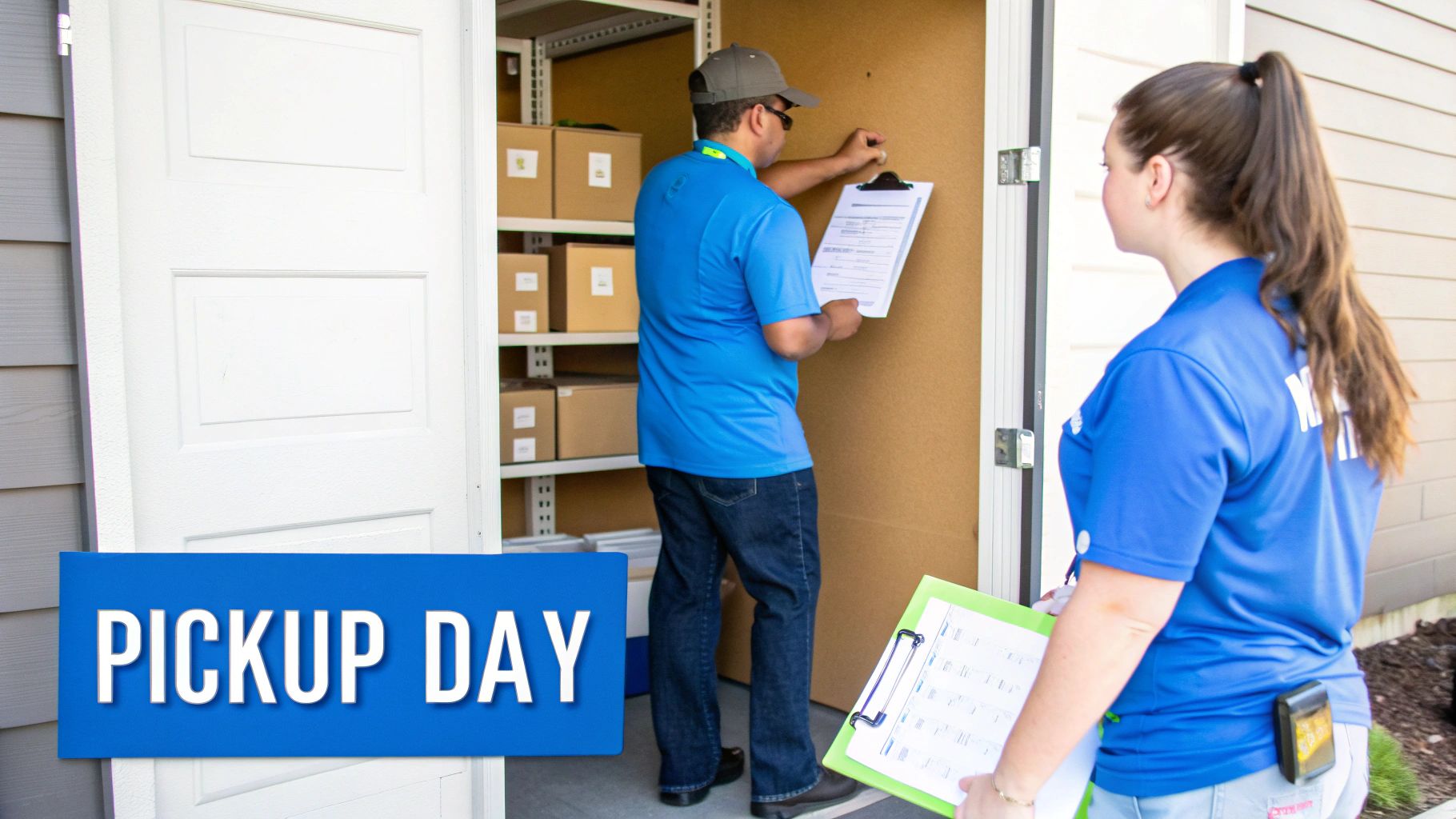
Your first move is non-negotiable: group all sold items by buyer. Print out each invoice and tape it directly to their pile of goods. For big things like a sofa or a dining table, a prominent tag with the buyer's name and lot number works perfectly. Honestly, this one step is the most critical thing you can do to prevent pickup day mayhem.
Setting The Stage For Efficiency
Before the event, take a walk through the pickup area as if you were a buyer. Can you move around easily? Is the path obvious? A well-planned layout isn't just about speed; it's a huge factor in safety and keeping things calm.
Here are a few practical steps to stage the space:
- Create a Welcome Station: A simple card table near the entrance is your command center. This is where you’ll greet buyers, check their IDs, and confirm they’re on your "paid" list.
- Establish a One-Way Path: Use painter's tape arrows on the floor or simple yard signs to guide people. This prevents those awkward hallway traffic jams and keeps everyone moving.
- Stage Items Logically: Put the big, heavy stuff—furniture, appliances, large equipment—near an exit like the garage or a patio door. This makes loading a breeze. Smaller items can be bagged or boxed and organized alphabetically by the buyer's last name in a separate room.
This level of prep is what separates amateur garage sales from the professional, high-return estate sales in Sacramento that really maximize value.
Managing The Day Of The Event
On pickup day, your hat changes from organizer to event manager. The focus is now on security, efficiency, and communication. I strongly recommend having at least one other person helping you out. A friend or family member can be a lifesaver—one of you can greet people at the door while the other helps locate items.
A successful pickup day isn't about speed; it's about control. By managing the flow of people and verifying every transaction, you protect your assets and ensure a secure, professional conclusion to your sale.
Never just assume an online payment went through. On platforms like DIYAuctions, payments are secured beforehand, but you still need to verify. Have a printed or digital list of all paid invoices at your welcome station. Check the buyer's ID against your list before anything leaves the house.
It's also smart to secure any part of the home that isn't part of the sale. Lock the doors to bedrooms or offices and put up simple signs that say "No Entry" or "Private." This stops people from wandering off into areas where they shouldn't be.
Your Final Pickup Day Checklist
A good checklist keeps you from forgetting the small-but-critical details in the final hours.
- Clear Signage: Post signs from the nearest major street to guide buyers in. Also, put one on your front door with your cell number just in case someone has trouble.
- Essential Supplies: Have some extra boxes, packing tape, and a few basic tools (a multi-bit screwdriver is a great choice) handy. Buyers are responsible for their own move, but having these on hand is a thoughtful touch.
- Payment Verification: Keep your list of paid invoices right at the welcome station. Using a tablet or laptop makes it easy to do a quick search for a buyer's name.
- Post-Event Plan: Decide ahead of time what you're doing with any items that don't get picked up. Have the number for a local Sacramento junk hauler or a donation center like the Sacramento Food Bank & Family Services ready to go for a quick clear-out after the pickup window closes.
Follow this playbook, and the end of your estate sale will be just as successful as the beginning. A well-run pickup day is the final, positive touch that makes the whole process a win.
Common Questions About Sacramento Estate Sales
Even the best-laid plans can hit a snag, and you’re bound to have questions as you dive in. The world of estate sales in Sacramento definitely has its own local quirks. Let's tackle some of the most common queries we hear from folks just like you.
Think of this as your go-to guide for navigating those final details.
How Much Do Estate Sale Companies Charge In Sacramento?
This is usually the first question on everyone's mind, and for good reason—it’s your money! Traditional estate sale companies in the Sacramento area almost always work on commission, taking a cut of 35% to 50% of the gross sales. On top of that, you might get hit with extra fees for things like setup, advertising, or post-sale cleanouts.
An alternative like a DIY online auction flips that model completely. With a much lower, totally transparent fee, you can keep up to 90% of your earnings. For an estate with even a modest collection of furniture or collectibles, that difference can mean thousands of dollars back in your pocket.
Do I Need a Permit For An Estate Sale In Sacramento?
This is a critical step many people forget. The short answer is: it depends. Permit rules for estate sales really hinge on your exact address—whether you’re inside the city limits of Sacramento or in an unincorporated part of Sacramento County.
Typically, a one-time residential sale run by the homeowner doesn't require a special business permit. But you should always, always verify this for yourself. Your best bet is to check the official City of Sacramento website or give the Sacramento County business license office a quick call. They’ll give you the most current and accurate info.
Don't forget about the other layer of rules: your HOA. If the home is in a community with a Homeowners Association, you absolutely have to check their bylaws. Many HOAs have strict rules about how often you can have sales, where visitors can park, and even where you can put up signs.
What Sells Best At Sacramento Estate Sales?
Knowing what local buyers are looking for is the key to a profitable sale. Thanks to Sacramento's unique mix of neighborhoods and housing history, certain items are always hot tickets.
Here’s a quick rundown of what local buyers are constantly searching for:
- Mid-Century Modern Items: A huge chunk of Sacramento homes were built between 1940 and 1999. Because of this, furniture and decor from that era are always in high demand. Think clean lines, solid wood, and that unmistakable vintage character.
- Practical Household Goods: With so many people moving to the area, practical stuff sells like crazy. Quality kitchenware, small appliances, and good everyday furniture are easy wins.
- Tools and Yard Equipment: From shovels to power drills, these items are a staple in Sacramento garages. They get snapped up fast by new homeowners and seasoned DIYers alike.
- California Collectibles: Art showing local landscapes, regional pottery, or anything with a distinct California or Sacramento history will always attract dedicated collectors.
The real trick is presentation. Great photos and honest, detailed descriptions are what will grab the attention of both passionate collectors and new families looking to furnish their home.
What Should I Do With Unsold Items After The Sale?
It's pretty much a guarantee you'll have some things left over after pickup day wraps up. The good news is that Sacramento has plenty of great options for clearing out what's left, making sure the property is left empty and clean.
Donation is your best first move. Several local charities are happy to take gently used goods and might even offer pickup for larger furniture, which is a massive help. Consider reaching out to places like the Sacramento SPCA Thrift Store or WEAVEWorks.
For anything not suitable for donation, you've got a couple of easy disposal options. The City of Sacramento offers a bulky waste pickup service for residents, so you can schedule a collection right from the curb. If you need it done faster, you can hire one of the many local junk removal companies that service the area. They can often clear an entire property in just a few hours.
More guides in Estate Sale Basics
July 28, 2026
Revenue Reporting for Estate Sales and Auctions
Learn revenue reporting essentials for estate sales and auctions. Discover key metrics, templates, and best practices to simplify tracking and compliance.
Read guideJuly 26, 2026
Stamp Collection Valuation: A Practical Step-by-Step Guide
Stamp collection valuation made simple. Learn how to identify, grade, price, and sell your stamps with confidence for estate sales or consignment.
Read guideJuly 23, 2026
Estate Sales Brick NJ: Your 2026 Guide to Success
Planning your estate sales brick nj? Our guide covers permits, pricing, marketing, & running a safe sale with DIYAuctions.
Read guideGet the estate sale pricing guide
Enter your email for pricing ranges, planning notes, and a clearer path to launch.