Estate Sales Wisconsin: How to Run estate sales wisconsin Profitably
Learn proven steps to run estate sales wisconsin that maximize profits, attract buyers, and simplify compliance from setup to close.
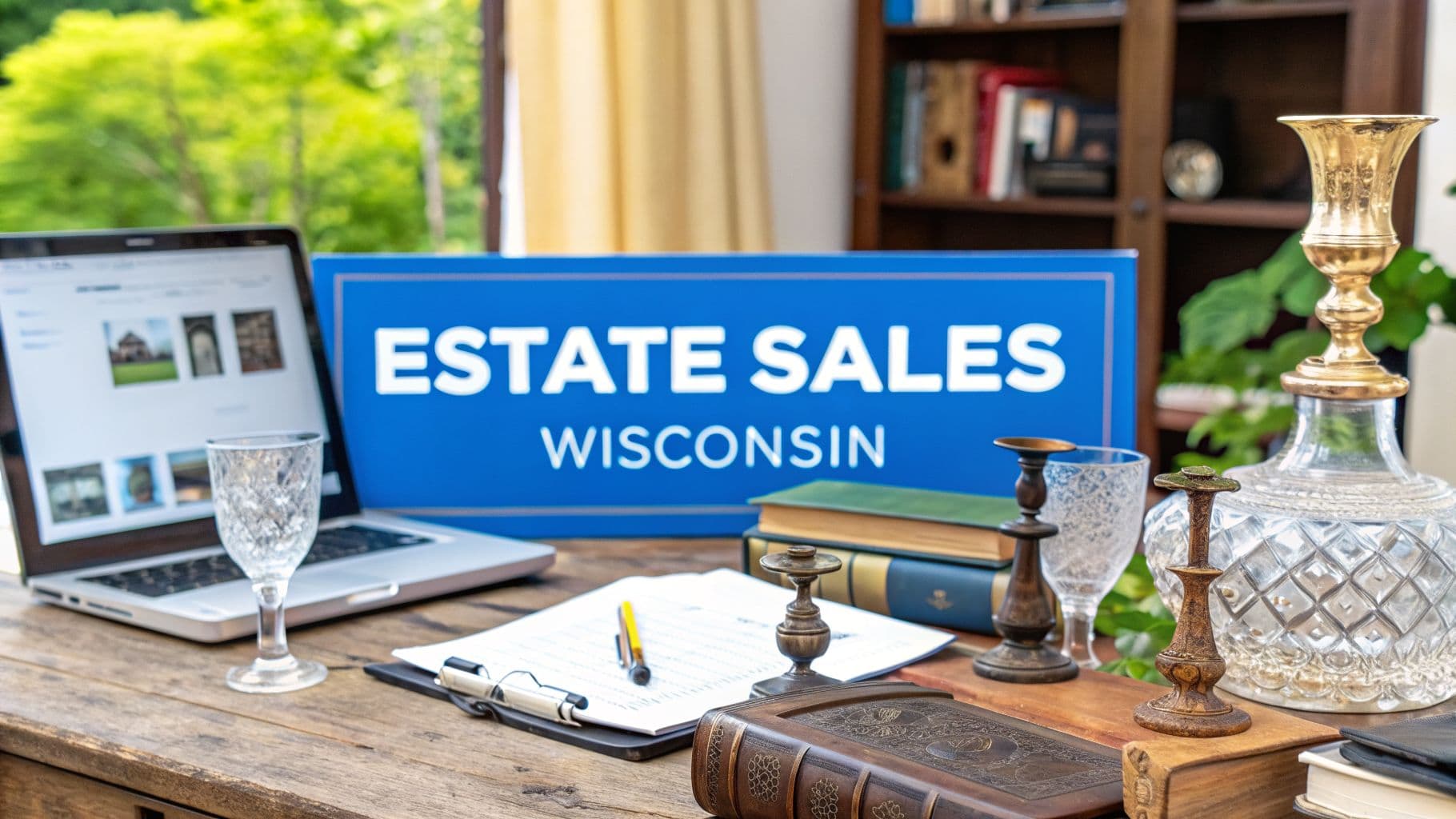
When you’re tasked with running an estate sale in Wisconsin, your very first decision is the most important one. It sets the foundation for everything that follows.
You’re standing at a crossroads with two clear paths: hiring a traditional, full-service estate sale company or taking the reins yourself with a modern, DIY approach. This choice will directly impact your timeline, your stress levels, and ultimately, how much money ends up in your pocket.
Your Practical Starting Point for Wisconsin Estate Sales

Whether you’re downsizing or settling a loved one's estate, the process is always part emotion, part logistics. Forget sorting through closets for a minute—the real first step is deciding how you're going to manage the sale itself.
Let’s break down your two options.
The Traditional Route: Full-Service Companies
The classic approach is to hire an estate sale company. These are the pros who come in and handle just about everything: pricing, staging, marketing, running the multi-day sale, and even the final clean-out.
For this all-inclusive service, they charge a hefty commission, typically anywhere from 35% to 50% of the total sales. For some, especially those living far away or with no time to spare, paying for that convenience makes sense.
The Modern Alternative: The DIY Platform
The other path is a tech-powered, do-it-yourself approach. This model puts you in complete control, allowing you to manage the process with the help of a powerful online platform that handles the heavy lifting of marketing, payment processing, and buyer communication.
Choosing Your Path: A Wisconsin Estate Sale Snapshot
Deciding between these two isn't always easy. This table cuts through the noise and shows you a direct comparison of what to expect from each path.
| Feature | Traditional Estate Sale Company | Modern DIY Platform |
|---|---|---|
| Commission | 35% - 50% of gross sales | 10% of gross sales (or less) |
| Control | Low - you hand over the keys | High - you set prices and rules |
| Transparency | Varies; often receive one final check | Full; see every bid and final price |
| Your Effort | Low; mostly hands-off | Medium; you catalog and manage pickup |
| Final Payout | Lower; high fees reduce your net | Higher; you keep 90% of the proceeds |
Ultimately, it’s about weighing convenience against your final profit. While a traditional company feels easier upfront, a DIY platform almost always puts significantly more money back into the estate.
The Financial Bottom Line
The financial difference here isn't just a few bucks—it's often staggering.
Think about it: On a sale that grosses $40,000, a 40% commission to a traditional company costs you $16,000. With a DIY platform's typical 10% commission, that fee is only $4,000. That's an extra $12,000 in your pocket for the same collection of items.
From my experience helping families across Wisconsin, the decision often comes down to a simple question: Is the convenience of a full-service company worth potentially tens of thousands of dollars in commission fees? For many, the answer is no.
This isn’t just about the commission, either. When you run the sale, you ensure that cherished or valuable items get the attention they deserve. You know the story behind the art or the value of that vintage tool collection. Nothing gets overlooked or bundled away for pennies on the dollar. You can even research the local market for things like auctions in Milwaukee, WI to get a better feel for prices.
Taking control means you make informed choices that directly boost your bottom line, ensuring your Wisconsin estate sale is as successful as it can possibly be.
Navigating Wisconsin Legal and Tax Requirements
Before you start tagging items, let's talk about the legal side of running an estate sale in Wisconsin. It might not be the most glamorous part of the process, but getting this right from the start protects you from major headaches later on.
First things first: you need the legal authority to sell the property. If you're the executor of a will or the trustee of a trust, you absolutely must have the official paperwork in hand. This isn't just a suggestion—it's a legal requirement to sell any of the estate's assets.
Wisconsin Sales Tax Rules
A question we hear all the time is, "Do I really need to collect sales tax?" For a Wisconsin estate sale, the answer is almost always yes. The state has a 5.00% sales tax, and many counties add their own local taxes on top of that.
While a small, one-off garage sale might fly under the radar, a full-blown estate sale is usually seen as a business activity by the Wisconsin Department of Revenue. Don't risk it.
The best path forward is to plan on collecting and remitting sales tax. Getting this wrong can lead to penalties and a bill for back taxes you really don't want. It’s far easier to do it right from the beginning.
Here’s what you need to do:
- Get a Seller's Permit: You can register for one through the Wisconsin Department of Revenue. This permit makes you an official collector of sales tax.
- Collect the Right Amount: You'll need to charge the combined state and local sales tax based on where the sale is physically located.
- File and Pay: After your sale wraps up, you must file a sales tax return and send the money you collected to the state.
This timeline gives you a bird's-eye view of the key legal checkpoints you'll encounter.

As you can see, staying compliant is an ongoing process, not just a one-and-done task.
Handling Specific and Titled Items
Some items have their own set of rules, and you can't just put a price tag on them and call it a day.
Selling firearms, for example, means following strict state and federal laws. This usually involves using a Federally Licensed Firearms Dealer (FFL) to handle the transfer. For vehicles—like cars, boats, or ATVs—you'll need to go through the Wisconsin DOT for a formal title transfer. The title must be clean, with no liens, before you can hand the keys to a new owner.
On a brighter note, there's some good news for anyone managing an estate in the Badger State. Wisconsin does not have an estate tax or an inheritance tax. This is a huge relief, as it means your heirs won't get a surprise tax bill from the state on the assets they receive. You can learn more about general estate sale laws and how they differ from state to state.
Getting these details right ensures your sale is both profitable and legally sound. It’s a crucial step toward a successful, stress-free estate sale in Wisconsin.
Building Your Wisconsin Estate Sale Timeline
Running a successful estate sale feels like a massive project because, well, it is. But the secret isn't working harder; it's working smarter. A realistic timeline is your best friend, turning a mountain of tasks into a series of manageable steps.
We've found an 8-week countdown is the sweet spot. It gives you enough breathing room to handle everything from sorting to settlement without the last-minute panic. This isn't just a checklist; it's your roadmap for running a smooth sale, whether you're in Lake Geneva or near Green Bay.
Weeks 8 to 6: Initial Sorting and Planning
This is where the real work begins, but don't get bogged down in details yet. Your first job is to simply understand the scope of the project. Walk through the entire property—attic, basement, garage, every closet—and just take it all in.
During this first pass, your focus is on three big-picture goals:
- Secure Valuables and Personal Items: Before you do anything else, pull out everything that is not for sale. This means family heirlooms, personal photos, important documents, and high-value items like fine art or jewelry that might need a separate, formal appraisal.
- Declutter and Discard: Now is the time to be ruthless with what is clearly trash. Get rid of expired items, broken junk, and anything with zero resale value. Renting a small dumpster is one of the smartest moves you can make at this stage.
- Initial Organization: Start grouping like with like. All the kitchen gear goes in one corner, all the tools in another. It doesn’t need to be perfect, but this rough sorting will save you a massive headache when it’s time to catalog.
A quick tip from our experience in Wisconsin: Use those cold winter months for this indoor prep work. Trust me, sorting a stuffy attic is a lot more bearable in February than it is in a humid July.
Weeks 5 to 3: Cataloging and Pricing
Okay, you've cleared the clutter. Now you shift from big-picture sorting to the nitty-gritty details. This part takes the most time, but it’s also where you directly impact your final profits. You're building the online catalog that will attract buyers.
This is your chance to make your items shine.
- Take Clear Photos: Good lighting and a simple background are non-negotiable. Get multiple angles of every key item, and be sure to photograph any unique features, maker's marks, or flaws.
- Write Honest Descriptions: Don't just say "chair." Note the brand, condition, dimensions, and any interesting history you know. Honesty builds trust and leads to more confident bidding.
- Research Pricing: This is where the rubber meets the road. See what similar items have sold for on platforms like DIYAuctions, eBay, and local Wisconsin Facebook Marketplace groups. If you have a truly rare antique or collectible, investing in a professional appraisal can pay for itself many times over.
Weeks 2 to 1: Final Staging and Promotion
The finish line is in sight! With your sale about to launch, your focus moves from inventory to logistics and marketing. Your online catalog is built, and it's time to get the physical space ready and start building buzz.
Your Final Checklist:
- Finalize Staging: Arrange all your cataloged items in a designated pickup area, like the garage or a cleared-out living room. Double-check that your lot numbers are clearly visible and match what buyers see in your online auction.
- Plan for Wisconsin Weather: This is a big one. If your pickup day is in the spring or fall, have a plan B for rain or even an unexpected snow squall. Tarps and a clear, safe path to the driveway are a must.
- Check Your Systems: Log into your DIYAuctions account and do a final check. Are your sale settings correct? Is your payment info linked? Are your automated emails to bidders ready to go?
- Promote the Sale: While our platform handles the heavy lifting on marketing, you should share the sale link on your own social media pages and in local community groups. A little extra buzz in that final week can make a huge difference in bidding.
Following this eight-week plan transforms what feels like an overwhelming project into a calm, controlled process, ensuring your Wisconsin estate sale is a success from start to finish.
How to Price and Catalog for the Wisconsin Market

This is the stage where you directly influence your bottom line. Pricing and cataloging isn't just data entry; it’s a delicate balance of market research, storytelling, and sales psychology. Get it right, and you’ll watch competitive bidding drive up your profits. Get it wrong, and you either leave money on the table or end up with a house full of unsold items.
Your mission is to build an online catalog so compelling that it gets Wisconsin buyers excited to bid. It’s about more than just listing items—it's about presenting them in a way that builds trust and creates desire.
Researching for the Local Wisconsin Market
Before you slap a price tag on anything, you have to know what similar items are actually selling for right here in Wisconsin. A vintage Pabst sign that’s a hot seller in a Milwaukee suburb might get crickets in a rural northern community. Local demand is king.
It’s time to become a digital detective. Your best sources are online marketplaces where you can see real, completed sales data.
- Facebook Marketplace: Search for items in your specific area—whether it’s Madison, Appleton, or Kenosha. Make sure you’re looking at listings marked as "Sold."
- eBay: This is a goldmine for unique items. Use the "Sold Items" filter in the advanced search to see what collectors nationwide are willing to pay.
- DIYAuctions: Browse the completed sales right here on our platform. This gives you the most direct comparison for how items perform in an online estate sale format.
For example, say you have some vintage Packers memorabilia. A signed Bart Starr football has a completely different market value than a generic 1990s pennant. Doing this research grounds your prices in reality, not just sentimental value.
Creating an Irresistible Online Catalog
Think of your catalog as your digital storefront. In this store, high-quality photos and compelling descriptions are everything. They are the two factors that make a potential buyer confidently click "bid."
Tips for Standout Photos:
- Good Lighting is Non-Negotiable: Natural light is your best friend. Avoid dark, blurry photos and harsh shadows at all costs.
- Show Every Angle: For a piece of furniture, that means the front, back, sides, and any important details like drawer joints or manufacturer labels.
- Highlight the Good (and the Bad): Get close-ups of maker's marks, unique hardware, or beautiful wood grain. Be just as honest about scratches or damage—that transparency builds the trust you need.
Writing Descriptions That Sell:
A great description tells a story and provides context. Go beyond the obvious facts and give the buyer a reason to connect with the item.
Instead of writing "Old Wooden Chair," try something like this: "Mid-Century Modern Armchair, Broyhill Brasilia (c. 1962). Solid walnut frame with original upholstery. Shows some wear consistent with age, making it a perfect restoration project or a beautiful vintage accent piece for any home."
The second description hits keywords for searchers (Broyhill Brasilia), sets clear expectations on condition, and even plants an idea for how the buyer could use it. This approach works for everything from antique farm equipment in the Driftless Area to classic Milwaukee-brewed beer collectibles. For a deeper dive, our guide offers excellent strategies for pricing items for estate sales.
The Art of Grouping and Bundling
Let's be honest: not every item in a home is a showstopper. One of the smartest ways to maximize your return from estate sales wisconsin is to know what to sell individually and what to group into lots.
- High-Value Heroes: Unique, rare, or in-demand items should always get their own listing. Think designer furniture, collectible art, fine jewelry, or sought-after antiques. This allows them to attract dedicated bidders and reach their true market value.
- Attractive Bundles: Everyday items sell best when grouped logically. Instead of trying to sell 20 different kitchen items for a dollar each, bundle all the baking pans, mixing bowls, and utensils into a "Baker's Dream Lot." It’s far more appealing.
Common Bundling Strategies
| Lot Category | Example Items Included | Target Buyer |
|---|---|---|
| Kitchen Essentials | Pots, pans, utensils, small appliances | New homeowners, college students |
| Garage & Tools | Hand tools, power tools, hardware, garden supplies | DIY enthusiasts, homeowners |
| Linens & Bedding | Towels, sheet sets, blankets, tablecloths | Families, bargain hunters |
| Books & Media | Paperback novels, DVDs, CDs, vinyl records | Casual readers, collectors |
This method helps you clear out a higher volume of common household goods while making the lots more attractive to buyers. It also makes the final pickup day a breeze—one person takes a whole box instead of 30 tiny things.
Marketing That Attracts Eager Wisconsin Buyers
You can have a house full of perfectly cataloged items, but none of it matters if no one shows up to bid. Getting the word out is what drives a profitable sale, and it goes way beyond sticking a sign on the street corner. The real goal is to build a buzz that pulls in a crowd of ready-to-buy Wisconsinites.
This is where a modern platform like DIYAuctions gives you an immediate head start. We automatically put your sale in front of thousands of local bidders who are already searching for auctions in your area. Think of it as a built-in audience of qualified buyers from day one.
But to really get the best results, you'll want to layer in some of your own local promotion. It’s easier than you think.
Tapping Into Wisconsin's Online Communities
To get maximum exposure, you need to meet buyers where they already are—and in Wisconsin, that means local online groups. This is your direct line to the collectors, bargain hunters, and neighbors who will become your best customers.
-
Local Facebook Groups: These are a goldmine. Search for groups specific to your area, like "Kenosha County Online Garage Sale," "Fox Valley Marketplace," or "Madison WI Buy/Sell/Trade." Posting your auction link here puts it in front of thousands of local eyes, instantly.
-
Craigslist: It might feel a bit old-school, but Craigslist still gets a ton of traffic for local sales. Post a clean, well-written ad in the "garage & moving sales" section for your city (Milwaukee, Green Bay, etc.). Always include your best photos and a direct link to the online auction.
-
Nextdoor: This neighborhood-centric app is perfect for reaching people in your immediate community. It's a fantastic way to let your neighbors know about the treasures they can find right down the street.
Think like a local. Your marketing message for a sale in rural Barron County might highlight tools and outdoor equipment, while a post for a Shorewood sale could emphasize vintage furniture and fine art.
A quick pro tip: Timing is everything. Try to post in the evenings between 7 PM and 9 PM or on weekend mornings. That's when people are most likely scrolling, and a simple change in timing can double or triple the number of people who see your sale.
Wisconsin Marketing Channel Effectiveness Guide
Not all marketing channels are created equal. Here’s a quick rundown of where you’ll get the most bang for your buck when promoting your sale to a Wisconsin audience.
| Channel | Target Audience | Effectiveness Rating | Notes |
|---|---|---|---|
| Local Facebook Groups | Community members, local deal seekers, niche collectors | ★★★★★ | By far the most effective. Join multiple groups for your county and surrounding areas. Easy to share photos and links. |
| Craigslist | Broader audience, people specifically searching for sales | ★★★☆☆ | Still works, but requires a well-written post. Less visual and engaging than Facebook. |
| Nextdoor | Hyper-local neighbors, people within a few miles | ★★★☆☆ | Great for generating foot traffic awareness for pickup day and reaching your immediate community. Limited reach. |
| EstateSales.net | Serious estate sale shoppers and professionals | ★★★★☆ | A go-to for dedicated buyers. DIYAuctions automatically syndicates your sale here, handling this for you. |
Ultimately, a mix of these channels, anchored by the built-in marketing from DIYAuctions, creates an unstoppable promotional engine for your sale.
Crafting a Post That Grabs Attention
Your online ad is your digital storefront. It needs to be clear, compelling, and make it easy for someone to start bidding. A lazy post will get scrolled past, no matter how great your items are.
Make sure every single post you make includes these key details:
- A Catchy Headline: Don't just say "Estate Sale." Try something like, “Huge Online Estate Sale in Waukesha - Vintage Furniture, Tools, & Collectibles!”
- Key Item Highlights: Name-drop 3-5 of your star items. Use keywords people search for, like "Mid-Century Modern," "Snap-On Tools," or "Vintage Pyrex."
- High-Quality Photos: This is non-negotiable. Attach at least 4-5 of your best photos directly to the post to create an immediate visual hook.
- Clear Logistics: State the pickup city and the exact auction end date and time. This creates a sense of urgency.
- A Direct Link: This is the most crucial part. Always, always include the direct link to your online auction. You want to take people from interested to bidding in a single click.
A strong promotional push ensures your estate sales wisconsin attract a wide and motivated crowd. This is how you create the competitive bidding that sells more items for higher prices, leading to the profitable outcome you’re working for.
Managing a Smooth Pickup and Post-Sale Process
 The auction might be over, but the work isn't done just yet. Now your focus shifts to the final, crucial step: getting the items into the hands of their new owners. A well-organized pickup day is the key to a safe, efficient, and positive finale for you and your buyers.
Your main goal here is to avoid chaos. You absolutely do not want dozens of people showing up at the same time, creating a bottleneck and a security headache. This is where a modern platform like DIYAuctions becomes a lifesaver, allowing buyers to schedule their own specific pickup time slots. This simple feature staggers arrivals and keeps the entire process orderly and manageable.
Preparing for a Secure and Efficient Pickup
A little prep work before pickup day goes a long way. Take some time to group all the sold items by buyer or lot number. Stage everything in an easily accessible area, like the garage or a cleared-out front room. Trust me, this prevents a frantic search for "Lot #42" while the buyer is standing on your doorstep.
When buyers arrive, you need to know who they are. Have your list of winning bidders and their purchases ready on a tablet or clipboard. Simply cross-reference their name and ID with your records before you hand anything over. This ensures the right items go to the right person, every time.
The single biggest security advantage of a modern online platform is the elimination of day-of-sale payments. With all transactions processed online in advance, you completely remove the risks of handling cash, dealing with fraudulent payment app requests, or worrying about bounced checks.
This approach transforms pickup day from a high-stress cash exchange into a simple, secure handover of pre-paid goods. It protects both your profits and your personal safety.
The Post-Sale Wrap-Up in Wisconsin
Once the last car has driven away, you’ll probably have some items left behind. Don't let them sit and become a new problem. You need a clear plan for what to do next. Fortunately, Wisconsin has plenty of great local options for clearing out the remainder.
Your Top Choices for Unsold Items:
- Donation Centers: Organizations like Goodwill Wisconsin and St. Vincent de Paul are fantastic for usable goods like clothing, furniture, and housewares. Many have convenient drop-off locations, and some will even schedule a pickup for larger furniture donations.
- Consignment Shops: Did some higher-quality furniture, decor, or brand-name clothing not meet its reserve? A local consignment shop might be your best bet. They sell the items for you and pay you a percentage of the final sale price.
- Junk Removal Services: For everything that’s broken, unsellable, or not suitable for donation, a professional junk removal service is your most efficient solution. They come right to the property and haul it all away, leaving the home completely empty and ready for what’s next.
By planning your pickup and clean-out with the same care you put into the sale itself, you guarantee your Wisconsin estate sale ends on a high note—smooth, safe, and successful.
Common Questions About Estate Sales in Wisconsin
When you're wading into the world of estate sales, it's natural to have a few questions. We’ve been there, and we’ve heard just about all of them. Let's tackle some of the most common ones that come up for sales right here in Wisconsin.
Do I Need a Special Permit for an Estate Sale in Wisconsin?
For a single estate sale at a private home, the short answer is usually no. Most Wisconsin towns don't require a special permit like they would for a new business.
That said, it’s always a good idea to double-check. Give your local city or town hall a quick call. Some communities have rules about signage (how many you can post and where), parking, or even limit the number of sales you can hold at one address per year. A five-minute phone call can save you from a potential fine or a last-minute headache.
What Is the Best Way to Handle Valuable Art or Jewelry?
If you have any items you even suspect are valuable—like fine art, antique jewelry, or rare collectibles—your first step is to get an independent, professional appraisal. Don't try to guess the value yourself.
When it's time to sell, an online auction platform is almost always the best route for high-value pieces. It puts your treasures in front of a much larger pool of serious collectors, not just in Wisconsin but across the country.
This wider reach creates the competitive bidding environment you need to really push the final price up. More bidders almost always means more money in your pocket.
What Is the Biggest Mistake People Make Running Their Own Sale?
From all the sales we've seen, the most frequent and costly mistake is a mix of poor organization and emotional pricing. It's a double-edged sword that can seriously hurt your bottom line.
On one hand, people undervalue items because they just want them gone, leaving a lot of money on the table. On the other, they put sky-high prices on sentimental items that, realistically, won't sell. A structured system for cataloging and researching comparable prices is your best defense. It helps you stay objective and focused on getting the best financial result.
Are There Specific Rules for Selling a Car or Boat?
Absolutely. Selling titled vehicles in an estate sale in Wisconsin involves a specific legal process. You can't just hand the keys over and call it a day.
You must have the legal authority to transfer the title, and it must be free and clear of any liens. The Wisconsin DOT has very clear procedures for this, and you need to follow them to the letter. Sticking to these rules is the only way to guarantee a legal and valid sale for both you and the buyer.
More guides in Estate Sale Basics
July 28, 2026
Revenue Reporting for Estate Sales and Auctions
Learn revenue reporting essentials for estate sales and auctions. Discover key metrics, templates, and best practices to simplify tracking and compliance.
Read guideJuly 26, 2026
Stamp Collection Valuation: A Practical Step-by-Step Guide
Stamp collection valuation made simple. Learn how to identify, grade, price, and sell your stamps with confidence for estate sales or consignment.
Read guideJuly 23, 2026
Estate Sales Brick NJ: Your 2026 Guide to Success
Planning your estate sales brick nj? Our guide covers permits, pricing, marketing, & running a safe sale with DIYAuctions.
Read guideGet the estate sale pricing guide
Enter your email for pricing ranges, planning notes, and a clearer path to launch.