A Compassionate Guide to Help for Seniors Downsizing
Discover practical help for seniors downsizing. This guide offers emotional support, decluttering strategies, and financial advice for a smooth transition.

Deciding to downsize isn't just about moving house—it's a huge, positive step toward a simpler, more manageable life. The trick is to see it not as a loss, but as a chance to shape your living space to fit your current life, focusing on big wins like financial freedom and saying goodbye to endless home maintenance.
Starting the Downsizing Journey with Confidence
Let's be honest: downsizing is far more than a physical move. It’s an emotional marathon that requires real thought and open communication. For many of us, a home is a scrapbook of memories, filled with decades of milestones, holiday dinners, and family history. The very first step, before you even touch a single box, is to acknowledge those feelings.
If you try to power through the emotional side of things, you'll just end up stressed and resistant, which makes every practical task feel ten times harder.
Instead, start by talking about the future. This isn't about erasing the past, but about designing a future that’s less about upkeep and more about actually living. When you bring the family into these conversations, the whole project can transform from a daunting chore into a team effort.
Fostering a Supportive Atmosphere
Getting everyone on the same page is crucial. This means the person downsizing, their kids, and anyone else involved agrees to approach this with empathy and a whole lot of patience. A great way to kick things off is by focusing on the real, tangible benefits.
- Financial Freedom: Talk about what reducing housing costs could actually mean—more money for travel, hobbies, or just a bigger cushion for peace of mind.
- Reduced Maintenance: Emphasize the sheer relief of not having to worry about mowing the lawn, fixing a leaky roof, or cleaning a house that's bigger than you need.
- Increased Safety and Accessibility: A smaller, more modern space is often much safer and better designed for changing mobility needs down the road.
The goal here is to flip the script. Stop talking about what's being given up and start celebrating what's being gained. This shift in perspective makes all the tough decisions that follow so much easier to handle.
Moving on is a process, not a single event. Make sure to allow time to reminisce, share stories tied to certain belongings, and honor the home’s history. It makes letting go feel much more gentle and meaningful.
Setting a Realistic and Gentle Pace
One of the biggest mistakes families make is trying to tackle everything at once. Rushing just creates a mountain of pressure and leads to emotional burnout. The best way to help seniors downsize is with a plan that moves at a realistic, comfortable speed.
Start small. I mean really small. Pick a single closet or the guest room that's rarely used. That small win will help build momentum without making you feel completely swamped from day one.
Before diving into the physical sorting, it’s incredibly helpful to map out the big picture. This framework can guide your initial conversations and ensure everyone is aligned on the goals and timeline from the very beginning.
Initial Downsizing Planning Framework
| Planning Area | Key Objective | First Action Step |
|---|---|---|
| Emotional Readiness | Acknowledge feelings and establish a positive mindset. | Schedule a low-pressure family meeting to discuss the "why" behind downsizing. |
| Financial & Legal | Understand the financial implications and legal requirements. | Consult with a financial advisor to review the budget for the new lifestyle. |
| Timeline & Pace | Create a realistic schedule that avoids burnout. | Draft a high-level timeline, starting with a target move-out date and working backward. |
| Communication Plan | Ensure all involved family members are informed and supportive. | Designate a point person for communication and decide on regular check-in dates. |
Taking the time for this initial planning phase sets the stage for a smoother, less stressful process for everyone involved.
This thoughtful, paced approach is a strategic choice many are making. Downsizing is an incredibly common path for seniors, especially Baby Boomers, as they adjust to new life stages. Trading large family homes for more manageable spaces is all about gaining financial security and more personal freedom. If you're curious, you can explore more about these downsizing statistics to see just how big this trend has become.
Building a Realistic Downsizing Timeline
Let’s be honest: the thought of downsizing a lifetime of memories can feel completely overwhelming. The secret to keeping that feeling at bay is simple—don't try to do it all at once. Tackling decades of accumulated life in a few frantic weekends is a surefire path to burnout.
The best way to get a handle on it is to stretch the process out over a realistic timeline. This isn't about a rigid, one-size-fits-all schedule. It's about giving yourself the time and space to make thoughtful decisions instead of rushed, regretful ones. The right pace depends entirely on your moving date, your energy levels, and how much help you have on board.
This timeline gives you a bird's-eye view, breaking the journey into three key stages: talking it through, making a solid plan, and moving at a comfortable pace.
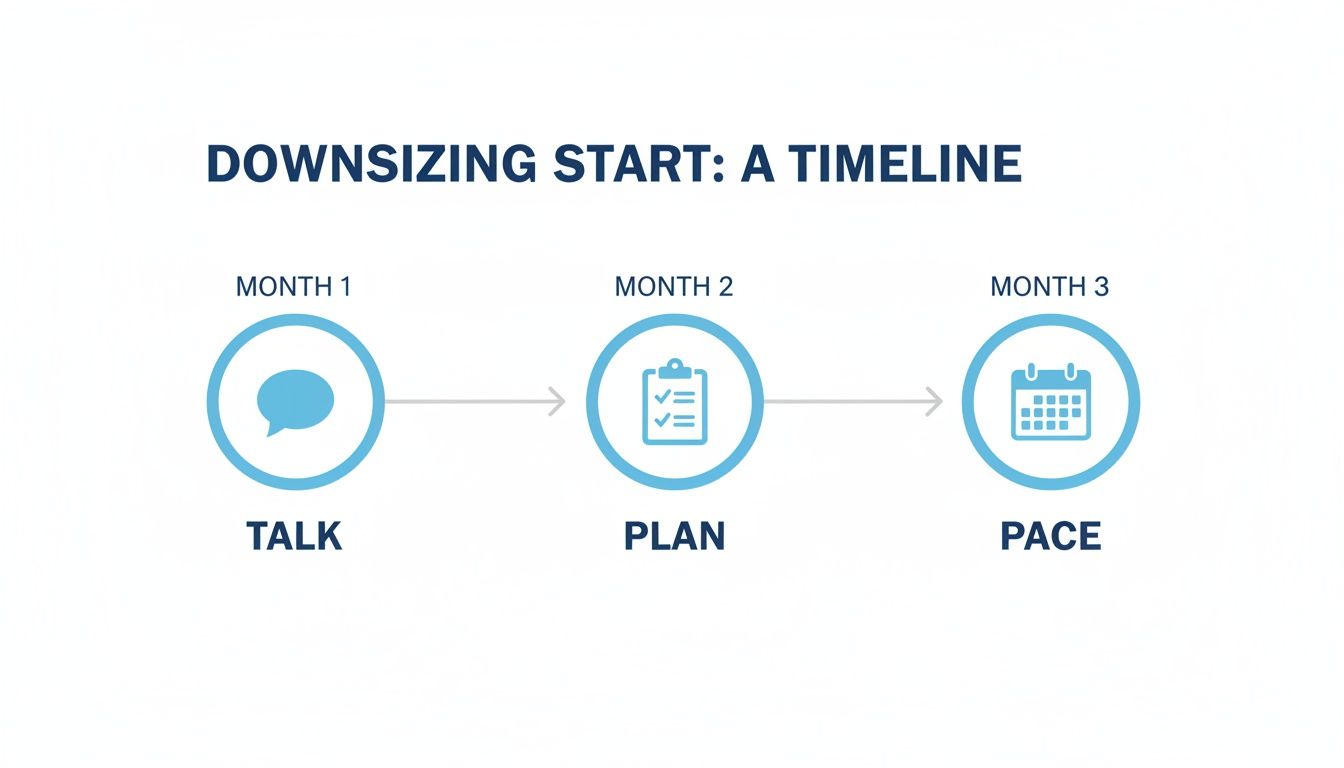
As you can see, the real work starts long before you even think about packing a box. It begins with conversations and smart, strategic planning.
The Long-Range Plan (3 to 6 Months Out)
Think of this as your mission planning phase. You're not packing anything yet. The goal here is to lay all the essential groundwork for a smooth transition down the road. This is where you make the big-picture decisions that will guide every step you take later.
Your main focus should be on research and organization. Get a floor plan of your new place and measure the furniture you absolutely can't live without. Knowing exactly what will fit takes the guesswork out of the equation and stops you from paying to move a beloved armoire that just won't work in the new space.
Here are a few key tasks for this stage:
- Line Up Your Pros: Start looking into moving companies, senior move managers, or real estate agents. Getting quotes and checking references early gives you time and bargaining power.
- Create a Master List: Walk through each room and make a high-level inventory. No need for tiny details yet—just a general sense of what you're working with.
- Legal & Financial Check-in: Now's the time to book appointments with financial advisors or lawyers to make sure all your paperwork is in order for the move.
The Action Phase (1 to 2 Months Out)
Alright, it's time to roll up your sleeves. With your game plan in place, you can finally start the physical sorting and decluttering. The trick is to be methodical. Go one small space at a time—a single closet, one bookshelf—so you don't get discouraged by the mountain of stuff.
My advice? Start with a room that doesn't hold a lot of emotional weight, like the guest bathroom or laundry room. Scoring a quick win builds momentum and makes you feel like you can really do this. This is also when you'll want to lock in your support team, whether that means confirming dates with movers or lining up help from family and friends.
For a more granular look, check out our complete downsizing checklist for seniors. It's great for tracking every little detail.
Set a small, achievable goal for yourself each day. Seriously. It could be, "Today, I will clear out one drawer in the kitchen." Or, "This afternoon, I'm tackling that pile of magazines." These tiny efforts really do add up to huge progress over a month.
The Final Stretch (The Last Month)
This last month is all about logistics. The heavy emotional lifting of sorting through belongings should be mostly behind you. Now, you can shift your focus to coordinating the actual move and ticking off all those administrative boxes.
Your to-do list for these final weeks should look something like this:
- Confirm Your Movers: Give the moving company a call to re-confirm the date, arrival time, and all the key details.
- Schedule Utility Transfers: Arrange for utilities to be shut off at your old home the day after you move out, and turned on at your new place the day before you arrive.
- Pack an "Essentials" Box: This is the box that stays with you, not on the truck. Fill it with medications, important documents, phone chargers, toiletries, a fresh set of clothes—anything you'll need for the first 24 hours.
- Notify Everyone: File a change of address with the post office and let your banks, doctors, insurance providers, and any subscription services know where you're headed.
By breaking a massive project into these distinct phases, you turn it into a series of achievable tasks. This structured approach is what gives you the confidence to navigate the entire downsizing journey.
Your Room by Room Decluttering Strategy
Trying to declutter an entire house in one go is a surefire way to feel overwhelmed. Staring at a lifetime of possessions can be paralyzing, which is why I always recommend a methodical, room-by-room approach. It breaks the massive project into a series of smaller, more manageable wins.

The secret is to start somewhere easy. Pick a space that doesn’t hold a lot of emotional weight—the guest bathroom, the linen closet, maybe the laundry room. Clearing out these areas first gives you a quick, satisfying victory. That little boost of confidence is exactly what you need before tackling the more sentimental spaces.
Master the Four-Box Method
To keep things organized and prevent decision fatigue, I swear by the Four-Box Method. Just grab four large boxes (or simply designate four zones in the room) and give them clear labels: Keep, Donate/Sell, Dispose, and Relocate. This simple system forces you to make a decision about every single item you pick up.
- Keep: These are the non-negotiables—the things you love, use often, and that will physically fit into your new home. Be honest with yourself about your new space.
- Donate/Sell: Items that are in good shape but you no longer need. This is your opportunity to make a little extra money or help out a cause you care about.
- Dispose: This is for anything broken, expired, or truly unusable. It’s okay to admit when something has served its purpose.
- Relocate: A handy spot for things that belong to other people or just need to be moved to a different room.
This method stops you from falling into the common trap of just moving piles around without actually making any progress. For more insights as you plan your attack, check out this a practical guide on how to declutter your home.
Strategies for Sentimental Items
Let's be honest, this is the hardest part. Certain objects aren't just "stuff." They’re tangible links to people we love and memories we cherish. Rushing decisions on these items is a recipe for regret.
When you encounter something deeply meaningful that you just can't take with you, give it a moment of respect.
Allow yourself to tell the story behind the item. Share its history with a family member or friend. Often, acknowledging the memory is what truly matters, making it easier to let the physical object go.
This is where you can get a little creative. You don't always have to keep the thing to keep the memory.
- Create a Digital Scrapbook: Take beautiful photos of cherished pieces before you part with them. You can organize them into a digital album with little notes about why they were so special.
- Design a Memory Box: Choose just a few of the most important small items—a single teacup from Grandma's set, a favorite tie, a special letter—and keep them together in a beautiful box. It captures the essence without all the clutter.
- Repurpose Materials: Fabric from old blankets or clothing can be transformed into a memory quilt. This turns something bulky into a new, functional heirloom.
Tackling Tricky Categories
Some things are just plain difficult to deal with. Decades of paperwork, bulky furniture, and huge collections each require their own game plan. For a complete guide, our room-by-room declutter checklist has specific tips for every corner of the house.
For now, here’s how to get started on the toughest categories:
The Challenge of Paperwork Piles of paper can feel incredibly daunting. Sort all your documents into three simple piles: shred, scan, and save.
- Shred: Get rid of old utility bills, junk mail, and expired warranties without a second thought.
- Scan: Digitize important but non-essential papers like old tax returns (anything past seven years), sentimental cards, and your kids' old artwork.
- Save: Keep the original copies of vital documents. This means birth certificates, Social Security cards, wills, and property deeds. Store them in a secure, waterproof file box.
Navigating Collections and Hobbies Whether it’s model trains or a room full of quilting supplies, these items represent a passion. Instead of an all-or-nothing approach, think like a museum curator. Pick the top 10% of your most prized pieces to keep and display, and find a new home for the rest. This honors the hobby without letting it take over your new, smaller space.
Managing the Financial and Legal Aspects
Let’s be honest: downsizing isn't just about moving boxes. It's a major financial milestone that can reshape your retirement and long-term security. Getting the numbers and legal details right from the start is absolutely crucial.
The financial pressure many seniors feel is very real. With the median retirement savings for Baby Boomers hovering around $202,000, and a staggering 40% of adults aged 55 to 64 having no retirement savings at all, a more affordable living situation isn't just a nice idea—it's a necessity. This reality is a huge driver behind the downsizing trend. You can dig deeper into this shift in senior housing trends from PwC.
Create a Comprehensive Downsizing Budget
Before you start dreaming about the profits from selling your home, you have to get a firm grip on the costs. Moving isn't cheap, and those little "surprise" expenses have a nasty habit of eating into your bottom line.
A detailed budget is your best defense. Think beyond the moving truck and get granular.
- Selling Costs: This is a big one. It includes realtor commissions, closing costs, and any repairs or staging needed to get your home sold quickly and for the best price.
- Moving Expenses: Don't forget the cost of professional movers, mountains of packing supplies, and insurance to protect your belongings on the road.
- New Home Setup: Will you need to pay security deposits? What about utility connection fees? And will you need to buy new furniture that actually fits your new, smaller space?
Once you've tallied up these costs, you can subtract them from your expected sale price to find your real net profit. That's the number that truly matters for your next chapter.
Consult with a Financial Advisor
The money from your home sale isn't just a sudden windfall; it's a vital piece of your retirement puzzle. This is not the time for guesswork. A qualified financial advisor can help you make smart, informed decisions.
They'll walk you through the tax implications of the sale and help you build a strategy to invest the proceeds. Maybe that means beefing up your retirement accounts, wiping out lingering debt, or creating a fund for future healthcare needs.
A good advisor does more than just invest your money. They'll help you rework your entire retirement budget. A smaller home often brings lower property taxes, cheaper insurance, and smaller utility bills, freeing up cash for the things you really want to do, like traveling or enjoying your hobbies.
Review and Update Essential Legal Documents
A major life event like downsizing is the perfect trigger to get your legal house in order. Outdated documents can create a world of confusion and stress for your family later on. Think of this as a crucial act of care for both yourself and your loved ones.
It’s time to pull out your key legal paperwork and review it with an attorney. You need to be sure it all still reflects your current life and wishes.
Key Documents to Review:
- Will or Trust: Does it still accurately state how you want your assets distributed? Have there been any big family changes—like new grandchildren or marriages—that need to be reflected?
- Power of Attorney (POA): Have you named someone you trust to make financial and healthcare decisions for you if you can't? As you navigate this process, understanding tools like a Power of Attorney for Aging Parents in Texas can provide incredible peace of mind.
- Beneficiary Designations: This is a big one people often forget. Check the beneficiaries on your 401(k)s, IRAs, life insurance, and other accounts. These designations usually override whatever is in your will.
Tackling these financial and legal steps gives you a solid foundation for your new life. It’s how you ensure you're not just moving into a smaller home, but into a more secure and worry-free future.
What to Do With Everything You Can't Keep
Alright, you’ve sorted everything into piles. Now comes the big question: what actually happens to all the things in the "Donate/Sell" and "Dispose" stacks? This part of the process is more than just getting rid of stuff. It’s a chance to pocket some extra cash, help out your community, and make sure everything is handled responsibly.
Thinking through this step ensures every single item finds its proper next home, whether that's with a new owner, a local charity, or a recycling center.

The best path forward really depends on the item's value, your moving timeline, and how much hands-on effort you're willing to put in. Let's walk through the most effective ways to handle it all.
Smart Strategies for Selling Your Items
Turning items you no longer need into cash is a fantastic way to help cover moving costs or even fund a new adventure. You've got several ways to go about it, each with its own benefits.
- Estate Sales: This is a solid choice if you have a whole house full of items, from the dining room set to the good china. A professional company comes in and handles all of it—pricing, staging, advertising, and running the sale. They do take a hefty commission (plan on 30-50%), but you don’t have to lift a finger.
- Consignment Shops: Perfect for higher-end clothing, furniture, or unique decor. The shop sells it on your behalf and splits the profit with you. It’s less work than selling it yourself, but you have to wait for your items to find a buyer.
- Online Marketplaces: Platforms like Facebook Marketplace are great for selling larger pieces locally. No shipping required. You get total control over the price and you deal directly with the buyers.
- Online Auctions: If you have valuable collections, antiques, or special items, an online auction can get your things in front of a national audience of serious collectors.
For those who want a more hands-on approach but with expert support, modern solutions are a great fit. If you want to explore all your choices, you can learn more about various estate liquidation options that give you both control and convenience.
The Power of Meaningful Donations
Donating items in good, usable shape is a wonderful way to support causes you believe in while clearing out your space. It turns what you no longer need into someone else's treasure.
To make it as easy as possible, start by looking up local charities. So many of them, like Habitat for Humanity ReStores, offer free home pickup for big things like furniture, which saves you a major headache.
A Few Tips for Donating:
- Check Their Rules First: Before you book a pickup, hop on the charity's website to see what they actually accept. Many can't take mattresses, old tube TVs, or certain large appliances.
- Schedule Pickups Early: Goodwill, The Salvation Army, and other popular organizations can be booked solid for weeks. Get on their calendar as soon as you have a good idea of what’s going.
- Keep Good Records: Always, always get a receipt. For tax purposes, it’s smart to take photos of what you’re donating and make an itemized list with your best estimate of its fair market value.
Donating isn’t just about making room. It's about legacy. When you pass on a beloved armchair or a set of classic books to a family that needs them, you're extending that item's story.
Responsible and Safe Disposal
Finally, you’ll be left with a pile of things that can't be sold or donated. Getting rid of these items responsibly is just as important. You can't just toss everything in a dumpster—it’s often bad for the environment and, for some materials, it's against the law.
The best way to tackle this is to separate items by category.
Disposal Categories and Solutions
| Item Category | How to Dispose | Why It's Important |
|---|---|---|
| E-Waste | Laptops, old TVs, phones. | Find a certified e-waste recycling center. Many local governments or even stores like Best Buy have free drop-off programs. |
| Hazardous Materials | Old paint, cleaning supplies, batteries, pesticides. | These need special handling. Check your city or county’s website for designated hazardous waste collection days. |
| Old Medications | Expired or unused prescriptions. | Never flush them. Your local pharmacy or police station likely has a secure drug take-back box. |
| Bulk Trash | Broken furniture, worn-out rugs, non-recyclables. | Schedule a special pickup with your local waste management service. Just be sure to follow their rules on what they'll take. |
By working through each category—sell, donate, and dispose—you can feel confident that every item is handled the right way. This structured plan turns a huge job into a series of manageable steps, moving you closer to your new, simpler life.
Assembling Your Downsizing Support Team
Tackling a downsize is a massive project, but it’s absolutely not one you have to do alone. In fact, pulling together a reliable support system is one of the smartest first moves you can make. This isn't just about hiring help; it's about blending trusted professionals with your personal network of family and friends.
A strong team turns what feels like a stressful, solitary marathon into a manageable group effort. Having the right people in your corner gives you logistical muscle, emotional support, and expert advice right when you need it most.
Finding Professional Downsizing Help
Sometimes, the best help comes from people who navigate these transitions for a living. They bring a level of experience and an objective eye that can help you sidestep common mistakes, saving you a huge amount of time and energy.
Think about adding these pros to your lineup:
- Senior Move Managers: These are the project managers of the downsizing world. They can do it all, from creating a floor plan for your new space to sorting, packing, and even setting up your new home so it feels right from day one.
- Professional Organizers: If the sheer volume of stuff feels paralyzing, a professional organizer can be a lifesaver. They provide hands-on help to sort through belongings and make those tough "keep or go" decisions far less painful.
- Real Estate Agents (Senior Specialists): Don’t just hire any agent. Look for one with a Seniors Real Estate Specialist (SRES®) designation. They’ve had specific training to handle the financial and emotional complexities that come with selling a family home you've lived in for decades.
The need for this kind of expertise is definitely on the rise. Senior housing demand has shot up, with the annual absorption rate jumping from under 20,000 units a year between 2015 and 2019 to over 35,000 units annually in recent years. This isn’t just a number—it’s a clear signal that more people are moving toward smaller, more manageable homes. This trend has pushed occupancy rates from 85.6% in 2023 to 87.7% in 2024. You can dig into more 2025 senior housing trends to see where the market is headed.
When you're interviewing potential pros, always ask for references from recent senior clients. The right person isn't just skilled—they need to be patient, empathetic, and genuinely understand what a major life transition this is.
Engaging Your Personal Support Network
While professionals are fantastic for logistics, the support from family and friends is the emotional heart of your downsizing team. Their help can make the entire process feel less like a chore and more like a shared family project.
The secret is to ask for help clearly and delegate specific jobs. Most people truly want to lend a hand but have no idea where to start. Instead of a vague "I need help with the move," get specific.
For instance, ask your niece if she could spend a Saturday helping you digitize old family photos. Ask a friend to be in charge of researching local donation centers that offer free pickup. By giving people clear, manageable tasks, you avoid overwhelming any one person and you guarantee that real progress gets made.
A simple group chat or a weekly email can keep everyone in the loop, letting you celebrate small victories and coordinate the next steps together.
Answering Your Downsizing Questions
When you're facing a downsize, it’s completely normal for a flood of questions to come up. In fact, most families we talk to share the same core concerns. Getting some clear, straightforward answers can make the whole process feel less intimidating and give you the confidence to get started.
Let's tackle some of the most common questions head-on.
How Long Does This Whole Thing Really Take?
There’s no magic number here, but I can tell you from experience that a comfortable, well-planned downsize typically takes somewhere between three and six months.
The biggest mistake people make? Rushing. It’s the number one cause of stress and burnout. The best way to avoid that frantic, last-minute panic is to start early and chip away at it. Think small, consistent wins—like clearing out a single junk drawer or one shelf in the linen closet each day. It keeps you moving forward without feeling like the whole project is crushing you.
What’s the Hardest Part of Downsizing for Most People?
Hands down, it’s the emotional side of things. It's almost never about the "stuff" itself. It's about the memories, the history, and the life chapter those items represent. Letting go can feel like letting go of a piece of your past.
My best advice is to give yourself permission to feel it all. Grieve a little, laugh a little, and tell the stories. Take photos of cherished things you can't keep and share why they were so important. When you honor the memory, it becomes so much easier to release the physical object.
How Do I Even Begin to Decide What Stays and What Goes?
Start with pure practicality—it’s the easiest filter. Grab the floor plan for your new home and a measuring tape. Your big, essential furniture either fits, or it doesn't. The numbers don't lie, and this will make some of the biggest decisions for you.
For everything else, shift your thinking to your new lifestyle. A good rule of thumb is the one-year test: if you haven't used it, worn it, or even thought about it in the last year, you probably won't miss it. Focus on keeping what is truly functional, absolutely irreplaceable, or deeply meaningful to you now.
More guides in Downsizing & Relocation
June 17, 2026
Senior Relocation Assistance: Your Complete 2026 Guide
Find practical senior relocation assistance with our step-by-step guide. Learn to assess needs, find funding, and manage downsizing for a smooth transition.
Read guideFebruary 24, 2026
A Guide to Senior Moving Services for a Seamless Transition
Discover how senior moving services can simplify your relocation. This guide covers downsizing, planning, and hiring the right team for a stress-free move.
Read guideFebruary 19, 2026
A Practical Guide to Stress-Free Moves for Seniors
Planning moves for seniors can be overwhelming. Our guide offers practical advice on downsizing, selling items, and settling in for a smooth transition.
Read guideGet the estate sale pricing guide
Enter your email for pricing ranges, planning notes, and a clearer path to launch.