Move for Seniors: A Practical Guide to a Smooth Relocation (move for seniors)
A compassionate, practical guide to move for seniors, covering downsizing, health needs, and emotional support for a smooth, confident transition.

The whole process of a move for seniors doesn't start with a moving truck. It starts with a conversation—a sensitive, respectful one. The key is to frame this discussion around positive changes, like a safer home, more comfort, or just a more manageable day-to-day life. That simple shift can turn a really tough topic into a team effort.
Starting the Conversation and Creating a Plan
Talking about moving needs empathy and good timing. The last thing you want to do is bring it up during a holiday dinner or some other stressful moment.
Find a quiet, comfortable time to chat, and keep the focus on their well-being and future happiness. Using "I" statements can help, like, "I've been thinking about how to make things easier for you, and I want to make sure you're in the best possible place."
Once everyone is open to the idea, it’s time to build a roadmap together. A 3-to-6-month timeline is usually realistic. It breaks the massive job into small, weekly goals so no one feels completely overwhelmed. This isn't about rushing; it's about making steady, thoughtful progress.
Establishing a Move Command Center
To keep track of everything, you absolutely need a central "command center." This could be a simple binder on the kitchen counter or a shared Google Drive folder that everyone can access. This is where you'll keep all the essential info.
- Key Documents: Think copies of important papers, the floor plan of the new place, and contracts from the movers.
- Contact Lists: All the phone numbers you'll need—realtors, movers, utility companies, and family members who are helping out.
- To-Do Lists: A master checklist, maybe broken down by week or by month, so you know what’s next.
Having this one central spot for information keeps everyone on the same page and cuts down on confusion. A great first step is to start documenting belongings, and a home inventory list template can be a lifesaver early on.
A solid plan is the best defense against stress. When you break a huge project like a move into smaller, doable tasks, it transforms from an overwhelming event into a series of manageable steps. It puts everyone back in control.
Building Your Support Team
Nobody should have to tackle a major move alone. Delegating tasks is a must—not just to share the physical work, but for emotional support, too.
Assign jobs based on what people are good at. Maybe one family member is great at researching and can handle finding movers. Another might be a natural organizer and can take charge of sorting and packing one room.
This graphic gives you a great visual of how those first few phases—talking, planning, and delegating—fit together.
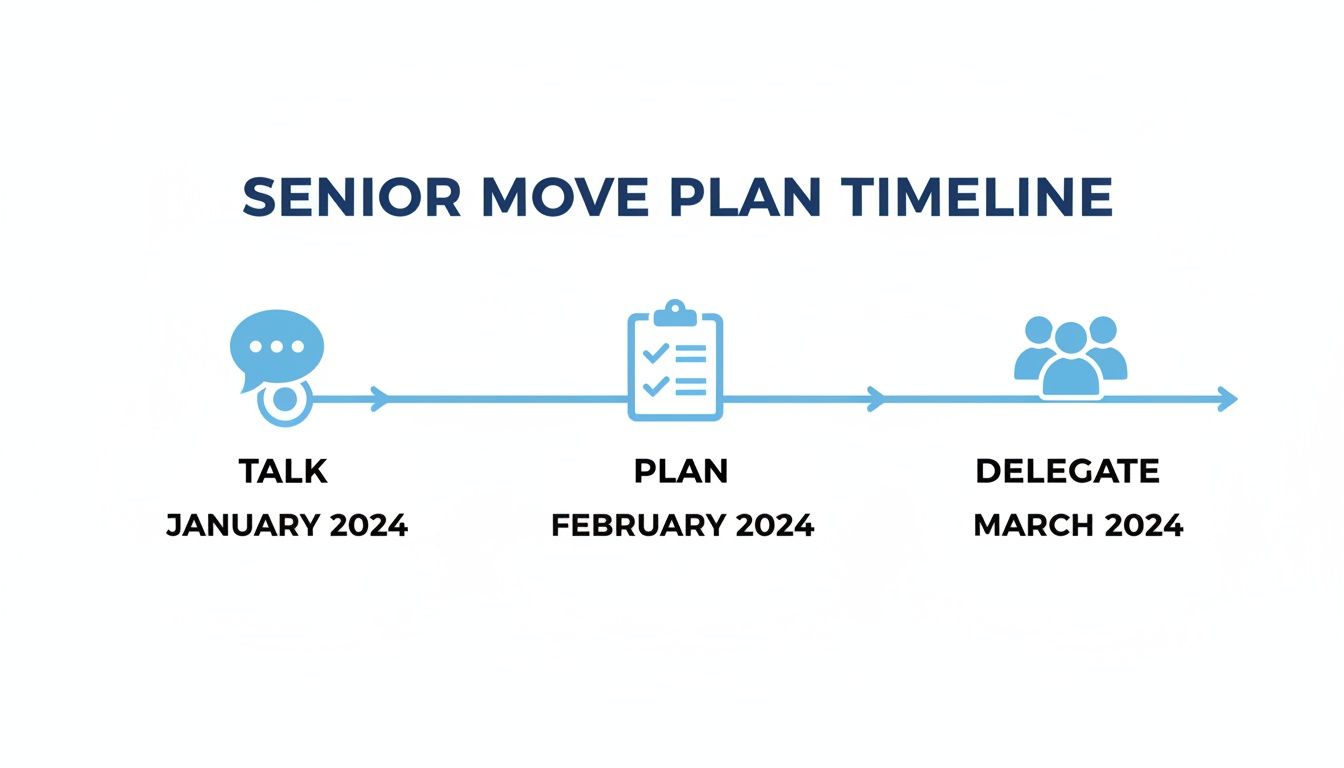
You can see how each step builds on the last, creating a structured approach that feels a lot less chaotic than trying to do everything at once.
To make things even clearer, here’s a quick overview of what a 3-month timeline might look like.
Senior Move Planning Timeline (3-Month Overview)
This table breaks down the entire process into manageable phases, giving you a bird's-eye view of what needs to happen and when.
| Phase | Key Tasks & Focus Areas | Timeline |
|---|---|---|
| Month 1: Foundation & Planning | • Initiate conversations with family. • Set a budget. • Create a move "command center" binder. • Start researching new living options & movers. • Begin initial decluttering (one room at a time). | 3 Months Out |
| Month 2: Sorting & Action | • Finalize new residence. • Book movers & schedule move-out/move-in dates. • Begin serious downsizing & sorting (Keep, Sell, Donate, Discard). • Plan an estate sale or auction for unwanted items. • Notify doctors, banks, & subscriptions of the move. | 2 Months Out |
| Month 3: Packing & Logistics | • Start packing non-essential items. • Label all boxes with contents and destination room. • Arrange for utility transfers. • Pack a "move day" essentials box. • Confirm final details with movers. | 1 Month Out |
Seeing it laid out like this makes the process feel much more achievable. It's all about taking one step at a time.
Thinking Ahead: Health and Accessibility in the New Home
A successful move for a senior isn't just about getting boxes from point A to point B. It's measured by how well the new home supports long-term health, safety, and happiness. This means shifting the focus from moving logistics to a careful evaluation of how a new space will work for both current and future needs.

It’s easy to get caught up in the charm of a new place. But it's crucial to think beyond today’s mobility. What seems perfect now could become a daily challenge in five or ten years. A little foresight goes a long way.
Running an "Accessibility Audit"
Before committing to a new home, it’s smart to walk through it with a critical eye. Create a simple checklist to evaluate each potential residence objectively. Remember, small details can have a huge impact on daily safety and comfort down the road.
- Single-Level Living: Can you get to the primary bedroom, a full bathroom, the kitchen, and the laundry without using stairs? Eliminating daily stair climbs is a game-changer for long-term accessibility.
- Bathroom Safety Features: Look for a walk-in or zero-threshold shower. Are there grab bars already installed? Is the toilet at a comfortable height? These features are proven to reduce the risk of falls.
- Easy Navigation: Measure the doorways. Are they wide enough for a walker or wheelchair? Even a single step up to the front door can eventually become a major hurdle.
- Kitchen Functionality: Are the countertops at a manageable height? Can you easily reach the cabinets without a step stool? An accessible kitchen is key to maintaining independence.
This isn't just about house hunting. It's about investing in a safe and supportive environment for the years ahead. This kind of proactive planning is what defines a successful move for seniors.
Don't Forget Continuity of Care
Beyond the physical layout, you need a solid plan for healthcare. A smooth transition is non-negotiable—it prevents stressful and potentially dangerous interruptions in medical care.
The goal is to have the new healthcare team fully lined up before moving day. Taking this step early provides incredible peace of mind and ensures there are no gaps in care during an already hectic time.
First, start identifying new primary care doctors, any necessary specialists, and the closest hospital. Your current physicians are often a great resource for recommendations in the new area.
Next, get the ball rolling on transferring medical records. You'll need to coordinate with both the old and new providers’ offices. While you're at it, find a convenient new pharmacy and have all prescriptions transferred well in advance of the move.
Finally, think about the social and community connections. Research local senior centers, clubs, and volunteer groups. Having these resources nearby, along with reliable transportation, is absolutely vital for staying active, engaged, and happy long after the last box is unpacked.
Navigating the Emotional Journey of Downsizing
Let's be honest: the toughest part of a senior move rarely involves the moving truck or stacking boxes. It’s the incredibly personal process of sorting through a home filled with a lifetime of memories, where every single object seems to tell a story. This part of the journey requires real patience and empathy.
Letting go of possessions isn't about erasing your past. Think of it more as mindfully choosing which items will truly serve you in your new chapter. It’s less about loss and more about a thoughtful curation of your life's most meaningful moments.
The Room-by-Room Method
Trying to tackle the entire house at once is a surefire way to get overwhelmed. I’ve seen it happen time and time again. Instead, just focus on one room—or even just one corner of a room—at a time. This simple shift breaks an enormous task into small, manageable steps.
Start with a less emotionally charged space, like a guest bathroom or the laundry room, to build some momentum. As you pick up each item, ask yourself a couple of practical questions: “Will this actually fit in my new space?” and “Have I used this in the past year?” This logical filter really helps balance the emotional attachment.
A simple system that works wonders is sorting everything into four distinct categories. Get four boxes or just designate four corners of the room you're working in:
- Keep: These are the essentials, the things you use often, or items with such deep sentimental value you simply can't part with them.
- Sell: Belongings that still have monetary value but no longer fit your lifestyle. Selling these can help offset moving costs.
- Donate: Useful items that can find a good new home with someone who needs them.
- Discard: Anything broken, expired, or just plain unusable.
This framework brings clarity to what can be a very emotional process. For more structured advice, some guides offer excellent downsizing help for seniors and can provide a solid plan of action.
Honoring Memories and Cherished Belongings
So, what do you do with items that won't fit but are far too precious to leave behind? This is where you can get a little creative to preserve the memory without having to keep the physical object.
One great idea is to create a digital photo album of these items. Take clear, high-quality pictures of old furniture, collections, or artwork. You can even add notes about the story behind each piece, creating a beautiful digital keepsake you can look at anytime and easily share with family.
The goal is to preserve the memory, not necessarily the item itself. Shifting your focus from what you’re letting go of to what story you’re saving makes the process of a move for seniors a tribute to the past, not a departure from it.
Another wonderful strategy is to create a dedicated memory box. Find a special container for those smaller, irreplaceable treasures—a child’s first drawing, old love letters, a special piece of jewelry, or a handful of favorite photos. Knowing these things have a safe, designated spot waiting for them in your new home provides immense peace of mind.
By taking the time to honor the emotional side of downsizing, you turn a logistical chore into a meaningful step toward the future.
Turning Unwanted Items into Financial Resources
After you’ve thoughtfully sorted through a lifetime of belongings, what's next? The logical move is to unlock their financial potential. This isn’t just about clearing out space; it’s a smart way to help fund the next chapter, whether that means covering moving costs or adding a cushion to a retirement nest egg.
This financial piece of the puzzle is more important than ever. In 2022, a surprising 235,000 Americans moved specifically for retirement. With 87% of retirees seeing inflation as a major threat, many are downsizing and selling assets to make their savings last longer. This often means selling furniture, collectibles, and heirlooms from the home they’ve lived in for decades.

Taking Control of the Estate Sale Process
Traditionally, families have hired estate sale companies to handle everything. While that sounds convenient, it comes with a hefty price tag—commissions can be as high as 30-50% of the total sales. You often lose control over how your items are priced and presented, too.
But there’s a modern alternative that puts the power—and the profit—back into your hands. A do-it-yourself (DIY) approach gives you total say over the sale, from setting the prices you want to scheduling a simple, one-day pickup event for all the buyers.
By managing the sale yourself, you're not just selling items; you're maximizing the return on a lifetime of investments. This financial boost can be a significant advantage during a major life transition.
Think about a family getting ready for a cross-country move for their mom. Instead of forking over half the proceeds to a third party, they can use an online platform to easily manage their own sale and keep more of the money where it belongs.
How a Modern DIY Auction Works
Platforms like DIYAuctions are built to make this whole process easy, even if you’ve never run a sale before. They give you the framework, the marketing reach, and the payment security, while you stay in the driver's seat. This is a key part of an effective plan for a move for seniors.
Here’s how it works for families:
- Simple Cataloging: Just snap pictures of items with your phone and upload them with a quick description.
- You Set the Terms: You decide on the pricing. You can run it as a true auction or list items at a fixed price.
- Built-in Marketing: The platform promotes your sale to a network of vetted local buyers, bringing customers right to you.
- Secure Transactions: All payments are handled securely online. No more dealing with cash or worrying about bounced checks.
By using this kind of model, families can keep up to 90% of the profits. That difference can easily mean thousands of extra dollars to help make a senior's new home more comfortable and secure. For a more detailed walkthrough, our guide offers valuable senior downsizing help and practical tips.
As they start downsizing, many seniors find themselves wondering how much your antique is worth. A DIY approach gives you the time to do a little research and set prices you feel are fair, ensuring you get the true value for cherished heirlooms. It’s all about making informed decisions that benefit you the most.
Coordinating a Smooth Move Day and Settling In
After all the planning and packing, move day is the final hurdle. This is where a little preparation goes a long way, turning a potentially chaotic day into the first positive step of a new chapter. The goal isn't just to move boxes; it's to move a life with care and minimal stress.
A simple color-coded labeling system is an absolute lifesaver. Assign a color to each room in the new home—say, yellow for the kitchen, blue for the primary bedroom. Then, stick a matching colored dot on every single box destined for that room. It’s a simple visual cue that helps movers work faster and more accurately, preventing that dreaded mountain of boxes from piling up in the living room.
The All-Important 'Open First' Kit
I can't stress this enough: pack an "Open First" kit. This is a suitcase or a clearly marked box that travels with you, not in the moving truck. Think of it as your 24-hour survival kit, containing everything you'll need right away.
Here’s what you should have in there:
- Essential Medications: At least a week's supply, plus dosage instructions and the pharmacy’s phone number.
- Important Documents: IDs, medical info, contact numbers for movers and real estate agents, and key contracts.
- Basic Comforts: A change of clothes, toiletries, toilet paper, soap, and a few familiar snacks and drinks.
- Electronics: Phone chargers are non-negotiable. Add chargers for any medical devices, tablets, or e-readers, too.
Having this kit means you won't be tearing through boxes looking for a toothbrush or a vital prescription after an exhausting day. It provides an immediate sense of control and comfort.
Choosing the Right Help
When it comes to the heavy lifting, consider hiring professionals who specialize in senior moves. These folks aren't your standard movers. They’re trained to handle the unique emotional and physical aspects of a move for seniors. Many offer extra services like unpacking, setting up the bed, and arranging furniture, which can be a huge relief.
As you get the logistics sorted, it's interesting to see where people are headed. For three years running, South Carolina has been the top inbound state, with places like Myrtle Beach seeing a huge influx of Americans over 65. In fact, a whopping two-thirds of all moves in the US are now to the Sun Belt, as people leave states like California and New York for a more affordable lifestyle. You can see more of these migration trends over at movebuddha.com.
A seamless move day is the bridge between the old home and the new. Taking the time to prepare an essentials kit and hire compassionate movers transforms a stressful event into a successful one.
Your First 30 Days: Settling In
The first month is all about turning that new house or apartment into a home. Unpacking is one thing, but establishing a new routine is what really makes you feel settled. A 30-day checklist can provide some much-needed structure.
- Week 1: The Essentials. Focus on getting the kitchen, bedroom, and bathroom functional. This is also the time to update your mailing address with the post office, banks, and your doctors.
- Week 2: Getting Connected. Arrange for utilities, internet, and cable to be turned on. Find the local pharmacy and a grocery store you like. Make a point to introduce yourself to at least one neighbor.
- Week 3: Exploring Your New Community. Check out the local senior center or library. Find a new coffee shop, park, or walking trail to enjoy.
- Week 4: Establishing a Routine. Start building a new daily rhythm. Once you're feeling a bit more settled, invite a friend or family member over to see your new place and celebrate this milestone.
Common Questions About Senior Relocation
Even the most detailed plan for a senior move is bound to bring up questions. That’s completely normal. Tackling these concerns head-on is the best way to bring clarity and build confidence for everyone involved in this big life change. Let's walk through some of the most common issues families run into.

This kind of move is becoming more and more common. The global senior living market was valued at a massive USD 190 billion back in 2020 and is on track to more than double by 2030. With the senior population in the US expected to jump from 83.6 million in 2024 to over 110 million by 2050, it’s clear that more families will be navigating these relocations. They're all looking for the same thing: affordable and accessible housing. If you're interested in the "silver generation" trend, you can find more information about this shifting landscape.
When Is the Best Time to Start Planning a Move?
The sweet spot for starting is three to six months before you hope to move. This timeline is a game-changer. It gives you enough breathing room to make thoughtful decisions without the crushing pressure of a last-minute deadline. You'll have plenty of time for downsizing, figuring out what to do with extra belongings, researching new communities, and booking the right movers.
Starting early transforms a huge, overwhelming project into a series of smaller, more manageable steps. It also creates a natural buffer for the inevitable hiccups, like a home sale taking longer than expected or needing a bit more time to go through sentimental keepsakes.
How Do We Handle Family Disagreements?
Let's be honest—disagreements are practically a given when family members are stressed and navigating an emotional situation. The trick is to establish open, respectful communication right from the start. Set up regular family meetings, whether it's around the kitchen table or on a group video call, so everyone has a chance to be heard.
Appoint a single, neutral family member to be the main point of contact—the "project manager," so to speak. This person can keep information flowing, delegate tasks, and help mediate discussions. It prevents miscommunication and keeps the senior’s wishes front and center.
At the end of the day, it's absolutely crucial that the senior's own needs and preferences guide every final decision.
What Is the Best Way to Sell a Long-Time Family Home?
Selling a house that holds decades of memories isn't just a transaction; it's an emotional process. The first step is to decide if you need a quick sale or if you can afford to wait for the best possible offer. That choice will shape your entire strategy. I always recommend interviewing at least two or three real estate agents, ideally those who have experience with senior transitions. You’re looking for someone who is not only knowledgeable but also empathetic to the situation.
Before the "For Sale" sign goes up, focus on a few key tasks:
- Decluttering: This is non-negotiable. Clearing out personal items and extra furniture helps potential buyers see themselves living in the space.
- Minor Repairs: Take care of the little things. Fix that leaky faucet, patch small holes in the wall, and consider a fresh coat of neutral paint. It makes a world of difference.
- Curb Appeal: Never underestimate a first impression. A tidy lawn and a clean, welcoming entryway can work wonders.
These small efforts can have a huge impact on both the sale price and how quickly the home sells.
More guides in Downsizing & Relocation
June 17, 2026
Senior Relocation Assistance: Your Complete 2026 Guide
Find practical senior relocation assistance with our step-by-step guide. Learn to assess needs, find funding, and manage downsizing for a smooth transition.
Read guideFebruary 24, 2026
A Guide to Senior Moving Services for a Seamless Transition
Discover how senior moving services can simplify your relocation. This guide covers downsizing, planning, and hiring the right team for a stress-free move.
Read guideFebruary 19, 2026
A Practical Guide to Stress-Free Moves for Seniors
Planning moves for seniors can be overwhelming. Our guide offers practical advice on downsizing, selling items, and settling in for a smooth transition.
Read guideGet the estate sale pricing guide
Enter your email for pricing ranges, planning notes, and a clearer path to launch.