A Guide to Profitable and Stress-Free Move Out Sales
Turn your unwanted items into cash. Our guide to move out sales covers pricing, marketing, and hosting a sale that maximizes profit and minimizes stress.

A move out sale isn't just a fancy term for a garage sale. It's a carefully planned event to sell a large chunk of your household items before you relocate, turning stuff you can't take with you into cash. Done right, it can seriously offset moving expenses and drastically cut down on what you have to pack, haul, and unpack.
It’s all about simplifying your move while maximizing your return.
Why a Move Out Sale Is Your Smartest Pre-Move Strategy
Moving is one of life’s most expensive and chaotic experiences. But a well-run sale can flip that script, turning a costly headache into a profitable, organized project. The old way of doing this meant sitting in your driveway for a whole weekend haggling over a few bucks. That’s not what we’re talking about here.
Today’s approach is about efficiency, control, and keeping more of your own money.
The Modern Way to Manage a Moving Sale
You could hire a traditional estate sale company, but they often take a huge slice of the pie—sometimes as much as 40% in commissions. That’s a massive cut of your profits. On the flip side, a standard garage sale is great for small trinkets but rarely attracts serious buyers willing to pay real money for your furniture or electronics.
This is where an online-first strategy changes everything. A platform like DIYAuctions gives you the professional tools to run your own sale, connecting you with a network of motivated local buyers. You get complete control over the pricing, the timeline, and most importantly, you keep the lion's share of the money.
Comparing Your Move Out Sale Options
Here’s a quick breakdown of your choices for a move out sale, showing the pros and cons of each method for sellers.
| Feature | Traditional Estate Sale Company | DIY Garage Sale | DIYAuctions Platform |
|---|---|---|---|
| Control Over Pricing | Limited; company often sets prices to move inventory quickly. | Full control, but pricing is often guesswork. | Full control with data-driven insights. |
| Profit Share | You keep 50-70% after high commissions. | You keep 100%, but total earnings are typically low. | You keep 90%, maximizing your net profit. |
| Buyer Reach | Reaches their existing network of followers. | Limited to local foot traffic and signs. | Broad local reach through targeted digital marketing. |
| Effort Required | Low; they handle most of the work. | Very high; you manage everything from setup to cleanup. | Medium; you photograph and catalog, we market and manage payments. |
| Best For | Hands-off liquidation where profit is not the main priority. | Selling low-value items and decluttering quickly. | Maximizing profit and maintaining control over the entire process. |
Choosing the right path depends on your goals, but for most people looking to make real money from their move, the modern approach offers the best balance of effort and reward.
Turning Clutter into Significant Cash
It's a staggering number: in 2023, nearly 41 million Americans moved and spent a whopping $19 billion on moving services alone. This highlights the universal problem every mover faces: what do you do with all the stuff you can’t or don’t want to pack?
A successful move out sale is the answer. It converts that unwanted furniture, old electronics, and extra décor directly into funds you can use for movers, packing supplies, or even a new couch for your next home.
A well-organized move out sale isn't just about getting rid of stuff. It's a financial strategy that puts you in the driver's seat, allowing you to liquidate assets on your own terms and timeline.
The benefits are pretty clear:
- Maximize Profit: You dodge the hefty commission fees, which means more money stays in your pocket.
- Reduce Stress: Clearing out your home before you pack makes the entire moving process infinitely more manageable. Our guide on https://www.diyauctions.com/learn/decluttering-before-moving has some great strategies for this.
- Gain Control: You’re in charge. You decide what sells, when it sells, and for how much.
To make sure your sale fits seamlessly into your moving plan, it helps to look at the bigger picture. Reviewing a comprehensive UK moving checklist can give you a solid overview of all the steps involved. A little planning up front is what turns a stressful chore into a rewarding financial win.
Building Your Foundation for a Successful Sale
Let’s be honest: a profitable move-out sale is won or lost long before the first bid is ever placed. The prep work you do upfront—the sorting, the cleaning, the organizing—is what separates a chaotic, stressful mess from a smooth, money-making event.
This isn't just about tidying up. It’s a strategic process that turns a house full of stuff into a curated collection of assets ready to sell. It can feel like a mountain of a task, but if you break it down, you'll get through it. The goal is to move methodically from clutter to clarity.
Selling methods have changed dramatically over the years, shifting from high-effort, low-return options to smarter digital solutions that put more money in your pocket with less hassle.
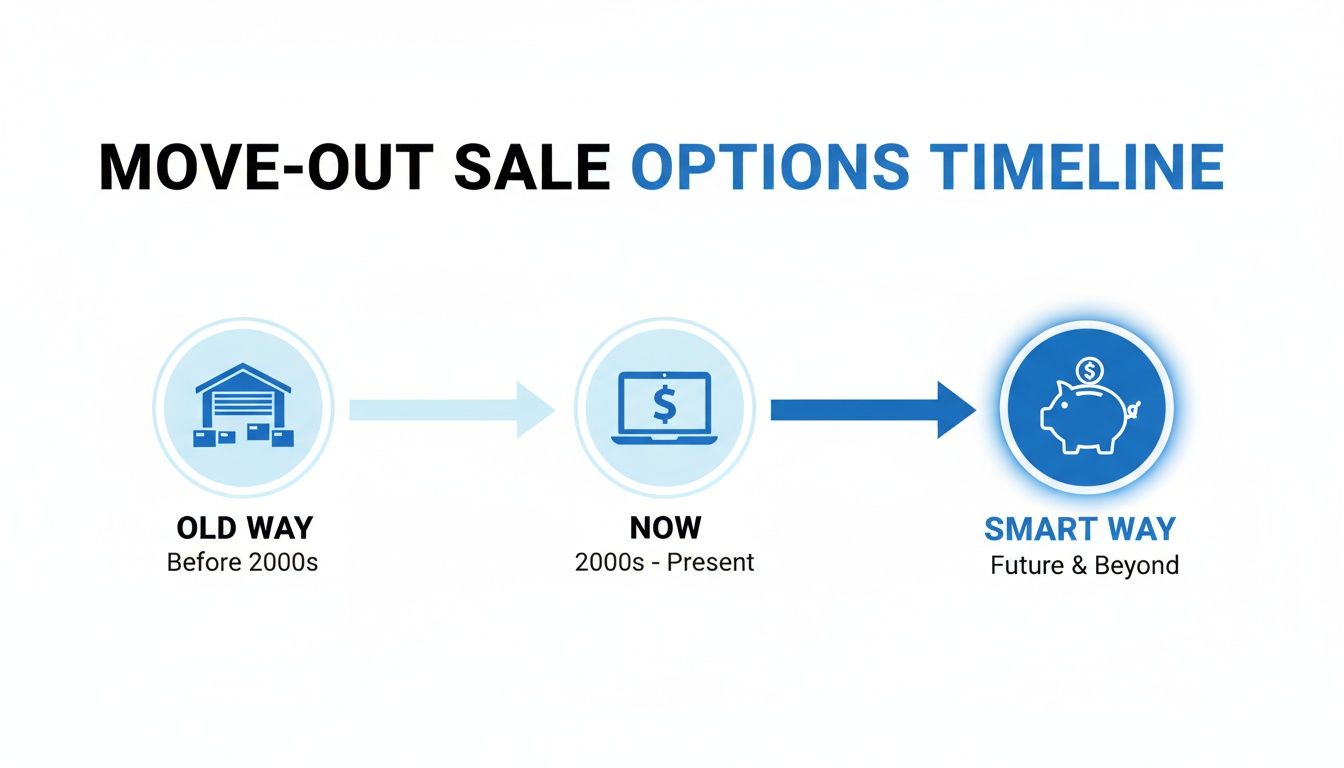
As you can see, the trend is moving toward platforms that deliver better financial results and efficiency. That’s exactly what a well-planned, modern sale is all about.
The Art of Sorting and Decluttering
The best way to start is one room at a time. It keeps the overwhelm at bay. As you go, create four distinct piles (or use colored stickers): Sell, Keep, Donate, and Discard. This simple system is your best friend because it forces a decision on every single item. No more "I'll deal with this later" piles.
You have to be a little ruthless here. For those sentimental things you just can't take, snap a high-quality photo as a keepsake. It’s about detaching emotionally and thinking like a business owner for a few weeks.
Struggling to decide? Ask yourself these questions about each item:
- Have I used this in the last year? If the answer is no, it’s a prime candidate to go.
- Does it fit my new life? That giant sectional was great for the family room, but it’s not going to work in your new condo.
- Is it in good, sellable shape? A buyer needs to see value in it. Be honest with yourself.
- Is it worth the cost and effort to move? Sometimes, paying movers to haul a heavy, low-value piece just doesn't make financial sense.
This isn't just busywork. A recent survey found that 27% of people moved for a new job, often on a tight schedule. For them, decluttering wasn't a choice—it was a necessity. Getting the sorting right from the start saves you time, money, and a whole lot of stress later.
Prepping Items for Maximum Appeal
Okay, you've got your 'sell' pile. Now it's time to make every item look its best. A little elbow grease at this stage can have a huge impact on the final sale price. People are always more willing to bid on something that looks clean, cared for, and ready to use.
Put yourself in the buyer's shoes. A dusty bookshelf feels neglected. But after a quick wipe-down? It looks like a well-maintained piece of furniture. That wobbly chair leg that takes you five minutes to tighten could be the difference between a bidder seeing a "project" and seeing a "steal."
Remember, presentation signals value. The effort you put into cleaning and minor repairs translates directly into higher bids and a faster sale. Don't skip this step.
Here are a few quick and effective prep tips:
- Clean Everything: Wipe down all surfaces, vacuum upholstery, and give any wood or metal a quick polish. If you're selling clothes, make sure they're washed and folded.
- Test Electronics: Plug things in to make sure they work. Keep some batteries handy so buyers can test items during pickup.
- Make Minor Repairs: Tighten loose screws, use a furniture marker on small scratches, or sew on a missing button. These tiny fixes make a big impression.
- Gather All the Parts: Find the remote controls, power cords, and accessories that go with your electronics. A complete set is always worth more than a collection of parts.
By tackling these foundational steps, you're doing more than just getting ready for a sale. You’re crafting a better shopping experience for your buyers, which builds trust and encourages them to bid with confidence.
How to Price and Catalog Your Items Like a Pro
Pricing your items for a move-out sale is more art than science, but getting it wrong can be costly. Price too high, and you're left with a house full of stuff on moving day. Go too low, and you're leaving cash on the table—money that could be funding your move.
The secret is finding that sweet spot. It all starts with a bit of detective work to find out what your things are actually worth in today's market. Forget what you paid for them or what they mean to you. Sentimental value, unfortunately, doesn't translate to market value.

Uncovering the Market Value of Your Belongings
The best place to begin is by researching "comps"—that is, comparable items that have recently sold. The key word here is sold. Looking at active listings only tells you what people are asking, not what buyers are actually willing to pay.
Here are the tools I use every time:
- eBay's "Sold Items" Filter: This is your best friend. Search for an item similar to yours, then check the "Sold Items" box in the filter menu. It gives you hard data on what everything from vintage Pyrex to used power tools has recently fetched.
- Facebook Marketplace: A great way to gauge your local market. Search for similar items and see how long the listings have been up. If that couch has been sitting for three weeks at $500, you know that price is too ambitious.
- LiveAuctioneers & Other Auction Sites: For anything that might be an antique, a piece of art, or a serious collectible, check the archives here. It’ll give you a sense of what the pros think it’s worth.
If you really want to get this right, this estate sale pricing guide is a fantastic resource for understanding the nuances of valuing secondhand goods.
The Three Pillars of Smart Pricing
Once you’ve got a ballpark market value, you need to fine-tune your price based on three critical factors: condition, brand, and demand. This is how you go from a vague estimate to a specific number you can stand behind.
- Condition is King: Be brutally honest with yourself. Is that armchair truly "gently used," or does it have faded fabric and a wobbly leg? A simple grading system works wonders: New/Like-New, Excellent, Good, and Fair. As a rule of thumb, each step down the ladder usually knocks 20-30% off the price.
- Brand Recognition Sells: A well-known brand like DeWalt, Crate & Barrel, or KitchenAid will always fetch a higher price than its generic counterpart. If you’ve got the good stuff, make sure you shout it from the rooftops in your listings.
- Demand Drives Urgency: Timing is everything. Patio furniture will fly out the door in April, but it'll sit around in October. Desks and office chairs? They're hot commodities around back-to-school season. Aligning your sale with seasonal demand can make a huge difference in your final numbers.
Crafting a Catalog That Does the Selling for You
Think of your online catalog as your digital storefront. It’s working for you 24/7. High-quality photos and compelling descriptions aren't just nice to have; they build trust and create desire before the first bid is ever placed.
A great listing acts as your best salesperson. It can convince a buyer to pay a premium and show up on pickup day genuinely excited about what they bought.
You don’t need a professional camera; your smartphone is more than enough. Just follow these simple rules:
- Use natural light. Always. It shows true colors and avoids harsh shadows.
- Clear the clutter. Make sure the background is clean so the item is the hero of the shot.
- Take multiple angles. Get a full shot, side views, and close-ups of any interesting details or noticeable flaws. Honesty is the best policy.
Next up, your descriptions. Write titles that are packed with keywords. Instead of "Side Table," go with "Mid-Century Modern Walnut Side Table by Lane Acclaim." See the difference? One is generic, the other is searchable and tells a story. Your description should fill in the rest: list the dimensions, note the condition (and be specific about any wear), and mention the brand. This level of detail cuts down on questions and prevents any drama on pickup day.
For a deeper dive into this crucial step, check out our guide on how to price your estate sale items effectively. Nailing the pricing and cataloging is what separates a decent sale from a truly profitable one.
Getting the Word Out: How to Market Your Sale and Attract Eager Buyers
Even the most amazing collection of treasures won't sell itself. To get the best prices, you need to draw in a crowd of motivated buyers, and that means doing a little smart marketing. While a great platform like DIYAuctions brings its own built-in audience, a few extra promotional moves can make a huge difference in your visibility and final bids.
Think of your marketing as building buzz. The goal is to create a sense of excitement and urgency around your move-out sale so that when the bidding opens, people are already lined up and ready to go.
Your Digital Town Square: Local Social Media
Your most powerful (and free) marketing tools are local social media groups. Think Facebook Marketplace and community-specific groups—that’s where a massive number of secondhand shoppers are already hanging out. It’s the modern town square, and you need to be there.
Just dropping a link isn't enough. You have to stop the scroll. To do that, your posts need two things: fantastic photos and compelling descriptions.
- Lead with Your Best Stuff: Your first photo should be a "hero shot" of your most desirable item. Got a beautiful mid-century dresser or a high-end appliance? Put that front and center.
- Create a Photo Collage: Use a simple app to stitch 4-6 of your best photos into a single, eye-catching image. This shows variety at a glance and gives people more reasons to click through.
- Write a Headline That Grabs Attention: Instead of a generic "Moving Sale," try something specific like, "Entire Household in Northgate Moving Sale – Everything Must Go!" or "Vintage Furniture & Tools - Final Move Out Sale This Weekend."
Timing is everything. Try posting on weekday evenings (around 7-9 PM) or on weekend mornings. That’s when people are most likely to be scrolling, and a well-timed post can make all the difference.
Crafting the Perfect Social Media Post
You don't need to be a marketing genius to create a great social media announcement. The idea is to give people all the essential info clearly while drumming up a little excitement.
Here’s a template that we’ve seen work wonders on platforms like Facebook.
Example Social Media Post Template
Headline: Huge Move Out Sale in [Your Neighborhood/Town]! Everything Must Go!
Body: We're moving and selling everything from our [e.g., 'smoke-free home']. This is your chance to get high-quality furniture, tools, and home goods at fantastic prices.
Our online auction features:
- [Highlight Item 1 - e.g., 'Solid Oak Dining Table with 6 Chairs']
- [Highlight Item 2 - e.g., 'Like-New LG Washer and Dryer Set']
- [Highlight Item 3 - e.g., 'Collection of Power Tools - DeWalt, Ryobi']
- And so much more! Home decor, kitchenware, electronics, and outdoor gear.
Photos: [Attach your collage and best hero shots here]
How to Bid: All items are up for auction online right now! The sale ends on [Date] at [Time].
Pickup Details: Easy, one-day pickup on [Date] in [Your Neighborhood].
Link: [Link to Your DIYAuctions Sale Page]
Tags: #[YourTown]GarageSale #[YourCity]Marketplace #MoveOutSale #EstateSale #[YourNeighborhood]
This template is designed to be scannable, informative, and drive people right to your auction page.
Reaching Niche Buyers for Your Special Items
Got something a little out of the ordinary? A collection of vintage comic books, antique cameras, or high-end cycling gear? For these kinds of items, you need to go beyond the general marketplaces and find the real enthusiasts.
Seek out specific online forums, dedicated Reddit communities (subreddits), or specialized Facebook groups where collectors hang out. Posting in these communities puts you directly in front of an audience that already knows and appreciates what you're selling. They’re often the ones willing to pay a premium for items they can’t find anywhere else.
This targeted approach makes sense when you look at who's moving these days. The housing market is more diverse than ever; single women now make up 24% of buyers, and 17% of households are multigenerational. These groups, along with city-bound professionals, are all looking for efficient ways to furnish a new home or clear out an old one. You can discover more insights about these commercial moving trends and what the data says. Tapping into these different buyer pools is a huge part of pulling off a successful move out sale.
Running a Smooth and Secure Pickup Day
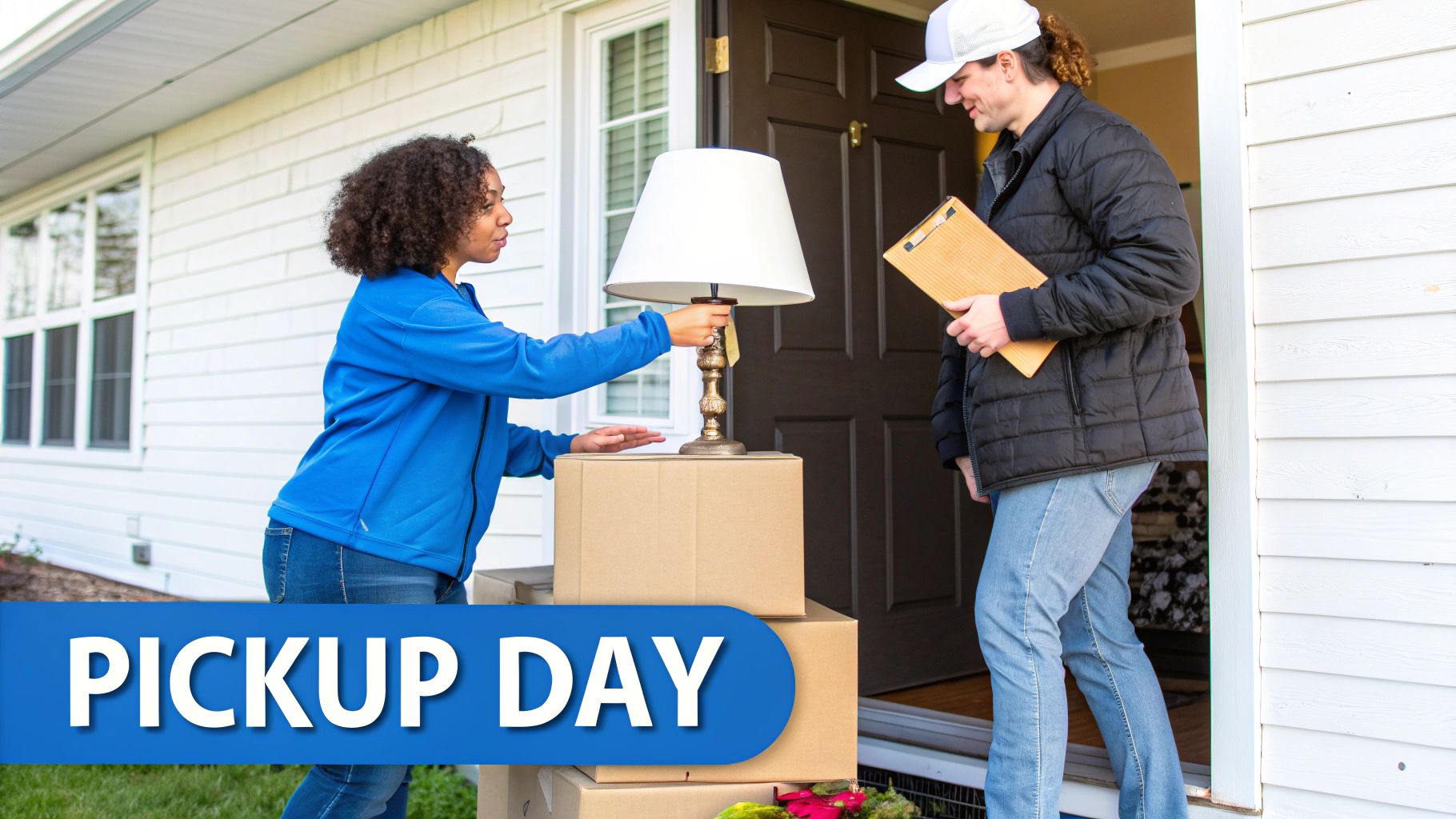
This is it—the grand finale of your move out sale. All the hard work sorting, cataloging, and marketing comes down to this one crucial day. A little organization upfront is all it takes to turn potential chaos into a smooth, secure, and genuinely satisfying experience for you and your buyers.
The goal is to create a process that feels effortless and professional, making sure everyone leaves happy.
Preparing for a Flawless Pickup Process
A smooth pickup day is really won the day before. Don't leave this for the last minute.
Start by grouping all sold items by buyer or invoice number. Find an open space like your garage or a cleared-out living room to stage everything.
Clearly label each lot with the buyer's name and invoice number using large, easy-to-read signs. This one simple step prevents mix-ups and dramatically speeds up the handover process. Think of it as setting up a mini "fulfillment center" right in your own home.
Next, think about the flow of traffic. Map out a clear path for buyers to enter, grab their items, and get out without causing a bottleneck. If you sold large furniture, make sure doorways are clear and have a dolly or hand truck ready. A little forethought here prevents scraped walls and strained backs.
Your Day-Of Pickup Checklist
When the day arrives, having a few key things on hand will be a lifesaver. Keep these essentials in one spot so you're not scrambling.
- Charged Phone & Power Bank: Your phone is your command center for checking sales records, texting buyers, and verifying payments.
- Sales Records: Have a printed or digital list of every sale, including buyer names, what they won, and their payment status.
- Basic Toolkit: You'd be surprised how often a screwdriver, wrench, or box cutter comes in handy for quick disassembly of things like bed frames or tables.
- Extra Packing Supplies: A few extra boxes, packing tape, or bubble wrap is a thoughtful touch that buyers really appreciate.
Managing the pickup day effectively is the final, critical step. It’s where your professionalism builds trust and ensures a positive end to the transaction, leaving buyers feeling great about their purchase.
Managing a Staggered and Secure Pickup
The real secret to a stress-free pickup day is avoiding a crowd. A free-for-all where everyone shows up at once is a recipe for disaster.
Instead, schedule staggered pickup times. You can assign 15- to 30-minute windows based on the size of their purchase—give buyers with big items more time.
This approach pays off in a few ways:
- It reduces congestion. No parking nightmares or crowded hallways.
- It enhances security. You can focus on one buyer at a time, ensuring the right stuff goes to the right person.
- It improves the experience. Everything feels calmer and more personal.
As each buyer arrives, greet them, confirm their name, and pull up their invoice. Always verify payment has cleared before an item leaves your property. Most auction platforms handle this for you, but if you're using third-party apps, double-check that the transaction is complete. You can learn more about how different platforms handle this by reading up on payment processing for small business transactions.
Every now and then, you'll get a no-show. Be firm but polite. Send one final message reminding them of the pickup deadline. If you don't hear back, you can move on to your backup plan, whether that’s offering the item to the next highest bidder or just setting it aside for donation.
Once that last car pulls away, you’re left with a clean slate and the profits from a successful sale.
Your Top Move Out Sale Questions, Answered
Even with a solid game plan, you're bound to run into a few head-scratchers during your sale. It happens to everyone. This is where we’ll tackle the most common questions we hear from sellers, giving you quick, practical answers to help you handle those tricky spots with confidence.
What Actually Sells Best in a Move Out Sale?
Let's cut to the chase: some categories just do better than others. You want to focus your energy where you'll get the biggest return, and that means knowing what buyers are actively hunting for.
Time and again, we see these items get the most attention and the best bids:
- Real Furniture: We're talking solid wood pieces—dressers, dining sets, bookshelves. They're always in demand. Quality upholstered furniture from known brands is another big winner.
- Working Appliances: A reliable refrigerator, washer, or dryer is a major score for someone setting up a new home. These are big-ticket items people love to find secondhand.
- Tools & Outdoor Gear: Power tools, lawnmowers, and decent gardening equipment hold their value incredibly well. You'll find a dedicated crowd of buyers for this stuff.
- Home Decor That's "In": Think large mirrors, neutral rugs that fit any style, and unique lamps. These trendy pieces can often sell for surprisingly high prices.
The real secret? Sell things that are clean and ready to use. A buyer is always willing to bid higher for an item they can take home and use right away, no repairs or deep cleaning required.
Seriously, How Far in Advance Should I Start Planning?
If there's one mistake I see people make over and over, it's not giving themselves enough time. Rushing leads to bad photos, sloppy pricing, and a mountain of stress you just don't need. A generous runway is your best friend.
For a sale of any decent size, you need to start the planning process 4 to 6 weeks before you absolutely need everything gone. This isn't just a random number; it breaks the whole project down into bite-sized, manageable chunks.
Here's a realistic look at that timeline:
- Weeks 1-2: The Great Sort. This is your time to go room by room and decide what to keep, sell, donate, or toss. Be ruthless.
- Week 3: Prep & Photoshoot. Now you clean, make minor repairs, and take all your pictures. Good photos are non-negotiable.
- Weeks 4-5: Go-Live Window. Build out your online catalog on DIYAuctions and start promoting the sale.
- Week 6: The Grand Finale. This is your pickup day and when you handle all the final logistics.
Following a schedule like this keeps the last-minute panic at bay and gives your marketing efforts enough time to actually work.
Should I Sell Things One-by-One or in Bundles?
This is a fantastic strategic question, and the answer is... both! The smartest sellers use a mix-and-match approach to get the most money while clearing out the most stuff. You wouldn't sell a diamond ring the same way you’d sell a box of half-used craft supplies, right?
Your high-value, unique, or brand-name items should always be sold individually. Let each one shine and find its own true market value. We're talking about your Crate & Barrel sofa, your KitchenAid mixer, or that cool mid-century armchair. Listing them solo ensures the right buyers find them and can bid competitively.
Bundling, on the other hand, is your secret weapon for all the smaller, lower-value things that might get lost in the shuffle.
The trick is to create themed lots that tell a story:
- "Baker's Dream Lot": Group those mixing bowls, cookie sheets, and measuring cups.
- "Instant Home Office Kit": Bundle a desk lamp, a paper tray, and some office supplies.
- "Weekend Project Power Pack": Combine leftover paint cans, brushes, and a drop cloth.
This strategy makes those small odds and ends way more appealing and helps you clear out clutter far more effectively.
How Can I Handle Payments Safely on Pickup Day?
Pickup day should be about smooth handoffs, not fumbling with cash or worrying about scams. The goal is security and convenience, and thankfully, modern sales have made this part incredibly simple.
Your absolute best bet is to use a platform like DIYAuctions that processes all payments for you ahead of time. This is the gold standard for safety. Payment is confirmed before the buyer even shows up, which means no bounced checks, no counterfeit bills, and zero awkward haggling on your doorstep.
If you absolutely must take payment in person, stick to digital apps like Venmo or PayPal. If cash is the only way, just follow a few common-sense rules:
- Payment Before a-Go-Go: Always, always confirm you have the money in your account before the item leaves your property.
- Come Prepared: If accepting cash, have a small amount of small bills on hand to make change easily.
- Trust Your Gut: If a situation feels sketchy, it probably is. It is perfectly okay to politely cancel a transaction. Your safety is worth more than any sale.
More guides in Estate Sale Basics
July 28, 2026
Revenue Reporting for Estate Sales and Auctions
Learn revenue reporting essentials for estate sales and auctions. Discover key metrics, templates, and best practices to simplify tracking and compliance.
Read guideJuly 26, 2026
Stamp Collection Valuation: A Practical Step-by-Step Guide
Stamp collection valuation made simple. Learn how to identify, grade, price, and sell your stamps with confidence for estate sales or consignment.
Read guideJuly 23, 2026
Estate Sales Brick NJ: Your 2026 Guide to Success
Planning your estate sales brick nj? Our guide covers permits, pricing, marketing, & running a safe sale with DIYAuctions.
Read guideGet the estate sale pricing guide
Enter your email for pricing ranges, planning notes, and a clearer path to launch.