A Complete Guide to Online Auctions in Cincinnati Ohio
Your expert guide to finding, bidding on, and running profitable online auctions in Cincinnati Ohio. Learn local logistics, pricing tips, and how to sell.
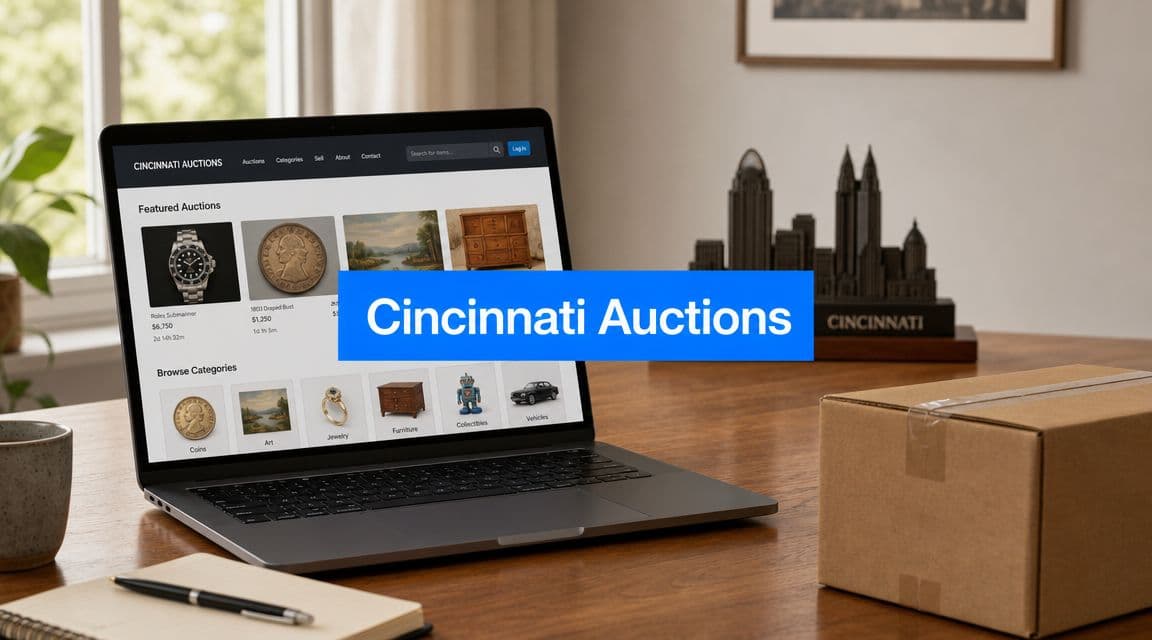
If you're staring at a house full of furniture, tools, collectibles, holiday decor, and the pile of “someone will want this” items that accumulates during a move, downsizing project, or estate cleanout, you're in the same spot a lot of Cincinnati sellers reach before they ever list a single lot. The usual options feel familiar but limiting. Hire an estate sale company and give up control, or try to piece together Facebook Marketplace, porch pickups, and endless no-shows.
Online auctions in Cincinnati Ohio give you a third path. You can sell locally, keep control of timing, and move a large volume of items through one organized event instead of dozens of separate negotiations. That works especially well in a metro where buyers already know how to shop auctions and where pickup logistics matter just as much as pricing.
The key is to think like both a buyer and a host. Buyers want clear listings, fair terms, and an easy pickup. Sellers want strong bids, fewer headaches, and a clean finish. When you build around those realities, a DIY auction becomes manageable.
Finding and Bidding on Cincinnati's Online Auctions
Cincinnati is already an active auction market. The Better Business Bureau shows 153 results for “Online Auctions near Cincinnati, OH,” which tells you this isn't a fringe category but a developed local marketplace with many established operators and a broad buyer base (BBB listing for Cincinnati online auctions). That density matters because it means local bidders are trained. They compare listings, expect clean pickup instructions, and know how auction terms work.
For a seller, that's useful information. Before you run your own sale, spend time bidding or at least browsing the way a buyer would.
Where Cincinnati buyers actually look
Start with a few different types of auction sources:
- Local auction companies: These are often the first stop for furniture, estate contents, household goods, antiques, and collections. Cincinnati buyers recognize names and often follow recurring sellers.
- National platforms with local inventory: These pull in bidders from outside your immediate neighborhood while still supporting local pickup.
- Government surplus auctions: The City of Cincinnati's fleet sales are fully online, which reinforces how normal digital bidding has become for structured local disposal events.
- Category-specific sellers: Some operators focus on art, jewelry, business assets, or specialty collections.
If you want to see how one Cincinnati auction brand is presented to sellers and buyers, review this Cincinnati auction overview. Not because you should copy any one company exactly, but because studying real auction formats sharpens your eye for what buyers trust.

How to spot a well-run auction
A sloppy auction repels good bidders fast. A solid one usually gets the basics right:
| What buyers check | What that tells them |
|---|---|
| Clear photos | The seller understands condition questions |
| Detailed lot descriptions | Pickup day will probably be organized |
| Stated terms and timelines | Fewer surprises after close |
| Pickup instructions | The seller has an actual plan |
| Category organization | The host knows what they're selling |
Practical rule: If a buyer has to guess what an item is, what condition it's in, or how they'll retrieve it, bidding cools off.
You'll see this same pattern in strong local marketing generally. The businesses that win don't just “exist online.” They match intent with clear information. That same principle shows up in this piece on competitive edge in real estate marketing. Auction listings benefit from the same discipline. Use the words buyers would search, and remove uncertainty.
A buyer's bidding playbook
Buyers who do well in online auctions in Cincinnati Ohio usually follow a simple process.
-
Register early
Don't wait until the last minutes of closing. Some platforms require account setup, payment method entry, or approval. -
Read the terms
Check whether items are sold as-is, whether there's a buyer's premium, whether shipping is offered, and how pickup works. If terms are vague, proceed carefully. -
Research value before bidding
Look at completed sales for comparable items when possible. Buyers who skip this step often overpay for common pieces and miss underpriced specialty items. -
Set a hard ceiling Include all costs you'll pay, including fees, transportation, labor, and any repair risk.
The auction literature supports this disciplined approach. A major auction survey notes that bidding often resolves late, and buyer guidance recommends watching completed auctions, setting a hard maximum, and paying close attention to the final 15 minutes rather than drifting into emotional bidding earlier in the process (auction survey discussion and bidder guidance).
Late bidding doesn't make a bad item good. It just makes an already interested bidder more expensive.
Pickup is part of the bid
A lot can look like a bargain until you realize it's on the third floor, needs two people to carry it, and has to be removed during a narrow pickup window in a busy Cincinnati neighborhood. Smart bidders evaluate logistics before they bid.
That matters if you're the seller too. Buyers remember whether pickup felt orderly or chaotic. A smooth handoff builds trust. A messy one turns even happy winners into one-time customers.
The DIY Guide to Running Your Own Auction
Running your own auction makes sense when your priority is control. You choose what gets listed, when bidding opens, when pickup happens, and how aggressively you want to move inventory. That's very different from handing over the whole project and hoping someone else prices, stages, and markets the sale the way you would.
Traditional estate sale arrangements can be useful in some situations, especially when a seller can't be involved at all. But if you're capable of organizing the property and making decisions, a DIY auction often gives you a cleaner process. You keep authority over the catalog, the schedule, and the terms.
Why sellers choose the DIY route
The biggest advantage isn't just keeping more of the proceeds. It's making better decisions because you know the contents better than anyone else.
A family member knows which dresser is solid wood and which one came from a big-box store. A business owner knows which tools still have demand. An executor knows which rooms contain the highest-value items and which items should be grouped into practical lots. That knowledge affects outcomes.

The workflow that actually works
The cleanest DIY auctions follow a simple operational rhythm.
- Start with triage: Walk the property once to separate obvious sellable items, obvious donations, family keepsakes, and trash. This prevents wasted listing time.
- Group by buyer behavior: Buyers don't shop an estate the way families sort one. They buy categories. Garage tools. Mid-century furniture. Vintage kitchenware. Patio sets.
- Choose your sale date backward from pickup: Don't pick a closing date because it “sounds good.” Pick the day you can staff pickup properly, then build the auction schedule around it.
- Write your terms before listing: Return policy, as-is condition, pickup expectations, and what happens if a buyer misses pickup all need to be decided before the first lot goes live.
If you want a practical walk-through of the process, this guide on how to do an online auction is a useful reference point. One platform option in this space is DIYAuctions, which provides sale pages, catalog tools, payment handling, and a pickup-based local buyer flow for estate-style auctions. For a first-time host, structure matters more than fancy features.
Marketing is local even when bidding is online
A common mistake is assuming the platform alone will do all the work. It won't. The strongest auctions still need clear local promotion, especially for bulky items that appeal most to nearby buyers.
That doesn't mean complicated advertising. It means practical visibility:
- Use neighborhood-aware language: Mention the general area buyers will recognize.
- Lead with the categories people care about: Tools, antiques, garage finds, patio furniture, appliances, collectibles.
- Show the strongest items early: Your cover image and first few lots set the tone.
For a useful parallel, small service businesses face the same challenge. They need focused local visibility, not generic noise. This article on marketing advice for contractors captures that idea well. Auction hosts can borrow the same principle. Be specific about who the sale is for and why it's worth the drive.
A good auction isn't just a pile of listings. It's a well-staged invitation to the right buyers.
The pickup day is the real finish line
Many first-time hosts think the auction ends when bidding closes. It doesn't. The hard part is over, but the sale isn't complete until winners pay, show up, and remove their items.
That's why a single organized pickup day works so well. You can stage sold lots, verify invoices, move traffic through the property, and finish the project in a controlled window. For most Cincinnati-area household sales, that beats stretching pickups across several days and reopening the door to confusion.
Pro Tips for Cataloging and Pricing Your Items
Most auction problems begin long before bidding starts. They begin when a seller posts weak photos, vague titles, missing dimensions, or a description that leaves buyers guessing. Research on online auctions points to listing errors and seller inexperience as hidden failure modes, and the practical takeaway is straightforward: preventing avoidable defects in photos and descriptions before launch is the highest-value move a new seller can make (research on hidden metrics in online auctions).
That finding matches what experienced sellers see in practice. Strong catalogs get better questions, fewer disputes, and more confident bids.

What to photograph and how to do it
You don't need a studio. You need consistency.
Use a smartphone, natural light if possible, and a neutral background when the item is movable. For furniture and larger pieces, clear the area around the item so buyers can understand shape and scale. Take enough photos to answer the buyer's first questions without forcing them to message you.
Focus on these image types:
- Overall view: The full item, straight on.
- Angle views: Side and corner shots that show shape.
- Details: Maker marks, tags, hardware, carvings, fabric pattern, model numbers.
- Condition evidence: Chips, stains, wear, repairs, missing parts.
- Scale cues: Close enough to show details, wide enough to show size.
A useful habit is to photograph flaws as carefully as you photograph strengths. That feels counterintuitive to new sellers, but it builds trust and reduces after-sale friction.
Descriptions that get bids instead of questions
Catalog descriptions should sound like a knowledgeable person labeling inventory, not a salesperson writing ad copy. The goal is clarity.
Use this order:
- What it is
- Brand or maker if known
- Material
- Dimensions
- Condition
- What's included
- Any known issue
Here's the difference:
| Weak description | Stronger description |
|---|---|
| Nice vintage cabinet | Vintage wood cabinet with glass-front upper doors, lower drawer storage, visible finish wear, approximate dimensions included |
| Tool lot | Mixed hand tool lot including wrenches, pliers, and screwdrivers, sold as found, quantity shown in photos |
| Chair | Upholstered accent chair, carved wood legs, fabric wear on seat edge, sturdy frame |
One sentence test: If a bidder can't picture the item clearly after reading your title and first line, rewrite both.
If you need a visual example of how experienced resellers think through item presentation and condition, this short video is worth watching before you build your catalog:
Pricing without scaring off bidders
Pricing trips up first-time sellers because they confuse starting bid with expected value. Those are not the same thing. A starting bid should attract participation. Your expected value is what you hope competition will produce.
For everyday household goods, lower opening bids often create movement. For specialty items, branded goods, or pieces with meaningful downside risk, reserve pricing can make sense. The trick is not to overprotect everything. If every lot feels guarded, buyers lose momentum.
A good way to think about pricing is to borrow logic from other markets where perception and fairness matter. This guide to pricing event tickets isn't about auctions, but the underlying lesson applies. Price setting works better when you balance demand, buyer psychology, and the total cost to participate.
Common catalog mistakes to avoid
- Using room names instead of search terms: “Item from basement” tells a buyer nothing.
- Skipping dimensions: Buyers need to know whether an item fits.
- Bundling unlike items together: Mixed lots work best when the buyer wants the whole group.
- Leaving condition vague: “Used” is rarely enough.
- Uploading dark photos: If the buyer can't see it, the bid stays low.
Good cataloging feels slow the first time. It speeds up fast once you create a repeatable rhythm.
Mastering Local Logistics in Cincinnati
The online part of the sale gets attention. The local part determines whether the whole project feels professional. In Cincinnati, that usually comes down to terms, timing, access, and pickup discipline.
A home in Hyde Park presents one kind of pickup problem. A multi-level house in Mount Lookout presents another. A condo with elevator rules, limited parking, or loading restrictions changes the plan again. Sellers who ignore those details create delays that buyers remember.
Use structured timelines like a formal auction operator
The City of Cincinnati offers a useful model. Its fleet auctions run fully online, with a recurring monthly cycle, a defined inspection window on the Friday before close from 10 AM to 2 PM, and pickup parameters that are clearly stated in advance (City of Cincinnati fleet auction process). That's worth paying attention to because it shows how serious online auctions rely on structure, not improvisation.
You don't need to copy a municipal schedule. You do need the same discipline.
Write down, in plain language:
- When bidding closes
- When invoices are due
- When pickup happens
- What buyers need to bring
- Whether help is available for loading
- What happens if they miss pickup
Run pickup like an operation, not an open house
Most Cincinnati estate-style auctions work best with a concentrated pickup window rather than scattered appointments. A single-day event keeps labor focused, reduces repeated interruptions, and helps you clear the property decisively.
Here's a practical setup:
| Pickup task | Better approach |
|---|---|
| Buyer arrival | Assign time slots or clear pickup windows |
| Item staging | Group sold lots by invoice or bidder name |
| Traffic flow | Use one entrance and one exit when possible |
| Load-out | Keep dollies, tape, markers, and help ready |
| Verification | Check invoices before items leave |
Buyers are usually patient when the system is clear. They get frustrated when they can't tell where to park, where to check in, or whether anyone is in charge.
Terms matter more than friendliness
Plenty of sellers are generous and accommodating. That's good. But local auction hosting gets harder when friendliness replaces rules.
If an item is sold as-is, say so clearly. If buyers must remove large furniture safely and bring their own labor, state it. If pickup is limited to a defined date, put that in writing before bidding opens. Clear terms reduce argument. They also protect the seller from case-by-case negotiations after the sale closes.
One caution on tax and compliance. Ohio sales tax handling depends on how the sale is structured and which platform processes payment. Because that can vary, it's smart to confirm current requirements with your platform and a qualified tax professional before launch rather than guessing.
Your Cincinnati Online Auction Seller Checklist
A first auction feels big because there are many small tasks. The easiest way to stay in control is to move through the project in phases and treat each one like a short work session, not a marathon. If you prefer checklists, keep one printed and mark it up as you go.

Before you list anything
Start with decisions, not photos.
- Define the goal: Are you clearing a full house, reducing volume before a move, or selling selected higher-value categories?
- Sort the property: Keep, sell, donate, discard. Don't catalog sentimental decisions by accident.
- Choose the pickup date first: Build your auction calendar backward from the day you can staff.
- Draft your terms: As-is condition, pickup requirements, payment expectations, and missed-pickup handling should all be decided early.
If you want a broader planning tool for estate-related selling, this estate sale checklist is a useful companion.
Build the catalog carefully
This phase decides how much confidence your buyers will have.
- Photograph every lot clearly: Show the full item, then details and flaws.
- Write searchable titles: Brand, item type, material, and distinguishing features matter.
- Add measurements: Especially for furniture, rugs, framed art, shelving, and appliances.
- Check category placement: A great item in the wrong category gets weak attention.
- Review for errors before launch: Misspellings, omitted damage, and mixed-up photos create unnecessary problems.
Seller reminder: Buyers forgive honest wear. They don't forgive surprises.
Manage the live auction actively
Once bidding starts, your job shifts from setup to responsiveness.
-
Monitor questions daily
If buyers ask whether a lamp works or whether a dresser has dovetail drawers, answer quickly and update the listing if the answer helps everyone. -
Watch the catalog for weak spots
If a lot title is unclear or a photo sequence is wrong, fix it while the auction is live if your platform allows. -
Keep promotion practical Share the sale where local buyers will see it. Lead with standout items and useful categories, not generic announcements.
-
Stay disciplined on side deals
Once bidding begins, avoid private offers and off-platform confusion. Consistency protects the integrity of the sale.
Prepare for closing and pickup
The final phase should feel organized, not rushed.
- Print or save winning invoices: Have a reliable check-in system.
- Stage sold items in advance: Small lots should be easy to retrieve quickly.
- Label everything: Invoice number, bidder name, or lot grouping.
- Prepare the property: Clear walkways, protect door frames, and identify heavy-removal areas.
- Communicate pickup instructions clearly: Parking, entrance, time windows, and loading expectations should all be sent in one clean message.
- Keep basic supplies ready: Tape, markers, moving blankets, hand truck, extension cord, and cleaning supplies.
A simple closing checklist helps:
| Final check | Why it matters |
|---|---|
| Payment status verified | Prevents item release errors |
| Pickup message sent | Cuts down on repeated questions |
| Large items flagged | Helps staff prepare for load-out |
| Unsold items identified | Speeds post-sale cleanup |
| Entry path cleared | Keeps pickup moving |
If you approach online auctions in Cincinnati Ohio with that level of order, you'll already be ahead of many first-time sellers. The process doesn't need to be fancy. It needs to be clear, accurate, and well-run.
Cincinnati already has the buyer base for online auctions. Your job is to meet that market with solid listings, realistic pricing, and a pickup plan that works in practice. Do that, and you keep more control, move more inventory in less time, and avoid the chaos that usually comes with piecemeal selling.
More guides in Online Auction Platform
August 1, 2026
Online Auction Bidding Software: Profitable Estate Sales
Learn how online auction bidding software helps sellers run profitable estate sales, plus key features and DIYAuctions benefits.
Read guideJuly 24, 2026
The 7 Best Auctions in Winchester: 2026 Guide
Discover the top auctions in Winchester (VA & KY). Our 2026 guide covers auction houses, consignment details, and modern alternatives like DIY estate sales.
Read guideJuly 3, 2026
What Is an Online Auction: Your 2026 Guide for Estate
What is an online auction - Discover what an online auction is & how it helps estate sellers. Learn formats and maximize profit in 2026 with our comprehensive
Read guideGet the estate sale pricing guide
Enter your email for pricing ranges, planning notes, and a clearer path to launch.