A Modern Guide to Your Online Charity Auction
Discover how to run a successful online charity auction. This guide offers proven strategies for planning, promotion, and donor engagement that deliver results.

An online charity auction is just what it sounds like: a fundraising event held entirely on the internet. Supporters bid on items, and all the money goes to your nonprofit. It’s all managed with specialized software that handles everything from listing items to collecting payments, making it a powerful and flexible way to engage your community—without the overhead of a physical event.
Setting the Stage for a Successful Auction
Long before the first bid comes in, the real work of a successful online auction is already done. The most profitable events aren’t just thrown together; they’re built on a solid foundation of smart planning. This means moving beyond a simple checklist and getting serious about your goals, your team, and your budget. This is what turns a good idea into a seamless and high-impact fundraiser.
Define Your Purpose with Clear Goals
First things first: what does success actually look like for this auction? While the financial goal is obviously front and center, a truly great auction can achieve so much more. Setting specific, measurable objectives gives your team a North Star, guiding every decision you make along the way.
Think about a mix of goals, both for your bank account and your community:
- Financial Target: Don't just say "raise money." Be specific. "Raise $15,000 to fund our summer reading program" is a goal that both your team and your donors can get behind.
- Donor Engagement: An auction is a fantastic way to bring new people into the fold. A great goal is to acquire 50 new supporters through the event, which keeps your team focused on promotion and outreach.
- Community Awareness: How much buzz can you generate? Track your social media shares and mentions to measure how much you're increasing your organization's visibility.
Assemble Your Auction Dream Team
You don't need a massive committee. In fact, it's often better to have a small, dedicated team where everyone knows their role. Spreading the work prevents burnout and makes sure every critical task has a clear owner. Think of it as your fundraiser's special ops unit.
Here are the key roles you’ll want to assign:
- Auction Chair: This is your project manager. They own the timeline, keep the team on track, and have the final say on big decisions.
- Procurement Lead: The person in charge of getting all the great stuff to sell. They’re a natural relationship-builder, connecting with local businesses and individual donors to solicit and collect all your auction items.
- Content & Marketing Lead: This person brings the auction to life. They write those compelling item descriptions, manage your email blasts, and get people excited on social media.
A classic mistake is having vague responsibilities. When everyone is responsible for something, no one is. By assigning one person to each key area, you create real accountability and ensure nothing slips through the cracks.
Map Out a Practical Timeline and Budget
Your timeline and budget are the roadmaps that will keep you out of the weeds. They help you sidestep that last-minute panic and avoid any nasty financial surprises. From our experience, a typical online auction needs a good three to four months of planning to pull off smoothly.
Break your timeline into phases: planning (months 1-2), getting items and promoting the event (months 2-3), and the final push to execution (final month). Your budget needs the same foresight. Don't just account for the obvious stuff. Remember to include software subscription fees, credit card processing charges (which usually run 2-3%), and any money you might spend on social media ads. Planning for these costs ahead of time is the key to making sure your event is truly profitable.
Choosing Your Tech and Sourcing Great Items
An online auction's success really boils down to two things: the tech you use and the items you offer. Nail these two, and you’re on your way to a thrilling bidding war that blows past your fundraising goals. The right platform makes bidding a breeze, while a fantastic catalog gives people a reason to bid in the first place.
When you're thinking about the technical side of things, platforms like online event management software can be a huge help. They’re built to handle all the moving parts of a virtual event, from getting bidders signed up to processing payments, which frees you up to focus on the big picture.
Before you jump into picking software and chasing down donations, this decision tree is a great sanity check to make sure your foundation is solid.
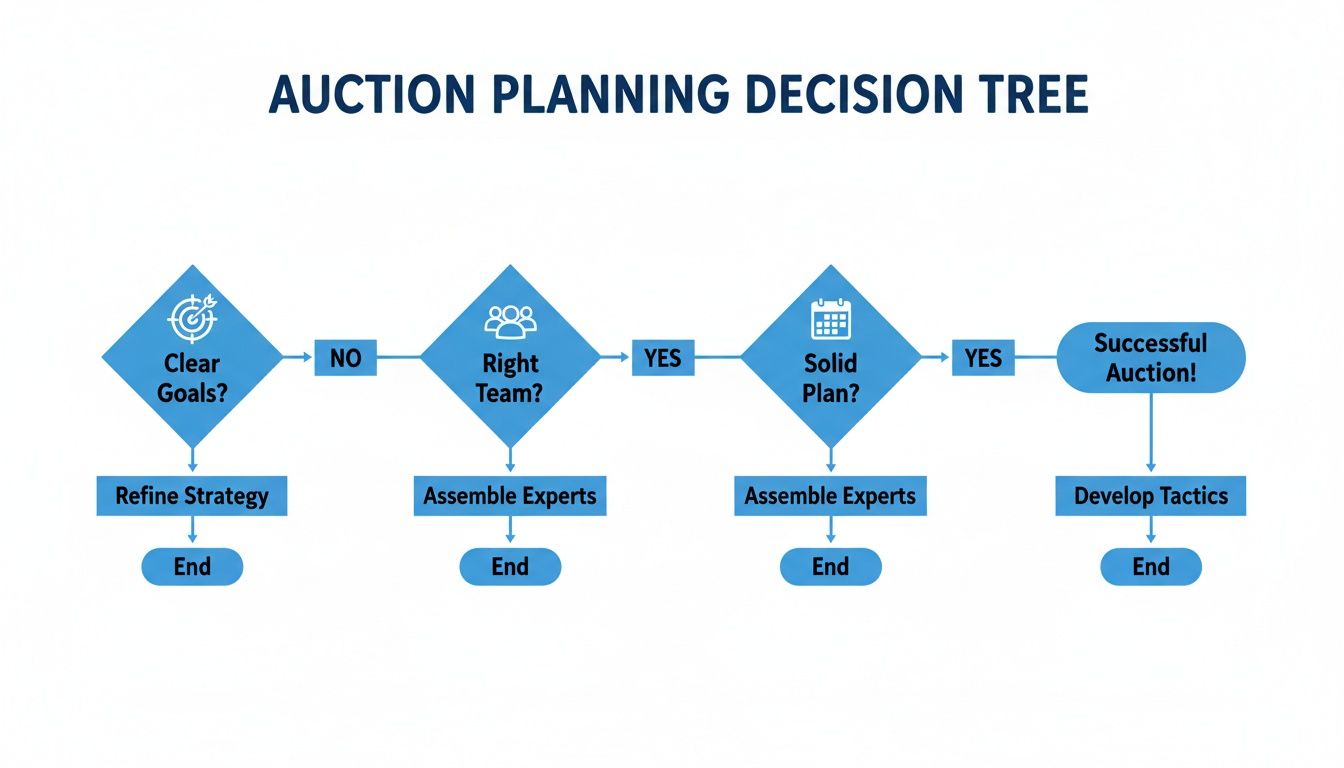
As you can see, choosing your platform and finding items should only happen after you’ve set clear goals, put together the right team, and have a solid plan.
Selecting the Right Auction Software
Think of your auction software as your virtual venue. It needs to be inviting, easy to navigate, and totally reliable. It’s easy to get wowed by a long list of flashy features, but it's smarter to focus on the fundamentals that directly affect your bidders' experience and your own administrative sanity.
So, what should you actually look for?
- Mobile-Friendly Bidding: Let's be real—most of your bidders will be on their phones. If the mobile experience is clunky, you’re going to lose bids. It's as simple as that.
- Text and Email Notifications: Instant "you've been outbid!" alerts create a sense of urgency. This is what gets people to jump back in and drives those final prices up.
- Simple Registration and Checkout: Signing up and paying should be completely painless. Any little hiccup here can lead to someone giving up and leaving money on the table.
The data backs this up. Nonprofit auctions are incredibly efficient, with the average event raising 134.5% of the items' listed value. Good tech is a huge reason why. In fact, 65% of Gen Z and Millennial donors say features like mobile bidding and text alerts are critical.
Pro Tip: Before you sign on the dotted line, ask for a demo or a trial run. Go through the whole process yourself—register, place a few test bids, and go through the checkout. See it exactly how your donors will. For a deeper dive, check out our guide on the best online auction software at https://www.diyauctions.com/learn/best-online-auction-software.
Online Auction Platform Feature Comparison
Choosing the right platform can feel overwhelming. To help you compare your options, this table breaks down the essential features across different types of auction software. It's designed to give you a clear, at-a-glance look at what each model offers, so you can find the best fit for your team's skills and your event's needs.
| Feature | DIY Platforms (e.g., DIYAuctions model) | Full-Service Platforms (e.g., GiveSmart) | Integrated Platforms (e.g., SchoolAuction.net) |
|---|---|---|---|
| Cost Structure | Lower cost, often commission-based. | Higher cost, typically a flat fee or subscription. | Mid-range, often with tiered pricing. |
| Setup & Management | User-managed setup and operation. | Platform provides account managers and support. | Can be user-managed with optional support add-ons. |
| Customization | Standard templates with some branding options. | Highly customizable event pages and branding. | Good customization within a defined structure. |
| Payment Processing | Integrated, but managed by the user. | Fully managed by the platform. | Integrated with major payment gateways. |
| Ideal For | Small to mid-size orgs with volunteer capacity. | Large galas and orgs needing extensive support. | Schools and nonprofits needing donor management integration. |
Ultimately, the best choice depends on your budget, your team's tech comfort level, and the scale of your auction. Whether you need a simple, cost-effective tool or a fully-managed solution, there's a platform out there that fits.
Sourcing Items That Spark Bidding Wars
A great platform is only half the battle. The real magic of an online auction comes from a fantastic catalog filled with things people are genuinely excited to win. You want to think beyond the standard gift basket and find donations that feel unique and exclusive.
Get creative and lean into experiences rather than just physical stuff. While tangible items are always appreciated, it’s often the unique experiences that carry a higher perceived value and spark the most memorable bidding contests.
Here are a few categories that consistently do well:
- Unique Experiences: We're talking about those "money-can't-buy" opportunities. This could be a private cooking class with a well-known local chef, a behind-the-scenes tour of a city landmark, or even the chance to be a zookeeper for a day.
- Travel and Getaways: Weekend trips are always a huge hit. Try partnering with a few boutique hotels or vacation rental owners in a popular nearby destination for a donated stay.
- Local Business Packages: Team up with high-end restaurants, spas, and cool local shops to bundle their offerings into an exclusive package. For example, a "Downtown Date Night" could include dinner for two, theater tickets, and a gift certificate for a local boutique.
Creating Buzz and Promoting Your Event

Let's be honest—a great auction catalog and a slick website don't mean much if nobody shows up. This is where the real work begins: turning your well-planned auction into an event people are genuinely excited about. It's time to build a real promotional strategy that gets you a packed virtual house when the bidding officially opens.
The secret is to connect your bidders to the why behind your auction. Don't just show them items; tell them the story of what their winning bid accomplishes. A simple shift in language makes all the difference. Instead of just "Bid on a spa package," try framing it as, "Your winning bid for this relaxing spa day provides 20 hot meals for our neighbors experiencing homelessness." Suddenly, it’s not a transaction—it's a direct contribution.
And you’re tapping into a rapidly growing market. The online charity auction space blew up from $0.2 billion in 2019 to $0.5 billion in 2023, with projections to hit $1 billion by 2031. That incredible growth tells us one thing: a strong digital game is essential to capture your supporters' attention.
Crafting Your Promotional Timeline
A well-timed marketing plan builds momentum without annoying your audience. Think of it like a slow crescendo leading up to the main event.
-
Four Weeks Out (The Teaser Phase): Start dropping hints. Announce the auction dates and begin showing off your "hero" items on social media—those big-ticket experiences that get people talking. Now is also the perfect time to launch your auction site with a "Coming Soon" page to start gathering email sign-ups.
-
Two Weeks Out (The Reveal Phase): It's time to open the full item catalog for a sneak peek. Let everyone browse, "favorite" the items they want, and plan their bidding strategy. Send an email blast to your list with a direct link to the catalog, and maybe highlight different categories each day to keep them coming back.
-
Auction Week (The Urgency Phase): This is the final push. Daily reminders are key here, counting down to the auction’s close. Shine a spotlight on items with low bids to spur action and stir up some friendly competition. For a deeper dive, you can explore more tips on https://www.diyauctions.com/learn/digital-marketing-for-local-businesses.
Pro Tip: Create a simple, shareable graphic with the key details—date, time, website, and a compelling image. Pin it to the top of your social media profiles and ask your board members and top volunteers to share it far and wide.
Leveraging Social Media and Community Partners
To really get the word out, it’s crucial to follow social media best practices to build real connections and drive bids. Think beyond just posting item photos. Share behind-the-scenes content, like videos of your team collecting donations or short interviews with the people your mission directly helps.
And don't overlook the power of your community. Reach out to local bloggers, influencers, or businesses with a strong local following and ask them to share your event. Offering them a simple shout-out or a sponsorship spot can turn their audience into your bidders, expanding your reach far beyond your own email list.
Running a Flawless Live Auction Experience
The moment your online charity auction goes live is when all your careful planning pays off. Smooth execution is everything now. This is your playbook for managing the event in real-time, keeping the energy high, and making sure every bidder has a fantastic experience.

Think of yourself as the host of a virtual party. Your job is to keep things moving, engage with your guests, and handle any little hiccups with grace. A seamless live event builds trust and leaves everyone feeling great about their contribution, win or lose.
Keeping Bidders Engaged and Informed
An engaged bidder is a generous bidder. You can’t just launch the auction and walk away; you need to nurture the excitement from start to finish.
- Real-Time Monitoring: Keep a close eye on the bidding activity. Have a team member dedicated to watching which items are hot and which ones need a little nudge. This allows you to react and adapt your communication on the fly.
- Promptly Answer Questions: Bidders will have questions about item details, pickup logistics, or the bidding process. A quick, friendly response can be the difference between a hesitant observer and an active bidder.
- Fuel Friendly Competition: Most auction platforms have leaderboards or activity feeds. Use them! A simple social media post like, "The beach getaway package just got a new high bid! Is it yours?" can reignite interest and spur on another round of bidding.
Managing the Final Countdown
The last hour of an online auction is where the real magic happens. This is when urgency kicks in and bidding wars ignite. Your communication during this window is absolutely critical.
Send out a series of timed reminders to your registered bidders. A "Final Hour!" email, followed by a "15 Minutes Left!" text message, creates a powerful sense of FOMO (fear of missing out). Make sure your platform's outbid notifications are working perfectly to keep bidders in the game right up to the last second.
When the clock hits zero, your work isn't quite done. A clear "Bidding Closed!" message should appear on the auction site, immediately followed by automated emails to all winners, congratulating them and providing clear instructions for payment and item pickup.
This final, professional touch ensures the experience ends on a high note and makes the post-auction process a breeze for everyone involved.
Mastering Post-Auction Follow-Up and Donor Care
The final bids are in and the winners are celebrating, but your job isn't quite done. Honestly, this last stage is what separates a good fundraising event from a truly great one. This is your moment to turn one-time bidders into genuine, lifelong supporters of your cause.
First things first: you have to get those amazing items into the hands of their excited new owners. Smooth, clear communication here is everything.
As soon as payments are confirmed, send a personal email to each winner. Don't just rely on the automated system message. This email should congratulate them, thank them for their winning bid, and lay out the next steps in crystal-clear detail.
Item Fulfillment and Logistics
A hassle-free pickup and shipping process shows your supporters that you respect their time and their generosity. Thinking through the logistics now will help you create a positive final impression that people remember.
For your local winners, set up specific pickup times and a clear, easy-to-find location. It’s a good idea to offer a couple of different time slots to accommodate people's busy schedules. To cut down on no-shows, a quick reminder email a day before pickup works wonders.
Shipping obviously requires a bit more legwork. Here's a quick checklist to keep you on track:
- Package Like a Pro: Use sturdy boxes and plenty of padding. This is especially critical for anything fragile.
- Be Upfront About Costs: If you didn't build shipping into the item price, let the winner know the exact cost before they pay. No one likes surprise fees.
- Always Share Tracking: Use a shipping service that provides tracking and send that number to the winner the moment their item is on its way.
The Art of the Meaningful Thank You
While the winners get the prizes, every single person who participated deserves a heartfelt thank you. This is the cornerstone of building lasting relationships. Remember to thank everyone who registered, placed a bid, donated an item, or even just shared your event online.
A segmented approach is most effective here. Winners get one type of message, while non-winning bidders should receive a different—but equally appreciative—note. Your message to those who didn't win can be incredibly powerful; you're acknowledging their effort and encouraging them to stay connected.
The most overlooked step in any online charity auction is thanking the people who didn't win. These individuals raised their hands to support you. Acknowledging their participation makes them feel valued and significantly increases the likelihood they will support your next event.
Sharing Your Success and Impact
Finally, you need to close the loop by celebrating what you accomplished together. This isn't about bragging; it's about making every single donor a hero in your organization's story.
Send one last email blast to everyone who was involved. Announce the grand total with genuine excitement! But most importantly, connect that number to a real-world outcome. Instead of just saying you raised $20,000, explain what that money does. Tell them it will provide "after-school tutoring for 100 children for an entire year." That makes the impact tangible and reinforces just how much their support matters.
Of course, making sure all those final payments come through smoothly is a huge part of this last step. For more on that, you can check out our guide on payment processing for a small business in our guide.
Got Questions About Your Online Charity Auction? We Have Answers.
Running your first online charity auction can feel a little daunting. Even seasoned event planners find new puzzles to solve with every fundraiser. We've pulled together the most common questions we hear and laid out clear, practical answers to help you move forward with confidence.
What Are the Biggest Mistakes We Should Avoid?
More often than not, trouble comes from a few key areas: rushing the planning, using blurry or unappealing item photos, and not shouting about the event from the rooftops. Another classic mistake is picking a clunky software platform that makes potential supporters want to throw their computers out the window.
But the single biggest missed opportunity? It's what happens after the auction ends.
Failing to follow up and thank every single person involved—from the highest bidder to someone who just placed one bid—is a surefire way to damage donor relationships. It makes asking for their support next year a much, much harder conversation.
A great online auction isn't a one-and-done transaction; it's part of a cycle. The goodwill you generate with thoughtful, prompt follow-ups is the fuel for your next campaign. Acknowledging every supporter makes them feel seen and valued, which is exactly how you earn their loyalty.
How Far in Advance Do We Really Need to Plan?
Give yourself a solid three to four months. Trust us, this timeline isn't just a random suggestion. It's the difference between a strategic, well-run event and a frantic, last-minute scramble that burns out your entire team.
Here’s how that timeline usually breaks down:
- Months 1-2 (The Foundation): This is all about the big picture. You’ll define your goals, assemble your auction committee, pick your auction platform, and draft an initial budget.
- Months 2-3 (Procurement & Content Creation): Now the real fun begins. Your team should be focused on securing amazing auction items. Simultaneously, your marketing lead can start crafting those compelling item descriptions, taking fantastic photos, and getting promotional materials ready to go.
- The Final Month (Promotion & Hype): It's go-time. This final stretch is all about marketing and building excitement. You're driving registrations and making sure you have a crowd of enthusiastic bidders ready the moment the auction opens.
What Kinds of Items Actually Sell the Best?
While tangible items are great, it's the unique experiences that consistently get bidders fired up. People get excited about bidding on something they can't just go out and buy.
Think about things like a weekend getaway to a donor's vacation home, a private behind-the-scenes tour of a local brewery, or a one-on-one cooking class with a celebrated chef.
Consumable luxuries are also a safe bet. A curated case of high-end wine, a gourmet foodie basket from a local market, or a "year of coffee" subscription always do well. The real trick is to offer a thoughtfully curated selection at a variety of price points. You want something that appeals to every budget.
How Should I Price My Items?
Your pricing strategy is what creates that initial spark of bidding activity.
For starting bids, a good rule of thumb is 30-40% of an item's fair market value (FMV). This makes the entry point feel low and accessible, which is crucial for encouraging that very first bid and getting the momentum going.
Adding a "Buy It Now" price can be a fantastic tool, especially for your most sought-after items. We've found that setting it at 150-200% of the item's value works wonders. It gives a passionate supporter the chance to snag the item immediately while making a truly significant gift to your organization. Just be strategic and use it on items you know will have high demand or a unique, emotional pull.
More guides in Online Auction Platform
August 1, 2026
Online Auction Bidding Software: Profitable Estate Sales
Learn how online auction bidding software helps sellers run profitable estate sales, plus key features and DIYAuctions benefits.
Read guideJuly 24, 2026
The 7 Best Auctions in Winchester: 2026 Guide
Discover the top auctions in Winchester (VA & KY). Our 2026 guide covers auction houses, consignment details, and modern alternatives like DIY estate sales.
Read guideJuly 3, 2026
What Is an Online Auction: Your 2026 Guide for Estate
What is an online auction - Discover what an online auction is & how it helps estate sellers. Learn formats and maximize profit in 2026 with our comprehensive
Read guideGet the estate sale pricing guide
Enter your email for pricing ranges, planning notes, and a clearer path to launch.