Find an Online Estate Auction Near Me and Maximize Your Sale
Discover how to find the best online estate auction near me. This guide offers practical steps for homeowners and executors to run a smooth, profitable sale.

When you're faced with liquidating an estate, the task can feel overwhelming. But a quick search for an "online estate auction near me" is the right first step—it's your gateway to a much more manageable and profitable process.
This modern route typically leads you to two choices: a full-service local auction company or a do-it-yourself (DIY) platform. Which path is right for you really comes down to your timeline, how hands-on you want to be, and your overall goals for the sale.
The Modern Approach to Estate Liquidation
The days of relying only on a weekend-long, in-person estate sale are quickly fading. Why? Because the internet has completely changed the game.
Going digital allows you to reach a massive pool of interested buyers, extending way beyond your immediate neighborhood. What used to be a very localized event is now a dynamic marketplace that attracts competitive bidding from all over the area, often resulting in much better returns.
This isn't just a small shift; it's part of a huge global trend. The online auction market was valued at around USD 5.25 billion in 2023 and is on track to more than double, hitting a projected USD 11.3 billion by 2032. This incredible growth is fueled by everyone having a smartphone in their pocket, allowing bidders to participate in local sales from absolutely anywhere.
Your Two Main Options
When you decide to take an estate sale online, you're looking at two very different paths. There’s no right or wrong answer—just what works best for your situation.
-
Partner with a Professional Company: This is the hands-off approach. You hire a local auction service to manage every single detail, from cataloging and photography to marketing, payment collection, and organizing the pickup. It’s the perfect choice if you're short on time or prefer to pay a commission for professional expertise and convenience.
-
Manage it Yourself (DIY): If you're someone who likes to be in control and wants to keep more of the profits, a DIY platform like DIYAuctions is the way to go. You’re in the driver’s seat—cataloging items, taking photos, and running the sale on your schedule. The platform provides the crucial backend support: marketing reach, secure payment processing, and a proven structure to follow.
To get a better sense of how this fits into the bigger picture, it helps to understand the broader real estate market, including auctions. No matter which route you choose, this guide will walk you through the practical steps you need to take to run a successful sale.
Finding the Right Local Online Auction Partner
When you start searching for an "online estate auction near me," you’ll get plenty of hits. But the goal isn’t just to find a company—it’s to find a trustworthy partner who’s genuinely invested in getting you the best results.
Your initial search is just the starting point. Go past the paid ads and dig into what real people are saying. Check out reviews on Google, Yelp, and even community hubs like Nextdoor. That’s where you’ll find honest feedback from neighbors who’ve been in your shoes.
Vetting Potential Auction Companies
Once you’ve got a shortlist of three to four local auction services, it's time to pick up the phone and start asking some tough questions. A good company will be happy to answer everything you throw at them. Their job is to earn your confidence, not to pressure you into a contract.
Honestly, this vetting process is the most critical step you'll take. It’s what protects your assets and saves you from a world of headaches down the road.
"Never sign a contract without a complete understanding of all fees. A low commission rate can be misleading if the company adds separate charges for marketing, labor for cleanup, or credit card processing fees."
Treat these initial calls like an interview. You’re hiring someone to manage a significant financial event for your family, so be direct and take good notes. For more background on what to look for, our guide to the different types of estate sale and auction companies can help you prepare.
Key Questions to Ask Every Potential Partner
Before you even think about signing anything, make sure you have crystal-clear answers to these questions—preferably in writing. If you sense any hesitation or vagueness, that’s a big red flag.
- What is your total commission and what does it include? Don't just get a percentage; ask for a full fee schedule. Does their rate cover photography, marketing, payment processing, and staffing for the pickup day? Or will you be hit with surprise charges later?
- How do you market your auctions to local buyers? You need to know how they get eyeballs on your stuff. Do they have a big email list of active bidders in your area? Do they run ads on social media? Strong marketing is what drives bidding wars and gets you higher prices.
- What is your process for managing item pickup? A chaotic pickup day is a nightmare. Ask about their system for scheduling, how they verify payments before items leave, and what happens if a buyer is a no-show.
- Can you provide references from recent clients? This is non-negotiable. Talking to a few past clients is the absolute best way to know what you’re getting into. Ask them about communication, if the final results met their expectations, and how smoothly the whole process went.
Ready to Run Your Own Online Auction? Here's How.
For the hands-on homeowner or executor who wants to steer the ship, running your own online estate auction is not just possible—it's incredibly empowering. When you take the DIY route, you're in the driver's seat. You control the timeline, the presentation, and best of all, you keep a much larger slice of the pie.
Success here comes down to thoughtful execution, and it all starts with building an amazing auction catalog.
Your online catalog is your virtual showroom, and it's where bidders fall in love with your items. Don't skimp here. Sharp, well-lit photos taken from multiple angles are an absolute must. Pair those great pictures with honest, detailed descriptions. Highlight the good stuff, but also be upfront about any dings, scratches, or quirks. That kind of transparency builds immediate trust with bidders and saves you from headaches later.
Whether you're hiring a full-service company or choosing a DIY platform, the vetting process is key to making sure you're working with the right partner for your situation.
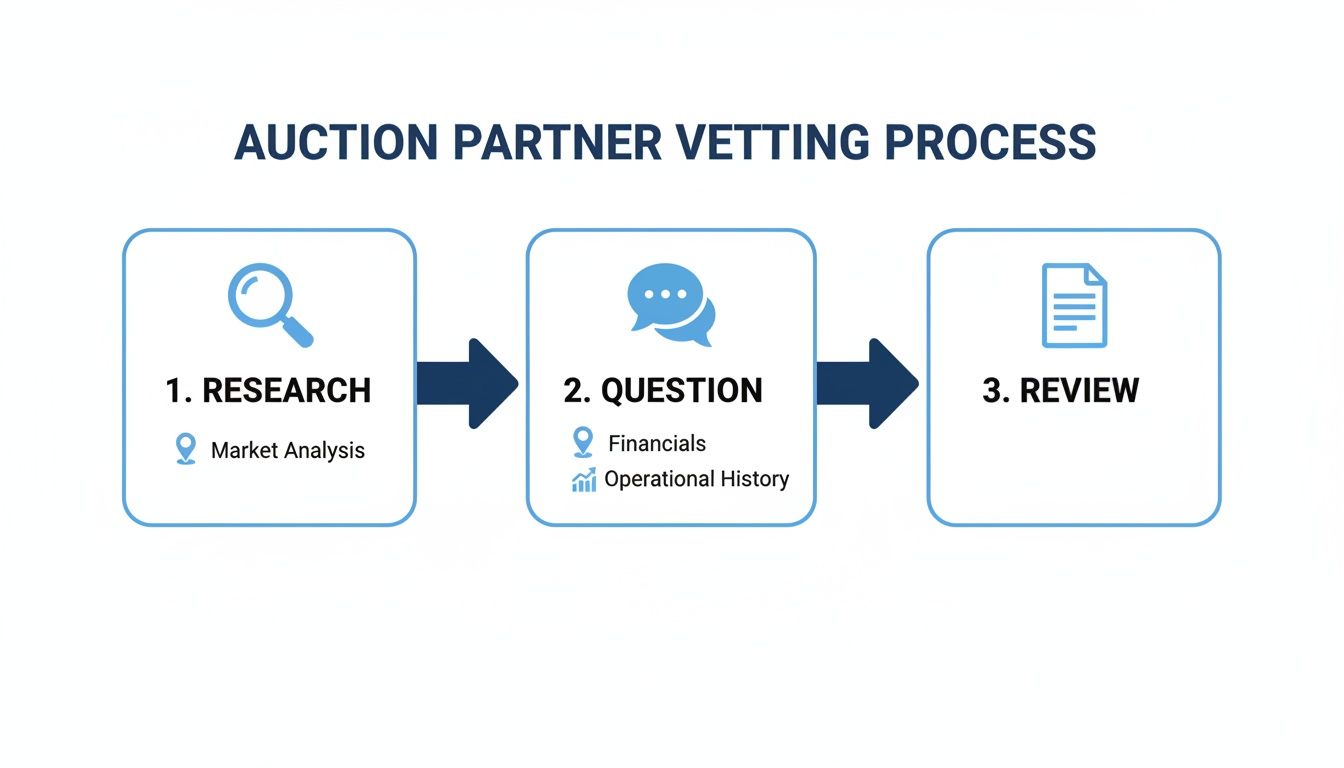
This just goes to show that no matter which path you choose, doing your homework, asking good questions, and understanding the terms upfront is the foundation of a great outcome.
Setting Prices and Building Smart Lots
Once your inventory is photographed and described, it’s time to talk numbers. A little online detective work goes a long way. See what similar items have sold for on other auction sites to get a realistic sense of value. For most things, starting the bidding low (we often recommend $1) is a fantastic way to get people's attention and spark that initial bidding flurry.
But what about the really good stuff? For that antique grandfather clock or signed piece of art, a reserve price is your safety net. It’s a confidential minimum you set, ensuring your most valuable assets don’t sell for a penny less than they're worth.
A pro tip for getting the most out of your sale is to group related items into "lots." Instead of listing one teacup, create a "Vintage English Bone China Tea Set" lot. This clears out more inventory at once and can ignite bidding wars between collectors who want the whole collection.
Think about creating lots like these:
- Themed Collections: A "Mid-Century Modern Decor Lot" or "Nautical Themed Artwork."
- Hobbyist Bundles: Think "Vintage Fly-Fishing Gear" or a "Scrapbooking & Craft Supplies Lot."
- Brand Groupings: Combine desirable brands, like a "Lot of All-Clad Cookware."
This strategy makes it easier for passionate buyers to find exactly what they’re looking for. For a deeper look at this and other powerful techniques, our complete guide on estate sale liquidation is a great resource.
Understanding Your Bidders and Preparing for the Sale
The audience for online auctions is also changing. Demographic shifts are reshaping online estate auctions, with Millennials and Gen Z driving 60% of bids on platforms, favoring digital-native experiences. By 2025, these groups are expected to represent 50% of global online auction participation, drawn to sustainability; 70% prefer second-hand estate items to reduce waste, aligning with the circular economy. You can find more details about these online auction trends and their impact on the market.
With your catalog built and prices set, platforms like DIYAuctions simplify the final steps. They provide the structure for scheduling your auction dates, marketing to a built-in audience of local buyers, and handling all secure payment processing. Your primary focus shifts to preparing for a smooth, single-day pickup event, which we'll cover in detail later.
Marketing Your Auction to Attract Local Bidders
A fantastic catalog is a great start, but let's be honest—a successful auction really comes down to getting the right eyes on your items. Your real mission is to create a buzz that reaches motivated local buyers who are already looking for the exact treasures you're selling.
This process starts with your individual item listings. You have to think like a buyer. They aren't just searching for "old plates"; they're typing "Vintage Franciscan Desert Rose Dinnerware" into a search bar. Be specific. Use those valuable keywords in your titles and descriptions to make sure your items actually show up.
A title like "Antique Sterling Silver Flatware Set" is infinitely more powerful than just "Silverware."
Spreading the Word in Your Community
Once your auction is live, it's time to become your own best promoter. The trick is to go where the local buyers and collectors are already spending their time. Don't just post once and walk away. Consistent, strategic sharing is what really drives traffic and bids.
Your digital marketing toolkit should absolutely include these local powerhouses:
- Facebook Marketplace: This one is non-negotiable. Put together a compelling post with a great cover photo—a collage of your best items works really well here. Add a short, punchy description of the sale and a direct link to your auction. Highlighting a few standout pieces is a great way to pique interest.
- Community Groups: On Facebook, join and post in your local "buy and sell," "garage sale," and neighborhood-specific groups. Just be sure to check the group rules first. This is a direct line to thousands of potential bidders in your immediate area.
- Nextdoor: This platform is hyper-local, connecting you with people right in your own neighborhood. It's the perfect place to announce your online sale and any preview day you might hold. People love buying from sellers who are just around the corner.
A well-advertised, in-person preview day can be a total game-changer. When potential bidders can see, touch, and inspect items themselves, it builds an immense amount of trust. We often see this lead to much more aggressive bidding as the auction nears its end.
Reaching Niche Collectors and Enthusiasts
Beyond the general local platforms, take a moment to think about the specific kinds of items you're selling. Do you have a big collection of vinyl records, military memorabilia, or vintage sewing machines? Believe it or not, there are dedicated online communities for just about every hobby imaginable.
Go out and find those niche collector forums and specialized Facebook groups. Sharing a link to your "Collectible Vinyl Records" lot in a group for audiophiles can attract highly motivated buyers who are often willing to pay a premium. This targeted approach connects your items with a truly passionate audience that a general marketing blast would completely miss.
For a deeper dive into promotion strategies, our in-depth guide to powerful estate sale marketing tactics offers even more ideas to maximize your reach.
By combining broad local outreach with targeted niche marketing, you create a powerful funnel that directs a steady stream of qualified bidders right to your online estate auction. Every share and every post builds momentum, dramatically increasing your chances of a highly successful sale.
Managing a Seamless Post-Auction Pickup
The final bid is in, and the auction clock has hit zero. Congratulations! But the job isn't quite done. Now comes the most critical operational part of the whole process: getting your items paid for and smoothly into the hands of their new owners.A well-organized pickup day is what separates a professional-looking sale from a frustrating, chaotic mess.
Your first move? Secure all payments immediately. Platforms like DIYAuctions have secure payment processing built right in, which is a massive advantage. You don't have to chase people down, handle wads of cash, or worry about bounced checks.
As soon as the auction ends, send invoices to every single winning bidder with a clear, firm payment deadline. From my experience, 24 hours is the perfect timeframe. It's fair but firm.
This simple, non-negotiable deadline helps filter out non-serious buyers right away and tells you exactly who is committed to coming for their items.
Organizing a Stress-Free Pickup Day
The secret to a successful pickup is managing the flow of people. The last thing you want is a dozen cars in your driveway and twenty people wandering around your property at the same time. This is where a scheduled system is your absolute best friend.
Use a free online tool like Calendly or SignUpGenius to create simple time slots for winners to book their pickup. Even 15-minute intervals can work wonders. This small step prevents gridlock and gives you the breathing room to handle each person without feeling rushed or overwhelmed.
Before anyone shows up, pre-stage every single item. Group lots together by invoice or bidder number and put them in an easy-to-access spot like the garage or a cleared-out living room. This prep work turns a potentially hour-long search for items into a quick, two-minute handoff.
When buyers arrive for their scheduled slot, have their things ready to go. Before a single box leaves the property, check their payment confirmation on your phone or laptop. This is your final checkpoint for a secure, completed sale.
Creating a Plan for No-Shows
It happens. Despite your best efforts, you will probably have a few no-shows—it’s just part of running an auction. The key is to have a plan baked into your auction terms, which every bidder agrees to beforehand.
Here are a few common and effective policies:
- Forfeiture: The buyer forfeits the item without a refund if they don’t pick it up during the designated time. This is standard practice.
- Donation: State that any unclaimed items will be donated to a local charity after a certain period.
- Disposal Fee: For huge items that cost money to remove (like an old piano or hot tub), you can state that the buyer may be charged a disposal fee if they abandon it.
Putting these rules in place protects you and sets crystal-clear expectations from the start. A well-run pickup day is the final, crucial step in your online estate auction journey. It ensures buyers leave happy, protects your reputation, and lets you close out the sale with confidence and peace of mind.
Common Questions About Local Online Estate Auctions
Jumping into the world of online estate auctions for the first time always brings up a bunch of questions. It's only natural. Whether you’re thinking about hiring a local company or just tackling the sale yourself, getting straight answers is the first step to feeling confident.
Let's walk through some of the most common things people ask when they're in your shoes.
How Much Does an Online Estate Auction Company Cost?
This is usually the first thing people want to know, and for good reason. Most professional services work on a commission, which can swing from 25% to as high as 50% of the gross sales.
That number might make you raise an eyebrow, but a good company's fee should be all-inclusive. It covers the tedious work: professional photography, detailed cataloging, marketing the sale, hosting the auction, and dealing with all the payments and pickup logistics.
It’s tempting to just shop for the lowest commission rate, but that can backfire. A lower percentage might come with a bunch of extra charges for things like trash removal, credit card fees, or extra labor costs that weren't mentioned upfront.
A top-tier auction company with a higher commission but a massive list of motivated local bidders will almost always net you more in the end than a cheaper service with poor marketing reach. Always get a detailed contract that outlines every single potential fee before you sign.
What Kinds of Items Sell Best in Online Auctions?
One of the great things about an online auction is the sheer variety of people it can reach. That means a huge range of items can sell really well. We see certain categories, time and time again, that get bidders excited.
Items that consistently get a lot of action include:
- Collectibles: This is a massive category, covering everything from coins and stamps to vintage toys, sports memorabilia, and comic books.
- Quality Furniture: Well-made pieces always find a home, especially if they have a distinct style like mid-century modern or are genuine antiques.
- Tools and Equipment: Power tools and high-quality hand tools from brands like Snap-on or Craftsman are huge draws for hobbyists and pros.
- Jewelry and Artwork: Precious metals, gemstones, and signed pieces of art have a broad appeal and can command high prices.
- Vehicles: Cars, trucks, motorcycles, and even boats are often sold successfully through local online auctions.
The real drivers are almost always quality, condition, and rarity. While your everyday coffee mugs might not bring in big bucks on their own, they sell great when you group them into a larger "kitchen essentials" lot.
How Can I Avoid Scams and Non-Paying Bidders?
This is a big one. Keeping the process secure is a major concern for anyone selling online. If you go with a full-service auction company, this is one of the main things you're paying them for. They handle vetting bidders, securing all the payments, and preventing fraud.
But what if you're running the sale yourself? You just have to be proactive.
Using a platform like DIYAuctions with its own secure, integrated payment system is your best line of defense. It means you never have to handle cash or worry about a personal check bouncing.
Be crystal clear about your terms right from the start. Post a firm payment deadline (for example, within 24 hours of the auction closing) and state that any items not paid for will be forfeited. When it's time for pickup, never let an item leave the property until you've confirmed the payment has been fully processed and is sitting in your account.
More guides in Estate Sale Basics
July 28, 2026
Revenue Reporting for Estate Sales and Auctions
Learn revenue reporting essentials for estate sales and auctions. Discover key metrics, templates, and best practices to simplify tracking and compliance.
Read guideJuly 26, 2026
Stamp Collection Valuation: A Practical Step-by-Step Guide
Stamp collection valuation made simple. Learn how to identify, grade, price, and sell your stamps with confidence for estate sales or consignment.
Read guideJuly 23, 2026
Estate Sales Brick NJ: Your 2026 Guide to Success
Planning your estate sales brick nj? Our guide covers permits, pricing, marketing, & running a safe sale with DIYAuctions.
Read guideGet the estate sale pricing guide
Enter your email for pricing ranges, planning notes, and a clearer path to launch.