Value Guide for Your Antique Phone Table and Chair
Unlock the true value of your antique phone table and chair. This guide covers identification, appraisal, restoration, and how to sell it for the best price.

That charming little phone table and chair set in the corner? It’s often called a “gossip bench,” a single piece of furniture that combined a spot for the telephone with an attached seat. These were a household staple from the late Victorian era all the way through the Mid-Century Modern period, a dedicated station for phone calls before they went portable.
Decode Your Antique Phone Table and Chair
The gossip bench tucked away in your hallway is so much more than just a piece of old furniture. It's a direct link to a time when the telephone was a stationary hub for family communication. Uncovering its story is the first step, and it all starts with learning to spot the key design clues that peel back the layers of its history.
Think of yourself as a detective. This initial step is all about observation—the overall shape, the style of the legs, the materials used. Every element is a clue, reflecting the popular tastes and manufacturing methods of its time.
Read the Design Language
Different eras left their own distinct signatures on furniture. Your phone table will almost certainly fall into one of these major design movements:
- Victorian (c. 1880s-1901): Think ornate and decorative. You'll see dark woods like mahogany or walnut, intricate carvings, curved cabriole legs, and plush, often upholstered, seating. These pieces were designed to be statements.
- Art Deco (c. 1920s-1930s): This style is all about bold, geometric shapes and sharp angles. Look for streamlined designs and the use of contrasting materials, like inlaid wood veneers or chrome accents.
- Mid-Century Modern (c. 1940s-1960s): Here, function and simplicity were king. This era favored clean lines, tapered legs, and lighter woods like teak or blonde oak. The construction is often far more minimalist and less ornate.
Hunt for Maker's Marks
While the style gives you a great starting point, the real prize is finding a maker's mark. It’s the furniture equivalent of an artist signing their work. These marks can be anything from a stamp or a small metal plate to a simple paper label.
A personal tip: always start your search in the most overlooked places. Grab a flashlight and check underneath the seat, inside any small drawers, and on the back of the table. Sometimes, a faint ink stamp is all that's left, but finding one is an absolute game-changer for confirming a piece's history and true value.
How to Identify and Date Your Antique Set
So, you’ve got a charming little phone table and chair set. The real fun starts when you dig into its history. Beyond just its general style, a close look at the materials and how the piece was built can tell you a surprising amount about its true age.
The type of wood used is one of your biggest clues—it’s like a fingerprint for the era. If you can learn to spot the different grain patterns and colors, you're already halfway to pinning down a timeline. For instance, that deep, reddish-brown swirl of mahogany was all the rage in the Victorian and Edwardian periods. A phone table made from it was likely crafted around the turn of the 20th century. Oak, with its bold "tiger-stripe" grain, was a go-to for Arts and Crafts furniture and later, more no-nonsense designs. Lighter woods like maple or birch often signal a more recent mid-century piece.
Examine the Construction Details
How a piece of furniture was put together is its autobiography. The joints, the hardware, and even the marks left by a saw can help you separate a genuine antique from a later copy. Knowing what to look for is everything.
You’d be surprised how much these details can tell you:
- Dovetail Joints: Pull out a drawer and look at the corners. If you see slightly irregular, imperfectly spaced dovetails, that’s a sign of hand-cut craftsmanship, likely from before 1900. Perfectly uniform, machine-cut dovetails became standard in the early 20th century.
- Hardware: Original brass or cast-iron drawer pulls will have a natural patina and visible wear from decades of use. And here's a great tip: Phillips head screws weren't common until the 1930s. If you see them, it might mean the piece is newer than you think, or that the original hardware was replaced.
- Saw Marks: Try running your hand along an unfinished part of the wood, like the bottom of a drawer. Feel straight, parallel marks? That’s from a circular saw, which was common after about 1850. Older pieces often have more uneven marks left by pit saws.
To help you connect these clues, here’s a quick reference table.
Dating Your Antique Phone Table by Era and Style
This table provides a snapshot of common characteristics you'll find in phone tables from different design periods. Use it to match the wood, hardware, and overall look of your set to a potential era.
| Era | Common Woods | Hardware Style | Key Design Features |
|---|---|---|---|
| Victorian (1837-1901) | Mahogany, Walnut, Rosewood | Ornate brass or cast iron pulls, intricate carvings. | Dark woods, heavy ornamentation, curved legs ("cabriole" style), often with velvet or needlepoint upholstery. |
| Arts & Crafts (1880-1920) | Oak (especially quarter-sawn), Ash | Simple, hand-hammered copper or iron hardware. | Straight lines, exposed joinery (like mortise and tenon), focus on craftsmanship over decoration. |
| Art Deco (1920-1940) | Exotic woods (like Macassar ebony), Burlwood, Lacquered finishes | Geometric shapes, chrome, Bakelite, polished brass. | Bold geometric patterns, symmetrical designs, streamlined forms, often featuring inlaid details. |
| Mid-Century Modern (1945-1965) | Teak, Walnut, Birch, Rosewood | Minimalist pulls (wood or metal), recessed handles. | Clean lines, organic curves, tapered legs, functional and uncluttered design. Often features vinyl upholstery. |
Think of these characteristics as building blocks. Each one helps you form a clearer picture of your furniture's past.
Remember, this furniture tells a story about technology and home life. These sets became popular as telephone adoption in U.S. households skyrocketed from around 20% in 1920 to nearly 65% by 1940, creating a brand-new need for a dedicated spot for the phone.
This visual timeline can help you see how styles evolved over the decades.

You can clearly see the journey from the ornate, curvy styles of the Victorian era to the clean, geometric shapes of Art Deco and, finally, the simple, functional lines of Mid-Century Modern design.
Putting It All Together
By combining everything you’ve observed—the wood, the joinery, the hardware, and the overall style—you can build a really strong case for your set's age. Each detail is a piece of the puzzle. A mahogany table with hand-cut dovetails and ornate pulls shouts "Victorian," while a teak set with tapered legs and simple hardware points straight to the 1960s.
This detective work turns simple guesswork into a confident conclusion about your furniture's history. If you want to go even deeper, check out our comprehensive guide on how to identify valuable antiques.
Assessing Condition to Determine Market Value
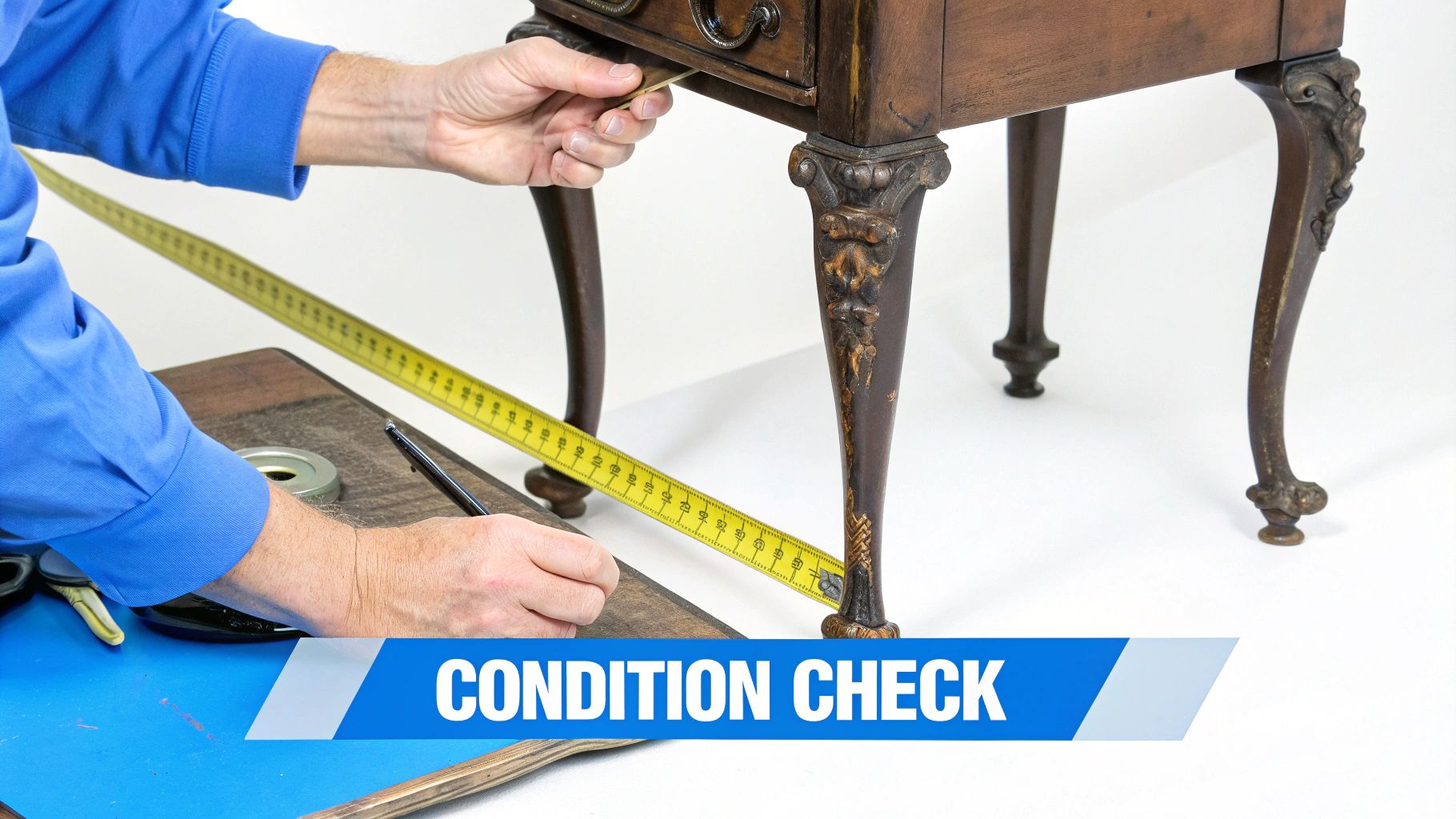
So, you've figured out what you have. Now comes the most important part of the puzzle: evaluating its condition. This single factor often has the biggest impact on market value, turning a potential treasure into a simple project piece. It's time to look past the charm and inspect every detail with a critical eye.
Start with the basics. Does the chair wobble? Is the table steady? Gently press down on different parts of the set. Any looseness in the joints, especially where the legs meet the frame, can be a major red flag for buyers who want something they can actually use, not just look at.
Distinguishing Patina from Damage
This is where a lot of new sellers get tripped up. There’s a fine line between desirable, age-related character and outright damage that sinks the value. Nailing this distinction is absolutely key.
Patina is a good thing. It’s that gentle sheen and subtle wear that develops on a wood surface over decades of use and care—the soft rounding of sharp edges, the slight darkening of the finish, and a mellow glow you just can't fake. Collectors actively look for this because it proves authenticity.
Damage, on the other hand, compromises the piece's look or function. Be on the lookout for:
- Deep Scratches or Gouges: Significant marks that cut through the finish and into the wood itself.
- Water Rings and Stains: Those tell-tale dark or white rings from glasses left on the surface.
- Veneer Damage: Any chipping, peeling, or bubbling veneer that reveals the less attractive wood underneath.
- Breaks and Cracks: Obvious structural failures in the wood, a common issue on legs or chair backs.
When you're looking at the upholstered parts, understanding the furniture reupholstering benefits can help you decide what to do. A worn but original fabric might be desirable to a purist, but a badly torn or stained seat might be a perfect candidate for a refresh to attract more buyers.
Conducting Market Research
With a clear picture of your set's condition, it’s time to find out what similar pieces are actually selling for. This isn't about what sellers are asking, but what buyers are actually paying. DIYAuctions is an invaluable tool for this, since you can filter for sold listings to see real-world results.
As you research, focus on sales of pieces that match yours in era, style, and, most importantly, condition. A mint-condition Mid-Century Modern gossip bench will command a far different price than a Victorian one with significant veneer damage. This data-driven approach is fundamental to pricing correctly. For a deeper dive, check out our guide on how to determine fair market value for your items.
It helps to know that you're tapping into a healthy market. The global traditional chair market was valued at around USD 47 billion in 2023, and it's expected to keep growing. This shows a strong, ongoing interest in quality, historic furnishings that add character to modern homes. Your phone table set isn't just an old item; it's part of a vibrant market.
Preparing Your Antique Furniture for Sale
A little prep work can go a long way in boosting the final sale price of your telephone table and chair. The goal isn't a full-blown restoration that strips away its story. Instead, you're aiming for a careful refresh that shows potential buyers it’s been well-cared-for.
Think preservation, not perfection. This shows respect for the piece and makes it much more appealing when the bids start rolling in.
First things first: step away from the modern, harsh chemicals. They can eat through an original finish and tank the value of an antique in seconds. Your best bet is to start with the gentlest method possible—a soft, dry microfiber cloth to get rid of any surface dust.
If you’re dealing with years of built-up grime, you can slightly dampen a cloth with a very weak solution of mild soap and distilled water. Make sure you wring it out until it's barely damp.
Always, always test your cleaning solution on a hidden spot first, like the underside of the table or the back of a leg. After cleaning a small section, wipe it immediately with a separate cloth dampened with just distilled water to clear off any soap residue. Then, dry it completely with a third soft cloth. This simple process is key to preserving the beautiful, aged patina that collectors and enthusiasts are looking for.
Addressing Minor Repairs and Polishing Hardware
You’d be surprised how much simple fixes can improve a piece's stability and perceived value. It's crucial to learn how to restore antique furniture with a light touch, focusing on preserving its integrity rather than just replacing parts.
Got a wobbly leg? Often, the fix is as simple as tightening an existing screw. If a joint feels a little loose, you can sometimes use a syringe to inject a tiny amount of wood glue into the gap. Clamp it down firmly and let it dry completely. It's a non-invasive way to reinforce the structure and make the piece sturdy again.
When it comes to the original brass or copper hardware, fight the urge to polish it to a mirror-like shine. Stripping away that dark, aged character can actually decrease its value. Instead, use a gentle, specialized metal cleaner. A homemade paste of lemon juice and baking soda can also work wonders.
Apply your polish with a soft cloth, rubbing just enough to lift the surface tarnish while leaving the darker patina in the crevices. This technique makes the details pop and maintains that authentic, aged look that buyers prize.
This kind of thoughtful preparation ensures your phone table set looks its absolute best, telling a story of history and careful ownership.
Creating a Listing That Sells Your Piece
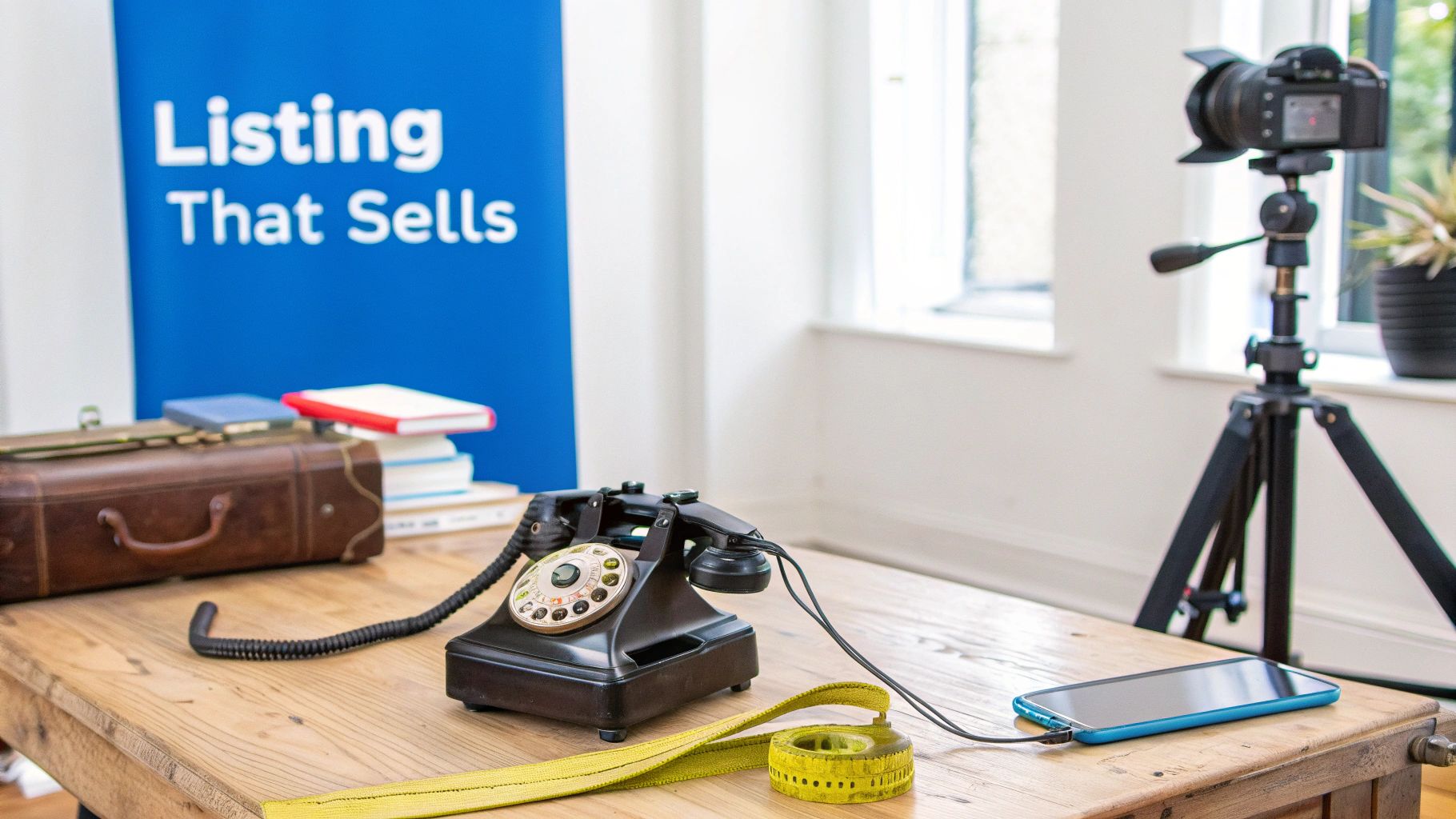
You’ve done the hard work of identifying, assessing, and prepping your antique phone table and chair. Now for the fun part: creating an online listing that truly does it justice. Think of your listing on DIYAuctions as your digital storefront. It's your one chance to make a great first impression and tell your piece's story.
It all starts with the photos. You don’t need a professional setup—your smartphone and some good natural light are your best friends here. Find a spot near a large window, but try to avoid that harsh, direct sun that can cause glares and wash out the beautiful color of the wood.
Your job is to capture every single angle. Put yourself in the buyer's shoes. They'll want to see the front, back, sides, and top. Get close-ups of the details that matter: the wood grain, any maker’s marks, the original hardware, and the chair's upholstery. And be honest. If there’s a scratch or a tiny chip in the veneer, take a clear picture of it. Transparency builds trust and prevents headaches down the road. For more great tips, check out our guide on how to take professional product photos.
Crafting a Title and Description That Connects
Your title is what will grab a buyer's attention in a sea of search results. Be specific! Use the keywords you think someone would actually search for. "Old Table" won't cut it. Something like "Vintage Mid-Century Modern Teak Phone Table and Chair Set" is worlds better—it packs in the era, style, material, and what the item actually is.
The description is where you breathe life into the piece. Lead with the essentials:
- Precise Measurements: Don't skip this. Include the height, width, and depth for both the table and the chair. Buyers need to know if it will fit in their home.
- Condition Report: Be honest and use the right terms. You can mention the "beautiful aged patina" but also be upfront about any "minor veneer chipping on the back leg."
- The Story: If you know anything about its history, share it! Was it a family heirloom? Mention the era it came from and point out any cool design features you discovered.
Your listing is tapping into a market with renewed energy. We're seeing a huge resurgence in demand for antique furniture, especially pieces with a real story. Dark woods are making a major comeback, and the broader collectibles market is expected to grow at a CAGR of over 6% through 2027. You can dig into more of these trends over on ResearchAndMarkets.com.
Setting the Right Price and Logistics
Time to pull out that market research you did earlier. Price your set competitively based on what similar pieces in similar condition have actually sold for. On DIYAuctions, you can choose a starting bid or a "Buy It Now" price. A slightly lower starting bid is a great way to drum up early interest and get the bidding started.
Finally, nail down the logistics. Furniture is bulky, so most sales will be for local pickup. State this clearly in your listing. Mention your general area (e.g., "Los Angeles area") and outline your pickup expectations. Being clear about the pickup window and whether the buyer needs to bring help to move the item ensures a smooth handoff for everyone involved.
Tackling Common Questions About Selling Antique Furniture
Even with the best plan, you're bound to hit a few snags or have some questions pop up when you're getting ready to sell a vintage piece like a phone table. It happens to everyone. Let's walk through some of the most common hurdles I see sellers face, so you can move forward with confidence.
"What If I Can't Find a Maker's Mark?"
This is probably the number one question I get. First off, don't panic. While finding a clear maker’s mark is the gold standard, its absence doesn't mean your piece is junk. Plenty of fantastic, well-made antiques were never marked, especially older, handcrafted items.
When there's no mark, your other detective work just becomes more important. You'll need to lean on the other clues we've talked about—the type of wood, the style of the joinery (like those dovetail joints), the hardware, and the overall design. This is where your detailed photos and rich description do the heavy lifting, building a case for authenticity piece by piece.
How to Price a Piece with Damage
The next big question is always about flaws. What do you do with a piece that has a noticeable water ring or a wobbly leg? The answer is simple: be brutally honest. Trying to hide or downplay damage is a surefire way to end up with an unhappy buyer and a potential headache with the sale.
Instead, own it. Address the damage directly in your description and, even more importantly, show it in your photos. Price the set accordingly, maybe even calling it a "great restoration project" or noting its "charming imperfections." You'd be amazed how many people are specifically looking for a piece they can fix up themselves. By pricing it fairly for its current state, you attract the right kind of buyer—one who sees potential, not a problem.
You'll have to decide whether to invest in professional repairs before listing. It's a simple cost-benefit analysis. For a truly rare or high-value phone table, a pro restoration could seriously boost the final price. For a more common piece, that repair bill might be more than the value it adds. In that case, selling it as-is is the smarter move.
Arranging a Safe and Smooth Local Pickup
Finally, let's talk about the handoff. Most furniture sales on DIYAuctions are for local pickup, so making that process seamless is key. It all comes down to clear communication.
As soon as your item sells, get in touch with the buyer to coordinate.
- Propose a clear timeframe. Give them a few specific days and time slots to choose from.
- Set expectations upfront. Your listing should already state this, but repeat in your message that the buyer needs to bring their own muscle and any moving blankets or straps.
- Pick a safe spot. You don't need strangers wandering through your house. Moving the phone table to your garage, carport, or even a covered porch for the pickup is a great way to keep things comfortable and secure for everyone.
Thinking through these common situations ahead of time means you won't be caught off guard. You’ll be able to handle whatever comes your way and make sure your antique phone table finds its new home without a hitch.
More guides in Selling Antiques & Collectibles
July 31, 2026
Ceramic Christmas Tree Atlantic Mold Seller's Guide
Identify, value, and sell a Ceramic Christmas Tree Atlantic Mold piece with confidence. Covers markings, rarity, condition, pricing, and listing tips.
Read guideJuly 30, 2026
Nurre Mirror Value: How to Identify and Sell for Profit
Learn to assess nurre mirror value with our step-by-step guide. Identify authentic pieces, estimate price, and sell profitably on DIYAuctions.
Read guideJuly 29, 2026
Distinction Deluxe Stainless Steel by Oneida HH: A Complete
Learn to identify, assess, and price your distinction deluxe stainless steel by oneida hh set for maximum profit.
Read guideGet the estate sale pricing guide
Enter your email for pricing ranges, planning notes, and a clearer path to launch.