A Modern Guide to Successful Art Estate Sales
Discover how to run successful art estate sales. Our guide covers art valuation, pricing, and proven sales strategies to maximize your collection's value.
Whether you're downsizing or handling an inheritance, dealing with a lifetime's worth of art can feel like a monumental task. An art estate sale turns what seems like a complex chore into a genuinely profitable project. This is your chance to take the wheel, sidestep the steep commissions of traditional auction houses, and unlock the real financial potential sitting on your walls.
From Collection to Cash Flow
A home filled with paintings, sculptures, prints, and ceramics tells a story. It’s a reflection of years of passion, memories, and personal taste. But when life shifts, that collection can suddenly feel less like a joy and more like a burden. How do you even begin to figure out what it's worth, find the right buyers, and handle all the logistics?
The key is to change your approach. Instead of handing everything over to a third party and hoping for the best, you take an active role. Modern platforms give you the power to manage your own sale, which means you keep the lion's share of the profits. This isn’t just about offloading items; it's about respecting the collection's history while making a smart financial move.
Understanding the Modern Art Market
The art market can sound intimidating, with headlines screaming about multi-million dollar paintings. But the reality for most collections is much more grounded—and frankly, more exciting. The numbers tell a fascinating story. While the global art market pulled in an estimated $57.5 billion, the most interesting growth happened at a different level.
The market for art valued under $5,000 actually grew by 7% in value, and the number of lots sold jumped by 13%. This shows a huge appetite from collectors and everyday buyers for accessible, valuable art. That’s the sweet spot where a well-run art estate sale can truly succeed. You can dig into the specifics by checking out the full art market report.
This journey from a physical collection to cash in your pocket is a straightforward process when you break it down.
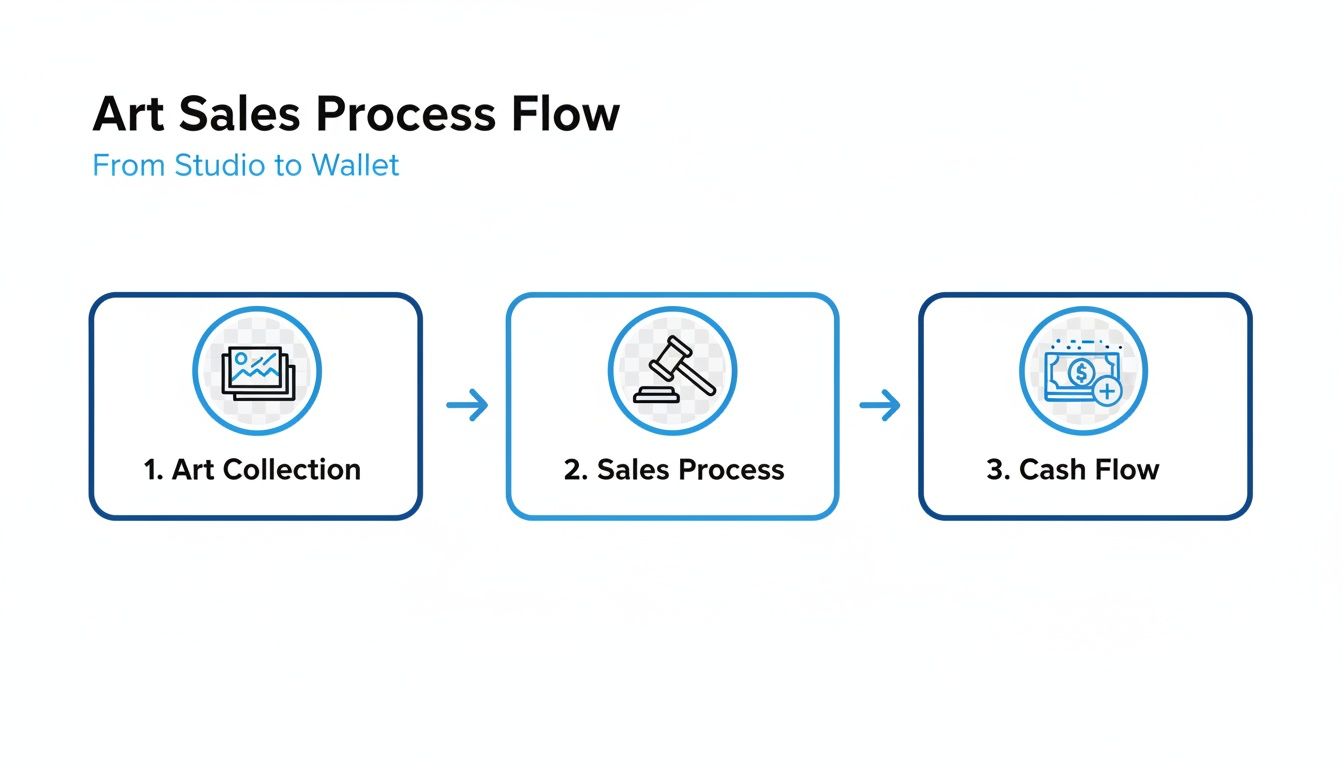
As you can see, managing your art properly leads directly to a successful sale and money in the bank. It's a clear path.
Taking Control of Your Sale
So, why manage the sale yourself? Two words: control and profit. Traditional estate sale companies often take commissions anywhere from 30% to 50%, which is a massive cut of your proceeds. When you take charge, you get to call the shots on what really matters:
- Pricing: You’re in the driver's seat. Set your starting bids and reserve prices based on what you know and what you're comfortable with, making sure nothing gets sold for less than it's worth.
- Timing: Forget waiting for a spot to open up on someone else’s busy calendar. You pick the sale dates that fit your schedule.
- Presentation: You get to tell the story behind each piece. You control the photos and write the descriptions that capture what makes each work of art special.
By overseeing the process yourself, you transform from a passive client into an empowered seller. Platforms like DIYAuctions are designed for this exact purpose, providing the structure and tools needed to run a professional sale without sacrificing a large portion of your earnings.
How to Inventory Your Art Collection
Before you can even think about listing a single piece of art, you have to know exactly what you’re working with. A thorough inventory isn't just a simple list; it's the bedrock of your entire art estate sale. This part of the process is less about being an art historian and more about being a detective, gathering the crucial details that will ultimately determine value and catch a buyer's eye.
Think of each piece of art as having its own unique story or resume. Your job is to document it, from its creation to its current condition. You can start with a basic spreadsheet or even a dedicated notebook, but the key is consistency. For every single item—whether it's a massive oil painting or a small ceramic vase—you need to capture the same core information.
Gathering the Essential Data
Your first pass at inventory is all about the "what." This is the objective, factual information you can find just by carefully examining the piece. Don't get hung up on value just yet; for now, your only goal is documentation. A well-organized inventory gives any future appraiser or potential buyer a clear, professional snapshot of the collection right from the start.
For each work, make sure you document these key details:
- Artist's Name: Look for a signature. On a painting, it’s usually in a bottom corner, but check the back, too. For sculptures, inspect the base or underside for a signature, initials, or a foundry mark.
- Title of the Work: If the title isn't clearly written on a label or the back of the piece, it's best to leave this blank for now. Never guess—an incorrect title can seriously mislead buyers.
- Dimensions: Measure the height and width of the artwork itself, not including the frame. For three-dimensional pieces like sculptures, record the height, width, and depth at their widest points.
- Medium: Get specific about what it’s made of. Is it an "oil on canvas," a "watercolor on paper," a "bronze sculpture," or a "lithograph print"? The more detail, the better.
- Provenance Clues: Hunt for any gallery labels, exhibition stickers, or handwritten notes on the back. These clues provide a history of ownership (provenance), and a strong provenance can dramatically increase an item's value.
A well-documented inventory is your most powerful sales tool. It builds buyer confidence and provides the substance needed for accurate pricing, directly impacting your final profits.
Assessing the Condition of Each Piece
Once you have the basics down, it’s time to put on your critic’s hat and be brutally honest about each item’s condition. You don’t need to know technical jargon, just use clear, plain-language descriptions. This kind of transparency is non-negotiable for online art estate sales, since buyers are relying completely on your assessment to bid with confidence.
Examine each piece in good, natural light if you can. Make a note of any imperfection, no matter how small it seems. For paintings and prints, check for:
- Discoloration or yellowing on the paper or varnish
- Cracks in the paint (the official term is craquelure)
- Any scratches, tears, or holes in the canvas or paper
- Water damage, stains, or any signs of mold
- Damage to the frame itself, like chips or busted corners
For sculptures and other 3D works, look for chips, cracks, missing bits, or any major patina changes that look more like damage than natural aging. This detailed condition report is gold when you start writing your online listings and will help you justify your pricing. For more in-depth strategies, you can learn more about inventory management best practices in our complete guide.
Safe Handling and Storage During the Process
Throughout this entire inventory process, remember that how you handle the art is critical to preserving its value. Always work with clean, dry hands. Even better, wear nitrile gloves to avoid transferring oils and dirt onto the surfaces.
When you have to move paintings, carry them by the sides of the frame—never, ever by the top wire. Store them standing upright, facing each other, with a protective piece of cardboard sandwiched between them. Don't stack them flat on top of one another, as the pressure can cause irreversible damage. Keeping the art in a climate-controlled, low-traffic spot while you work will prevent accidents and ensure every piece stays in the best possible shape for its new owner.
Smart Valuation and Pricing Strategies

Figuring out what the art is actually worth is, hands down, the most intimidating part of running an art estate sale. If you price a piece too high, you’ll scare off bidders before they even get started. Go too low, and you're just leaving cash on the table.
The secret is to approach valuation with a clear head and a solid strategy. It's part detective work, part market analysis. Your first big decision is whether to hire a pro or roll up your sleeves and do the research yourself.
Formal Appraisals Versus DIY Research
Getting a formal appraisal from a certified expert gives you a valuation that holds up for legal, tax, or insurance purposes. These folks live and breathe art, with access to exclusive sales data that helps them pinpoint a value, especially for rare or big-ticket items. But that expertise isn't free—you're typically looking at $150 to $500 per hour.
For most collections you'll find in an estate, DIY research is the way to go. It's practical, cost-effective, and puts you in the driver's seat. The goal is to find comparable sales—we call them "comps"—which are just records of what similar pieces by the same artist have recently sold for.
The art market is actually in a sweet spot for this right now. Recent data shows that while public art sales over $10 million dropped by 44% year-over-year, the market for art under that price point actually grew by 17%. This tells us there's a huge, active market for the kind of art that fills most estates, making it the perfect time to sell.
Comparing Artwork Valuation Methods
To help you decide which path is right for your collection, here’s a quick breakdown of your main options.
| Valuation Method | Best For | Pros | Cons |
|---|---|---|---|
| Formal Appraisal | High-value, rare, or complex collections; needs for legal or insurance purposes. | Legally defensible, highly accurate, expert insights. | Can be expensive ($150-$500/hr), time-consuming to schedule. |
| DIY Research | Most estate collections with a mix of known and lesser-known artists. | Cost-effective, empowering, flexible, and fast. | Can be time-intensive, risk of mispricing without good data. |
| Auction House Estimate | Potentially valuable pieces you might consign to a major auction house. | Free, provides a good market pulse from a major player. | Estimate is not a formal valuation; they may not be interested in all pieces. |
| Online Valuation Tools | Quick, preliminary checks on more common or listed artists. | Fast and often free for initial lookups. | Can be inaccurate; often relies on asking prices, not sold prices. |
Each method has its place. For a typical estate, a savvy mix of DIY research for the bulk of the collection, with a potential formal appraisal for one or two standout pieces, often strikes the perfect balance.
Finding Your Own Comparable Sales
To find solid comps, you need to know where to dig. You're looking for sold records of art that match yours as closely as possible in artist, medium, size, and condition.
Here are the best places to start your search:
- Online Art Databases: Sites like Artnet and AskArt are goldmines of auction records. Full access can cost money, but they often provide enough free info to get you started.
- Auction House Archives: Big names like Sotheby's and Christie's, plus many regional auctioneers, keep their past sales results online. A quick search for the artist can turn up real-world prices.
- Online Marketplaces: For regional or less famous artists, don't overlook eBay (use the "Sold Items" filter) and LiveAuctioneers. The data here is invaluable for understanding what everyday buyers are willing to pay.
Here's the key: Always, always focus on the final sold price, not what someone was asking for. An item is only worth what a buyer actually paid. That's the only number that matters.
Setting a Smart Pricing Strategy
Once you have a value range, it’s time to decide how you want to sell. This is more than just picking a price; it’s about choosing a method that fits your goals. For particularly valuable items, verifying authenticity and clear title for high-value items is an essential step to protect both you and the buyer.
Think about using one of these proven strategies in your art estate sale:
- Set a Reserve Price: This is your secret floor price. Bidding can start super low to draw people in, but the piece won’t sell unless the bidding hits your hidden reserve. It’s the perfect way to protect your investment without scaring anyone off with a high starting bid.
- Offer a 'Buy It Now' Option: Some buyers don't want to wait. A "Buy It Now" price lets someone grab the item instantly, ending the auction. It’s a great option for decisive collectors willing to pay a little extra to lock it down.
- No-Reserve Auction: This one is a thriller. If you know an item is in high demand, starting the bidding at $1 with no reserve can create an absolute frenzy. The competition itself drives the price up, often beyond what you would have set as a fixed price.
By pairing solid research with a smart, flexible pricing strategy, you can set yourself up for a successful sale. You can dive deeper into this topic with our guide on how to determine fair market value.
Creating Online Listings That Sell
You’ve done the hard work of inventorying everything and you have a solid pricing strategy. Now for the fun part: creating the online listings that connect your art with eager buyers.
Think of your photos and descriptions as your virtual showroom. In an online art estate sale, they're your salesperson, your storyteller, and your handshake all rolled into one. A blurry photo or vague description can make even a masterpiece look questionable. A sharp, detailed presentation, on the other hand, signals quality and professionalism, giving bidders the confidence they need to compete for your art.
Mastering Artwork Photography
You don't need a pro-level studio to take photos that sell. Your most powerful tool is simply good, natural light.
Find a spot near a large window, ideally on a slightly overcast day to avoid harsh sunbeams. This soft, diffused light is perfect for capturing the artwork’s true colors and textures without creating nasty glare or dark shadows.
For paintings and prints, hang the piece flat against a neutral wall. Stand directly in front of it with your camera or phone, making sure you’re parallel to the artwork to prevent any weird distortion. Snap several shots to guarantee you get at least one perfectly sharp image.
Pro Tip: Whatever you do, turn off your camera's flash. It’s the fastest way to ruin a photo of artwork. The flash creates a harsh glare that washes out colors and completely hides details like brushstrokes and signatures.
Beyond that one great overall shot, you need to capture the details that serious collectors and buyers zero in on. These close-ups are what build bidder confidence.
- The Signature: Get a crisp, close-up photo of the artist's signature. This is often the first thing a potential buyer looks for.
- Surface Texture: Take an angled shot to show the texture—the thick impasto of oil paint, the weave of the canvas, or the grain of the paper. This helps prove the medium and quality.
- The Frame: Don't neglect the frame! Show its condition, including any cool details or signs of wear and tear.
- Labels and Markings: Photograph any gallery labels, inscriptions, or edition numbers on the back. This is crucial documentation for establishing provenance.
- Condition Issues: Be upfront about any flaws. Take clear photos of any scratch, chip, or discoloration. Honesty builds trust and prevents headaches later on.
Since art is so visual, knowing how to optimize images for web performance is a game-changer for creating fast-loading listings that keep buyers from clicking away. For even more pointers, check out our guide on how to take professional product photos for your sale.
Writing Titles and Descriptions That Convert
Your listing title is your first impression. It needs to be descriptive and packed with the keywords a real collector would search for. A generic title like "Nice Painting" will get you nowhere.
A powerful title should include these key ingredients:
- Artist's Name (if known)
- Title of the Work (if known)
- Medium (e.g., "Oil on Canvas," "Lithograph Print")
- Style or Period (e.g., "Mid-Century Modern Abstract," "Impressionist Landscape")
- Key Features (e.g., "Signed," "Limited Edition," "Framed")
Here's an example of a title that works: John Smith Signed Mid-Century Modern Abstract Oil on Canvas, 1968
The description is where you tell the piece’s story. Start with the facts you gathered during your inventory—dimensions, medium, and a detailed condition report. Then, bring it to life. Where did the art come from? Who was the artist? Any interesting details about its history (provenance) can forge an emotional connection that really drives up the bids.
Using a platform like DIYAuctions makes this part easy, guiding you field-by-field to build a professional-looking catalog that grabs the attention of serious buyers.
Marketing and Managing Your Art Sale

Once your online catalog is looking sharp, it’s time to get some eyes on it. A platform like DIYAuctions brings a built-in audience of local buyers, but a little extra promotion can make a huge difference in your final results. This is where you put on your marketer hat.
Your goal isn’t just to attract casual browsers. You want to create a buzz that pulls in serious collectors who know what they're looking at and are ready to bid.
Spreading the Word Effectively
Think of your marketing as an extension of your listings—it should be just as thoughtful. Each post or email is an invitation, giving people a real reason to check out your art estate sale.
- Showcase on Social Media: Don't just post a link and call it a day. Tell a story. Share your best photos on Instagram and Facebook and use hashtags that collectors actually follow, like #ArtForSale, #LocalArt, #[YourCity]Art, and #EstateSaleFinds.
- Tap into Local Art Communities: Find local Facebook groups for art lovers, antique collectors, or even neighborhood events. A simple, well-written post highlighting a few standout pieces can drive a surprising amount of local traffic.
- Use Your Personal Network: Never underestimate the power of word-of-mouth. A quick, personal email to friends, family, and colleagues with a link to your sale can work wonders. You never know who’s a budding collector or knows someone who is.
Don't let recent headlines fool you; the art market is surprisingly strong, especially in the sweet spot for estate sales. While overall sales saw a small dip, the number of lots sold at public auction actually grew by 4%, and fine art lots jumped by 6%. That growth was driven by pieces in the sub-$5,000 range—exactly where most estate sale art lands. You can dig into these global art market trends to see the opportunity for yourself.
Executing a Flawless Pickup Day
This is it—the grand finale. A smooth, organized pickup day ensures your buyers have a great experience and saves you from a world of logistical headaches. Getting this right leaves a lasting positive impression.
Your main job here is to make it incredibly easy for people to collect their new treasures. Clear communication is everything. Before the pickup day, shoot a confirmation email to every winning bidder. Include the exact address, their scheduled pickup time, and any specific instructions they need to know.
A well-planned pickup day is the hallmark of a professional sale. By organizing items and scheduling appointments, you prevent chaos and ensure every transaction is secure and efficient.
This structured approach keeps you from having a dozen people show up at once, turning a potentially stressful day into a calm and orderly process.
Your Pickup Day Checklist
A simple checklist will keep you on track when things get busy. Preparation is key.
- Organize the Artwork: Before the first person arrives, get each buyer's items grouped together. Slap a label on each lot with the buyer’s name and invoice number. This one step will save you a massive amount of time and confusion.
- Set Up a Staging Area: Designate a clean, accessible space—a garage or entryway works perfectly—where buyers can do a final inspection before they haul their items away.
- Have Packing Supplies Ready: Buyers should bring their own packing materials, but it’s a classy move to have some extra bubble wrap, paper, or a few boxes on hand. It shows you care about the art making it home safely.
- Confirm Payments: This is a huge benefit of using a platform like DIYAuctions—the money is already handled securely online. Your only job is to check the buyer’s ID against your list of paid invoices. No fumbling with cash or worrying about payments.
By managing the marketing and logistics with a bit of care, you ensure your art estate sale is not just profitable but also a smooth and rewarding experience from beginning to end.
Your Art Estate Sales Questions Answered
Even with the best plan, running an art estate sale will almost always bring up a few last-minute questions. It’s completely normal. When you’re in the home stretch, dealing with unsold pieces or figuring out financial obligations can feel a little overwhelming.
This section is built to give you quick, practical answers to the most common questions we see from sellers. We want to help you clear these final hurdles so you can wrap up your sale feeling confident and successful.
What Should I Do with Art That Doesn't Sell?
It happens in every sale—a few items don’t find a home. Don’t worry about it. This is a standard part of the process, and the trick is simply having a game plan ready before the auction ends.
What you do next really depends on the art's value and your own priorities. Here are a few solid options:
- Re-list the Item: Sometimes, a great piece just needs a second look. If you still believe it has value, you can always try again in a future sale or list it on another online marketplace.
- Donate to Charity: For art with more sentimental or decorative appeal than monetary value, a donation is a fantastic choice. Local museums, schools, or community centers are often grateful for such pieces, and you might even get a tax deduction.
- Consign to a Local Shop: Got a nearby antique mall or consignment store? They're always on the hunt for fresh inventory. This is a low-effort way to get the art in front of a new crowd without managing the sale yourself.
- Gift to Family or Friends: Before anything else, consider if a relative or friend would love one of the remaining pieces. It's a wonderful way to keep the art's story going.
Having a plan for unsold items before your sale concludes is crucial. It transforms a potential source of stress into a simple, manageable task, allowing you to focus on the successes of your sale.
How Do I Handle Shipping for Out-of-Town Buyers?
While most of your bidders in a DIY art estate sale will likely be local, you might be surprised by interest from farther away. Offering shipping can dramatically expand your buyer pool and often leads to higher final sale prices. Just be sure your shipping policy is crystal clear right from the start.
In your listings, state that shipping is available at the buyer's expense. Once the auction is over, you can coordinate directly with the winning bidder. You have two main ways to go about it:
- Professional Packing and Shipping: For valuable, large, or delicate artwork, this is your safest option. Take the piece to a professional shipper (like a UPS Store that handles art). They’ll pack it properly and manage the logistics. You simply pass that cost on to the buyer.
- DIY Packing: For smaller, sturdier, or lower-value pieces, you can handle it yourself. Just be sure to use the right materials—plenty of bubble wrap, strong boxes, and good packing tape. Always ship with tracking and insurance, and charge the buyer for the postage plus a small fee for your materials and time.
Are There Tax Implications I Need to Know About?
This is a big one, and the honest answer is: it depends. Tax laws around estate sales can get complicated, changing based on your location and the specifics of the estate. Because of this, we highly recommend you consult with a tax professional or an estate lawyer.
That said, here are a few key concepts to be aware of so you can have an informed conversation:
- Inheritance Tax: A handful of states have an inheritance tax, which is paid by the person who inherits the property. This is different from an estate tax, which is paid by the estate itself.
- Capital Gains Tax: This is important. If you inherit art and then sell it for more than its fair market value on the date of the original owner's death, that profit could be subject to capital gains tax. This is tied to a "step-up in basis," a term you'll want to understand.
- Sales Tax: You may need to collect sales tax from your buyers, depending on your state's laws. The good news is that platforms like DIYAuctions often collect and remit this for you, which makes life much easier.
Getting professional advice on taxes is the single best way to protect your profits and avoid any unpleasant surprises later on. It’s the final step to ensuring your sale is a complete success.
More guides in Estate Sale Basics
July 28, 2026
Revenue Reporting for Estate Sales and Auctions
Learn revenue reporting essentials for estate sales and auctions. Discover key metrics, templates, and best practices to simplify tracking and compliance.
Read guideJuly 26, 2026
Stamp Collection Valuation: A Practical Step-by-Step Guide
Stamp collection valuation made simple. Learn how to identify, grade, price, and sell your stamps with confidence for estate sales or consignment.
Read guideJuly 23, 2026
Estate Sales Brick NJ: Your 2026 Guide to Success
Planning your estate sales brick nj? Our guide covers permits, pricing, marketing, & running a safe sale with DIYAuctions.
Read guideGet the estate sale pricing guide
Enter your email for pricing ranges, planning notes, and a clearer path to launch.