A Modern Guide to Your Auction of Jewelry
Discover how to run a successful auction of jewelry. This guide shares expert tips on appraisal, photography, pricing, and marketing for maximum profit.
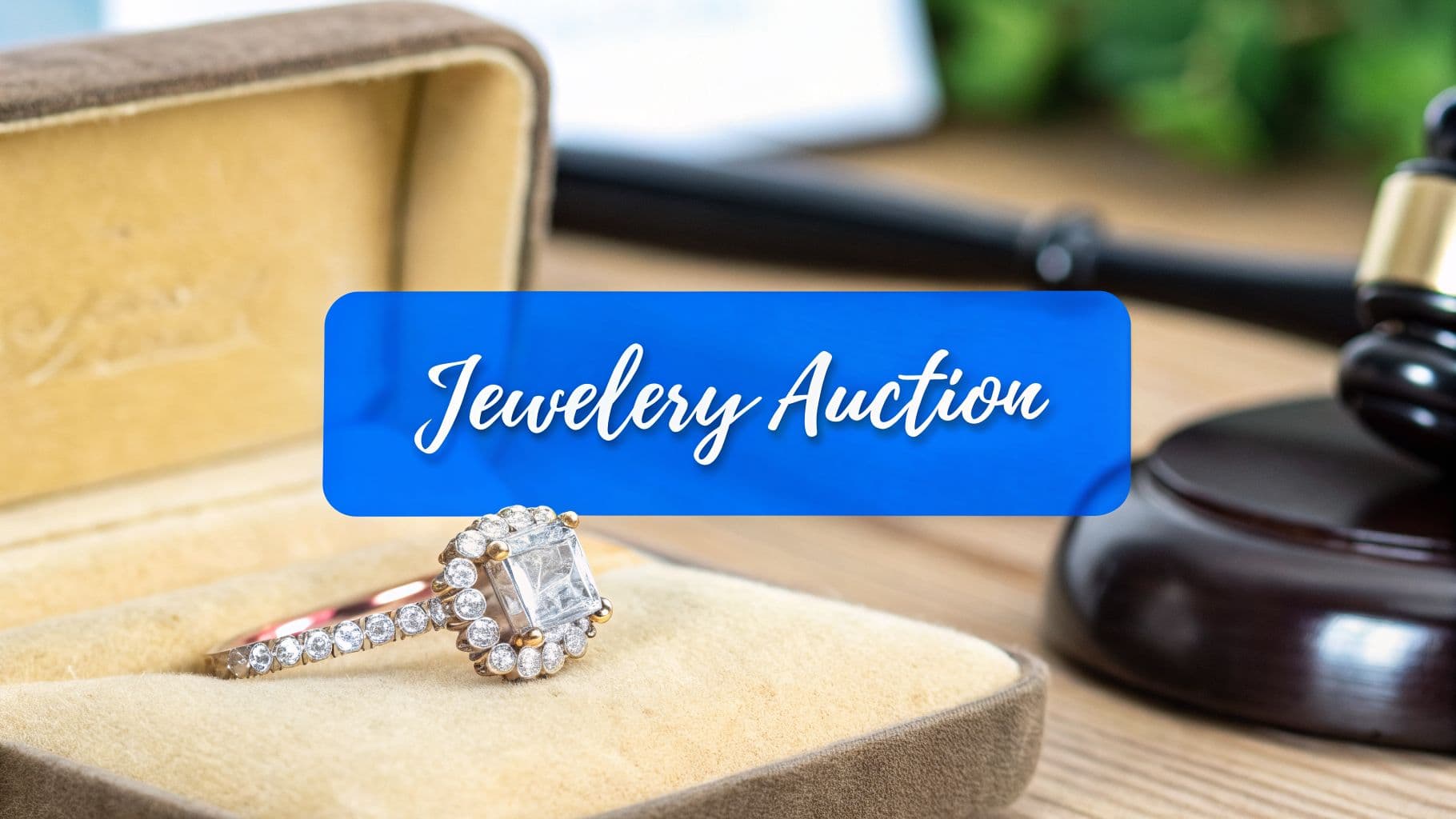
Thinking about selling some jewelry? Whether you're handling an estate, downsizing your own collection, or just looking to turn old pieces into cash, an auction can be a surprisingly powerful tool. It’s about more than just selling; it's about getting the true value for your items by letting bidders compete for them.
Unlocking the Value in Your Jewelry Box

That box of jewelry sitting in a drawer might hold a lot more than just sentimental value. Many of us have inherited heirlooms or have pieces that have simply gone out of style. The idea of selling them can feel overwhelming, but a well-run auction turns what seems like a chore into a smart financial decision.
Forget the lowball offers you might get at a pawn shop. An auction creates a dynamic, competitive marketplace that brings in multiple motivated buyers. When bidders compete, the final price often goes far beyond what you'd get from a single buyer in a private sale.
Why an Auction Often Beats Other Sales Methods
When you hear "jewelry auction," you might picture a high-end, exclusive event. While those certainly exist, modern online platforms have opened up this powerful sales method to everyone.
The core advantage is simple: you connect your jewelry with a wide, targeted audience of buyers who are ready to compete.
- Wider Reach: An online auction puts your items in front of a much larger pool of buyers than local ads or word-of-mouth ever could.
- Competitive Bidding: Nothing drives up a price like the excitement of a bidding war. It’s a natural way to discover an item's true market value.
- Full Transparency: With all bids out in the open, it's a fair and transparent process. Buyers can see what they're up against, which builds trust and encourages higher offers.
Thinking about whether your collection is a good fit for an auction? This quick table can help you assess the potential.
Jewelry Auction Potential at a Glance
| Factor | Description | Why It Matters for Your Auction |
|---|---|---|
| Brand Recognition | Pieces from well-known brands like Tiffany & Co., Cartier, or Rolex. | Brand names attract specific collectors and can command higher prices right from the start. |
| Material & Quality | Items made with high-karat gold, platinum, or large, high-quality gemstones. | The intrinsic value of the materials provides a solid price floor and appeals to a broad range of buyers. |
| Rarity & Uniqueness | One-of-a-kind custom pieces, antique or vintage items, or limited editions. | Scarcity creates demand. Unique items can spark intense bidding competition. |
| A Compelling Story | Jewelry with documented history, from a notable estate, or with an interesting past. | A great story adds emotional value and makes a piece more desirable to bidders. |
| Condition | Items are in excellent shape, have been well-maintained, or come with original boxes/paperwork. | Good condition and original packaging signal quality and authenticity, increasing buyer confidence. |
Even if your items don't tick every box, a well-marketed collection with a mix of these factors has fantastic potential for a successful auction.
From Royal Treasures to Your Personal Collection
Selling valuable jewelry at auction has a long, fascinating history. Way back in 1795, Christie's held a famous auction for the jewels of Madame du Barry, King Louis XV's consort. Later, the 1887 auction of the French Crown Jewels generated what would be over $400 million in today's money.
These massive historical events were driven by the same things that make an auction successful today: scarcity, a great story, and competitive demand.
Key Takeaway: You're not just "selling jewelry." You're strategically marketing unique assets to an audience that's ready to buy. The principles that worked for royalty can work for you, too.
The good news is, you don't need a crown to run a successful auction in 2026. Platforms like DIYAuctions give you the tools to create a professional auction experience for your own collection. The focus shifts to what makes an item truly desirable—its condition, brand, rarity, and the story behind it.
The first, most critical step is figuring out what your jewelry is actually worth. To get started on the right foot, check out our guide on how to determine fair market value.
Preparing Your Pieces for the Auction Block

A successful jewelry auction doesn't just happen when the bidding starts. The real work—the work that separates a decent sale from a truly profitable one—begins long before your items ever see the auction block.
Think of this early stage as setting the foundation. Every bit of effort you put into preparation now directly translates into higher bids and more money in your pocket later. It's about knowing what you have, showing it off perfectly, and telling a story that makes bidders need to own it.
Understand What It's Worth
First things first: you need an appraisal. But it's critical to get the right kind of appraisal, because this is where many sellers make their first mistake.
There are two values you’ll hear about, and they mean very different things.
-
Retail Appraisal: This is that big number you see on an insurance policy. It's the cost to replace the item with a brand-new one from a high-end store. It's great for insurance, but it's not a realistic sale price.
-
Fair Market Value (FMV) Appraisal: This is the number you actually need. It’s a real-world estimate of what a knowledgeable buyer would likely pay for your piece today. This is the value that should guide your expectations and your reserve price.
To get a solid FMV, seek out an independent, qualified graduate gemologist—someone whose job is to appraise, not sell, jewelry. Their unbiased opinion is invaluable. Look for credentials from respected organizations like the Gemological Institute of America (GIA).
The Power of Paperwork and Provenance
In a jewelry auction, paperwork is everything. You aren't just selling a piece of jewelry; you're selling confidence. Every official document you have is a building block of trust that encourages buyers to bid higher.
It's time to gather every scrap of documentation you can find. We’re talking about:
- Gemological Reports: For any serious diamond or gemstone, a GIA, AGS, or EGL certificate is the gold standard. It’s non-negotiable for high-value pieces.
- Original Receipts: These help establish an item’s age, origin, and history—its provenance.
- Past Appraisals: Even older retail appraisals add to the story and provide helpful specifications.
- Branded Boxes and Packaging: Don't underestimate this! An original blue box from Tiffany & Co. or a red one from Cartier can significantly boost an item's final price.
Key Insight: Provenance is the story that makes your piece unique. Was it a fiftieth-anniversary gift? Did it belong to a globetrotting relative? Weaving this history into your description transforms a simple necklace into a one-of-a-kind artifact. Bidders love a good story.
Before you even think about photos, consider how you’re keeping these items safe. Storing and presenting your jewelry in a professional manner, like in a lockable glass cabinet, adds another layer of credibility, especially if you plan an in-person preview.
To Clean and Repair or Sell As-Is
So, should you fix that clasp or polish out that scratch? This is a common question, and the answer is: be strategic. A sparkling, clean piece will always get more attention, but not every repair is a smart financial move.
A professional cleaning is almost always a 'yes'. For a small fee, a jeweler can use an ultrasonic cleaner and steamer to make metal and gems pop. Clean jewelry photographs dramatically better, and great photos are essential. Need help with that? Our guide on how to take professional product photos has you covered.
When it comes to actual repairs, you need to weigh the cost against the potential return.
Repairs That Make Sense:
- Fixing a broken clasp on a necklace or bracelet.
- Replacing a tiny, missing pavé stone.
- Polishing out light scratches from a gold or platinum band.
Repairs to Probably Skip:
- Recutting a primary gemstone. This is a job for experts and can fundamentally change the stone's value (not always for the better).
- Major structural work that costs hundreds of dollars. You likely won’t make that money back in the sale.
- Altering an antique piece's original design. You could inadvertently destroy its historical value.
Your appraiser is a great resource here. Sometimes, the "flaws" are part of an item’s character and history, especially with antiques. The goal is to enhance the presentation, not erase the past.
Crafting Listings That Captivate and Convert
When you're auctioning jewelry online, your listing is your salesperson. It’s your digital display case and your expert storyteller, all rolled into one. A powerful listing doesn't just show an item—it makes a bidder feel a connection, trust its quality, and get excited to place that next bid.
This isn’t about being a professional photographer or a novelist. It's about being smart. By focusing on crystal-clear photos and a compelling story, you can create listings that grab serious attention and drive the prices you’re hoping for.
Smartphone Photography That Sells
Forget the expensive DSLR camera. Your smartphone is more than capable of taking stunning photos that make your jewelry pop. The real secret isn't the camera; it's controlling the light and the background.
- Lighting is Everything: Natural, indirect light is your best friend. Find a spot near a window on a slightly overcast day. Stay away from direct sun, which creates harsh glares, and absolutely never use your phone’s flash—it will wash out all the beautiful details and color.
- Keep the Background Simple: Use a plain, non-reflective surface in a neutral color like white, gray, or black. This makes sure the jewelry is the star of the show. A simple piece of felt or a sheet of poster board is all you need.
- Capture the Essential Details: You need to take several shots from different angles. Be sure to get close-ups of any hallmarks (like "14K" or a maker's mark), the clasp, the setting, and any intricate design work. For gemstones, do your best to show off their facets and clarity.
A steady hand is non-negotiable for sharp, clear photos. You can rest your elbows on a table or use an inexpensive phone tripod. Blurry photos are the number one reason bidders lose interest and click away.
Expert Tip: Use your phone’s "macro" mode for those super close-ups. This feature is designed for capturing tiny details, making it perfect for showing off hallmarks and the quality of a gemstone. Most modern phones have this built right into the camera app.
Writing Descriptions That Tell a Story
Photos grab the initial attention, but it's the description that builds the trust and desire needed to win an auction. A great description does more than just list the facts like "gold ring, 1.2 carats." It paints a picture and gives the piece a personality.
Start with the must-haves: metal type, weight, stone type and size, dimensions, and condition. Be totally transparent about any flaws, whether it's a small scratch or a loose prong. Honesty builds bidder confidence and saves you from headaches after the auction ends.
Once the facts are out of the way, it’s time to tell the story.
- Mention the Era: Is it a bold, geometric Art Deco piece from the 1920s? Or maybe a delicate Victorian-era locket? Naming the style period helps collectors and enthusiasts find exactly what they’re looking for.
- Share What You Know (Provenance): If you know any history behind the item, share it! "This watch was a retirement gift from a local company in the 1960s" is way more interesting than just "vintage men's watch."
- Highlight What Makes It Special: Point out the unique features. Does it have unusual filigree work? Is the gemstone a rare color? Guide the bidder's eye to what makes it a real treasure.
This story element can have a massive impact on the final sale price. Think about the 1987 Sotheby's auction of the Duchess of Windsor's jewels—it brought in $50.3 million, nearly seven times its estimate, almost entirely because of its powerful story. More recently, Elizabeth Taylor's collection fetched $137 million in 2011, with individual pieces soaring past their estimates.
Your listing is a crucial piece of marketing. To truly maximize its impact, it helps to understand how to improve website conversion rates by turning those views into active bids. Using a platform like DIYAuctions makes uploading these high-quality photos and detailed descriptions a simple, guided process, ensuring every click has the best chance of becoming a sale.
Getting Your Pricing and Auction Format Right
When it comes to auctioning jewelry, pricing is everything. It's the part of the process where a little bit of strategy can make a huge difference in your final sale price. Your pricing choices don't just set a number; they drive bidder excitement and, most importantly, protect your investment.
You have two main levers to pull: the starting bid and the reserve price. They might both be dollar figures, but they do completely different jobs. The starting bid is the public price of entry, while the reserve is your secret walk-away number—the lowest price you'd be happy to accept.
A common mistake I see is setting a high starting bid, thinking it guarantees a high final price. More often than not, it does the exact opposite. A high barrier to entry can scare off potential bidders and make your auction look like a ghost town from the start.
The Low Start, High Reserve Strategy
My go-to strategy, especially for valuable jewelry, is to pair a ridiculously low starting bid (sometimes even $1) with a realistic—and private—reserve price. This one-two punch works wonders.
The low starting bid is pure psychology. It’s an irresistible invitation for bidders to jump in, creating an immediate flurry of activity. This early action signals to other buyers that the item is desirable, building momentum right out of the gate.
All the while, your reserve price is working silently in the background as your safety net. You get all the benefits of a bidding frenzy without any of the risk, since you're never forced to sell unless your minimum price is met. You can dig deeper into this concept in our guide on what is a reserve price in an auction.
Choosing Your Auction Format
Now, let's talk about the big picture: how you'll actually run the sale. Your choice between a timed online auction and a live event can have a major impact on the outcome.
A timed online auction runs for a set number of days—say, a week. This format is brilliant for casting a wide net and giving bidders from all over the country plenty of time to find your items, do their research, and place their bids.
On the other hand, a live bidding event is all about speed and excitement. Everything happens in real-time, with bidding wrapping up in a matter of minutes. This format is perfect for creating urgency and sparking a bidding war, especially for those "hero" items that you know will draw a crowd.
And don't forget, as we've talked about, your photos are a huge part of this. Great photos give bidders the confidence to compete, no matter the format.

As you can see, sharp, clear photos are non-negotiable for getting top dollar.
Online vs Live Jewelry Auction Formats
To make the decision a little easier, here's a quick breakdown of how the two formats stack up.
| Feature | Online Auction | Traditional Live Auction |
|---|---|---|
| Pace | Slower, runs over several days | Fast-paced, concludes in minutes |
| Audience | Geographically broad and diverse | Focused, highly engaged at a set time |
| Best For | Entire collections, maximizing buyer reach | High-value "hero" items, creating urgency |
| Psychology | Builds anticipation and consideration | Creates scarcity and drives impulse bidding |
Choosing the right format really comes down to what you're selling and what you hope to achieve.
Here's a pro tip: You don't always have to choose just one. Imagine you're selling an estate with a mix of jewelry. You could run a seven-day timed auction for the entire collection to attract a wide range of buyers. Then, for that one showstopper piece—like a signed Cartier bracelet—you could schedule a "live finale" event on the last day. This focuses all the attention and energy on your best item to drive bidding through the roof.
Ultimately, a smart strategy gives you the power to shape your auction's outcome. Whether you're looking for a fast sale or want to maximize the return on a few key treasures, the right combination of pricing and formatting will get you there.
Marketing Your Auction to Find Eager Buyers

You’ve done the hard work of appraising, photographing, and listing your jewelry. Now comes the exciting part: getting your collection in front of the right buyers. A successful jewelry auction hinges on making sure people who want your pieces know they're available.
While platforms like DIYAuctions give you a huge head start by targeting qualified local buyers, you shouldn’t stop there. Your own promotional efforts can build the kind of buzz that makes a good auction truly great.
Build on the Foundation
Think of our built-in marketing as the foundation. We bring in a reliable stream of serious bidders who are already searching for high-value items and estate collections. Your job is to build on that momentum and create a personal buzz.
Start with your own network. You’d be amazed who in your immediate circle—or one degree away—is a budding collector or searching for that perfect anniversary gift. A simple, personal email or a post on your private social media can be surprisingly effective. Don't just frame it as a sale; present it as a unique opportunity.
From there, expand your reach to where enthusiasts gather online.
- Social Media: Post your most stunning photos on Instagram, Facebook, or Pinterest. Use specific hashtags like #VintageJewelry, #EstateSaleFinds, or #ArtDecoRing to tap into niche communities.
- Collector Forums: Find online groups dedicated to jewelry, antiques, or even specific brands like Rolex or Cartier. Just be sure to read and follow the group’s rules—focus on sharing your exciting finds, not just a hard sell.
The Goal: You want to turn your auction from a simple listing into a can't-miss event. Every post and share you make sends a signal that something special is happening here, drawing more eyes and, ultimately, more bids.
Spotlight Your "Hero" Pieces
One of the most powerful strategies I've seen is focusing on a "hero piece." Instead of trying to promote your entire collection at once, pick one or two of your most exceptional items to feature in your marketing. This might be your most valuable diamond ring, a signed designer bracelet, or a rare antique watch.
This hero piece becomes the headliner for your event. It's the showstopper that grabs attention and pulls people in. Once they arrive to check out the star of the show, they’ll discover all the other incredible pieces in your collection—the supporting cast.
This strategy creates a funnel, drawing bidders in with one item and getting them hooked on the rest. It’s a tactic used at every level, from local sales to global auction houses. The famous May 2016 sale of the Oppenheimer Blue diamond for $57.7 million is a perfect example of how one spectacular piece can capture global attention. That event also underscored Asia’s growing 40% share in luxury jewelry auctions, demonstrating how a single item can tap into a massive, motivated market.
While you're selling locally, platforms like DIYAuctions mirror this on a smaller scale, connecting your hero pieces with serious collectors right in your area who follow the same trends. You can learn more by exploring insights from the guardians of jewelry history.
Create an Irresistible Preview
By showcasing your best items with incredible photos and compelling descriptions, you're not just listing products—you're creating an enticing preview. Every social media post and email is a sneak peek that builds anticipation.
When your auction finally goes live, you’ll have a built-in audience of interested bidders ready and waiting to compete. This proactive approach ensures your treasures get the attention—and the prices—they truly deserve.
The auction’s over, the final bids are locked in, and the excitement starts to settle. But don't pop the champagne just yet. This last part of the process—handling the handoff with your winning bidders—is what separates a good auction from a truly great one.
The moment your auction closes, clear and friendly communication is everything. While platforms like DIYAuctions instantly send out automated invoices and notifications, a quick, personal follow-up message can set a wonderfully professional tone. It shows you’re on top of things and ready to make the final steps easy for your buyers.
Securing Payment and Dodging Fraud
Let’s be honest: handling payments for high-value jewelry can be nerve-wracking. You’re dealing with significant sums, and you need to know the money is secure before you hand over a single piece. This is exactly why integrated payment systems are a non-negotiable.
When your auction platform processes payments directly, you sidestep a world of potential headaches.
- Fraud Protection: These systems are designed to spot red flags and suspicious activity, acting as your first line of defense against common scams.
- Guaranteed Funds: The money is verified and secured before the pickup. This completely eliminates the risk of a bounced check or a reversed Venmo payment after the item is gone.
- Simple for Buyers: Winners can pay instantly and securely with a credit card, which is what they expect. It’s convenient for them and gets you paid faster.
Make sure your payment deadline is crystal clear—24 to 48 hours is the standard. This creates a sense of urgency and helps you quickly identify any bidders who weren't serious.
Running a Flawless Pickup Event
With the payments safely collected, it's time for the grand finale: getting the jewelry into the hands of your happy buyers. The most efficient and secure way to do this is with a single, well-organized pickup event.
My Go-To Checklist for a Secure Pickup:
- Schedule a Tight Window: Choose one specific day and a 3-4 hour time slot for the pickup. This focuses your efforts and keeps the event secure and manageable.
- Verify, Verify, Verify: Always require a government-issued photo ID that matches the winning bidder's invoice. No exceptions. This is your number one security step.
- Get That Signature: Have every buyer sign a copy of their invoice to confirm they’ve received their items. This simple piece of paper is your proof that the sale is complete.
- Be Ready to Go: Before anyone arrives, have all the items packaged, labeled, and organized alphabetically by the buyer's last name. This makes for a quick, smooth, and professional handoff.
If a buyer brings up a concern, handle it with calm professionalism. Your best defense is a good offense—the detailed photos and honest descriptions from your original listing. That initial transparency is what will help you resolve any last-minute questions with confidence.
By nailing these final steps, you not only ensure you get paid promptly but also leave every buyer with a positive impression, making them eager to bid in your next sale.
Got Questions About Your Jewelry Auction? I’ve Got Answers.
When you’re preparing to auction jewelry, a few key questions always come up. Getting these right from the start is the difference between a smooth, profitable sale and a frustrating experience. Let's walk through the most common questions I hear from sellers just like you.
Should I Sell My Jewelry as a Collection or Piece by Piece?
This is the big one, and from my experience, the answer boils down to one thing: value.
For your heavy hitters—think diamond engagement rings, signed pieces from designers like Cartier, or genuine antique treasures—selling them individually is almost always the best move. It lets dedicated collectors find exactly what they’re searching for and bid accordingly, which drives up the price for you.
On the other hand, for lower-value items like costume jewelry, simple gold chains, or pieces without significant gemstones, grouping them together is a much smarter strategy.
Creating a well-photographed "lot" of these pieces attracts buyers on the hunt for value. More importantly, it saves you an incredible amount of time compared to listing dozens of individual low-dollar items. This keeps your auction manageable and your efforts focused.
How Do I Know If My Old Jewelry Is Actually Valuable?
You can do some initial detective work yourself. Grab a magnifying glass and get up close.
Look for tiny stamps, called hallmarks, that signal the metal content. You might see things like ‘14k,’ ‘18k,’ or ‘PLAT’ for platinum. Also, hunt for any maker's marks or brand names, even if they're faded.
Any piece with a large gemstone, a particularly intricate design, or a recognizable brand is worth a closer look. But if you have even the slightest doubt, the single most reliable way to uncover its true value is to consult a certified gemologist. An expert eye can spot the details you might miss, ensuring a family treasure doesn't get sold for a fraction of its worth.
More guides in Selling Antiques & Collectibles
July 31, 2026
Ceramic Christmas Tree Atlantic Mold Seller's Guide
Identify, value, and sell a Ceramic Christmas Tree Atlantic Mold piece with confidence. Covers markings, rarity, condition, pricing, and listing tips.
Read guideJuly 30, 2026
Nurre Mirror Value: How to Identify and Sell for Profit
Learn to assess nurre mirror value with our step-by-step guide. Identify authentic pieces, estimate price, and sell profitably on DIYAuctions.
Read guideJuly 29, 2026
Distinction Deluxe Stainless Steel by Oneida HH: A Complete
Learn to identify, assess, and price your distinction deluxe stainless steel by oneida hh set for maximum profit.
Read guideGet the estate sale pricing guide
Enter your email for pricing ranges, planning notes, and a clearer path to launch.