Best Place to Sell Precious Moments Figurines: Guide 2026
Find the best place to sell Precious Moments figurines. Get tips for valuation, platforms like eBay, and maximize your profit in 2026.
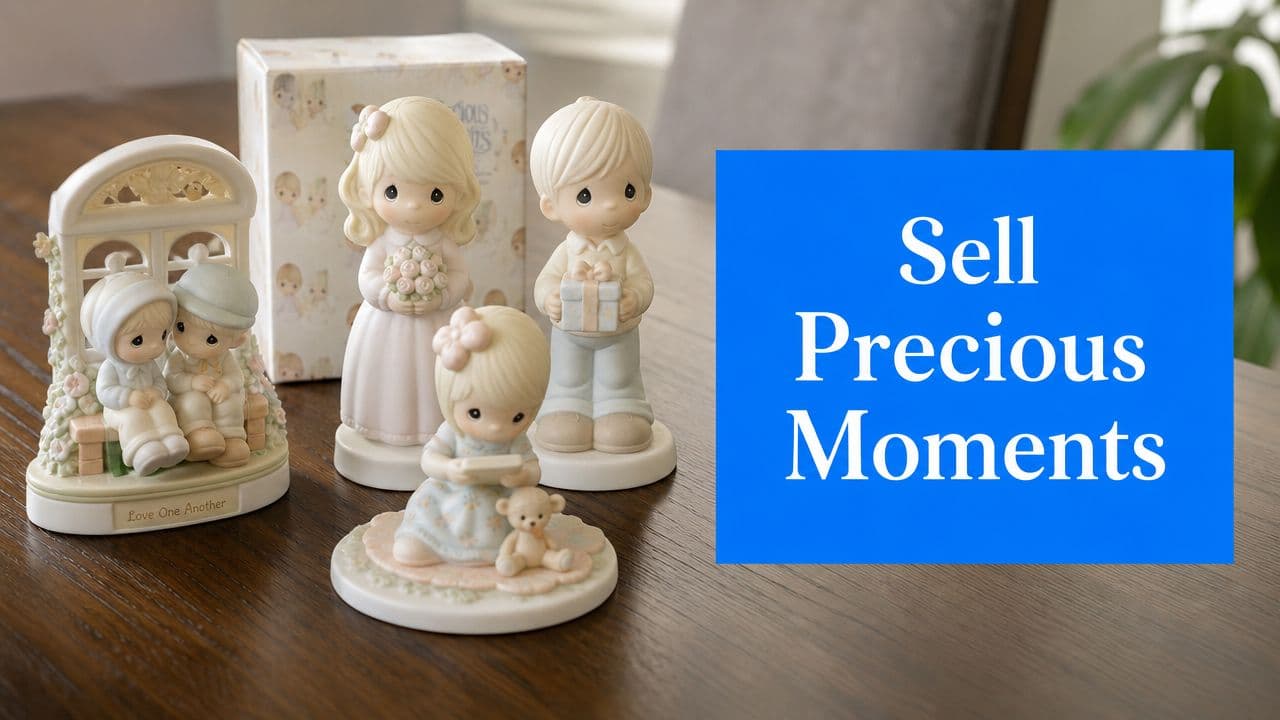
You open a tote in the attic, then another. Inside are rows of Precious Moments figurines wrapped in old newspaper, some still in their boxes, some loose, some with names you vaguely recognize, and some you've never seen before. If you're downsizing, settling an estate, or finally clearing out a room that became storage, this usually starts the same way. You wonder whether you're looking at sentimental clutter or something worth the effort to sell.
That uncertainty is normal. These collections often come with emotion attached. They may have belonged to a parent, a grandparent, or a serious collector who bought carefully for years. But emotion doesn't answer the practical questions. What's worth money? What should be sold one by one? What should be grouped? And where is the best place to sell Precious Moments figurines without wasting weeks on listings that go nowhere?
After years around estate liquidations, I can tell you the wrong approach is usually obvious. People either price everything as if it's rare, or they give up too early and unload the whole collection for less than it could have brought with a better plan. Neither works well.
The better approach is to treat the collection like inventory. Sort it. Identify the standouts. Keep your eye on net proceeds, not just asking price. And choose a sales method that fits the collection you have, not the one you wish you had.
That Attic Full of Figurines
A typical seller isn't sitting at the kitchen table with three museum-grade figurines and all day to research them. It's more often a daughter clearing her mother's house, an executor trying to empty a condo before closing, or a homeowner who wants the guest room back. The collection is mixed. Some pieces are boxed. Some have dust in the folds. One has a tiny nick. Several look nearly identical.
That's where a lot of bad decisions get made.
One person lists everything individually online and gets buried in photos, packing, buyer questions, and breakage risk. Another calls the nearest shop and accepts a low offer just to make the problem disappear. A third keeps moving the boxes from one room to another because they can't tell what's worth the hassle.
Most Precious Moments collections aren't a treasure hunt. They're a sorting problem first, and a selling problem second.
The best results usually come from stepping back and looking at the collection as a whole. Not every figurine deserves the same treatment. Some are worth individual attention. Many are better sold in grouped lots. A large number are only profitable if the sale method keeps labor and handling under control.
What sellers are usually trying to solve
People rarely search for the best place to sell Precious Moments figurines because they enjoy resale logistics. They want one of three outcomes:
- Clear the space efficiently: The room needs to be emptied without creating a month-long side job.
- Get a fair return: Not top-dollar fantasy pricing, but a result that reflects real market demand.
- Avoid damage and drama: Fragile figurines, missed pickups, payment issues, and endless negotiation wear people out fast.
If that sounds familiar, you don't need a vague list of marketplaces. You need a strategy that matches mixed-value, breakable collectibles to the right selling format.
First Things First How to Value Your Precious Moments
Before you decide where to sell, figure out what you have. That sounds basic, but it's the step people skip most often. They assume either everything is collectible or nothing is. In reality, the collection usually breaks into tiers.
According to secondary-market commentary on valuable Precious Moments figurines, many ordinary pieces are often worth only about $22 to $50, while better-preserved examples with original packaging can sell for roughly $100 to $150. The same source also notes that authentic pieces from the 1970s and 1980s are the ones that continue to attract collectors. That immediately tells you two things. First, many figurines won't justify high-effort selling. Second, age, condition, and completeness matter.

Start with the physical check
Pull each figurine into good light and inspect it carefully.
- Condition comes first: Chips, hairline cracks, repairs, crazing, stains, and fading all affect buyer confidence.
- Turn it over: The backstamp matters. Collectors want authenticity marks, production information, and artist-related identifiers.
- Look for the box and paperwork: Original packaging, inserts, and certificates often make a piece easier to sell and easier to trust.
A seller who only photographs the front misses what buyers care about most. For collectible ceramics, the underside is often as important as the face.
Sort into three working groups
Don't try to assign an exact price to every item on day one. Sort instead.
| Group | What belongs here | Best next move |
|---|---|---|
| High-potential pieces | Early authentic pieces, excellent condition, original box, clear markings | Research individually |
| Mid-tier pieces | Good condition but common models, no box, moderate appeal | Consider small themed lots |
| Low-priority pieces | Wear, damage, duplicates, later common releases | Bundle, local sale, or donation |
This kind of triage keeps you from spending an hour researching a figurine that may only sell if grouped with others.
What to look for beyond age
Age alone doesn't make a figurine desirable. A common older piece in poor condition can still be hard to move, while a clean, documented example gets more attention. If you need help learning what signs matter across collectibles, this guide on how to identify valuable antiques is a useful framework.
Practical rule: If a figurine is common, fragile, and missing its box, treat it as part of a collection sale unless you have a strong reason not to.
The point isn't to talk yourself out of value. It's to stop wasting effort on pieces that won't repay it.
Where to Sell Comparing eBay Local Shops and Estate Sales
Most advice on this topic gives you a quick list. eBay. Etsy. Facebook Marketplace. Consignment. Local antique mall. Estate sale company. That's not enough. The key question is which channel gives you the best net outcome after time, packing, risk, and the kind of collection you have.
Independent resale guidance notes that collectibles are a buyer's market, and while online marketplaces can produce higher gross prices, sellers often undercount postage, packing materials, and listing labor for fragile, low-value items. That's especially important with figurines, where those costs can wipe out the benefit of a higher sale price, as noted in this Precious Moments resale guide.

eBay and Etsy
These marketplaces have one obvious advantage. They bring collector traffic. If you have a standout figurine with strong photos, clean provenance, and the original box, broad exposure can help.
But broad exposure comes with work.
- Each item needs its own listing: Title, condition notes, photos, and buyer communication all take time.
- Packing is unforgiving: One weak box corner and a ceramic figurine can arrive broken.
- Competition is constant: Buyers compare your item against many similar listings in seconds.
This route is strongest when you have a small number of premium pieces. It's far weaker when you're trying to move shelves full of common items.
Local consignment and antique shops
These shops reduce hassle. You don't photograph everything, you don't answer every buyer message, and you don't ship. That convenience matters, especially during probate, downsizing, or a move.
The trade-off is usually control. The shop decides what they want, what they think will move, and what margin they need to make it worthwhile. For mixed figurine collections, that often means selective buying or conservative pricing.
Traditional estate sale companies
This option works best when the figurines are only one part of a larger house full of sellable contents. If you already need furniture, tools, art, kitchenware, and décor liquidated together, the figurines can ride along.
If the collection is the main event, the fit is less obvious. Traditional estate sales are designed around whole-house volume, not careful collector presentation of fragile ceramics. The better pieces may get lost, while the ordinary ones still take table space and setup time.
If you're judging where to sell, don't ask only, “Where can I list these?” Ask, “What sales method fits this inventory without creating unpaid labor?”
A quick comparison
| Selling channel | Best for | Weak point |
|---|---|---|
| eBay or Etsy | A few better pieces with collector appeal | Labor, shipping, breakage risk |
| Local shop or consignment | Sellers who want simplicity | Lower control and selective interest |
| Traditional estate sale | Full-house liquidation | Figurines may not get focused treatment |
If you want more context on selling antiques through digital channels, this overview of the best way to sell antiques online gives a broader comparison.
A Smarter Strategy for Collections The DIY Online Estate Sale
When the collection is large, mixed in value, and fragile, the best place to sell Precious Moments figurines often isn't a single listing site at all. It's a consolidated online estate sale approach. That means cataloging the collection into one timed event, grouping common items intelligently, highlighting the better pieces, and directing buyers toward local pickup instead of individual shipment.

This model solves the biggest problem with figurine collections. Shipping kills momentum. It adds material cost, handling time, damage risk, and after-sale troubleshooting. That may be worth it for a premium figurine. It usually isn't worth it for shelves of ordinary pieces.
Collectibles pricing guides emphasize that many pieces have limited resale value, and marketplace discussions indicate sellers often do best with local pickup or estate-sale style liquidation for low-to-mid value figurines, while saving individual shipping for premium examples only, as discussed at Retired Precious Moments selling guidance.
Why this works better for real-world collections
A collection sale lets you build around buyer behavior instead of forcing every item through the same channel.
- Premium pieces get featured individually: Strong photos, full description, clear condition notes.
- Common figurines become attractive lots: Angels together, holiday themes together, boxed groups together.
- Pickup replaces packing: Buyers collect on a scheduled day, and the seller avoids a week of wrapping porcelain.
That last point holds greater significance than commonly understood. A seller with a full cabinet of figurines doesn't need more tiny tasks. They need one organized system.
The right mix of control and efficiency
Traditional estate services can be useful, but a DIY online estate sale gives the seller something many other channels don't. Control. You decide how to group the collection, how to describe the condition, and whether a piece deserves individual placement or lot treatment.
That control doesn't mean chaos. It works best when the process is disciplined.
- Separate the standouts
- Bundle the ordinary pieces with logic
- Use pickup as the default
- Reserve shipping only for the items that justify it
Here's a short walk-through of how this format works in practice:
Sellers usually make more progress when they stop treating every figurine like a solo listing and start treating the collection like a managed event.
For estate cleanouts, relocations, and inherited collections, that's often the cleanest path to both speed and return.
Crafting Your Sale From Photos to Pricing Strategy
Good sales don't start with pricing. They start with presentation. Buyers don't hold the figurine in their hands before bidding, so your photos and descriptions have to do that job for them.

Photograph like a careful seller, not a casual one
Use a clean background, even light, and multiple angles. Front, sides, back, bottom stamp, and any flaw. If there's a chip, show it plainly. Hiding damage doesn't protect value. It causes disputes.
If you want a useful refresher on setup, framing, and lighting, these tips for commercial product photography are worth applying even with a phone camera. For resale listings specifically, this guide on how to photograph items to sell online is practical and easy to follow.
Write descriptions that answer buyer doubts
A weak listing says, “Precious Moments figurine, good condition.” That forces the buyer to guess.
A better listing includes:
- Exact name if known: Use the box or base if you have it.
- Condition notes: Mention chips, crazing, repairs, discoloration, or that none were observed.
- What's included: Box, certificate, inserts, paperwork.
- Why it's grouped this way: For lots, explain the theme or logic clearly.
The buyer should know what they're getting without sending three follow-up messages.
Grouping strategy matters
Creating random lots often causes many sellers to leave money on the table. Don't create random lots just to reduce work. Buyers respond better to curated groups than to mixed leftovers.
Try combinations like these:
- Holiday sets: Christmas, Easter, or seasonal figurines together.
- Boxed lots: Buyers like consistency and easier resale.
- Similar size or display style: Shelf-ready groupings feel intentional.
- Damaged or low-demand pieces: Keep these separate from cleaner, stronger items.
Pricing without scaring buyers away
There isn't one perfect formula, but there are two useful approaches.
| Pricing style | Works best when | Risk |
|---|---|---|
| Low opening bid | Demand is uncertain but photos are strong | Weak turnout can lead to a soft finish |
| Firm starting price | You have a clearly desirable piece or a well-built lot | Set it too high and buyers move on |
For mixed figurine collections, I like a simple rule. Use more assertive pricing on the pieces you've already identified as strong. Use accessible starting points on grouped mid-tier lots so buyers engage early and often.
A clean, honest listing beats an inflated listing every time. Buyers can forgive a modest starting price. They won't forgive bad photos and vague condition notes.
Closing the Deal Secure Payments and Smooth Pickup Logistics
The sale isn't over when the bidding ends. At this point, many first-time sellers get tripped up. They've done the hard part, but then they lose time to payment confusion, pickup scheduling, no-shows, or buyers trying to renegotiate after the fact.
Secure payment handling matters because collectibles attract both sincere buyers and opportunists. Keep communication and payment inside the selling platform whenever possible. If someone asks to take the transaction off-platform, sends a strange overpayment story, or wants to bypass the listed terms, decline and move on. Serious buyers don't need side deals to complete a straightforward purchase.
Why pickup day changes everything
For a collection of fragile ceramics, a scheduled pickup day is one of the cleanest operational choices you can make. Instead of wrapping and labeling dozens of boxes for separate shipments, you stage sold lots in one area, assign buyer names or invoice numbers, and move items out in a controlled block of time.
That solves several problems at once:
- Breakage risk drops: Less handling means fewer accidents.
- The timeline gets shorter: You're not stretching fulfillment across days.
- Buyers know the rules: Pickup windows reduce back-and-forth messaging.
A practical handoff checklist
Use a basic process and stick to it.
- Prepare sold items in advance: Group by buyer or invoice.
- Keep the pickup area organized: Table, labels, and a simple checkoff list.
- Verify payment before releasing items: Don't rely on screenshots or verbal confirmation.
- Document exceptions: If someone misses pickup, follow the stated terms instead of improvising.
The easiest collectible sale to manage is the one with clear terms, platform-based payment, and one pickup window.
This is also where the online estate sale model earns its keep. It combines broad buyer visibility with a local handoff structure that fits delicate, mixed-value inventory. You avoid the chaos of one-off transactions while keeping far more control than you would in a traditional outsourced sale.
If you're dealing with a collection instead of one or two standout figurines, that's usually the most efficient path. And if you want a platform built around that exact model, DIYAuctions lets sellers run a professional online estate sale with catalog tools, secure payments, buyer marketing, and a single pickup-day workflow that fits fragile collections especially well.
More guides in Selling Antiques & Collectibles
July 31, 2026
Ceramic Christmas Tree Atlantic Mold Seller's Guide
Identify, value, and sell a Ceramic Christmas Tree Atlantic Mold piece with confidence. Covers markings, rarity, condition, pricing, and listing tips.
Read guideJuly 30, 2026
Nurre Mirror Value: How to Identify and Sell for Profit
Learn to assess nurre mirror value with our step-by-step guide. Identify authentic pieces, estimate price, and sell profitably on DIYAuctions.
Read guideJuly 29, 2026
Distinction Deluxe Stainless Steel by Oneida HH: A Complete
Learn to identify, assess, and price your distinction deluxe stainless steel by oneida hh set for maximum profit.
Read guideGet the estate sale pricing guide
Enter your email for pricing ranges, planning notes, and a clearer path to launch.