Best Way to Sell Office Furniture: A 2026 Profit Guide
Discover the best way to sell office furniture in 2026. Our guide covers pricing, staging, and selling channels like DIYAuctions to maximize your profit.
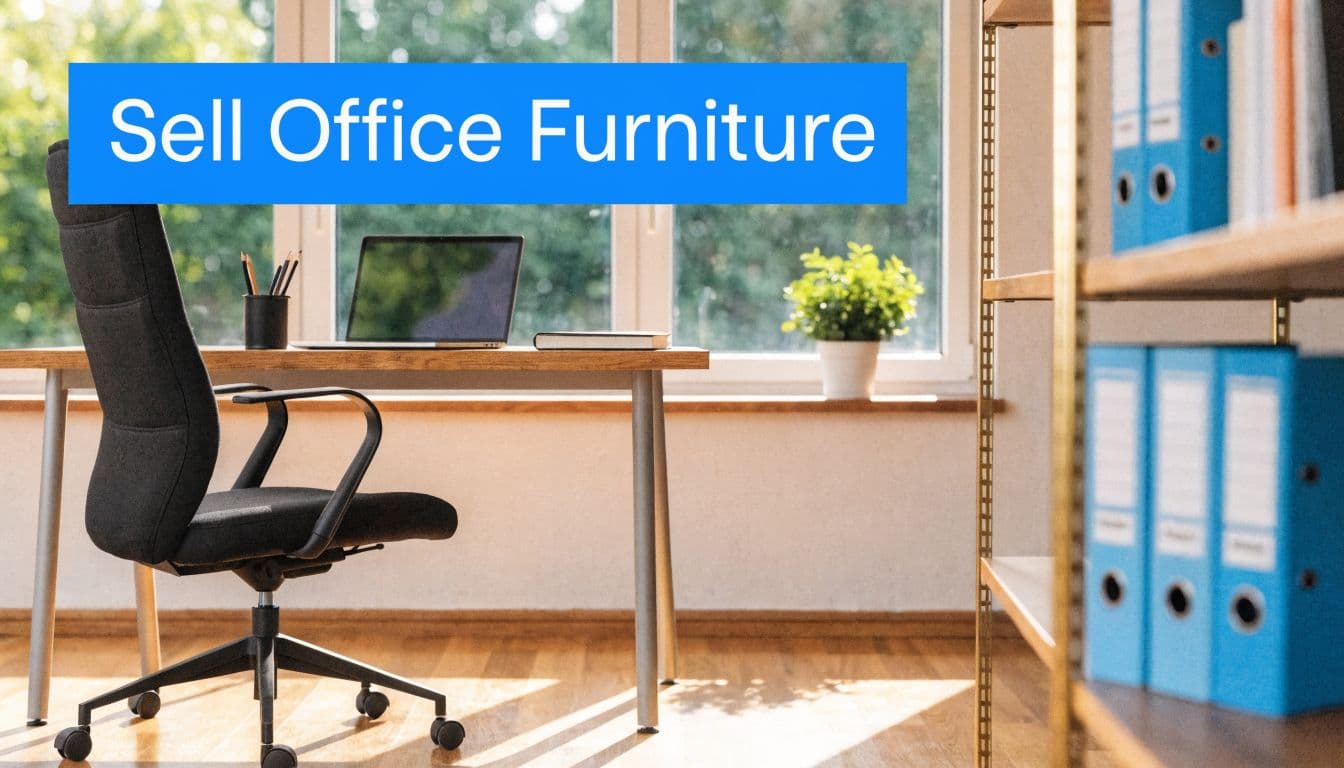
You’re probably looking at a room full of furniture you no longer need and trying to decide whether it’s worth the hassle to sell it. Maybe it’s a few standing desks after a downsizing move. Maybe it’s a home office setup you upgraded. Maybe you inherited a house with filing cabinets, task chairs, and conference furniture that no one wants to keep.
That moment overwhelms a lot of sellers. The mistake is thinking used office furniture only moves through giant corporate liquidation deals. It doesn’t. Buyers still want ergonomic chairs, storage, modular desks, reception seating, and branded commercial pieces, especially when they can get them locally and avoid long lead times. Demand is broad, and the market is still active.
Your Guide to Selling Used Office Furniture
The best way to sell office furniture depends on two things. How fast you need it gone and how much value you want to recover.
If speed is your only priority, a dealer or bulk buyer can clear the room quickly. If profit matters, you need a better process. That process works whether you’re selling one Herman Miller chair from a home office or clearing out a small business suite with desks, cabinets, and meeting room furniture.
The opportunity is real. The global office furniture market is projected to reach approximately $85 billion by 2026, and online office furniture sales in the U.S. generated $16.8 billion in 2025 according to contract furniture market analysis from Cylindo. That doesn’t mean every used item is a gold mine. It does mean there are active buyers, multiple selling channels, and strong reasons to take the process seriously.
What usually kills a sale is not lack of demand. It’s poor execution.
Sellers lose money when they:
- Guess at pricing and anchor to original retail instead of resale reality
- Post weak photos that make good furniture look rough
- Choose the wrong channel for the item and timeline
- Skip inventory details that buyers need before they’ll commit
- Create pickup chaos with unclear logistics
A clean chair with a visible brand tag, clear measurements, and sharp photos often outsells a better chair listed carelessly.
If you’re handling a larger move, these expert tips for office cleanouts from Cubicle By Design are worth reviewing before you start pulling furniture apart or booking haulers.
A good sale starts long before the listing goes live. You need to know what you have, present it well, price it credibly, and choose a sales method that fits your situation instead of copying what someone else did on Facebook Marketplace.
Evaluate and Prepare Your Furniture for a Top-Dollar Sale
Most sellers rush to listing. That’s backwards. The money is made in the prep.
A buyer decides value in seconds. If the item is dirty, poorly photographed, or missing basic details, they assume there’s more wrong with it than you’ve shown. That assumption gets expensive fast.

Build a real inventory
Start with a simple spreadsheet or note system. Don’t overcomplicate it, but don’t wing it either. For each item, record brand, model if known, dimensions, color, quantity, condition, and location.
The brand matters more than many sellers realize. A buyer browsing commercial furniture wants to know whether a chair is Steelcase, Herman Miller, Humanscale, HON, Haworth, or a no-name import. If you can’t identify the piece, take close photos of labels under seats, inside drawers, on frame rails, or under desktops.
Include condition notes that a buyer can trust:
- Surface wear such as edge chips, scratches, laminate bubbling, or ring marks
- Mechanical condition like seat height function, tilt tension, drawer glide, or cable management condition
- Completeness including keys, power modules, modesty panels, divider screens, or matching hardware
If you’re selling a cluster of similar pieces, don’t force buyers to decode “desk set x12.” List the exact makeup of the lot. Six matching desk shells, six mobile pedestals, four return pieces, and eight task chairs is much more useful.
Clean what you can fix cheaply
This is the easiest return on time in the entire process. Professional liquidators note that proper cleaning and minor repairs can boost final bids by up to 25%, and high-quality photos with multiple angles can increase buyer reach by 70% compared with poor visuals according to liquidation guidance from Michael’s Global Trading.
Wipe hard surfaces thoroughly. Vacuum fabric panels and upholstered seats. Remove tape residue, labels, and sticky marks. Tighten loose screws. Replace missing glides if you have them. Reattach loose cable covers. Touch up only when the repair will look clean and honest.
Practical rule: Clean for credibility, not perfection. Buyers will accept honest wear. They won’t accept grime that suggests neglect.
For home-office sellers, basic staging principles help more than people expect. A chair photographed in a bright, uncluttered room will always read better than the same chair shoved against storage bins. Some of the same presentation logic from this expert guide to home selling applies surprisingly well to furniture listings.
Photograph like you want a buyer to trust you
Most office furniture listings fail here. They show one dark front angle and call it done. Serious buyers want enough visual information to decide whether it’s worth the drive, the truck rental, and the time.
Use daylight if possible. Pull the item away from walls so edges and silhouette are visible. Show the full piece, then move closer.
A strong photo set usually includes:
- The hero shot with the full item visible straight on
- Angle views from both front corners
- Detail shots of work surfaces, arms, casters, drawer interiors, or fabric texture
- Brand and model tags if present
- Damage disclosure photos that clearly show chips, tears, stains, or wear
- Scale context with nearby objects or dimensions in the description
If the item has a feature, prove it. Show the standing desk raised. Show the drawers open. Show the chair reclined. Show the conference table base and top separately if disassembly is involved.
For a deeper walkthrough on framing, lighting, and sequence, DIY sellers can use this professional product photo guide.
Sort furniture before you sell it
Preparation also means separating pieces into the right buckets. Not every item should be sold the same way.
Use three groups:
- High-value branded pieces that deserve individual attention
- Useful commodity furniture that may sell better in matching sets or room lots
- Low-demand or damaged items that should be bundled, discounted, donated, or removed quickly
This step keeps you from wasting premium listing effort on items that only move when priced for convenience.
Choose the Right Selling Channel for Your Goals
A lot of bad advice starts with “just post it online.” That works sometimes. It also creates dead listings, no-shows, lowball offers, and messy pickup schedules if you’re not careful.
The selling channel should match the inventory. A single premium chair, a mixed home office, and a 40-piece office clear-out shouldn’t all go through the same path.

Comparison of office furniture selling channels
| Channel | Typical Commission / Fees | Seller Effort | Profit Potential | Best For |
|---|---|---|---|---|
| Online marketplace | Usually low upfront cost, but seller handles everything | High | Mixed | Single items, bargain buyers, local pickup |
| Specialist dealer | Offer is built into buyout price | Low | Lower than direct sale in many cases | Fast bulk clearance |
| Consignment shop | Shared proceeds after sale | Medium | Moderate to high if item fits the shop | Designer or selective office pieces |
| Auction platform | Platform commission varies by provider | Medium | High when listing quality and demand align | Small and mid-size liquidations, estates, downsizing |
Free marketplaces
Facebook Marketplace, Craigslist, OfferUp, and similar platforms attract traffic. They also put the entire burden on you. You write the listing, answer repetitive questions, field low offers, chase pickup times, and deal with buyers who disappear.
For a few low-value items, that may be acceptable. For a mixed office, it becomes a part-time job.
What works on free marketplaces:
- Simple local items like a basic desk, guest chair pair, or filing cabinet
- Fast-clearance pricing when you care more about space than margin
- Very common furniture that buyers already understand
What usually doesn’t:
- Premium branded pieces listed with weak proof of authenticity
- Bulk lots that require coordinated pickup
- Scattered inventory across rooms or locations
- Sellers with limited time for constant messaging
The biggest hidden cost is friction. You may save on formal fees and still lose money through underpricing, bad visibility, and failed pickups.
Specialist dealers
Dealers solve a real problem. They buy in volume, know how to disassemble systems furniture, and can clear a site fast. If your lease deadline is close, that has value.
But sellers need to understand the trade-off. According to specialist dealer guidance from Coggin SOS, offers are often built around 50% to 70% depreciation after two years, and quotes can be reduced by 30% to 50% when items are unidentifiable or poorly photographed. That’s not a scam. It’s the dealer model. They need margin for transport, labor, storage, and resale risk.
Dealers are useful when speed matters more than maximum return. They are not usually the best way to sell office furniture if your goal is to keep as much value as possible.
Choose a dealer when:
- You have a deadline and need one transaction
- You’re clearing volume and don’t want to manage many buyers
- The inventory is consistent and easy to assess from photos or a site visit
Avoid defaulting to a dealer when:
- You have strong branded inventory
- You can wait for buyer competition
- The lot is small enough to manage without wholesale pricing
Consignment shops and local resellers
Consignment can work for selective inventory. Think reception furniture, designer storage, architectural desks, or visually distinctive pieces that fit a showroom.
The upside is presentation. The downside is time and selectivity. Shops won’t want every gray laminate desk in a former accounting office. They’ll cherry-pick.
This route makes sense if your pieces are:
- Design-forward
- In strong cosmetic condition
- Likely to appeal beyond office buyers
It’s usually a poor fit for plain cubicles, basic workstations, or heavily used operational furniture.
Auction-based selling
Auction selling gives you something the other channels often don’t. Competitive buyer behavior. When multiple local buyers want the same item or lot, the price can move on its own instead of being anchored by the first low offer.
That matters for both small and larger liquidations. A homeowner selling one premium chair and a standing desk can benefit from buyer competition just as much as a business clearing a suite of furniture. The same is true for executors managing inherited property with mixed office contents.
Auction models are especially useful when:
- You want market feedback instead of guessing
- You have multiple desirable items
- You need structured pickup and payment
- You want one coordinated event rather than staggered pickups
For sellers comparing setup, timing, and logistics, this guide to online auctions for furniture is a practical starting point.
The small-seller problem most guides ignore
Most office furniture advice is written for large corporate exits. That leaves a gap. Plenty of sellers only have five to twenty pieces. A few desks, a conference table, quality chairs, storage, maybe some monitors or shelving. That inventory is too much for casual classifieds and too small for many traditional liquidation firms to care about.
That’s where modern self-managed auction platforms make sense. They give small sellers structure without forcing a wholesale deal. You keep control over cataloging, pricing, and timing, while using a system built for visibility, buyer management, and organized pickup.
That middle ground is often the smartest path. It avoids the low-return bulk buyout and the chaos of unmanaged listings.
Price Your Office Furniture to Maximize Returns
Pricing isn’t about what you paid. It’s about what a buyer can choose instead today.
That sounds obvious, but sellers still anchor to original invoice prices all the time. A desk that cost a lot new may have weak resale demand if it’s oversized, generic, or hard to move. Meanwhile, a compact branded chair can sell quickly because buyers know exactly what it is and how it fits their space.

Start with live comparables
Look up sold listings, not just asking prices. eBay sold items, completed local auctions, and closed marketplace listings will tell you more than optimistic active posts that have been sitting for weeks.
Match on the details that matter:
- Brand and model
- Condition
- Age if known
- Finish and color
- Pickup-only versus shippable
- Single item versus matched quantity
A common mistake is comparing your used office chair to the newest version on a retailer site. That comparison helps buyers reject your price, not accept it.
Price by demand, not category alone
Some categories move differently even when the furniture looks similar. Modular and reconfigurable pieces have stronger appeal because buyers are still adapting spaces for hybrid work. That’s part of why ready-to-assemble office furniture is projected to grow 3.5% annually, according to Technavio’s office furniture market analysis. If your furniture is flexible, compact, easy to reconfigure, or simple to transport, that can support a stronger asking strategy.
Use that market logic in practical ways:
- Compact sit-stand desks can justify firmer pricing than bulky fixed desks
- Mobile storage often sells faster than large lateral files
- Modular pieces can be listed individually or in adaptable groups
- Hard-to-move custom installations usually need a discount to offset buyer effort
Decide whether to lot or separate
There isn’t one correct answer. Lotting helps when the value is in convenience. Individual sales help when some pieces clearly outperform the rest.
As a rule:
- Sell individually when the item is branded, premium, or easy to identify
- Bundle in pairs or room sets when pieces naturally belong together
- Create larger lots when the buyer pool is mainly resellers, landlords, or small business operators furnishing quickly
Strong pricing feels fair from the buyer’s side. If the listing saves them time, uncertainty, and sourcing effort, they’ll pay more.
If you’re handling mixed inventory from a home, estate, or small office, this pricing guide for estate-style sales offers a useful framework for balancing speed and return.
Choose the pricing format that fits the item
Fixed price works when the market value is obvious and demand is steady. Auction pricing works well when there’s uncertainty, local buyer interest, or enough desirability to create competition.
A low starting point can attract attention. A realistic reserve mindset protects you from expecting too much. The right answer depends on whether you want certainty, speed, or upside. Most sellers get into trouble when they try to force all three from every piece.
Manage the Sale Process from Listing to Pickup
Once the pricing is set, execution matters more than theory. Good furniture can still sell badly if the listing is thin, the terms are vague, or pickup turns into confusion.
Start with the listing itself. Buyers should understand the item, its condition, and what pickup requires before they contact you.

Write descriptions that answer questions early
A strong listing description doesn’t sound clever. It sounds complete.
Include:
- What it is with brand, model, and furniture type
- Condition summary with visible wear and functional notes
- Dimensions especially for desks, credenzas, tables, and storage
- What’s included such as keys, power units, matching pieces, or hardware
- Pickup facts including location type, stairs, elevator access, and whether disassembly is needed
You want fewer messages, not more. If buyers keep asking the same questions, the listing is incomplete.
Good merchandising also helps. Even outside traditional retail, the same principles apply. Clear grouping, visual hierarchy, and cleaner presentation can make furniture easier to evaluate. Some of those ideas are laid out well in these merchandising tips that boost sales.
Keep payment controlled
A lot of direct sales go sideways. Cash can work for lower-value local transactions, but it creates obvious risks. Peer-to-peer app payments can also become messy when buyers dispute timing, pickup, or condition.
A controlled payment process matters because it:
- Reduces no-shows
- Creates a record of the sale
- Helps both sides confirm what was purchased
- Makes pickup faster
If you’re selling multiple items or coordinating a larger event, don’t try to track deposits, balances, and buyer names in scattered text threads.
The smoother the payment process, the smoother the pickup window. Buyers show up better when the transaction feels organized.
A quick visual walkthrough can also help sellers think through staging, timing, and item flow before pickup day:
Run pickup like an appointment, not a favor
Most stress shows up on pickup day. This is why one scheduled pickup event often beats random individual meetups all week long.
For small sales, a defined pickup window keeps your day from disappearing. For larger liquidations, it prevents bottlenecks, repeated access issues, and damage from unplanned traffic through the space.
Set clear terms in advance:
- Pickup date and time window
- Who brings labor and tools
- Whether the item is assembled
- Building access rules
- What happens if the buyer misses pickup
For heavy items like conference tables, filing systems, and cubicle components, make buyers responsible for proper removal unless you’re explicitly offering help. You do not want last-minute surprises involving stairwells, scratched floors, or someone showing up alone for a six-person job.
Protect the room while it clears
If you’re selling from an active office, occupied home, or leased space, keep sold items tagged and grouped. Don’t let buyers wander. Direct them to their lot, confirm payment status, and move them through efficiently.
That level of control makes the whole sale feel professional. It also lowers the chance of disputes, accidental mix-ups, and damage to property you still care about.
Navigate Legal and Financial Considerations
A furniture sale feels informal until there’s a dispute. That’s why basic paperwork matters, even when the transaction is local.
Use a simple bill of sale
For higher-value pieces, business liquidations, or any sale involving multiple items, create a short bill of sale. It doesn’t need legal drama. It needs clarity.
Include:
- Seller and buyer names
- Date of sale
- Item description
- Quantity if applicable
- Sale price
- Pickup terms
- An as-is statement
The as-is language matters because used office furniture almost always has some wear, and you don’t want post-sale arguments over expected condition. Be honest in the listing, then document the final transaction clearly.
Clear records don’t make a sale harder. They prevent avoidable problems later.
Keep business records clean
If you’re selling as a business, treat the liquidation like an asset disposition, not a casual side sale. Your accounting team or bookkeeper may need the original asset record, depreciation history, and sale amount.
That’s especially important when you’re clearing multiple pieces at once. A vague “office furniture sold” note may not be enough for internal records or year-end reconciliation. Even if you’re a small business, keep copies of invoices, sale summaries, and buyer receipts.
Know when to ask a tax professional
Tax treatment varies by situation. A homeowner downsizing a home office, an executor handling inherited assets, and a business liquidating depreciated furniture are not all dealing with the same rules.
The practical move is simple:
- Save your documentation
- Record the sale amounts
- Keep original purchase records if available
- Ask a tax professional if the sale is meaningful enough to matter on returns or business books
Don’t guess when there’s real money involved. A short conversation with a CPA or tax preparer is cheaper than cleaning up bad records later.
Watch building and lease obligations
Commercial sellers should also review removal rules before pickup day. Freight elevator reservations, insurance requirements for movers, loading dock hours, and end-of-lease conditions can affect how and when furniture leaves.
Those details don’t change what the furniture is worth. They do change whether the sale goes smoothly.
Frequently Asked Questions About Selling Office Furniture
What’s the best way to sell office furniture if I only have a few pieces
If you’ve got a small group of items, focus on quality over volume. Build strong listings, photograph each piece properly, and use a selling format that creates structure instead of back-and-forth chaos. A handful of good items can still produce a strong result if you present them professionally.
Should I sell items individually or as a bundle
Sell individually when a piece has clear standalone value, especially branded chairs, standing desks, or premium storage. Bundle when convenience is the selling point, such as matching guest chairs, a desk with pedestal, or a complete home office setup. Mixed low-value pieces usually move better in grouped lots than as separate listings.
Can I sell office electronics with the furniture
Yes, but treat them differently. Electronics bring more buyer questions about age, compatibility, and function. If you include monitors, desk lamps, docking stations, or cable accessories, test them first and describe them clearly. For anything with stored data or smart features, wipe it properly before listing.
What if a high-value item doesn’t sell the first time
Don’t panic and slash the price immediately. Check the basics first. Were the photos strong, was the model identified, were dimensions included, and did the price match actual comparables? Premium items often fail because the listing didn’t give buyers enough confidence, not because there was no demand.
You can also change the format. A fixed-price listing that stalled may do better in an auction setting, and a broad mixed listing may perform better when the strongest piece is separated out.
How do I handle large items like cubicles or conference tables
Spell out the removal requirements in advance. Buyers need to know whether the item is assembled, whether elevators are available, and whether they need extra labor or tools. For modular systems, provide photos of connectors, panels, and included parts so buyers know exactly what they’re getting.
Is cleaning really worth the effort
Yes. It affects buyer confidence immediately. A wiped-down desk, vacuumed chair, and organized photo set signal that the furniture was maintained. Dirty, dusty, or partially disassembled items suggest hidden problems, even when the piece is perfectly usable.
Are dealers ever the right choice
Absolutely. If you need speed, one invoice, and minimal involvement, a dealer can be the right answer. Just recognize the trade-off. Dealers buy to resell, so convenience comes at the expense of upside.
What should I do with furniture that’s too damaged to sell
Separate it early. Don’t let broken items drag down the quality of the whole sale. Bundle salvageable low-value pieces only if they still have practical use. Otherwise, donate, recycle, or dispose of them through the appropriate local channel. The goal is to keep your main listings clean and credible.
How much detail is too much in a listing
Very little. Buyers rarely complain that a furniture listing was too informative. They do ignore listings that leave basic questions unanswered. If a detail affects fit, function, condition, transport, or completeness, include it.
If you want a modern way to sell office furniture without handing away your margin to a dealer or getting buried in unmanaged marketplace messages, DIYAuctions is built for that middle ground. You can catalog items, set pricing, run a professional online sale, reach local qualified buyers, and keep more of the proceeds with a transparent 10% commission capped at $1,000 through DIYAuctions. It’s a strong fit for homeowners, executors, downsizing businesses, and anyone who wants control without the usual liquidation headaches.
More guides in Estate Sale Basics
July 28, 2026
Revenue Reporting for Estate Sales and Auctions
Learn revenue reporting essentials for estate sales and auctions. Discover key metrics, templates, and best practices to simplify tracking and compliance.
Read guideJuly 26, 2026
Stamp Collection Valuation: A Practical Step-by-Step Guide
Stamp collection valuation made simple. Learn how to identify, grade, price, and sell your stamps with confidence for estate sales or consignment.
Read guideJuly 23, 2026
Estate Sales Brick NJ: Your 2026 Guide to Success
Planning your estate sales brick nj? Our guide covers permits, pricing, marketing, & running a safe sale with DIYAuctions.
Read guideGet the estate sale pricing guide
Enter your email for pricing ranges, planning notes, and a clearer path to launch.