Online Auctions for Furniture A Seller's Guide
Master online auctions for furniture with our guide. Learn to prep items, write listings that sell, and maximize profits on platforms like DIYAuctions.
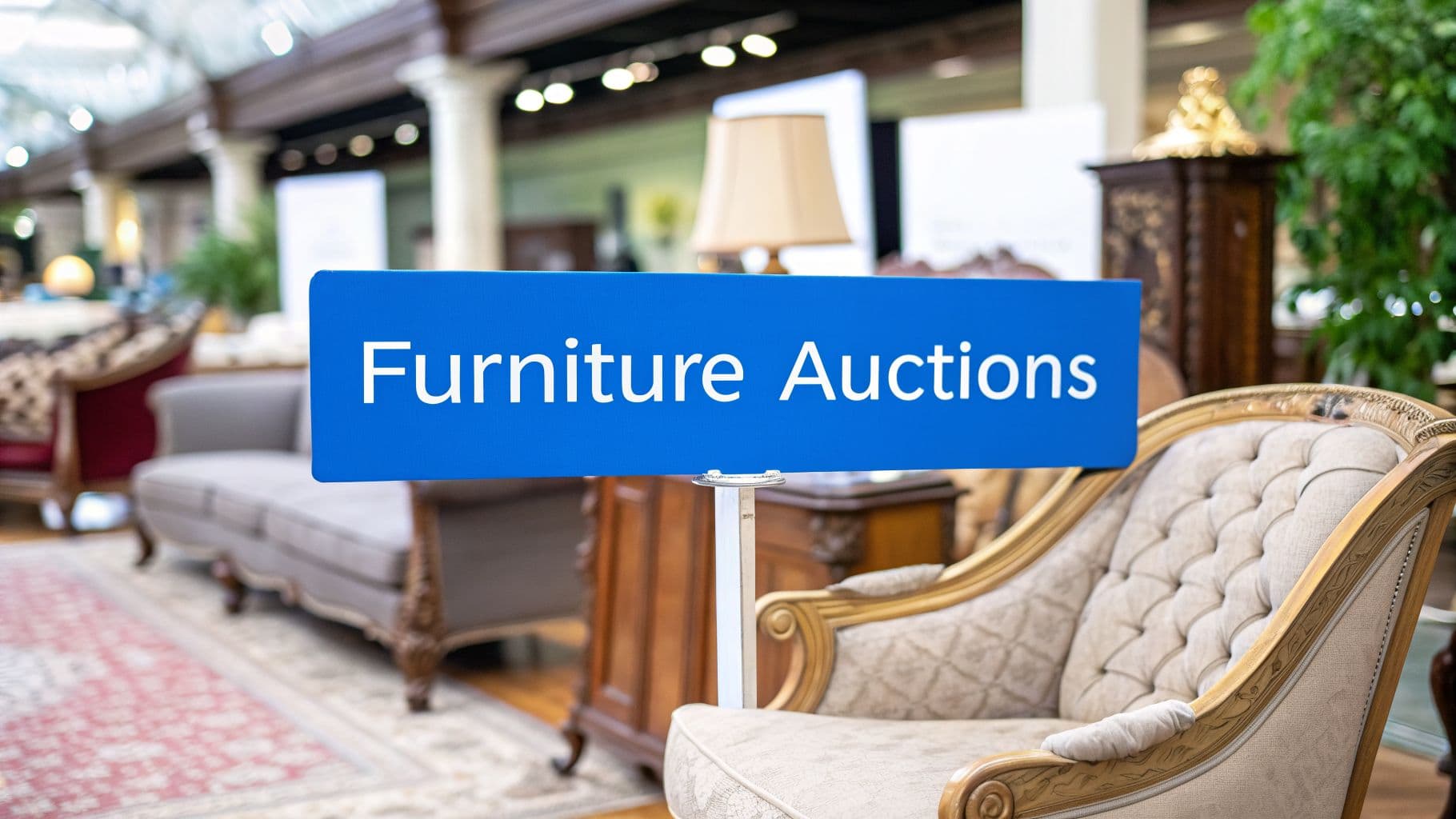
Tired of the endless haggling with marketplace buyers or watching a huge chunk of your profits vanish with a traditional estate sale company? When it comes to selling furniture, online auctions are a much smarter way to go, connecting you directly with a whole market of eager buyers. It’s an approach that puts you in the driver’s seat and helps you get a much better return on your items.
Why Online Auctions for Furniture Are Booming

Let's be honest, the old ways of selling secondhand goods are broken. Your only options used to be a weekend-long yard sale or handing everything over to a full-service company and just hoping for a decent check at the end. The move to online platforms has completely changed the game, especially for valuable pieces like furniture.
And it’s not just a small trend. The global online auction market is exploding and is expected to grow by USD 3.98 billion between 2025 and 2029. That growth is driven by a massive 14% compound annual growth rate (CAGR) as more and more people ditch old-school auction houses for the convenience of digital sales. We've seen firsthand how this market shift is putting power back into sellers' hands.
The Problem with Traditional Models
For years, sellers have been stuck between two frustrating choices. You could list items on local marketplaces and deal with an inbox full of lowball offers, flaky buyers, and frustrating no-shows. It's a huge time-sink.
The other route was hiring a traditional estate sale company. While they do handle the work, they take a staggering commission—usually between 35% and 60% of the final sale price.
On a $10,000 estate sale, that means you could lose up to $6,000 in fees alone. For most people, that's just too much money to give away for a service you could largely manage yourself.
This old model often leaves you feeling short-changed. The lack of control over pricing and the opaque fee structure is a major pain point, especially when you know your furniture is worth more.
A Modern Solution for Sellers
This is exactly where DIY platforms for online auctions for furniture are making a real difference. By giving you the reach of an online marketplace with the proven format of a professional auction, services like DIYAuctions are flipping the script. We offer a simple, fair commission structure so you actually keep the money you earn.
Just take a look at how the numbers stack up.
Traditional Estate Sale vs DIY Online Auction
This quick comparison shows just how much more you can make by taking a more hands-on approach.
| Feature | Traditional Estate Sale Company | DIYAuctions Online Platform |
|---|---|---|
| Seller Commission | 35% - 60% of gross sales | Flat 10% (capped at $1,000) |
| Net Profit on a $10,000 Sale | $4,000 - $6,500 | $9,000 |
| Control Over Pricing | Limited to none; company sets prices | Full control; you set starting bids |
| Scheduling Flexibility | Company dictates sale dates | You choose your auction and pickup dates |
The benefit is crystal clear: you invest a little of your own time to get a substantially bigger payout. By handling the easy parts—like taking photos and writing descriptions—you save thousands of dollars in fees. It's a powerful trade-off that puts the control, and the profit, right back where it belongs: with you.
Prepping Your Furniture to Attract Top Bids
 When you're running online auctions for furniture, a little elbow grease can make a huge difference in your final numbers. Think of it like staging a home before a sale. You're showing each piece at its absolute best to help bidders imagine it in their own space.
A dusty table or a wobbly chair can make a potential buyer pause and lower their bid. It’s not about doing a full-blown restoration, but simply showing that an item has been well-maintained. A clean, sturdy piece instills confidence and encourages people to bid competitively.
Start with a Deep Clean
Every single item, no matter its condition, needs to be thoroughly cleaned before you even think about taking photos. This is more than just a quick wipe-down. You need to get into the nooks and crannies where dust and grime have settled over the years.
For wood furniture, stay away from harsh chemicals. A mild soap-and-water solution on a damp cloth is usually all you need. Always wipe it dry with a soft cloth immediately to prevent any water spots.
Upholstered items are a different beast. Give them a good vacuuming, using the crevice tool to get deep into the seams. If you find a stain, be sure to spot-test a gentle upholstery cleaner on a hidden area first.
A common mistake we see is people using too much water or cleaner on fabric. This can leave behind rings or even damage the foam underneath. Always use less than you think you need, work it in gently, and blot, don't rub.
Taking the time to clean properly is probably the highest-return activity you can do.
Small Repairs, Big Impact
Once everything is sparkling clean, turn your attention to the small functional issues. You don't have to be a master carpenter; a few simple fixes can show buyers that your furniture is solid and ready for a new home.
Focus on these easy wins:
- Tighten Everything: Grab a screwdriver and go over every leg, handle, and hinge. A wobbly chair is a huge red flag for bidders.
- Fix Sticky Drawers: This is one of my favorite tricks. Just rub an old candle or a bar of soap along the wooden drawer glides. It's a tiny detail that makes a piece feel much higher quality.
- Touch-Up Minor Scratches: You can make light scratches on wood almost invisible in photos with a scratch-cover polish or a matching touch-up marker.
These quick fixes remove the little doubts that might stop someone from placing a bid. For more ideas on getting your items sold, you can learn more about the best ways to sell furniture online and what buyers are really looking for.
Stage for Success
Now for the final touch: staging. You've cleaned and repaired the piece, and this last step helps it tell a story. You don’t need a photo studio, but a little context goes a long way.
Try placing that armchair you’re selling in a bright corner with a small table and a book next to it. Suddenly, it’s not just a "used chair"—it’s a "cozy reading nook." This helps bidders connect emotionally and see the piece in their own lives.
Simple staging helps your online auctions for furniture listings stand out and grab the attention of buyers ready to bid.
How to Write Compelling Listings That Convert
Once you've cleaned and prepped your furniture, it's time to put on your storyteller hat. A fantastic listing for an online auctions for furniture event does more than just display an item—it sells a vision. The magic happens when great photos and a well-written description come together to turn a casual browser into an eager bidder.
Think of your listing as your best salesperson, working around the clock to show buyers why your piece is the one they've been searching for. It needs to be honest, persuasive, and completely engaging. Let's walk through how to nail the two most critical parts: the photos and the words.
Master Your Furniture Photography
You don’t need a high-end studio to get incredible photos. Honestly, a good smartphone and an eye for natural light are all it takes. The goal is simple: capture your furniture in a way that’s both accurate and aspirational.
-
Find the Best Light: Position your piece near a large window to bathe it in soft, indirect sunlight. Steer clear of harsh sun that creates dark shadows, and whatever you do, don't use the flash. It washes out colors and hides all the beautiful details.
-
Show Every Angle: Bidders want a 360-degree view. Snap photos of the front, back, sides, and top. If you're selling a desk or dresser, open the drawers and get a shot of the inside. Leave nothing to the imagination.
-
Capture the Details: Get up close and personal with what makes the piece special. This means highlighting unique hardware, rich wood grain, maker’s marks, or any intricate carvings. Just as important, be upfront about imperfections. Photographing scratches or chips builds trust and prevents issues later.
-
Demonstrate Scale: Take at least one picture that puts the furniture in context. Placing a lamp on an end table or a book on a bookshelf helps buyers instantly visualize its size and how it could look in their own space.
Remember, bidders can’t touch or feel the furniture themselves, so your photos have to do all the heavy lifting. To really level up your game, check out our complete guide on how to take professional product photos for more pro tips.
Weave a Story with Your Description
Your words are just as powerful as your pictures. A great description tells a story, gives buyers the essential facts, and uses the right keywords to attract the people you want to reach.
Start with a title that packs a punch. Instead of a generic "Brown Dresser," try something like, "Vintage Mid-Century Modern Teak Dresser by Broyhill." This immediately catches the eye of collectors searching for specific styles or brands.
The most effective descriptions blend romance with reality. They paint a picture of how the piece can enhance a buyer's life while also providing all the necessary factual information—dimensions, condition, and materials—without any fluff.
What to Include in Your Listing
To make sure your furniture gets the attention it deserves, you need to optimize your online listings with descriptions that are clear, detailed, and easy to find. A complete listing should feel thorough and leave no questions unanswered.
Here’s a quick checklist for what to include in your description:
- Dimensions: Always list the height, width, and depth. This is non-negotiable information for anyone buying furniture online.
- Condition: Describe the item's state honestly, and reference your photos of any flaws. Use clear phrases like "excellent vintage condition with minor wear consistent with age" or "shows some signs of use, including a small scratch on the top surface."
- Keywords: Sprinkle in words that describe the style (Danish Modern, Farmhouse, Art Deco), material (teak, walnut, velvet), and the brand, if you know it.
- History: If you know anything about the piece's backstory, share it! Was it a family heirloom? A unique find from a local market? These personal details add character and can increase its value.
The demand for quality furniture is stronger than ever. The global design furniture auction market hit USD 8.2 billion in 2024, with major auction houses like Sotheby’s and Christie’s reporting huge growth. ArtTactic noted that the furniture and decorative arts category alone jumped 20.4% to $172 million. This proves that buyers are ready to pay top dollar for items that are marketed well. You can read more about these record-breaking sales and see just how much potential is waiting in the items you have to sell.
Smart Pricing and Scheduling Strategies
Pricing your furniture for an online auction can feel like walking a tightrope. Go too high, and you might not get a single bid. Go too low, and you worry about leaving money on the table. But here's the secret I've learned from running countless sales: strategic pricing isn't about guessing an item's final value. It's about creating an environment that gets people excited to bid.
The real magic is in understanding how bidders think. A low starting bid, even just $1, is one of the most powerful tools in your arsenal. It’s a low-risk invitation to "get in the game." Once someone places that first bid, they're psychologically invested and far more likely to stick around and fight for the win.
Setting Your Starting Bids
Your first big decision is where to set that opening price. While a low start is fantastic for building momentum, a slightly higher starting point can work wonders for items with a well-known value. You’re essentially "anchoring" its worth in the minds of potential buyers right from the start.
I typically recommend one of two paths:
- The Low Start Strategy: For most common household goods, decorative pieces, and standard furniture, a $1 starting bid is your best friend. This approach builds a big pool of bidders who compete with each other, naturally driving the price up.
- The Value Anchor Strategy: Got a designer sofa or a solid oak dining set? You might start the bidding at a more substantial, yet still modest, figure like $50 or $100. This signals quality from the get-go and helps your premium items stand out.
Your goal is simply to get as many eyes on your auction as possible. The online furniture resale market is booming—it hit $34 billion in 2023 and is on track to reach a staggering $56 billion by 2030. These are motivated buyers looking for exactly what you have. You can learn more about this expanding antiques and collectibles market and how to tap into it.
When to Use a Reserve Price
But what about that one-of-a-kind antique or that designer armchair you can’t stomach selling for pennies on the dollar? This is exactly what a reserve price is for. Think of it as a secret minimum price that must be met for the item to actually sell.
A reserve price is your safety net. If bidding doesn't reach your reserve, the item remains yours. Use it sparingly, but use it wisely for your most valuable assets.
Bidders will see that a reserve is in place, but they won’t know the amount. This protects you from a bad outcome on your best pieces. A word of caution, though: don't overuse them. Some bidders find reserves frustrating, so save this tool for your genuine showstoppers. You can play around with different scenarios using our auction fee calculator to see how a reserve might affect your bottom line.
Scheduling Your Auction for Maximum Impact
When your auction ends is just as important as how you price it. You need the final countdown to happen when your target buyers are actually online and ready to jump in with last-minute bids. This frenzy, often called "auction sniping," is where most of the action happens.
Here are the time slots that consistently perform the best:
- Weekday Evenings: Sunday through Thursday, between 7 PM and 10 PM local time, is prime time. People are home from work, relaxed, and scrolling on their phones or tablets.
- Avoid Fridays and Saturdays: These are typically social nights. Fewer people will be glued to their screens to monitor an auction's final moments.
Always think about who your ideal buyer is. Selling office furniture? A weekday lunchtime closing might catch people on their break. For general home furnishings, though, sticking to those weeknight evenings is almost always your best bet.
Planning a Flawless Pickup Day
One of the greatest things about running local online auctions for furniture is the single-day pickup. No shipping, no boxes, no hassle. But it does require some smart planning to make sure it's a smooth experience for you and your winning bidders.
I always recommend choosing a weekend day, like a Saturday or Sunday morning, between 9 AM and 1 PM. This gives people plenty of time to arrange a truck and a helping hand. Make sure you state this pickup window clearly and repeatedly in your auction listings so there are no surprises.
To keep things moving, organize your sold items by lot number in an easy-to-access spot like your garage or a cleared-out living room. When a buyer arrives, you can quickly grab their items and send them on their way. It’s an efficient, professional touch that leaves everyone feeling great about the sale.
Managing a Smooth Auction and Pickup Day
The final bids are in and the timers have hit zero. Congratulations, you've successfully sold your furniture! Now comes the final piece of the puzzle: getting those items to their new owners.
This might feel like the most complicated part, but a platform like DIYAuctions is designed to handle the heavy lifting for you. We take care of marketing your sale to local buyers, processing all payments securely, and providing fraud protection. You never have to chase down a payment or handle cash.
Your main job is simply to manage a smooth and professional pickup day.
Preparing for a Seamless Pickup Event
The key to a stress-free pickup is all in the preparation. Your goal is to create a simple, organized flow where buyers can arrive, confirm their purchase, and be on their way with their new treasures. A little work beforehand makes all the difference.
Start by gathering all the sold items into one accessible spot. Your garage or a cleared-out room on the first floor is perfect. Grouping items by their lot number is a pro tip—it prevents you from hunting for a specific chair while a buyer waits.
Remember, items need to be handled carefully right up until they're in the buyer's hands. Brushing up on proper furniture protection for moving can help you avoid any last-minute dings or scratches.
Your Pickup Day Checklist
With everything organized, you can focus on the day itself. A simple checklist will keep you on track.
- Have Your Invoices Ready: The platform provides a list of all winning bidders and their paid-for items. Have a printed copy or a tablet on hand to check people in.
- Designate a Clear Entry: Direct all buyers to a single entrance and exit. This keeps the flow orderly and ensures you can greet everyone.
- Verify IDs: As buyers arrive, simply check their name against your list of paid invoices. It’s a quick security step to make sure the right items go to the right people.
- Bring a Friend: It's always a good idea to have a helper. For safety and efficiency, one person can greet buyers while the other helps retrieve the items.
We always tell our sellers to keep the pickup area separate from the rest of the house. Never let buyers wander through your private living spaces. Sticking to the garage or entryway protects your privacy and makes everyone feel more secure.
This process chart shows how your strategy comes together, from pricing your items all the way to the pickup day.

As you can see, the pickup isn't an afterthought—it's the critical final stage that ensures your entire auction is a success.
Finalizing the Sale and Keeping Records
Once the last item has been picked up, your work is nearly done. One of the biggest advantages of running online auctions for furniture with a dedicated platform is the automatic digital record-keeping.
You’ll have access to a complete report detailing every item sold, its final price, and the buyer's details. We highly recommend downloading and saving this report for your records. This documentation is incredibly useful for tracking your total profits and is a lifesaver come tax time, especially if you're managing a larger estate.
Following these steps creates a great final impression. Buyers leave happy, and you can wrap up the process feeling confident and professional, with a clear space and extra money in your account.
Common Questions About Selling Furniture Online
Diving into the world of online auctions for furniture is exciting, but it’s completely normal to have a few questions before you get started. We get it.
Let's walk through the most common things sellers ask. We’ll give you straightforward, real-world answers to help you feel confident about the process and see how a DIY platform puts you firmly in charge.
What Happens If My Furniture Does Not Sell?
This is a top concern for many first-time sellers. The good news is that with smart pricing and the kind of targeted local marketing a good platform provides, most items find a buyer.
But if a piece doesn't sell? You have plenty of great options. On a platform like DIYAuctions, you can simply relist it in your next sale. You could also offer it at a fixed "buy now" price or try another local marketplace.
The key is, you’re always in control. Unlike traditional estate services that might dispose of unsold items for a fee, you retain full ownership. You haven't lost a cent, and you decide what happens next.
How Do I Handle Shipping for Large Furniture?
This is one of the best parts about using a locally focused online auction: you don’t. The entire system is built around a single-day, local pickup that you schedule.
This model completely sidesteps the logistical nightmare and huge expense of shipping bulky furniture—a major roadblock on national sites.
All winning bidders are responsible for coming to your location to collect their items. We make this crystal clear in your auction listing, so every buyer knows the deal before they even place a bid.
How Much Money Can I Really Save With a DIY Auction?
The savings are dramatic. It’s one of the biggest reasons people are moving away from the old model. Traditional estate sale companies frequently charge commissions from 35% all the way up to 60%.
Let's break down a real-world scenario.
- On a $10,000 sale, a traditional company's commission could be anywhere from $3,500 to $6,000.
- With DIYAuctions' flat 10% commission, our fee on that same $10,000 sale is just $1,000.
That’s an extra $2,500 to $5,000 that goes directly into your pocket. You're just trading a little bit of your own effort—taking photos and writing descriptions—for a massively higher return on your assets.
Is It Safe to Have Buyers Come to My Home?
Safety is absolutely paramount, and a well-managed online auction for furniture is designed to minimize risk. This is not like throwing your doors open to the general public.
First off, all payments are processed securely online before anyone shows up. This means you never have to handle cash, haggle over the price, or chase down a payment from a no-show.
Second, you get a complete list of verified winning bidders and exactly what they bought. You know who is coming and when they're supposed to arrive.
For extra peace of mind during your pickup event:
- Bring a friend. There’s always safety in numbers.
- Set up in a garage or entryway. This keeps buyers out of your main living areas.
- Control the flow. Schedule pickups in short, defined time slots to prevent a crowd from forming.
By following these simple steps, you can run a safe and professional pickup day. The combination of pre-vetted buyers and a structured schedule gives you total control from start to finish.
More guides in Online Auction Platform
August 1, 2026
Online Auction Bidding Software: Profitable Estate Sales
Learn how online auction bidding software helps sellers run profitable estate sales, plus key features and DIYAuctions benefits.
Read guideJuly 24, 2026
The 7 Best Auctions in Winchester: 2026 Guide
Discover the top auctions in Winchester (VA & KY). Our 2026 guide covers auction houses, consignment details, and modern alternatives like DIY estate sales.
Read guideJuly 3, 2026
What Is an Online Auction: Your 2026 Guide for Estate
What is an online auction - Discover what an online auction is & how it helps estate sellers. Learn formats and maximize profit in 2026 with our comprehensive
Read guideGet the estate sale pricing guide
Enter your email for pricing ranges, planning notes, and a clearer path to launch.