Estate Jewelry Auction Online A Modern Seller's Guide
Discover how to run a successful estate jewelry auction online. This guide offers expert advice on appraisal, photography, and pricing to maximize your returns.
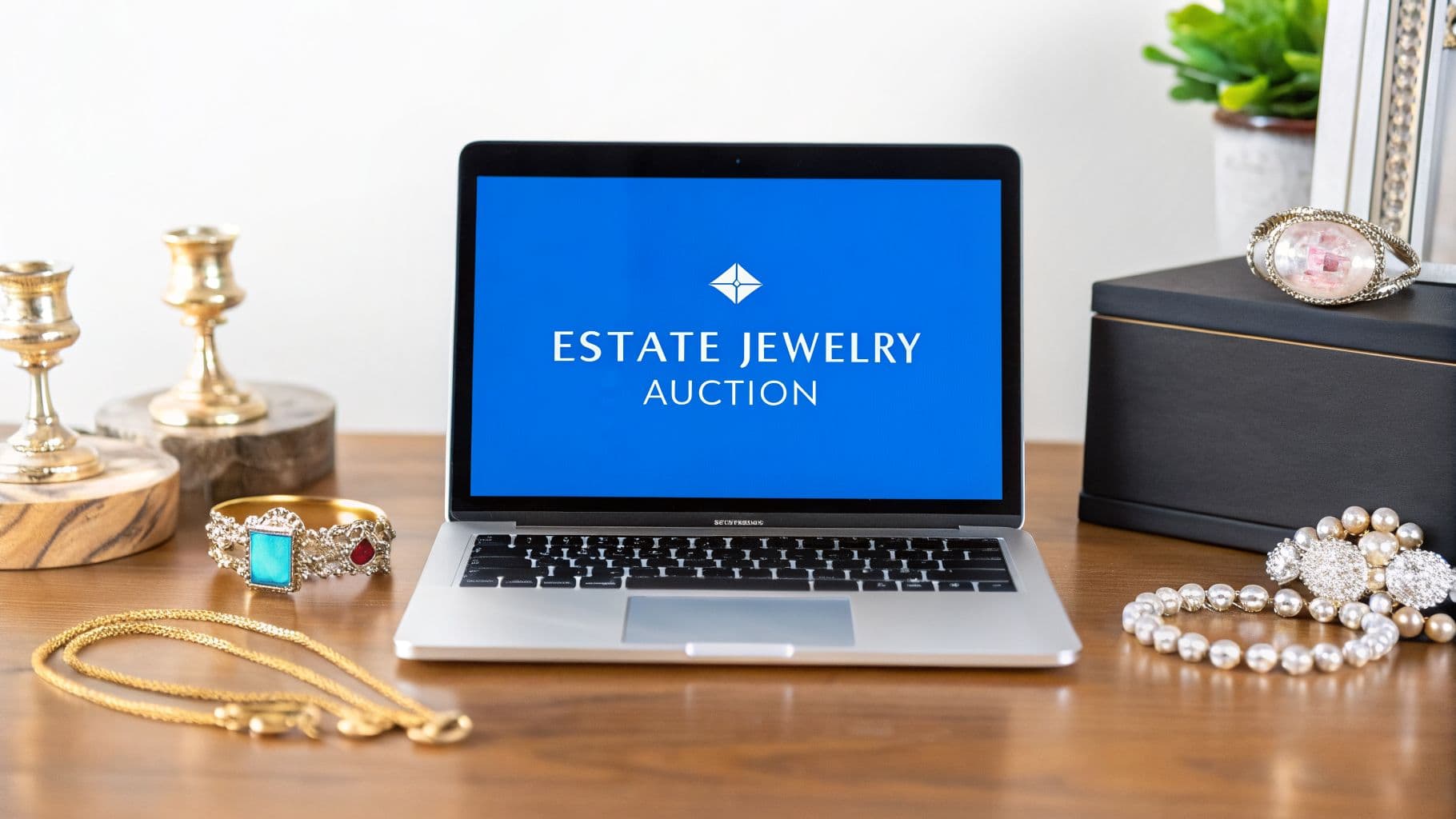
Thinking of selling some estate jewelry online? Your timing couldn't be better. We're seeing a perfect storm in the market right now for sellers, all thanks to some big shifts in buyer trends and a growing hunger for unique, pre-owned pieces that you just can't find in a regular store.
Why 2026 Is The Year For Your Online Jewelry Auction
Before you even start sorting through that velvet-lined box of heirlooms, let's talk about timing. Deciding to sell is one thing. Selling at the right time is what turns a good outcome into a fantastic one. As it turns out, 2026 is shaping up to be a unique window of opportunity, and knowing why will give you a ton of confidence moving forward.
This isn't just some fleeting trend. We're witnessing a fundamental change in how people approach luxury. A whole new generation of buyers, who care deeply about sustainability and individuality, are actively hunting for pieces with a story. They aren't just buying a ring; they're buying a piece of history. This shift creates an incredibly powerful seller's market for estate items.
The New Wave of Jewelry Buyers
Today’s shoppers are looking past the mass-produced items you see everywhere. They want something distinctive and eco-conscious, and an estate jewelry auction online speaks directly to that desire. These buyers get that pre-owned jewelry is the ultimate form of sustainable luxury, and that attitude is fueling some serious market momentum.
The market for estate jewelry is absolutely exploding. Projections show it soaring from an estimated $2.8 billion in 2025 to $10.9 billion by 2033. That’s a compound annual growth rate of about 16.4%. The numbers show just how deep this opportunity runs.
This incredible growth means more motivated buyers are out there, actively searching for exactly what you have. You’re not fighting for attention; you're meeting a ready-and-waiting demand.
Seizing the Financial Opportunity
More demand, of course, means higher potential profits for you. The real game-changer is how you access that demand.
Let’s quickly compare the old way with the new way.
Traditional Vs DIY Online Jewelry Auction
| Feature | Traditional Estate Company | DIYAuctions Online Platform |
|---|---|---|
| Commissions | Typically 20-50% of final sale price. | A flat 10%, capped at $1,000. |
| Control | Company controls pricing, marketing, and timeline. | You're in the driver's seat. You set the bids and schedule. |
| Transparency | Complex fee structures; sometimes hidden costs. | Clear, upfront pricing. No surprises. |
| Audience Reach | Limited to their local network or physical auction attendees. | Broad exposure to qualified local buyers online. |
The difference is clear. Platforms like DIYAuctions let you connect directly with this eager audience without the staggering commissions traditional auction houses and estate sale companies charge.
By managing the sale yourself, you keep control and—more importantly—a much larger share of the final price. You can check out our guide on the top online estate auction websites to see how the options stack up.
Picking the right platform is key to making the most of this strong market. Combining this high demand with a modern, low-commission platform makes now the perfect time to get started.
Unlocking The True Value Of Your Collection
That box of inherited jewelry isn't just a collection of memories; it's a collection of assets. Before you can launch a successful estate jewelry auction online, you have to know exactly what you’re working with. This is the crucial first step where you turn a tangled assortment of pieces into a curated collection that bidders will be excited about.
The first thing you’ll want to do is a simple sort. Find a clean, well-lit surface and lay everything out. Create three basic piles: fine jewelry (gold, platinum, diamonds, and other precious stones), sterling silver, and costume jewelry. This initial pass gives you a clear picture of the collection's scope and helps you spot the most promising items right away.
Don't just sell everything individually. Think strategically about how you group things. A few charming but non-precious brooches might get lost on their own, but package them as a "Vintage Costume Brooch Lot" and they suddenly become a must-have for a niche collector. On the other hand, a signed Tiffany & Co. silver bracelet should always stand on its own as a featured item.
The Critical Role Of A Professional Appraisal
Once you’ve separated the obvious treasures from the fun costume pieces, it’s time for a professional evaluation. It’s tempting to guess, I know, but getting a formal appraisal is the single best investment you can make in this entire process. For your most significant pieces, find a certified appraiser through a reputable organization like the GIA (Gemological Institute of America) or the ASA (American Society of Appraisers).
Here's the key: you need to ask for the right kind of appraisal. Request the "fair market value" (FMV), which is what an item would likely sell for between a knowledgeable buyer and seller. This is not the same as an "insurance replacement value," which is always inflated and an unrealistic starting point for an auction. You can learn more about this important difference in our guide on how to determine fair market value.
Think about this real-world example: An executor I worked with found what she assumed was a pretty garnet ring. An appraiser quickly identified it not as garnet, but as a rare Padparadscha sapphire in an Art Deco setting. That appraisal gave her the confidence to set a smart reserve price, and the ring ended up selling for over $8,000—a life-changing amount compared to the few hundred dollars she might have guessed.
Making Sense Of Market Conditions
All this prep work ties directly into why now is such a fantastic time to sell. The market is hot. This visual guide breaks down exactly why the current climate is primed to maximize your return.

As you can see, strong market growth and high buyer demand are creating the perfect storm for sellers. This data isn't just theoretical; it's confirmation that your time spent on appraisal and preparation will pay off.
An appraisal gives you more than a price tag. It provides authenticated details—carat weight, clarity, cut, metal purity—that build trust with your buyers. Armed with a professional report, you can write auction descriptions with authority and confidence, proving your items' worth and allowing you to set strategic starting bids that draw in serious collectors from the very beginning.
Creating Listings That Spark Bidding Wars
In any estate jewelry auction online, the listing does all the talking. I've seen it time and again: a phenomenal piece can get completely ignored because of bad photos, while a more modest item can spark a bidding war with a great presentation. This is where you connect with buyers and give them the confidence to hit that "bid" button.

Don't worry, you don't need a professional photography studio. Your smartphone, some good natural light, and a simple background are really all you need to make your jewelry shine and grab the attention of serious collectors.
Photography That Sells
Great photos are completely non-negotiable. Bidders need to see every single detail, from the sparkle of a diamond to the delicate metalwork on a vintage setting. If your images are blurry or badly lit, you’re creating doubt, and doubt kills bids.
Start by finding a spot with bright, indirect sunlight—near a window is perfect. Direct sun is actually too harsh and creates ugly glares. What you're after is soft, even lighting that shows off the piece without washing out the details.
Next, get a clean background. A plain white or black surface works wonders here. This could be a piece of poster board, a clean sheet of fabric, or even just a crisp sheet of paper. For a truly professional look, mastering the white photoshoot background is a skill that will make your items stand out.
Pro-Tip: Use the macro mode on your smartphone camera (it’s often a little flower icon) to get those super sharp, close-up details. To avoid any blur, stabilize your phone on a small tripod or even a stack of books.
Make sure to take shots from multiple angles. Capture the front, back, any clasps, and especially any hallmarks or maker's marks you find. For a ring, always include a photo of it on a finger or a ring stand to give buyers a sense of scale. A complete set of photos answers questions before a bidder even has to ask. For more in-depth advice, check out our guide on how to take professional product photos using just your phone.
Descriptions That Connect
Once your photos have pulled bidders in, your description needs to seal the deal. This is your chance to mix hard facts with compelling storytelling to build trust and create an emotional connection.
Begin with the essential facts from your appraisal. Be precise and completely transparent.
- Materials: Clearly state if it's 14k yellow gold, 925 sterling silver, or something else.
- Gemstones: Detail the 4Cs—carat, color, clarity, and cut—for any significant stones.
- Measurements & Weight: Give the necklace length, bracelet diameter, and the total weight in grams.
- Hallmarks: Note any stamps you see, like "Stamped 'Tiffany & Co. 925'."
But don't stop there. If you know anything about the piece's history, share it! Was it a 25th-anniversary gift from the 1960s? Was it purchased on a romantic trip to Paris during the Art Deco era? This kind of provenance adds a layer of romance and uniqueness that buyers simply can't find in a modern jewelry store.
Finally, think like a buyer when writing your title. Instead of just "gold ring," use descriptive, searchable terms like "Vintage Art Deco Sapphire Ring" or "Mid-Century Pearl Necklace." Your title and description are the most powerful tools you have to attract the right people to your auction.
Developing a Winning Auction and Pricing Strategy
You’ve sorted the collection and your photos look fantastic. Now comes the part that often feels the most daunting: setting your prices. But this isn't about guesswork. Think of it less like pricing and more like launching an event—your strategy is what gets the party started and draws in the crowds.
With the right approach, you can create the kind of competitive energy that drives final bids well beyond your expectations. It’s a strategic game you can absolutely win.
The Power of a $1 Starting Bid
It sounds completely backward, I know, but starting your auction at just $1 is one of the most powerful moves you can make.
A low starting bid removes every barrier for a potential buyer. It encourages them to jump in early and place that first bid. Once they do, a psychological switch flips. They've invested, and now they feel a little sense of ownership, making them far more likely to stick around and keep bidding.
This tactic is brilliant for the bulk of your collection—think interesting vintage pieces, costume jewelry lots, or items where the value isn't set in stone. It builds immediate momentum and lets the market itself show you what your items are truly worth. You’ll be amazed at how high a $1 auction can climb when you get a few determined bidders competing.
But for your most valuable pieces, you’ll want a safety net.
For a truly exceptional item—like a signed Cartier bracelet or a vintage Rolex—you need to protect its value. This is exactly what a reserve price is for. It’s a confidential minimum price that must be met for the item to sell. A reserve gives you the confidence to start the bidding low and generate buzz, while ensuring your star piece never sells for less than it's worth.
Aligning Your Prices With Market Trends
Your appraisal provided a solid value baseline, but the current market tells you what buyers are willing to pay right now. This is where real strategy comes into play, and right now, the timing couldn't be better for sellers.
Recent data shows a fascinating trend in the jewelry world. Gross sales have grown by a strong 4.7 percent, even while the total number of pieces sold actually fell by 5.6 percent.
This "price up, units down" trend is a clear signal. While people may be buying fewer items overall, they are paying significantly higher prices for quality pieces they really want. For you, this means there is strong demand for the distinctive, high-quality jewelry in your collection. You can read more about this key 2025 market trend for the full analysis.
This data confirms that buyers are actively hunting for—and paying a premium for—unique items. Your pricing strategy should reflect that confidence. By combining compelling listings with smart starting bids and reserves, you're perfectly set up to meet this demand and achieve a fantastic result for your auction.
Managing Your Live Auction And Post Sale Logistics
Once your auction is live, the focus shifts. You’re no longer just preparing; you’re managing the event. Your dashboard becomes your command center, letting you watch the bidding action in real-time and see which pieces are catching bidders' eyes.
This is also when you step into the role of the expert. Be ready to answer questions. A bidder might want to see a photo of a ring on a hand to judge its size, or maybe they need help deciphering a hallmark. Quick, clear answers build the trust needed to turn a hesitant watcher into a confident bidder.
Securing Your Sale and Your Sanity
Let's be honest: a big part of running a successful auction is knowing your sale is secure. You shouldn’t have to worry about non-paying bidders or chase down payments.
That’s where integrated payment processing, like the system on DIYAuctions, becomes your best friend. It acts as your primary defense against fraud by handling all the financial details. The platform verifies and collects the funds from the winning bidder before you even think about shipping.
After the final bid, the platform automatically charges the winner's card and notifies you that payment is secured. Only then do you proceed with shipping or pickup. This protects you from non-paying bidders and fraudulent chargebacks, ensuring you get paid for your valuable items.
This isn’t just a nice feature; it’s essential in a global market. The estate and antique jewelry industry is a massive $5.5 billion global retail market, connecting sellers with buyers across 195 countries. You can explore detailed insights on this worldwide market to see just how critical secure, international-ready systems are.

From Final Gavel To Final Delivery
With the payment confirmed, it’s time to get that beautiful piece safely to its new home. For high-value jewelry, careful packaging isn’t just a suggestion—it’s a requirement.
Here’s how to do it right:
- Use the Box-in-a-Box Method. First, place the jewelry in a small, padded jewelry box. Then, put that box inside a slightly larger, sturdy shipping box. Fill any gaps with cushioning so absolutely nothing can move.
- Always Insure Your Shipment. Choose a shipping option that gives you a tracking number and provides full insurance coverage for the final sale price. USPS Registered Mail is an excellent, highly secure choice for domestic shipping, while carriers like UPS or FedEx offer robust declared value coverage.
- Keep It Discreet. Never write words like "jewelry," "gold," or "diamonds" on the outside of the package. A plain, generic label is your best bet to avoid attracting the wrong kind of attention.
Following these final steps guarantees a professional and secure transaction, from the very first bid to the moment your item is safely delivered.
Common Questions About Selling Estate Jewelry Online
Even with the best plan in place, stepping into your first estate jewelry auction online can feel a little nerve-wracking. It’s only natural to have a few last-minute questions pop up.
We get it. We’ve heard them all. So, let’s tackle the most common concerns we hear from sellers, giving you the straightforward answers you need to move forward with confidence. Platforms like DIYAuctions have built-in tools to manage many of these worries, but a little expert insight never hurts.
How Do I Know If My Jewelry Is Actually Valuable?
This is, without a doubt, the number one question on every seller's mind. The good news is that most jewelry made from precious metals or set with genuine gemstones has at least some inherent value.
Start by playing detective. Look for tiny stamps—known as hallmarks—like '14k,' '925,' or 'Plat.' These tell you the metal content. For more significant-looking pieces, especially those with large stones or a designer name like Tiffany & Co. etched on them, getting a formal appraisal is a very smart move.
For everything else, a quick visit to a trusted local jeweler can often clear things up. They can usually identify materials on the spot. And don't ever dismiss broken items; even a snapped gold chain has a "melt value" based on its weight.
An online auction is the ultimate test—it lets the market decide the true worth. You’d be amazed what collectors will bid on, from specific Art Deco brooches to mixed lots of interesting costume jewelry.
What Is The Biggest Mistake First-Time Sellers Make?
The single most common—and costly—mistake is a nasty combination of bad photos and vague descriptions. When you're selling online, your listing is your entire sales pitch.
Blurry photos, poor lighting, or forgetting to list crucial details like weight, dimensions, and gemstone clarity will absolutely scare away serious bidders. It’s a recipe for a disappointing final price.
Honestly, the best investment you can make is your time. Crafting a beautiful, transparent, and highly detailed listing will do more for your auction's success than anything else.
How Can I Ship High-Value Jewelry Safely?
This part is non-negotiable. Once the auction is over and the payment is confirmed, your final job is getting that precious item to its new owner, safe and sound.
For your peace of mind, always follow these best practices:
- Use the "box-in-a-box" method. Place the jewelry in its own small, padded gift box. Then, put that small box inside a larger, plain shipping box with plenty of cushioning.
- Get it insured. This is critical. Always select a shipping service that includes tracking and insurance for the full sale price of the item. USPS Registered Mail is a fantastic, highly secure option for high-value pieces.
- Be discreet. Never write words like 'jewelry,' 'gold,' or 'diamonds' on the outside of the package. Keep it boring.
A secure platform like DIYAuctions ensures you never ship until payment is fully confirmed and cleared in your account. This system is designed to protect you from fraud and guarantees a smooth, professional end to your sale.
More guides in Estate Sale Basics
July 28, 2026
Revenue Reporting for Estate Sales and Auctions
Learn revenue reporting essentials for estate sales and auctions. Discover key metrics, templates, and best practices to simplify tracking and compliance.
Read guideJuly 26, 2026
Stamp Collection Valuation: A Practical Step-by-Step Guide
Stamp collection valuation made simple. Learn how to identify, grade, price, and sell your stamps with confidence for estate sales or consignment.
Read guideJuly 23, 2026
Estate Sales Brick NJ: Your 2026 Guide to Success
Planning your estate sales brick nj? Our guide covers permits, pricing, marketing, & running a safe sale with DIYAuctions.
Read guideGet the estate sale pricing guide
Enter your email for pricing ranges, planning notes, and a clearer path to launch.