Your Guide to Hiring an Estate Sale Agent
Thinking of hiring an estate sale agent? This guide covers their role, fees, and the pros and cons, helping you decide if it's the right choice for you.

An estate sale agent is essentially a professional project manager you hire to appraise, organize, and sell the contents of a home. Think of them as the director of a complex play where your belongings are the cast—they orchestrate everything from pricing antiques to managing the crowds on sale day.
What Does an Estate Sale Agent Really Do?

When you're faced with clearing out a household, the sheer volume of stuff—and the emotional weight attached to it—can feel completely overwhelming. An estate sale agent steps into that chaos and turns it into a structured, profitable event. Their job goes way beyond just slapping price tags on furniture; they’re part logistician, part marketer, and part negotiator, all rolled into one.
At the end of the day, their main goal is to get the most money possible from the home's contents. That work starts long before the first customer ever steps through the door.
Core Responsibilities of an Agent
The process kicks off with a detailed evaluation. The agent will do a walkthrough to get a feel for the quantity and quality of the items, making sure there's enough potential revenue to meet their company's minimum. Once you sign a contract, their team hits the ground running.
Here’s what they typically handle:
- Inventory and Sorting: They go through everything, meticulously cataloging items from fine china down to the everyday kitchen utensils. This is where they separate the truly valuable pieces from common household goods and flag things that are better off donated or tossed.
- Appraisal and Pricing: This is where their expertise really shines. Agents research and price thousands of individual items, leveraging their knowledge of current market values. They know what collectors are looking for and can accurately price antiques, jewelry, and art to make sure you get a fair return.
- Staging and Organization: The home is totally transformed into what looks and feels like a pop-up retail shop. They clean, arrange, and display everything to create an appealing, shoppable experience for buyers, which is proven to encourage higher sales.
The goal is to make the home look like a boutique, not a garage sale. Proper staging can significantly increase the total revenue by making items more attractive to potential buyers.
Managing the Sale from Start to Finish
With all the prep work done, the agent shifts into marketing and sales mode. They'll advertise the event to their network of dedicated buyers, collectors, and local shoppers using email lists, social media, and specialized websites. This kind of targeted promotion pulls in a much larger and more serious crowd than a simple yard sign ever could.
During the actual sale, they manage all the logistics—from crowd control and security to processing every single payment. But their job isn't over when the last customer leaves. They also handle the final clean-out, which can involve coordinating buyouts for unsold items, arranging for charity pickups, or hiring junk removal services.
Finally, they provide you with a detailed financial statement and a check for the proceeds, leaving you with a completely cleared-out home. To get an even deeper look into their role, you can learn more about estate sale managers and their comprehensive duties.
Decoding Estate Sale Agent Commissions and Fees
When you hire an estate sale agent, you’re not just paying for a service—you’re entering a partnership. Their payment structure is built around that idea. It’s almost always commission-based, which means the agent’s paycheck is directly tied to how much money they can make for you.
The industry standard for commission floats somewhere between 35% and 50% of the total gross sales. Let’s put that into real numbers. If your sale brings in $20,000, the estate sale company would take home between $7,000 and $10,000. That percentage might feel steep at first, but it’s meant to cover the monumental effort involved: sorting through a lifetime of items, researching and pricing everything, staging the home, marketing the event, and staffing the actual sale days.
Think of it as an all-inclusive fee for their comprehensive, hands-on service. Still, it’s absolutely critical to ask what’s actually included before you sign anything.
Uncovering Potential Extra Costs
One of the biggest mistakes people make is assuming the commission is the only expense. Depending on the company and the unique needs of your estate, other fees can and do pop up. Reputable companies won't hide these, but you often have to ask the right questions to get the full picture.
Here are a few common extra costs to watch out for:
- Specialized Appraisals: Got fine art, rare coins, or antique jewelry? You’ll likely need a certified appraiser, and that cost is almost always passed on to you.
- Security Services: For sales with exceptionally high-value items or in busy neighborhoods, hiring security guards might be a necessary add-on.
- Extensive Advertising: While basic online listings are usually part of the deal, a big marketing push with premium ads or print features might cost extra.
- Disposal and Cleanout Fees: What happens to the unsold items and trash? The cost to haul it all away is frequently billed as a separate line item.
Always ask for a detailed list of what the commission covers and what services would incur an additional charge. A trustworthy estate sale agent will be completely transparent about all potential fees from day one.
A Financial Breakdown: Agent vs. DIY
Seeing the numbers side-by-side really helps clarify the financial impact. Let's compare how a traditional agent’s commission model stacks up against a lower-commission alternative, like an online auction platform. It’s a great way to see how different service models affect your bottom line. To dig even deeper, you can explore the nuances of estate sale commission rates and what they typically cover.
The table below breaks down a hypothetical $20,000 gross estate sale to show you where the money goes.
Cost Comparison: Traditional Agent vs. DIY Platform
| Expense/Profit Category | Traditional Estate Sale Agent (40% Commission) | DIYAuctions Platform (10% Commission) |
|---|---|---|
| Gross Sales Revenue | $20,000 | $20,000 |
| Commission Fee | -$8,000 | -$1,000 (capped) |
| Additional Fees (Est.) | -$500 | $0 |
| Net Profit to Seller | $11,500 | $19,000 |
As you can see, the commission model has the single biggest impact on your final payout. The convenience of a full-service agent is undeniable, but it comes at a significant cost. On the other hand, a platform like DIYAuctions is designed to maximize your financial return by putting you in the driver’s seat.
Deciding whether to hire an estate sale agent is a big move, and honestly, it’s not the right call for every situation. You really need to understand the trade-offs between convenience and cost before you sign any contract.
For most folks, it all boils down to one simple question: What do you value more—your time and sanity, or your final take-home profit?
A professional service can be an absolute lifesaver, especially when you're already dealing with a stressful or emotional time. They step in and manage a massive project that could otherwise eat up weeks, if not months, of your life.
The Advantages of Full Service
The single biggest reason people hire an estate sale agent is the sheer convenience. They handle everything. From sorting through dusty boxes in the attic to managing a crowd of hundreds of shoppers on sale day, they take care of it all. This comprehensive service saves you a truly incredible amount of physical and emotional work.
Here’s where they really shine:
- Expert Pricing and Higher Returns: Professionals live and breathe this market. They know how to accurately price antiques, collectibles, and even everyday household goods to get you the most money. In many cases, their expertise leads to much higher total sales than a self-run event could achieve.
- Built-In Buyer Network: Good companies come with a built-in audience. They have long lists of dedicated buyers, serious collectors, and local dealers they market to directly. This ensures a much bigger and more motivated crowd shows up than you could ever hope to attract on your own.
- Reduced Stress and Emotional Distance: Liquidating a loved one's home is emotionally draining. An agent acts as a compassionate but objective third party. They manage the whole process so you don't have to put a price tag on sentimental items and watch them get carried out the door.
Handing over the keys to a professional means you can step back from the chaos. You avoid the stress of pricing, the hassle of advertising, and the responsibility of managing crowds of strangers in the home.
The Drawbacks of Handing Over Control
While the benefits sound great, they don’t come for free. You're giving up a significant chunk of your profit and a lot of your personal control. The financial hit is the number one concern for most people, as those commission fees come directly out of your pocket.
And for those who want to be more hands-on, there are fantastic resources out there on how to become one of the most effective estate sales organizers for your own event.
Before you jump in, consider these potential downsides:
- High Commission Fees: With commission rates typically falling between 35% and 50%, the agent's fee is by far the biggest expense. This can feel particularly painful if the total sale amount ends up being lower than you hoped.
- Loss of Pricing Control: You’re putting your full trust in the agent's ability to price things fairly. If you have strong feelings about what certain heirlooms or collectibles are worth, giving up that control can become a real source of conflict.
- Rigid Schedules and Requirements: Many companies have strict rules. They might have minimum value thresholds to even consider your sale, and they operate on their own schedule. If your estate is on the smaller side or your timeline doesn't fit their calendar, they might just pass on the job.
The Estate Sale Process From Start to Finish
So, you’ve signed the contract with an estate sale agent. What happens next? A whole lot, and it usually starts moving fast. Their team has a finely tuned system for turning a private home into a pop-up retail shop, all designed to get the best possible return on your items. Knowing the timeline can take a lot of the mystery out of the process.
The first phase is always the most hands-on. Expect the agent and their crew to spend anywhere from a few days to a couple of weeks just sorting, organizing, and cataloging every single thing in the house. This isn't just a quick tidy-up; it's a deep dive to find any hidden gems that might need a special look.
Inventory and Professional Pricing
During this initial stage, nothing gets missed. The team will go through every closet, dig into every drawer, and empty every cabinet to build out a complete inventory. They'll separate the high-value antiques and collectibles from the everyday household goods, making sure everything is properly grouped before a single price tag is written.
This is where an estate sale agent’s real expertise shines. They lean on their deep market knowledge and specialized research tools to put a fair market value on thousands of different items. Whether it’s fine jewelry, artwork, kitchen gadgets, or old tools in the garage, the goal is always the same: price things to sell, but price them high enough to generate real revenue for you.
Staging and Strategic Marketing
Once everything has a price, the focus pivots to presentation. The agent’s team will stage the home, thoughtfully arranging furniture and displaying items to create an atmosphere that feels less like a house and more like a boutique. They bring in their own tables, shelving, and even glass display cases to make everything look shoppable and appealing.
At the same time, the marketing machine kicks into gear. This is a multi-pronged attack to get the word out, and it usually includes:
- Professional Photography: High-quality photos are snapped to showcase the best items and draw buyers in online.
- Email Blasts: An announcement goes out to their dedicated list of followers—serious collectors, local dealers, and loyal shoppers who never miss a sale.
- Online Listings: The sale is posted on specialized estate sale websites and promoted across social media.
This simple flowchart breaks down the core functions an agent performs to get ready for the big day.
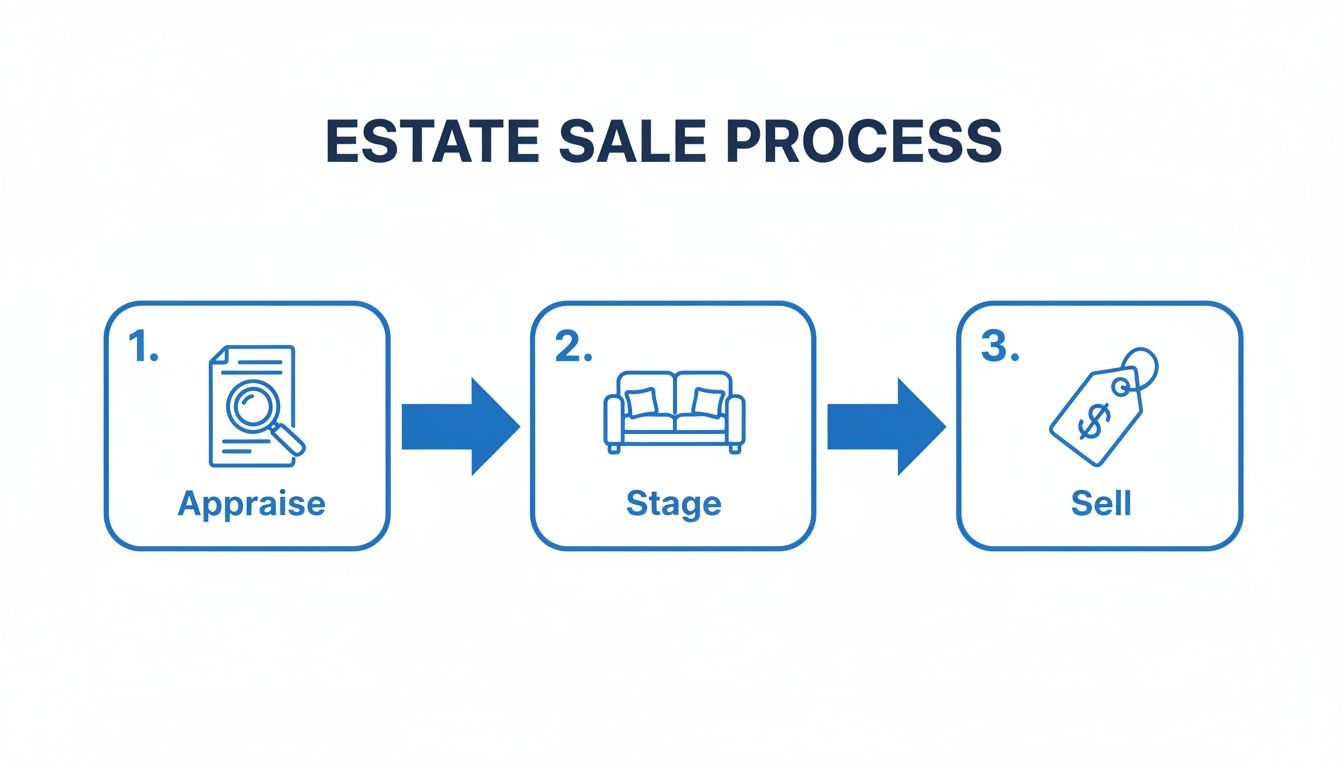
It really just boils down to that fundamental progression: figure out what it’s worth, make it look great, and then hold the sale.
Sale Days and Final Reconciliation
When the sale days arrive, the agent and their staff manage everything. They handle crowd control, process all payments, and keep an eye on security. Having an experienced team on-site means customers get help when they need it, and the whole event runs like a well-oiled machine.
After the last shopper walks out the door, the job still isn't done. What happens after the sale is just as important as the prep work, as it determines how the home is left and what your final check will look like.
The last step is the final accounting and clean-out. The agent will coordinate what to do with anything that didn't sell. This could mean arranging for a charity to pick up donations or connecting you with a great junk removal company for clearing an estate for anything left over.
Finally, you’ll receive a detailed financial report. It will clearly break down the gross sales, the agent's commission, and any other agreed-upon fees. Along with it, you'll get your final payment, and the home will be left empty and ready for whatever comes next.
How to Choose a Trustworthy Estate Sale Agent

Let's be blunt: not all estate sale companies are created equal. Far from it. Choosing the right one is easily the most critical decision you'll make in this entire process.
A fantastic agent can feel like a godsend, pulling maximum value from the estate while shielding you from stress. The wrong one? They can turn a tough time into an absolute nightmare of lost money and frustration.
This is where doing your homework pays off. The vetting process is your best defense, helping you spot the seasoned pros and steer clear of the inexperienced or—worse—the unethical operators. A little due diligence right now will save you a world of headaches later.
Red Flags to Watch For Immediately
Before you even get to an interview, you can often spot trouble from a mile away. Keep your eyes peeled for these immediate warning signs of an unprofessional or shady business. If you see any of them, just walk away.
- No Formal Contract: Any legitimate company will insist on a detailed, written contract outlining commissions, fees, and exactly what they'll do. A handshake deal is a gigantic red flag waving in the wind.
- Lack of Insurance: They must have liability and theft insurance, period. If they can’t show you proof, they aren't a real business, and you could be on the hook for any accidents or problems.
- Pressure to Sell Items Directly: This is a big one. If an agent tries to buy valuable items from you "off the books" before the sale, that’s a massive conflict of interest. Their job is to get you the highest price from the public, not to cherry-pick your best stuff for themselves at a discount.
A reputable agent’s priority is maximizing your sale’s revenue, not acquiring your items for their own inventory. Transparency and a clear focus on your financial outcome are non-negotiable.
Essential Questions for Your Interview
Once you've weeded out the obvious non-starters, it's time to sit down with the remaining candidates. Treat this like a job interview where you're the one doing the hiring. You need to get a feel for their process, their experience, and how they’d handle your unique situation.
Don't be afraid to ask direct questions. Their answers (or lack thereof) will tell you everything you need to know.
To make this easier, we’ve put together a checklist of must-ask questions. Asking each company the same things helps you make a true apples-to-apples comparison.
Vetting Checklist for Your Estate Sale Agent
Before you sign on the dotted line, run every potential agent through this list. A trustworthy professional will have clear, confident answers for every single one.
| Question Category | Essential Questions to Ask |
|---|---|
| Experience & Reputation | "How many years have you been in business, and can you provide references from recent clients?" |
| Specialty | "Do you have specific experience selling items like mine (e.g., antiques, collectibles, art)?" |
| Costs & Fees | "Can you give me a complete breakdown of your commission and any other potential fees? Are there hidden costs?" |
| Marketing & Reach | "How do you market your sales? How large is your email list or network of buyers?" |
| Post-Sale Process | "What happens to items that don't sell? Is there an extra charge for clean-out services?" |
These questions aren't just for show; they empower you. Armed with this information, you can confidently choose a partner who will treat your family's estate with the care and respect it deserves.
Looking Beyond Traditional Agents
While hiring an estate sale agent is a path many take, it’s far from the only game in town these days. Technology has opened up a whole new world for people liquidating assets, giving sellers a level of control and financial upside that just wasn't possible before. New solutions are popping up that directly challenge the old-school, high-commission model.
These alternatives are designed for folks who don't mind rolling up their sleeves a bit in exchange for keeping a much bigger chunk of the profits. Let's be honest, the thought of handing over 40% to 50% of your sale's earnings is tough to swallow. The new way empowers you to run the show yourself, but with professional-grade online tools to back you up.
The Rise of DIY Online Auction Platforms
What if you could get the same marketing firepower as a professional company, but without giving away half your revenue? That's exactly the idea behind DIY online auction platforms. Think of them as the perfect middle ground—you get the massive buyer exposure an agent provides, combined with the cost savings of running the sale yourself.
Instead of a sky-high commission, these services usually charge a small, clear-cut fee. That simple change means you could walk away with up to 90% of what your items sell for.
You’re back in the driver's seat, making the calls that matter:
- You Set the Prices: You decide the starting bids and any reserves for your most important items. Nothing sells for less than you're comfortable with.
- You Control the Schedule: The auction dates and the one-day pickup event work around your life, not an agent’s packed calendar.
- You Catalog Your Items: Using simple smartphone-friendly tools, you photograph and describe your own things, ensuring they’re presented just the way you want.
This isn't about leaving you to figure it all out alone. A good platform handles the heavy lifting—like marketing your sale to a huge network of local buyers and processing all the payments securely—while you focus on managing the items at your location.
Keep More of Your Money
The biggest win here is obvious: more cash in your pocket. By cutting out the massive commission of a traditional estate sale agent, your final payout can be dramatically higher.
This isn't happening in a vacuum. The broader market is heating up, too. For instance, commercial real estate is seeing a major uptick, with 60% of investors predicting significant growth. That kind of activity signals a strong, competitive buyer market across the board, which is fantastic news for anyone selling assets. You can dig into some of these commercial real estate trends and their market impact to see the bigger picture.
For someone using a low-fee platform, this active market means more bidders and higher final prices—a powerful combination of market demand and financial smarts.
Common Questions About Working With an Agent
When you're thinking about hiring a professional, a lot of questions pop up. It's a big decision. Let's walk through some of the most common things people ask so you can get a clearer picture.
How Are High-Value Items Handled?
What about that antique painting or the family jewelry? A good estate sale agent knows their limits. They won't just slap a price tag on a rare collectible based on a hunch. Instead, they'll call in certified appraisers who live and breathe that specific market, ensuring you get an accurate, fair price.
During the sale, these aren't just left out on a table. High-value items are typically secured in locked display cases, and sometimes the company will even bring in extra security. It’s all about protecting your most valuable assets.
What Happens to Unsold Items?
It’s almost a guarantee that not everything will sell. So, what happens to the leftovers? Your agent should walk you through a few standard options and help coordinate everything.
- Donation: This is the most popular route. The agent arranges for a charity to pick everything up, and you get a tax receipt for the donation.
- Buyout: Some estate sale companies will offer to buy all the remaining items for a single, lump-sum price. It’s a fast way to clear the house.
- Disposal: For anything that's truly just junk, the agent can schedule a junk removal service to haul it all away, leaving the property completely empty.
Make sure your contract is crystal clear on this point. It should spell out exactly how leftovers are handled and whether the clean-out service is part of their commission or an extra fee.
Can I Set Minimum Prices?
This is a big one, and it's a bit of a delicate dance. You can absolutely share your thoughts on what you think certain items are worth—after all, they were yours. However, you're hiring the agent for their expertise in what the local market will actually bear.
Most seasoned pros will listen to your input but need to have the final say on pricing. Their goal is to sell things, not have them sit there because the price is too high. If you have a couple of heirlooms you absolutely can't part with below a certain number, it’s often better to just pull them from the sale altogether.
Is a High Commission Really Worth It?
Honestly, it all comes down to what you value most. If your top priority is saving your own time and avoiding the stress, physical labor, and emotional drain of emptying a house, then yes, paying a commission is often well worth it. A great agent can also generate much higher sales totals than you could on your own, which can easily cover their fee and then some.
But if your number one goal is to maximize every last dollar you net from the sale, a lower-commission alternative might be a better fit. A platform like DIYAuctions gives you the tools to manage the sale yourself, putting more of the final profit directly in your pocket.
More guides in Estate Sale Basics
July 28, 2026
Revenue Reporting for Estate Sales and Auctions
Learn revenue reporting essentials for estate sales and auctions. Discover key metrics, templates, and best practices to simplify tracking and compliance.
Read guideJuly 26, 2026
Stamp Collection Valuation: A Practical Step-by-Step Guide
Stamp collection valuation made simple. Learn how to identify, grade, price, and sell your stamps with confidence for estate sales or consignment.
Read guideJuly 23, 2026
Estate Sales Brick NJ: Your 2026 Guide to Success
Planning your estate sales brick nj? Our guide covers permits, pricing, marketing, & running a safe sale with DIYAuctions.
Read guideGet the estate sale pricing guide
Enter your email for pricing ranges, planning notes, and a clearer path to launch.