Choosing Estate Sales Organizers DIY Platform vs Full Service
Deciding between DIY and professional estate sales organizers? This guide compares costs, timelines, and control to help you make the most profitable choice.
When you need to liquidate an estate, the very first decision you’ll face is a big one: do you hire professional estate sales organizers or manage the sale yourself with a DIY platform? This isn't just a small detail—it's a choice that shapes your profits, time commitment, and how much say you have in the process.
Professionals offer a completely hands-off service, but they typically charge a hefty commission of 30-50%. On the flip side, a DIY platform gives you all the tools you need for a fraction of the cost, putting you in complete control.
Choosing Your Estate Sale Strategy
Think of it as two distinct paths. One path leads you to full-service estate sale organizers who literally handle everything—from sorting and pricing every single item to marketing the event and managing the chaos of sale days. This is a lifesaver for anyone short on time, living out of state, or simply feeling too overwhelmed to start. The convenience is incredible, but it comes at a steep price that takes a major bite out of your final proceeds.
The other path is the DIY approach, using a modern online platform. This route puts you squarely in the driver's seat. You decide the prices, you set the schedule, and you control how your items are presented to buyers. It definitely requires more hands-on work, but the financial rewards can be massive. You're not just dodging high commissions; you're also able to use your personal knowledge of the items, which often leads to smarter pricing and a much better net return.
If you want to dig deeper, you can explore various estate liquidation options to see which one truly fits your situation.
Core Differences at a Glance
To make a smart call, it helps to see the two options side-by-side. Each one is built for different needs and priorities, and seeing the distinctions clearly is the first step toward a successful sale.
Quick Look: Professional Organizers vs. DIY Platform
This table breaks down the essential trade-offs between hiring a company and running your own online sale.
| Factor | Professional Estate Sales Organizers | DIY Platform |
|---|---|---|
| Cost & Fees | High commissions, 30-50% of gross sales, plus potential hidden fees. | Low, flat fee, often a small percentage with a cap to maximize your profit. |
| Time Commitment | Very low; they handle all the labor-intensive work from beginning to end. | Moderate; you're in charge of cataloging, photos, and pickup day. |
| Control | Low; the company dictates pricing, staging, and the entire sale schedule. | High; you have total control over pricing, descriptions, and all logistics. |
| Convenience | Maximum convenience; a completely hands-off experience for the seller. | Requires direct involvement but offers total flexibility and freedom. |
The bottom line is pretty straightforward. You're choosing between convenience and profit.
The fundamental trade-off is clear: Professional organizers sell convenience by taking a large share of the profits, while DIY platforms empower you to keep more money in exchange for your time and effort.
Ultimately, the best choice really does come down to your personal circumstances. If you have the time and feel comfortable managing the process, a DIY platform is almost always the more profitable route. But if you’re pressed for time or dealing with a lot of stress, the full-service approach from professional estate sales organizers might be the more practical solution.
A Detailed Financial Breakdown Of Your Options
When it's time to choose, you need to look past the sales pitch and get down to the real numbers. The biggest financial difference between hiring estate sales organizers and using a DIY platform is how they charge for their services—a difference that directly impacts your final payout. It really boils down to a choice between a high-commission, all-inclusive service and a low-fee, hands-on approach.
Professional estate sale companies almost always work on commission, typically taking a cut of anywhere from 30% to 50% of the gross sales. This fee covers their end-to-end service, from sorting the attic to sweeping the floors. While it’s certainly convenient, this model means a huge chunk of your proceeds is gone before it ever hits your bank account.
A DIY platform, on the other hand, offers a much more seller-friendly financial model. Our platform, for example, charges a straightforward 10% commission that’s capped at $1,000. This clear, low-fee structure is built to make sure you keep the lion's share of the money your items earn.
Uncovering The Hidden Costs
That headline commission rate isn't the whole story. Traditional professional services can come with extra fees that aren't always obvious when you first sign up. It’s absolutely critical to ask about these potential costs before you sign any contract.
Some of the most common add-on fees include:
- Marketing and Advertising: Some companies will pass the cost of promoting your sale directly on to you.
- Labor for Heavy Lifting: Need to move a piano or a king-size bed? That might be an extra line item on your invoice.
- Credit Card Processing Fees: A percentage of all credit card transactions could be deducted from your payout.
- Unsold Item Disposal: The cost to haul away what doesn't sell can pile up fast.
With a platform like ours, essential services like marketing and payment processing are already baked into the low base fee, so you won't get hit with surprises. While you’re in charge of dealing with any unsold items, you get to decide whether to donate, sell, or keep them—sparing you from mandatory disposal fees.
A Real-World Profit Scenario
Let's run the numbers on a realistic example to see just how big the difference can be. Imagine your estate sale brings in a total of $15,000 in gross revenue. Here’s how your take-home profit would likely compare.
| Financial Metric | Professional Estate Sales Organizers | DIY Platform |
|---|---|---|
| Gross Revenue | $15,000 | $15,000 |
| Commission Rate | 40% (average) | 10% (capped at $1,000) |
| Commission Fee | -$6,000 | -$1,000 |
| Hidden Costs (Est.) | -$500 (Disposal/Advertising) | $0 |
| Total Costs | -$6,500 | -$1,000 |
| Your Net Profit | $8,500 | $14,000 |
In this scenario, choosing the DIY platform puts an extra $5,500 directly into your pocket. The financial upside is huge, and it really shows the value of a model built for sellers who want to maximize what they earn. For a more detailed look at these figures, check out our guide on the cost of an estate sale.
The real question isn't "What's the commission rate?" It's "How much of my money do I actually get to keep?" A lower, capped fee structure almost always puts more cash in the seller's hands.
The estate liquidation industry is a big one, valued at around $230.3 million, which shows that people consistently need these services. Both professional and DIY routes are here to stay, but the financial outcome for you can be worlds apart.
If your estate involves complicated financial or legal situations, it's always smart to consult with professionals who offer expert tax services for deceased estates to make sure every box is checked. By looking at these concrete numbers, you can confidently choose the path that truly matches your financial goals.
Comparing The Time And Effort Required
When you’re staring down an estate liquidation, your most valuable asset is often your time. The path you choose—hiring estate sales organizers or running it yourself with a DIY platform—will completely change your schedule and the kind of work you'll be doing.
One approach is hands-off but slow, stretching over several weeks. The other is fast and flexible, but it requires your direct, focused effort. Figuring out which timeline fits your life, your deadlines, and your energy level is the first step to making the right choice.
The Professional Organizer Timeline: A Multi-Week Process
Handing the keys over to a full-service company means you’re outsourcing the entire project. But that comprehensive service comes with a pretty significant lead time. Their process is methodical and structured, almost always playing out over a few weeks.
Here’s what that typically looks like:
- Week 1: Initial Consultation and Staging. The organizers meet you, walk the property, and then dive into the huge job of sorting, cleaning, and staging every single item. This is where their team puts in the most sweat.
- Weeks 2-3: Research, Pricing, and Marketing. Now, the company’s experts are researching values for unique items, pricing everything, and starting to promote the sale to their network of buyers.
- Week 4: The Sale and Cleanout. The sale itself is usually a 2-3 day event over a weekend. After it’s over, their team handles what’s left—packing up items for donation, buyout, or disposal.
All in, you're looking at a minimum of 3-4 weeks from start to finish. While you won't be doing the heavy lifting, the process takes over the property for a whole month. That can be a real problem if you're trying to get the house listed or close a sale.
The DIY Platform Timeline: A Streamlined Workflow
A DIY platform completely flips the script. It puts you in the driver’s seat, which means you can create a much faster, more flexible timeline. Instead of weeks of on-site staging, your main job is cataloging everything online, and you can do that on your own schedule.
The online format is what makes all the difference. It gets rid of the need for weeks of physical prep inside the house. The entire sale happens online, and it all leads up to one single, organized pickup day.
Here's the breakdown of that process:
- Cataloging and Photography: You take pictures and write descriptions of your items whenever it works for you. You could knock it out in a couple of focused days or spread it over a week.
- Online Sale Duration: The online auction typically runs for 5-7 days. This gives buyers plenty of time to browse and bid from the comfort of their homes.
- Pickup Day: You host one scheduled pickup event, which usually only takes a few hours on a weekend. Buyers come at their assigned times to get their winnings.
By shifting the "shopping" experience online, a DIY platform condenses a multi-week, on-site operation into a process you can complete in about a week, culminating in a single day of on-site interaction.
This approach gives you the power to liquidate an estate fast. Since you’re in control of the calendar, you can launch a sale and clear out a property in a fraction of the time needed by traditional estate sales organizers. It’s the perfect solution when you’re up against a tight deadline. Your effort is concentrated and hands-on, but the total time from start to finish is dramatically shorter.
Control and Logistics: Who's Really in Charge?
When you’re weighing a professional estate sale company against a DIY platform, the biggest question is this: how much control are you willing to trade for convenience? This one decision will ripple through everything, from the prices you set to the hands-on work you’ll need to do. Each path offers a very different balance of power and responsibility.
Hiring a full-service company means handing over the keys. They step in and manage the entire operation—sorting, staging, pricing, and running the sale. While the relief of being hands-off is huge, it also means you’re giving up control over decisions that directly affect your final payout.
Who Controls Pricing and Presentation?
Professional estate sales organizers definitely bring experience to the table, but their main objective is usually a fast, total liquidation. This can mean pricing items to sell quickly, sometimes for less than they might be worth. Your personal knowledge—the story behind a unique piece or its sentimental value—often gets lost in their need for speed.
On the other hand, a DIY platform puts you firmly in the driver's seat. You get to research and set every single price, using your firsthand knowledge of the items. This is a game-changer for belongings with a unique history or personal meaning that an outside company would likely overlook.
When you run your own sale, you make sure that heirlooms and sentimental items are valued for what they truly are—not just their material worth. You get the final say.
This control lets you tell the story behind each item in your online listings, attracting the right kind of buyers who appreciate its value and are willing to pay for it. You’re in charge of how every item is photographed, described, and presented, which keeps the integrity of the collection intact.
Managing the Physical and Digital Work
Logistics are the engine of any estate sale, and this is where the two options really diverge. A professional organizer handles all the physical details for you. They’re arranging furniture, managing crowds of shoppers, and handling payments right there in the home. It's an all-in-one logistical package.
A DIY platform splits up the work in a much smarter way. The platform takes care of the tricky digital logistics for you, including:
- Marketing and Advertising: Getting your sale in front of a built-in audience of qualified local buyers.
- Secure Payment Processing: All transactions are handled securely online, so you don’t have to worry about managing cash or bounced checks.
- Buyer Communication Tools: An easy system for you to answer questions and coordinate pickups.
This leaves you to manage the physical logistics, which are boiled down to two simple tasks: creating the online catalog and overseeing a single, scheduled pickup day. You aren't running a chaotic, multi-day open house. You're just facilitating a smooth and organized handover of already-sold items.
The Impact on Your Property and Timeline
Let's be honest, a traditional estate sale can be rough on a house. It basically turns your property into a retail store for a few days, leading to inevitable wear and tear. A DIY platform avoids this completely by keeping all the "shopping" online. The only in-person event is a short, scheduled pickup appointment.
This is a critical point, especially if you're trying to get the house ready for the real estate market. The global real estate sector is projected to hit $5,388.87 billion by 2026, and in the U.S., it makes up a huge 17% of GDP. To compete in a market like that, you need the property looking its best, and minimizing disruption is essential. You can see more on how these financial trends connect by looking at estate sale marketing statistics.
Ultimately, the trade-off is clear. A professional service takes on all the logistical work, but you have to give up control over your assets and the final numbers. A DIY platform gives you total control over the financial outcome, asking only that you handle the straightforward physical tasks of cataloging and a single pickup day.
A Practical Guide To Your DIY Estate Sale
Going the DIY route puts you squarely in the driver's seat. It’s a hands-on approach, for sure—you won't have a full-service team managing every little detail. But with a smart workflow and the right online tools, you can run a seriously profitable sale without all the stress.
This guide breaks down the entire process. We'll walk you through turning a house full of possessions into an organized, successful online auction that wraps up with a simple, single-day pickup.
Phase 1: Initial Sorting And Decluttering
Before you even think about taking photos, you need to sort. This isn't about deep cleaning just yet; it's about making big-picture decisions that will simplify everything down the line. To make it easy, create three clear categories.
- Keep: These are the items you or other family members are definitely holding onto. Move them into a separate room and close the door, or at least mark them clearly so they don't get mixed into the sale by accident.
- Sell: This is everything you believe has resale value. Don't get bogged down with pricing right now—just focus on gathering everything you plan to list.
- Donate/Discard: Get real about what’s broken, stained, or just not likely to sell. Being realistic here saves you from cluttering your sale with items that won’t attract any buyers.
This first pass creates a focused inventory and prevents you from wasting time photographing and listing things that won't make you money. It’s a solid foundation for everything that comes next. And if you're looking to expand your reach, learning how to sell antique furniture and collectables online can be a huge help.
Phase 2: Creating Compelling Online Listings
Think of your online listings as your virtual showroom. High-quality photos and detailed descriptions are non-negotiable—they're the only tools a buyer has to decide if they want to bid. This is your chance to really show off what makes each item great.
Take clear, well-lit pictures from several angles against a simple, neutral background. For a piece of furniture, show the front, back, and any interesting details or flaws. For smaller things, it's often better to group them into logical lots, like a "Set of 8 Dinner Plates," which makes them more attractive to bidders.
A great description tells a story. Always include the brand, age, condition, and dimensions. If you know anything about an item's history, add a sentence or two. That personal touch can make it stand out and often leads to higher bids.
Once your photos are ready, use an online platform to get everything uploaded. Staying organized will save you hours. I recommend creating a folder on your computer for each room’s photos, which makes it a breeze to build your online catalog one room at a time.
Phase 3: Pricing Research And Sale Scheduling
Pricing is part art, part science. Go too high, and you'll scare off buyers. Go too low, and you leave money on the table. Your personal connection to the items gives you a huge advantage over third-party estate sales organizers who are just seeing them for the first time.
Do some digging online to see what similar items have sold for recently. Check completed listings on auction sites or look at antique dealer websites to get a baseline. For items where you’re just not sure of the value, an online auction is perfect—start the bidding low to generate interest and let the market decide the final price. Our guide on professional estate sale organizers has more great tips for valuing your items.
When it comes to timing, let your online sale run for about 5-7 days. That gives buyers plenty of time to find your listings and place their bids. For the pickup, schedule a single 3-4 hour window on a weekend. This consolidates everything into one short, manageable event.
Phase 4: Managing The Pickup And Post-Sale
A smooth pickup day is all about organization. All that sorting and cataloging you did earlier is about to pay off big time. Before people start arriving, group the sold items by the buyer's name or invoice number. This makes finding everything quick and easy.
Good communication is also crucial. Send a reminder email to all the winners the day before the pickup with the address, time window, and any special instructions. On the day of, have a printed or digital checklist of all sold items to mark off as buyers collect their things. It’s a simple step that prevents any confusion and makes for a smooth handover.
Making The Right Choice For Your Situation
So, you're standing at a crossroads: hire a full-service estate sale organizer or take the reins yourself with a DIY platform? It’s a big decision, and honestly, there's no single right answer. The best path is the one that fits your life, your resources, and what you hope to achieve.
It all boils down to a classic trade-off between your time, your money, and how much control you want to keep. By asking yourself a few straightforward questions, you can figure out your priorities and make a choice you feel good about, without piling more stress onto an already tough situation.
Key Questions To Guide Your Decision
Let’s get to the heart of it. Be real with yourself about what you can handle and what you truly need from this sale.
-
What Is Your Primary Goal? Are you trying to squeeze every last dollar out of the estate? Or is the main objective to clear the house quickly with as little hands-on effort as possible? If profit is king, the low, capped fees of a DIY platform are tough to beat. If you're chasing convenience, a professional service is probably your best bet.
-
How Much Time Can You Realistically Commit? Do you have a few weekends you can dedicate to sorting, taking pictures, and managing a pickup day? Or are you completely swamped, living out of state, or staring down a tight deadline? A DIY sale requires a manageable, focused burst of effort, while organizers take everything off your plate over a longer, multi-week timeline.
-
Are You Comfortable With Technology? Using a DIY platform means snapping photos with your phone and creating listings online. Modern platforms are built to be user-friendly, but you know your own comfort level. If you can navigate a website or an app without breaking a sweat, the process is pretty straightforward.
This decision tree gives you a visual way to walk through the process, from the initial "we need to empty this house" moment all the way to collecting your money.
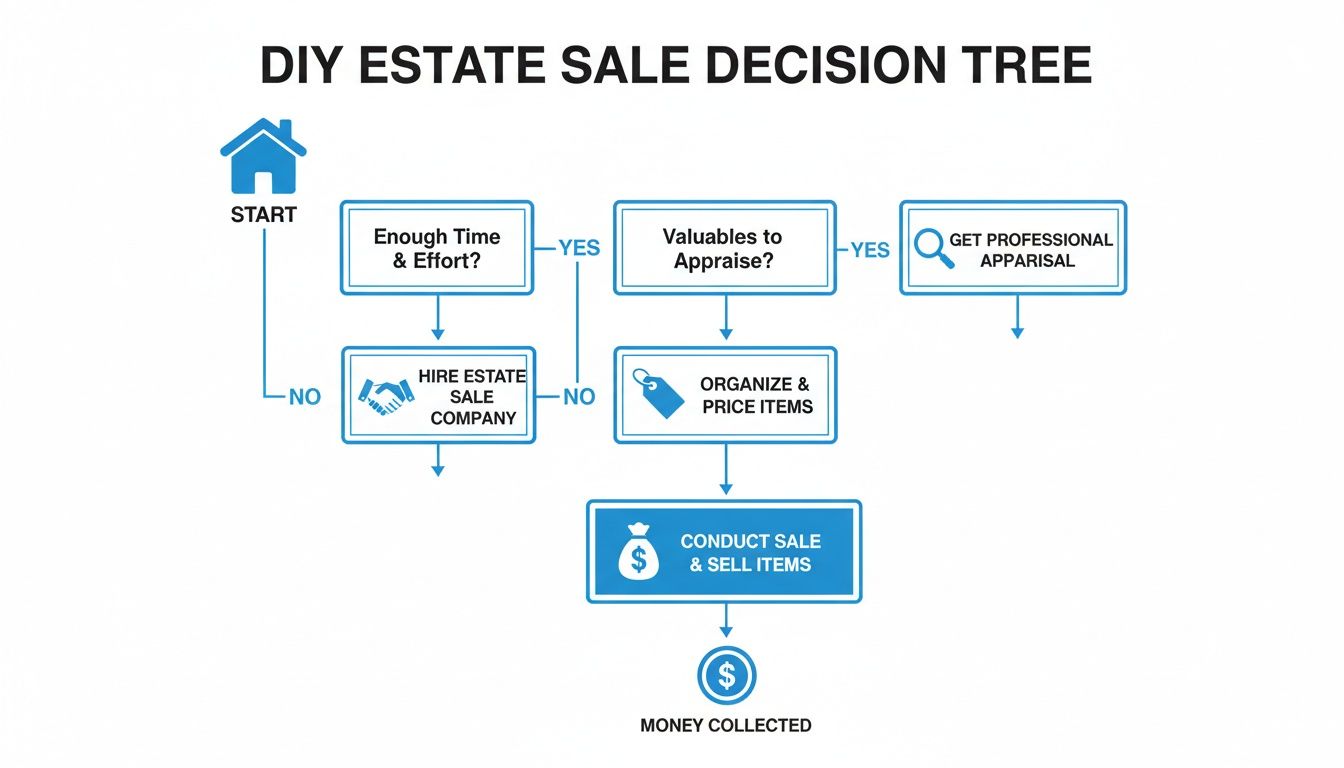
As the flowchart shows, the path you take really hinges on your willingness to invest your own time in tasks like organizing and appraising items to maximize what you earn.
Ultimately, your choice reflects your most valuable resource. If you have more time than money to spare, the DIY route offers unparalleled financial returns. If your time is limited, paying a higher commission for a hands-off service may be a worthwhile investment.
By thinking through these factors—your financial goals, your available time, and your comfort with the process—you can move forward with a clear strategy. This ensures you pick a path that not only liquidates the estate effectively but also works for your personal and financial well-being.
Frequently Asked Questions
When you're facing an estate liquidation, a lot of questions come up. It's a big job, and you want to do it right. Here are some of the most common things people ask when deciding between hiring a pro and using a DIY platform.
How Do I Know If My Items Are Valuable Enough For An Estate Sale?
This is a great question. Most people think they need a house full of antiques to hold a sale, but that's rarely the case. The real value is often in the collection of items. A home filled with well-maintained furniture, everyday decor, tools, and kitchenware can absolutely generate a significant profit.
A DIY platform is perfect for this exact scenario. Because the commission is low and transparent, it makes financial sense to sell a whole range of items, not just a few high-dollar pieces. If you do have something you think is exceptionally valuable, you can always get a separate, specialized appraisal to make sure you're pricing it correctly.
What Is The Biggest Advantage Of A DIY Platform Over A Traditional Organizer?
It really comes down to two things: money and control. The financial return is the most obvious advantage. When traditional organizers take 30-50% in commission, that's a huge slice of your final profit gone. A DIY platform with a lower fee structure means you pocket a much larger share of the money you earn.
The second key advantage is being in the driver's seat. You get to set the prices, you decide on the sale dates, and you control how everything is presented. This is a game-changer for anyone who knows the story behind their items and wants to make sure their true value is understood, rather than just being priced to move quickly.
The real benefit of a DIY platform is empowerment. It puts the financial control and all the key decisions back where they belong—with you. That usually leads to a more profitable and satisfying result.
Are There Legal Considerations When Running My Own Estate Sale?
Yes, there are a couple of things to be aware of, but they are very straightforward. The two main areas are collecting sales tax and managing liability. The good news is that a reputable DIY platform will handle the sales tax side of things for you, which lifts a major administrative headache off your shoulders.
As for liability, it's always smart to check your homeowner's insurance policy to make sure you're covered for having buyers on your property for pickup. The online platform model actually minimizes this risk. Instead of a multi-day free-for-all, you have a single, structured pickup event, which is much easier and safer to manage than crowds walking through your home for days on end.
More guides in Estate Sale vs Alternatives
July 20, 2026
7 Smart Garage Sale Alternatives for 2026
Skip the hassle. Explore 7 smart garage sale alternatives to sell your stuff faster, from online auctions to local apps. Find the best option for you in 2026.
Read guideJuly 4, 2026
Estate Sales Charleston WV
Your complete guide to running profitable estate sales charleston wv. Learn how to plan, price, and sell online to maximize your return without high fees.
Read guideMarch 25, 2026
Where to Sell Estate Jewelry for the Best Price in 2026
Discover where to sell estate jewelry for its true value. Our guide compares jewelers, auctions, and online platforms to help you maximize your return.
Read guideGet the estate sale pricing guide
Enter your email for pricing ranges, planning notes, and a clearer path to launch.