A Guide to Selling Estate Sale Artwork for Profit
Discover how to identify, value, and sell estate sale artwork. Our guide offers expert tips for maximizing your profit with online auctions.
That dusty painting in the attic might be worth a whole lot more than just sentimental value. When it comes to estate sales, the real opportunity in artwork isn't some mythical, million-dollar masterpiece. It's in the thriving, accessible mid-market, which is seeing more sales now than ever before.
Why Estate Sale Artwork Is a Golden Opportunity
Artwork is easily one of the most valuable—and most frequently underestimated—assets in any estate liquidation. It's a classic mistake: sellers see a painting without a famous signature and assume it's not worth much. That kind of thinking can be incredibly costly.
The truth is, a booming art market is turning forgotten canvases and prints into serious profit for people just like you. The secret is realizing the art world is so much bigger than just the headline-grabbing auctions. For estate sellers, the real action is in original paintings, limited edition prints, and quality decorative art that appeals to a massive audience of buyers and collectors.
The Market Is Hotter Than Ever
Demand for one-of-a-kind art is absolutely surging. More and more people are looking to decorate their homes with pieces that have a real story and character. You just can't get that from a big-box store.
This isn't just a feeling; the numbers back it up. The global art and sculpture market is on track to explode from US$43.0 billion in 2026 to an incredible US$88.7 billion by 2033. That’s driven by a powerful 10.9% compound annual growth rate.
And here's the best part: North America makes up 43% of that market, putting your estate's artwork right in the sweet spot. You can learn more about these art market trends and see just how much potential is waiting.
This table breaks down exactly why now is the perfect time to sell.
Why Estate Sale Artwork Is a Golden Opportunity
| Market Trend | What's Happening | How This Benefits You |
|---|---|---|
| Surging Mid-Market | Buyers are hungry for unique, affordable original art—not just big names. | Your regional paintings and signed prints are exactly what collectors are looking for. |
| Desire for Authenticity | Homeowners want decor with history and character that can't be mass-produced. | Estate pieces have a built-in story that makes them highly desirable to a broad audience. |
| Online Accessibility | Digital platforms have made it easier than ever for buyers to discover and bid on art. | You can reach a targeted, local market of motivated buyers without gallery fees. |
In short, the pieces you have are exactly what today's buyers want, and modern tools make it simple to connect with them.
The greatest value often lies hidden in plain sight. A well-executed painting by a regional artist or a vintage print with a compelling story can attract fierce bidding from buyers looking for something special.
Modern Tools Put You in Control
Not too long ago, selling valuable art meant going through high-commission auction houses or galleries. This was the norm, and it often meant sellers would lose a massive 25% to 50% of the final sale price right off the top.
Thankfully, those days are over.
Today, platforms like DIYAuctions give you the power to tap into this lucrative market directly and on your own terms. We provide the tools to:
- Reach a targeted audience of local collectors who are actively searching for estate sale art.
- Keep a much larger share of the profits, thanks to our transparent, seller-friendly fee structure.
- Manage the entire process—from taking photos to getting paid—securely and efficiently.
This shift puts you firmly in the driver's seat, allowing you to maximize the financial return on your family’s collection. By using the right platform, you connect with genuinely eager buyers and ensure your artwork finds a new home while fully honoring its value.
How to Identify and Authenticate Your Art
Before you can even think about pricing a piece of art from an estate, you have to play detective. Figuring out the story behind each painting, print, or sculpture is where you start, and it’s the key to unlocking its real value. You don’t need an art history degree—just a keen eye and a little patience.
Start with the basics: examine the artwork up close, both front and back. The most obvious clue, of course, is the artist's signature. Check the corners of a painting or the bottom edge of a print. Sometimes, artists get creative and work it right into the composition itself.
A full, clear signature is fantastic, but don't stop there. An artist’s monogram, a set of initials, or even a unique symbol can be just as telling. If you’re dealing with a print, look for edition numbers, which usually look like a fraction (e.g., 25/100). That little number tells you it's the 25th print from a limited run of 100, a detail that can seriously boost its value.
Look for Clues on the Back
Often, the back of a frame is more revealing than the front. This is where you’ll find the breadcrumbs that lead to provenance—the documented history of ownership for a piece of art. A strong, verifiable provenance can make an artwork's value skyrocket.
Keep an eye out for these tell-tale signs:
- Gallery Labels: Old stickers from art galleries can tell you where and when a piece was sold, and sometimes they even list the original price.
- Auction Stickers: These are great for tracing an item's sales history through auction house records.
- Exhibition Tags: A tag from a museum exhibit or a juried art show is a huge vote of confidence in the artist’s reputation.
- Framer's Marks: A label from a high-end, well-known framer suggests the original owner knew they had something valuable.
Every little detail adds to the story. A faded label from a well-regarded SoHo gallery in the 1970s paints a very different picture than a modern sticker from a big-box craft store.
Using Online Resources for Research
With your physical clues in hand, it's time to head online. There are several fantastic, free databases that can help you identify an artist and see what their work has sold for in the past. Websites like AskART and Artnet are my go-to resources for searching artist names and checking their auction records.
Let's say you find a painting signed "J. Albright." A quick search will likely bring up several artists with that name. From there, you can compare the signature style on your piece to the examples online to pinpoint the correct artist. The same process works for prints and sculptures, helping you build a solid case for an item’s market value. This investigative approach is fundamental and shares a lot of principles with finding other treasures, which we cover in our guide on how to identify valuable antiques.
Knowing When to Call a Professional
You can get pretty far with your own research, but some situations call for an expert. If you have good reason to believe a piece is by a major artist, or if you see online auction records showing similar works selling for thousands, it's time to invest in a professional appraisal.
An appraisal isn't just about getting a price tag; it's about formal authentication. A certified appraiser provides the proof of legitimacy that serious collectors demand, which is crucial for getting a top-dollar sale.
To find someone you can trust, check out organizations like the Appraisers Association of America (AAA) or the International Society of Appraisers (ISA). They both have directories of certified specialists in fine art, so you can be sure you're getting an accurate, unbiased opinion. This small investment up front gives you the confidence and proof you need to sell your best pieces for what they're truly worth.
Pricing Your Artwork to Attract Buyers
This is where all your hard work and research pays off. Setting the right price for artwork is a delicate balance. Go too high, and you might scare off serious collectors. Go too low, and you're leaving money on the table. It’s about hitting that sweet spot between the piece's history and what the market is willing to pay right now.
It’s also important to understand that a single piece of art can have several different "prices." A gallery price, for example, is the full retail value, which has to cover the gallery's significant overhead. An auction estimate is often a strategic range meant to draw in bidders.
But for an estate sale, you're aiming for the real-world number a local buyer is ready to pay. That's your target.
To get there, you need to shift your mindset from sentimental value to strategic positioning. Learning how to determine the price of a product for profit is a must for any seller who wants to succeed.
Grounding Your Price in Reality
The most powerful pricing tool you have is data from "comps"—comparable sales of similar works by the same artist. Hop onto online art databases and look for actual sold prices, not just what people are asking. This simple step removes nearly all the guesswork.
When you're comparing, focus on sales that are a close match to your piece in a few key areas:
- Medium: An original oil on canvas will always be worth more than a limited-edition print from the same artist. Make sure you’re comparing apples to apples.
- Size: Generally, larger works fetch higher prices, assuming the quality is consistent across the artist's portfolio.
- Condition: Be brutally honest here. Any fading, tears, grime, or damage to the frame will impact the value. It’s better to acknowledge it and price accordingly than to surprise a potential buyer.
This is where the authentication work you did earlier becomes the bedrock of your pricing strategy.
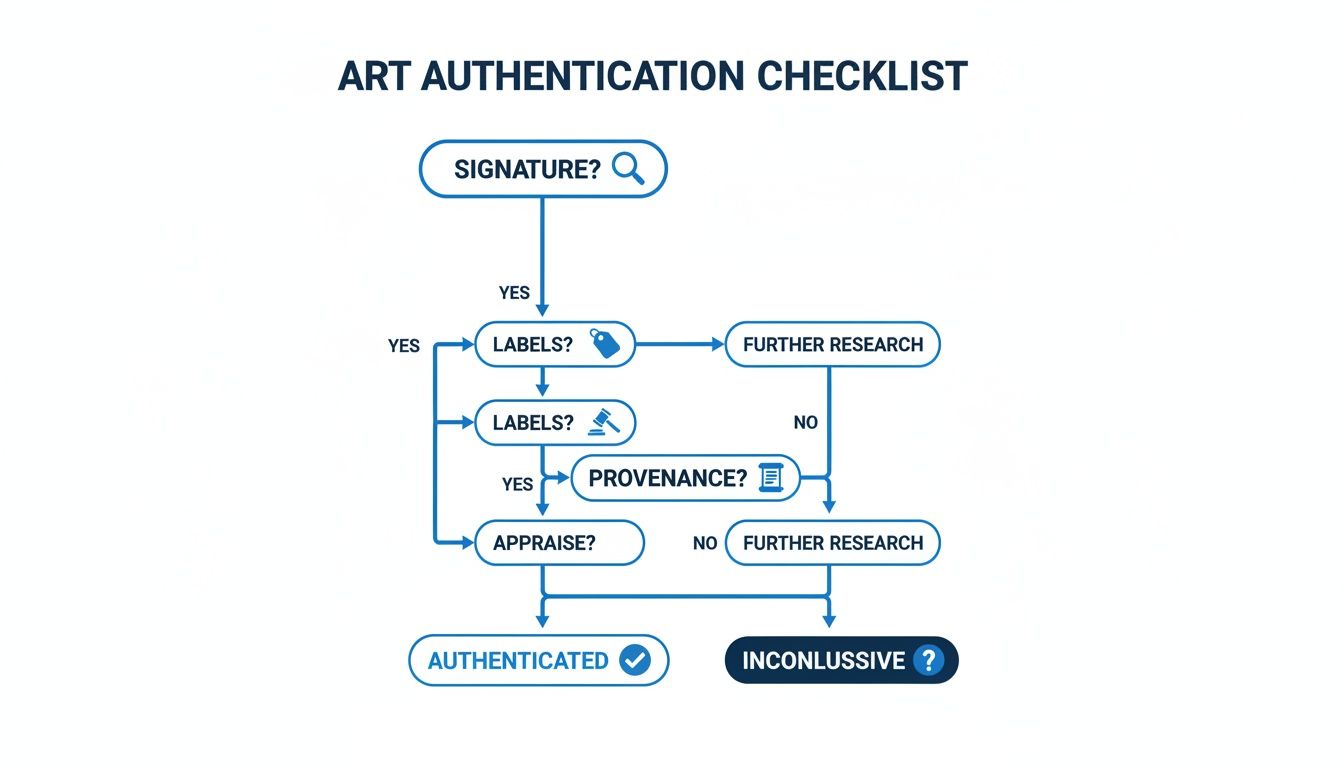
Without verifying the signature, checking the provenance, and getting an expert opinion when needed, you’re just guessing. A solid authentication gives you the confidence to set a firm, justified price.
Strategic Pricing for Online Auctions
Once you've landed on a value range, you have a couple of ways to approach pricing in your online auction. Each has its own benefits.
Starting Bid: Kicking things off with a low, attractive starting bid is a fantastic way to build momentum. It gets more eyes on your item and encourages people to place that first bid, creating a competitive environment that can drive the final price well beyond your expectations.
Buy It Now: A fixed "Buy It Now" price is all about simplicity and speed. It’s perfect for buyers who know what they want and don't want to get into a bidding war. This approach works especially well for decorative pieces or art from creators with very stable, predictable market values.
Don’t be afraid of the middle market. It’s where most estate sale artwork thrives. Smart, data-backed pricing in this segment consistently leads to successful and profitable sales.
Interestingly, the real strength in the art market right now is exactly where most estate pieces land. While sales over $10 million have recently dipped, the sub-$10 million segment actually saw a 17% increase in some 2025 auctions. Single-owner collections, just like the ones from estates, brought in a massive US$962 million, showing that buyers are hungry for quality finds.
Ultimately, confident pricing comes from solid research. For a much deeper dive, check out our complete guide on how to determine fair market value for estate items. It’s packed with more tools and techniques to help you get it right every time.
Creating Online Listings That Sell

You can have an incredible piece of art, but if the online listing falls flat, so will the final price. In the world of online auctions, your listing is the showroom. A great one can be the difference between a single lackluster bid and an all-out bidding war.
The good news? You don’t need a fancy studio to create a listing that gets collectors excited.
Your entire goal is to make a potential buyer feel like they’re standing right in front of the artwork. This all starts with the photos, and believe it or not, the smartphone in your pocket is more than powerful enough for the job.
The absolute most important factor here is lighting. Whatever you do, avoid using your camera’s flash. It creates harsh glares and completely washes out the true colors of the piece. Instead, find a spot near a large window with plenty of indirect, natural light. An overcast day is actually your best friend—it gives you soft, diffused light that minimizes ugly shadows.
Photographing for Impact
Once you've got your lighting figured out, it's time to think about presentation and angles. Nothing devalues a piece faster in a buyer's mind than a messy, distracting background.
Find a solid, neutral-colored wall. White, gray, or even a soft beige will work wonders to make the artwork the undisputed star of the show.
Ready to get photos that pop? Just follow these simple rules:
- Go Straight On: Your main hero shot should be a direct, head-on photo of the entire piece, frame included. Make sure your phone is perfectly parallel to the art to avoid any weird, distorted angles.
- Zoom In On Details: Get close-ups of the artist's signature, any interesting brushstrokes or textures, and the edition number on prints. These are the details that serious buyers hunt for.
- Show the Back: Don’t forget to flip it over! Photograph any gallery labels, framer’s marks, or handwritten notes you find. This is all part of the artwork's history and provenance.
- Give It Some Scale: Take one photo that shows the art in a room setting, like hanging over a small table or a chair. This gives buyers a crucial sense of its actual size and helps them imagine it in their own space.
If you want to dive deeper, our guide on how to take professional product photos has even more great tips that apply here.
Writing Descriptions That Connect
Great photos get buyers to click, but a compelling description is what convinces them to place a bid. This is your chance to move beyond the simple facts and tell a story. Art is an emotional purchase, and connecting a collector to a piece’s history creates a powerful pull.
Always start with the must-have information, presented clearly so buyers can find it at a glance.
Listing Essentials Checklist
- Artist: Full name, if you have it.
- Title: List the title if it’s known.
- Medium: Be specific (e.g., "Original oil on canvas," "Limited edition lithograph").
- Dimensions: Height and width, both with and without the frame.
- Condition: Be totally transparent. Note any scratches on the frame, fading, or other damage. Honesty builds trust and prevents issues later.
After you've covered the basics, bring it to life with a little narrative. Where did the owner get it? Was it a treasured gift? Did it hang in their study for 40 years? Even small personal details can add huge character and perceived value.
A weak listing just states the facts. A great one makes the buyer feel like they're about to uncover a hidden gem.
Anatomy of a High-Converting Art Listing
The difference between a listing that gets overlooked and one that sparks a bidding war often comes down to a few key details. Here’s a quick comparison to make sure your listings are always on the right track.
| Listing Component | What to Avoid | What to Include |
|---|---|---|
| Title | "Painting" or "Framed Art" | "Vintage Mid-Century Seascape Oil Painting by J. Smith" |
| Photos | Dark, blurry, or angled shots. One photo only. | Multiple bright, clear photos: front, back, signature, details, and in-room scale shot. |
| Dimensions | "It's big." | "Artwork: 24" x 36"; Framed: 28" x 40"" |
| Description | "Found in attic. Looks old." | "Acquired in the 1970s, this original oil on canvas features thick, expressive brushwork. The artist's signature is clear..." |
| Condition | Ignoring flaws or saying "good for its age." | "Excellent vintage condition. Minor scuffing on the top-right corner of the oak frame, as pictured. Colors are vibrant." |
Paying attention to these components transforms your listing from a simple classified ad into a professional sales pitch that speaks directly to art lovers and collectors.
Managing a Smooth Sale and Pickup
Once your listings go live, your role shifts from cataloger to manager. This is where the action happens, and a clear plan makes all the difference between a chaotic free-for-all and a seamless, profitable event.
Fortunately, if you’re using a platform like DIYAuctions, the payment side is handled for you automatically. That frees you up to focus on what really matters now: communicating with buyers and nailing the logistics.
You can bet potential bidders will have questions. They’ll want to see another angle of the frame, ask for a close-up of the artist's signature, or get clarification on the condition. Prompt, professional replies build the trust that leads to confident bids. The final hours of an auction are often a frenzy, so being on standby to answer those last-minute questions can push your final sale price higher than you expected.
This level of engagement is especially critical right now. The secondary art market is on fire, with sales under $5,000 breaking records. In fact, pieces in the US$500–$50,000 bracket are selling for 57% above their estimates, a trend largely fueled by single-owner estate sales. It’s a huge opportunity, but only if you run your sale like a pro.
Coordinating a Secure Pickup
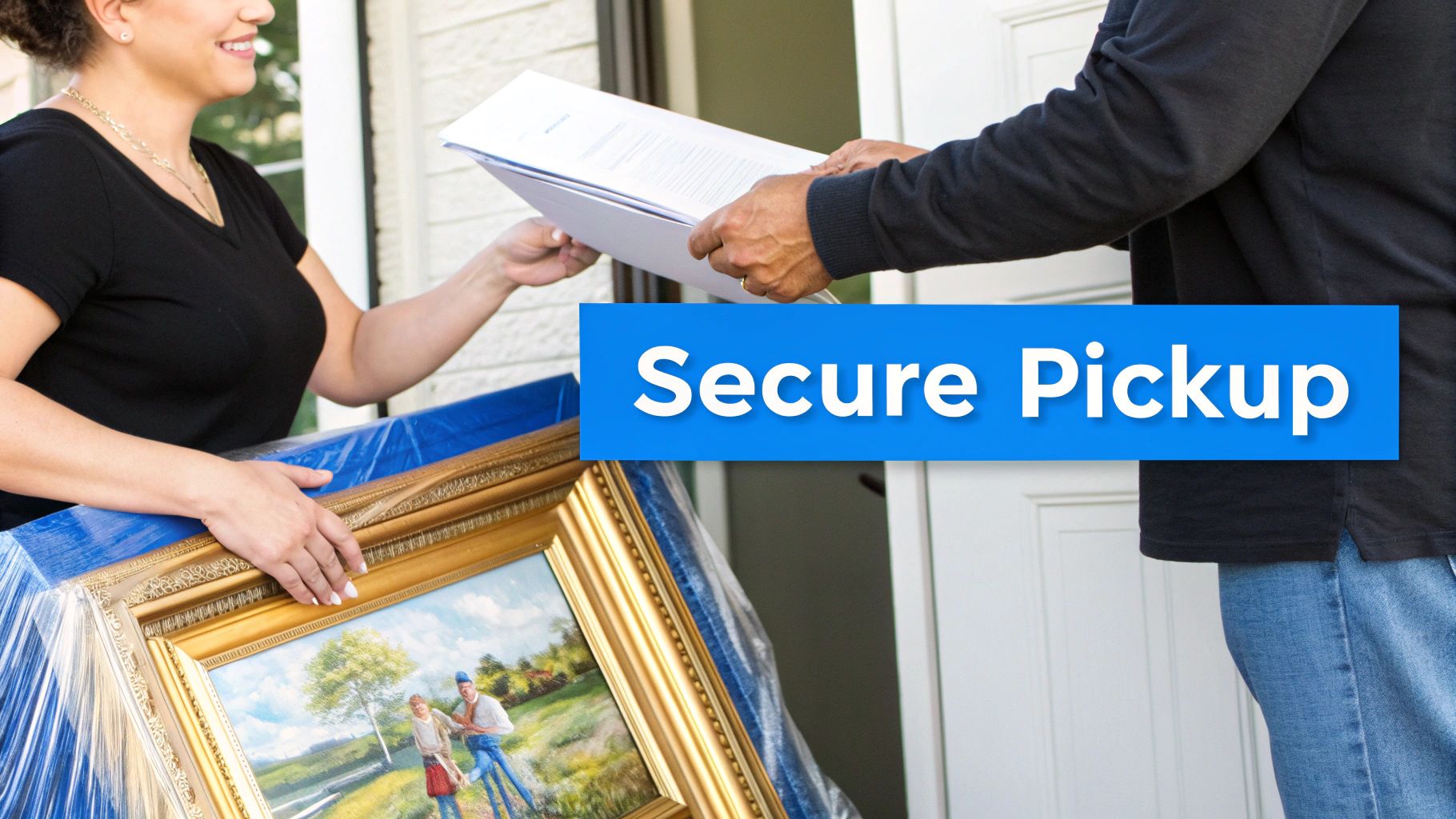
An online sale isn't truly over until the art is safely in the buyer's hands. The key? Communication. The moment the auction ends and payment is confirmed, get in touch with the winning bidder. Your goal is to schedule their pickup slot during your designated one-day event.
For anything valuable or fragile, think like a gallery. Keep the artwork tucked away in a secure, low-traffic spot until the buyer arrives. When they do, it's a great practice to do a final condition check together, comparing the piece to your original listing photos. This simple step confirms everything is as described and heads off any potential disputes down the road.
Think of your pickup event less like a free-for-all and more like a well-run appointment book. By staggering arrival times, you prevent a crowd, reduce stress, and can give each buyer your undivided attention. It’s a professional touch that ensures a secure handover for every single piece.
Professionalizing the Handover
You’ve done everything right so far—don’t stumble at the finish line. Providing the right paperwork cements the sale's legitimacy and gives your buyer total confidence. Creating a flawless itemized receipt template is an easy way to offer transparency and give buyers the documentation they need for valuable new acquisitions.
Pickup Day Best Practices
- Be Ready: Have every sold piece, especially the delicate ones, prepped and waiting near an exit to make the transfer quick and easy.
- Confirm Who's Who: Before you hand anything over, discreetly check the buyer's identity against your sales record.
- Supervise the Exit: Stay present while the buyer handles and moves the artwork. While transport is their responsibility, your oversight ensures it's done with care.
Taking these final steps wraps up the transaction professionally, protecting both you and the buyer. It ensures your valuable estate sale artwork starts its next chapter on the perfect note.
Common Questions About Selling Estate Artwork
When you're sorting through a collection of art, a few questions almost always pop up, especially if this is your first time managing an estate. Getting the right answers can make all the difference between a frustrating process and a successful sale.
Does Every Painting Need a Formal Appraisal?
One of the first things people wonder is whether they need to call in a professional appraiser for every single piece. The short answer is no, definitely not.
For decorative prints you’d find in a home goods store or paintings by unknown local artists, a formal appraisal is usually overkill. A little online digging to find what similar pieces have sold for will give you all the information you need to set a fair price.
But what if you find something signed by a known, or "listed," artist? Or maybe you’ve uncovered an original painting that just feels special—the skill and quality are undeniable. That’s when investing in a formal appraisal is a very smart move. A certified appraiser provides the authentication and valuation that serious collectors look for, which can dramatically boost the final selling price.
What If Some of the Artwork Doesn’t Sell?
It’s always a good idea to have a backup plan for any art that might be left over after the auction closes. Thinking about this ahead of time saves you from a last-minute scramble and ensures every piece finds a new home.
You’ve got a few great options for any unsold artwork:
- Donation: Local charities, theaters, or non-profits are often thrilled to receive art. It’s a wonderful way to support a cause you care about, and you might even get a tax deduction.
- Consignment: Check with a local auction house or a consignment shop. Many are happy to take on remaining pieces, especially if they handle varied lots.
- Secondary Markets: You can always list the items on other online marketplaces that cater to individual art sales.
And of course, sometimes family members decide to keep a few pieces for sentimental reasons. The key is to have your "Plan B" decided before the sale ends. It makes the final clear-out process so much smoother and less stressful.
An estate sale is all about clearing the estate efficiently. Your plan for what doesn't sell is just as crucial as your strategy for what does. It’s what guarantees a complete and successful liquidation from start to finish.
How Should I Handle the Pickup for a High-Value Piece?
When a buyer comes to pick up a valuable or fragile piece of art, you’ll want to take a little extra care. For a large painting, a heavy sculpture, or anything delicate, safety and security are your top priorities.
Try to have the artwork ready in a well-lit area that’s easy to get to, preferably near an exit. This simple step minimizes how much the piece needs to be handled and moved. While buyers are responsible for bringing their own packing materials, it’s always a thoughtful touch to have some bubble wrap or a spare blanket on hand, just in case.
Since payment is handled securely through the DIYAuctions platform beforehand, you don't have to worry about the transaction itself. You can focus completely on supervising a smooth handover, making sure the buyer handles the artwork carefully. It gives both of you peace of mind and ends the sale on a positive, professional note.
More guides in Estate Sale Basics
July 28, 2026
Revenue Reporting for Estate Sales and Auctions
Learn revenue reporting essentials for estate sales and auctions. Discover key metrics, templates, and best practices to simplify tracking and compliance.
Read guideJuly 26, 2026
Stamp Collection Valuation: A Practical Step-by-Step Guide
Stamp collection valuation made simple. Learn how to identify, grade, price, and sell your stamps with confidence for estate sales or consignment.
Read guideJuly 23, 2026
Estate Sales Brick NJ: Your 2026 Guide to Success
Planning your estate sales brick nj? Our guide covers permits, pricing, marketing, & running a safe sale with DIYAuctions.
Read guideGet the estate sale pricing guide
Enter your email for pricing ranges, planning notes, and a clearer path to launch.