A Guide to Estate Sale Auction Sites and How to Choose the Best
Discover how estate sale auction sites work. Learn the step-by-step process, compare key features, and see how to maximize your profits from an online sale.
Let’s cut to the chase: what exactly is an estate sale auction site?
Think of it as your all-in-one command center for running your own professional estate sale. Instead of handing over a huge chunk of your profits to a traditional estate sale company, you get the tools to manage the sale yourself and keep what you earn.
What Are Estate Sale Auction Sites and Why Are They So Popular?
If you’ve ever had to clear out a house, you know the old way of doing things. You hire an estate sale company, they come in and run the show, and then they walk away with a hefty 30-50% commission. It’s a painful cut.
Estate sale auction sites completely flip that model on its head. They give you the software and the roadmap to run the whole thing yourself. It turns what feels like an overwhelming project into a straightforward, manageable process—and a much more profitable one at that.
These aren't just simple classified ad sites. They're powerful platforms built to get you the best results. You don't have to worry about finding buyers; the platform automatically markets your sale to a built-in network of eager local bidders who are ready to buy.
The Modern Toolkit for Asset Liquidation
So, what’s actually in this digital toolkit? Essentially, it’s everything you need to run a top-notch sale, even if you’ve never done it before.
- A Custom Auction Webpage: You get a dedicated, professional-looking webpage just for your sale, where all your items are showcased with photos and descriptions.
- Automated Local Marketing: The site does the heavy lifting, promoting your sale to its database of local buyers with targeted emails and online ads.
- Secure Payment Processing: Forget the hassle and risk of cash. All payments are handled securely right on the platform.
- Step-by-Step Guidance: From cataloging your first item to scheduling the final pickup day, the entire process is broken down into easy-to-follow steps.
This new approach has really taken off, shifting estate liquidation from a small, local service into a major industry. In the United States alone, the industry was valued at around $230.3 million, and it's been expanding steadily. If you're curious about the numbers, Grandview Research has some great data on it.
At its core, an estate sale auction site puts the power back where it belongs: with you. It’s about giving you control, ensuring you get the maximum value for your belongings, all while using professional-grade tech and marketing.
This move toward DIY platforms is a direct answer to what executors, downsizers, and families have been asking for—a more transparent, fair, and profitable way to handle a property clear-out. By giving you the right tools, these sites help you get results that often blow traditional methods out of the water, putting thousands more dollars right back in your pocket.
You can learn more about the specifics by exploring our guide on online estate sales.
Your Step-by-Step Guide to Running an Online Estate Auction
Running your own online estate auction can feel like a huge project, but with the right platform, it’s really just a series of straightforward steps. Think of it less like launching a business from scratch and more like following a well-tested recipe. The whole point is to catalog, present, and sell everything for the best possible price—without all the stress.
This skill is more important than ever. With big demographic shifts on the horizon, we're seeing a massive transfer of assets. Global residential real estate alone is expected to surpass $534 trillion. As people downsize, all the things inside those homes—furniture, collectibles, equipment—need to find new owners. A good process makes that happen.
Step 1: Catalog and Photograph Your Items
First things first: preparation. Your job here is to create a true and appealing record of every single item up for auction. You're not just making a list; you're telling a story with photos and details that will get bidders excited.
Start by grouping similar items together—all the kitchenware in one spot, all the tools in another. This makes the next part, photography and writing descriptions, so much easier.
- Take Clear, Well-Lit Photos: Your smartphone is all you need. Just find a simple background and use natural light to capture a few different angles of each item.
- Write Honest Descriptions: Make a note of the item’s condition, its size, and any special features or even flaws. Being upfront builds trust and saves you headaches later.
- Research and Set Starting Bids: Here’s a pro tip: a low starting bid, even just $1, is a great strategy. It gets people bidding right away and creates a competitive buzz that often pushes the final price much higher.
This initial work is the foundation for your whole sale. The better your items look online, the more action you’ll see from bidders.
Step 2: Price and Schedule Your Auction
Once your catalog is ready, it's time to set the rules. Pricing is a big part of this, and getting it right is key to maximizing what you earn. For a deep dive, check out this expert estate sale pricing guide for some solid strategies.
Next, you’ll set the auction timeline. Most online estate sales run for about 7-10 days. That’s the sweet spot—long enough to market the sale and build bidding momentum, but not so long that people lose interest.
Key Insight: The schedule does more than just set dates. It creates urgency. A clear end date encourages bidders to make their move, which is why you see that flurry of action in the final hours of a sale.
This simple flowchart shows how these pieces—cataloging, marketing, and processing—all fit together.
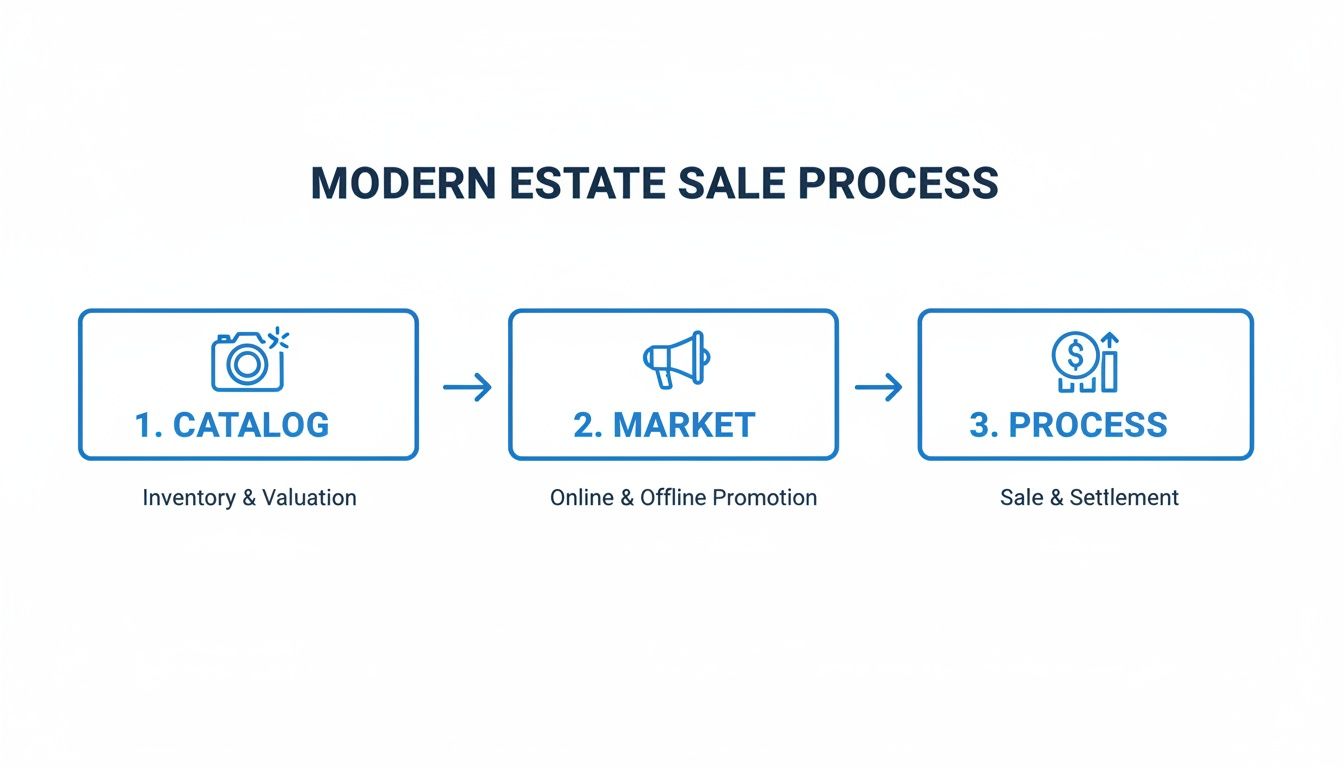
As you can see, a clear process is what turns a house full of items into cash in your pocket.
Step 3: Market Your Sale and Manage Pickups
The moment your auction goes live, the platform’s marketing kicks in. Emails automatically go out to registered local bidders, and targeted ads find new buyers who are looking for exactly what you're selling.
While the auction is running, your main job is to answer any questions that pop up from bidders. When it's over, the platform handles all the payments for you. No need to deal with cash or checks.
The final piece of the puzzle is organizing a pickup day. This is just a single, scheduled event for all the winners to come and get their items.
- Schedule a Pickup Window: Pick a 4-6 hour block of time, usually on a weekend, for buyers to stop by.
- Organize Items for Easy Retrieval: Group everything by the winning bidder's number. This makes the handoff quick and painless.
- Supervise the Pickup: Just be there to make sure things go smoothly and help people find their new treasures.
By following these structured steps, you can confidently run the whole sale from start to finish. For an even more detailed walkthrough, take a look at our guide on how to do an online auction.
What to Look For in the Best Online Auction Platforms
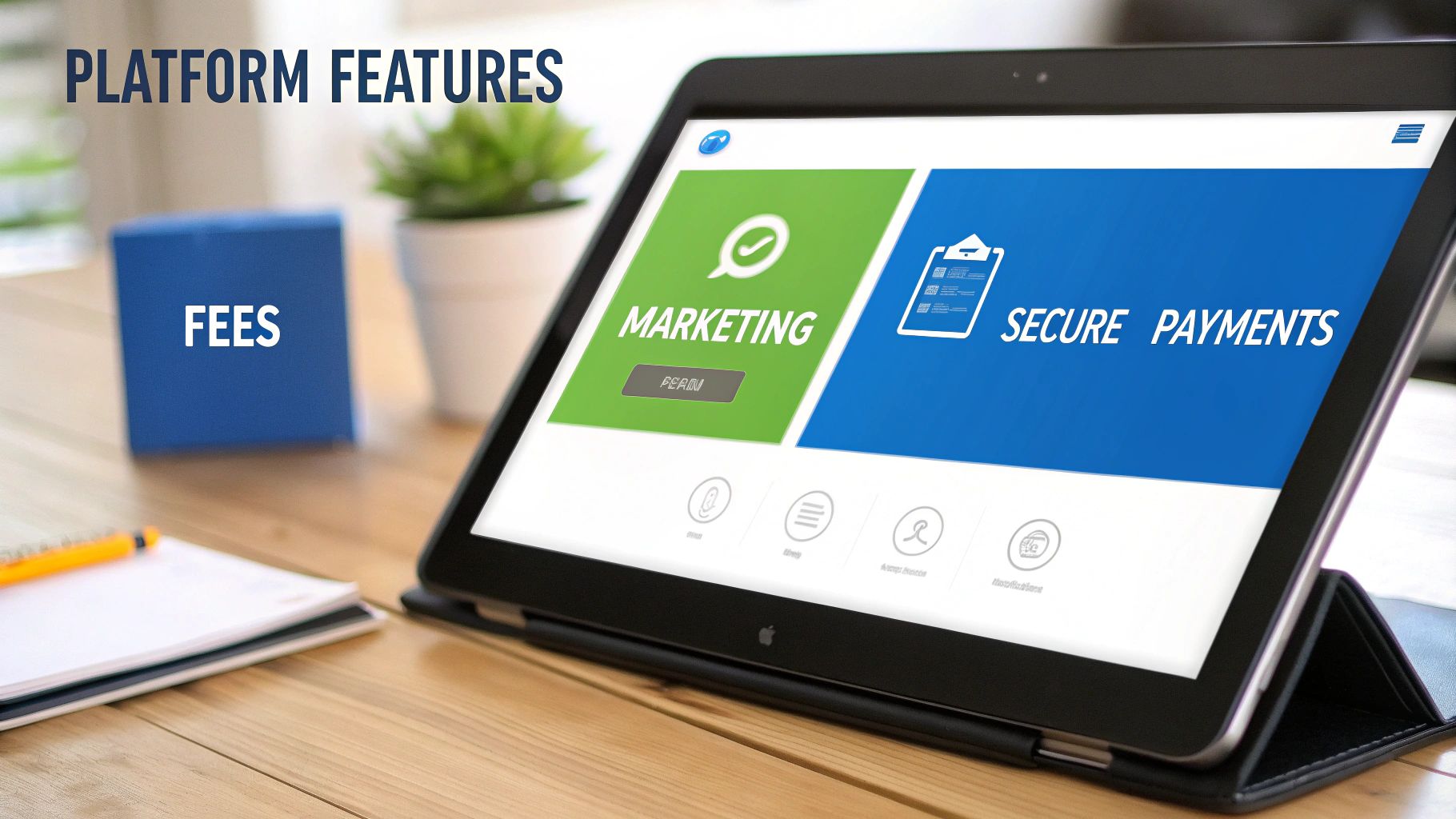
Trying to pick the right estate sale auction site can feel like a chore. At first glance, they all seem to offer the same thing, but the details buried in their features can make a world of difference for your sale’s success—and your sanity.
Think of it like choosing a toolkit. You could grab a basic set with just a hammer and screwdriver, or you could opt for a professional-grade kit that gives you power tools, precision instruments, and a clear guide for every step. The best platforms are like that pro toolkit, built to make your job easier and your profits higher.
Essential Features of Top Estate Sale Auction Sites
This table breaks down the non-negotiable features you should be looking for. It’s a quick-glance guide to help you compare platforms and see which ones truly deliver the tools you need for a profitable, stress-free sale.
| Feature | What to Look For | Why It Matters for Your Bottom Line |
|---|---|---|
| Commission Structure | A low, transparent percentage (10% or less) with a cap on the total commission. Avoid high, uncapped fees. | This is the biggest factor in how much money you keep. A 30-50% commission from traditional companies can cost you thousands. |
| Automated Local Marketing | Built-in email lists of local bidders, targeted social media ads, and an established buyer community. | You can have great items, but if no one sees them, they won't sell. Automated marketing brings motivated local buyers right to your auction. |
| Secure Payment Processing | Integrated, encrypted payment system that handles all transactions directly on the platform. | Eliminates the hassle and risk of handling cash, checks, or flaky third-party apps. You get paid quickly, safely, and without any fuss. |
| User-Friendly Interface | An intuitive dashboard for uploading photos, writing descriptions, and managing your sale from one place. | A simple, guided process means less time fighting with technology and more time focused on your sale. It should feel easy, not technical. |
By focusing on these core features, you can quickly cut through the noise and identify a platform that's truly built to serve you, not just take a massive cut of your hard-earned profits.
Your Biggest Financial Win: The Commission Structure
Let’s be honest, the fees are where you can win or lose the most money. It’s the first thing you should look at. Traditional estate sale companies are notorious for taking a huge 30-50% commission. That’s a massive slice of your sale’s total earnings.
The best modern platforms have flipped that model on its head. Look for one with a simple, fair, and low commission. A rate like 10% is a game-changer, ensuring you keep the lion’s share of the money. Even better is a platform that puts a cap on that commission, protecting your earnings on high-value sales.
This single feature—a low, capped commission—is the most powerful financial advantage of using a modern DIY platform. It means thousands of extra dollars end up in your pocket instead of someone else's.
Marketing That Works for You, Not the Other Way Around
You can have a house full of treasures, but if the right buyers don't know your sale is happening, you’ll never get the prices you deserve. This is why powerful, built-in marketing is an absolute must. A top-tier platform doesn’t expect you to become a marketing guru overnight.
Instead, it should already have a large, active network of local bidders and a system to reach them automatically. Here’s what that looks like in practice:
- Targeted Email Blasts: The system should automatically email registered bidders in your area who have bought—or shown interest in—the kinds of items you’re selling.
- Smart Digital Ads: Think automated ad campaigns on social media that find potential new buyers near you, driving fresh traffic directly to your auction page.
- An Existing Buyer Community: A great platform comes with a built-in audience, giving your sale instant visibility the moment it goes live.
This kind of automated marketing muscle is critical. It creates a bidding war by bringing more interested buyers to the table, which naturally pushes your final sale prices higher.
The Nuts and Bolts: Platform Tools That Don't Fail
Beyond fees and marketing, the technology itself has to be solid, secure, and simple to use. The whole point is to make the auction process feel guided and straightforward, even if it’s your first time. The best estate sale software will give you all the essential tools without the headache.
An easy-to-use dashboard is non-negotiable for both you and your bidders. You need a simple way to upload photos, write descriptions, and watch your auction unfold. Your bidders need a smooth, simple way to browse, bid, and pay.
Finally, secure payment processing is a must. A reputable platform handles every dollar through encrypted systems, just like any major online store. This protects you from the risks of dealing with cash or checks and ensures you get paid promptly and securely.
Comparing Traditional Estate Sales to DIY Online Auctions
When it's time to handle an estate, you're essentially standing at a fork in the road. One path leads to a traditional, full-service estate sale company, and the other leads to the modern, tech-savvy world of DIY online auctions. Which one is right for you?
Think of it this way: planning a vacation. You could hire a travel agent who coordinates every flight and hotel for a hefty fee. Or, you could book it all yourself online, saving a ton of money and getting exactly what you want. That's the choice we're breaking down right here.
The Great Divide: Commission and Control
The biggest, most glaring difference between these two models comes down to the commission. It's the single factor that decides how much money from the sale actually makes it into your bank account.
Traditional estate sale companies usually charge anywhere from 30% to 50% of the total sales. That fee covers everything from pricing your items to running the physical sale. It's hands-off, for sure, but that convenience costs a small fortune.
On the flip side, leading DIY online auction platforms charge a much smaller slice of the pie—often around 10%. Platforms like DIYAuctions even cap that fee, so you're not penalized for having high-value items. This huge difference means you can keep an extra 20-40% of your earnings. We're talking about thousands of dollars.
The core trade-off is clear: Traditional companies offer hands-off service for a premium fee, while DIY platforms offer maximum profit and control through user-friendly technology. Your choice directly impacts your financial outcome.
This isn't just about a few percentage points; it's a fundamental shift in who reaps the rewards of your sale.
Breaking Down the Real-World Differences
Beyond the bottom line, the experience of running the sale couldn't be more different. The best estate sale auction sites are built to empower you. The traditional model, by its nature, requires you to hand over the keys and hope for the best.
To see how this plays out in practice, let's look at how the two stack up on the factors that truly matter.
Traditional Estate Sale vs DIY Online Auction: A Cost-Benefit Analysis
This table cuts through the noise and shows exactly where your money and control go in each scenario.
| Factor | Traditional Estate Sale Company | DIY Online Auction Platform |
|---|---|---|
| Commission Rate | Typically 30-50% of gross sales, often with no cap. | Around 10%, with platforms like DIYAuctions offering a $1,000 cap. |
| Pricing Control | The company sets all the prices, often with a goal to sell quickly. | You set the starting bids and have final say on pricing strategy. |
| Marketing Reach | Relies on local newspaper ads, yard signs, and a limited email list. | Utilizes automated digital ads and a large, built-in network of local bidders. |
| Sale Duration | A physical sale is confined to a single weekend (2-3 days). | An online auction runs for 7-10 days, maximizing exposure and bidding time. |
| Your Profit Share | You keep 50-70% of the total sales. | You keep 90% or more of the total sales. |
| Convenience | Completely hands-off; the company manages everything. | Requires you to catalog items and manage a single pickup day. |
As you can see, the DIY approach puts significantly more profit back into your pocket while giving you final say on the entire process.
Who Really Controls the Sale?
Control is the other massive piece of the puzzle. When you hire a traditional company, you're giving them the authority to price and sell your items as they see fit. Their main goal is to clear the house out fast, which often means pricing things low to ensure they move during a short, 2-day sale.
With a DIY platform, you're in the driver's seat. You decide the starting bid for every single item. This is a game-changer. It means you can start everyday items at $1 to spark a bidding frenzy while setting more strategic, higher starting bids for valuable antiques or collectibles.
This hands-on control is especially critical for heirlooms or items with sentimental value. Your personal knowledge can fetch a far better price than a company's one-size-fits-all approach. You get to make sure every item gets the attention—and the competitive bidding—it truly deserves.
How the Right Platform Makes Selling Simple and Profitable

Choosing between a traditional estate sale company and a modern DIY platform isn't just about saving a few bucks. It’s about finding a smarter, more efficient way to handle a major life event. The best online auction sites give you the best of both worlds: the high profits and control of a DIY sale, backed by the professional tools you need to succeed.
Think of it like investing. You could hire an old-school financial advisor who takes a huge percentage of your earnings, or you could use a modern platform that gives you powerful tools and guidance for a fraction of the cost. A platform like DIYAuctions is your toolkit for liquidating an estate, designed to put the maximum amount of money back where it belongs—in your pocket.
After all, you know your items best. Our platform just gives you a professional-grade system to turn that knowledge into real profit, transforming a potentially overwhelming project into a manageable and rewarding one.
The Power of a Fair Commission Structure
The single biggest difference you'll find is the commission structure. Traditional companies often take a whopping 30-50% of the gross sales. In contrast, a modern platform like DIYAuctions charges a simple, transparent 10%.
Better yet, that fee is capped at $1,000. This cap is a total game-changer. It means that on a large or high-value sale, you're protected from excessive fees. If your auction brings in $20,000, your commission is still just $1,000—not the $2,000 it would be without a cap, and certainly not the $6,000 to $10,000 a traditional company would pocket.
A low, capped commission isn't just a feature; it's a fundamental shift in how this business should work. It ensures the platform succeeds with you, not at your expense. This structure alone can put thousands of extra dollars directly into your bank account.
This financial advantage is what makes modern estate sale sites so compelling. You’re not just saving money; you’re finally earning what your assets are actually worth.
Guided Process Meets DIY Control
Lots of people hesitate to run their own sale because they’re afraid of the unknown. What if I price things wrong? How do I even find buyers? The right platform takes all that guesswork out of the equation with a clear, step-by-step roadmap.
DIYAuctions acts as your digital co-pilot, guiding you through every stage:
- Cataloging Made Simple: Our software walks you through taking photos and writing descriptions, making the process feel intuitive, not technical.
- Strategic Pricing: You have full control over starting bids. This lets you use the famous $1 start strategy to kick off bidding wars on everyday items while setting protective reserves for your more valuable pieces.
- Automated Marketing Engine: Once your sale is set up, our marketing machine roars to life. You don’t need to be an expert to reach thousands of qualified local buyers who are actively looking for what you’re selling.
This hybrid approach strikes the perfect balance. You stay in the driver's seat for the critical decisions that affect your bottom line, while the platform handles the heavy lifting of marketing, payment processing, and auction management.
Real-World Success: Putting More Money in Your Pocket
Let's look at a concrete example. Say an estate sale grosses a total of $15,000. The financial outcomes between the two models are dramatically different.
| Scenario | Gross Sales | Commission Rate | Commission Paid | Your Net Profit |
|---|---|---|---|---|
| Traditional Estate Sale Company | $15,000 | 40% | $6,000 | $9,000 |
| DIYAuctions (with $1,000 cap) | $15,000 | 10% (capped) | $1,000 | $14,000 |
In this very common scenario, choosing a platform like DIYAuctions puts an extra $5,000 in profit back into your hands. That's not a small difference—it’s a life-changing amount of money that can go toward a down payment, retirement savings, or paying off debt.
The platform provides the professional framework, but you are the one who reaps the financial rewards. By pairing user-friendly tech with a fair business model, the best online auction sites empower you to get results that were once only possible for industry insiders.
Frequently Asked Questions About Online Estate Auctions
Even with a plan in hand, it’s completely normal to have a few last-minute questions before diving into your first online estate auction. Let's walk through some of the most common things people ask, so you can feel totally confident moving forward.
Our goal here is to clear up any lingering doubts. You'll see just how straightforward and profitable this process can be when you have the right tools.
How Much Work Is a DIY Online Estate Auction?
Let's be clear: you're definitely more involved than if you hired a full-service company. But a good platform acts like your project manager, doing all the heavy lifting so you can focus on what matters.
Your main jobs? Taking photos, writing descriptions, and running a single, organized pickup day. The platform handles the tough stuff: building a professional auction website, marketing your sale to a network of local buyers, processing every payment securely, and guiding you step-by-step.
Most sellers find the effort is a fantastic trade-off, especially when they pocket an extra 20-40% of the profit that would have otherwise gone to commission fees.
What Happens if an Item Does Not Sell?
This is a very common worry, but in practice, it’s rarely a problem. Between the marketing power of a great estate sale site and the buzz created by low starting bids, almost everything finds a new home. The competitive nature of online bidding really helps clear things out.
For the few items that might be left, your options are simple and stress-free:
- Donate them to a local charity and get a tax write-off.
- List them on a different marketplace if you have time.
- Call a junk removal service for a quick and final clear-out.
Since you've already maximized your profit on everything that sold (thanks to low commissions!), dealing with a few leftover pieces is just a small, easy final step.
Is It Safe to Handle Payments for a Large Sale Online?
Absolutely. It's actually much safer than old-school methods. Reputable platforms use the same secure, encrypted payment technology that major online retailers rely on. This is a massive improvement over traditional sales where you might be handling large amounts of cash.
All payments are verified and protected against fraud, and you get paid through a simple direct deposit. This setup gets rid of the risk of bounced checks, fake bills, and the general anxiety of managing cash on-site.
This secure and professional financial system is a core feature of the best estate sale auction sites, giving you complete peace of mind from start to finish.
Can I Really Reach Enough Local Buyers on My Own?
This is where a great platform really shines—you’re not doing the marketing alone. It’s a common myth that you have to build an audience from scratch. The top sites already have a built-in, active community of local bidders who are eager to buy.
They bring buyers to your sale using several channels at once:
- Targeted email lists that alert past buyers in your area.
- Digital ad campaigns on social media that find new, interested shoppers.
- An established online community of bidders who visit the site regularly looking for new sales.
This built-in promotion often creates far more bidding action than you could ever get from newspaper ads or yard signs. When you're comparing different estate sale auction sites, knowing the right questions to ask is key. It’s no different than hiring any other expert; for instance, you’d probably use a guide on what questions to ask when choosing a service provider to make sure you're making a smart choice. A solid platform will have clear, confident answers about how they bring motivated buyers right to your doorstep.
More guides in Estate Sale Basics
July 28, 2026
Revenue Reporting for Estate Sales and Auctions
Learn revenue reporting essentials for estate sales and auctions. Discover key metrics, templates, and best practices to simplify tracking and compliance.
Read guideJuly 26, 2026
Stamp Collection Valuation: A Practical Step-by-Step Guide
Stamp collection valuation made simple. Learn how to identify, grade, price, and sell your stamps with confidence for estate sales or consignment.
Read guideJuly 23, 2026
Estate Sales Brick NJ: Your 2026 Guide to Success
Planning your estate sales brick nj? Our guide covers permits, pricing, marketing, & running a safe sale with DIYAuctions.
Read guideGet the estate sale pricing guide
Enter your email for pricing ranges, planning notes, and a clearer path to launch.