Your Guide to Modern Online Estate Sales
Discover how online estate sales work from start to finish. Our guide covers the process, costs, and key strategies for a successful digital liquidation.

An online estate sale is pretty much what it sounds like: a digital event where the entire contents of a home are sold to the public, auction-style. But instead of people physically walking through the house, bidders get to browse, bid on, and buy everything from furniture to fine china right from their own homes. The whole thing typically runs for about 7-14 days.
The Modern Shift to Digital Estate Liquidation

Picture a traditional weekend estate sale. Now, imagine taking that same event and turning it into a global, 24/7 marketplace. That’s the big idea behind online estate sales. You’re no longer limited to local foot traffic over a couple of days; you’re opening up the sale to a worldwide audience of interested buyers, which is a game-changer for convenience and reach.
Think of it like a pop-up auction house for a home's entire collection. Every single item—from an antique grandfather clock to the everyday kitchen dishes—gets its own listing with photos and a description in a digital catalog. Bidders can scroll through everything at their own pace, place bids from their couch, and compete for items without ever having to set foot on the property.
Why People Choose Online Estate Sales
This digital approach is quickly becoming the go-to choice for people navigating big life transitions. The reasons are both practical and emotional, as it offers a much less intrusive way to handle what can often be a very difficult process.
Here are the most common situations where an online sale makes perfect sense:
- Managing an Inheritance: When settling a loved one's estate, an online auction provides a discreet and organized way to liquidate personal property without the stress of managing crowds in a private home.
- Downsizing for Retirement: For those moving into a smaller space, an online platform is an incredibly efficient way to sell decades of accumulated belongings to a broad audience, making sure those items find a new home.
- Relocating for a Job or Life Change: A big move, especially long-distance, often means selling a ton of stuff. Online sales make this so much easier, allowing you to manage the whole thing from anywhere.
- Business Liquidations: Companies that are closing down can use the very same model to sell off office furniture, equipment, and inventory in a structured, competitive setting.
This approach transforms what was once a localized, time-sensitive event into a flexible and far-reaching marketplace. It removes geographical barriers, allowing a collector in another state to bid on a rare painting just as easily as a local neighbor can bid on a lawnmower.
The Core Appeal: A Digital Transformation
At its heart, the appeal comes down to two things: efficiency and expanded reach. The success of a traditional sale often hinges on good weather, how well you advertised locally, and how many people can physically show up during a very short window. In sharp contrast, online estate sales run around the clock, attracting bidders across different time zones.
And this isn't just about throwing a few listings online; it’s a fully managed event. The process covers everything from creating the initial inventory and taking professional photos to marketing the sale and handling all the payments. Once the auction is over, a specific pickup day is scheduled for local winners to come and collect their items, which makes for an orderly and secure wrap-up. This structure gives sellers a clear, step-by-step framework that cuts down on the hassle while aiming for the best possible financial outcome.
Traditional vs. Online Sales: Which Is Right for You?
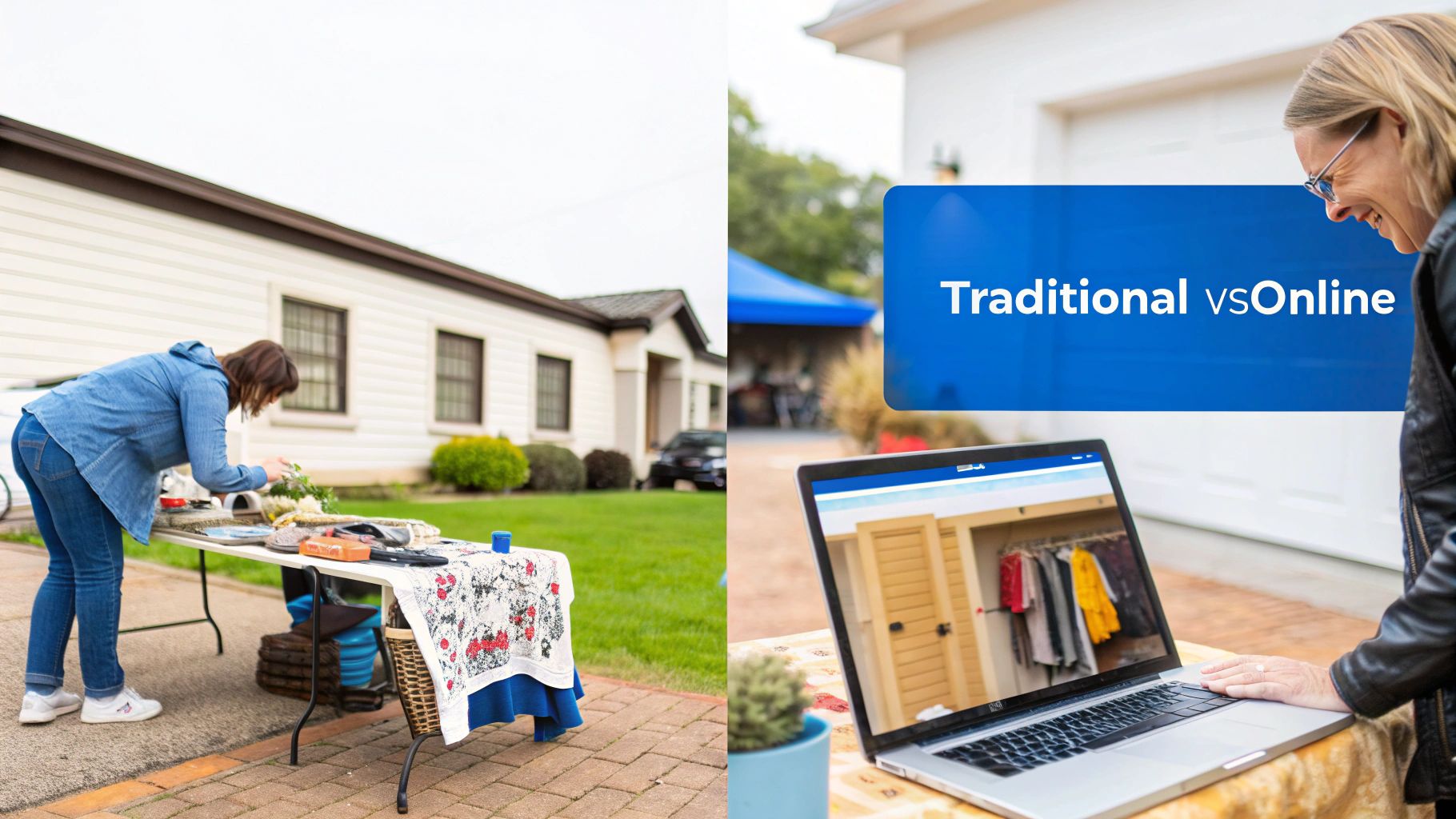
Deciding between a classic, in-person estate sale and a modern online estate sale is one of the first big choices you'll make. Each route has its own distinct advantages and, let's be honest, its own set of headaches. The key is understanding these differences to pick the approach that actually fits your timeline, your items, and what you’re trying to achieve.
There’s an undeniable energy to a traditional sale. People walk through the home, pick things up, and make deals on the spot. That hands-on experience can be great for moving certain types of inventory, and the whole thing is usually over in a weekend.
But that old-school model comes with some serious limitations. You're completely dependent on who shows up in your local area on that specific weekend. A rainy Saturday can kill your turnout, and the logistics of securing a home full of valuables while strangers wander through can be a real nightmare.
The Power of a Global Bidding Pool
This is where online estate sales completely change the game. Instead of being stuck with your local market, you’re suddenly showing your items to a national—or even global—pool of bidders. This is a massive advantage if you have specialized items like collectibles, rare art, or antique furniture that have niche buyers scattered far outside your zip code.
The broader auction industry has leaned into this digital shift in a big way. Globally, the sector now connects with over 32.4 million registered buyers, driving total public auction sales to a staggering $25.1 billion. Here in the U.S., auction sales hit $7.8 billion, proving just how powerful broad market access is. It’s no surprise that around 91% of estate sale companies are now using social media to get the word out.
Going online also brings a level of organization that's tough to match in person. A detailed digital catalog shows off every single item with good photos and clear descriptions, letting bidders browse whenever they want. The bidding itself is automated, which naturally creates competition and can push final prices higher without you having to do a thing.
To help you see the differences at a glance, we've broken down the key factors in this simple comparison table.
Key Differences: Traditional vs. Online Estate Sales
| Feature | Traditional Estate Sale | Online Estate Sale |
|---|---|---|
| Audience Reach | Limited to local shoppers who can physically attend. | National or even global reach to niche collectors and bidders. |
| Sale Duration | Typically 2-3 days over a single weekend. | Usually runs for 7-10 days, allowing more time for bidding. |
| Convenience | Requires shoppers to be physically present at set times. | Bidders can browse and bid 24/7 from any device. |
| Weather Impact | Highly vulnerable; bad weather can ruin turnout. | Completely immune to weather-related disruptions. |
| Security | Requires managing crowds and securing valuables in an open house. | The home remains private; no public foot traffic. |
| Marketing | Relies on local signs, newspaper ads, and word-of-mouth. | Digital marketing, email lists, and social media drive targeted traffic. |
| Pricing | Fixed prices with potential for last-day discounts and haggling. | Competitive bidding determines the final price, often maximizing value. |
| Effort | Intensive physical setup, pricing every item, and managing a live event. | Focus is on digital cataloging, photography, and managing a single pickup day. |
This table shows a clear trade-off: the immediate, localized nature of a traditional sale versus the broad, structured reach of an online auction.
Practical Considerations for Each Method
While the reach of an online sale is a huge plus, it comes with its own set of rules. For instance, high-quality photography isn't just a nice-to-have; it's everything. Since bidders can't touch the items, your photos and descriptions are doing all the selling.
You'll also need a solid plan for shipping and pickup. Most of your winners will be local and will come on a designated pickup day, but you have to figure out how you’ll handle shipping items to out-of-state bidders. It’s the necessary trade-off for tapping into that much larger buyer pool.
The core difference really boils down to control and audience. A traditional sale gives you immediate, tangible results within a local box. An online sale gives you a structured, far-reaching platform built to maximize visibility and competition.
So, how do you choose? If you’re just selling general household goods and want a quick, contained event, a traditional sale might feel like the path of least resistance. But if you have valuable or unique items that could spark a bidding war, an online estate sale is almost always the smarter move.
If you want to dive deeper into the nuts and bolts, check out our guide comparing the financial outcomes of an estate sale vs an auction.
The Step-by-Step Process for a Successful Sale
Turning a house full of possessions into a successful online estate sale isn't as intimidating as it sounds. The best way to approach it is as a well-defined project with four clear phases. Each step logically builds on the last, guiding you from start to finish.
Let's break down the entire process, from taking that first photo to coordinating the final pickup, so you know exactly what to expect.
Crafting Your Digital Catalog
The heart of any online estate sale is a fantastic digital catalog. This is your virtual showroom, and since bidders can't physically touch the items, your photos and descriptions have to do all the work.
First, you need to inventory everything. Just go room by room and make a list of what you're selling. This simple step keeps you organized and ensures nothing important gets missed.
Next up is photography, and this part is absolutely critical.
- Use Natural Light: Good lighting is non-negotiable. It shows true colors and helps items look their best.
- Show Multiple Angles: Give bidders a full 360-degree view. For a dresser, open the drawers and take a picture. Let them see everything.
- Highlight Imperfections: Honesty sells. Point out any scratches, dings, or signs of wear. This builds bidder trust and prevents any headaches down the road.
With your photos ready, it's time to write descriptions that sell. Be specific. Include dimensions, brands, materials, and any cool backstory the item might have. The more details you give, the more confident your bidders will feel.
Staging and Marketing Your Sale
Once your catalog is built, it's time to get it in front of the right people. This is all about choosing the right platform and creating some buzz around your event.
Picking the right online auction website is a big decision. You want a platform with a strong local buyer network, straightforward fees, and user-friendly tools. For instance, DIYAuctions is designed to connect you directly with qualified local buyers, taking a lot of the promotional guesswork off your plate.
Good marketing is what will make your sale truly take off. Share your auction link on social media, in local community groups, and with any collector forums that might be interested. A key part of preparing for an online estate sale involves crafting compelling listings; master essential strategies for effective digital marketing content creation to draw in more potential buyers.
A well-marketed sale creates a sense of event and urgency. Your goal is to build momentum before the bidding even starts, ensuring there are plenty of eyes on your items from day one.
Managing the Live Auction
As soon as the auction goes live, your role shifts from creator to manager. The bidding itself is automated, but staying engaged and responsive is key to keeping bidders interested and driving up prices.
Be ready to answer questions quickly. Bidders might ask for an extra measurement or a clearer photo of a specific detail. A fast, helpful reply can easily turn a casual browser into an active bidder.
Keep an eye on the bidding, especially for your high-value items. If a prized piece of furniture isn't getting much action, a quick post on social media can bring in a new wave of interest. It's all about being proactive to get the best possible final price. For a deeper dive into running the event, check out our full guide on how to do an online auction.
Handling Payments and Pickup
This is the final stretch where all your hard work pays off. After the auction closes, you'll move on to collecting payments and coordinating the pickup of sold items. A smooth, organized finish is just as important as a strong start.
The beauty of modern platforms is that they handle all the payment processing for you. This means transactions are secure, and you don't have to worry about chasing down payments. The money is collected before a single item leaves the house.
The final piece of the puzzle is the pickup event.
- Schedule a Specific Day: Set a clear time window for buyers to collect their items, like a Saturday between 9 AM and 3 PM.
- Organize Items: Before anyone arrives, group sold items by the buyer's name or invoice number. This makes the whole process faster for everyone.
- Manage the Flow: Have a designated area for pickup and be ready to help people find their winnings. A little organization here goes a long way toward creating a stress-free experience.
Breaking Down the Costs and Financial Returns
https://www.youtube.com/embed/3HGImtAGYoA
Let's talk about the money side of an online estate sale. Knowing the numbers upfront is key to setting the right expectations and, most importantly, making sure you walk away with the most profit possible. This isn't your average yard sale; it's a professionally managed event with real costs, but also the potential for much higher returns.
So, where does the money go, and what can you expect to earn?
The main cost you'll encounter is the commission fee. This is simply the percentage of the total sales that the estate sale company or platform takes for handling everything. It’s the standard way things are done in this business.
For a fully managed online estate sale, you can expect commission rates to fall somewhere between 25% and 45%. That's a pretty wide range, and it all comes down to the level of service. A higher commission usually means a more hands-on, all-inclusive experience where the company does nearly all the work for you.
What’s Included in the Commission
That commission fee isn’t just pulled out of thin air. It covers all the operational heavy lifting required to run a great auction. Think of it as investing in a team of specialists who have the tools and experience to sell your items for the best possible price.
Here's a quick look at what that commission typically covers:
- Cataloging and Photography: The time-consuming work of inventorying, researching, and taking great photos of every single item.
- Marketing and Promotion: Tapping into the company's network of buyers, sending out email blasts, and advertising your sale on specialty websites.
- Platform and Technology Costs: Access to the online auction software that hosts the sale, takes bids, and keeps the whole event running smoothly.
- Payment Processing: Securely handling hundreds of credit card payments from all the different winning bidders.
- Customer Support: Having staff on hand to answer questions from bidders before and during the auction.
- Sale Management: The expertise to organize, launch, and manage the entire auction from beginning to end.
The real beauty of a commission-based model is that the company is 100% motivated to get you top dollar. When your sale does well, they do well—it keeps everyone's goals perfectly aligned.
Other Potential Expenses to Consider
While the commission covers the main event, a few other costs might pop up. These aren't always necessary but can be helpful depending on your specific situation.
- Clean-Out Services: After the auction pickup is over, you might have some unsold items left. Many companies offer a clean-out service for an extra fee to handle the rest.
- Specialized Appraisals: Got something truly special, like fine art or rare jewelry? A formal appraisal might be a good idea to set a proper reserve price.
- Excessive Trash Removal: If the home needs a major clean-out before the sale can even be set up, there may be an extra charge for junk hauling.
You can get a deeper dive into how these costs work in our guide on understanding estate sale fees.
This infographic gives you a great visual of the entire journey your items take in an online sale, from the first photo to the final payment.
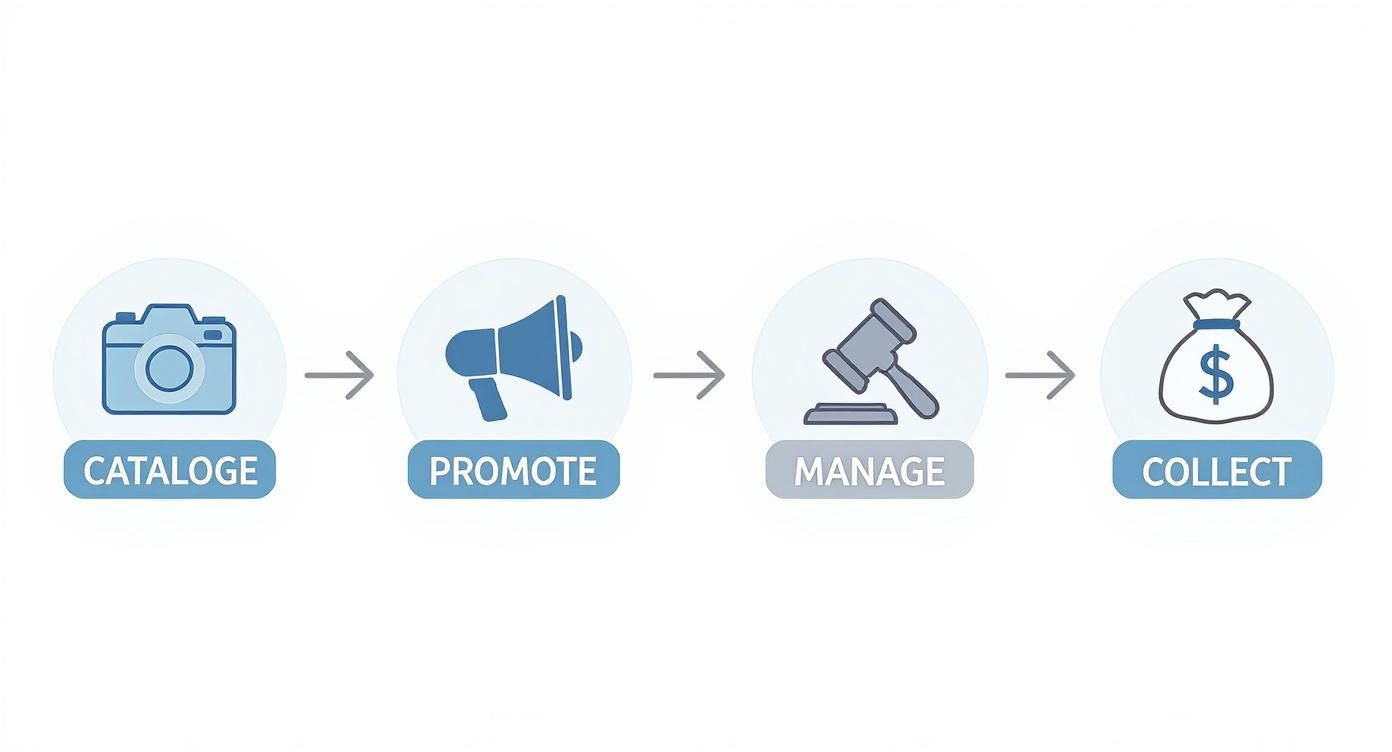
As you can see, every step is connected. Professional management and promotion are what drive those strong financial returns at the end.
Maximizing Your Net Profit
So, how do you make sure you get the biggest check at the end? It really boils down to a few things. The quality of your items is obviously huge, but just as important is the reach of the auction. The more eyeballs you get on your sale, the more bids you'll get. That competition is what pushes prices up.
This is where the online model really shines. It's part of a huge and growing market.
Globally, the online auction market—which includes online estate sales—was worth around USD 5.25 billion in 2023. Experts project it will more than double to USD 11.3 billion by 2032. North America is leading the charge, thanks to a digital-first culture that connects sellers with a massive audience of buyers who are comfortable shopping and bidding online.
Finally, since every transaction is digital, security is non-negotiable. Reputable platforms protect your earnings from payment disputes by implementing chargeback protection strategies, which is a must-have in any online business.
Here is the rewritten section, crafted to match the human-written style of the provided examples.
Why Online Estate Sales Are More Popular Than Ever
The move to online estate sales isn't just about a new app or website. It's a fundamental shift in how we look at the things we own, how we value them, and how we pass them on. What used to be a niche service for specific situations is quickly becoming the go-to choice for a whole new generation of buyers and sellers.
This boom is tied directly to the idea of a circular economy. More than ever, people are looking for sustainable ways to live. Instead of buying new, they’re hunting for quality secondhand goods—and an online estate sale is like a goldmine for well-made furniture, unique decor, and cool collectibles that are ready for a second act.
A New Focus on Sustainability and Value
Today's buyers are smart and eco-conscious. They know that reusing a vintage dresser is way better for the planet than buying a new, cheaply made one. This mindset has turned estate sales from simple liquidations into curated marketplaces for people who want to consume more thoughtfully.
At the same time, we're all feeling the pinch of inflation. People are actively looking for better value outside of big retail stores, and online auctions are the perfect place to find it. You can score unique, durable items at prices that big-box stores just can't touch.
These forces have created the perfect environment for the online estate sale market to thrive. It's where sustainability, minimalism, and smart spending all meet. As a result, estate sales have evolved from being just a way to clear out a house into exciting, community-focused events. You can dive deeper into these shifts in these 2025 trends in estate sales.
The Search for Meaningful, Curated Items
It's not just about saving money or the planet, either. There's a real movement toward minimalism and living with fewer, better things. People are tired of mass-produced, identical items and are looking for things with a bit of history and character.
This has created a new kind of shopper, one who values story and craftsmanship.
- They want unique pieces: They're looking for items you can’t find in a catalog—things that make their home feel personal.
- They appreciate quality: There’s a huge amount of respect for the solid wood and timeless design you find in older furniture.
- They love connecting to the past: Buying from an estate sale feels like you're adopting a small piece of history and giving it a new life.
Online estate sales are perfectly designed for this modern consumer. They aren’t just selling "used stuff"—they’re offering curated collections that tap directly into today's values of reuse, quality, and individuality.
This creates a great feeling for everyone involved. Sellers know their cherished belongings are going to people who will actually appreciate them. And buyers get to bring home high-quality, sustainable items that truly reflect their style. It’s a win-win that has cemented the online estate sale as a modern, practical, and incredibly relevant solution.
Common Mistakes That Can Derail Your Sale
 Getting an online estate sale right is about more than just listing a few things for sale. It’s about sidestepping the common tripwires that can turn a great sale into a frustrating mess. Trust me, learning from the mistakes of others is the fastest way to protect your profits and keep the whole process running smoothly.
The biggest errors we see aren’t complex, but they hit your bottom line hard. They almost always boil down to a lack of preparation in four key spots: photography, pricing, descriptions, and pickup logistics. Let’s walk through them so you can avoid them completely.
Failing the First Impression with Poor Photography
In an online auction, your photos are your sales pitch. That's it. Bidders can’t pick things up or look them over, so they are relying entirely on the images you give them. Blurry, dark, or single-angle pictures scream "risk" to a buyer, killing their confidence and leading to fewer bids and lower final prices.
Imagine you’re trying to sell an antique desk with just one dark photo. A buyer can't see the beautiful carvings, the condition of the finish, or any maker's marks. They have no reason to get excited or place a bid, so they'll just scroll right on by.
To make your items pop, make sure your photos are:
- Bright and Clear: Always use natural light if you can, and make sure your images are in sharp focus. No blurriness!
- Comprehensive: Take pictures from every angle. Get close-ups of details, signatures, and yes, even any scuffs or damage. Honesty builds trust.
- Uncluttered: Clear the junk away from the item. A clean, simple background makes your item the star of the show.
Setting Prices Too High
Want to scare off bidders before your auction even starts? Set your opening bids too high. A huge part of the fun in an online estate sale is the thrill of the hunt and the chance to score a great deal. If your starting prices are close to retail value, you kill that excitement right out of the gate.
Setting an opening bid at $0.99 or another low, enticing price is a proven strategy. It gets the ball rolling, sparks competition, and lets the market decide what your item is truly worth—not just your guess.
Low starting bids build momentum. An item with 20 bids that climbs to $100 feels way more desirable to bidders than something that starts at $75 and only gets one bid.
Writing Vague or Inaccurate Descriptions
Just like bad photos, weak descriptions leave buyers with too many questions. Simply writing "wood chair" is a massive missed opportunity. Is it oak or pine? What are the dimensions? Does it have any wobbles?
Every missing detail is another reason for a bidder to hesitate and move on. A great description works with your photos to build a complete picture, giving buyers the confidence to bid higher. Always include dimensions, materials, brand names, and an honest report of the item's condition.
Neglecting the Pickup Plan
The final—and often most chaotic—mistake is fumbling the pickup day. A disorganized pickup can sour an otherwise successful sale, creating a stressful experience for you and your buyers. Without a clear system, you're signing up for long lines, confused customers, and items getting mixed up or lost.
A smooth pickup day just takes a little organization. Schedule buyers in specific time slots, have their items already gathered and waiting for them, and post clear signs for where to go. This bit of planning makes the final step feel professional and ends your sale on a positive note.
Common Questions We Hear About Online Sales
As you get closer to launching your sale, a few practical questions almost always pop up. Getting these final details sorted is the key to feeling confident and ready to go. Here are some straightforward answers to the things we're asked most often by sellers just starting out with an online estate sale.
How Long Does a Typical Online Sale Last?
Most online estate sales run for about seven to fourteen days. This really seems to be the sweet spot. It gives buyers plenty of time to find your sale, browse everything you've listed, and get their bids in without the whole thing dragging on for too long.
Of course, the size of your estate can shift this a bit. If you have a massive collection with hundreds of items, you might want to extend the sale a little to make sure every item gets seen. On the flip side, a shorter, more focused sale can create a real sense of urgency that gets people bidding right away.
What Happens to Items That Don't Sell?
It’s pretty rare for every single item to find a new home, so having a plan for the leftovers is a crucial part of the process. You’ve got a few great options, and this is something you’ll typically discuss and agree on with your estate sale company from the start.
Here's what usually happens with unsold items:
- Company Buy-Outs: Some companies might offer to buy what’s left for a flat fee. This is a fast and simple way to clear out the property completely.
- Charitable Donations: You can arrange for a local charity to come and pick up the remaining goods. This is a popular, feel-good choice that also comes with a tax-deductible receipt.
- Disposal or Clean-Out: For anything that doesn't have much value, hiring a professional clean-out service can take care of removing it all, leaving the property empty and ready for whatever's next.
The key is to plan for unsold items before the sale begins. A good company will lay out all your options upfront so there are no surprises when the auction ends. It’s all about ensuring a smooth, complete liquidation from start to finish.
Do I Need to Be There for the Pickup Day?
Nope, you generally don't need to be present for the scheduled pickup day. In fact, that’s one of the biggest perks of hiring a pro or using a platform like DIYAuctions—we handle the logistics for you. The sale manager coordinates the entire event to make sure it’s secure and orderly.
Once the auction closes, your job is pretty much done. The team on-site will manage the flow of buyers, check payments, and make sure people only take the items they actually won. This keeps your privacy intact and saves you from the headache of coordinating dozens of different people, so you can focus on moving forward.
More guides in Estate Sale Basics
July 28, 2026
Revenue Reporting for Estate Sales and Auctions
Learn revenue reporting essentials for estate sales and auctions. Discover key metrics, templates, and best practices to simplify tracking and compliance.
Read guideJuly 26, 2026
Stamp Collection Valuation: A Practical Step-by-Step Guide
Stamp collection valuation made simple. Learn how to identify, grade, price, and sell your stamps with confidence for estate sales or consignment.
Read guideJuly 23, 2026
Estate Sales Brick NJ: Your 2026 Guide to Success
Planning your estate sales brick nj? Our guide covers permits, pricing, marketing, & running a safe sale with DIYAuctions.
Read guideGet the estate sale pricing guide
Enter your email for pricing ranges, planning notes, and a clearer path to launch.