A Practical Guide to Estate Sale Oklahoma Success
Run a profitable estate sale Oklahoma with our guide. Learn local laws, pricing for the OK market, and marketing tips to maximize your earnings.
When you’re facing an estate sale in Oklahoma, it can feel overwhelming. Whether you're downsizing your life in Edmond or handling a loved one's inheritance in Tulsa, the first big question is always the same: how do you actually get it done?
You essentially have two roads you can take. The traditional path involves hiring an estate sale company, which typically takes a commission of 30-50%. The other is a more modern, DIY approach where you keep nearly all of the profit. This guide will walk you through both, so you can figure out which one makes the most sense for you.
Understanding Your Oklahoma Estate Sale Options
Before you start tagging furniture, it’s crucial to understand the two main ways to run an estate sale in Oklahoma. Each has its own pros and cons, and the best choice really boils down to your goals, your timeline, and how hands-on you want to be. It’s a good idea to start by evaluating your estate situation to get a clear picture of what you're working with.
The Traditional Estate Sale Company
The old-school route is to hire a professional estate sale company. These folks come in and do everything—sorting, pricing, staging, marketing, and running the sale over a weekend. If you’re short on time or live out of state, this full-service model can be a lifesaver.
But that convenience comes with a hefty price tag. Most companies here in Oklahoma charge a commission anywhere from 30% to a staggering 50% of the total gross sales. Think about it: if your sale brings in $20,000, you could be handing over anywhere from $6,000 to $10,000 right off the top.
The Modern DIY Approach
There's a better way emerging, and that’s the do-it-yourself (DIY) method, powered by online platforms. This approach puts you in the driver’s seat but gives you all the professional tools you need to succeed. You handle the hands-on work of cataloging and photographing your items, while the platform takes care of the marketing, payment processing, and buyer communications.
This completely flips the financial script. Instead of a massive commission, you’re looking at a small fee or a much lower percentage, allowing you to keep up to 90% of the profits. It’s the perfect fit for anyone who wants to get the most money out of their items and doesn’t mind putting in some of their own time. If you're curious about how to manage it all, our guide on how estate sale organizers can help you manage your own sale is a great resource.
The key difference is simple: with a traditional company, you trade a large portion of your profits for convenience. With a DIY approach, you trade your time and effort for a significantly higher financial return.
Choosing your path means weighing what matters most. Take a hard look at the value of the estate, how much time you can realistically commit, and what your financial goals are. For a smaller estate, giving up a huge commission might not make sense, making the DIY route the clear winner. On the other hand, if you're dealing with a massive, complex estate and have zero time to spare, the full-service option might be worth the cost.
Navigating Oklahoma's Legal and Financial Rules
Before you even think about putting a price tag on a single item, you have to get a handle on the legal and financial side of an estate sale Oklahoma event. It’s not the most exciting part of the process, I know, but getting these details right from the very beginning is what saves you from a world of headaches—and potential fines—later on.
The rules aren't the same everywhere in the state, which can make things tricky. What flies in a small town near Lawton might not be compliant in downtown Tulsa. Think of this as your essential legal checklist to keep your sale professional, compliant, and free of any nasty surprises.
Do You Need a Sales Permit in Oklahoma?
This is usually the first question people ask, and in Oklahoma, the answer is always: it depends entirely on where you live. There's no single statewide rule, so the legwork of checking with your local government falls on you.
Generally, the bigger the city, the more likely you'll need a permit.
- Oklahoma City: You’ll almost certainly need a temporary sales or garage sale permit. They’re usually cheap, but they are mandatory.
- Tulsa: Has its own specific rules, too. A quick call to the city's licensing and permits department is an absolute must.
- Norman or Edmond: These suburbs might have different requirements than their bigger neighbors.
- Rural Counties: If you're out in a smaller town or an unincorporated area, you might find there are no permit requirements at all.
The golden rule here is to never assume. A five-minute call to your city or county clerk's office is the fastest way to get a clear answer and avoid getting shut down.
Understanding Oklahoma Sales Tax Obligations
This is where a lot of first-timers get tripped up. The Oklahoma Tax Commission is pretty clear about collecting and remitting sales tax. If you're selling tangible personal property, you're usually considered a vendor, which means you may be on the hook for collecting sales tax.
The "casual sale" exemption that covers your typical Saturday garage sale often does not apply to a full-blown estate liquidation, especially if it's large or runs for more than a day.
What this means for you is that you’ll likely need to get a sales tax permit from the Oklahoma Tax Commission before your sale starts. You'll be responsible for charging the correct combined state and local tax rate on every single purchase and then sending that money to the state. Keeping meticulous records of every transaction isn't just a good idea—it's non-negotiable.
For a deeper dive into this, check out our detailed guide on understanding specific estate sale laws and regulations.
Key Duties for Estate Executors
If you’re running the sale as the executor of an estate, you've got an extra layer of legal responsibility called a fiduciary duty. In plain English, this means you are legally required to act in the best interest of the estate and its beneficiaries.
Your main duties boil down to three things:
- Inventorying Assets: You need a complete and accurate list of every single thing being sold. No shortcuts.
- Achieving Fair Market Value: Your job is to get the best possible prices. Underselling items could open you up to legal challenges from heirs down the road.
- Proper Accounting: Track every penny. All money from the sale must go directly into a dedicated estate bank account.
When you're dealing with inherited property, understanding the ins and outs of things like probate property sales can be a huge help. Fulfilling these duties protects you legally and ensures a fair outcome for everyone, making the entire liquidation process transparent and defensible.
Creating Your Action Plan and Timeline
A successful estate sale in Oklahoma is all about momentum. It's a process built on thoughtful planning, not last-minute scrambling. Trying to tackle everything at once is a surefire way to get overwhelmed, but when you break the process down into a manageable timeline, it all falls into place.
Think of this action plan as your strategic framework. By starting early and giving yourself weekly goals, you can move forward with confidence, making sure no little detail gets missed. This approach is what prevents that chaotic, last-minute rush and sets you up for a smooth, profitable event.
This visual timeline breaks down the key legal and financial checkpoints you'll need to hit for any estate sale in Oklahoma.
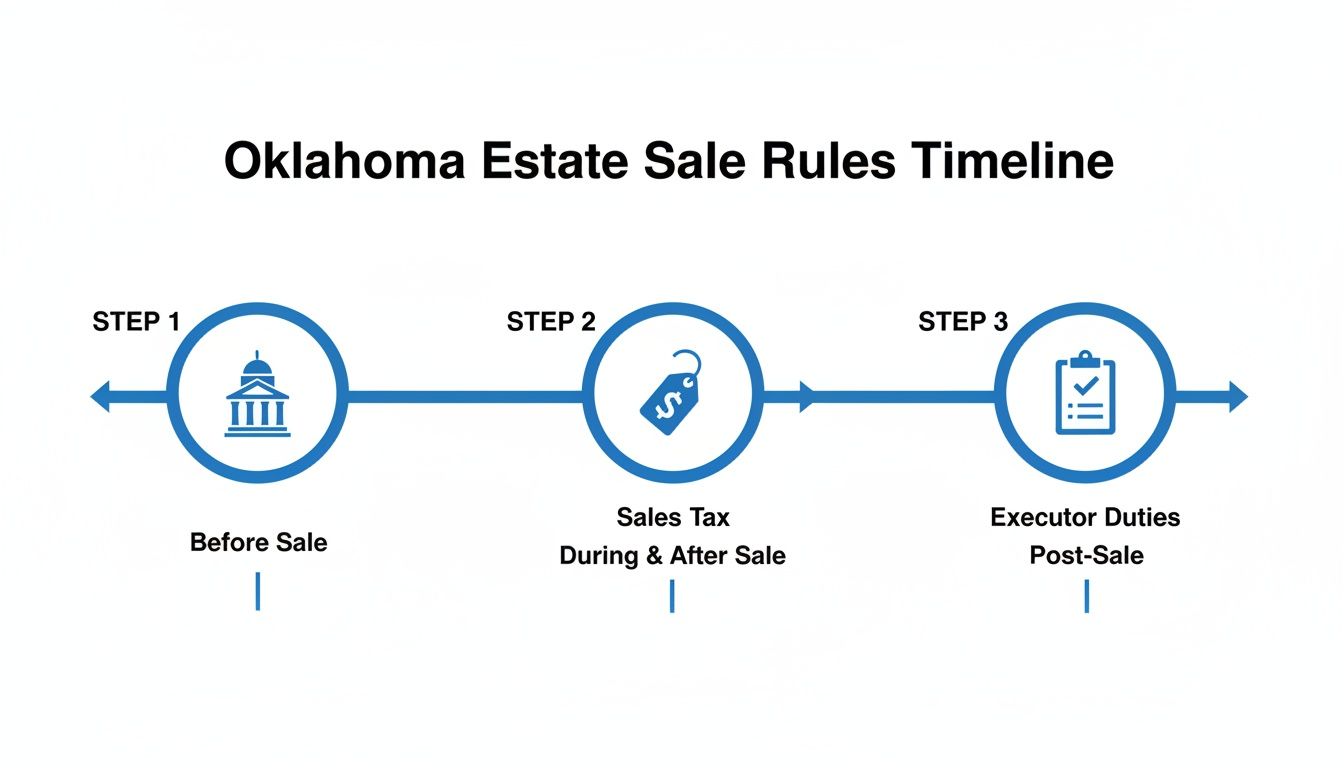
As you can see, getting a handle on things like permits, taxes, and any executor duties early on is absolutely non-negotiable for a compliant sale.
To put this all into practice, here's a detailed checklist that walks you through the entire process, from six weeks out to the day after your sale wraps up.
Oklahoma Estate Sale Planning Checklist
This table is your road map. Follow it step-by-step to stay on track and avoid common pitfalls.
| Timeframe | Key Tasks | Pro Tips for Oklahomans |
|---|---|---|
| 6 Weeks Out | Sort all items into "Keep," "Sell," and "Discard" piles. Remove all "Keep" items from the property immediately. | Be ruthless. Old farm equipment or Frankoma pottery might sell, but expired pantry items or broken electronics won't. |
| 4-5 Weeks Out | Begin photographing and cataloging every "Sell" item. Start researching prices for high-value pieces. | Good lighting is your best friend. For local treasures, check what similar items have sold for on Oklahoma-based auction sites. |
| 2-3 Weeks Out | Finalize your catalog on the DIY Auctions platform. Set your auction start/end dates and the pickup day. | Choose a pickup day that works for most people, like a Saturday morning. This cuts down on no-shows. |
| 1 Week Out | Launch your auction! Start sharing the link on social media and with local groups. | Post in Oklahoma-specific Facebook groups for antiques, furniture, or collectibles. It’s free, targeted advertising. |
| During the Sale | Monitor bids and be ready to answer questions from potential buyers through the platform. | Prompt, friendly answers build bidder confidence and can lead to higher final prices. |
| Pickup Day | Organize winning items by bidder number for a fast, smooth pickup process. Have boxes and packing materials on hand. | Group items for each winning bidder before they arrive. It makes the handoff take minutes, not hours. |
| Day After Sale | Initiate your payout through the platform. Address any remaining "Discard" items. | Celebrate your success! Then, call a local junk removal service for anything left. Don't let it linger. |
Sticking to a checklist like this one is the single best way to keep the process feeling manageable and under control.
The Initial Push: 4 to 6 Weeks Out
This is your foundation-building phase. The main goal here is to get a crystal-clear picture of what you're actually selling and what needs to be out of the picture entirely. Rushing this stage is a common mistake that almost always leads to regret, so give yourself plenty of time.
Your first major task is to sort. Go through every single room, closet, and cabinet with a system. A simple three-category method works wonders:
- Keep: These are the non-negotiables—family heirlooms, personal documents, photos, and anything else you or other family members have claimed.
- Sell: This bucket is for everything you believe has resale value, from furniture and antiques to everyday kitchenware and tools.
- Discard: This is for items that are broken, expired, or just too worn to sell. Be honest with yourself here; not everything is worth the effort.
Once you have your "Keep" pile, get those items out of the house immediately. I can't stress this enough. Move them to your own home, a relative's place, or a small storage unit. This is the only way to guarantee a priceless heirloom doesn't get sold by mistake.
Pro Tip: This is also the perfect time to shred old financial documents, properly discard expired medications, and deal with hazardous materials like old paint or chemicals that can't be sold or thrown in the regular trash.
Gaining Momentum: 2 to 4 Weeks Out
With the clutter gone and the personal items secured, you can shift your focus to the details that make a sale profitable. This phase is all about preparation, research, and presentation.
Now you'll begin the process of cataloging and photographing every single item you plan to sell. If you're using an online auction platform like DIY Auctions, this step is your storefront. Great photos and compelling descriptions are what will draw buyers to your sale over someone else's.
- Photography: Use natural light whenever you can. Take clear, well-lit photos from several different angles, and don't forget close-ups of any important details like brand names, artist signatures, or even imperfections. Honesty is key.
- Descriptions: Write detailed, honest descriptions. Always include dimensions, the item's condition, and any interesting history or context. Is it a classic piece of Frankoma pottery? Say so. Is it an antique farm tool from a rural Oklahoma homestead? That's a great detail to add.
This is also your research window. Start looking up what your more valuable items are actually selling for. Use online marketplaces and check the "sold" listings on auction sites to get a realistic idea of current market value. This research is crucial for setting competitive starting bids and ensures you aren't leaving money on the table. A few minutes of homework can easily add hundreds of dollars to your final take.
How to Price and Catalog for the Oklahoma Market
Getting the price right is where an estate sale succeeds or fails. This isn't just about slapping a sticker on a lamp; it's about knowing the local Oklahoma market and making your items look irresistible. All that sorting and organizing you did earlier? This is where it pays off, turning those piles into a moneymaking online catalog.
It doesn’t matter if you’re in a quiet rural town or a busy OKC suburb—the core principles are the same. Good research and a fantastic catalog are your two most important tools.
Researching Oklahoma-Specific Value
Before you price a single thing, you have to do your homework. An item’s value isn’t what you think it's worth; it’s what a local buyer is actually willing to pay for it today. And Oklahomans have their own unique tastes.
For instance, certain items with regional flair tend to do really well here:
- Western Art and Decor: Think bronzes, cowboy paintings, or that rustic ranch furniture. It’s always in demand.
- Native American Jewelry and Pottery: Real turquoise, silver, and especially signed pottery pieces are huge sellers, particularly if they have ties to local tribes.
- Antique Farm Tools: Don’t write off those old plows or rusty wrenches. People love them as decor for modern farmhouses.
- Frankoma Pottery: An Oklahoma classic. Flip it over and check the markings—local collectors hunt for specific colors and eras.
To get a feel for real-world prices, check the "sold" listings on online auction sites. This shows you what people have actually paid, not just what sellers are asking. That's the data you can trust.
One of the biggest mistakes I see is people pricing based on sentimental value or the original purchase price. The market for a 1990s oak dining set is a world away from what it was back then. Let current, local data be your guide, always.
This kind of smart pricing is more critical than ever when you look at the local economy. In Oklahoma, the median home price just hit $252,400, a 2.5% increase, but housing inventory is also up 9.1%. With only 17.8% of homes selling above the list price, it’s a balanced market. That means homeowners and executors need to get the most out of every single asset.
This is exactly why a DIY auction model makes so much sense. You get to skip the 30-50% commission that traditional estate sale companies charge and keep that money for the estate. You can see more on the latest Oklahoma housing market trends on Redfin.com.
Creating a Compelling Online Catalog
Think of your online catalog as your digital storefront. Great photos and detailed descriptions aren't optional—they’re what will convince someone in Tulsa to place a bid on your item in Norman.
First, nail the photography. You don’t need a fancy camera; your smartphone is perfect. The secret is good, natural light. Take your pictures near a window and turn off the flash, which causes glare and washes out the true colors.
For every single item, make sure you take:
- A Clear Overall Shot: Show the whole item without a bunch of junk in the background.
- Multiple Angles: Get the front, back, and sides. For furniture, open the drawers and show the back panel.
- Close-Ups of Details: Zoom in on any maker's marks, signatures, or cool features.
- Honest Pictures of Flaws: Photograph every scratch, chip, or stain. Being transparent builds trust with your bidders and saves you headaches on pickup day.
Next up, write descriptions that actually sell. "Brown chair" isn't going to cut it. You need to answer a buyer's questions before they even think to ask them.
- Measurements: Always, always include dimensions (height, width, depth).
- Condition: Describe it honestly. Mention the good stuff and the flaws you photographed.
- Context: If you know the story behind an item, tell it! "Grandfather's WWII footlocker" is way more interesting than "old trunk."
For a deeper dive into getting this right, check out our complete guide on the essential strategies for pricing estate sale items.
Let the Market Set the Price
Here’s the beauty of using an online auction platform: you harness the power of competitive bidding. Instead of trying to guess the one perfect price for a static tag, you can start the bidding low and let motivated buyers do the work for you.
This strategy almost always gets you a final price that’s much closer to the item’s true market value. Sometimes, it blows past what you ever would have dared to ask. This is especially true for rare collectibles or trendy vintage pieces. The thrill of the auction creates its own energy, turning a simple cleanout into a genuinely profitable event for your estate sale Oklahoma journey.
Marketing Your Sale and Managing Pickup Day Logistics
Once your catalog is built and your pricing is set, the real action begins. This is where you shift from prep work to getting your items in front of eager buyers and, most importantly, into their hands after the sale. A well-marketed auction and a smooth pickup day are what separate a decent sale from a truly great one.
The good news? You don’t have to suddenly become a marketing guru. When you run an estate sale Oklahoma event on a modern online platform, the heavy lifting is done for you. These platforms are designed with built-in marketing machines that target qualified local buyers actively looking for exactly what you're selling.
Bringing in the Oklahoma Buyers
Forget about the old days of printing flyers or hoping someone sees your newspaper ad. Today’s marketing is all about precision. An online auction platform uses digital tools to put your sale right in front of the right people across Oklahoma.
It works through a few powerful channels:
- Email Lists: Platforms have massive email lists of past bidders and registered shoppers, all sorted by location. The moment your sale goes live, an email blast goes out to buyers right in your area.
- Targeted Social Media Ads: Your sale gets promoted with paid ads on sites like Facebook, specifically targeting users in your zip code who have shown interest in antiques, furniture, or collectibles.
- Search Engine Visibility: The platform itself is built to rank high in search results when people look for local estate sales, pulling in organic traffic straight to your auction.
This automated approach means a steady flow of interested bidders finds your sale without you having to lift a finger on promotion. Your only job is to have that fantastic catalog ready for them.
The real power here is in the efficiency. While you're busy sorting through heirlooms, a dedicated system is working 24/7 to connect your Western art, antique furniture, and vintage collectibles with motivated buyers from OKC to Tulsa.
Planning a Flawless Pickup Day
The final, and arguably most critical, piece of the puzzle is the pickup day. This is the one in-person event where all your online work pays off. A smooth, organized pickup protects your property, keeps buyers happy, and makes the whole experience feel professional from start to finish. On the flip side, a chaotic pickup can sour an otherwise perfect sale.
The secret to success is simple: scheduling. Instead of a free-for-all with dozens of people showing up at once, use a scheduling tool to let buyers sign up for specific time slots. This staggers arrivals, prevents a traffic jam on your street, and lets you give each buyer your attention.
Your Pickup Day Playbook
To make sure everything runs like a well-oiled machine, you just need a simple system. The goal is to get buyers in, out, and on their way—quickly, safely, and with the right items.
- Pre-Sort Everything: Before the first car pulls up, group all sold items by the winning bidder's number. Slap a sticky note or a label on each lot. It’s also smart to put smaller items into boxes or bags to make them grab-and-go.
- Create a Clear Path: Figure out the best way for people to get in and out. Clear a walkway through the house or garage so buyers can safely carry their new treasures, especially the big stuff.
- Set Up a Welcome Station: A small table near the entrance works perfectly. Have a printed list of winning bidders, check them in as they arrive, and point them toward their items.
- Have Help on Hand: Don’t be a hero—you can’t do this alone. Ask a friend or family member to help you manage the flow of people and find items. And always remind buyers ahead of time that they need to bring their own muscle for heavy furniture.
This systematic approach takes the stress out of the final step. In Oklahoma, where estates can sometimes involve significant assets like agricultural land, this level of organization is non-negotiable. Oklahoma County, for instance, leads in state-owned property, and with slower property turnover in cities like Oklahoma City, a well-run estate event is incredibly valuable. For executors, a DIY platform offers the tools to market everything efficiently, helping them retain up to 90% of the profits. You can learn more about Oklahoma's property asset dynamics in this official report. A smooth pickup day is the final handshake that seals the deal.
Common Questions About Oklahoma Estate Sales
Even with a solid game plan, you're bound to have questions pop up. That’s just part of the process. Handling an estate is a big job, and it’s perfectly normal to need a little extra guidance. Here are some straightforward answers to the questions we hear most often, designed to help you move forward with confidence.
Do I Need a Permit to Hold an Estate Sale in Oklahoma?
This is a big one, and the answer is… it depends. Oklahoma doesn't have a single, statewide rule for estate sales, so the regulations change from one place to the next.
What you'll find is that bigger cities like Oklahoma City or Tulsa almost always have some sort of permit requirement, often treating an estate sale like a garage sale. But if you're in a smaller town or an unincorporated part of a rural county, there might not be any rules at all.
The only way to know for sure is to get in touch with your local city hall or county clerk's office. A quick phone call is all it takes to clear things up and make sure you don’t get hit with an unexpected fine or a shutdown order.
What Is the Best Way to Handle Antiques or Collectibles?
When you stumble upon antiques, collectibles, or anything you think might be valuable, you can't just slap a price tag on it and hope for the best. The right approach here can make a huge difference in your final numbers.
Your first step should be research. Start by looking up "sold" listings on auction sites to see what similar items have actually sold for recently. If you think you've found something really special—like signed Native American art or a rare piece of Frankoma pottery—it might be worth paying for a professional appraisal.
An online auction is hands-down the best way to sell these kinds of items. It creates a competitive bidding environment where passionate collectors from all over Oklahoma can drive the price up to its true market value.
When you're cataloging these special pieces, details are everything. Take sharp, well-lit photos from every angle, making sure to capture any maker’s marks, signatures, or unique features. Your description needs to be just as thorough—tell the story of the item and explain what makes it so special.
What Should I Do with Items That Don't Sell?
Let’s be realistic: it's almost impossible to sell every single item. That’s why you absolutely need a plan for the leftovers before your sale even starts. Thinking ahead will make the final cleanout process quick and painless.
Here are your best options for what’s left:
- Donation: This is the go-to for most people. Oklahoma charities like Goodwill and The Salvation Army are great options for furniture, clothing, and household goods. Make sure you get a receipt—you might be able to claim a tax deduction.
- Consignment: For higher-end furniture or art that didn't move, a local consignment or antique shop is a great second chance. They do the selling for you and you get a cut of the final price.
- Disposal: For everything else that can't be sold or donated, a junk removal service is your best bet. Schedule their pickup for the day after your sale so you can clear out the property and move on.
Is It Better to Hire a Company or Do It Myself in Oklahoma?
Deciding whether to hire a traditional estate sale company or go the DIY route really boils down to what's more important to you: time or money. According to EstateSales.net, a typical sale can bring in $18,000 to $20,000, so this isn't a small decision.
A full-service company in Oklahoma will do all the heavy lifting, but it comes at a steep price. They typically charge a commission of 35% to 50%. On a $20,000 sale, you'd be handing over $7,000 to $10,000. This route makes sense if you live out of state or just don’t have the time to manage it yourself.
On the other hand, using a guided online platform like DIY Auctions lets you keep up to 90% of the profits. If your main goal is to maximize the financial return for the estate and you're willing to put in the time to organize and catalog, the DIY path offers a huge financial advantage. You get all the professional marketing and payment tools without the massive commission fees.
More guides in Estate Sale Basics
July 28, 2026
Revenue Reporting for Estate Sales and Auctions
Learn revenue reporting essentials for estate sales and auctions. Discover key metrics, templates, and best practices to simplify tracking and compliance.
Read guideJuly 26, 2026
Stamp Collection Valuation: A Practical Step-by-Step Guide
Stamp collection valuation made simple. Learn how to identify, grade, price, and sell your stamps with confidence for estate sales or consignment.
Read guideJuly 23, 2026
Estate Sales Brick NJ: Your 2026 Guide to Success
Planning your estate sales brick nj? Our guide covers permits, pricing, marketing, & running a safe sale with DIYAuctions.
Read guideGet the estate sale pricing guide
Enter your email for pricing ranges, planning notes, and a clearer path to launch.