A Guide to Estate Sales Bay Area for Maximum Profit
Your expert guide to running successful estate sales Bay Area. Learn local permit rules, pricing for Bay Area buyers, marketing tips, and when to hire a pro.
Getting started with an estate sale in the Bay Area can feel like a massive undertaking, especially when you're already dealing with the emotions of a big life change. Before you get lost in the details, the first step is to zoom out and define your main objective.
Your First Steps in Bay Area Estate Sales
So, what’s the primary goal here? Are you trying to get top dollar for every last item, or is the real priority just clearing the house by a deadline? Your answer will shape every single decision you make from here on out.
This is also the time to get a rough sense of the project's scale. Do a simple walkthrough of the home. You don't need to count every teacup just yet, but make a mental (or physical) list of the major categories and any obvious high-value pieces.
Creating a Realistic Timeline
One of the most common mistakes we see is people seriously underestimating how much time this all takes. For most estate sales Bay Area residents plan, a realistic timeline is somewhere between four and eight weeks. That buffer is crucial—it covers sorting, pricing, marketing, and running the actual sale.
Think about the moving parts:
- Sorting and Decluttering: This alone can easily eat up a few weeks, depending on how much stuff you’re dealing with.
- Research and Pricing: To get fair prices, you have to do your homework, especially for antiques or unique collectibles.
- Marketing Period: Give yourself at least two solid weeks to spread the word and get your sale in front of serious buyers.
- Sale and Cleanup: The event itself, plus dealing with unsold items, adds another week to the calendar.
The pressure can be especially high given the Bay Area's fast-paced housing market. Recent reports show a 3.5% year-over-year increase in Bay Area home sales, the highest jump among major California markets. This frenzy, particularly in counties like Solano and Sonoma, often means you need to get a property cleared out and ready for listing fast. You can get a better feel for California's housing market trends and what it means for sellers right now.
Deciding Who Handles the Sale
Now for the big one: who is going to run this thing? You really have two main paths to choose from—hiring a full-service estate sale company or tackling it with a Do-It-Yourself (DIY) approach.
A professional company brings in a team and handles everything from pricing to cleanup, but that service comes at a price—typically 30-50% of the total sales. The DIY route, especially with a platform to guide you, gives you total control and means you keep a much bigger slice of the profits.
The right choice really boils down to your own time, energy, and how comfortable you feel managing a big project. Each option has its pros and cons, which we'll break down in more detail to help you figure out what makes the most sense for your situation.
Getting the Green Light: Navigating Bay Area Permits and Local Rules
Before you spend a minute pricing teacups or taking photos, you have to get a handle on the local bureaucracy. The Bay Area isn't a single jurisdiction—it's a complex patchwork of cities and counties, and every single one has its own opinion on estate sales.
Assuming the rules are the same in Palo Alto as they are in San Jose is a classic rookie mistake. Getting this wrong can mean fines or, even worse, having your sale shut down mid-stream. It’s a frustrating and totally avoidable setback.
Your very first move? Get on the phone with your local city hall or dig through their website. Find out exactly what the regulations are for your specific address. This isn't just a suggestion; it's a non-negotiable step for anyone serious about running a successful sale.
Don't Get Tripped Up by Signage and Parking
Signage is where so many well-intentioned sellers get into hot water. It’s tempting to plaster signs on every corner to drive traffic, but most cities have very strict rules about where they can go, how big they are, and how long they can stay up.
You'll often find restrictions like these:
- No signs on public property. That means telephone poles, traffic signs, and utility boxes are completely off-limits.
- Size matters. Many cities dictate the maximum square footage for your signs.
- The clock is ticking. You'll almost always be required to take down every single sign within 24 hours after your sale ends.
Parking is the other big neighborhood headache, especially in dense areas like San Francisco, Berkeley, or Oakland. If street parking is already a battle, a hundred potential buyers won't make you popular. A simple heads-up to your immediate neighbors about the sale dates is a great courtesy. It manages their expectations and can prevent a frustrated phone call to the city.
Permits, Taxes, and the Fine Print
The permit landscape changes dramatically from one city to the next. For a broader overview of the legal side, our guide on general estate sale laws covers the basics that apply nationwide, but local rules are king.
A crucial heads-up: Even if your city doesn't require a specific "estate sale" permit, you might still need to collect and remit California sales tax. If you hold sales regularly, the state may see you as a retailer. Your best bet is to check with the California Department of Tax and Fee Administration (CDTFA) to clarify your obligations.
To give you a starting point, we've put together a quick-glance table for some of the major Bay Area cities.
Bay Area Estate Sale Permit Quick Reference
This table summarizes the general permit requirements and key considerations for estate sales in major Bay Area cities. Think of it as a cheat sheet, but always verify this information directly with your local city hall for the most current regulations, as rules can and do change.
| City/County | Permit Generally Required? | Key Signage Rules | Common Considerations |
|---|---|---|---|
| San Francisco | Yes, a temporary use permit may be required. | Strict rules on placement and size. No posting on public poles. | Parking is a major challenge; consider logistics for buyers. |
| Oakland | Varies by situation; check with the city. | Prohibited on public property. Specific rules for residential zones. | Neighborhood parking permits can impact your customers. |
| San Jose | Yes, a garage sale permit is often needed. | Limited number of signs allowed, must include address and date. | City enforces limits on the number of sales per year per address. |
| Fremont | Generally yes, a permit is required for garage sales. | Signs are only allowed on private property with owner permission. | City has clear guidelines on sale duration and frequency. |
Ultimately, a little homework upfront saves you from a world of trouble later. A quick call to the city planning or code enforcement department is the best investment of time you can make at the start of this process.
How to Price and Stage for the Bay Area Buyer

Getting the pricing and staging right is where the magic happens. This is the point where you turn a house full of stuff into a successful, profitable event.
Here in the Bay Area, you have to know your audience. Local buyers have a specific taste, and it’s usually not for dusty, old-fashioned antiques. Think clean lines and cool finds: mid-century modern furniture, vintage Apple tech, and interesting pieces from local artists are what really get people excited.
Your pricing research should start online. Spend some time digging through local sites like Facebook Marketplace, Craigslist, and eBay. The key is to use the "sold items" filter—that’s what tells you what things are actually selling for, not just what sellers are hoping to get.
Know Your Buyer and Your Market
The Bay Area has its own unique rhythm, and understanding that is crucial for pricing. For example, the Inner East Bay housing market recently saw a 50% surge in home sales year-over-year, but median prices actually dipped a bit.
What does that tell you? It points to a buyer pool that’s eager but also incredibly savvy about value. That mindset doesn’t just apply to real estate; it extends to everything they buy. Even in a hot market, Bay Area shoppers want a fair deal.
For your high-ticket items—fine jewelry, original artwork, or rare collectibles—don't even think about guessing. This is when you bring in a professional appraiser. The fee for an appraisal is a small price to pay to avoid undervaluing something by hundreds, or even thousands, of dollars.
Staging a Home for Shoppers
Once you've got your prices sorted, it's time to shift your thinking from "home" to "store." You want to make it as easy and inviting as possible for people to browse and buy.
Your number one enemy here is clutter. Start by grouping similar items together. Put all the kitchenware in the kitchen, line up the tools in the garage, and so on. It just makes sense.
Think like a retail pro:
- Create Clear Pathways: People need to move around freely without the fear of knocking something over. Make sure there’s enough space for shoppers to pass each other in every room.
- Let There Be Light: Open every curtain and turn on all the lights. If a corner is still dim, bring in a lamp. Good lighting makes everything look more appealing.
- Display Items with Care: Don't just cram things onto tables. Use shelves and surfaces to create little vignettes that show off items in their best light.
Staging isn't just about making things look pretty; it's about safety and psychology. A clean, organized space makes shoppers feel more comfortable. They'll stay longer and look more closely, which almost always leads to more sales.
For some fantastic ideas that work for both selling a home and its contents, check out these expert real estate staging tips. And for a deeper dive into valuing everything from furniture to fine china, our comprehensive estate sale pricing guide has you covered.
Marketing Your Sale to Attract Eager Crowds
You can have the most incredible items staged perfectly, but if no one knows about your sale, you'll be standing there alone. Getting the word out is absolutely essential for a successful estate sale, especially here in the Bay Area where buyers have endless options every single weekend.
Your goal isn't just to post an ad; it's to create a buzz. You want to craft a story that makes people feel like they have to be first in line on opening day. That means hitting people where they are, both online and with good old-fashioned signs.
It all starts with your digital storefront—your online listing. First impressions are everything.
Creating Irresistible Online Listings
Your go-to platforms for reaching serious estate sales Bay Area buyers are going to be EstateSales.net, Craigslist, and Facebook Marketplace. The trick is to not just list your items but to sell the experience.
- Lead with Your Best Stuff: Use a good smartphone camera to get bright, clear photos. The very first images people see should be your showstoppers—that sleek mid-century modern credenza, the designer handbag, or the pristine collection of vintage vinyl.
- Get Specific in Your Descriptions: Don't just say "kitchen stuff." That's a rookie mistake. Instead, try: "Full set of Le Creuset cookware, Cuisinart stand mixer, and a collection of vintage Pyrex bowls." Specifics attract serious buyers who are actively hunting for those exact things.
- Make it Easy to Skim: Group your photos and descriptions logically by room or category (like Furniture, Art, or Electronics). Shoppers are scrolling fast, so make it simple for them to find what they're looking for.
For a complete masterclass in writing the perfect ad, you can dig into our detailed estate sale marketing guide.
The Bay Area's real estate scene is a great parallel. When the housing market gets hot, you have to work harder to stand out. We've seen San Francisco home sales jump by 35% thanks to the local AI boom, with new listings practically doubling in a single month. That same competitive energy spills over into estate sales. Your marketing has to cut through the noise.
Harnessing Local Social Media and Physical Signs
To really widen your net, understanding how to build a strong social media presence can be a game-changer. Tap into those hyperlocal Facebook groups for neighborhoods from Walnut Creek all the way down to Palo Alto. A week before your sale, post the key details along with a few teaser photos of your best items.
Don’t underestimate the power of old-school signage. Well-placed, legally compliant signs are your best tool for capturing drive-by traffic on sale day.
Think bright, bold colors and huge, clear letters. All you really need is "Estate Sale," the address, and a big, can't-miss-it arrow.
On the morning of the sale, put them up at major intersections nearby and at the turn onto your street. Just make sure to check local city rules on sign placement first. And here’s a pro tip: be a good neighbor and take them down the second your sale is over. It saves you from potential fines and keeps everyone happy.
Choosing Your Path: DIY vs. Hiring a Pro
This is probably the biggest decision you'll make in this whole process. Do you roll up your sleeves and go it alone, or do you bring in a professional team? There's no single right answer—it really boils down to a classic trade-off between your time, your energy, and your money.
Going the DIY route puts you in complete control. You call all the shots, from pricing every last teacup to deciding when the sale happens. The biggest upside is purely financial: you keep 100% of the profits.
But that control comes with a serious cost. The sheer amount of time and work involved is staggering. You’re suddenly a researcher, a marketer, a crowd-control specialist, and a logistics manager. It’s easily a full-time job for several weeks.
The Full-Service Professional Route
On the other side of the spectrum, you have full-service estate sales Bay Area companies. Hiring a professional crew means you can hand over the keys and walk away. They’ve got the pricing expertise, an established network of buyers, and a team to handle everything from setup to the final clean-out.
Of course, this convenience isn't free. You'll pay a commission, which in the Bay Area usually falls somewhere between 35% to 50% of the total sales. For many people, giving up a chunk of the profit is a fair trade to avoid the overwhelming stress and physical labor.
This graphic really helps visualize the difference, especially when it comes to getting the word out.
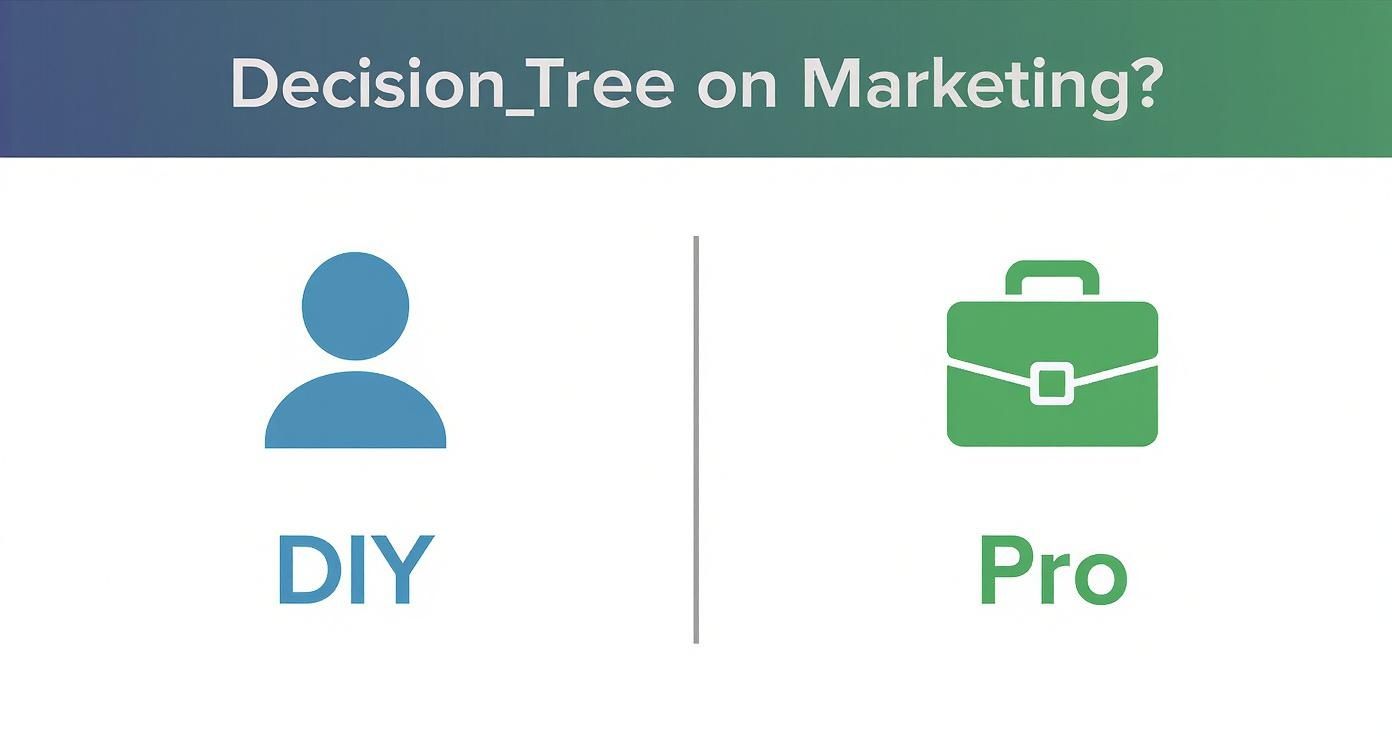
As you can see, the DIY path means you're building the marketing plan from scratch. A professional service comes with a built-in audience.
Finding a Middle Ground
Thankfully, it's not an all-or-nothing choice anymore. Hybrid solutions are popping up that give you the control of DIY with the reach of a professional service. A platform like DIYAuctions offers a fantastic middle path.
With this approach, you handle the on-site sorting and staging, but the platform takes care of the heavy lifting—things like marketing, payment processing, and connecting you with a network of vetted local buyers. You get to stay in charge while keeping a much bigger slice of the pie, often up to 90% of the profits.
The real question to ask yourself is simple: "What is my time worth?" If you have weeks to dedicate to this and you actually enjoy the process, DIY can be incredibly rewarding. But if your schedule is already packed or the emotional weight feels too heavy, hiring help is a smart investment.
To make the choice a bit clearer, let's break down exactly what each path looks like.
Estate Sale Approach Comparison: DIY vs. Full-Service
Here’s a head-to-head comparison to help you weigh the pros and cons based on what matters most to you.
| Factor | DIY (Do-It-Yourself) | Full-Service Company |
|---|---|---|
| Profit Share | You keep 100% of the proceeds. | You pay 35-50% commission on gross sales. |
| Time Commitment | Extremely high. Plan for 4-8 weeks of intensive work. | Very low. The company handles almost everything for you. |
| Control | Total control over pricing, sale dates, and the entire process. | You hand over control to the company's process and expertise. |
| Expertise | Relies entirely on your own research for pricing and marketing. | Professionals bring years of market knowledge and a buyer network. |
| Stress & Labor | You are responsible for every bit of physical and emotional labor. | The team manages all logistics, staffing, and heavy lifting. |
Ultimately, the best approach depends on your personal situation, your timeline, and how hands-on you want to be.
Answering Your Bay Area Estate Sale Questions
Even with the best game plan, questions are going to pop up. Running an estate sale in the Bay Area comes with its own set of local quirks and buyer habits. Let's tackle some of the most common ones we see.
How Long Does It Take to Plan an Estate Sale in the Bay Area?
Give yourself a comfortable four to eight weeks. That’s the sweet spot.
This timeframe gives you enough breathing room to sort through everything without losing your mind, do some real research for pricing, handle any city permits, market the sale properly, and stage the home.
Trying to cram it all into two or three weeks? That's a direct path to stress and leaving money on the table. If you're dealing with a larger estate or one with specialized items like fine art or rare books, you should probably plan on the process taking a few months.
What Actually Sells Well at Bay Area Estate Sales?
Bay Area buyers have a specific vibe. Their tastes often lean more toward modern, functional pieces rather than stuffy, traditional antiques. Knowing what they're looking for is half the battle.
Here’s what consistently gets snapped up:
- Mid-Century Modern Furniture: Anything with those clean lines from brands like Herman Miller or Eames, plus Danish modern pieces, is always a hit.
- Quality Tools: Well-kept tools from names like Snap-on or DeWalt are a sure thing.
- Vintage Tech and Audio: Think old Apple computers, vinyl collections, and quality stereo gear. There's a dedicated crowd for this stuff.
- Designer Goods: Authentic, well-priced brand-name clothing, handbags, and accessories will move fast.
- Unique Art and Decor: Bay Area folks love pieces from local artists or anything with a unique, eclectic character.
The takeaway? It’s less about "antiques" in the classic sense and more about good design, brand recognition, and items with a story. Style and substance often win out over sheer age here.
What Should I Do With Items That Do Not Sell?
It’s a guarantee: you'll have things left over. Planning for the remainders is just as critical as planning the sale itself.
You’ve got a few solid options:
- Professional Cleanout Service: These are the pros you call to make everything disappear. They'll clear the house for a flat fee, leaving it broom-clean. It's the fastest route but also the priciest.
- Donation: Many local charities, like Goodwill or the Habitat for Humanity ReStore, will schedule pickups for larger donations of furniture and household goods.
- Consignment or Online Sales: If a few specific high-value items didn't find a home, try a local consignment shop or a one-off listing on a platform like Facebook Marketplace. It can be a great second-chance strategy.
Should the Sale Happen Before or After Selling the House?
This is a big one, and the answer is almost always the same: hold the estate sale before you list the house.
Ask any real estate agent or estate sale pro, and they'll tell you the same thing for a simple, practical reason. A clean, empty, and depersonalized house is a blank canvas. It’s way easier for real estate agents to stage and for potential buyers to picture themselves living there.
Trying to show a house that's still crammed with personal belongings just creates clutter. It makes rooms feel smaller and can seriously tank the property's appeal. Clear everything out first. It lets you handle any needed repairs and present the home in its best possible light.
More guides in Estate Sale Basics
July 28, 2026
Revenue Reporting for Estate Sales and Auctions
Learn revenue reporting essentials for estate sales and auctions. Discover key metrics, templates, and best practices to simplify tracking and compliance.
Read guideJuly 26, 2026
Stamp Collection Valuation: A Practical Step-by-Step Guide
Stamp collection valuation made simple. Learn how to identify, grade, price, and sell your stamps with confidence for estate sales or consignment.
Read guideJuly 23, 2026
Estate Sales Brick NJ: Your 2026 Guide to Success
Planning your estate sales brick nj? Our guide covers permits, pricing, marketing, & running a safe sale with DIYAuctions.
Read guideGet the estate sale pricing guide
Enter your email for pricing ranges, planning notes, and a clearer path to launch.