Garage Sale Marketing: A Pro Plan to Maximize Your Sales
Master your garage sale marketing with our step-by-step guide. Learn how to price, promote, and present your items to attract buyers and maximize profit.
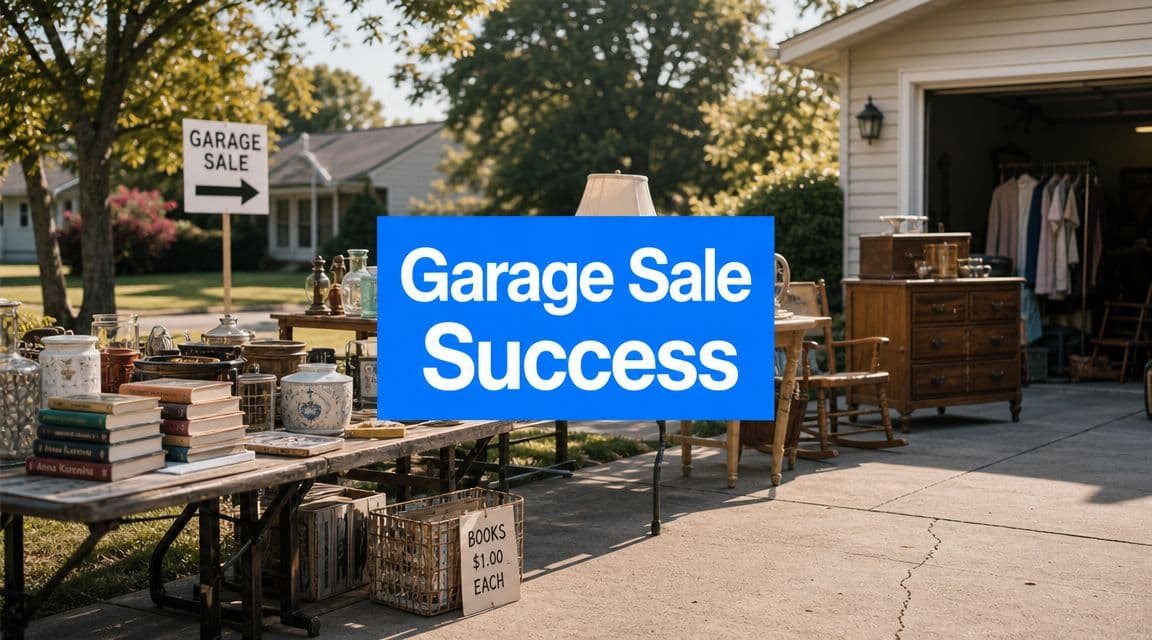
You're probably looking at a garage, basement, spare room, or an entire house and thinking the same thing most sellers think at first: just get it out. That mindset is exactly why so many garage sales underperform.
A profitable sale doesn't happen because people happen to drive by. It happens because buyers know what you have, know when to show up, and can find you without friction. Good garage sale marketing turns a stressful clean-out into a short retail event with a clear plan.
Why Your Garage Sale Needs a Marketing Plan
The default garage sale strategy is simple. Put a handwritten sign at the corner, post a vague notice online, and hope bargain hunters do the rest.
That approach works if your only goal is to get rid of things. It doesn't work if you want to sell through more inventory, protect the value of your better items, and avoid a chaotic day.

Treat the sale like a one-day store
Garage sale marketing matters because this isn't a tiny niche. Americans host 6.5 to 9 million garage sales annually, with about 690,000 buyers participating each week, according to yard sale market statistics compiled here. The same reference notes average item prices sit under a dollar, which means visibility and buyer volume matter a lot.
If your marketing brings in the right buyers, even modest pricing decisions become more profitable. If your marketing is weak, you get the opposite outcome. People browse, cherry-pick underpriced items, and leave the better merchandise behind.
Practical rule: A garage sale is a local retail launch. If you market it like an afterthought, buyers will shop it like one.
What a plan actually changes
A real plan does three things.
- It attracts intent, not just traffic. Buyers searching for tools, furniture, baby gear, collectibles, or kitchenware are more likely to show up when your ads name those items directly.
- It reduces low-value haggling. When shoppers see organized photos, clear categories, and a sale that looks worth attending, they come in with better expectations.
- It lowers your stress. A timeline prevents the last-minute scramble that leads to missing signs, weak listings, and poor setup.
Sellers who want a broader playbook for local liquidation can also review DIYAuctions' guide to garage and estate sales, especially if the project is closer to a full household clear-out than a casual driveway sale.
For the digital side, it also helps to understand how repeated messages reach local buyers across phones and short-form channels. Call Loop's guide to mobile marketing is useful background if you want to think more intentionally about how people see reminders and local promotions now.
The mistake that costs sellers money
Most underperforming sales have the same issue. The seller markets the event, but not the merchandise.
“Garage sale Saturday” is weak marketing. “Garage sale with solid wood dresser, shop tools, kitchenware, holiday decor, baby items, and vintage glassware” is much stronger. Buyers don't leave home for a generic promise. They leave home for something they already want.
The Pre-Sale Blueprint Your Marketing Timeline
Garage sale marketing works best when it builds in stages. Random promotion creates random turnout. A simple timeline creates momentum.

Two weeks out
Start with sorting, not advertising. Pull out anything that deserves special treatment before it gets buried in a bulk sale.
This is the moment to separate items into three groups: likely garage sale stock, higher-value items that may deserve individual pre-listing, and items that shouldn't be sold because they're broken, incomplete, or too low-value to justify table space.
At the same time, begin taking clean photos of your best items. Don't photograph cluttered piles. Photograph the strongest pieces individually, with enough light that buyers can tell what they're seeing.
One week out
Promotion should begin 5 to 7 days before opening, and then the ad should be repeated the day before, based on this yard sale promotion guidance. That timing catches both planners and people who shop at the last minute.
At this stage, publish your main listings in local channels. Use neighborhood Facebook groups, Craigslist or local classifieds, community pages, and any neighborhood-specific platforms you already know buyers use. Keep the wording consistent so buyers see the same address, dates, and best-item highlights everywhere.
Three days out
This is where local visibility starts to matter. Confirm your route signs, poster board, tape, stakes, and markers. Test your wording before you place anything.
You should also refresh your digital listings. Add a new photo if needed. Move high-interest items to the top of the description. If people ask repeated questions, update the post so the next buyer doesn't have to.
A strong sale ad gets easier to trust when the listing looks maintained instead of abandoned.
The day before
Repeat your ads. That second push is often what puts a sale on someone's Saturday plan instead of their “maybe” list.
Then walk your signage route in person. Don't guess where cars will turn. Stand at intersections and make sure a driver can immediately see the next arrow. If a sign creates confusion, it isn't doing its job.
Sale day
Open on time with the space already staged. Serious buyers show up early, and they notice immediately whether the sale looks organized.
Use this timeline as your working checklist:
| Timeframe | Key Marketing Tasks |
|---|---|
| Two weeks out | Sort inventory, identify higher-value items, clean standout pieces, photograph hero items individually |
| One week out | Post digital listings, write category-based descriptions, include strong photos and sale logistics |
| Three days out | Refresh listings, answer buyer questions, prepare signage materials and route |
| One day out | Repost ads, place or stage signs, confirm address visibility and setup flow |
| Sale day | Open on time, greet buyers, keep displays tidy, update local posts if major items sell |
A calmer workflow wins
The timeline matters as much for stress control as it does for turnout. Sellers who wait too long usually rush their pricing, post weak photos, and forget to pre-market the pieces that could have sold individually for more. A schedule protects your energy and your margin.
Crafting Digital Ads That Attract Buyers
Most buyers see your sale online before they ever see a sign. That first impression decides whether they save your address or scroll past it.

The difference between a weak ad and a useful one
Here's the kind of listing that gets ignored:
Garage sale this Saturday. Lots of stuff. Furniture, clothes, household items. Great prices.
Nothing in that copy gives a buyer a reason to care. “Lots of stuff” usually reads like leftovers, not value.
Now compare that with this style:
Multi-category garage sale Saturday. Solid wood dresser, hand tools, small kitchen appliances, holiday decor, baby gear, books, and vintage glassware. Clean items, clearly priced, early start, easy parking.
That version gives buyers anchors. A tool buyer sees tools. A parent sees baby gear. A reseller sees vintage glassware. A household shopper sees useful goods instead of vague clutter.
Build every listing around hero items
A garage sale ad performs better when it leads with a few specific pieces that make the trip feel worthwhile. I call these hero items. They're the things buyers mention to the person riding with them in the car.
Hero items usually include:
- Furniture with broad appeal like dressers, side tables, shelving, and patio pieces
- Useful equipment such as tools, small appliances, and electronics that are easy to recognize from photos
- Targeted-interest goods like collectibles, craft supplies, baby gear, or musical equipment
- Clean category lots such as kitchenware, holiday decor, or quality children's clothing
Don't post one photo of a driveway full of random objects and expect buyers to do the sorting mentally. Show the top items individually, then include a wider shot later.
Copy templates you can actually use
For neighborhood groups:
Saturday garage sale with furniture, kitchenware, tools, books, decor, and kids' items. Best pieces include a wood dresser, patio chairs, and small appliances. Everything is organized and clearly priced. Address and hours in the post.
For Craigslist or classifieds:
Garage sale with household goods, garage items, storage pieces, holiday decor, books, and clothing. Featured items are photographed individually. Good stop for buyers looking for practical home items plus a few higher-interest pieces.
For Marketplace-style posts:
Pre-sale listing for top garage sale items. Furniture, tools, decor, and household goods available at Saturday sale. Message only if interested in pictured item details. Remaining bulk inventory available on site.
Writers who want a tighter handle on phrasing can borrow ideas from broader ad copy best practices. The same core principles apply here. Lead with what matters, cut vague filler, and make the next step obvious.
Keywords buyers actually respond to
Use the words buyers use when they search. Not clever labels. Not family nicknames for objects.
Good examples include “dresser,” “tools,” “baby items,” “patio furniture,” “kitchen appliances,” “vintage,” “moving sale,” and “multi-family.” If the item is a known brand or style and you can identify it accurately, include that too.
Avoid words like “miscellaneous,” “various,” and “something for everyone.” Those phrases don't help anyone decide.
Specificity does the selling. Buyers don't search for “great finds.” They search for the object they want.
If your sale includes enough inventory that it starts to resemble an estate-style event, this estate sale advertising guide from DIYAuctions is a useful reference for structuring photos and pre-sale promotion without overcomplicating the listing.
Dominating Local Visibility with Smart Signage
People love saying signs are outdated. Sellers who run successful local sales know better.
Physical signage is still the last-mile conversion tool in garage sale marketing. Digital posts create awareness. Signs get the car to turn.
Signs aren't old-fashioned. Bad signs are
Guidance on garage sale advertising still points to physical signs as a major driver of local foot traffic, especially for neighbors and impulse shoppers who weren't actively searching online, as noted in this garage sale advertising guide.
That matches what happens in real neighborhoods. A shopper may head out for one planned stop, then buy from two or three other sales because the route is easy and visible. If your signs are clear, you capture that traffic. If your signs are sloppy, another seller gets it.
What your signs need
Most garage sale signs fail because they include too much information or too little direction.
Use this standard:
- Big readable wording such as “Garage Sale”
- A large arrow that can be understood at a glance
- High contrast with dark lettering on a light background
- Simple placement at every decision point, not just one main road
Don't expect drivers to remember your last sign three turns later. Each sign should answer one question only: do I keep going straight, or do I turn here?
Build a breadcrumb trail
Think of signage as a route, not a poster campaign. One sign at a busy corner attracts attention. The rest of the signs complete the conversion.
A good route usually includes a visibility sign near a busier road, then directional signs at each turn into the neighborhood, then one final confirmation near the home. If a buyer hesitates at any intersection, the chain is broken.
If someone has to slow down and guess, your sign system is unfinished.
What doesn't work
Tiny lettering doesn't work. Decorative signs don't work. Crowded signs with dates, item lists, and extra wording don't work well from a moving car either.
The strongest garage sale signs are almost blunt. They're made for drivers, not readers standing still. If you want to sell the merchandise, do that online. If you want people to find the driveway, keep the signs stripped down and obvious.
Pricing and Presentation for Maximum Profit
Most sellers think low prices are what make a garage sale succeed. That's only partly true. Clear pricing and clean presentation usually matter more than racing to the bottom.

Price for movement, not regret
A common rule is to price used items at about 10% of retail, slightly used items at 30%, and new items at 50%, based on this garage sale pricing guidance. That same guide also recommends clear, rounded price tags and displaying goods on tables rather than the ground.
Those benchmarks are useful because they stop two expensive mistakes. The first is sentimental pricing. The second is unmarked pricing that forces every shopper to ask questions.
If you want room to negotiate, price slightly above your true minimum. But don't price so high that buyers mentally dismiss the item before they touch it.
Decide your real goal before you tag anything
There are two very different sale goals.
One seller wants the driveway empty by afternoon. Another wants maximum net proceeds from the best pieces before using the sale to clear out the rest. Those goals produce different pricing choices.
If profit matters more than speed, don't throw every attractive item into the same pile of general sale inventory. Some items deserve to be pre-marketed individually before sale day. For broader item valuation logic, this guide to pricing estate sale items helps frame the difference between liquidation pricing and value-based pricing.
Presentation changes buyer behavior
A garage sale that looks like a rummage pile gets treated like one. A garage sale that looks like a temporary shop gets better browsing and better offers.
Use tables. Group by category. Put visually stronger items at eye level or where they can be seen from the street. Keep clothing folded or hung. Set small related goods together so buyers can compare without digging.
A short video walkthrough can help you think more like a merchandiser before the sale opens:
What to fix before buyers arrive
- Unpriced items slow down decisions and invite lowball offers
- Items on the ground look neglected, even when they're worth buying
- Mixed categories make shoppers work too hard
- Dirty merchandise lowers trust immediately
Buyers pay for what they can evaluate quickly. Clean, visible, tagged items are easier to buy.
The sellers who earn more usually aren't the ones offering the deepest discount first. They're the ones who make the purchase feel easy.
Day-Of Operations to Convert Interest into Sales
Sale day is where garage sale marketing either pays off or gets wasted. If the setup is confusing, the checkout is slow, or the higher-value items are mixed into clutter, all that promotion leaks away in real time.
Run the sale like a short retail event
Start with a clear checkout area and enough change ready to go. Buyers should know where to pay without asking. Keep bags, wrapping paper, and any sold-item markers in one spot so the flow stays smooth.
Greet people, but don't hover. A quick welcome and a simple “Let me know if you want a bundle price on anything” is usually enough. Serious buyers like help when they need it and space when they don't.
Protect margin early and move inventory late
The best day-of tactic is usually a mixed one. Higher-priced items that were pre-listed individually can capture stronger demand before or during the sale, while the on-site event clears the bulk inventory. That approach is consistent with this guidance on garage sale versus pre-listing strategy.
As the day moves on, watch what's sticking. If practical low-ticket goods aren't moving, group them into simple bundle offers. If larger items remain late in the day, make it easy for buyers to take them immediately.
Keep the last hours simple
Use a short operating checklist:
- Refresh displays: Return stray items to their category and keep surfaces tidy
- Mark decisions clearly: If a price changes, retag it instead of negotiating the same item repeatedly
- Separate sold goods: Avoid confusion and accidental double-selling
- Close with intent: Decide what gets discounted, donated, or relisted before exhaustion sets in
A well-run sale doesn't feel frantic. It feels easy to shop. That's usually the final difference between a driveway that empties profitably and one that leaves money, and work, behind.
Garage sale marketing works best when it isn't treated as one task. It's a sequence. Sort early, promote on schedule, write specific digital ads, place signs like directions instead of decoration, and stage the sale so buying feels simple. That's how you get more cash out of the same pile of stuff, with a lot less stress.
More guides in Estate Sale Marketing & Advertising
June 28, 2026
8 Key Neighborhood Marketing Tactics for Your Sale
Boost attendance at your estate sale with these 8 neighborhood marketing tactics. Learn hyperlocal ads, local SEO, partnerships, and more to attract buyers.
Read guideJune 21, 2026
Master Auction Marketing Strategies for 2026
Discover 10 actionable auction marketing strategies for 2026. Attract more buyers, boost sales, and maximize profits for your online estate sale.
Read guideFebruary 21, 2026
Crafting the Perfect Estate Sale Listing to Maximize Profits
Learn to create a compelling estate sale listing that attracts serious buyers. Our guide covers photos, descriptions, and pricing to boost your final profits.
Read guideGet the estate sale pricing guide
Enter your email for pricing ranges, planning notes, and a clearer path to launch.