Maximize Your Payout With a Home Appliances Auction
Turn your used appliances into cash. Our guide to running a successful home appliances auction covers prep, pricing, and logistics for maximum profit.
If you've got used home appliances to sell, you’ve probably found yourself stuck between a rock and a hard place. On one side, you have the marketplace hagglers offering you pennies on the dollar. On the other, traditional consignment or estate sale companies are waiting to take a massive cut.
A home appliances auction cuts right through all that noise. It’s the single most effective way to turn those unwanted items into real cash, whether you’re clearing out an estate, downsizing, or just making room for an upgrade. We’re going to walk you through the whole process, from the first wipe-down to waving goodbye on pickup day.
Why an Auction Just Works Better for Appliances
Let’s be honest, trying to sell a used refrigerator or washing machine with a fixed price is a guessing game. You either price it too low and leave money on the table, or price it too high and hear nothing but crickets.
An auction flips the script entirely. Instead of you hoping for a decent offer, you create a competitive space where motivated buyers determine the true market value. This is where the magic happens—a few interested bidders can quickly drive the price far beyond what you would have listed it for.
With a platform like DIYAuctions, you’re in the driver’s seat and can keep up to 90% of the profits. That’s a world away from the 30-50% commissions you’ll see with many full-service options.
You're Selling into a Red-Hot Market
The timing for this couldn't be better. The demand for quality, pre-owned appliances has never been stronger. Think about it: every homeowner doing a renovation, every landlord outfitting a rental, and every new buyer on a budget is looking for a deal on the exact items you have.
The numbers don't lie:
- Huge Renovation Spending: In 2024 alone, homeowners dropped a jaw-dropping USD 603 billion on renovations, which means a constant flow of perfectly good appliances are being swapped out.
- A Growing Industry: The U.S. home appliance market was worth USD 129.83 billion in 2024 and is on track to hit USD 204.99 billion by 2032. All that growth means more buyers are actively hunting for what you’re selling. You can dig into the data in this detailed report on fortunebusinessinsights.com.
This isn't just about getting rid of an old dishwasher. You're meeting a massive, built-in demand. For more ideas on what to sell, take a look at our guide on running a successful household items auction.
The real power of an auction is that it turns buyer competition directly into your profit. A clean, well-photographed appliance doesn't just sell—it can kick off a bidding war that pushes the final price well past what you ever expected to get.
Getting Your Appliances Ready for the Auction Block
The final sale price of your appliances is decided long before the first bid is ever placed. Preparation is everything. A sparkling clean, fully functional, and well-documented appliance doesn’t just look better—it screams reliability to potential buyers, which directly encourages more competitive bidding.
Think of it this way: when a bidder sees a meticulously cleaned refrigerator, they aren’t just seeing a clean appliance. They're seeing an item that was clearly cared for. This simple perception reduces their feeling of risk and makes them willing to bid higher. The effort you put in upfront is your single best tool for maximizing what you earn.
The second-hand market is absolutely booming, largely driven by a massive consumer shift towards sustainability and finding great value. In fact, the global volume for household appliances is projected to hit an incredible 5.0 billion pieces by 2030. Small appliances are really leading that charge as people upgrade them more often.
The Essential Inspection: Your First Move
Before you even touch a cleaning cloth, you need to give each appliance a thorough and honest look-over. This step is crucial for writing an accurate listing and spotting any small fixes that could seriously boost its value.
- Cosmetic Check: Look for any scratches, dents, or scuffs. Be methodical—check the top, sides, front, and back. Make a note of every imperfection. Being transparent builds trust with your bidders.
- Functionality Test: You have to run every single cycle and feature. Does the dishwasher actually finish a full wash? Does the oven preheat to the right temperature? Does the refrigerator's ice maker still make ice?
- Seals and Gaskets: Check the rubber seals on the doors of refrigerators, freezers, ovens, and washers. You're looking for seals that are intact, pliable, and free of any mold or mildew.
- Cords and Hoses: Inspect all the connections for fraying, cracks, or other damage. These are cheap to replace, but a damaged cord is a huge red flag for a potential buyer.
- Model and Serial Numbers: Find the tag with the model and serial number. This is gold for bidders who want to look up specifications or product reviews online.
This simple process of listing, selling, and getting paid is a powerful way to turn your unused items into cash.
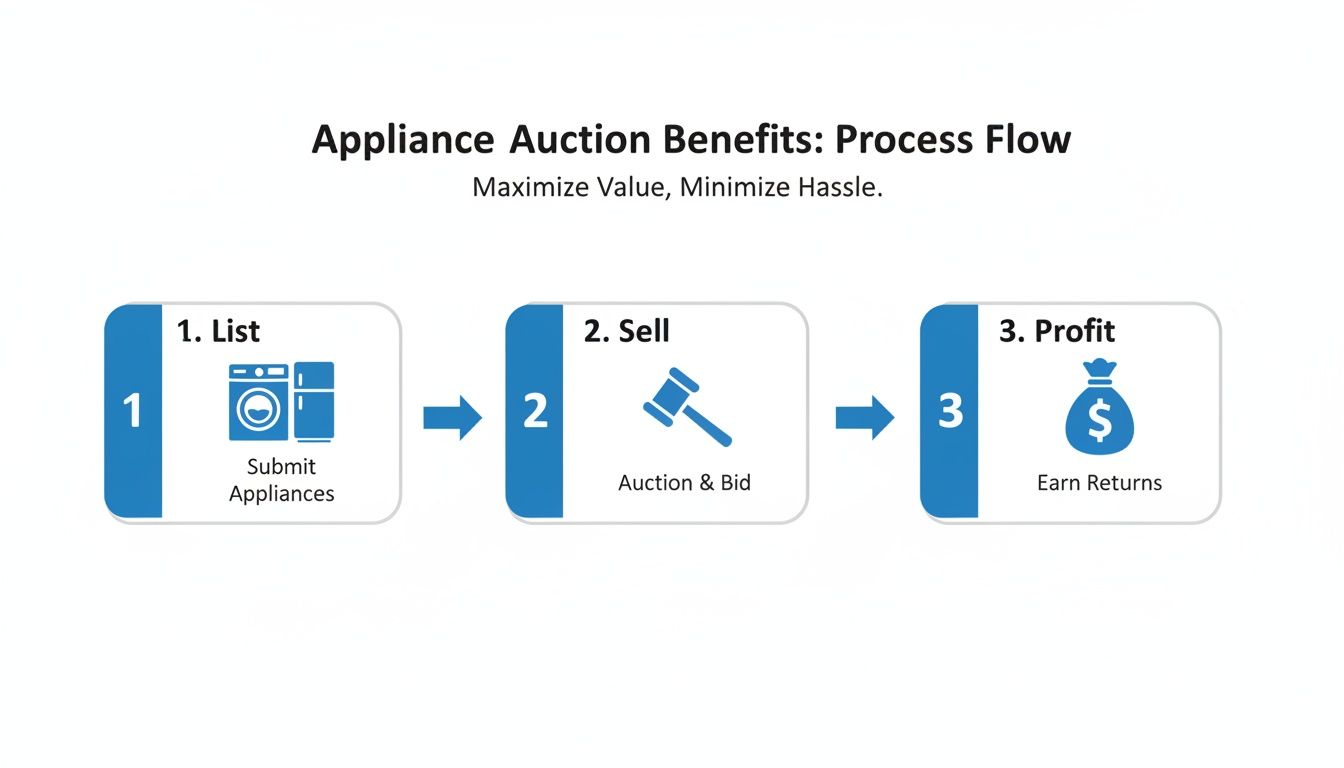
The path from cataloging your appliance to getting paid is straightforward, making the whole auction process easy for anyone to manage.
Deep Cleaning for Maximum Appeal
Okay, now that you know the exact condition of your appliance, it’s time to make it shine. A really good deep clean can dramatically increase how much people think it's worth, often adding hundreds of dollars to the final bid for bigger items like refrigerators or ovens.
As you get things ready, you might be faced with the classic repair vs. replace decision for a minor issue. It's worth remembering that sometimes a small, inexpensive fix can bring a significant return when the auction closes.
Pro Tip: Don't just clean what's on the surface. Serious bidders will absolutely inspect the nooks and crannies. A clean dishwasher filter or spotless oven racks sends a powerful signal that the machine was well-maintained, justifying a much higher bid.
To help you out, here’s a quick checklist for getting your common appliances ready for their close-up.
Appliance Inspection and Cleaning Checklist
| Appliance Type | Inspection Point | Cleaning Action | Pro Tip |
|---|---|---|---|
| Refrigerator/Freezer | Check seals, temperature control, ice maker | Remove and wash all shelves/drawers. Wipe interior with a baking soda/water mix. | Clean the exterior condenser coils to improve efficiency—buyers notice this. |
| Oven/Stovetop | Test all burners, oven functions, and self-clean | Use oven cleaner inside. For glass tops, use a specialized, non-scratch cleaner. | Pull out the bottom drawer and clean underneath. It’s a tell-tale spot. |
| Washer/Dryer | Run a full cycle, check for leaks, test all settings | Wipe down the drum. For front-loaders, scrub the rubber door gasket to remove mildew. | Thoroughly clean the dryer’s lint trap and the housing it sits in. |
| Dishwasher | Test all cycles, check for clogs or slow draining | Remove and clean the filter at the bottom. Run an empty cycle with a cleaning tablet. | A fresh, clean smell when the door is opened makes a huge difference. |
This table is your roadmap to getting top dollar. Follow these steps, and you'll present an appliance that looks cared for and ready for its new home.
Finally, take a minute to gather up any original manuals, warranty paperwork, or even old receipts you have for the appliance. Including these documents adds a layer of credibility that bidders love. It shows you were a diligent owner, and that confidence translates directly into higher bids on auction day.
Crafting Listings That Spark Bidding Wars
You’ve done the hard work of cleaning and inspecting your appliance. Now it’s time to make that effort pay off. Your online listing is your 24/7 salesperson, and it's what ultimately convinces a bidder to click—and keep clicking.
The difference between a lazy, one-photo listing and a thoughtfully detailed one can easily mean hundreds of dollars in your pocket. You’re selling trust just as much as you're selling a machine. Every clear photo and honest detail you share chips away at a buyer's hesitation, giving them the confidence to bid higher in your home appliances auction. This is where you build the momentum for a real bidding war.
Photography That Sells
You don't need a pro-level camera to take photos that move merchandise. Your smartphone is more than powerful enough to capture the crisp, clear images that will make your appliance stand out. The goal is to give bidders a complete virtual tour, leaving no stone unturned.
First things first: lighting is everything. Natural, indirect light is your best friend. Try to position the appliance near a window but out of the harsh, direct sun to avoid weird shadows and glare. Flip on the room lights, too—you want the scene to look bright and inviting.
Next, you need to cover all the angles. A serious buyer wants to see it all, so don't be shy.
- The Hero Shot: Get a clean, straight-on photo showing the entire appliance. This is your main image, the one that grabs their attention.
- Detailed Close-Ups: Snap photos of the control panel, any special features like an ice dispenser or convection fan, and the interior shelves or drum.
- The Information Tag: Take a crystal-clear picture of the model and serial number tag. This is non-negotiable for buyers who do their homework.
- Honesty Shots: This is crucial. Photograph any of those scratches, dings, or signs of wear you found during your inspection. Being upfront builds immense trust.
We believe this step is so important that we’ve put together a full guide on it. Check out our tips on how to take professional product photos for even more pointers.
Writing Descriptions That Convert
Your photos get them to stop scrolling; your words seal the deal. The description is your chance to really sell the value of your item and manage expectations from the get-go. A great description is both informative and persuasive, guiding a potential buyer from casual interest to active bidding.
Start with a clear, descriptive title. "Used Refrigerator" is okay, but "GE French Door Refrigerator - 25.3 Cu. Ft. - Excellent Condition" is infinitely better. It gives bidders the key info they need right away.
In the description itself, make the details easy to scan. Bullet points are your friend here.
Listing Template Example
Item: Whirlpool Cabrio Top-Load Washer - Model WTW8500DC
Condition: Excellent, fully functional. Minor scuff on the left side (see photo). Meticulously cleaned and ready for a new home.
Key Features:
- 5.3 cu. ft. capacity - handles large loads and comforters with ease.
- 11 distinct wash cycles for customized cleaning.
- Low-profile impeller provides gentle yet thorough washing.
Dimensions: 27.5" W x 42.25" H x 28" D
Important Notes: Buyer is responsible for bringing help and an appropriate vehicle for pickup on the designated day.
This format lays out all the crucial details at a glance. It's honest about the small flaws while highlighting the great features, creating a complete and trustworthy picture for the buyer.
Tapping into the Digital Shift
Creating a compelling online listing has never been more critical. Buyers are more comfortable than ever making big-ticket purchases online, and appliances are no exception. The market is surging at a 6.1% compound annual growth rate, with a whopping 78% of Americans now comfortable buying major appliances digitally in 2024. That’s a big jump from 73% just the year before and a clear signal of where things are headed.
A strong digital listing allows you to tap directly into this growing pool of motivated buyers. If you want to make sure your listings truly shine, you can always order professional product photos to get that extra edge. Platforms like DIYAuctions make the listing process incredibly straightforward, giving you the tools to upload your photos and descriptions and create a professional-looking catalog that brings in the qualified local bidders you're looking for.
Pricing Your Appliances to Sell for Top Dollar
Getting the price right is probably the most nerve-wracking part of selling, but it’s also where you have the most power to create a successful auction. If you start too high, you’ll scare bidders away before the auction even gets going. But if you start too low without a plan, you risk leaving good money on the table.
The trick is to find that sweet spot. You want to attract a crowd, spark some competition, and let the bidders themselves drive the final price up to what it's really worth.
Finding the Fair Market Value
First things first, you need to do a little homework. Don't just guess what your appliance is worth; find out what people are actually paying for that exact model right now. This is your reality check.
Hop on a site like eBay and search for your appliance’s model number. The key here is to filter the results to show only “Sold” or “Completed” listings. This cuts through the noise of what people are asking and shows you the real-world prices people have paid. Find a few examples in similar condition to yours, and you'll have a solid anchor for your pricing strategy.
The psychology of an auction is a powerful thing. A low starting bid feels like a golden opportunity, drawing in way more people. All that early interest creates a buzz, making other bidders feel the item is desirable and worth fighting for. This often leads to a much higher final price than an intimidatingly high starting bid ever could.
This built-in competition is why a home appliances auction works so well. It’s a dynamic process that helps you capture the true market value of your items.
The Art of the Starting Bid
Your starting bid is your first impression, and it sets the entire tone for your auction. It feels a bit backward, but a super low starting bid—I’m talking as low as $1—is often the single best thing you can do to get bidders excited.
A low opening bid removes any hesitation. It makes it easy for someone browsing to throw in that first bid, and once they've done that, they're invested. They start to feel a sense of ownership, and that’s what fuels those exciting bidding wars.
A couple of approaches I’ve seen work well:
- The Aggressive Start: A $1 starting bid is fantastic for common, high-demand appliances like a standard washer and dryer set. It screams "potential bargain" and can attract dozens of bidders right out of the gate.
- The Moderate Start: For something a bit more specialized, like a high-end Bosch dishwasher, starting at around 10-15% of its market value is a great strategy. It still feels like a deal but attracts more serious buyers from the get-go.
Using a Reserve Price to Protect Your Investment
But what if you're selling a premium Sub-Zero refrigerator and the thought of it selling for pocket change makes you break out in a cold sweat? That's exactly what a reserve price is for.
A reserve is a secret minimum price you set. Bidders can't see it, but the system won't let the item sell unless the bidding reaches that amount. It's your safety net. This ensures your most valuable appliances don't go for less than you’re comfortable with. Use it for those high-ticket items where you have a firm bottom line.
To get a clearer picture of your potential earnings, you can play around with our auction fee calculator.
To help you decide which path to take, here's a quick comparison of the most common strategies for pricing used appliances in an online auction.
Pricing Strategy Comparison for Used Appliances
| Strategy | Best For | Potential Outcome | DIYAuctions Feature to Use |
|---|---|---|---|
| $1 Starting Bid (No Reserve) | Common, in-demand items (washers, dryers, standard fridges) where you want maximum bidding activity. | High engagement, potential for a bidding war that exceeds market value. Small risk of selling low if demand is weak. | Standard Auction Listing |
| Low Start (10-25% of Value) | Mid-range to high-end items (specialty ovens, high-end dishwashers) to attract serious buyers. | Attracts qualified bidders, less initial "noise." Final price usually lands close to or above fair market value. | Standard Auction Listing |
| Starting Bid with Reserve | High-value, premium, or rare appliances (Sub-Zero, Wolf ranges) where you must protect your investment. | Provides a safety net, ensuring you get at least your minimum price. Can sometimes deter initial bidding if bidders suspect a high reserve. | Reserve Price |
Choosing the right strategy comes down to understanding your item and your comfort level with risk. For most common appliances, a low starting bid is the surest way to generate excitement and a great final price.
Remember, the home appliance market is huge—it hit USD 503.03 billion globally in 2024, according to The Business Research Company. With DIYAuctions' 10% capped commission, you keep up to 90% of what your item sells for. That's a massive difference from traditional estate sales, which can take 30-50%. This lets you price competitively while making sure you walk away with the most profit.
Running a Smooth Auction and Pickup Day
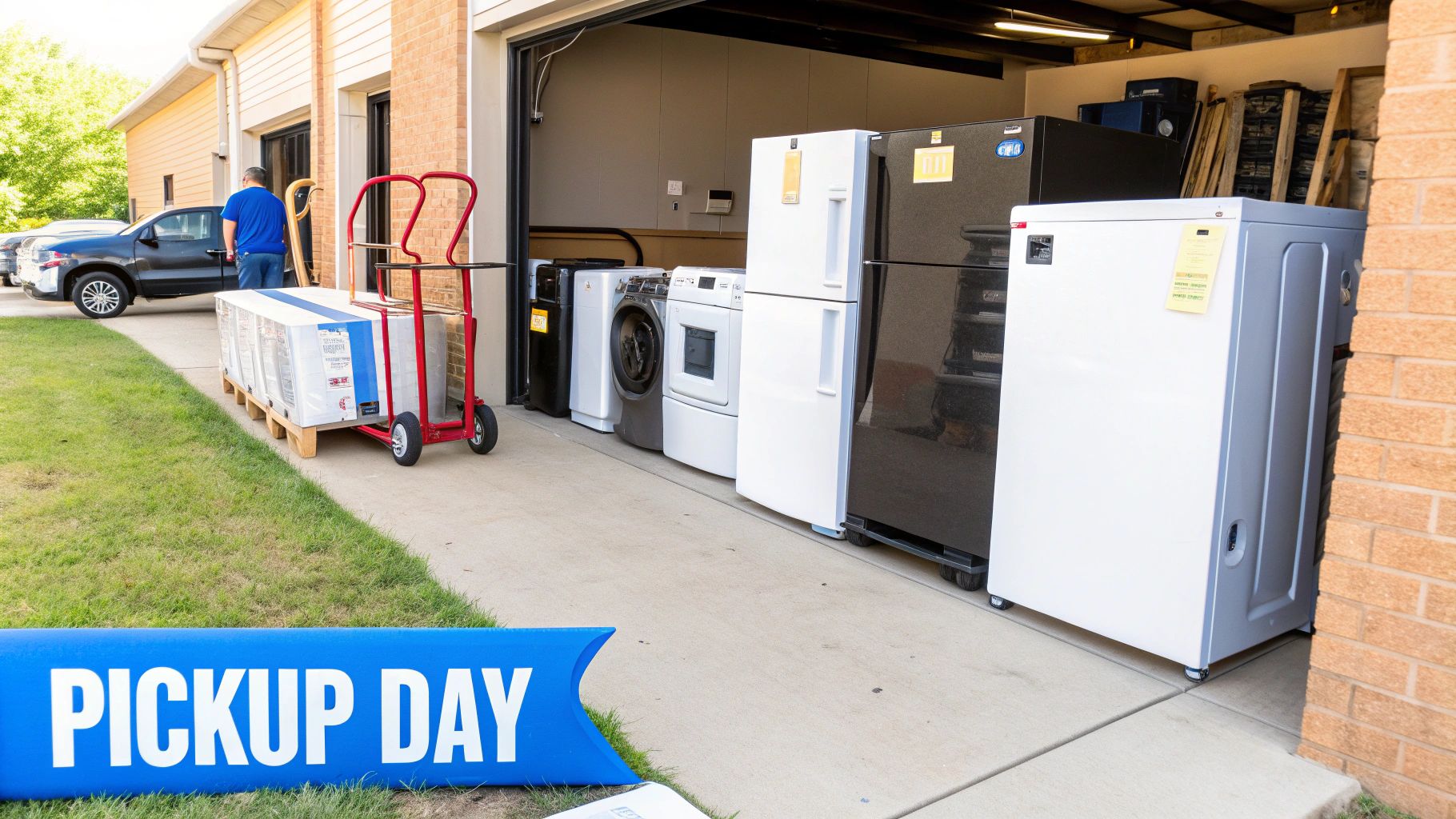
Once your home appliance auction goes live, your job switches from promoter to manager. This is where all that prep work really starts to pay off. The final days of bidding and the pickup event itself are the moments that make or break the experience for you and your buyers.
Your main task during the auction is simply to be available. Bidders almost always have questions. A quick, clear answer about a dimension you might have missed or a specific detail about the condition can be the very thing that keeps someone in the game. Keep an eye on your listings and be ready to respond—it builds trust and often leads to higher bids.
Planning a Seamless Pickup Event
I can't stress this enough: the best way to keep things sane is to host a single-day pickup event. Forget about coordinating a dozen different meetups over a week. You get all the activity concentrated into one efficient, manageable window of time. It's safer, more organized, and far more respectful of your time.
Pick a day and a specific timeframe, like a Saturday from 9 AM to 2 PM, and make sure this information is front and center in your auction listings from day one. By making these terms non-negotiable, you filter for serious buyers who can actually show up, which drastically cuts down on no-shows and last-minute sob stories. Clear expectations prevent major headaches.
A well-organized pickup day is the hallmark of a pro. It’s not just about safety and efficiency; it leaves a great impression on buyers, making them eager to bid on your stuff again in the future.
Preparing Your Space for Safety and Efficiency
On pickup day, your garage or home essentially becomes a small warehouse. You need to think about safety and workflow. Before the first car pulls up, walk the route from each appliance to the front door. Clear out any tripping hazards—rugs, boxes, kids' toys, you name it. The goal is a completely unobstructed path for people moving very heavy things.
It also helps to arrange the appliances logically. If you can, group them by buyer. Double-check that every appliance is unplugged and fully disconnected from any water lines. A few minutes of prep here saves a ton of fumbling later.
Pickup Day Safety Checklist
- Clear the Path: Make sure there's a wide, obvious walkway from each appliance out to the driveway.
- Secure Your Pets: Keep dogs and cats in a separate room. The last thing you need is a pet underfoot.
- Manage Your Household: Let your family know the schedule and ask them to steer clear of the pickup zone.
- Have Tools Ready (Just in Case): Buyers should bring their own gear, but having a dolly or some furniture sliders on hand can be a real lifesaver in a pinch.
Communicating Clear Instructions to Winners
As soon as the auction ends, it's time to communicate. Send a message to every single winner with all the critical info they need for pickup day. Don't assume they'll remember the details from the listing.
Your message should clearly restate:
- The complete pickup address.
- The exact date and time window.
- A firm reminder that they are responsible for bringing their own muscle, tools, and a vehicle big enough for the job.
This kind of proactive communication heads off so many potential problems. Platforms like DIYAuctions make this part easy by automatically notifying winners and giving you a direct channel to send these crucial follow-up details.
Secure Payments and Fraud Protection
One of the biggest perks of using a real auction platform is payment security. Instead of fumbling with cash or worrying about sketchy checks on your lawn, payments are processed securely online right after the auction closes. This completely removes the risk of bounced checks, counterfeit bills, or awkward haggling at your door.
You get confirmed payment before anyone even shows up to your property. This is a massive layer of protection that lets you focus on the logistics of the handoff, knowing the money is already taken care of. It transforms a potentially stressful exchange into a simple, safe conclusion to your successful home appliances auction.
There’s more to a successful appliance auction than just good photos and smart pricing. When you're inviting buyers to your property to pick up large, heavy items, you’re also taking on a few responsibilities. A little common-sense prep work can protect you from potential liabilities and keep the whole process, from listing to pickup, safe and drama-free.
One of the most important things you can do happens right in your listing. You absolutely need to state clearly and upfront that all items are sold "as-is, where-is."
This little phrase is a critical legal disclosure. It tells buyers exactly what they’re getting into—no warranties, no returns, no second thoughts. It makes it clear that the sale is final, and the condition you’ve honestly described is the condition they’ve agreed to buy.
This is especially true when you're selling big-name brands. People see names like GE (which holds 21% of the market share), LG (18%), and Samsung (16%) and their expectations go way up. That "as-is" clause, combined with honest pictures of any dings or scratches, is your best defense against post-sale complaints. You can dig into more brand data over at Statista's appliance market share report.
Managing a Safe Pickup Environment
After the final bid, your focus shifts from the screen to your front door. When buyers show up, you have a legal duty to provide a reasonably safe environment. It’s a concept called premises liability, and it just means you need to take basic steps to prevent obvious accidents.
Here’s how to make pickup day go smoothly:
- Clear the Path: Before anyone rings the doorbell, walk the exact route the appliance will take to get out of your house. Get rid of tripping hazards like area rugs, extension cords, shoes, and general clutter.
- Secure Pets and Kids: A stranger wrestling a refrigerator out the door can be chaotic. For everyone's safety and peace of mind, it’s best to keep pets and small children in a separate, closed-off part of the house.
- Check for Weather Hazards: If it’s raining, put down some non-slip mats. If it’s a frosty morning, make sure your walkway is cleared and salted.
Taking these simple steps drastically cuts down the risk of an accident on your property, protecting both you and your buyers.
Key Takeaway: Your job is to provide a safe path out. The buyer's job is to bring the muscle, tools, and a suitable vehicle to do the moving—something you should also state clearly in your listing terms.
Get Paid Before It Leaves
This one is non-negotiable: never, ever let an appliance leave your home without confirmed payment. This is honestly one of the biggest perks of using a platform like DIYAuctions for your sale. The secure, upfront payment processing completely removes the risk.
You won't have to worry about handling big wads of cash, dealing with a check that might bounce, or—worst of all—enduring a buyer trying to haggle the price down on your doorstep.
When the payment is handled electronically and you see it's confirmed before the pickup window even opens, the deal is truly done. You can hand over the appliance with confidence, making for a clean, secure, and stress-free final step.
Common Questions About Selling Appliances at Auction
Even the most organized seller runs into a few questions when running a home appliances auction. Getting the right answers ahead of time is the key to a smooth, profitable sale instead of a stressful one.
Let's walk through some of the most common things people ask.
How Do I Figure Out What My Used Appliances Are Worth?
The only price that matters is what someone has actually paid for an item like yours. A great way to find this is to search for your appliance's exact model number on sites like eBay, but you have to filter for "sold" listings. This tells you the real market value, not just what other sellers are hoping to get.
As a general rule, appliances under five years old and in great shape can often fetch 50-70% of their original price. For older models, the key is proving they work perfectly. Always be upfront and honest about any scratches or dings in your photos and description—that kind of transparency builds the trust you need to get better bids.
How Should I Handle Heavy Items During Pickup?
It’s standard practice in the auction world for the buyer to be 100% responsible for moving and hauling large items. Your job is to make this crystal clear in your auction terms.
A simple, direct statement is all you need.
"Buyer is responsible for bringing their own help, tools, and an appropriate vehicle for removal. No loading assistance will be available."
This sets clear expectations right from the start. We’ve found that a single-day pickup event is the most effective way to manage this. It concentrates all the heavy lifting into one short, manageable window, which really minimizes the disruption to your schedule.
Should I Use a Reserve Price for Every Appliance?
Definitely not. A reserve price is a special tool, not something for every item. You should only use it for high-value appliances where you have a non-negotiable bottom line. Think of a premium Sub-Zero refrigerator or a Wolf range—that’s when a reserve makes sense to protect your investment.
For more common appliances, like a standard Kenmore washer or GE dryer, a low starting bid with no reserve usually works much better. It gets more people interested and bidding early. This competition is what drives the final price up, often higher than you might expect. For everyday items, it’s best to let the market work its magic.
What Happens If a Buyer Is a No-Show for Pickup?
This is a common fear, but platforms like DIYAuctions are built to handle it. Since we process all payments securely online before pickup day even arrives, you never have to worry about being out of pocket if someone flakes.
In this situation, the item is simply considered abandoned. You typically have the choice to offer it to the next-highest bidder or just relist it in your next sale. The best way to prevent no-shows in the first place is to be firm and clear about the pickup date and time in your listing from day one.
More guides in Online Auction Platform
August 1, 2026
Online Auction Bidding Software: Profitable Estate Sales
Learn how online auction bidding software helps sellers run profitable estate sales, plus key features and DIYAuctions benefits.
Read guideJuly 24, 2026
The 7 Best Auctions in Winchester: 2026 Guide
Discover the top auctions in Winchester (VA & KY). Our 2026 guide covers auction houses, consignment details, and modern alternatives like DIY estate sales.
Read guideJuly 3, 2026
What Is an Online Auction: Your 2026 Guide for Estate
What is an online auction - Discover what an online auction is & how it helps estate sellers. Learn formats and maximize profit in 2026 with our comprehensive
Read guideGet the estate sale pricing guide
Enter your email for pricing ranges, planning notes, and a clearer path to launch.