How to Sell Baseball Cards Online: A Step-by-Step Guide
Learn how to sell baseball cards online, from sorting and pricing to grading, fees, shipping and fraud protection for estate and collector sales.
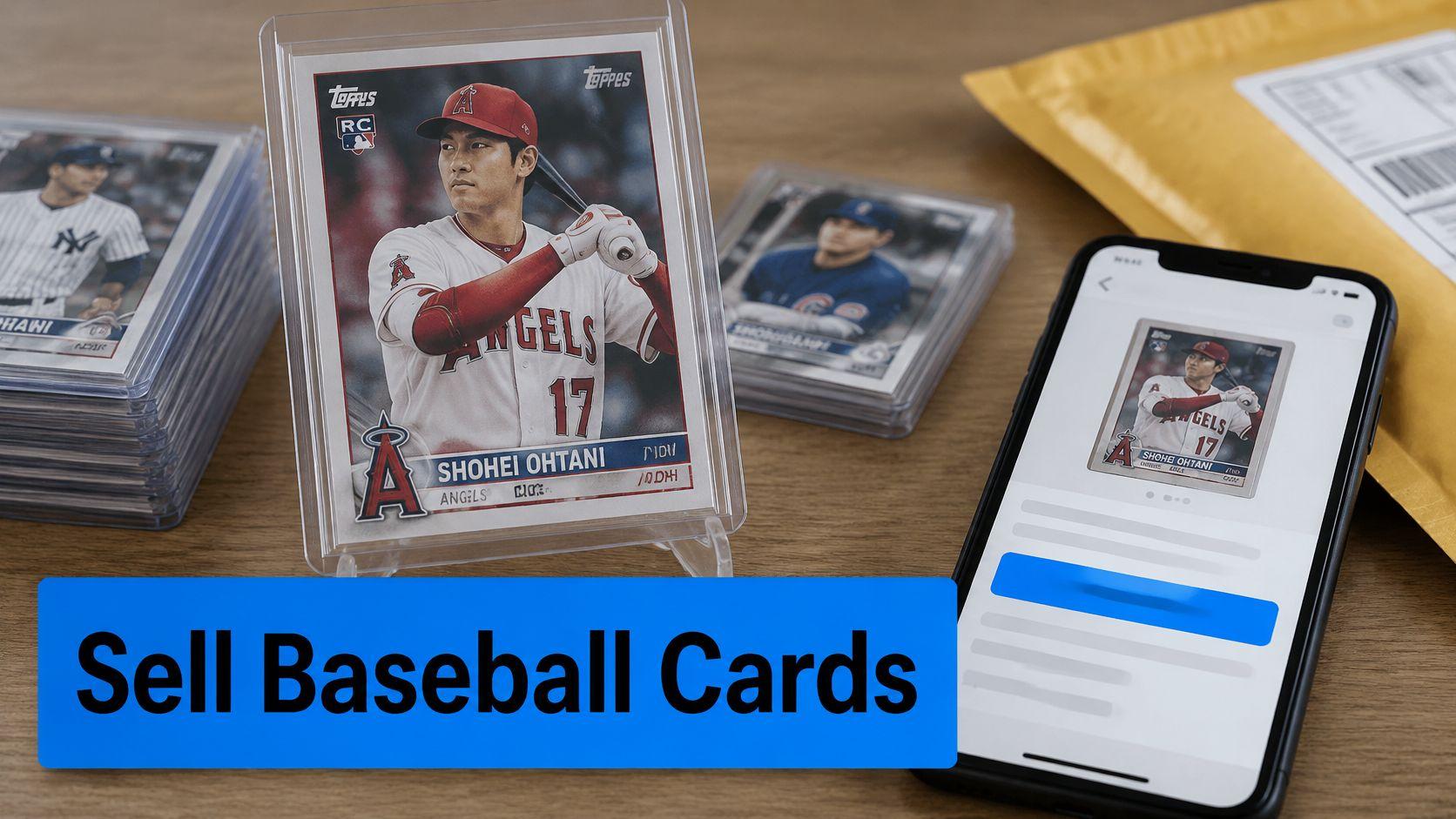
Collectors spent more than $381 million on sports and trading cards online in December 2025, according to Card Ladder figures reported by Yahoo Sports. That's a large market, but it doesn't make every card worth listing separately. Your biggest expense may be the time you spend identifying, photographing, packing, and answering questions about cards that leave little money after selling costs.
Learning how to sell baseball cards online starts with deciding which cards deserve that work. Separate the collection by value, price against completed sales, and calculate what you'll keep before you publish anything. A carefully built lot can produce a better return on your time than a stack of individually listed commons.
Sort Your Collection Into Value Tiers
| Tier | Typical cards | Sales route | Listing effort |
|---|---|---|---|
| Key cards | Stars, rookies, serial-numbered cards, autographs and memorabilia | Individual listing, grading if the math works | High per card |
| Mid-value singles | Recent veterans and solid parallels with clean condition | Fixed-price listing with sorted photos | Medium per card |
| Bulk commons | Common base cards from high-print years | Grouped lots by team, era or set | Low per card, high in total |
| Damaged or unsold | Heavy wear, creases, or no buyer interest after relisting | Donation or local lot | Minimal |
Value tiers are working categories, not permanent labels. A star's ordinary base card may belong in a team lot, while an overlooked parallel deserves its own listing. Don't assign value from the player's name alone.
In 2025, sports-card singles sold on eBay generated more than $1.78 billion across over 42 million tracked transactions, with an average transaction value of $39, according to GemRate figures reported by Yahoo Sports. That describes sports-card singles broadly, not baseball alone, and it's a reason to evaluate ordinary inventory rather than focus only on headline cards.
Turn the boxes into searchable inventory
Use Google Sheets or Excel and give each card or lot an inventory identifier. Record sport, player, year, manufacturer, set, card number, parallel, condition, and serial numbering. Add autograph or memorabilia status when applicable.
Keep physical storage aligned with that identifier. A profitable sale becomes frustrating if you can't find the card without reopening every box.
- Separate lookalikes: Base cards, refractors, color parallels, and variations need distinct entries.
- Preserve existing organization: Keep complete sets together until you've compared selling intact against breaking them apart.
- Flag uncertainty: Put questionable signatures, unusual backs, and possible alterations in a review pile instead of guessing.
For inherited collections, don't throw away handwritten inventories, receipts, or grading paperwork. They can help identify purchases and explain how the collection was assembled, although they don't replace authentication.
Test your workload before committing
Pull a small sample from a representative box and time the identification and sorting. Include unfamiliar cards, not just recognizable stars.
If research takes longer than you'd willingly spend on the likely proceeds, plan more lots and fewer singles. Your sorting speed should influence your sales route before the entire collection becomes a cataloging project.
Price Each Card From Completed Sales
Sold prices, not asking prices, set a defensible list price. An expensive active listing tells you what a seller wants, not what a buyer will pay.
Use this sequence before deciding whether a card deserves an individual listing:
- Search the exact card. Match year, manufacturer, set, card number, parallel, and grading status. A similar-looking card isn't a substitute.
- Choose comparable transactions. Favor recent completed sales in similar condition and exclude mismatched versions, damaged examples, and unexplained outliers. If the market is thin, widen the search period rather than pretending there's a reliable current price.
- Find the median and range. The middle comparable sale is a useful starting point, while the range shows how uncertain your estimate is. Don't discard a low sale merely because you dislike it.
- Subtract marketplace charges. Include the percentage fee and order charge. Check what the platform includes in its fee base.
- Deduct fulfillment costs. Use your actual postage, sleeve, holder, mailer, and insurance costs. Buyer-paid shipping isn't automatically cost-free to you.
- Choose the selling format. Fixed price suits a card with a reasonably established market. Use an auction when you have a credible reason to expect competing bidders.
This visual summarizes the comparison process.
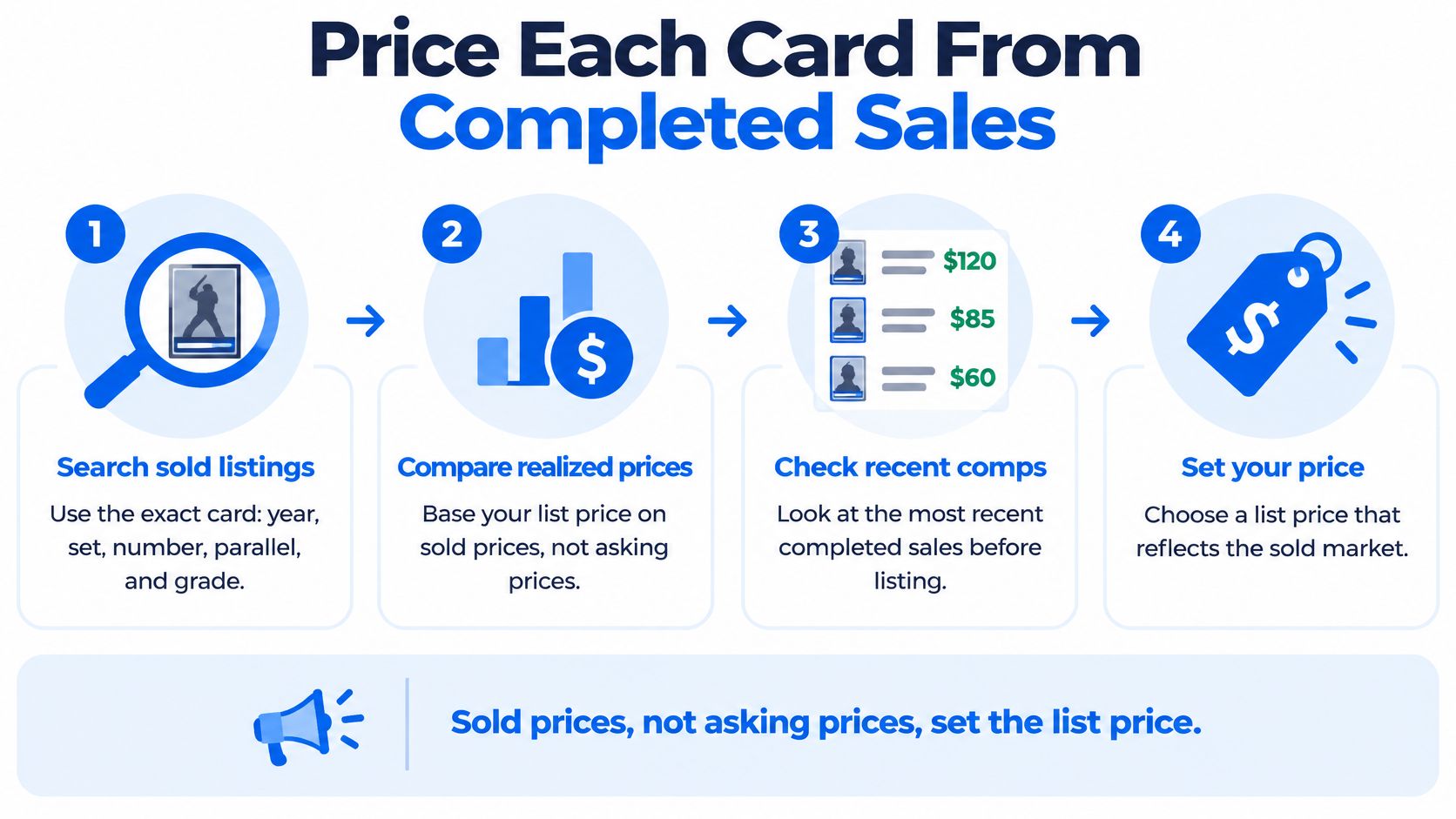
What a sale keeps before shipping
Zik Analytics' baseball-card selling guide lists an eBay trading-card final-value rate of 13.25% up to $7,500; eBay's seller payment guidance describes an additional $0.30 per order at $10 or less and $0.40 above $10, with the percentage calculated on the total sale.
The following calculations apply those stated charges to the sale price alone. They exclude postage, packaging, other fee-base amounts, and any additional account-specific charges; amounts are approximate.
| Sale price | Per-order fee | Percentage fee | Kept before shipping |
|---|---|---|---|
| $10 | $0.30 | About $1.33 | About $8.37 |
| $25 | $0.40 | About $3.31 | About $21.29 |
| $100 | $0.40 | $13.25 | $86.35 |
| $500 | $0.40 | $66.25 | $433.35 |
| $1,000 | $0.40 | $132.50 | $867.10 |
Check your current fee schedule before listing. Rates, categories, account arrangements, and optional promotions can change the result.
The cheapest row shows the problem: what remains still has to cover delivery and supplies. Then consider the time required to identify the card, create the listing, negotiate, and fulfill the order.
Bundling doesn't eliminate selling fees, but it combines listing work and order handling. A coherent team or set-building lot is also easier to explain than an unrelated assortment of leftovers.
For collections that include signed balls, programs, or other items, use the same comparison discipline in our guide to pricing sports memorabilia.
Practical rule: If the net after shipping doesn't justify the work, bundle the card rather than chase its highest possible individual price.
Grade Only Cards Where the Math Works
Grade only when the expected net return beats selling raw. Age alone isn't a reason to submit a card, and a grading holder doesn't guarantee that you'll recover the submission cost.
Examine the card under strong light before paying for an opinion.
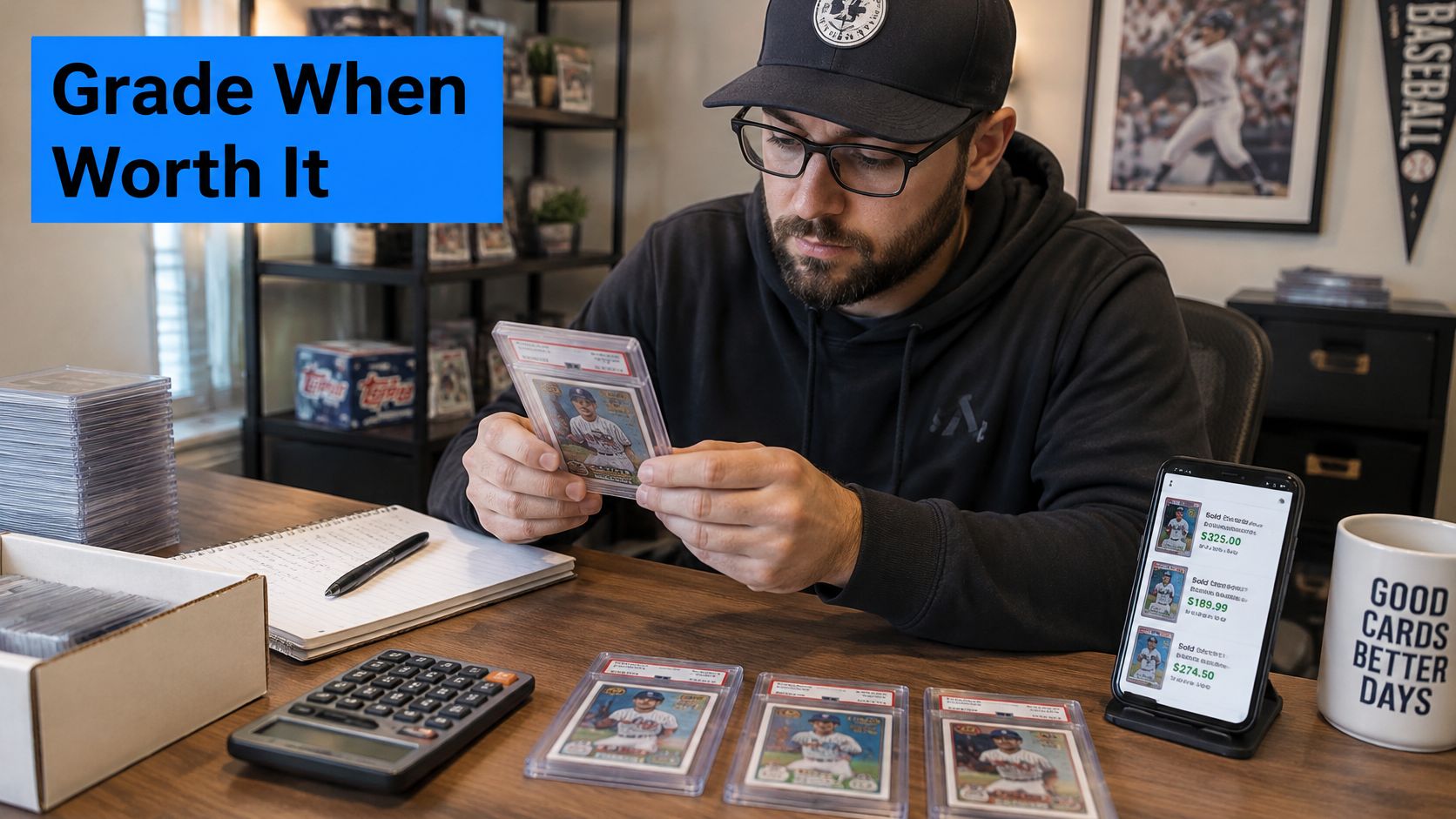
Compare likely outcomes, not the dream grade
Build an estimate for each plausible grade. Multiply the probability of that outcome by its recent realized sale price, add the outcomes together, then subtract grading, insured shipping, selling costs, and the cost of tying up your money.
Compare that result with the net proceeds from selling the card raw. Don't deduct a disappointing grade twice: its probability already belongs in the outcome calculation.
For a hypothetical card, the highest plausible grade might sell for far more than the raw copy. But if the card is more likely to receive an ordinary grade with little premium, the submission can still reduce your return. A best-case sale price isn't an expected value.
Check these features before assigning probabilities:
- Centering: Compare borders and image placement on both sides.
- Corners and edges: Look for whitening, compression, chips, and wear.
- Surface: Tilt the card to reveal scratches, indentations, residue, and print defects.
- Authenticity and alteration: Treat possible trimming, recoloring, or repair as a separate concern.
- Buyer demand: Compare sales for the exact issue, not merely the same player.
The video below offers another way to approach the grading decision.
Authentication serves a different purpose
Under eBay's Authenticity Guarantee guidance, eligible graded sports-card singles must be encapsulated by PSA, Beckett, Certified Collectibles Group, or SGC, and qualifying listings generally use a $250-or-more Buy It Now price or reach $250 or more at auction.
Eligibility has other conditions, so review the listing's authentication status rather than assuming price alone qualifies it. Authentication checks correspondence with the listing and relevant condition or holder concerns; it doesn't justify predicting a future grade.
State the exact slab grade and certification number. Disclose whether a card is raw, altered, trimmed, or repaired, and follow the designated shipping instructions for eligible transactions.
Keep intake photos, packing photos, tracking, and certification records until the applicable return and dispute periods have passed.
Photograph and Describe Every Card Honestly
Condition disputes are a preventable source of returns. Your job is to show the card clearly enough that buyers don't have to guess what the description leaves out.
Use a clean, neutral background, a stable phone mount, and diffuse light. Keep the camera parallel to the card for the main images, then change the lighting angle to reveal surface defects.
Build a repeatable photo checklist
- Front and back: Show the complete card without cropping away borders.
- Corners and edges: Include close views where wear or damage needs explanation.
- Centering: Make border proportions visible on both sides.
- Surface: Use angled light to expose scratches, dents, print lines, and residue.
- Identifiers: Capture serial numbering, autograph details, and any grading label.
- Flaws: Add a dedicated image of every defect that could affect a buyer's decision.
Don't clean, flatten, or otherwise treat a card to improve its appearance. Handle it by the edges with clean, dry hands and keep food and liquids away from the workspace.
For camera placement and lighting fundamentals, our guide to photographing items to sell online provides a useful starting point. If inconsistent lighting is slowing down a large batch, MyImageUpscaler's guide can help you refine your product photography workflow, but don't use enhancement to erase wear or invent detail.
Write searchable titles and literal descriptions
Build the title from year, manufacturer, set, card number, player, parallel, serial numbering, and autograph status, including only attributes that apply. Put identifying terms ahead of promotional language.
Describe visible defects plainly: a corner ding, a light surface scratch, edge whitening, or off-center printing. Explain where the flaw is so buyers can connect the wording to the photograph.
The BBC's reporting on high-value baseball cards illustrates how condition and professional authentication distinguish exceptional examples from ordinary cards. Avoid mint unless a recognized grading company assigned that grade.
Before photographing the entire collection, inspect a trial listing on your phone. Enlarge each image and ask whether a stranger could identify the flaws without holding the card.
Pick a Platform and Ship Without Losing Money
| Channel | Fee structure | Best for | Buyer reach |
|---|---|---|---|
| eBay | Percentage final-value fee plus per-order charge | Individually listed singles and graded cards | National buyer pool |
| Local card shop or lot buyer | Dealer offer incorporates resale margin | Bulk commons and fast payment | Local only |
| Card show or consignment | Table charge or agreed consignment commission | Mid-value cards benefiting from hands-on inspection | Attending collectors or the consignee's audience |
| Social or group sale | Group rules and payment-service charges | Niche collectors and team or era sets | Members of the specific community |
Choose the channel by the inventory, not by habit. A dealer's lower offer may be reasonable when the alternative is extensive work selling ordinary cards separately. Consignment can reduce your workload, but agree on commission, payout timing, unsold returns, and loss responsibility before handing anything over.
Our comparison of the best places to sell sports collectibles can help you match the collection to the buyer audience. Don't assume that every venue attracts buyers for every era or price level.
Pack for the service you're using
- Sleeve the card. Place it in a penny sleeve, then a suitable card saver or top loader without forcing the corners.
- Secure the holder. Use a team bag or another removable closure so the card can't slide out. Keep adhesive away from the card.
- Protect against bending. Add protective cardboard and choose an envelope or parcel mailer compatible with the carrier's requirements.
- Buy appropriate tracking. Use a qualifying tracked envelope service for eligible inexpensive cards, or tracked parcel shipping for cards needing greater protection. Add insurance when the potential loss justifies it.
Don't put a thick, rigid package into an envelope service without checking its dimensions and flexibility rules. A package that fails those requirements can incur additional postage or handling problems.
Finally, enter actual fulfillment expenses in your inventory sheet. If delivery consumes too much of the proceeds, change the lot structure before listing more cards the same way.
List Each Card and Manage Offers
A listing should answer the buyer's identification, condition, payment, and delivery questions without a message exchange. Use saved templates for repeatable fields, but check every copied attribute before publishing.
Build the listing in a controlled sequence
- Select the format. Use your completed-sales assessment to choose fixed price or auction. Don't use an auction merely because you're unsure what a card is.
- Set a defensible price. For fixed price, use the comparable-sale range and the card's condition. For auctions, choose an opening amount you can accept if bidding stays weak.
- Complete item specifics. Enter sport, player, year, manufacturer, set, card number, parallel, and grading status accurately. Leave an uncertain attribute unresolved rather than turning a guess into a searchable claim.
- Attach the matching images. Confirm that the photographed serial number and certification label belong to the inventory entry you're listing.
- Configure fulfillment. Select the carrier service, handling time, destination restrictions, and any combined-shipping arrangement before publishing.
- Choose return and offer settings. Read the platform's buyer-protection obligations alongside your selected policy. A no-return setting doesn't necessarily eliminate a not-as-described dispute.
- Preview as a buyer. Check the title, total delivered price, condition disclosure, and mobile image order.
Set an offer floor in net dollars
Your minimum offer should come from your required net proceeds, not from a percentage discount off the asking price. Recalculate fees and fulfillment at the offered amount before accepting.
If a buyer requests a bundle, check the combined package cost rather than multiplying your single-card shipping charge. A combined order can be worthwhile even when the per-card selling price is lower.
A watcher isn't a buyer, and an offer isn't a reason to abandon your minimum acceptable return.
Keep negotiations in the platform's messaging system. After purchase, confirm the order is paid and ready to ship through the platform itself, then update the inventory record so the same card can't sell elsewhere.
Guard Against Fraud and Tax Surprises
The main risks are condition disputes, counterfeit or altered cards, payment diversion, and claims filed after delivery. Good records don't guarantee that you'll win a dispute, but they give you something stronger than a recollection of what happened.
Packing is also a documentation step, especially when the card has identifying serial numbers or a grading label.
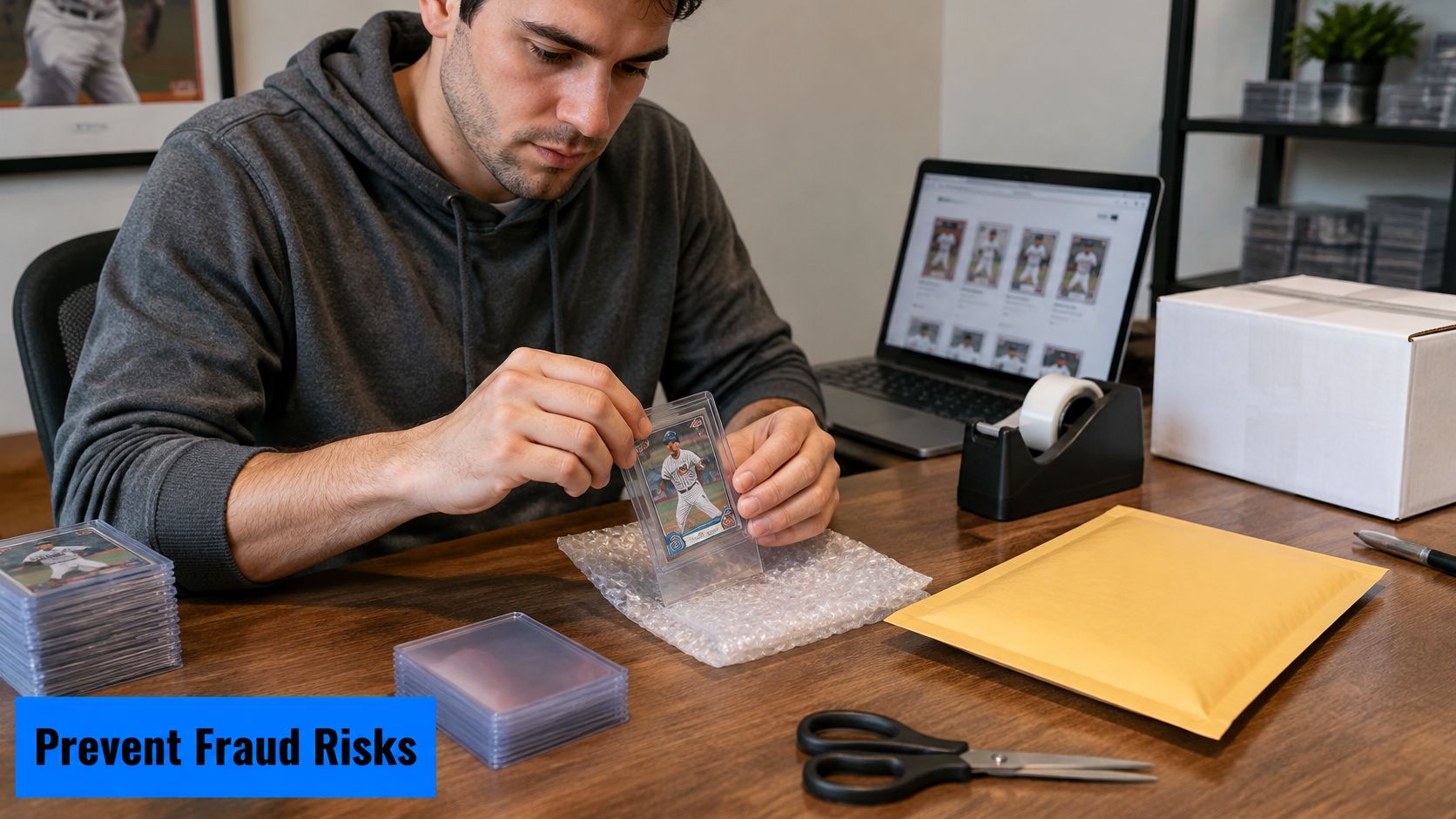
Keep the transaction traceable
Check payment status inside your seller account rather than trusting an email or screenshot. Reject requests to move a marketplace transaction to an outside payment method, and resolve address changes through the platform's approved process.
Photograph the actual card and its identifiers before packing. Retain the shipping receipt and delivery record; packing photos support your records, but they don't independently prove what a buyer received.
If a return arrives, compare its serial number, certification label, and visible characteristics with your original record. Report discrepancies through the platform's dispute process without accusing the buyer in public messages.
Separate sale proceeds from taxable profit
For U.S. personal-property sales, gains may be taxable while losses on personal-use items are generally not deductible. Business inventory, inherited property, and personal collections can receive different treatment, so have a tax professional confirm the applicable rules and cost basis rather than treating your payout as taxable profit.
Keep purchase evidence, acquisition records, selling charges, shipping expenses, refunds, and sale proceeds. A marketplace tax form isn't a substitute for those records.
Estate sellers should confirm their legal authority before listing anything. Being a relative doesn't automatically authorize a sale, and a power of attorney shouldn't be assumed to continue after death. Confirm the executor's or trustee's authority under local rules and keep estate property separate from personal inventory.
Maintain a transaction folder containing:
- Identity records: Inventory identifier, card details, serial number, and certification information.
- Condition evidence: Original photographs, listing screenshots, and disclosed flaws.
- Financial records: Acquisition documentation, sale price, fees, postage, and refunds.
- Fulfillment records: Buyer communications, packing documentation, tracking, and delivery confirmation.
For a large liquidation, get tax and estate advice before proceeds are distributed.
Choose Your Sales Route for the Whole Collection
A mixed collection usually needs a mixed sales plan. Reserve individual online listings for cards whose likely proceeds justify the attention. Move coherent lower-value groups through local buyers, and seek dealer or show offers when clearing space matters more than extracting every possible dollar.
Don't break apart a complete set or established collection until you've compared the intact offer with the work and uncertainty of selling its contents. The highest theoretical total isn't necessarily the best achievable result.
Match the sale to the household's deadline
If baseball cards are part of a whole-house clearance, we connect sellers with local estate-sale buyers through DIYAuctions. Sellers organize their lots, while we publish the sale, route buyers, handle payment flow, and keep bidding organized.
The sale ends with one coordinated local pickup day, rather than multiple days of buyers walking through the house. For items buyers leave uncollected, sellers can re-list them, donate them, or offer them to the next-highest bidder.
That route suits household liquidation, but a scarce card may still benefit from a specialist buyer audience. Keep the decisions separate: the best channel for the furniture doesn't automatically become the best channel for the collection's strongest card.
Put a test batch into motion
- Sort a representative box this week. Separate promising singles from coherent lots.
- Price a manageable test batch. Record completed-sale comparisons and condition differences.
- Calculate actual net proceeds. Include supplies, postage, marketplace charges, and your workload.
- Assign each tier a route. Commit valuable singles to individual sale and move labor-heavy inventory through lots.
The best sale is the one that keeps the most money for the time spent.
If you're clearing a home alongside the cards, start by identifying which lots belong in the household sale. Use DIYAuctions to organize those estate-sale lots and coordinate local pickup, while keeping specialist cards on the sales route their value deserves.
Get the estate sale pricing guide
Enter your email for pricing ranges, planning notes, and a clearer path to launch.