How to Price Sports Memorabilia for Maximum Returns
Learn how to price sports memorabilia using real sold comps, grading multipliers, and auction strategies. A practical guide for estate sellers and collectors.
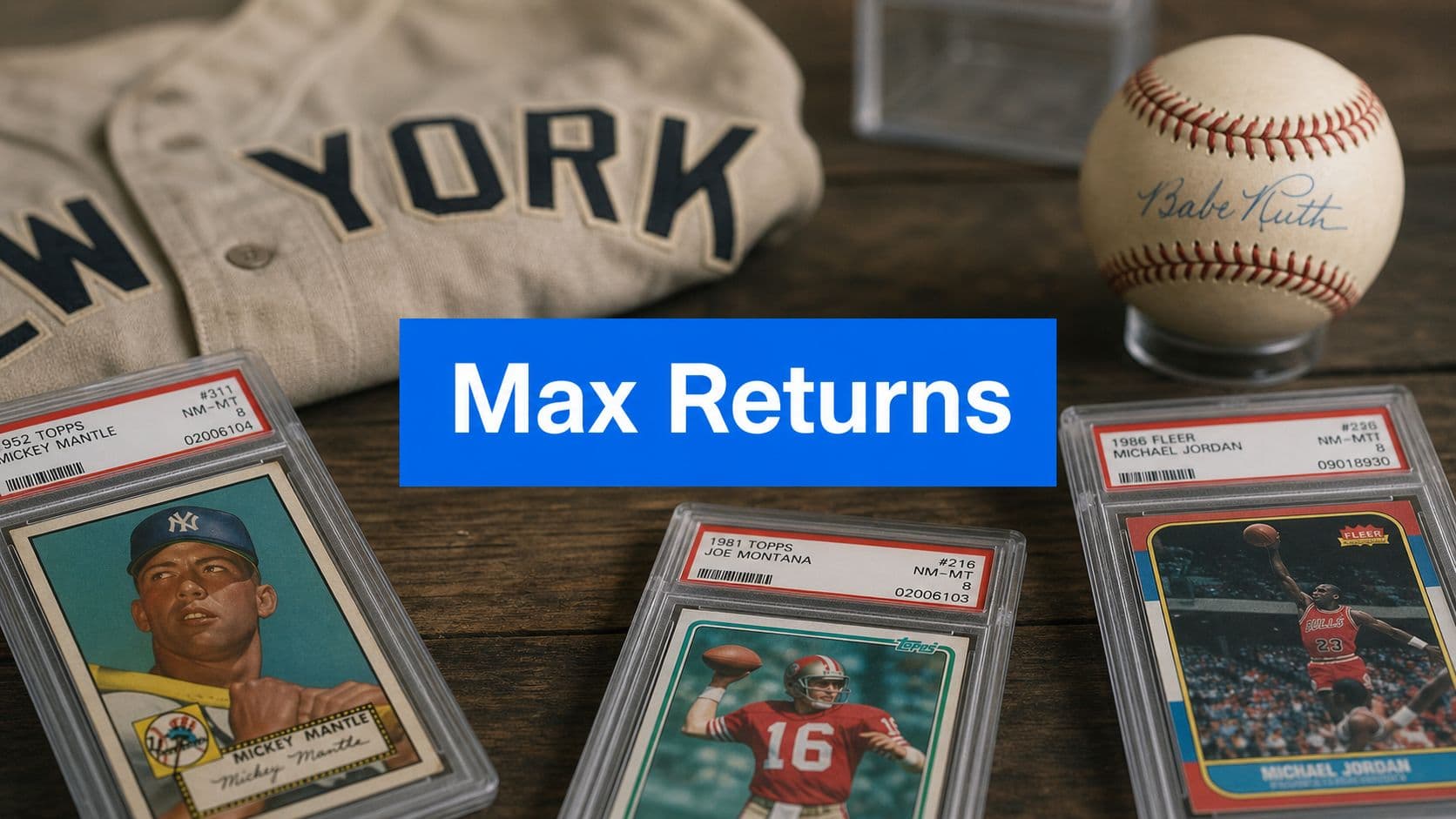
You open a dusty box in a basement, a garage, or a closet and find a mix of signed baseballs, old cards, a framed jersey, maybe a program from a big game. The temptation is to start typing item names into marketplace sites and trust the first prices you see. That's where a lot of estate sellers and DIY auction hosts leave money on the table, because asking prices are not sold prices and sentimental value doesn't tell you what buyers will pay.
Why Most Sellers Get Sports Memorabilia Pricing Wrong
A collection usually looks more valuable in the room than it does in the market. A father's signed ball, a stack of childhood cards, or a trophy from a local championship can feel special, but buyers don't price memory. They price authenticity, provenance, condition, and rarity, and they do it against what similar items have sold for, not what someone hopes to get.

The most common mistake is chasing list prices
I see this constantly with inherited collections. A seller finds a listing for a similar item, assumes it's the market, and sets the price there. Then the item sits, gets relisted, or sells far below the original asking number because the listing never reflected actual demand.
Heritage Auctions says valuation should start by searching auction archives for actual selling prices, then using those comps before requesting an appraisal, which is the right mindset for anyone learning how to price sports memorabilia. That advice matters because memorabilia pricing changes sharply with player, condition, and documentation, so the closest thing to a benchmark is a real completed sale.
Why estate sellers lose money
Estate sellers often have two bad habits. They either price by memory, or they assume age equals value. Age alone tells you almost nothing. A common card in rough shape can be worth far less than a newer item with strong provenance and a clean grade.
Practical rule: if you can't point to a completed sale that matches the item closely, you don't have a price yet. You have a guess.
DIY auction hosts make the same error when they browse active listings instead of sold results. That's a mistake because buyers don't pay asking prices unless the market agrees. If you're sorting through a mixed estate, the right move is to treat pricing like research, not intuition. For broader inventory discipline, the collectible pricing guide is useful as a companion framework, but memorabilia still needs sold comps first.
Building Your Price From Real Sold Comparables
The cleanest way to price a collectible is to identify it precisely, then find the most recent completed sales that match it as closely as possible. That sounds obvious, but most mistakes start with sloppy identification. A card isn't just a “Michael Jordan card.” It's the player, year, brand, set, card number, edition or parallel, and condition.

Match the item before you price it
Start by writing down every identifying detail you can verify. For cards, that means brand, year, set, card number, and grade or raw status. For signed items, note the player, item type, authentication label, inscription, and any visible flaws.
Then search sold results, not live listings. Heritage Auctions' guidance to anchor pricing in completed sales is the same standard I use in estate rooms, because sold comps show what the market cleared at, not what a seller wished for. If you're selling on a marketplace, the asking price can be useful context, but it should never drive the number you use.
Use a small comp set, not one shiny result
One sale can fool you. A perfect comp in an ideal venue can push the price too high, while a distressed sale can drag it too low. The better approach is to review the last 30 to 90 days of sold data, then use the middle of the comp set instead of the extreme high or low.
When exact matches don't exist, use cross-grade triangulation. Compare the item to close substitutes in the same set or era, then infer the value from nearby grades. In thin markets, one expert example suggested subtracting about 15% from a PSA 9 price to estimate a PSA 10, which shows how pricing turns model-based when liquidity is light. That's not a universal rule, but it does show the logic of adjusting from nearby sold evidence instead of inventing a number.
The right comp set is usually small and boring. Three to seven relevant sold results beat a hundred noisy listings every time.
A workable workflow is to separate comps into lower, middle, and higher buckets based on condition, provenance, authentication, and timing. That gives you a defensible range, not a fragile single number. For sellers who want an additional reference point on selling channels, selling strategies for eBay can help frame venue choice after pricing is set.
How Condition and Grading Reshape Your Asking Price
Condition isn't just one factor in memorabilia pricing. For cards and signed pieces, it's usually the biggest swing factor. Truist recommends authenticated and graded items through third-party services such as PSA, Beckett Authentication Services, and JSA, and it also notes that storing pieces around 70°F with 40% to 50% relative humidity can help prevent deterioration that would reduce resale value.

Why grading changes the category, not just the number
A raw item, an authenticated item, and a professionally graded item do not sit in the same market lane. LuxCalculator makes the logic explicit with a pricing model that uses Card Value = Comparable Sale × Grade Multiplier × Player Tier × Card Type Premium. That formula reflects how the market rewards better grades, stronger players, and more desirable formats.
The practical takeaway is simple. If you're pricing a raw card, don't compare it casually to a graded sale and assume they're interchangeable. A graded example can belong in a materially different pricing category, especially when the item is highly desirable or condition-sensitive. That's why two cards that look similar in a binder can land at very different price points once one is slabbed and the other isn't.
Storage and visible wear matter before the sale
Collectors often focus on what the item sold for last time and ignore the damage forming in the closet right now. That's a costly habit. Fingerprints, corner wear, surface scratches, fading, and poor storage can all suppress the final bid, even before a buyer thinks about authentication.
If you're deciding whether to grade, weigh the item's current ceiling against the cost and delay of submission. For common material, selling raw with honest disclosure can make more sense than chasing a premium that may never materialize. For scarcer cards or autograph-heavy items, grading can be the difference between a casual listing and a serious buyer pool.
The key is to price after checking whether comparable graded examples sold, then adjust based on the grade and the visible condition of your piece. If you've already done the comp work, the rest is just deciding whether the market will reward the holder, the autograph certification, or the raw originality.
Pricing Items When Authentication Is Uncertain
Not every estate item comes with clean paperwork, and not every seller wants to pay for authentication before listing. That doesn't make the item unsellable. It just means the price has to reflect uncertainty, not wishful thinking.
Disclosure usually beats polish
If provenance is incomplete, say so. If an autograph is unverified, say so. If a piece shows restoration, storage wear, odor, fading, or other visible issues, price accordingly and disclose it clearly. Buyers tend to punish surprises far more than they punish flaws that are already on the page.
A lower sticker price often performs better than a confident but fragile one. A common inherited item with question marks around authenticity is often worth more to the market when the listing removes friction instead of hiding it. That's a better outcome than spending time and money chasing perfection you may not need.
What to discount for, practically
Use a discount mindset whenever trust is incomplete. The exact adjustment depends on the item, but the logic is consistent. If a buyer has to do extra work to believe the item, the price has to do some of that work for them.
- Uncertain autograph authenticity: Treat it as a risk item, not a premium item.
- Incomplete provenance: Leave room for buyer skepticism.
- Visible restoration or damage: Price for the condition that exists, not the version you wish existed.
- Storage wear or odor: Expect more friction and a softer bid.
Price lower and disclose more when the item is common. That usually gets you farther than trying to defend a high number with weak documentation.
For sellers dealing with mixed or inherited lots, the process can be more important than the item itself. One practical reference point for handling tougher assets is how to sell luxury items, because the same disclosure logic carries over when buyer trust is doing most of the pricing work. In that sense, uncertainty isn't a reason to stop selling. It's a reason to price with more discipline.
Choosing Between Auction and Fixed Price Strategies
Once you've got a defensible price range, the next decision is the sales format. Auction and fixed price don't just change how the item is displayed. They change how buyers behave, how quickly the piece moves, and how much risk you carry.
Auction format fits urgency and uncertain demand
Auction works well when you want the market to tell you what the item is worth and when several buyers may compete for it. It's especially useful for pieces with active collector interest or unclear pricing lanes, because bidding can reveal demand that a static listing won't capture.
There's still risk. If the starting bid is too high, you can scare off the first buyers who create momentum. If it's too low, you may accept less than you hoped. Reserve prices can protect you, but they can also suppress bidding if the market thinks the item is out of reach.
Fixed price fits patience and tight comps
Fixed price works better when you already have strong comps and don't need quick liquidity. It gives you control, which matters for items with stable demand or clean authentication. The trade-off is slower discovery, because buyers can scroll past if the number feels ambitious.
| Criteria | Auction Format | Fixed Price Listing |
|---|---|---|
| Price discovery | Market sets the number through bidding | Seller sets the number up front |
| Speed | Often faster when demand is active | Often slower, but more controlled |
| Risk of underpricing | Higher if bidding is thin | Lower if your price is well researched |
| Risk of stalling | Lower for desirable items | Higher if the price is too aggressive |
| Best use case | Uncertain demand, time-sensitive sale | Clear comps, patient seller |
For estate sellers who want a managed process, DIYAuctions is one option that lets hosts set prices, schedule sales, and manage a single-day pickup event while it handles marketing, secure payment processing, and fraud protection. For broader venue decisions, best place to sell sports collectibles is a useful comparison point.
Your Pre Listing Pricing Checklist
Good pricing doesn't happen at the listing screen. It happens before the first photo is uploaded. The sellers who do best treat every item like a small research file, not a guess in a hurry.

Work the item from evidence to listing
Before you publish anything, verify the sold comps, not just the active listings. Then inspect the item thoroughly, because the market will notice corners, edges, surface issues, and centering even if you don't mention them.
- Research Complete: Check recent sold comparables, then ignore asking prices that haven't cleared.
- Condition Assessed: Record visible flaws, wear, and any irregularities.
- Grading Considered: Decide whether grading will improve the net return.
- Fees Calculated: Account for platform fees, shipping, and insurance before you lock the ask.
- Photos Taken: Use clear images of the front, back, signatures, labels, and flaws.
- Description Written: State the item, year, condition, and authentication status plainly.
- Price Set: Choose a firm fixed price or a competitive auction start based on the comps.
Timing and presentation still matter
Demand can rise around seasons or anniversaries, so the same item may perform differently depending on when you list it. That doesn't mean you should chase every calendar bump. It means timing should support a price that already makes sense on the comps.
Your photos should make the item look real, not perfect. Buyers trust listings that show the flaws. That trust is often what turns a cautious watcher into an actual bidder.
If you want the simplest path, use the same checklist for every item and keep the record with the sale file. The more complete the note, receipt, photo, and authentication trail, the easier it is to justify your ask and defend it later.
If you're sitting on a box of sports memorabilia right now, start with one item and price it from sold comps before you list the rest. Pull the exact sold examples, accurately record the condition, and choose the selling format that fits your timeline. If you want to turn the whole collection into a clean, documented sale, use a platform that helps you catalog items, set prices, and move them to qualified buyers without giving away the upside.
More guides in Selling Antiques & Collectibles
July 31, 2026
Ceramic Christmas Tree Atlantic Mold Seller's Guide
Identify, value, and sell a Ceramic Christmas Tree Atlantic Mold piece with confidence. Covers markings, rarity, condition, pricing, and listing tips.
Read guideJuly 30, 2026
Nurre Mirror Value: How to Identify and Sell for Profit
Learn to assess nurre mirror value with our step-by-step guide. Identify authentic pieces, estimate price, and sell profitably on DIYAuctions.
Read guideJuly 29, 2026
Distinction Deluxe Stainless Steel by Oneida HH: A Complete
Learn to identify, assess, and price your distinction deluxe stainless steel by oneida hh set for maximum profit.
Read guideGet the estate sale pricing guide
Enter your email for pricing ranges, planning notes, and a clearer path to launch.