Maximize Profit: Best Place to Sell Sports Collectibles
Find the best place to sell sports collectibles in 2026. Compare fees, speed, & pros/cons of auctions, online markets to maximize your profit.
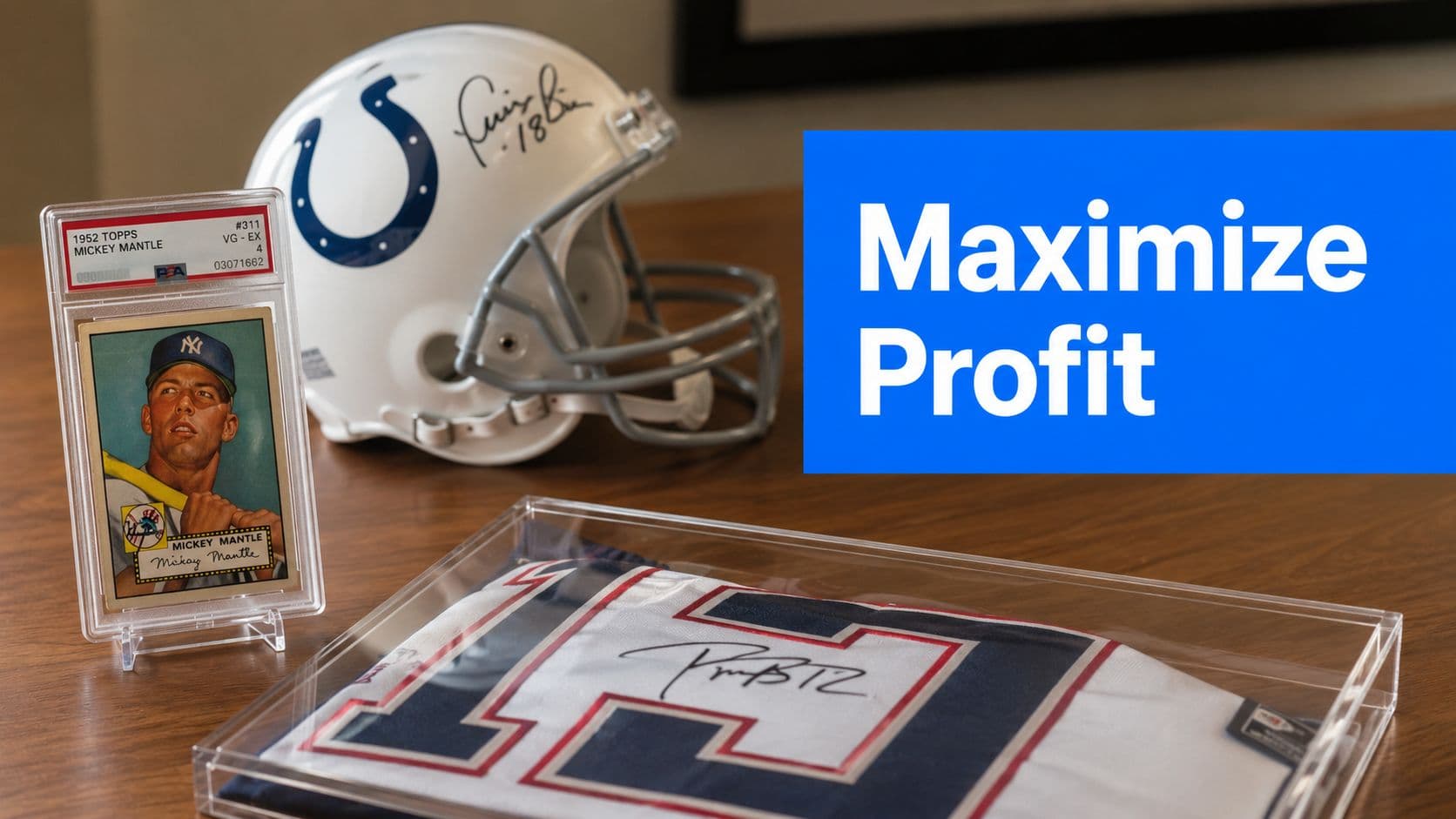
You pull open a closet, attic bin, or estate box and find more than clutter. There are cards in old top loaders, a signed baseball, a ticket stub album, or a jersey that could carry real value. The first decision is not whether it can sell. The key decision is where the sale leaves you with the highest net proceeds after fees, shipping, taxes, time, return risk, and the odds of dealing with the wrong buyer.
That distinction matters because sports collectibles now trade in a large, active market. Grand View Research tracks sports memorabilia as a global category with strong expected growth through the end of the decade, and North America remains a major center for buyer demand and high-value transactions, according to Grand View Research's sports memorabilia market analysis.
Sellers miss money by focusing on headline sale price instead of total outcome. A card that sells fast on a general marketplace may still net less than a slower consignment sale after platform fees, promoted listings, payment processing, packing costs, and returns are accounted for. A local cash deal avoids shipping and fees, but the buyer usually builds in enough margin to protect their own resale profit.
Before choosing a venue, get the basics organized. A practical card pricing and listing guide can help you sort titles, condition notes, and realistic comps so you can match the item to the right selling channel instead of guessing.
Your Guide to Selling Sports Collectibles
Those looking for the best place to sell sports collectibles often aren't full-time dealers. They're inheriting a collection, downsizing, cashing out a hobby, or trying to avoid getting picked apart by the first local buyer who says, "I'll take the whole lot."
That's where sellers lose money.
A vintage card, authenticated autograph, or game-used item can sell well in several places. But those venues don't produce the same outcome. One gives you speed. Another gives you reach. Another gives you stronger bidders. Another gives you convenience while subtly reducing your actual take-home.

What sellers usually get wrong
The first mistake is pricing from hope instead of comparable sales. The second is selling rare material in the same place they'd sell household goods. The third is ignoring prep work like authentication, presentation, and timing.
If you're sorting cards or signed pieces, a solid starting point is a practical card pricing and listing guide that helps you organize titles, condition notes, and realistic listing expectations before you choose a venue.
Practical rule: The best place to sell sports collectibles is rarely the place with the fewest steps. It's usually the place where serious buyers can verify what you're offering and compete for it.
What actually drives the result
In practice, four factors decide whether a sale goes well:
- Item quality and scarcity. Common modern cards and rare vintage stars shouldn't be sold the same way.
- Buyer confidence. Authentication, grading, and provenance change how aggressive buyers get.
- Channel fit. A general marketplace can work for liquid items, but stronger venues exist for premium material.
- Seller bandwidth. Some sellers want maximum control. Others want the least stressful path.
If you treat every collectible as "just something to list online," you'll almost always leave money on the table. A better approach is to match the item to the selling channel, then calculate what you'll net.
Comparing Channels to Sell Sports Collectibles
There isn't one universal answer to the best place to sell sports collectibles. The right venue depends on what you're selling, how quickly you need cash, and whether you want to handle photos, buyer messages, packing, disputes, and returns yourself.
The four most common channels cover most sellers. Each has a legitimate use case. Each also has a failure mode.

Comparison of venues for selling sports collectibles
| Channel | Fee Structure | Seller Effort | Best For... | Net Profit Potential |
|---|---|---|---|---|
| Online marketplaces | Platform and payment fees usually apply | High | Mid-range singles, common cards, broad-demand items | Good when you price accurately and manage the process well |
| Auction houses | Consignment commissions and related selling terms vary | Low to moderate | Rare, authenticated, high-interest pieces | Strong for premium items because bidders compete |
| Local dealers | Direct purchase, usually with a lower offer | Low | Fast liquidation, bulky collections, lower-effort exits | Lower headline price, but simple and fast |
| Direct sales | No marketplace commission, but seller handles everything | High | Niche collector communities and relationship-based selling | Can be excellent, but only if you control risk and find the right buyer |
A broader look at platform categories can help if you're still sorting through options. This overview of the best auction sites for collectibles is useful for seeing how auction-style venues differ from standard listing sites.
Online marketplaces
General online marketplaces work because they expose your item to a wide pool of buyers. For cards, lower- to mid-tier autographs, factory-sealed products, and recognizable player lots, that reach can be useful. You control the title, photos, price, shipping terms, and pacing.
But this is labor-heavy selling. You need strong images, clear condition notes, careful packaging, and a tolerance for buyer questions. If your collectible has subtle condition issues, altered edges, questionable signatures, or provenance gaps, the marketplace won't solve that for you. It will magnify it.
Common items often do well with self-listing. Exceptional items often need curation, not just exposure.
Auction houses
Auction houses earn their place when the item is important enough that bidder quality matters more than raw traffic. They catalog, market, authenticate or coordinate authentication, and put the piece in front of people who already collect in that lane.
For game-used gear, premium signed material, rare vintage cards, and estate-level collections, this can be the cleanest route to a strong outcome. The trade-off is patience. Auction calendars, intake standards, and consignment terms can slow the process.
To see the selling mechanics in action, this short video gives a useful overview:
Local dealers
A local dealer is usually the fastest answer, not the most profitable one. If you're selling a mixed lot, inherited binders, unsigned commons, or bulky memorabilia and you don't want the work, this path can make sense.
The downside is straightforward. Dealers need margin. They're buying so they can resell, and their offer reflects that. If you go this route, at least arrive with realistic comps and a sorted inventory. Unsurprisingly, organized sellers get taken more seriously.
Direct sales to collectors
Direct selling through hobby communities, forums, social groups, and collector networks can work very well for specialized items. If you know the niche, write accurate descriptions, and already have trust in the community, you can avoid platform commissions and reach the exact buyer you want.
The catch is that this route demands judgment. You have to vet buyers, manage payment safety, and handle negotiation without a platform buffer. New sellers often overestimate the upside here because "no fees" sounds great. But no fee doesn't mean no friction.
What usually works best
If the item is ordinary and liquid, self-listing is often fine. If the item is scarce, authenticated, or likely to attract serious competition, auction houses usually deserve the first look. If speed outranks price, a dealer may be the right answer. If you're plugged into a niche collector base, direct sales can outperform all of them.
The mistake is asking, "Which channel is best?" The better question is, "Which channel leaves me with the best result after all costs and effort are counted?"
Using Specialty Auction Houses and Consignment
When a collectible crosses into serious value, general-purpose selling starts to break down. Buyers want confidence. They want cleaner provenance, better descriptions, trusted photography, and some assurance that the item belongs in a premium sale rather than a random listing feed.
For higher-value material, that's why auction houses and consignors matter.
A guide from Lion & Unicorn states that for sports collectibles valued at more than $500, established auction houses almost always deliver a better net return than self-selling channels, largely because they gather qualified bidders and provide trusted authentication, as outlined in their sports memorabilia auction guide.
What qualifies for this route
This path usually makes the most sense for items like:
- Star-level vintage cards with clear eye appeal or grading potential
- Autographed memorabilia that already has third-party authentication or strong provenance
- Game-used pieces with documentation, photo matches, or team-linked history
- Focused collections where curation tells a stronger story than piecemeal listing
If you're unfamiliar with consignment mechanics, this explanation of the consignment auction process lays out what the handoff, selling timeline, and payout structure generally look like.
What the process feels like
The seller usually starts with photos, a short description, and any supporting documents. The auction house reviews the material and decides whether the item fits a scheduled sale, an online-only event, or a direct consignment strategy.
Then the important work starts. Specialists write catalog copy, verify details, sometimes recommend third-party grading or authentication, and place the item where their buyer base is most likely to compete for it.
That curation matters. A premium card or signed jersey often performs better when presented as a serious collectible, not just as "item for sale."
If an item needs explanation to justify its value, it usually needs a venue that can explain it well.
Where sellers misread the fees
Many sellers fixate on commission and stop there. That's a mistake. A self-listed sale may look cheaper until you add your time, packing, messaging, shipping risk, fraud exposure, and weak bidding depth. A consignment sale may look more expensive on paper while still leaving you with more money in practice.
The key isn't low fees. It's stronger net proceeds.
Auction houses aren't ideal for every item. They can be too slow for urgent sellers, too selective for lower-end pieces, and too formal for common inventory. But for the right material, they solve the biggest problem in high-value selling. They reduce doubt and attract buyers who can pay accordingly.
How to Prepare Your Collectibles for a High-Value Sale
A seller pulls a signed jersey from the closet, snaps two quick photos on the kitchen table, and lists it that night. The item may be legitimate and desirable, yet the sale still comes in weak because the listing leaves buyers with work to do. High-value buyers pay more when the item is easy to trust, easy to evaluate, and easy to compare against other offerings.
Preparation affects net proceeds more than many sellers expect. Good prep does not magically raise an item's rarity, but it does cut the discount buyers apply for uncertainty, poor presentation, missing paperwork, and avoidable condition risk.
Start with the right comps
Price research comes first because it shapes every other decision. Before spending money on grading, authentication, or upgraded shipping, check whether the item supports that investment.
Use closed sales, not asking prices. Auction archives from major houses and sold eBay listings usually give the clearest read on what buyers really paid. Match the same player, era, format, authentication status, condition tier, and, if relevant, inscription quality or patch type. A faded single-signed baseball is not a comp for a crisp authenticated example. A raw card with soft corners is not a comp for a strong graded copy.
This step prevents two expensive mistakes. Sellers either overestimate value and waste time holding stale inventory, or underestimate value and sell too cheaply in the wrong venue.
Use authentication where doubt suppresses bids
Authentication is best treated as a return-on-investment decision. If buyer skepticism is likely to shrink your bidder pool or drag offers down, third-party verification often pays for itself. That is especially true for autographs, game-used material, and higher-end cards where authenticity drives the whole sale.
PSA/DNA, JSA, Beckett, and established grading services matter because buyers recognize them. The right service depends on the item. Cards may need grading and authentication. A signed bat may only need autograph authentication. A game-used piece may need provenance reviewed more than a simple cert.
For perspective on how strongly rarity, condition, and provenance influence pricing at the top end of the market, See Mystershirt's most valuable memorabilia.
Improve the listing before you publish it
Poor photos and vague descriptions cost money. Buyers notice glare, cropped corners, hidden edges, and missing shots of the back. They also notice when a seller avoids specifics.
Photograph the item in even light with a neutral background. Show front, back, edges, corners, signatures, holograms, serial numbers, tags, stitching, and any flaw that will matter on arrival. For autographs, include close-ups of the signature and the authentication sticker or cert card. For cards, show the surfaces clearly enough that a buyer can judge print lines, chipping, and centering.
Descriptions should read like a clean condition report, not sales copy. State what the item is, who authenticated it, what is included, and what defects are present. If there is restoration, fading, paper loss, loose stitching, or replaced parts, disclose it plainly. Returns and disputes get expensive fast.
Handle timing with some discipline
Timing matters, but not every item deserves a long hold. Seasonal demand is real in sports collectibles. Interest often rises around the season, playoffs, Hall of Fame announcements, major anniversaries, and documentary releases. It can cool after the headline moment passes.
The practical question is whether waiting improves your net enough to justify the delay. If carrying costs are low and the item has a clear seasonal audience, patience can help. If the piece is common, hot because of short-term hype, or expensive to insure and store, selling sooner may be the better decision.
A prep routine that protects value
- Sort by value tier. Separate premium items from lower-end inventory so each group gets the right level of effort.
- Build an item file. Keep receipts, letters, prior auction tags, grading certs, and provenance notes together.
- Check condition closely. Look for creases, trimming, touch-ups, toning, fading, loose threads, surface scratches, and erased pencil marks.
- Photograph every material detail. Good images answer buyer questions before they become objections.
- Use the right holders. Sleeves, top loaders, semi-rigids, team bags, archival folders, and clean storage boxes prevent damage before the sale.
- Write for scrutiny. Assume the buyer knows the category well and wants precise disclosure.
- Choose the sales format last. Prep first, then match the finished item to the venue.
If you need a practical reference after the prep work is done, this guide on how to sell collectibles online is a useful next step.
Strong preparation does one job exceptionally well. It removes reasons for a buyer to hesitate, and hesitation is where your margin disappears.
A Decision Checklist for Choosing Your Sales Venue
The best place to sell sports collectibles depends on what you're optimizing for. Sellers say they want "top dollar," but many really want one of three things: fast money, minimal work, or the highest likely net after friction.
Those are not the same goal.
A major issue in this market is that many guides compare reach without quantifying the seller's actual take-home after commissions, authentication, shipping, and chargeback exposure. Grey Flannel highlights this problem directly in its discussion of selling sports memorabilia and evaluating take-home value.

Ask these questions in order
If you answer these truthfully, the right venue usually becomes obvious.
- How important is speed
If you need immediate liquidity, you'll probably accept a lower offer from a dealer or direct buyer. If you can wait, you gain stronger options.
-
How much labor are you willing to do
Self-listing sounds profitable until you're answering repetitive messages, packing fragile items, and dealing with post-sale disputes. If that work drains you, convenience has value.
-
Does the item need explanation
A rare card variation, game-used jersey, or authenticated autograph may need a specialized audience and better cataloging. Commodity items usually don't.
-
How risky is the transaction
Expensive items create stress. Payment disputes, shipping losses, and authenticity questions matter more as value rises.
The venue with the highest selling price isn't always the venue with the highest net. Sellers who ignore friction costs usually find that out too late.
A practical venue filter
Use this quick framework:
- Choose a general marketplace if the item is easy to identify, has active buyer demand, and you don't mind handling the full sale.
- Choose an auction house if the collectible is strong enough to benefit from curation, bidder competition, and trusted presentation.
- Choose a local dealer if convenience and immediate cash matter more than maximizing return.
- Choose direct collector sales if you already know the niche and can evaluate buyer trust on your own.
Build your own net proceeds view
Write down each likely cost before you decide:
| Cost area | What to include |
|---|---|
| Selling costs | Commission, listing costs, payment processing, consignment terms |
| Prep costs | Authentication, grading, supplies, photography help if needed |
| Fulfillment | Packing materials, shipping, insurance, signature confirmation |
| Risk costs | Returns, disputes, fraud exposure, damaged-in-transit headaches |
| Time cost | Listing labor, buyer communication, inventory management |
A lot of sellers change course. The "cheap" venue often isn't cheap once you factor in labor and risk. The "expensive" venue may be a bargain if it delivers stronger bidders and a cleaner transaction.
What I tell sellers in practice
If you're selling one standout piece, optimize for buyer confidence. If you're selling a large inherited group, optimize for process. If you're selling low-end material, optimize for efficiency.
That mindset is better than chasing a mythical single answer to the best place to sell sports collectibles. There isn't one. There's only the venue that best fits your item, your patience, and the amount of work you can tolerate.
Your Step-by-Step Workflow for a Successful Sale
A clean sale follows a repeatable workflow. Sellers get into trouble when they skip steps, especially research, documentation, and packaging.

The sequence that prevents expensive mistakes
Start with inventory. Build a simple spreadsheet or notes file with item name, year, player, brand, condition, authentication status, and any provenance. If you're handling an estate collection, this step keeps you from mixing premium pieces into bulk lots.
Then research realistic value. Use actual sold data, not asking prices. Separate the collection into three groups: premium items, worthwhile mid-tier items, and bulk or low-priority inventory.
Turn the file into a sale plan
Once values are roughly mapped, prep the items physically. Don't over-clean. Don't alter. Use safe holders and take sharp photos in even light. Show flaws clearly. That saves time later because serious buyers ask fewer questions when the listing already answers them.
After that, assign each item to a channel. Premium pieces may go to consignment or specialty auction. More standard material can be self-listed. Bulk leftovers can be grouped by team, player, era, or set to save labor.
Close the loop professionally
When the item goes live, stay responsive. Answer condition questions directly. If the venue allows negotiation, know your floor before the first inquiry arrives. Emotional pricing causes weak decisions.
Finish strong on fulfillment:
- Pack for impact protection. Cards and signed items need rigid support and moisture resistance.
- Use trackable shipping. Expensive pieces should never travel casually.
- Keep records. Save tracking, buyer messages, photos of the packed item, and proof of condition before shipment.
- Confirm payment flow. Know when funds clear and what the platform requires before you ship.
Good selling isn't just pricing well. It's documenting, presenting, and delivering in a way that leaves no room for avoidable disputes.
For larger downsizing projects, inherited collections, or mixed estates where you need an organized selling system rather than one-off listings, DIYAuctions can be worth a look. It gives sellers a structured way to catalog, market, and manage liquidation while keeping more control over the process and profit.
More guides in Selling Antiques & Collectibles
July 31, 2026
Ceramic Christmas Tree Atlantic Mold Seller's Guide
Identify, value, and sell a Ceramic Christmas Tree Atlantic Mold piece with confidence. Covers markings, rarity, condition, pricing, and listing tips.
Read guideJuly 30, 2026
Nurre Mirror Value: How to Identify and Sell for Profit
Learn to assess nurre mirror value with our step-by-step guide. Identify authentic pieces, estimate price, and sell profitably on DIYAuctions.
Read guideJuly 29, 2026
Distinction Deluxe Stainless Steel by Oneida HH: A Complete
Learn to identify, assess, and price your distinction deluxe stainless steel by oneida hh set for maximum profit.
Read guideGet the estate sale pricing guide
Enter your email for pricing ranges, planning notes, and a clearer path to launch.